July 12, 2023 Updated: July 13, 2023 (SFChronicle.com)
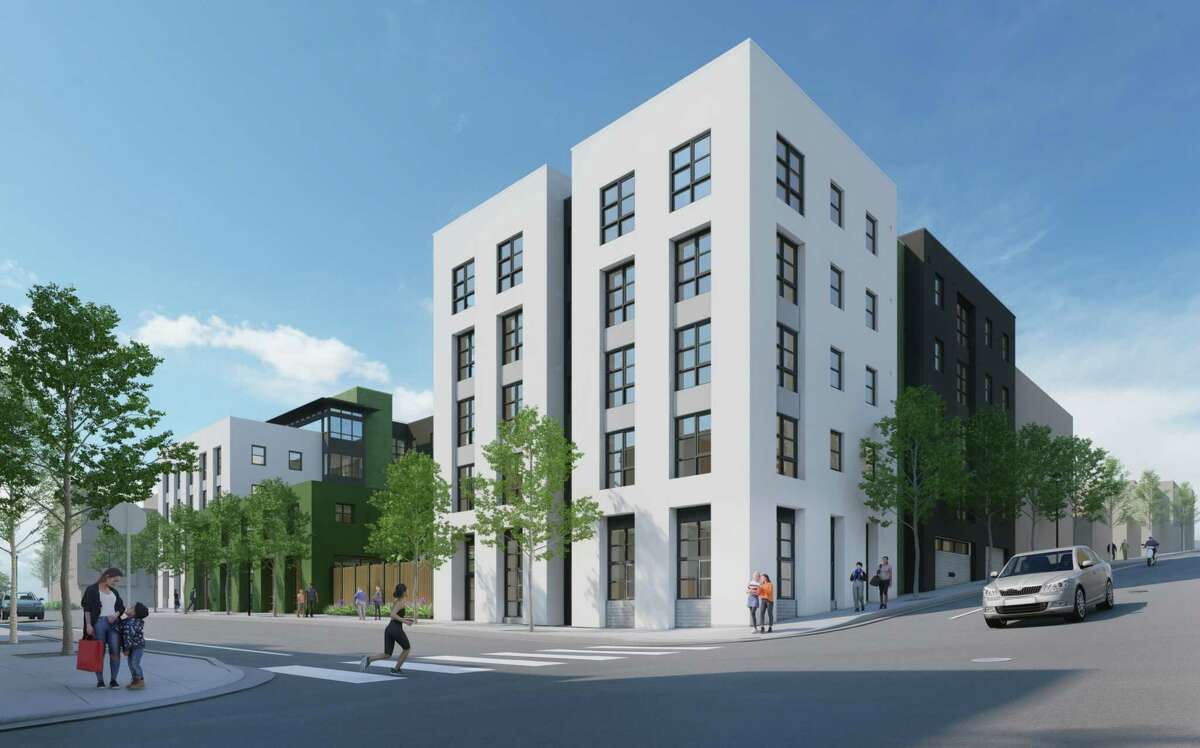
As San Francisco and other cities face pressure from the state to build unprecedented levels of affordable housing, officials throughout the Bay Area are hatching a plan to help the construction with a windfall of money.
They aim to put a regional bond measure on the November 2024 ballot for as much as $20 billion — and possibly try to amend the state constitution to help it and similar measures pass. Because builders could use the money to qualify for other funding, it could unlock as much as an additional $30 billion.
“We’ve never had the entire region have those kinds of resources,” said Kate Hartley, director of the Bay Area Housing Finance Authority, which is drafting the measure. If the bond measure and the amendment were passed, it would be “a game changer for housing efforts,” she said.
What’s SFNext
SFNext is a Chronicle special project to involve city residents in finding solutions to some of San Francisco’s most pressing problems.
Send feedback, ideas and suggestions to sfnext@SFChronicle.com
Where to find more SFNext content
@SFNext on Twitter The ‘Fixing Our City’ podcast Newsletter Data and facts index Get Involved Calendar The SFNext team More coverage
San Francisco consistently ranks among the most expensive cities in the nation. Without access to affordable housing, many low- and middle-wage earners must live elsewhere and face long commutes if they work in the city, or quit those jobs and go to work closer to where they live. That lack of housing also complicates recruiting for thousands of vacant city and law enforcement jobs.
“It’s a huge step forward, and without these resources it will be hard for the region to meet the state mandate,” said Jesse Arreguín, mayor of Berkeley and president of the Association of Bay Area Governments, which will review the measure before it goes to the region’s voters. “This is a critical need, and we need to act now.”
The measure would authorize the issuance of either $10 billion or $20 billion in bonds — a final decision will be made by early next year — which would fund grants and loans to preserve or create affordable housing in all nine Bay Area counties over a 10-year period. Some cities would get dedicated funding, either because they have large populations or they’re slated to build at least 30% of their counties’ low-income housing in coming years. If a $20 billion bond measure were approved, $2.4 billion would ultimately go to San Francisco.
That would help San Francisco build the 82,000 housing units — 46,000 of them affordable to low- and middle-income tenants — that the state has mandated be built by 2031. If that number isn’t met, the city could lose state funding and control over local land-use decisions.
The general-obligation bonds would be repaid with a real-estate tax increase. Property owners with assessed values of $500,000 would pay between $75 and $100 per year more if voters passed a $20 billion bond. It’s uncertain how much voters might be willing to accept, Arreguín said. Future public polling will help the measure’s authors decide which figure to land on, Hartley said.
More for you
- Is the 50-story S.F. condo tower actually realistic, or just ‘fear-mongering’?
- Almost no housing is getting built in S.F. Here’s Breed and Peskin’s plan to kickstart building
Despite widespread acknowledgement that the need for affordable housing is dire, the measure’s fate is uncertain. Like other general-obligation bond measures in California, this one needs a super majority of “yes” votes, or two-thirds support, in order to pass.
That seemed achievable in recent years, based on survey data from EMC Research, presented this spring to the Metropolitan Transportation Commission, the Bay Area’s transit planning body. In April 2019, about 63% of respondents said they supported a $10 billion affordable housing bond, and that November the figure rose to 67%, later surveys showed.
Then COVID-19 struck. By this past March, support had waned to 58%.
“Lots of things got shaken up in the pandemic,” said Amie Fishman, executive director of Non-Profit Housing Association of Northern California, which is trying to grow support for the measure. “And you see that when voters become nervous about economic outlook, there’s some amount of erosion” of support for policies like this, she said.
But Fishman cautioned against fixating on the survey figures, which are prone to fluctuate and carry some margin of error. Support for a regional housing bond has been consistently high, she said. To increase the bond measure’s odds, Fishman and others will try to gain support from community groups and labor unions.
But they’re also preparing to play another card: Changing the state constitution to lower the voting threshold that the bond needs to pass.
Assembly member Cecilia Aguiar-Curry, D-Winters (Yolo County), is leading that effort with Assembly Constitutional Amendment 1. The bill would drop the “yes” vote threshold from two-thirds to 55% for local and regional ballot measures that authorize general-obligation bonds and special taxes to pay for affordable housing and infrastructure.
Even if the state legislature passes ACA 1, it would still need approval from voters statewide before becoming law. That means it could land on the same ballot as the funding measure it’s trying to help.
It already has opposition, including from business groups and led by the California Taxpayers Association. The group says the amendment, which would make it easier for local governments to raise sales and property taxes, could be counterproductive.
“Rising property taxes increase the burden of home ownership,” the association said in a January letter to Aguiar-Curry, “all of which make housing less affordable to working families, including renters.”
If ACA 1 stalls, the backup plan is to get a similar measure onto the 2024 ballot through signature gathering, said Fishman of the housing association.
If both measures fail, and the voting threshold remains high, local officials will need to keep falling back on the state for help with their affordable housing and infrastructure costs. That approach to governing merely shifts the financial burden, while often neglecting smaller and rural communities, “like those in my district,” Aguiar-Curry said.
San Francisco Mayor London Breed is generally supportive of regional solutions to the housing crisis, said spokesperson Jeff Cretan.
“Housing prices don’t start and stop at one city’s border,” Cretan said, because they’re driven by forces acting on the broader Bay Area. But Breed is waiting to see the final version of the regional bond measure before giving it her full-throated support.
“We need to know what the total cost is, the total impact, how much money is coming to San Francisco, and the benefit versus the cost,” he said, and that includes the effect on property owners’ total tax burdens. “Until we have that, we can’t speculate.”
Noah Arroyo is lead reporter for The San Francisco Chronicle’s SFNext project. Email: noah.arroyo@sfchronicle.com, sfnext@sfchronicle.com
Written By Noah Arroyo
Noah Arroyo is a reporter examining the future of San Francisco. Before The Chronicle, he worked at Mission Local and the San Francisco Public Press and focused on the city’s housing and homelessness crises — possibly two sides of the same coin. Noah takes a data-driven approach when possible and seeks out the sources who don’t generally get quoted.

 ©2023 Hearst Communications, Inc.