By Chronicle Editorial Board Feb 17, 2024 (SFChronicle.com)

California has nearly 40 million people and only two senators to represent them. More than any other state, we need senators who deeply understand the full breadth of our disparate needs. This was among the strengths of the late Dianne Feinstein, whose love for California, Senate seniority and coveted spot on the Appropriations Committee allowed her to send billions in federal dollars back to the state each year for everything from mass transit to wildland preservation.
Of the 27 candidates vying to replace Laphonza Butler, Feinstein’s appointed replacement who decided not to run, only four have a legitimate chance of earning enough votes to advance to the top-two November general election.
Steve Garvey, the former baseball star and Republican frontrunner, is one of them, and he declined our request for an interview. Based on his campaign platform and his Senate candidate debate performances, however, it’s apparent he wouldn’t have had much of consequence to say. Garvey is emblematic of the decline of California’s GOP.
That leaves three viable hopefuls: Democratic Reps Adam Schiff, Barbara Lee and Katie Porter. Each is impressive in their own way, even if the differences in their platforms are negligible.
Polls show Schiff, 61, is the favorite in the race. He is an impressive speaker who we believe won both candidate debates with clear and concise ideas, such as enforcing antitrust laws on grocery chain mergers to crack down on spiking food prices. A former federal prosecutor, Schiff eloquently lead the prosecution of Donald Trump in the Senate impeachment trial.
He’s a regular on the cable talk show circuit, but as much as he seems to relish the national stage, Schiff says he’s focused on the needs of California. To help address the state’s insurance crisis, he introduced legislation to create a federal catastrophic reinsurance program, essentially allowing the government to backstop policies in climate-sensitive areas like wildfire country, where insurers are pulling out.
Insurance availability is arguably the least sexy of California’s varying crises. Schiff’s willingness to dive in is admirable.
However, while his plan would likely result in cheaper and more available insurance policies for Californians in the short term, it does nothing to slow development in areas vulnerable to climate catastrophe over the long term; in fact, it arguably incentivizes them. This would ultimately make the state and the country less prepared for our climate future while putting taxpayers on the hook for environmentally irresponsible development.
When we asked Schiff about some of these potential pitfalls, he had a rare moment of being tongue-tied.
All three of the top Democratic candidates have flaws in their platforms. But this took the luster off.
Lee, 77, meanwhile, is the progressive favorite in the race. She overcame an abusive relationship and subsequent homelessness to become a trailblazer in the House, where she has served for more than 25 years, distinguishing herself as the lone member of Congress to cast a vote against authorizing the use of U.S. military force after 9/11.
Lee also works across the aisle, including her introduction of the Rape Kit Backlog Progress Act last year with Rep. Nancy Mace, R-S.C., which sought to improve outcomes on the 100,000 untested rape kits around the country.
The lessons she learned from her life experiences are reflected in her policy ideas, most notably on housing and homelessness. She supports California Sen. Alex Padilla’s Housing for All Act, which would provide $500 billion for rental assistance, housing vouchers and affordable housing.
Such efforts are essential. But they’ve also struggled to gain traction in a divided Congress that shows no signs of trending bluer.
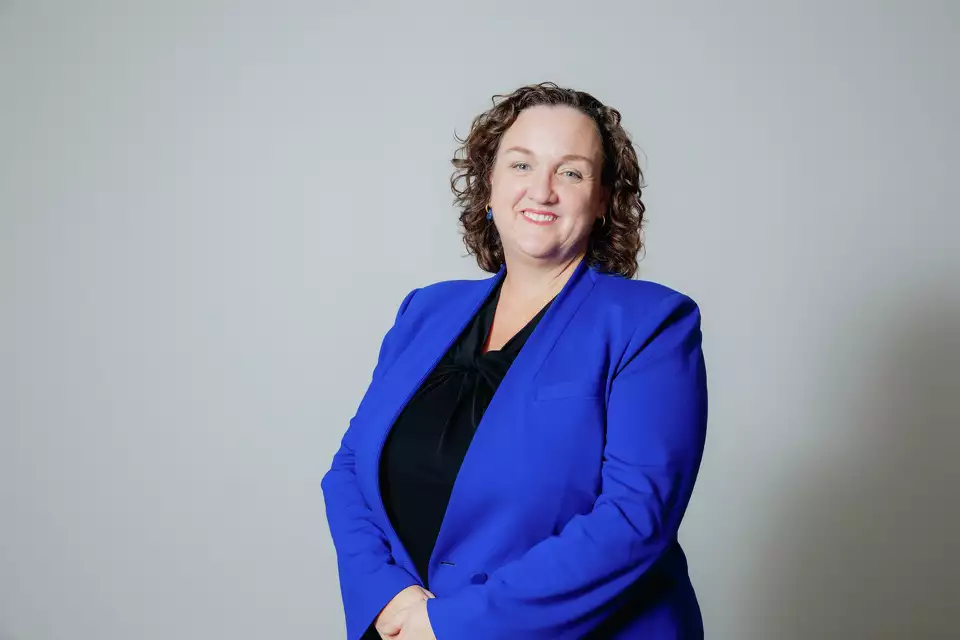
Then there’s Porter, 50.
Despite being known for her television-friendly grilling of corporate executives using her trademark whiteboard, Porter’s performance in the two candidate debates was disappointing. However, she was easily the most impressive candidate we interviewed during our endorsement process. Overflowing with ideas and energy, Porter demonstrated deep policy knowledge and brought her analytical mind to bear on California’s most intractable problems — including the potential for water recycling technology to shore up the state’s residential supply while sustaining the water needs of farmers.
Though not as ambitious as Lee’s, Porter’s housing platform is pragmatic, including bipartisan-friendly ideas to bring homebuilding costs down, such as federal support for 3-D printing and modular construction. She also proposes allowing the federal government to finance the construction of four-unit starter homes, which could potentially make new housing in low-slung neighborhoods like San Francisco’s Sunset District more financially tenable.
These practical ideas befit a candidate who has repeatedly won tough elections in a purple Orange County district. And they’re why we believe Porter has the chance to be effective for California even if Republicans control Congress.
To be clear, should Democrats control the levers of power, Porter can swing big, too, most notably on her ideas to end soft corruption in politics.
Schiff will almost certainly make it to the top two in November. We’d like to see what Porter can do opposite him, where we hope she’ll be able to better show Californians the same ideas and energy she showed us. We endorse her in the primary and the special election to fill the seat from November to early January.
As for the other candidates, we spoke to 11, including Democrats Christina Pascucci, a Los Angeles-based television journalist; Sepi Gilani, a UC San Diego physician and professor of surgery; and Republican Eric Early, an attorney running on a Trump-friendly platform. The others, including a no-party-preference candidate whose racist and conspiracy-theory-laced candidate statement in the state’s official voter guide speaks for itself, either did not respond to our requests or failed to show up for scheduled interviews. We can say with confidence that voters aren’t missing any diamonds in the rough among these also-rans.
Reach the Chronicle editorial board with a letter to the editor at sfchronicle.com/submit-your-opinion.