


- By James Salazar | Examiner staff writer
- Feb 8, 2026 (SFExaminer.com)
An upcoming film showcase will observe the lives of the more than 120,000 people of Japanese descent who were forcibly detained and sent to American concentration camps during World War II.
Japantown’s AMC Kabuki 8 movie theater will host Films of Remembrance on Feb. 21, screening 10 movies that day. The Nichi Bei Foundation hosts the annual event, which runs from 11 a.m. to 7:30 p.m. this year. The foundation is a charitable and educational nonprofit dedicated to informing people about the wartime incarceration of Japanese Americans in the U.S. during the 1940s.
Films of Remembrance started in San Francisco in 2012, expanding into a touring four-city undertaking last year. For the 15th edition of the organization’s annual showcase, screenings are taking place in The City, in San Jose on Feb. 22, and in Los Angeles and Gardena in March.
Organizers said the curated selection of films will elevate an overlooked part of American history, while also reminding viewers of the ways in which people’s constitutional rights, freedoms and protections are still being challenged today.
Foundation president Kenji Taguma said Nichi Bei’s event “comes at a time when many feel that civil liberties are under siege.”
Films of Remembrance commemorates Executive Order 9066, which President Franklin Roosevelt signed in February 1942 to authorize the mass removal of Japanese Americans. Similar events are taking place today, Taguma said.
President Donald Trump’s administration has tried to use the Alien Enemies Act of 1798 to “justify the current roundup of immigrants,” he said.
The federal law is the same one that was “used to justify the forced removal and incarceration of our community during World War II,” Taguma said.
Audiences will see incarceration play out from different perspectives, including “directly from former incarcerees, some by descendants of the camps and even by students who are trying to erect a monument to memorialize the experience in their community,” Taguma said.
The 10 films include eight short documentaries and two short films. In the short “9066: Fear, Football and The Theft of Freedom,” former Cal and NFL linebacker Scott Fujita links his family’s history in the country back to forced internment. Organizers are also screening “Hello Maggie!,” which San Francisco native Willie Ito animated.
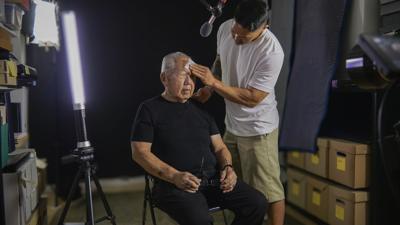
Emmy-winning documentary filmmaker Tadashi Nakamura will be this year’s headliner, presenting audiences with the feature-length “Third Act.” The film chronicles the career of his father, Robert Nakamura, who died in June. The senior Nakamura was one of the earliest filmmakers whose works dealt with wartime incarceration, and his films are said to have inspired others. “Third Act” also highlights Robert Nakamura navigating his own diagnosis of Parkinson’s disease.
In a statement, Nakamura said making the film helped him understand how his father’s “life and career have been shaped by coming to grips with the mass incarceration of WWII.”
“I realize that I have inherited the legacy of that government betrayal, the historical trauma, which is intergenerational,” he said.
Community members’ connectivity with each other is a central theme that Taguma said Films of Remembrance will explore with its selected presentations.
“In 1942, there were too few people who stood up for us,” he said.
Since then, descendants have learned how important it is “to speak out for others who are targeted by racial scapegoating today,” Taguma said.
Films of Remembrance was able to return to a touring format this year thanks to a presenting sponsorship from the Henri and Tomoye Takahashi Charitable Foundation, he said. The pair established the foundation in 1986 with Tomoye’s sister, Martha Masako Suzuki, seeking to preserve Japanese American culture through arts and education.

San Francisco artist Masako Takahashi, whose parents helped establish the foundation, was born in a concentration camp situated in the Utah desert. Takahashi said her parents lived in The City before the war and returned once it was over. Her family grew up near the intersection of Post and Buchanan streets, before homes and businesses were torn down as part of city officials’ redevelopment plans.
When her family “returned to San Francisco, a welcoming enclave existed in The City’s Japantown,” Takahashi said. She said she hopes viewers will come away from the series rejecting divisive rhetoric and work toward ensuring that The City remains a safe space for all residents.
“San Francisco was a city where people of all backgrounds could find a place,” Takahashi said. “I fervently wish it to be so in the future.”

James Salazar
Neighborhoods & Culture Correspondent


