


His findings are due no later than January 9. The Legislature that elects him votes December 2. Two questions he can answer today, yes or no.
| Christopher Armitage Jul 16, 2026 |
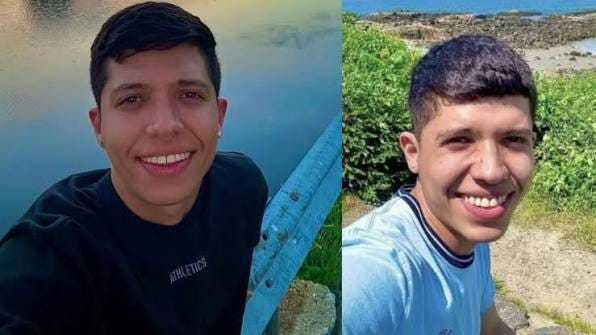
One office investigates each use of deadly force by law enforcement in Maine, and the same office decides homicide charges: the Attorney General’s. Its findings on the July 13 killing in Biddeford are due by January 9, 2027. A civilian who fired the same shots could expect handcuffs the same morning, not a six month deadline for a report.
WGME reported that since the office began these investigations in 1990, it has not determined that an officer’s use of deadly force was unjustified. Not once.
Maine’s Legislature elects the Attorney General. The Legislature chosen this November votes on that office on December 2, five weeks before those findings are due.
A federal immigration agent fired multiple rounds into a sedan at a Biddeford intersection on the morning of July 13, killing Johan Sebastián Durán Guerrero, a 26 year old delivery driver who, per Senator Angus King and Representative Chellie Pingree, was not the target of the warrant the agents were executing. A photograph of the car shows four bullet defects in the windshield. The agents wore no body cameras, and the Attorney General’s Office confirmed that no body or dash camera footage depicts the use of force. ICE stated that the agent fired “fearing for public safety” as the vehicle attempted to flee, and a witness with a direct view reported hearing the driver say “I tried to stop.”
I sent the letter below to Attorney General Aaron Frey. It asks for two commitments rather than a conclusion, with a written answer requested by September 1, and I will publish whatever the office says, in full. The classification rule is stated now, in advance: yes counts as yes. “We follow the facts,” “we cannot comment on a pending investigation,” and “we take this seriously” count as no answer, and I will report them as no answer.
Instructions for putting the same question to your own attorney general, before your state needs them, are at the end.
The letter, in full:
July 16, 2026
Hon. Aaron M. Frey Attorney General, State of Maine 6 State House Station Augusta, ME 04333
Re: The July 13, 2026 use of deadly force in Biddeford resulting in the death of Johan Sebastián Durán Guerrero; request for two public commitments
Dear Attorney General Frey,
I write as a journalist and publisher. I am the founder of The Existentialist Republic, a civic affairs publication. I am writing about the killing of Johan Sebastián Durán Guerrero on July 13, 2026, at the intersection of Pool Street and Hill Street in Biddeford. I am aware that your office opened its investigation that day under 5 M.R.S. section 200-A, that the FBI is assisting, and that findings are due within 180 days under 5 M.R.S. section 200-K, with any extension capped at 270 days. I do not ask the office to prejudge the evidence, and I do not ask about the agent’s identity, which the office can establish through its own process.
I ask the office to state two things publicly.
First, that the office will apply the same deadly force standard to this federal agent that it applies to a Biddeford police officer or a Maine State Police trooper: the justification provisions of 17-A M.R.S. sections 107 and 108, the constitutional requirements of Tennessee v. Garner and Graham v. Connor, and the totality of the circumstances analysis required by Barnes v. Felix.
Second, that if the completed investigation establishes probable cause under Maine law, the office will present the case to the York County grand jury.
I make the second request because the public record already raises a serious question under 17-A M.R.S. section 203(1)(A), which applies when a person recklessly, or with criminal negligence, causes the death of another human being. Published reporting describes four bullet defects in the sedan’s windshield, an absence of body or dash camera footage of the use of force, conflicting accounts of whether the shots preceded or followed the ramming of the vehicle, a Department of Homeland Security use of force policy that generally prohibits firing at moving vehicles, and statements by members of Maine’s congressional delegation that the driver was not the target of the operation. Whether the completed record establishes probable cause is for the office to determine. Whether established probable cause will be presented to a grand jury is a question of the office’s intentions, and it can be answered now.
I am aware that a charged federal agent may transfer a state prosecution to federal court and assert immunity there. Under Mesa v. California, that transfer changes the forum; the office remains the prosecutor and Maine law continues to govern. I raise this only to make clear that the answer to my second request is not controlled by federal officials.
I also ask the office to confirm that third party video from residential and commercial cameras near the intersection has been collected or preserved, since consumer camera systems overwrite stored footage on short cycles.
I request a written response by September 1, 2026. I am publishing this letter, and I am inviting readers, including Maine residents, to put the same questions to the office and to their own legislators in their own words. I will publish the office’s response in full.
Respectfully,
Christopher Armitage
Founder and Publisher, The Existentialist Republic
If you found this article worthwhile, and want to see this type of content along with our model legislation, free educational booklets, and free training, all continue, please consider being one of the 10 subscribers that keeps it alive for everyone. Don’t let this be the reason you skip a meal or miss rent. Thank you to everyone for showing up to arm yourself and others in our fight for the future of humanity.
If you live in Maine, call the Attorney General’s Office at 207-626-8800, or write to 6 State House Station, Augusta, ME 04333. Then tell your state representative and state senator to ask the same question. They elect the Attorney General on December 2. Find them at legislature.maine.gov.
To replicate this in your own state: find who charges homicide where you live, which in most states is the elected county or district prosecutor, and in a few states, Maine among them, a statewide office. Send the question in writing to that office and to your state attorney general, whom you can find at naag.org: if a federal agent uses deadly force here and the completed investigation establishes probable cause of a state crime, will your office charge the agent the way it would charge anyone else? State the classification rule in the same message, so a non answer counts as an answer. If any official tells you federal agents are immune from state charges, that claim has been false since 1932, when the Supreme Court wrote in Colorado v. Symes that federal officers and employees are “not, merely because they are such, granted immunity from prosecution in state courts.” In May, Hennepin County filed state criminal charges against an ICE agent in Minnesota. In January, ten locally elected prosecutors formed the Project for the Fight Against Federal Overreach to support exactly these prosecutions. The Department of Homeland Security’s own policy generally prohibits firing at moving vehicles in your state the same as in Maine. And a president cannot pardon a state conviction.
Wherever you live, reply to this email or leave a comment with the answer you receive, the date, and the words the office used. I will report back on what offices say and on what they refuse to say.
The call takes thirty seconds: “My name is [name], I live in [town]. I am calling about the July 13 shooting in Biddeford. I am not asking the office to prejudge anything. I have a question that takes a yes or a no. If the completed investigation establishes probable cause under Maine law, will the office present the case to the York County grand jury? Please record my call and the answer.”


