By Carolyn Wang KongNov 16, 2023 (SFChronicle.com)
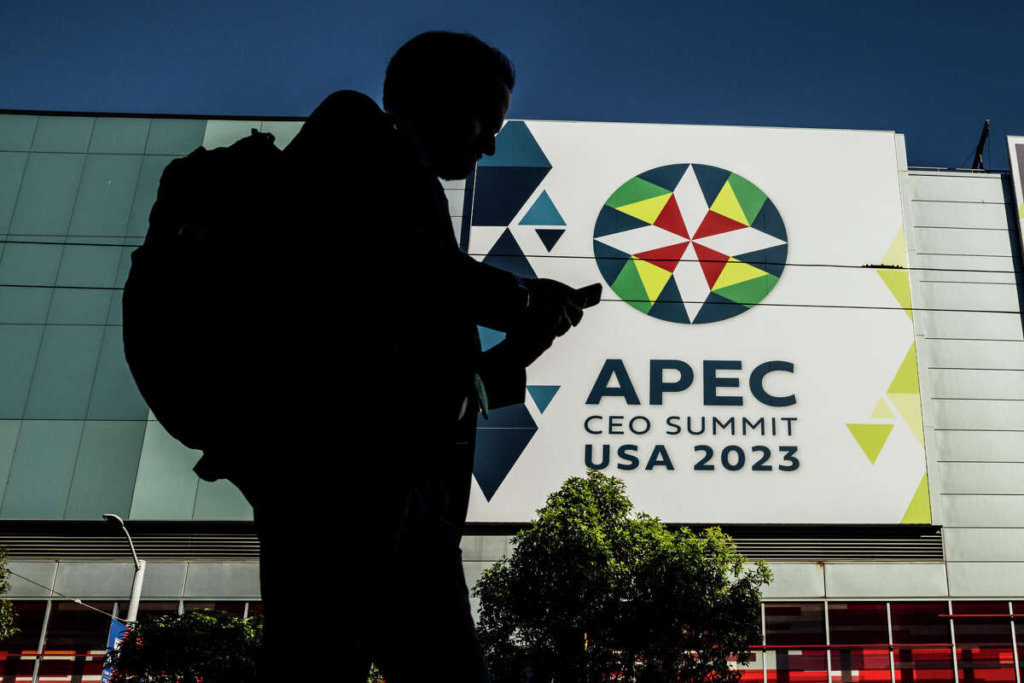

This week, much of the world’s attention is focused on San Francisco as our city hosts this year’s Asian-Pacific Economic Cooperation summit. The forum is bringing together leaders from 21 APEC countries to engage on global challenges under the theme of “Creating a Resilient and Sustainable Future for All.”
While the theme resonates deeply with our own city’s values, it also provides a stark contrast to the reality of many San Franciscans — and in particular, our Asian American and Pacific Islander community.
Welcome to our new site design! We’d love to hear what you think about it.Take A Survey
With a gross domestic product of more than $500 billion, the San Francisco metropolitan area is the fourth largest economic region in the U.S. and an essential hub in the global economy, home to some of the biggest Fortune 500 companies in the world. But not everyone in the city benefits from that economic success. AAPIs make up 33% our city’s population yet have the highest number of people living at or below the poverty line.
Merely a few blocks from the APEC convenings, hundreds of Asian American families with children live in single-room occupancies averaging 200 square feet with no bathrooms or kitchens. But their poverty is invisible because they do not show up on homelessness dashboards or reports — they are considered “housed.”
This economic precarity only exacerbates the ongoing crisis of mental health in AAPI communities. According to the Centers for Disease Control and Prevention, suicide was the 10th leading cause of death in the United States in 2019. Among Asian Americans, Native Hawaiians and Pacific Islanders age 15-24, however, it was the leading cause of death. For a community that prioritizes education, typical screening tools that focus on “missed days of school” or “failing grades” may not be the most effective indicators for who is most at risk. What would be? We don’t know because there has been little to no investment of resources put toward understanding the problem in the context of our community.
Language access also remains a persistent challenge. Federal standards mandated the provision of interpreter services 23 years ago, and almost 50 years after the passage of the 1964 Civil Rights Act, numerous government agencies and systems continue to fail to provide these vital services — effectively shutting out people with limited English proficiency from accessing job training programs, benefits and life-saving health care services. For example, in a recent survey from the research group AAPI Data, 28% of Asian Americans had difficulty accessing health services because of a language barrier. That’s almost a third of the Asian American population who could not even talk to someone about getting help because of a lack of language access.
The AAPI community has mobilized on its own to try to fill the gaping needs. For the past 30 years, more than 90 AAPI-serving nonprofits have served as a culturally competent safety net for AAPI communities in the nine counties of the Bay Area. These organizations fill needs that systems cannot meet but, like many AAPI-serving nonprofits across the country, are among the least funded.
According to a 2018 Asian Americans/Pacific Islanders in Philanthropy report, foundation funding designated for AAPI communities accounted for only 0.20% of all U.S. grantmaking — for every $100 awarded by foundations for work in the United States, only 20 cents was designated for AAPI communities.
Our city and our country can do better.
Lack of funding and recognition of issues in our community means that large swaths of our population continue to go unseen and unaddressed. But given we are the largest racial group in the region, San Francisco cannot afford to ignore the issues affecting us. Our issues are Bay Area issues.
As the U.S. chairs the meeting of APEC this year, the country faces a unique dual reality: hosting a global summit while wrestling with local issues that go neglected, particularly for our AAPI communities, including here in San Francisco. This juxtaposition is a reminder that looking outward to address global challenges should not come at the expense of ignoring the pressing needs within our communities.
Our city’s AAPI nonprofits have worked through economic downturns, a pandemic and violence to continue to tackle the complex and persistent issues of racism and poverty. But as these organizations continue their tireless work and support for the community, let APEC be a reminder to invest at home — because resilience, innovation and inclusivity are also needed here so that we can create a genuinely resilient and sustainable future for all that leaves no one behind. This process must begin with acknowledging and addressing the disparities in our own cities, such as San Francisco.
By bridging the gap between the global and the local, we can truly create a future that lives up to the promises of APEC 2023 — a failure to do so would be nothing short of a wasted opportunity.
Carolyn Wang Kong is president and executive director of the Asian Pacific Fund.