- By Adam Shanks | Examiner staff writer |
- Jan 22, 2025 Updated Jan 23, 2025 (SFExaminer.com)
Two days into President Donald Trump’s administration, San Francisco’s hackles were raised again Wednesday by a new Department of Justice memo that targets cities that refuse to team up with federal immigration enforcement.
The memo, written Tuesday by acting Deputy Attorney General Emil Bove and published a day later in a number of media outlets, calls for investigation and prosecution of local officials who do not comply with “lawful immigration-related commands and requests from federal authorities.”
It was issued in response to Trump’s arrival in office this week and the suite of executive orders he swiftly signed to implement his vision. While its broader implications remain to be seen, the memo — and Trump’s promised crackdown on immigration — could have major consequences for San Francisco.
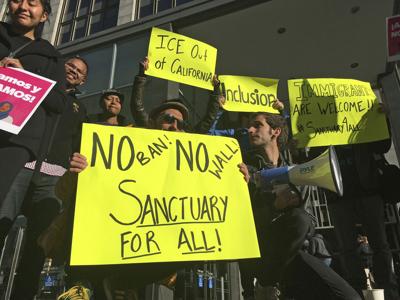
San Francisco has been a “sanctuary city” since 1989, and its laws prevent local officials from collaborating with federal authorities to facilitate deportations. Support for the sanctuary city ordinance was reiterated by the Board of Supervisors in a resolution that passed last week.
San Francisco City Attorney David Chiu’s office told The Examiner that it is in compliance with federal law.
“The purpose of San Francisco’s sanctuary laws is not to interfere with lawful federal immigration enforcement,” said Jen Kwart, a spokesperson for Chiu’s office. “Immigration enforcement is the federal government’s job, not the responsibility of state or local governments.”
In a CNN interview on Wednesday, California Attorney General Rob Bonta described the memo as a “scare tactic.”
“We are very well aware of what the law requires us to do and what it permits us to do,” he said. “We know that we don’t have to participate in immigration-enforcement activities.”
The memo also calls for the FBI’s Joint Terrorism Task Force “to assist in the execution of President Trump’s immigration-related initiatives.” As noted by Politico, the Joint Terrorism Task Force includes members of local enforcement, who would potentially be forced to choose between following federal orders or their cities’ own sanctuary laws. However, San Francisco left the task force in 2017 during Trump’s first term and has not rejoined it, despite recent calls by the police officers union to do so.
San Francisco officials, and leaders in other sanctuary cities, have long argued that such policies improve public safety, largely by encouraging those who would otherwise fear deportation to collaborate and cooperate with police.
San Francisco’s law includes exceptions for people accused or convicted of serious or violent crime like rape and assault with a deadly weapon. A 2020 Stanford University study, for example, found that sanctuary policies reduced deportations but had no measurable effect on crime.
During his campaign, Trump promised to look to Congress to “pass a law outlawing sanctuary cities nationwide, and we demand the full weight of the federal government on any jurisdiction that refuses to cooperate with [Immigration and Customs Enforcement].”
The battle with Trump over immigration policy is one that San Francisco officials have anticipated and fought before.
In 2017, Trump attempted to pull federal funding from cities that fail to comply with federal demands related to immigration enforcement. The City, and California, responded with a lawsuit that they eventually won.
San Francisco is already back in court during Trump’s second administration. On Tuesday, Chiu signed on with nearly two dozen states and Washington, D.C. in an effort to halt Trump’s efforts to revoke birthright citizenship — which is enshrined in the 14th Amendment of the Constitution — via executive order.