Months after SF closed its last RV parking site, San Jose’s is thriving — at a fraction of the cost.
 by MARINA NEWMAN July 31, 2025 (MissionLocal.org)
This week, San Francisco Mayor Daniel Lurie signed legislation banning RV dwellers from parking more than two hours on city streets.
Lurie described the ban as “led with compassion.” RV dwellers have three months to find other options, and city officials have offered to buy RVs from their owners, provide housing subsidies for nearly 800 people, and dedicate specific funding towards helping RV-dwelling families with children.
That, it appears, will leave a significant number of RV dwellers without a place to go. The San Francisco 2024 Point in Time count found an estimated 1,442 people living in vehicles across the city.

Want the latest on the Mission and San Francisco? Sign up for our free daily newsletter below.Sign up
Until recently, RV dwellers had the option of a legal place to park: An empty parking lot funded by Proposition C, where residents could park their vehicles for free in up to 53 spaces, take a shower, eat a hot meal and meet with homeless outreach workers and other social service providers.
But in March, the Bayview Vehicle Triage Center abruptly closed. San Francisco’s Department of Homelessness and Supportive Housing blamed the closure on high costs and “weak outcomes for program participants.”
In its three years of operation, the triage center had racked up a bill of nearly $18 million in construction and operating costs.
Just 48 miles south of San Francisco, however, San Jose is taking a different approach. While also issuing restrictions on RVs, the city has, in turn, opened two safe parking sites with a combined 128 parking spots — one in 2023, and the other in March of this year — at a fraction of the cost of the Bayview Vehicle Triage Center.
San Jose has fewer homeless residents; nearly 6,000 to San Francisco’s 8,300. But the number of San Jose residents living in their vehicles rivals that of San Francisco. A 2023 Point in Time survey counted approximately 1,250 vehicularly homeless people in San Jose.
But Matt Mahan, the mayor of San Jose, told Mission Local that his office estimates that number is much higher — closer to 2,000.
San Jose’s experiment in providing a few of them with safe parking spaces, Mahan added, has been surprisingly affordable. “It’s not that expensive to run an RV park,” Mahan said as he strolled through the Santa Teresa supportive parking site in the south of San Jose.
The site is on a small, dirt-road lot dotted with trees a stone’s throw from the Santa Teresa VTA light rail station. “You just need a willingness to think more creatively.” https://datawrapper.dwcdn.net/2OqKI/3/
Residents who live there say it’s a lifeline.
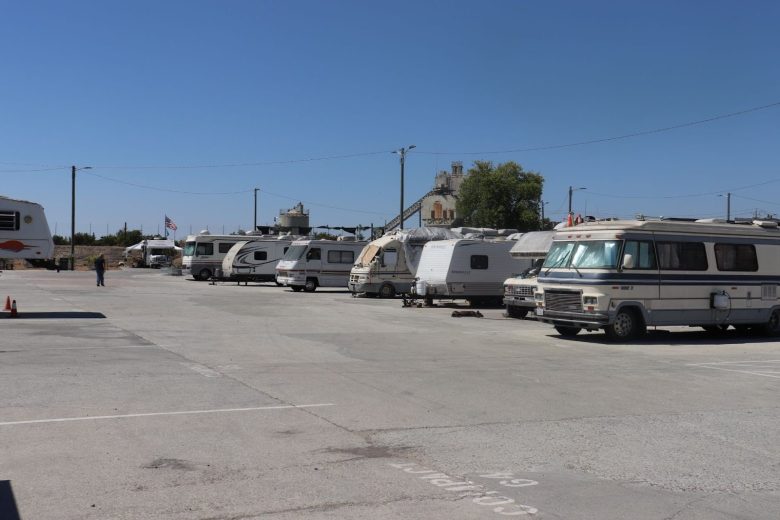
“This is the only thing that’s worked for me so far,” said Rita, gesturing towards the neat rows of RVs parked behind her in the newest supportive parking site, a sprawling parking lot at 1300 Berryessa Road in the north of San Jose. “They should make more like this.”
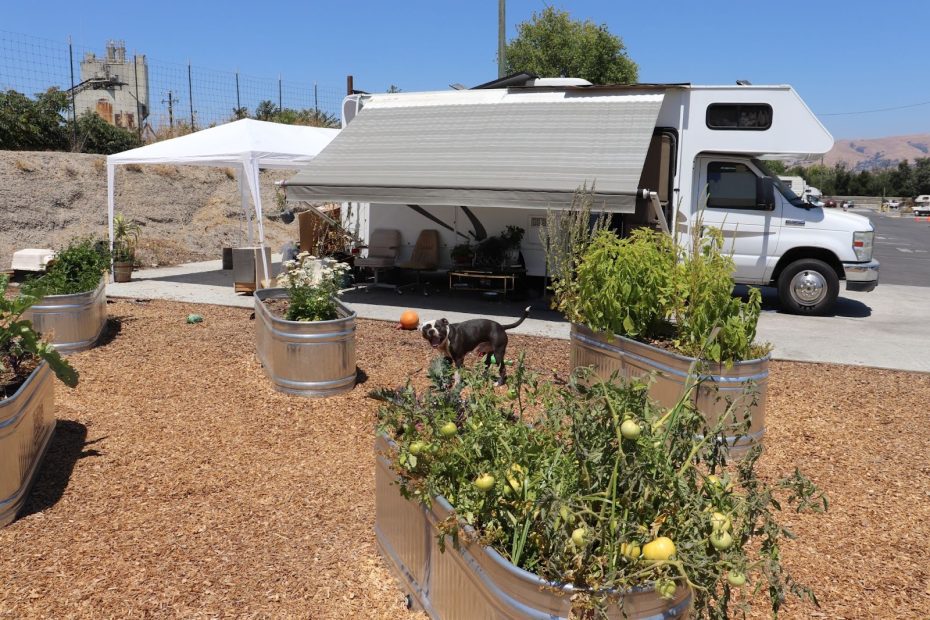
Along with case management sessions to search for permanent housing, access to showers, and free meals, some RV dwellers also tend to a vegetable garden, go to on-site therapy, and receive food and care for their pets.
Rita, 57, whose last name has been withheld for privacy concerns, has been homeless since 2006. She said that after just five months living at the parking site, her family has noticed a difference in her behavior. She seems calmer, less stressed.
“They told me I’ve changed,” said Rita, smiling as her neighbor’s new litter of puppies gathered and licked at her ankles.
San Francisco moves away from tolerating RVs
When San Francisco’s Bayview Vehicle Triage Center opened in January 2022, it too seemed like an oasis for RV dwellers accustomed to tickets, towing and hostile neighbors.
The Triage Center promised 135 parking spots for 203 people with a sweeping view of Candlestick Point, wrap-around case management, laundry facilities, and electricity for all, meaning residents wouldn’t have to bring their own generators to power their devices and heat their vehicles.
But in interviews with Mission Local, some former residents described it as a “nightmare.” The Triage Center, which partnered with the Bayview Hunters Point Foundation, provided just a fraction of the promised spots.
Some Triage Center residents who spoke to Mission Local described rodent infestations, constant power outages and bans against propane stoves, personal generators, and cooking inside vehicles. They described the environment as “carceral;” security was aggressive, and there were strict rules on everything from showering to visitation.
When the electricity failed, the city brought in temporary diesel-fueled generators, which led to a neighborhood group suing the city for violating the Clean Air Act and endangering neighbors.
According to the San Francisco Fire Department, the San Francisco Fire Code has stronger restrictions than the state code, and many other California cities. Propane and generators require permitting, and SFFD Lieutenant Mariano Elias says there are good reasons for that.
“There is a danger due to the propane gas, which is highly flammable,” said Elias in an email to Mission Local, “and generators emit gases such as carbon monoxide, which are deadly.”
The budget for money raised from Prop. C — a tax on businesses that make more than $50 million in gross receipts for homeless and housing services — now lists zero dollars next to a line item intended for a “Vehicle Triage Center” for the next two fiscal years.
Instead, the city’s focus has shifted to Mayor Lurie’s Breaking the Cycle Initiative, expanding the city’s temporary shelter capacity and phasing out RVs from city streets and lots.
“I don’t think that they should be living in broken-down RVs. I think they should be inside,” said Lurie at a recent town hall held in Bayview, a neighborhood that has shouldered over half of the city’s RV population.
Kunal Modi, the mayor’s chief of health and human services, agreed. “The crisis of RV homelessness is real. We need to understand why previous attempts didn’t work,” said Modi.
The Bayview center was expensive. It included $7.5 million in capital investments to get the site electrified and set up, and another $10.7 million on programming for social services, according to the Department of Homelessness and Supportive Housing. Operating costs came to approximately $250 per parking spot per day.
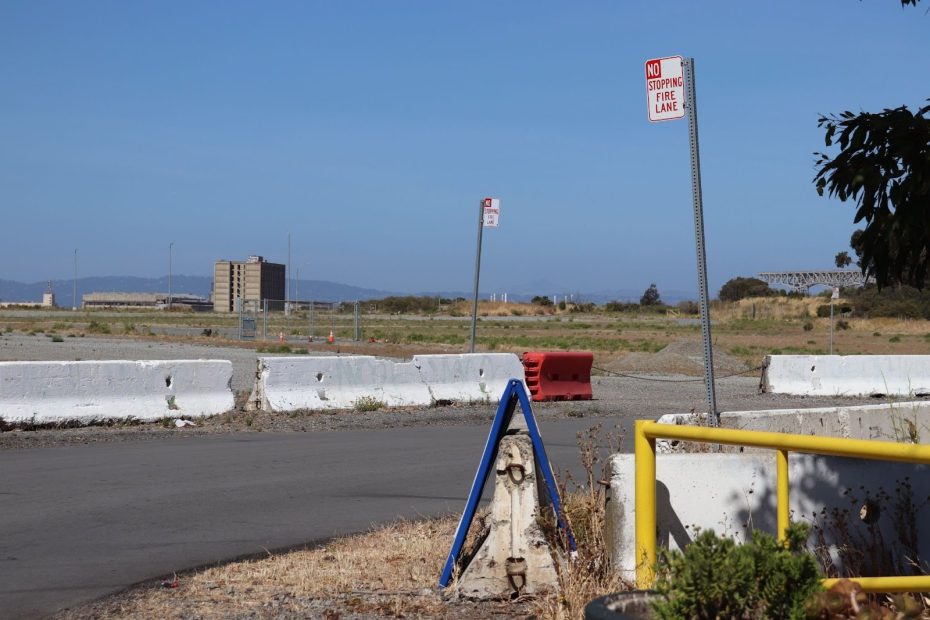
Jennifer Bouck, a representative from the Department of Homelessness and Supportive Housing, said that delays in getting the site electrified reduced capacity, which drove up the cost per person, along with the cost of programming.
“Between the high cost of the VTC and the weak outcomes for program participants, the City pivoted our strategy for addressing vehicular homelessness toward the Mayor’s new RV strategy that the Board approved this week,” added Emily Cohen from the Department of Homelessness and Supportive Housing in a statement to Mission Local.
Mauricio Alfonso Castro, who lived at the Bayview Vehicle Triage Center, said that despite the cost of 24-hour staffing and security provided by Urban Alchemy, a nonprofit that employs formerly incarcerated people, he felt unsafe. His RV was infested with rats. Castro only speaks Spanish, and had difficulty communicating with staff.
Kelly Hughes, who parked at the Triage Center for two and a half years, also remembers the rats. She says pest control only visited twice while she was there. Hughes remembered living without electricity for months, and said that when generators finally arrived, they were shut off at 1 a.m., leaving her vehicle freezing overnight in the winter.
At San Jose RV site, ‘I’d be here forever if I could’
In San Jose, despite offering similar amenities and programming, it’s a different story.
The city pays just $4.5 million annually to lease the land and contract the nonprofit WeHOPE to operate the Berryessa safe parking program, which has 86 parking spots and a long waiting list that offers priority to people who lived near the area before becoming homeless. The San Jose housing team estimated the cost per parking spot at $143.64 per day.
Like the Bayview Vehicle Triage Center, the Berryessa safe parking site offers laundry services, showers, bathrooms and 24-hour security, along with a vegetable garden, a food pantry, free breakfast and dinner, counseling, and case management to find permanent housing.
WeHOPE also supplies residents with propane every three to four days, a big cost savings that also allows residents to cook inside their RVs.
Victoria Garibaldi, the manager of the Berryessa safe parking site, has a team of security guards, but said she’s rarely had to rely upon them since the site opened in March. Police have only been called to the site once, for a bike theft. Garibaldi says she installed cameras just days ago.
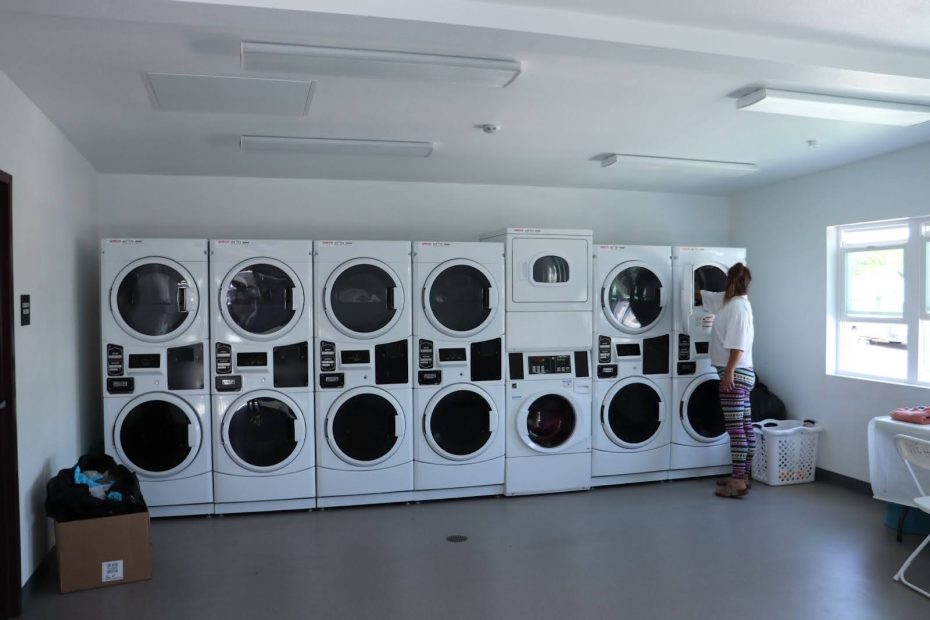
Residents at Berryessa are allowed to stay as long as they like, so long as there aren’t any recurring issues. Only two residents have been transferred out since March: one for living in a vehicle that was deemed too unsafe to actually live in, and another for a domestic dispute.
Another resident, Doan Nguyen, said he feels much safer at Berryessa than he did parking on the street or sleeping in a shelter. When he parked on the street, his car was broken into, and ever since he’s been worried for the safety of his dog, Sugar.
But here, Nguyen said, he knows his neighbors and feels safe. “I’d be here forever if I could,” he said.
Rita first decided to purchase her RV after being sexually assaulted in a shelter; it was the only housing option she could afford that is private. She is working towards a deposit on her first apartment, but said she will miss her neighbors once she leaves. “Everybody knows everybody here,” said Rita. “We look out for each other.”
The Santa Teresa site, which has 42 spaces, is more bare-bones than Berryessa, but also has a long waiting list. Mobile showers are offered three days a week, and the site has a single faucet with running water, along with a few portable toilets.
It costs $1.5 million annually in operational costs, or $98.80 per spot per day. Unlike the Berryessa site, which is leased for about $2 million per year, the land doesn’t cost the city anything to use. The City of San Jose partnered with the Santa Clara Valley Transportation Agency to build the site on the light rail station’s property.
Residents receive case management, counseling inside a designated “therapy tent,” five community dinners a week, free medical services, care for their pets, and career counseling. Sewage and cleaning water is disposed of twice a week.
Neither site offers much in the way of electricity; most RV dwellers are expected to have their own generators. Both Santa Teresa and Berryessa have solar panels, which are used to power the site and help residents charge their phones.
Not adding electrical infrastructure has cut costs tremendously. Berryessa also has a backup generator to power its offices and illuminate the bathrooms and walkways at night.
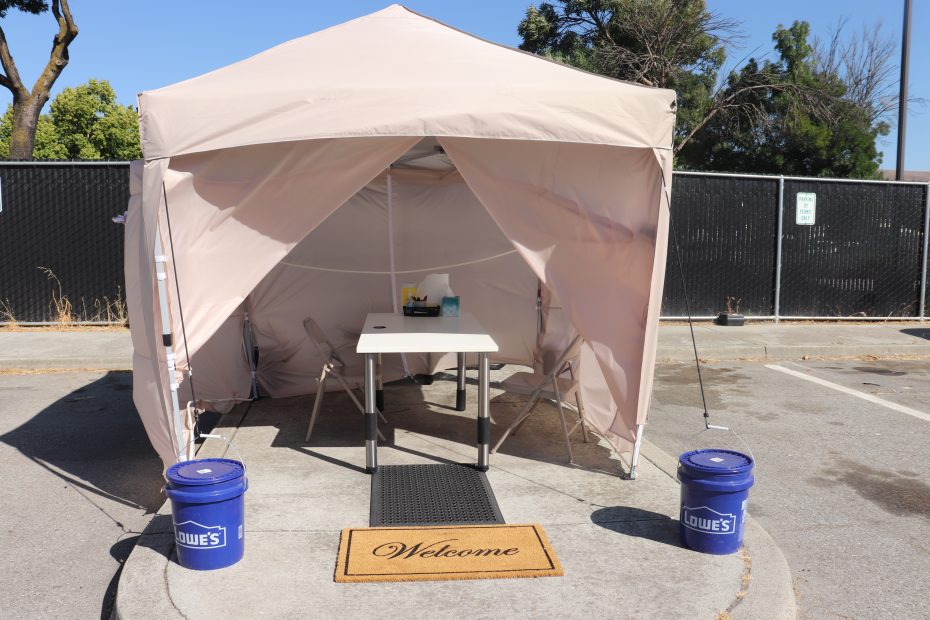
It’s still not cheap, but Mahan, the mayor of San Jose, says the cost, and human toll, of keeping someone unhoused is much greater — about $65,000 per person per year, much of that in the form of emergency medical expenses and other services.
“A lot of people think that these solutions are expensive,” Mahan told Mission Local. “But to allow the status quo to continue is unacceptable.”
San Jose has received complaints from neighbors about generators, exhaust and RV fires, as well as RVs parking in recreational areas. The city issued new restrictions on RVs this year, banning RVs on certain streets. But it’s not a blanket ban.
“We want public lands open and safe,” said Mahan. “And safety and dignity for people who live in their RVs. It’s safer when it’s managed.”
Arthur Ariza began living in his RV during the pandemic. It was supposed to be temporary, he said; he hoped to spend his retirement driving across the country. But in the wake of a family crisis, that home became permanent.
One day, while he was parked near a construction site, a caseworker knocked on Ariza’s door and told him about a supportive parking program opening up in San Jose.
Now, remarked Ariza, he feels safe again. As he spoke, his neighbors served up plates of pasta and sat eating at picnic tables. “I’m doing great here,” he said. “We’re like a little village.”