January 6, 2026 (democracydocket.com)
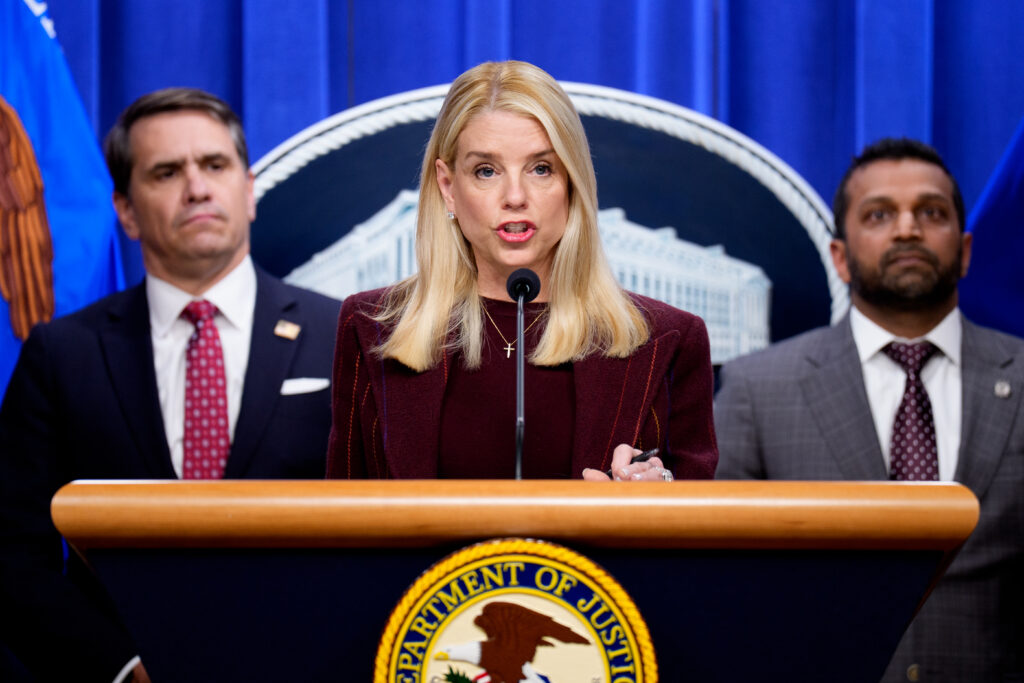
In November, Congress passed, and President Donald Trump signed into law, legislation mandating the Department of Justice (DOJ) to publicly release all of the files it has on convicted sex offender Jeffrey Epstein by late December.
More than two weeks past that deadline, the DOJ has released less than 1% of its Epstein documents and it will continue to be in violation of the law for the foreseeable future, according to a new letter the department sent a New York-based federal judge Monday.
In the letter, Jay Clayton, the top federal prosecutor in the Southern District of New York, said the department has so far published only 12,285 documents and that more than 2 million documents remain unreleased in “various phases of review and redaction.”
SIGN UP TODAY
Get updates straight to your inbox — for free
Join 350,000 readers who rely on our daily and weekly newsletters for the latest in voting, elections and democracy.
According to Clayton’s disclosure, the around 12,000 documents released so far represents only 0.6% of the remaining outstanding documents currently under review.
The Epstein Files Transparency Act, which passed Congress with near unanimous approval, required Attorney General Pam Bondi to release “all unclassified records, documents, communications, and investigative materials” it had on Epstein, his associates or entities with ties to his trafficking or financial networks by Dec. 19, 2025.
The DOJ, however, has slow-rolled its release of the Epstein file in violation of the new law, which does not allow the department to delay. The law had already given the department 30 days to process the documents for release, and the FBI started an extensive review and redaction process on the documents in March.
Senior DOJ officials have claimed that the department needs additional time to redact the files in order to protect victims. The department also suddenly discovered over a million more documents potentially related to Epstein that it did not include in its initial review and that could be covered by the act.
In the letter, Clayton acknowledged that many of the discovered documents were duplicates of materials that the department already collected for review but still had to “undergo a process of processing and deduplication.”
“This work has required and will continue to require substantial Department resources,” Clayton wrote, adding that the DOJ has detailed “over 400 lawyers” to review the files “for the next few weeks.”
From suddenly removing and re-releasing images of Trump to preemptively rejecting accusations against him within the documents, the DOJ also appears to be playing defense for the president with the release of documents.
Epstein, who died by suicide in a New York prison in 2019, was a longtime associate of Trump’s.
While he has acknowledged his past friendship with Epstein, Trump denied involvement in, or knowledge of, Epstein’s sex-trafficking operation and claimed they had a falling out in the mid-2000s.
However, the president, his former attorneys now at the DOJ, and his allies in Congress have also repeatedly attempted to prevent the release of the Epstein files. Emails from Epstein’s estate released by the House Oversight Committee last month also indicated that the convicted sex offender believed Trump knew of his abuses.
Reps. Ro Khanna (D-Calif.) and Thomas Massie (R-Ky.), the co-sponsors of the Epstein Files Transparency Act, have slammed the DOJ’s delay and have said they were exploring bringing contempt or impeachment charges against Bondi and other senior officials responsible for the incomplete release.
In addition to its unlawful publication delay, the DOJ hasn’t complied with other aspects of the law.
The act also required the department to give Congress a report detailing why it made redactions in the released documents, as well as a list of “all government officials and politically exposed individuals” named in the files within 15 days after publication.
However, the DOJ blew past the Jan. 3 deadline for the report and list without explanation.
Monday afternoon, Senate Minority Leader Chuck Schumer said on social media that lawmakers still had yet to receive any submission from the DOJ.
“It’s been 17 DAYS since the Trump DOJ first broke the law and failed to release all the Epstein files,” Schumer wrote. “It’s been 14 DAYS since Trump’s DOJ released anything at all – with the DOJ doing everything in its power to delay and obfuscate.”
“What are they trying to hide?” Schumer added.
In a letter sent late last month, a group of bipartisan senators also asked Don Berthiaume, the DOJ’s acting inspector, to audit the department’s compliance with the act, saying full transparency was “essential in identifying members of our society who enabled and participated in Epstein’s crimes.”
The DOJ made the new disclosure about the Epstein files in a letter to U.S. District Judge Paul Engelmayer, who has presided over aspects of the department’s criminal case against Epstein’s longtime accomplice and girlfriend, Ghislaine Maxwell.
Maxwell was found guilty of five federal counts related to the sexual abuse and trafficking of minor girls in connection with Epstein and was sentenced to 20 years in prison. However, Maxwell has continuously sought to challenge her convictions and sentence through appeals.
In addition to the appeals, she and her legal team appear to have been preparing an application for commutation to be reviewed by the Trump administration, which granted her forms of relief from her prison sentence last year.
In July, Deputy Attorney General Todd Blanche, one of Trump’s former defense attorneys, interviewed Maxwell in prison.
After the prison interview, the federal Bureau of Prisons abruptly transferred Maxwell from a prison in Florida to a minimum-security prison in Texas. Maxwell’s sex offender conviction should have precluded her serving her sentence in a less restrictive prison facility unless she received a special waiver, according to Bureau of Prisons policy.
Last month, Blanche defended Maxwell’s transfer, claiming she faced unspecified “threats against her life” in the Florida prison. He also appeared to acknowledge that he gave the final approval for her move.
“I am responsible for the bureau of prisons,” Blanche said. “Every decision they make lands on my desk to the extent it needs to.”