Massive No Kings events show Trump is in trouble—but what comes next?

Leading Democrats need to be paying attention to the streets (and not Wall Street). Plus: Alan Wong’s dilemma. That’s The Agenda for March 29-April 5

By Tim Redmond

March 29, 2026 (48hills.org)

It was a glorious day in San Francisco, sunny but with a cool breeze, and at least 50,000 people, maybe closer to 100,000, were in the streets. Crowd sizes are tricky, but I’ve covered a lot of large events, and this was one of the biggest.

The atmosphere was festive, with lots of great signs and colorful costumes, but the message was clear: Trump has got to go.

https://www.instagram.com/reel/DWcN6Cokrdk/?utm_source=ig_web_copy_link&igsh=NTc4MTIwNjQ2YQ==

The same message rang out across the country, in what some are calling the largest one-day demonstration in the history of the United States. The working rule is that no oligarch can survive 3.5 percent of the population in the streets; in the US, that would be just short of 12 million people, and the number that participated in the No Kings rallies was getting pretty close.

This sign made the larger point

By definition, the organizers didn’t focus on one issue; there’s so much to protest, and so many parts to an anti-Trump movement. But Sen. Bernie Sanders, speaking in Minneapolis, summarized what we are facing:

This moment is not just about one man’s greed, one man’s corruption or one man’s contempt for our Constitution. This is about a handful of the wealthiest people on Earth, who, in their insatiable greed, have taken over our economy, have taken over our political system, have taken over our media in order to enrich themselves at the expense of the working families of our country.

Never before in American history have so few had so much wealth and power.

Never before in American history has there been such extreme levels of income and wealth inequality, with the top 1 percent now owning more wealth than the bottom 93 percent.

Never before in American history have we seen the super-rich expand their wealth so rapidly. Last year alone, after receiving the largest tax break in history, 938 billionaires in America became $1.5 trillion richer. Trump, himself, became over a billion dollars richer. …

Today, March 28, 2026, millions of Americans are out on the streets demanding freedom, democracy and justice. But we must make certain: Today is not the end of our struggle. It is just the beginning.

That’s the issue for all of us: Is this just the beginning—and where do we go from here?

It’s going to be a long process to repair the damage of the Trump Era, but—for better or for worse—it starts this fall. I don’t see a revolution happening in the streets in the US; that’s never been a part of this nation’s history. What could happen is a massive loss for Trump’s party in the November mid-terms.

Scott, who lives in Texas, was on vacation visiting national parks in California but took time out to come to the protest rally.

I’m not here to endorse or support the positions of the current leadership of the Democratic Party, which has, for the most part, been late and weak in its opposition to Trump. Democratic leaders refused to listen to what Sanders has been saying and refused to allow his wing of the party to have any real influence, and that’s why Trump won, twice. The Democratic Party of Hillary Clinton, (yes) Joe Biden, and Kamala Harris was the party of Wall Street, which left those candidates open to the charge that they were the party of the elites. A lot of smart people have made a good argument that Harris lost in part because the party leadership failed to stand up against the genocide in Gaza.

Kimberly reminded us all that Trump ducked the draft and is now sending young people to die

But if the people in the streets want to stop Trump, Step One has to happen at the polls in November, and that’s where it gets difficult. Many of the people marching in the streets are not thrilled with Rep. Hakeem Jeffries and Sen. Chuck Shumer, and I don’t blame them. If the message is: Vote for some awful, weak, Wall Street Democrats because we have to trust them to save democracy, I’m not sure it works.

Sponsored link

We’re looking at a two-part deal here: The tens of millions of people in the streets need to go to the polls in the fall, even if they are voting for imperfect candidates—and the Democratic Party needs to recognize that the marchers were not demanding moderate, incremental collusion with the billionaires, who have, much to their embarrassment, sided with Trump.

Lillian reminds us that anti-fascism is a long tradition in the US.

If they want to slow the Trump agenda, the activists and organizers have to move this from the streets to the polls—but the Democrats also have to give them a reason to believe.

Sup. Alan Wong was never going to have an easy job. After Lurie named him to the D4 seat, he had to support the mayor’s (Rich) Family Zoning Plan, which isn’t popular in the district. So now he’s trying to show some Nimby bona fides, I guess, by messing with two affordable housing projects, one for low-income seniors.

SF Yimby, which had endorsed him after he supported the Lurie upzoning, and is now going after him, and might withdraw its endorsement. Not that there’s much of a choice for that group; none of the other major candidates support the upzoning.

The senior housing project on the Great Highway, Wong told Mission Local, might (gasp) house formerly homeless people, which some of the neighbors don’t like. The whole point of affordable housing is to keep people who can’t afford market rate housing off the streets. And these are seniors; the idea that they might bring crime to the area is just silly.

So now Wong has unhappy conservative voters who didn’t like his position on the (Rich) Family Zoning Plan, and unhappy progressive voters who don’t like his opposition to affordable senior housing, and unhappy Yimbys who were his big supporters.

And he has to face all of those voters in three months.

The supes and most city commissions are on spring break this week, so there’s not a lot happening at City Hall.

I am not going to join the speculation about Sup. Jackie Fielder, her health, or her political future. I am just going to say: She’s my supervisor, and she’s done a great job; she’s also a good person, and I hope she gets better—on her own schedule. As an elected official, she can take all the time she needs to heal, and her district will be behind her.

48 Hills welcomes comments in the form of letters to the editor, which you can submit here. We also invite you to join the conversation on our FacebookTwitter, and Instagram

Tim Redmond

Tim Redmond has been a political and investigative reporter in San Francisco for more than 30 years. He spent much of that time as executive editor of the Bay Guardian. He is the founder of 48hills.

Ending Sports Owner Blackmail

A new bill would prohibit the money grabs that billionaire team owners unleash to pit states and cities against each other in bidding wars over potential moves.

Gabrielle Gurleyby Gabrielle Gurley March 30, 2026 (Prospect.org)

Sen. Bernie Sanders (I-VT) and Rep. Greg Casar (D-TX)
Sen. Bernie Sanders (I-VT) speaks, while Rep. Greg Casar (D-TX) looks on, at a press conference announcing the Home Team Act, March 26, 2026, on Capitol Hill. Credit: Screenshot/Congressman Greg Casar/X

What do the Brooklyn Dodgers, Houston Oilers, Seattle SuperSonics, Kansas City Chiefs, Oakland Raiders, and Oakland Athletics have in common? They’re among the many professional sports teams that have moved on to new host cities. The fans left behind have to make do with past glories and what-ifs on their own fields of dreams.

Communities that want to keep their teams don’t have it any easier. They end up wrestling with professional sports owners’ extortionate demands for new tax breaks. More often than not, state and local officials sweat it out, cave in, and give up revenues, including property taxes, sales taxes, rents, and much more.

More from Gabrielle Gurley

Then they engage in elaborate subterfuge to disguise the contractual sweeteners that end up making the deal even more expensive for resident taxpayers. Or the city loses out anyway, thanks to teams angling with their hometown and a competing community nearby or clear across the country.

Pitting states and municipalities against each other in a furious clash to design lucrative packages for already-wealthy owners is an essential ingredient in the carrot-and-stick cocktail of lopsided negotiations and relocation threats—ones that professional sports leagues use to maximize profits, to the consternation of fans and government officials.

Last week, Rep. Greg Casar (D-TX) and Sen. Bernie Sanders (I-VT) proposed restoring some balance of power to states and cities in contractual negotiations over relocating professional sports teams. While the bill isn’t likely to pass anytime soon, it serves as an initial blueprint for how to end the double-dealing by sports owner billionaires.

The Home Team Act would end sports leagues’ prohibitions on public ownership by community members or local governments. It would also facilitate transfers of a franchise to a local entity, such as a city or town, community members, a nonprofit, a public-private partnership, or a public-spirited individual.

The Home Team Act would end sports leagues’ prohibitions on public ownership by community members or local governments.

It would require any team to give one year’s notice of its intention to move across state lines or into a new metropolitan statistical area. The local community would have that time to find an individual, entity, or group to buy the team at its “fair market value.” If no acceptable offer comes in, the owner can then move on. But if local investors do make a bid deemed fair by independent appraisers, they would be able to buy the club.

Not only would a local community potentially gain a financial stake in a team instead of pushing out more dollars to team owners, but state and municipal governments would be better situated to negotiate deals and ignore threats that lead to committing public funds to build stadiums. Noncompliant owners would be subject to fines of $30,000 a day.

Not only do billionaires contribute to social harms by underpaying workers and ruining government, Casar said at a Capitol Hill press conference announcing the bill, but “they are destroying the simple things in life that make every day worth living like rooting for our home teams.”

He pointed to the competition between taxpayers in Indiana and Illinois over the NFL’s Chicago Bears, valued at $8 billion. In February, Indiana Gov. Mike Braun (R) announced that the state had hammered out a deal to move the team across the Illinois border. State lawmakers passed a bill that would create a Northwest Indiana Stadium Authority to oversee the new facility.

The Bears said in a statement that the team is “committed to finishing the remaining site-specific necessary due diligence to support our vision to build a world-class stadium near the Wolf Lake area in Hammond, Indiana.” The Bears had been working on a $5 billion stadium/mixed use deal in suburban Chicago, and wanted another nearly $1 billion in additional public funds. ESPN reported that the Illinois House had scheduled a hearing on those issues on the same day that Indiana announced its plan. The hearing, not so surprisingly, was canceled.

The Casar-Sanders bill could complicate Indiana’s calculus. “Yes, this is a keep-the-Bears-in-Chicago bill,” Casar said.

Braun later blasted the “crazy ideas” in the plan, but Casar told Front Office Sports that the bill has already attracted interest from the Illinois congressional delegation.

The stadium battle that sent the Kansas City Chiefs from Missouri to Kansas featured more cash going to the team’s Hunt family owners (net worth: $25 billion). The deal includes a nearly $2 billion public subsidy, the largest ever negotiated, on the heels of the Washington Commanders’ $1 billion subsidy, hammered out with cash-strapped Washington, D.C., last year. The team will return from suburban Maryland to play in a new stadium built on its old stomping grounds near the U.S. Capitol.

Sanders said that when teams move, communities suffer a “double tragedy”: Not only do they shed jobs and economic activity, but there’s a “deep loss” that comes with breaking the emotional bonds between a team and its fans.

“The idea that somebody can make that decision to move to another city to make more money, that they can blackmail a community against another community for more tax breaks or public subsidies is not acceptable,” Sanders said. He lamented growing costs for fans. A working-class family of four that wants to go to a football game would have to pay upward of $1,000.

The two members held up the Green Bay Packers’ publicly owned, nonprofit corporation model as a framework that state and local governments could use to keep decades-old sports ties to their cities intact.

Under the Packers model, no one individual can own more than 4 percent, or about 200,000, of the team’s five million shares. A board of directors and a seven-member executive committee oversee team operations. Sanders compared the American environment with Germany, where most soccer teams are owned by fans and ownership by an individual or a single group is prohibited.

Geoffrey Propheter, an associate professor of public affairs at the University of Colorado Denver, told the Prospect that the Packers model has limitations. The fan-owners don’t get to make key decisions about the next CEO, head coaches, or player personnel.

He suggests municipalities would be better served by another public-ownership framework employed by the Columbus Clippers, the Triple-A affiliate of the MLB’s Cleveland Guardians. Franklin County, Ohio, owns the team and its stadium, and operates it much like a public utility. One of the benefits of a government-run franchise is what it can offer cost-conscious families. Clippers “Family Day” seats are cheap; seats for two adults and four kids run $30 or less.

What might a team want in return if it decides to sell to a public entity? Propheter notes that “there’s some promise in the idea,” but offers several cautions. Teams are “stupidly expensive,” he says. So if a team is prohibited from moving, the owners will want a premium price to sell, which increases the price of teams more broadly. “In a world in which taxpayers pay for both the stadium and the teams, it’s going to be pretty cost-prohibitive,” he says.

“But at the same time that’s what they thought in 1986,” Propheter adds, “when they passed the Tax Reform Act [which had prohibited using municipal bonds for projects like privately owned stadiums]. “That didn’t stop state and local governments. In fact, if anything, it accelerated the subsidies they’d be willing to give to sports. They got more creative in how they came up with the money, but it didn’t arrest these subsidies in any way, shape, or form—and this [bill] isn’t going to do that either.”

The hope from Casar and Sanders is that the independent valuation mechanism puts a lid on bidding up franchises, and makes owners think twice about threatening to move.

Both Sanders and Casar described their own experiences seeing their teams leave town. When the Oilers left Houston and made it to Super Bowl XXXIV in 2000 as the Tennessee Titans, Casar cheered instead for the St. Louis Rams, a team that had left Los Angeles. For Sanders, a native New Yorker, the defining moment was the Brooklyn Dodgers’ move to Los Angeles. He called it a “horrific moment” for the community where he grew up. Casar says the bill would have saved teams like the Dodgers, the Oilers, and the Oakland teams, among others.

As for pushback from sports leagues like the NFL, Casar isn’t concerned. “If there are 32 owners per league that are mad, that’s 32 people compared to the millions of people who I think would support the bill,” he told the Prospect.

 Read more

Prediction Markets May Have Inadvertently Outed Themselves as Casinos

Prediction Markets May Have Inadvertently Outed Themselves as Casinos

By intervening in individual bets, companies like Kalshi and Polymarket are not acting as neutral market makers, as they have claimed in litigation.

by David DayenFebruary 26, 2026

Fantasy Football

Fantasy Football

Root, root, root for the home team, but maybe not this time.

by Francesca FiorentiniFebruary 13, 2026

Making Sports Work

Making Sports Work

There are lots of examples where sports isn’t dictated by oligarch whims at everyone else’s expense.

by Prospect Staff February 12, 2026

Gabrielle Gurley

ggurley@prospect.org

Gabrielle Gurley is a senior editor at The American Prospect. She covers states and cities, focusing on economic development and infrastructure, elections, and climate. She wins awards, too, most recently picking up a 2024 NABJ award for coverage of Baltimore and a 2021 Association for Education in Journalism and Mass Communication urban journalism award for her feature story on the pandemic public transit crisis. More by Gabrielle Gurley

Two main tactics Indivisible is focused on

  1. Nationwide, local “What’s Next” movement absorption events. We’re advising every Indivisible group and local No Kings host to put together “What’s Next?” events in the next couple weeks. Think of this as both a welcoming orientation for newly activated community members and strategic alignment for what’s to come. More guidance in our toolkit here.
  2. May Day: a day of no work, shopping, or business as usual. The next major national action isn’t another protest — it’s flexing our collective economic muscle. We’re inspired by the Twin Cities’ Day of Truth and Action, where teachers, faith leaders, workers, students, and business leaders refused work, school, and shopping on a single Friday in January — preceding the regime’s retreat. We’re doing the same nationally on May 1. We know that when Trump tries to sabotage the midterms, we’ll need this movement muscle. May Day is how we build it. The May Day Strong coalition is bottomlining this — more from Indivisible in the weeks to come — and it’ll be a big topic on tomorrow’s No Kings Mass call (register here).

‘Beyond despicable,’ says Democrat after White House official says Trump ‘bored’ with Iran war

US President Donald Trump reacts as US Secretary of State Marco Rubio (L) looks on during a Cabinet meeting in the Cabinet Room of the White House on March 26, 2026 in Washington, DC. Photo by Chip Somodevilla/Getty Images

Posted inPolitics and Movements: US

“Real people have paid the price of this war,” said Rep. Don Beyer. “Civilians have been killed throughout the Middle East, including the US missile strike that killed more than 150 schoolchildren.”

by Brad Reed March 27, 2026 (therealnews.com)

US President Donald Trump reacts as US Secretary of State Marco Rubio (L) looks on during a Cabinet meeting in the Cabinet Room of the White House on March 26, 2026 in Washington, DC. Photo by Chip Somodevilla/Getty Images

Common Dreams Logo

This story originally appeared in Common Dreams on Mar. 27, 2026. It is shared here under a Creative Commons (CC BY-NC-ND 3.0) license.

It’s been less than a month, and President Donald Trump’s war of choice in Iran has unleashed a cascade of consequences for countless human lives and the global economy that are far from resolved—but he is reportedly getting tired of the illegal war he started.

MS NOW reported on Friday that White House sources believe that Trump is “getting a little bored” with the Iran war and “wants to move on” to other initiatives.

MS NOW’s report on Trump’s feelings about the war was echoed by The Wall Street Journal, which on Thursday reported that the president has told associates that he wants to wrap up the war in the coming weeks and avoid a protracted conflict.

The problem, sources told both MS NOW and the Journal, is that there is no simple way to wrap up the conflict given that Iran is continuing to block passage through the Strait of Hormuz, which is sending global energy costs spiking.

And while Trump has shown the ability to simply lie about his achievements in the past and have his supporters believe them, one former Trump official told MS NOW that just won’t work if Americans keep paying $4 per gallon of gas.

“He has learned he can tell the American people his feeling, and, with enough time, the American people will accept his lie,” the official said. “Just telling us the war is won isn’t good enough. We need to see it; we need to feel it.”

GET FEARLESS, AD-FREE, UNCOMPROMISING REAL NEWS IN YOUR INBOXSign up

In a social media post, Rep. Don Beyer (D-Va.) called the president “beyond despicable” for feeling “bored” after starting a war that has killed thousands of people, created chaos across the Middle East, and raised prices for US consumers.

Donald Trump is now ‘a little bored’ with his ‘little excursion’ in Iran, as if war is nothing more than passing amusement to him,” said Beyer. “War is not a game. It’s not a spectacle. It’s not something you pick up and drop when it stops entertaining you.”

Beyer then highlighted the human costs of Trump’s war, which he launched at 4 a.m. on a Saturday morning without any authorization from Congress.

“Real people have paid the price of this war,” he wrote. “We’ve already lost 13 Americans killed in action, with many more seriously wounded. Civilians have been killed throughout the Middle East, including the US missile strike that killed more than 150 schoolchildren.”

Trump and allies such as Sen. Lindsey Graham (R-SC) have signaled that after the US is finished with Iran, they will next attempt to topple the government of Cuba, where the White House has caused a catastrophic fuel shortage in recent weeks with its ramp-up of the blockade that’s been in place for decades. Secretary of State Marco Rubio said this month that “the embargo is tied to political change on the island.”

The press office of California Gov. Gavin Newsom, who is seen as a likely Democratic contender for the presidency in 2028, also blasted the president’s reported boredom with his own war.

“American soldiers are dying,” wrote Newsom’s office. “Americans are paying more at the pump. Republicans are cutting essential services to fund a war no one but Trump and MAGA wanted. And now Trump is bored. Disgusting. Truly unpresidential behavior from our supposed commander-in-chief.”

Related

US builds up air power reminiscent of Iraq invasion as Trump mulls Iran attacks

‘Deranged and dangerous’: Trump says ‘I guess’ Americans should expect a deadly attack on US

‘The tankers just keep coming’: US military movements spike fears of imminent attack on Iran

Brad Reed

Brad Reed is a staff writer for Common Dreams.More by Brad Reed

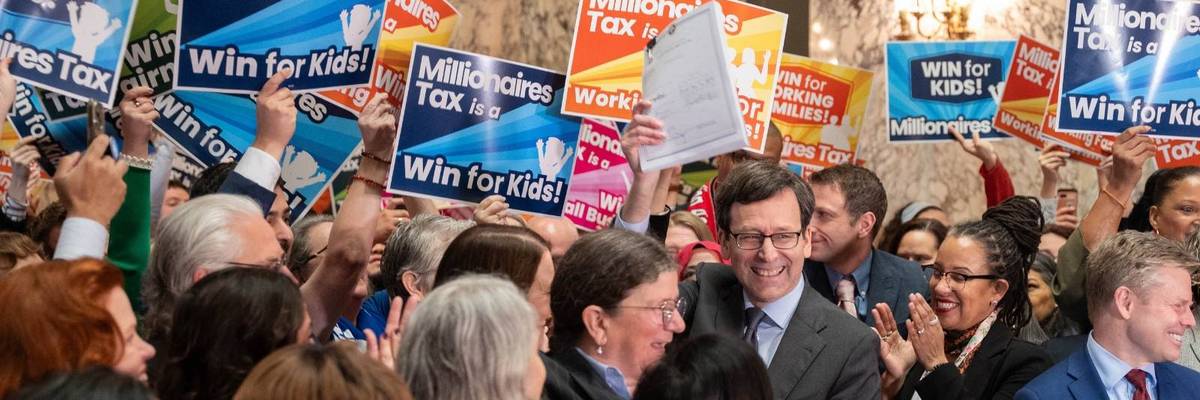
‘Inspiring’: Washington Enacts Millionaires’ Tax to Help Working Families

Democratic Washington Gov. Bob Ferguson

Democratic Washington Gov. Bob Ferguson signed state legislation that creates a tax on income over $1 million in a single year on March 30, 2026.

 (Photo: Gov. Bob Ferguson/Bluesky)

The head of the Institute on Taxation and Economic Policy praised state policymakers for “listening to the demands of the people to create a less regressive state tax system.”

Jessica Corbett

Mar 30, 2026 (CommonDreams.org)

While nearby California prepares for a November vote to tax the ultrarich, Democratic Washington Gov. Bob Ferguson on Monday signed state legislation that creates a tax on income over $1 million in a single year.

“Adoption of the historic Millionaires’ Tax makes our tax system more fair, and means free meals for K-12 students, the largest tax break in state history for small businesses, eliminating the sales tax for baby diapers, and sending a check to nearly 500,000 working families to make life more affordable,” Ferguson highlighted in a statement.

RECOMMENDED…

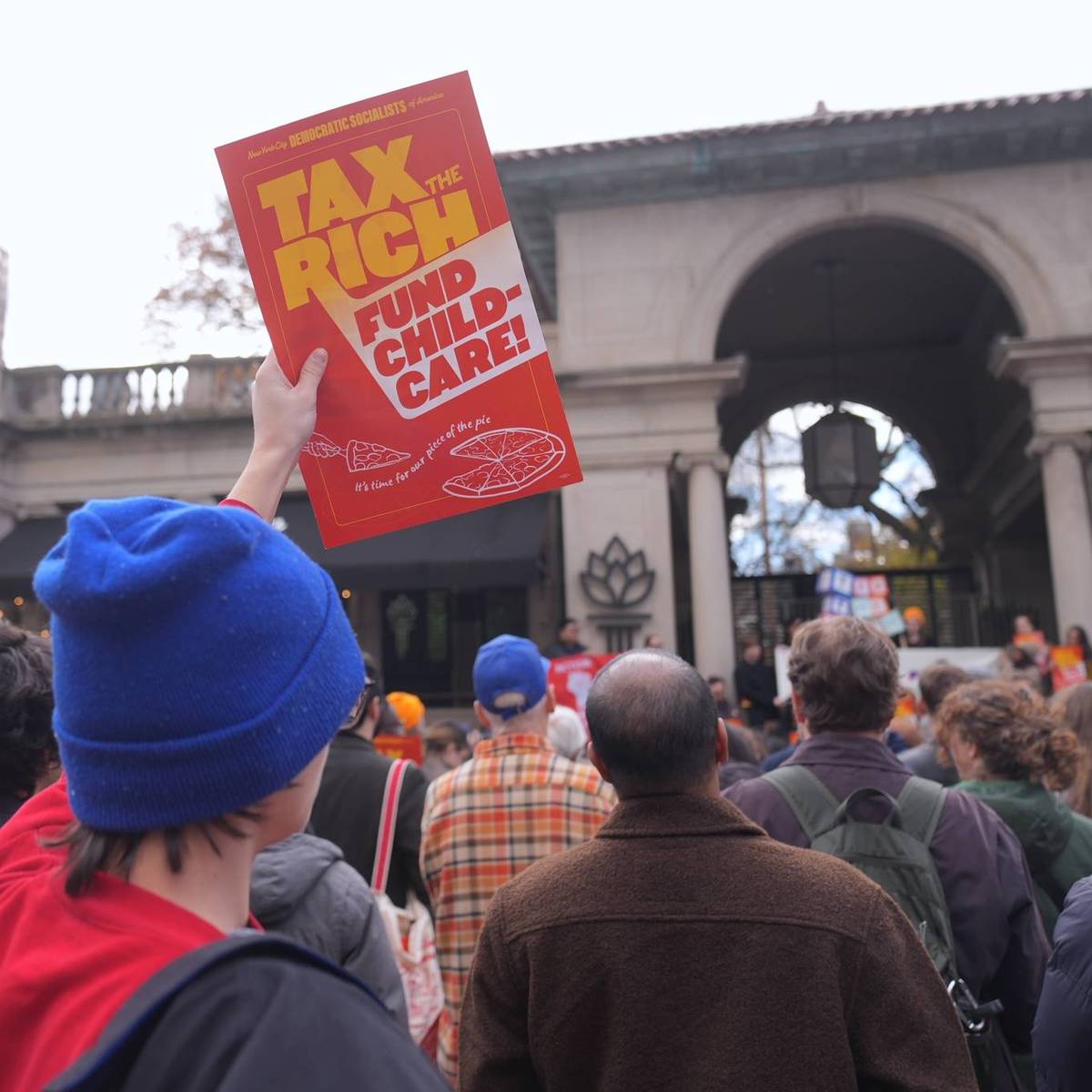
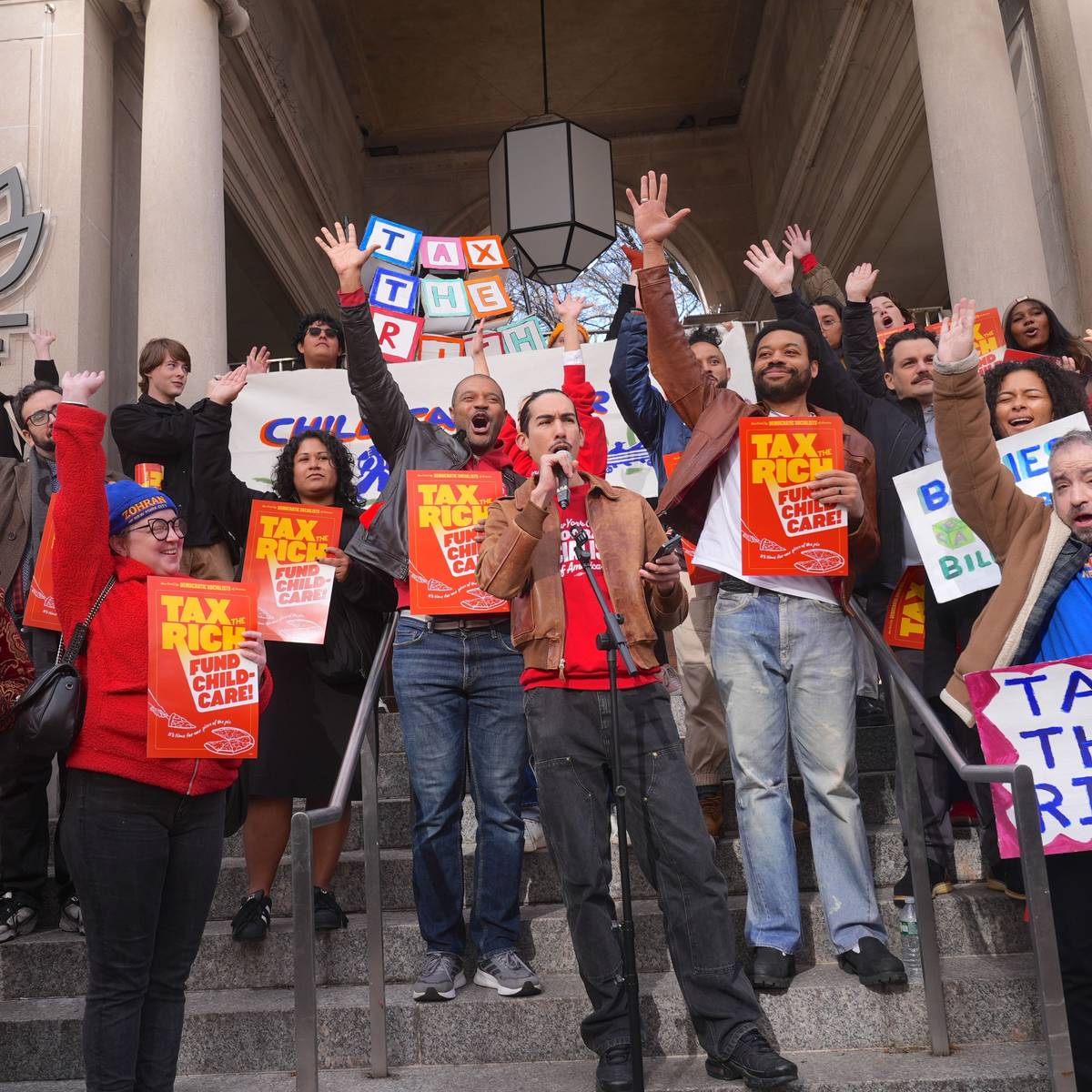
NYC-DSA holds a rally to tax the rich

‘The Current Tax Code Is Rigged,’ Plus 6.2 Trillion Other Reasons to Tax America’s Ultrarich

NYC-DSA holds a rally to tax the rich

Markey Applauded for Proposal to Make Wealthiest Americans Pay Investment Tax

Senate Bill 6346, sponsored by state Sen. Jamie Pedersen (D-43), was delivered to the governor earlier this month after passing the upper chamber 27-21. In the Washington House of Representatives, where the companion bill was led by Rep. Joe Fitzgibbon (D-34), it was approved 51-46.

“With this bill, we’re going to begin to right a historic wrong that has plagued our state for nearly 100 years, and made our tax system one of the worst and most regressive in the entire country,” said Pedersen. “We’ve asked Washington’s working families for far too long to shoulder far too much of the tax burden for the things we care about, and we have not asked enough of our wealthiest neighbors. The Millionaires’ Tax represents hope and change for people in communities like mine, and across the state.”

Bloomberg reported Monday that before adopting the law, which “applies a 9.9% levy on the roughly 30,000 taxpayers in the state who make more than $1 million a year,” Washington was one of just nine states without an income tax

Washington lawmakers previously “made progress in recent years by creating and later enhancing their capital gains excise tax,” but its “tax structure has been woefully unequal, ranking as the second-most regressive state and local tax system in the country,” according to the Institute on Taxation and Economic Policy (ITEP).

Inequality is at a historic high and billionaires are walking away with ever-larger shares of our country’s collective wealth,” ITEP executive director Amy Hanauer said in a Monday statement. “With those in charge at the federal level passing policies that only make this worse, it is incumbent upon states to come up with solutions. It is inspiring to see Washington listening to the demands of the people to create a less regressive state tax system.”

https://embed.bsky.app/embed/did:plc:fgarv67t3uimqcpfgt56n5ol/app.bsky.feed.post/3mic6lau5ic2g?id=7350594154461968&ref_url=https%253A%252F%252Fwww.commondreams.org%252Fnews%252Fwashington-state-millionaire-tax&colorMode=system

Last year, congressional Republicans and President Donald Trump used the GOP’s narrow majorities to pass a budget package, the One Big Beautiful Bill Act, that provided the rich with more tax breaks while slashing programs for working families, such as Medicaid and the Supplemental Nutrition Assistance Program (SNAP).

Ferguson signed Washington’s bill as Republicans in Congress prepare for this year’s budget package, which they aim to pass ahead of the November midterm elections, and other states and localities consider measures to tax the rich and use the revenue to better serve the working class.

As historian Lawrence Wittner detailed in an opinion piece for Common Dreams last week, “Campaigns for state tax-the-rich legislation are flourishing in California, Colorado, New York, Oregon, Rhode Island, Texas, and Virginia, and have already succeeded in getting such legislation adopted in Massachusetts and Washington.”

US Sen. Bernie Sanders (I-Vt.) headed to New York City on Sunday to boost an effort by NYC’s newly elected mayor, Zohran Mamdani, to pressure Democratic Gov. Kathy Hochul to raise taxes on the rich. He addressed a rally at Lehman College in the Bronx.

“The people of the city, the people of this state, the people of this country, they do not want to see our kids go hungry,” Sanders said. “They do not want people to sleep out on the street or lack healthcare. They want the very rich to start paying their fair share of taxes.”

At the federal level, Sanders and Rep. Ro Khanna (D-Calif.) earlier this month introduced the Make Billionaires Pay Their Fair Share Act. They were followed last week by Sen. Elizabeth Warren (D-Mass.) and Reps. Pramila Jayapal (D-Wash.) and Brendan Boyle (D-Pa.), lead sponsors of the Ultra-Millionaire Tax Act. However, neither bill is expected to get through the current Congress.

https://embed.bsky.app/embed/did:plc:372yknj7jnen7nu6umxzzpep/app.bsky.feed.post/3mic6rotp6c2k?id=696910754629937&ref_url=https%253A%252F%252Fwww.commondreams.org%252Fnews%252Fwashington-state-millionaire-tax&colorMode=system

Like in Washington, DC, efforts to tax the rich are still facing pushback in Washington state. After Ferguson’s signature, Citizen Action Defense Fund announced its intention to sue, with executive director Jackson Maynard declaring that “since lawmakers and the governor have chosen to ignore both the constitution and decades of settled case law, we will act.”

According to KUOW, during the bill signing event in Olympia that featured remarks from not only the governor but also the bill sponsors, a small business owner, and a tech executive, Ferguson acknowledged that “there’s going to be a public conversation around this in the days and weeks and months ahead, as there should be of something of this historic nature.”

“Putting front and center those perspectives you just heard, I think, will be critical,” he asserted, “because when Washingtonians hear the benefits that flow to working families, to businesses large and small, to kids in schools with those free meals, for childcare services for thousands of Washington families, it’s going to make a huge, huge difference.”

Our work is licensed under Creative Commons (CC BY-NC-ND 3.0). Feel free to republish and share widely.

Jessica Corbett

Jessica Corbett is a senior editor and staff writer for Common Dreams.

Full Bio >

What You Can Do Today

From: People Power United

Your Power in Action: What You Can Do Today

The movement for freedom over fascism, progress, and power to the people starts here.

FBI director reportedly assigned San Francisco agents to look into Eric Swalwell

By Anabel Sosa, Senior California politics reporter March 30, 2026 (SFGate.com)

Candidate for governor of California Rep. Eric Swalwel, addresses his crowd of supporters at Local Edition bar in San Francisco during the California Democratic Party 2026 State Convention on Friday, Feb. 20, 2026.Christina House/LATimes via Getty

The Trump administration is pushing the FBI to look into an old investigation on California Rep. Eric Swalwell, a sitting member of Congress and leading Democratic candidate for California governor, the Washington Post reported last week.

Swalwell, a former prosecutor and unsuccessful 2020 presidential candidate, called the FBI probe “nonsense” and suggested last week that the president’s directive is an attempt to influence the California governor’s race in which Swalwell says he is “the favorite.”

“Through great reporting, we now know the outrageous ends the White House will go to target political opponents,” he said in an emailed statement to SFGATE. “As was Trump’s mortgage case against me, this decade-old story is, of course, nonsense.” 

FBI Director Kash Patel reportedly has pushed investigators to revisit files from a decade-old investigation into Swalwell and a suspected Chinese operative, the outlet reported, citing three anonymous sources. Those sources said Patel assigned FBI agents based in the San Francisco bureau to look into those files on Swalwell and send them along to the White House. 

The files date back between the years 2011 and 2015, when the FBI looked into a relationship Swalwell had with a woman who was suspected of being a Chinese agent and had reportedly helped with reelection fundraising in 2014. At the time, federal officials flagged this relationship, and Swalwell cut ties with her and cooperated with agents.

Swalwell, who represents parts of Northern California, formerly worked as a deputy district attorney in Alameda County and was a city council member in Dublin before he was elected to Congress in 2012. He served as a House manager on the 2021 impeachment committee against Donald Trump, and also sued Trump and his close allies, alleging they incited the Jan. 6, 2021, riots.

“The reason Trump is so desperately trying to stop me is not because I’m running for Governor of California, but because now I’m the favorite,” he said in his statement. “What Trump wants the most is to have a Western White House. An enabler on the opposite coast. A lot of people have bent the knee to this administration. But I will not. And neither will the people of California.”

Also in an interview with Politico on Sunday, Swalwell reiterated that it’s a smear campaign against him by Trump and his supporters. 

“MAGA world has tried to smear me the whole way through on this,” Swalwell told the outlet. He said that his platform is to be the “fighter-protector that Governor Newsom has been” and that Trump and his supporters “see it as a threat.”

Other lawmakers have come out to blast the Trump administration for wasting FBI resources.

Rep. Jimmy Gomez, who sits on the House Intelligence Committee, said that Patel is “wasting resources on this bulls—t” and called it a “political hit-job.”

Got a tip? Send us the scoop.

DO IT NOW

Sen. Adam Schiff, a Democrat from California, similarly called it an “abuse of the FBI.”

“Time and again, the President and his appointees have weaponized the Department of Justice against those who dare stand up to Trump,” he wrote on Twitter. “There is no doubt Trump and Kash Patel will stop at nothing to try to tell Californians who their next governor should be.

Advertisement

Article continues below this ad

Since announcing his candidacy in November, Swalwell has risen in the polls as a top Democratic candidate along with former Rep. Katie Porter and billionaire climate activist Tom Steyer. Two Republican candidates, former Fox News commentator Steve Hilton and Riverside County Sheriff Chad Bianco, are leading in recent polls. Other Democratic candidates include Betty Yee, Antonio Villaraigosa, Tony Thurmond and Xavier Becerra. The primary is on June 2.

More Politics

— Newsom is touring Southern states. It’s exposing some hurdles in his path to 2028.
— Latest Calif. governor’s poll brings unexpected Democrat to top
— Leading SF tech lab in standoff with Pete Hegseth
— The biggest problem for California Democrats just revealed itself in San Francisco

March 30, 2026

Anabel Sosa

Senior California politics reporter

Anabel Sosa is the senior California politics reporter at SFGATE. She previously covered the statehouse and elections for the Los Angeles Times. She has a masters degree in investigative journalism from UC Berkeley. You can reach her at anabel.sosa@sfgate.com.

EARTH’S GREATEST ENEMY | OFFICIAL TRAILER

Empire Files Premiered Jul 12, 2023 A new film by Abby Martin exposing the world’s biggest polluter: the US military. Earth’s Greatest Enemy is a new documentary film investigating the Pentagon’s catastrophic toll on the planet–from carbon emissions, to toxic dumping, to habitat destruction and more, while highlighting the struggles against it. This will be the first ever piece of media that puts every facet of the Pentagon’s pollution together into one indictment. But funds are needed to complete post-production. All donations are tax-deductible via: Patreon [with exclusive behind-the-scenes reports and film bonus content]:   / empirefiles   PayPal: https://www.paypal.com/paypalme/empir… Credit card/check: https://earthsgreatestenemy.com/donate/

Wiener’s wealthy backers counter Chakrabarti’s big spending in SF congressional race

An attack mailer marks the first major move from a super PAC, an outside spending group that can raise unlimited donations.

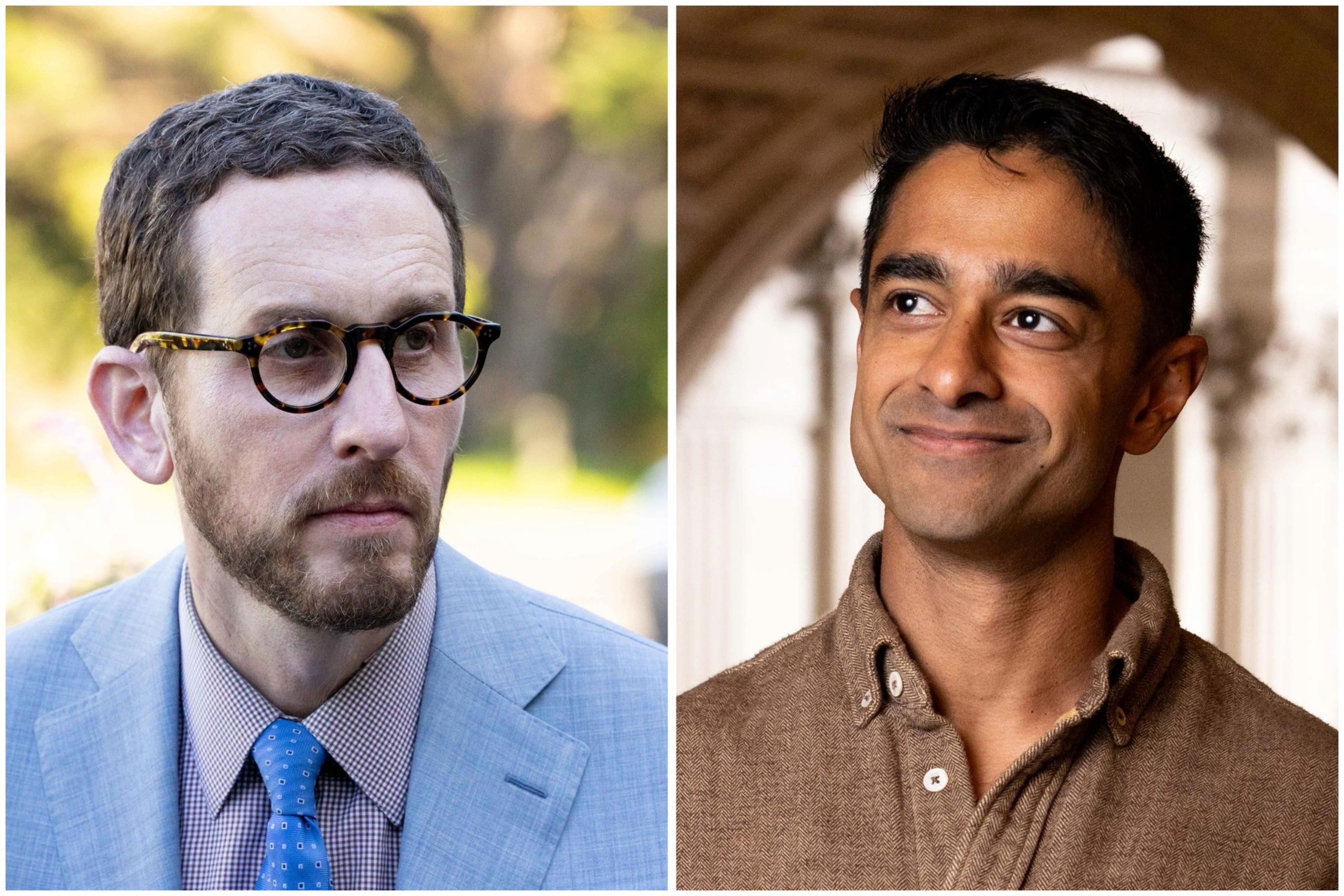
A man with glasses, a beard, and a blue suit looks seriously to the side, while a clean-shaven man in a brown shirt smiles gently against an arched background.
The feud between state Sen. Scott Wiener and Saikat Chakrabarti has picked up steam. | Source:Amanda Andrade-Rhoades/The San Francisco Standard

By Han Li Politics Reporter

Published Mar. 25, 2026 • SFStandard.com

San Francisco is no stranger to wealthy players in politics, and the race to replace one of Congress’ richest members(opens in new tab) — Speaker Emerita Nancy Pelosi — has become the latest battleground.

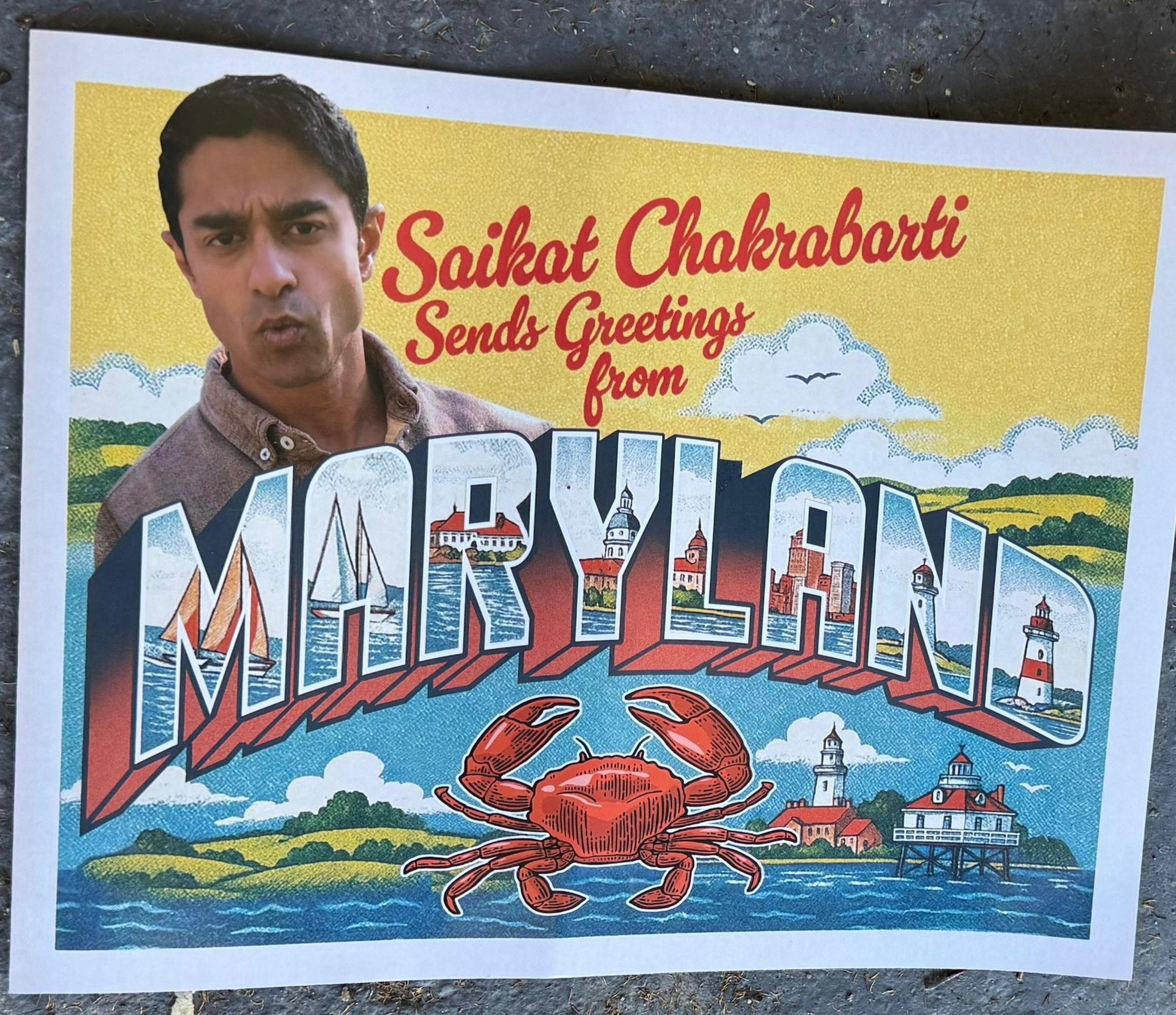
Many city voters may have received a postcard-style mailer featuring Saikat Chakrabarti, a former tech engineer and centimillionaire who is largely self-funding his campaign. The mailer includes images of crabs, scenic waterfront views, and landmarks in Maryland.

“Saikat Chakrabarti sends greetings from Maryland,” the mailer reads. “Saikat is an out-of-town millionaire trying to buy our seat in Congress.”

Saikat Chakrabarti poses with an illustrated postcard reading “Sends Greetings from MARYLAND,” featuring a red crab, lighthouses, water, and landscapes.
A super PAC-funded mailer attacks Chakrabarti. | Source:Courtesy photo

The piece marks the first major attack from a super PAC involved in the race. The spending group, Abundant Future, was formed in late 2025 and had raised about $235,000 by year’s end(opens in new tab), largely from wealthy tech leaders. The mailer, which cites reporting from The Standard revealing that Chakrabarti once misidentified a home he bought in Maryland as his primary residence, marks an escalation in the money war against the progressive candidate, who has bought a wave of TV ads that cost his campaign in the high six-figures.

Despite Chakrabarti’s tech ties as an early employee of Stripe, Abundant Future’s donors hail largely from Silicon Valley. Among them are crypto billionaire Chris Larsen, Y Combinator CEO Garry Tan, Yelp cofounder Jeremy Stoppelman, and socialite Dede Wilsey, all of whom have donated to state Sen. Scott Wiener’s congressional campaign.

Ten candidates are running to succeed Pelosi. The top two candidates in the June primary will advance to the November election.

Recent filings show Abundant Future spent about $65,000(opens in new tab) on direct mail, printing, and postage to attack Chakrabarti.

“I’m super supportive of Scott, the hardest-working legislator I know!” Larsen, the PAC’s top donor, at $100,000, told The Standard in an email. “And on Chakrabarti — never trust a multimillionaire socialist!”

Tan, who recently formed a high-profile political alliance(opens in new tab) with Wiener, contributed $25,000 to the PAC last year. Wiener announced tech-related legislation last week at the San Francisco headquarters of Y Combinator.

A message from The Standard:

Keep tabs on SF’s movers and shakers

Get the inside scoop on City Hall and local politics in our weekly Power Play newsletter.Sign up now

Sam Singer, a spokesperson for Tan, said the venture capitalist strongly supports Wiener and believes he knows how to build coalitions and get things done. “Unlike his opponents, Scott has real grassroots support, so expect even more people to rally behind him,” Singer said.

Wiener’s campaign, which by law can not involve itself in the activities of a super PAC, declined to comment. 

Chakrabarti’s campaign pushed back on the mailer, accusing Wiener of being backed by supporters of President Donald Trump, as Larsen’s company was a major donor(opens in new tab) to the president’s inauguration.

“They’re attacking Saikat because he helped his parents buy a house in Maryland. That tells you everything you need to know,” said Tiffaney Bradley, a spokesperson for the campaign.

The feud between Wiener and Chakrabarti has grown increasingly contentious in recent weeks. Earlier this month, Wiener flamed Chakrabarti on social media(opens in new tab) for misrepresenting his residence and deleting 13 years of posts. Soon after, Chakrabarti released a video(opens in new tab) criticizing Wiener for avoiding debates.

Other contenders for Pelosi’s seat are entering the fray. Marie Hurabiell, a more conservative candidate, has joined Chakrabarti in attacking Wiener, calling him a radical and suggesting that the state senator sees Chakrabarti as a threat whom he cannot defeat on policy grounds. Supervisor Connie Chan, a progressive candidate who’s been largely absent from the back-and-forth, released a video(opens in new tab) mocking the feud.

“Now I have to get back to work,” Chan says in the video. “I’ve got a budget committee to chair.”

More about the author:

  • A young man with short black hair smiles, wearing a black blazer over a dark button-up shirt, against a plain background.Han Li Politics Reporter·Contact