Senate Dem Leaders Are Trying to Sink Graham Platner. Voters Aren’t Convinced.

Despite his high-profile controversies, Platner is still popular with Mainers. But leadership isn’t budging from its centrist pick.

Eoin Higgins

March 16 2026 (TheIntercept.com)

OGUNQUIT, MAINE - OCTOBER 22: U.S. senatorial candidate from Maine Graham Platner speaks at a town hall at the Leavitt Theater on October 22, 2025 in Ogunquit, Maine. Platner, a veteran of the U.S. Marines and an oyster farmer, is running for the seat held by Sen. Susan Collins (R-ME). (Photo by Sophie Park/Getty Images)
Maine senatorial candidate Graham Platner speaks at a town hall at the Leavitt Theater on Oct. 22, 2025, in Ogunquit, Maine. Photo: Sophie Park/Getty Images

Eoin Higgins is the author of “Owned: How Tech Billionaires on the Right Bought the Loudest Voice on the Left.”

Maine oysterman-turned-politician Graham Platner has been drawing consistently packed crowds across the rural state for months as he aims to take on longtime incumbent Republican Susan Collins in this year’s Senate race. He’s regularly outpolling his only other viable competitor for the Democratic nomination, Gov. Janet Mills. At 41, he could hold a seat for decades that Democrats have long had their eyes on. 

Since Mills joined the race last fall (Platner announced he was running that August), her support has stagnated and even slipped in some polls as Platner’s numbers continue to rise. Collins and Mills are in a statistical dead heat, with Collins having the edge, while Platner has a few points difference ahead of the incumbent. 

For Maine voters concerned with electability, those polls lend credibility to Platner’s campaign. He’s in position to take on an entrenched Republican whose feigned objections to Donald Trump’s excesses — usually expressed as “concern” — have long driven liberal Mainers insane. So why is he still facing resistance from Senate Democratic leadership?

Platner’s town hall tour of Maine is further raising his profile, even after a number of controversies, most notably a Nazi tattoo, threatened his campaign. The more voters get to know him, the more they like him; he’s gone from underdog to favorite in the race. And despite establishment antipathy, he’s finding some friends in other corners of the party. 

Most Read

Democratic candidates for Congress, State Sen. Laura Fine, center, speaks as Evanston Mayor Daniel Biss, left, and Kat Abughazaleh listen to her during U.S. House 9th District primary debate, in Chicago, Wednesday, Feb. 25, 2026. (AP Photo/Nam Y. Huh)

Illinois Results: Daniel Biss Beats Kat Abughazaleh in Blow to Left and AIPAC Alike

Matt Sledge, Jessica Washington, Akela Lacy

President Donald Trump arrives on Air Force One, Wednesday, March 18, 2026, at Dover Air Force Base, Del., to attend the casualty return for the six crew members of an Air Force refueling aircraft who died when their plane crashed in western Iraq while supporting operations against Iran.

U.S. Warmongering Hits Historic Level as Trump Attacks 3 Continents in 3 Days

Nick Turse

NEW YORK - DECEMBER 13: Three months after her husband was assassinated, Erika Kirk will open up about life, loss, the state of political discourse, and much more in A TOWN HALL WITH ERIKA KIRK, a one-hour town hall event moderated by Bari Weiss, CBS News' editor-in-chief. The special will be broadcast on Saturday, Dec. 13, at 8:00 PM ET/PT on the CBS Television Network and will stream later on Paramount+ and CBS News 24/7. (Photo by Michele Crowe/CBS News via Getty Images)

Air Force Academy Prepares Ideological Overhaul, With Erika Kirk Bringing “Bold Christian Faith”

Austin Campbell

Three Democratic senators — Vermont’s Bernie Sanders, Arizona’s Ruben Gallego, and New Mexico’s Martin Heinrich — have endorsed Platner. Rep. Ro Khanna, D-Calif., is backing him, as are individual members of the progressive wing, like Robert Reich and David Hogg, and groups like Our Revolution and the Maine People’s Alliance. Platner also has the ear of the Pod Save America crew, a group of influential Democrats aligned with the Obama wing of the party. 

Related

Dem in Maine House Primary Funneled PAC Money to Republicans

But the Democratic establishment is trying to draw a line in the sand on the future of the party. Senate Minority Leader Chuck Schumer and Democratic Senatorial Campaign Committee Chair Kirsten Gillibrand, both Democrats from New York, are actively working to elect Mills. There is speculation that the governor, who has pledged to only serve one term in Washington, is Senate leadership’s preferred candidate because she would be a more pliable member of the delegation, while Platner is seen as more independent and willing to take populist, further left stands.

The race bears similarities to the 2016 Democratic primary for president, when Sanders went up against Hillary Clinton and offered a progressive alternative. As in this contest, the machine politician was pitched by the party’s establishment as the more deserving candidate, while the populist candidate to her left ran an insurgent campaign. 

OGUNQUIT, MAINE - OCTOBER 22: Leslie Harlow, the mother of U.S. senatorial candidate from Maine Graham Platner, applauds her son during a town hall at the Leavitt Theater on October 22, 2025 in Ogunquit, Maine. Platner, a veteran of the U.S. Marines and an oyster farmer, is running for the seat held by Sen. Susan Collins (R-ME). (Photo by Sophie Park/Getty Images)
Leslie Harlow, Graham Platner’s mother, applauds her son during a town hall at the Leavitt Theater on Oct. 22, 2025, in Ogunquit, Maine. Photo: Sophie Park/Getty Images

It’s another chapter in the intraparty civil war that has been simmering and often boiling over for decades. The Clinton wing, the Obama wing, the Sanders wing, and every other part of the sprawling political coalition that is the Democratic Party are all still vying for dominance. In 2008, the main dividing line was Iraq; in 2016, the failure of the Obama presidency; in 2020, Trump and Covid. 

In 2026, the party is still reeling from defeat at the ballot box just two years ago, one that was driven by a perception that the party was out of touch with voters on economic issues as well as, reportedly, its complicity in Israel’s genocide in Gaza. The latter issue has become a flashpoint for conflict between the base and the establishment, especially with Schumer — who has described one of his roles in leadership as ensuring Israel gets “all the aid” it needs from the U.S.

For centrist Democrats, Mills is their pick for Maine. Seniority means a lot to a certain kind of centrist Democrat. According to Platner, he was told in no uncertain terms that he was expected to stand down — “I was skipping the line,” he told Slate earlier this month — when he notified Democratic Senate leadership that he was considering running for the seat; the response he received came with a threat to turn his life inside out.

“They essentially said, if we do this, they’re going to come after me,” Platner said. “They’re going to rip my life apart.”

It’s not hard to see what’s off-putting about Platner to the moderate wing of the party. He’s running an anti-war, economically populist campaign with rhetoric aimed at the elites who fund the DSCC and the party’s corporatist wing. He’s come out forcefully for trans rights at a time when Democratic centrist think tanks, friendly to the party’s donor class, are all but arguing the party should throw marginalized groups under the bus. He’s also been forthright in calling Israel’s genocide in Gaza what it is

Unfortunately for the party establishment, the issues Platner is running on are popular with voters — especially the Democratic base. The party has been shifting left since Trump’s first term and Platner, like Sanders and members of the Squad, among others, is taking advantage of those rising tides of progressivism. 

Related

The Left Put Its Faith in Graham Platner. Will He Break Its Heart?

This isn’t to say that Platner doesn’t have his own significant challenges. His posts on Reddit, which span a decade, included some language seen as misogynistic, prejudicial, and insulting to Mainers, though clearly antifascist in general and anti-Nazi in particular. Most notably, a scandal last fall became a national news story over his tattoo of a Totenkopf — a skull-and-bones symbol commonly associated with the Nazis — which led him to publicly apologize and have it inked over. Platner has claimed he got the tattoo in a drunken haze while on leave in 2007 when he was a Marine and that he didn’t know its ties to the Nazis until last October.

The tattoo has dogged him ever since, with media outlets bringing it up whenever Platner makes the news, and the controversy hasn’t stopped there. Recently, Platner was criticized for appearing on a right-wing podcast hosted by a fellow veteran, Nate Cornacchia, who has endorsed conspiracy theories like far-right streamer Nick Shirley’s attacks on Somalis in Minnesota and tying Israel to the murder of Charlie Kirk. 

But the governor has her own baggage. Mills is already 78, and if elected, she would be 85 at the end of her six years in office. It’s a hard sell to Democrats in Maine, who, like their counterparts around the country, are still smarting from the humiliation of watching a visibly declining Joe Biden spend his presidency hidden from the public and the media and, when he did appear, fumbling answers onstage or staring off into space. 

We’re independent of corporate interests — and powered by members. Join us.

Become a member

Plus, after more than 30 years in Maine politics, which also includes serving in the statehouse and as attorney general, Mills is compromised in this race in specific ways that Platner is not. As governor, Mills has had to work with Collins to get things done for the state. There’s nothing unique about that, but it has provided soundbites of Mills praising Collins — one of which, “I appreciate all that she is doing,” the incumbent already used in an ad last fall. 

Maine voters will make the final decision on who the Democratic nominee will be. Right now, that looks like Platner — so much so that local labor leaders are urging Schumer to withdraw his support for Mills. 

If he wins the primary, Democrats in leadership will have a simple decision to make: Do they want to flip the Senate with a left-leaning veteran whose message resonates, even if it’s not how they wanted to do it? Or do they want to ride out another six years of even more razor-thin margins in either direction in the chamber and bet on 2032? Let’s hope they don’t think another six years of Susan Collins is better than winning with a candidate that outran their candidate from the left.

Donate

Contact the author:

Eoin Higginseoinhiggins@gmail.com@EoinHiggins_on X

Race for Congress takes shape—even as Wiener ducks community groups he doesn’t like

Chakrabarti runs on the national left while supporting the local right; how will D2 and D4 supes races impact turnout?

By Tim Redmond

March 18, 2026 (48hills.org)

State Sen. Scott Wiener didn’t show up to the Haight Ashbury Neighborhood Council Congressional candidate forum, which is not a surprise: Wiener doesn’t like audiences or panels that challenge him, and in this campaign has refused to engage with groups that might not support him.

That doesn’t seem like a good sign for someone who wants to represent almost of San Francisco in Congress for the next few decades.

But the HANC forum, and the events of the past few weeks, have framed the non-Wiener candidates and where they stand not just on national but on local issues.

Will turnout in the D4 race help Sup. Connie Chan? Who will vote on the East Side, and how much will they be influences by local issues?

Saikat Chakrabarti, who promotes himself as an ally of Rep. Alexandria Ocasio-Cortez and Sen. Bernie Sanders, told HANC that he supported Daniel Lurie for mayor because he was “outside the political establishment.” Lurie was also, of course, a billionaire insider. Chakrabarti said he supported Bilal Mahmood for D5 supe because they had worked together on state climate legislation and he “preferred” Mahmood’s stance on housing.

Sup. Connie Chan said she supported Dean Preston for supe and Aaron Peskin for mayor.

Chakrabarti was supportive of Lurie’s (Rich) family Zoning Plan; Chan voted against it.

Chakrabarti has insisted that Mahmood is a progressive, and he “preferred” Mahmood’s policies on housing. The truth is that Preston initiated and supported far more housing, including affordable housing, than Mahmood has done.

Check out the numbers:

X post: https://x.com/KimChiSpicey/status/2033324977051828409?ref_src=twsrc%5Etfw%7Ctwcamp%5Etweetembed%7Ctwterm%5E2033324977051828409%7Ctwgr%5Ed9f787a966217301cd751ea266e34592a40edc2c%7Ctwcon%5Es1_c10&ref_url=https%3A%2F%2F48hills.org%2F2026%2F03%2Frace-for-congress-takes-shape-even-as-wiener-ducks-community-groups-he-doesnt-like%2F

The lack of new housing starts has nothing to do with “red tape” and environmental review and everything to do with interest rates, costs, and the needs of speculative capital for high returns. Dean Preston backed the most important measures to tax the rich for affordable housing in decades; Mahmood wants to cut those taxes.

In fact, Mahmood is now working with the most conservative Democrat in the governor’s race, the anti-tax mayor of San Jose. Matt Mahan has endorsed Wiener.

So in a weird way, the candidate whose entire campaign is based on his association with the left wing of the national Democratic Party has allied himself with the right wing of the local Democratic Party. (At this point, neither Sanders nor AOC has endorsed in the San Francisco race. Neither has Speaker Emerita Nancy Pelosi).

Wiener and Chakrabarti are trading attack ads. Chakrabarti says (correctly) that Wiener’s campaign is paid for by big corporate money. Wiener says (correctly) that Chakrabarti’s self-funded campaign is made possible because of the wealth he accrued in the world of big corporate tech.

I’m not sure either attack is going to make much difference. Everybody who is at all clued into local politics and this race knows that Wiener has always been popular with Big Real Estate and Big Tech. Everybody knows, because Chakrabarti talks about it, that he got rich from his role as an early engineer at a fintech company, Stripe.

Neither is attacking Sup. Connie Chan, which may mean Chakrabarti thinks (correctly) that Wiener is ahead in the polls and will be one of the top two who go on to the November election, and Wiener thinks Chakrabarti has so much money he can buy his way into second place.

But there’s another important factor here: This is a mid-term primary, with no national or state races on the ballot. The main local races are for supes seats in D4 and D2.

Chan, a Chinese immigrant, is, of course, the only candidate who speaks Cantonese, and is popular in the heavily Chinese D4; if that race (which is all about closing the Great Highway) drives turnout, she will benefit. D2 is probably Wiener territory and likely a place where Chakrabarti and Chan will not do well.

Turnout on the more progressive East Side is going to be critical. If Chakrabarti convinces the progressives that he’s the next AOC, he’ll get a lot of votes. If those voters wonder about his support for the right-wing corporate slate that took over the local Democratic Party and his support for Mahmood over Dean Preston and his support for Lurie over Aaron Peskin, the picture gets a little different.

This primary is not going to be just about who gets what support; it’s also going to be about who votes, and how closely they pay attention to local, as well as national, politics.

Full disclosure: My daughter works for the Connie Chan for Congress campaign.

48 Hills welcomes comments in the form of letters to the editor, which you can submit here. We also invite you to join the conversation on our FacebookTwitter, and Instagram

Tim Redmond

Tim Redmond has been a political and investigative reporter in San Francisco for more than 30 years. He spent much of that time as executive editor of the Bay Guardian. He is the founder of 48hills.

Tell Congress: No more money for Trump’s war!

  1. Email your Members of Congress now and tell them to not give Trump more funds to prolong this illegal warDemand they conduct oversight, continue to force votes on War Powers Resolutions, oppose the war publicly, and absolutely refuse to give it another penny.
  2. Follow up with a phone call. Regardless of party, we have to let every Member of Congress know that their constituents don’t want to pay for Trump’s wholly unnecessary carnage, don’t want to send more Americans to die or be injured, and will remember how they voteCall your senators and then call your representative.
  3. Attend a No Kings protest on March 28 No Kings means no lawless imperial wars. If you oppose this war, show up and make your voice heard next weekend. Then ask three friends to join this.
  4. Help make this a world-historic day of protest by sharing our No Kings, No War video, far and wide on your social platforms, among loved ones, with folks you know from the movement. Here are links to the video on BlueskyInstagramFacebookThreads, and Substack.

From the war’s first day, Trump has made it clear he has no objective, no plan, no clue: It’ll take a few days, might last four weeks, has already been won (mostly), could be fought forever; requires the assistance of our not-at-all interested allies, doesn’t require a stinking coalition, but maybe it does, no wait, nope, not at all. 

And, in a rare moment of possible lucidity, the flailing wannabe-king even mused that “maybe we shouldn’t even be there.”

No member of Congress should give this flailing wannabe-king a single penny to continue a war that even he doesn’t seem to be sure we should be waging. 

Tell your members of Congress: End this war. 

Then show up on March 28 to make sure they get the message: No Wars. No Kings. 

In solidarity, 
Indivisible Team

P.S. On Tuesday, March 24, Indivisible will host our monthly Fight Back With Friends call, a one-hour training session that will give you the tools and guidance to connect with friends, family, and neighbors to call them into this movement and empower them to make their voices heard. Next week we’ll be laser-focused on demanding an end to Trump’s bloody war of choice. Join us if you can!

Power Belongs to the People: Peace, War, and Public Accountability

UC Berkeley should be proud of being blacklisted by Russia

  • Victoria Riabchenko | Special to the Daily Cal
  • Mar 17, 2026 (DailyCal.org)
ukraine_Kyle Garcia Takata_ss
 Kyle Garcia Takata | Senior Staff

Over the past four years, it has become impossible to speak about Russian foreign policy without confronting Russia’s brutal war in Ukraine. By utilizing drones and artillery capabilities, Russia continues to ravage Ukraine and its citizens. Thus, UC Berkeley should see the recent decision by the Russian government to blacklist UC Berkeley as a badge of honor.

The decision to blacklist UC Berkeley didn’t come out of nowhere. A complete consideration of this issue necessitates a broader conversation about what being a threat to Russia’s order, security or defense capabilities really means.

When The Daily Californian reported on the blacklist, it became apparent that there are members of the UC Berkeley community who still cling to an illusion of normalcy at a time when Russia is pounding Ukrainian cities with missile and drone barrages while occupying the home of more than three million people. The Daily Cal’s article also lacked nuance that reveals the Russian regime isn’t threatening anything new, and that Russian international students at UC Berkeley are at the back of a long line of people whose freedoms have been encumbered by the war.

In 2014, my parents and I fled Donetsk, in Eastern Ukraine, as Russian tanks rolled in. My elderly grandparents stayed, hoping that the occupation was temporary. In September 2022, Russia unilaterally annexed Donetsk. My grandparents were coerced into giving up their domestic Ukrainian passports and accepting Russian passports in exchange. Then they were told that they must now identify as Russian citizens.

A front line separates my grandparents from Ukraine. Vladimir Putin’s malicious neglect of his own alleged citizens separates them from Russia. Their Donetsk-issued debit cards, phone numbers and passports are no longer accepted; they are trapped without running water or medical care and left with only the knowledge that Russia has left them to die.

Denying freedom of movement is not a new play for the Russian regime, nor does the Russian government need a legal ruling to arbitrarily fine and imprison its people. Finding the blacklisting of UC Berkeley “heartbreaking” or “disorienting,” as a graduate student did, implies that it is an unexpected escalation. It is not an escalation but rather the continuation of a long thread of human rights violations.

In a similar vein, the Daily Cal reported that one undergraduate worries that if he travels to Russia to visit family, he might not be able to defer his “compulsory military service” to complete his degree. However, what the paper failed to acknowledge is that said military is committing war crimes.

Further, Ukrainians in the occupied territory are subject to Russian compulsory military service. My uncle was conscripted. He was kidnapped from his workplace on the first day of the full-scale invasion, leaving him seriously wounded and his right hand without its full function. Six months later, on the Ukrainian side of the front line, his mother was killed in her home by a Russian strike.

My uncle didn’t have the option of postponing his mandatory military service. Being detained and drafted isn’t a fear for him — it’s his reality. And, most importantly, he didn’t have the luxury of ignoring the fact that the Russian military has been terrorizing Ukrainian people daily for the past four years.

There are millions of people who are unable to visit their families in occupied Ukraine. There are people whose property is being forcibly taken because they refused to give up their Ukrainian passports. The threats against Russian international students at UC Berkeley are a small taste of what Russia has been making against Ukrainian people for years.

And it is unsurprising that the Russian government would target figures associated with higher education. The Ukrainian biologist Leonid Pshenichnov was arrested in September 2025 and charged with high treason for protesting Antarctic krill fishing — an industry the Russian government values very deeply. At the time of his arrest, he was 70 years old, lived in occupied Crimea and held a Russian passport but was arrested for the threat that he posed to the objectives of the Russian government.

The past four years have made it clear that the Russian government does not balk at hurting people — children, the elderly and civilians in general. In this context, I see the blacklisting of UC Berkeley as something to take pride in. I am proud that Russia’s regime sees our institution as a problem — and, in a sense, we really are.

We hold values at odds with those of Russian authoritarianism. We are famous for a culture of individual expression, in contrast to the Russian regime’s values of conformity and obedience. Along with many other American universities, we produce scientists, engineers, politicians and entrepreneurs whose work contributes to U.S. policies and programs aimed squarely at Russia. Our coupling with private industry drives a technoindustrial economy that steamrolls Russia by any respectable metric. Our institution is the paragon of everything Russia fears of the West: technical edge and social freedom.

The blacklisting of UC Berkeley by the Russian regime is a good thing — it is proof that we are on the right side of history.

Victoria Riabchenko is a junior studying chemical biology. Contact the Opinion Desk at opinion@dailycal.org, or follow us on X.

AIPAC Flops in Illinois, But Record Election Spending Called a ‘Full-Spectrum Disaster for Democracy’

US citizens in Illinois head to the polls for State's primary election

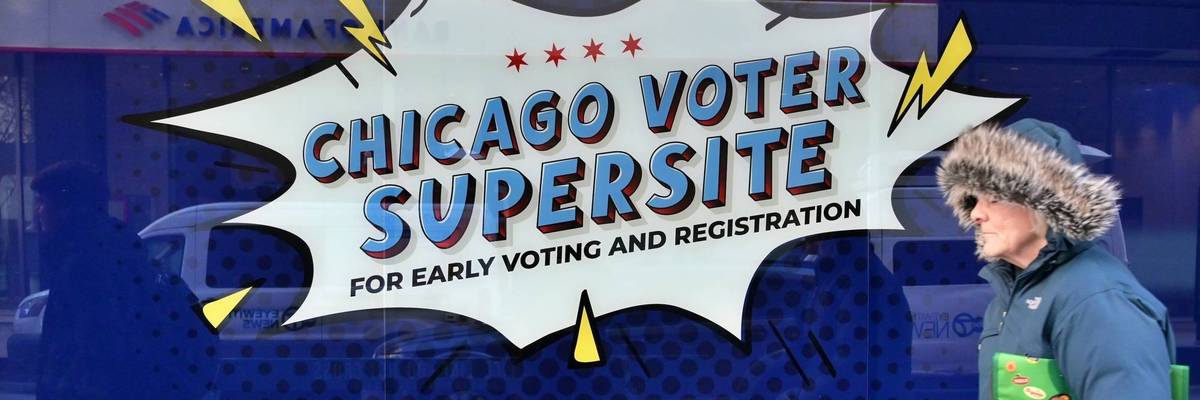
Voters arrive to cast their ballots inside the new Chicago Board of Elections on March 17, 2026.

 (Photo by Jacek Boczarski/Anadolu via Getty Images)

“It’s time to kick AIPAC and other billionaire-funded super PACs out of Democratic primaries.”

Jake Johnson

Mar 18, 2026 (CommonDreams.org)

The American Israel Public Affairs Committee failed on Tuesday to secure wins in the two Illinois US House primaries it invested the most money in, the latest electoral flop for the pro-Israel lobbying organization whose brand has become increasingly noxious to Democratic voters amid Israel’s genocidal assault on Gaza.

In Illinois’ 7th and 9th Congressional Districts, AIPAC spent millions backing Chicago treasurer Melissa Conyears-Ervin, who finished second, and Democratic State Sen. Laura Fine, who finished third. In the latter race, AIPAC pivoted from initially attacking Evanston Mayor Daniel Biss—who ultimately won—to concentrate on defeating Justice Democrats-backed Kat Abughazaleh.

RECOMMENDED…

'AIPAC Getting Desperate’: Pro-Israel Super PAC Tries to Splinter Left Vote in Illinois House Primary

‘AIPAC Getting Desperate’: Pro-Israel Super PAC Tries to Splinter Left Vote in Illinois House Primary

US-IRAN-ISRAEL-WAR-DEMONSTRATION

‘People Are Loving What’s Happening,’ Trump Claims While Massacring Iranian Children as US Oil Prices and Unemployment Spike

AIPAC, which faced backlash for trying to conceal its spending in the Illinois contests using shell organizations, tried to spin the 9th Congressional District results as a win, despite spending more against Biss than against Abughazaleh.

“Though Kat narrowly lost this race, we are proud to have backed this campaign that helped ensure the people of IL-09 would not be represented by another AIPAC shill,” Alexandra Rojas, executive director of Justice Democrats, said in a statement. “This outcome is a massive loss for AIPAC as they lose more and more influence within the Democratic Party. No amount of shell PACs or covert funding can hide their toxicity from Democratic voters, their monopoly over this party’s agenda is coming to an end.”

Two AIPAC-backed candidates did prevail Tuesday: Cook County Commissioner Donna Miller in the 2nd Congressional District and former Rep. Melissa Bean in the 8th Congressional District.

AIPAC’s mixed results came amid broad alarm over outside spending that flooded Tuesday’s midterm primary elections in Illinois, driven by pro-Israel, crypto, and AI special interest groups. Overall, more than $92 million was spent on campaign ads in Tuesday’s contests in Illinois, a state record.

“I think we can safely say that almost $100 million spent in a handful of primaries is a full-spectrum disaster for democracy,” wrote David Dayen, executive editor of The American Prospect, which called the torrent of spending “a corruption of democracy that is relatively unprecedented in modern elections.”

The National Journal reported Tuesday that when the national midterm cycle is over, “the price tag for the Illinois primary will be an important footnote in what’s projected to be the most expensive midterm election ever.”

“The nonpartisan research firm AdImpact estimates that more than $10.8 billion will be spent on ads alone this cycle,” the Journal observed. “Even as the competitive map gets smaller, the price tag keeps increasing as more outside deep-pocketed groups invest more in primaries.”

Super PACs, entities that can spend unlimited sums boosting their preferred candidates, pumped roughly $31 million into Tuesday’s US House primaries in Illinois. AIPAC-linked organizations accounted for around $22 million of the total.

“It’s time to kick AIPAC and other billionaire-funded super PACs out of Democratic primaries,” US Sen. Bernie Sanders (I-Vt.) wrote ahead of Tuesday’s races.

Our work is licensed under Creative Commons (CC BY-NC-ND 3.0). Feel free to republish and share widely.

Jake Johnson

Jake Johnson is a senior editor and staff writer for Common Dreams.

Full Bio >

Brendan Carr’s ‘equal time’ curveball crashes the midterms

The FCC chair’s warnings against partisan bias on broadcast TV talk shows could mean far fewer candidates on the air this year — especially Democrats.

Photo illustration of Brendan Carr holding a TV set displaying an off air test pattern

“Let’s just apply the law in an even-handed, neutral way,” FCC Chair Brendan Carr told POLITICO in late February. “That’s exactly what I’m doing.” | Illustration by Claudine Hellmuth/POLITICO (source images via Getty and iStock)

By John Hendel 03/17/2026 (Politico.com)

The midterm elections that could upend the final years of Donald Trump’s presidency face a new complication — his Federal Communications Commission chair.

Brendan Carr’s attempt to resurrect enforcement of the FCC’s nearly century-old “equal time” rule has already set off a chain reaction that kept Stephen Colbert’s interview with Texas Democrat James Talarico off the air in February. But the rule’s impact on elections could be even more sweeping, media law experts and campaign veterans of both parties told POLITICO, after Carr warned of potential penalties for television stations that fail to be even-handed in offering airtime to political candidates.

One result, some fear, could be the virtual banishing of candidate interviews from broadcast TV talk shows.

Democrats said they expect their candidates to take the immediate brunt if the FCC’s pressure causes TV programs to avoid interviews that could cause trouble. Some Republicans, meanwhile, worry that a future Democratic-led FCC will turn the same rules against one of the GOP’s longtime media bastions: conservative talk radio.

For Democrats, concerns about Carr’s tactics are heightened by his openly combative pro-Trump persona, history of launching investigations of liberal-leaning programs and repeated threats to pull the licenses of outlets he accuses of “distorting” the news — a threat he revived over the weekend while reposting Trump’s complaints about news coverage of the war in Iran. Carr’s efforts have gotten praise from Trump, who wrote Sunday night that he was “thrilled” to see his FCC chair “looking at the licenses of some of these Corrupt and Highly Unpatriotic ‘News’ Organizations.”

While Carr’s remarks on war coverage were driving headlines last weekend, his efforts to reimpose enforcement of the commission’s equal time rules threaten to have a more tangible effect on the interviews that millions of viewers see during the midterm campaign.

The issue reflects one of the paradoxes of the modern media environment, as broadcasters continue to fall under federal regulations from the early radio era while cable networks, podcasters, streamers and social media influencers enjoy free rein. For Democrats whose candidates failed to match Trump in engaging with digital media in 2024, network shows like those hosted by Colbert and Jimmy Kimmel are one of few friendly havens where they can take their message to a mass audience ahead of midterms that will decide control of Congress.

Carr has pledged fairness in how he enforces the rules — despite saying in January that his warnings about the equal-time rule were not aimed at talk radio.

“Let’s just apply the law in an even-handed, neutral way,” Carr told POLITICO in late February. “That’s exactly what I’m doing.”

Democrats don’t buy it.

“What you’re going to see is a chilling effect that I guarantee will not be applied across the board to candidates of both parties,” said Ian Russell, a veteran campaign operative at Beacon Media who formerly served as deputy executive director and national political director at the Democratic Congressional Campaign Committee.

Veteran communications attorney Andrew Jay Schwartzman said the equal time rule shouldn’t normally pose any serious burden for broadcasters, but that Carr’s approach to his job has so politicized the regulatory landscape that it’s likely to chill stations from carrying candidate interviews.

“I think that we’re going to see many fewer appearances,” Schwartzman said.

In this June 3, 1992 file photo, Bill Clinton, plays the saxophone.
Then-Democratic presidential candidate Bill Clinton’s appearance on “The Arsenio Hall Show” was a striking merger of politics and pop culture. But would it have run afoul of the modern FCC’s enforcement of “equal time” rules? | Reed Saxon/AP

‘More speech’?

At issue is a 1934 law requiring broadcast stations that put a political candidate on the air to offer comparable time to the candidate’s rivals. While broadcasters must provide this time if a candidate wants it, it does not necessarily have to be on the same program or format.

For decades, the FCC’s enforcement has left plenty of room for daytime and late-night TV to feature political candidates in marquee moments, such as Bill Clinton playing the saxophone on “The Arsenio Hall Show” in 1992, George W. Bush reading a David Letterman Top Ten list in 2000, and Trump joking with Jimmy Fallon (and Colbert) during the 2016 campaign. Twenty years ago, the commission declared that Jay Leno’s chats with guests on “The Tonight Show” qualified as “bona fide news interviews,” exempting them from the equal time requirements.

But after entering the White House in 2017, Trump complained that late-night TV catered to Democrats and that more Republicans should get equal time. And this January, Carr warned late-night and daytime TV talk shows that they don’t necessarily qualify as “bona fide news” — especially if their programming decisions are “motivated by partisan purposes.”

Specific programs and TV stations that think they merit the news exemption should petition the FCC for a ruling to that effect, Carr said. Otherwise, stations carrying these interviews will have to file public notices with the commission disclosing the candidates’ airtime.

Carr disputes that he is trying to quash political speech.

“The whole idea here is more speech, not less,” Carr told POLITICO at a Feb. 18 press conference. “You can have more candidates on. There is zero censorship.”

But critics such as Sen. Brian Schatz (D-Hawaii) say Carr is applying the law in a way that hurts Democratic candidates attempting to gain visibility.

 Most Read

President Donald Trump plays golf.
  1. ‘What is he doing?’: New threats emerge for Trump’s economy as war drags on
  2. FBI is buying data that can be used to track people, Patel says
  3. Estonia ‘ready to talk’ on Strait of Hormuz backup
  4. ‘They hold the cards now’: Trump allies fear Iran is slipping beyond the president’s control
  5. Democrats say Bondi won’t commit to testifying in House Epstein investigation

“I think that he’s a partisan, and a partisan is not supposed to interpret the federal law in a way that benefits his allies and punishes his enemies,” Schatz told POLITICO.

Colbert’s Talarico interview fell victim to the rule on Feb. 16, when the “Late Show” host told his viewers that CBS’ lawyers had forced him to sideline a planned conversation with the Texas Democratic Senate candidate. (Instead, the interview appeared on the show’s YouTube channel). The flap came a little more than two weeks before Talarico defeated Rep. Jasmine Crockett in the Democratic primary.

Carr disputed the idea that he was to blame for blocking the interview, telling reporters that Colbert could have aired it as long as the network gave comparable time to Talarico’s opponents. CBS made the same argument in its response to the furor. (Colbert replied that he had already had Crockett on his show twice.)

The FCC had separately opened an investigation into whether the ABC daytime talk show “The View” violated the equal time rule when it aired its own interview with Talarico, Fox News reported in early February. That probe is ongoing, Car has said.

Consequences for violating the rule would likely be minimal under the law, which would penalize only broadcasters showing patterns of willful violation, Schwartzman said. “Everybody knows this is all bluster,” he said.

Carr, though, has phrased some of his warnings as cautions to TV stations whose broadcasting licenses come up for renewal: “The law is clear,” he wrote in his complaint last weekend about allegedly skewed news coverage. “Broadcasters must operate in the public interest, and they will lose their licenses if they do not.”

President-elect Donald Trump talks with Brendan Carr.
Then-President-elect Donald Trump speaks with Brendan Carr before a test launch of a SpaceX rocket in November 2024 in Boca Chica, Texas. | Brandon Bell/Pool via AP

It’s ultimately impossible to know how many interviews may never happen as a result of the guidance, or how many more TV hosts will just host candidates on platforms like YouTube to avoid triggering the equal time requirement.

Daniel Suhr, a conservative lawyer and Carr supporter heading the Center for American Rights, said the FCC guidance could reshape the media landscape by boosting Republicans and preventing TV hosts from advancing their own personal political agendas. He said he hopes it leads to more voices on air but acknowledged a possibility that the hosts “decide to quit playing the game and take the ball home.”

Either way, Suhr said he believes Carr is on the right track.

“We have a window, I think, to make real, permanent, structural change in the media landscape,” he told POLITICO.

Broadcasters appear to be wrestling over how to comply.

During a recent Breitbart event, Carr told attendees that Disney is defending “The View” as a bona fide news program to agency officials. But at the same time, he said, some local TV stations in Texas have filed equal time notices with the FCC over its Talarico interview — “signifying that they don’t necessarily agree with Disney that ‘The View’ qualifies.”

In two of those public notices, the ABC affiliates in Sweetwater and Amarillo, Texas, wrote that Talarico had appeared on “The View” for “a total period of 10 minutes and 6 seconds” on Feb. 2, and that a photo of Talarico and Crockett “appeared twice for approximately 7 seconds.” A third station based in southwest Oklahoma filed an FCC notice disclosing two interviews that “The View” had conducted with Crockett and Talarico in January and February, respectively, despite noting that “ABC classified these programs as bona fide interview programs.”

Democrats, who have limited means to challenge Carr’s agenda, said they worry that he wields too much leverage over broadcasters, some of them owned by large conglomerates that have mergers and other regulatory business in front of the commission. They also point to a furor last fall in which Carr’s threats to enforce a rarely used policy against “news distortion” prompted ABC to briefly suspend Kimmel’s late-night talk show.

Broadcast lawyers are “worried about what their bosses would do — because they’re playing on a different playing field,” said Russell, the former DCCC political director.

Some Democrats in the midst of what will likely be nail-biter campaigns for Congress don’t trust Carr to oversee the TV markets where they’ll be trying to draw attention.

“It appears to me that the FCC chair is a political hack wielding the commission’s power to run little errands for the president,” Democratic Sen. Jon Ossoff, who is facing a tough reelection fight in Georgia, told POLITICO.

‘Democrats will remember’

Some Republicans fear Carr’s strategy will backfire on the GOP if Democrats regain power in Washington and apply the same equal time pressure to talk radio, which remains a bastion for conservative content.

Conservative radio programming became prominent in the 1990s with hosts including Rush Limbaugh. Top voices such as Sean Hannity, Glenn Beck and Mark Levin still attract millions of listeners. Conservative radio was also the launchpad for former Vice President Mike Pence and former FBI Deputy Director Dan Bongino.

“I think we will be writing the obituary of conservative radio,” one former Trump campaign official, granted anonymity to discuss sensitive concerns, told POLITICO. “And I think the autopsy report will say, ‘Murdered by Brendan Carr.’”

Some Democrats acknowledge that talk radio is a politically enticing target given the precedent Carr is setting.

“I think we will be writing the obituary of conservative radio. And I think the autopsy report will say, ‘Murdered by Brendan Carr.’”— Former Trump campaign official

“Democrats will remember,” said Russell, the former Democratic official. “If the deal was, ‘I will give up the legacy media that is losing viewers if I can take out your media that is the beating heart of your movement,’ I’ll take that deal.”

That risk is also on the minds of some of the conservative movement’s top radio personalities.

During a recent broadcast, Glenn Beck told listeners he would stop interviewing political candidates on the air if Democrats enforce the equal time rule on radio. Hannity said in January that he opposes further regulation of broadcast content, adding that the government should not interfere with where people choose to get their information.

When asked about the radio scenario, Carr told POLITICO that “that’s not a concern for me.” Republicans, he said, should apply the law based “on our best judgment of where things stand,” not let fear of eventual reprisals deter them.

“Too many Republicans are falling into this trap of, when we have the gavel, we should take it and bury it in the sand and never use it out of fear that Democrats are going to weaponize it when they get it again,” Carr said.

What Are the Odds of a Noncitizen Voting? We’re Glad You Asked

I voted, sticker, election, 2025
“I voted” sticker, location unknown, November 4, 2025. Photo credit: John / Flickr (CC BY-NC-SA 4.0)

Elections

Klaus Marre 03/17/26 (whowhatwhy.org)

Republicans want Americans to believe that the threat of noncitizens voting is so great that fighting it justifies potentially disenfranchising millions of eligible voters who do not have a birth certificate or a passport. So we crunched the numbers to see if they are right. 

With the Senate taking up the GOP voter suppression bill that is Donald Trump’s top legislative priority, we thought it would be good to take a closer look at the reason why Republicans claim that this legislation is needed: the supposed scourge of noncitizens voting.

People familiar with the debate know that it isn’t much of a problem at all. That’s because it is illegal for non-Americans to vote in federal elections, and since the upside of doing so, i.e., casting one additional ballot among tens of millions of others, stands in no relation to the downside, i.e., imprisonment and deportation, hardly anybody does it.

How rare is it that somebody commits this most pointless of crimes?

We are so glad you asked! Let’s take a look.

Including the 2000 presidential election, which is a great reference point not only because it’s a quarter century in the past but also because it was decided by 537 votes* and therefore any small factor could have made a huge difference, Americans have cast about 1.5 billion ballots in federal elections.

According to the conservative Heritage Foundation, aka “the Project 2025 guys,” aka “a bunch of guys who support voter suppression and are therefore really intent on finding evidence that noncitizens voting is a widespread problem,” exactly 100 aliens have been caught committing voter fraud.

In other words, according to these numbers, one noncitizen is caught trying to vote illegally for every 15,000,000 votes cast.

Or, to put it differently, if you wanted to randomly pick out a non-American at a polling place, you’d have a 1 in 15 million chance to be successful.

Those aren’t great odds.

In fact, here are a few things that are more likely to happen than that:

  • You are more likely to be killed by a hippo
  • You are more likely to flip a coin 23 times in a row and get heads every time
  • You are more likely to be struck twice by lightning
  • If you know that your friend lives in California but you don’t know where, you have a better chance to knock on a random door in the entire state and find him in that household
  • You are 600 times more likely to be killed by an act of gun violence

That being said, there are some things that are even less likely than finding a noncitizen who votes. For example, getting a Republican to admit the real purpose of this bill, i.e., to make it more difficult for people to vote who are more likely to support Democrats than Republicans, is much more of a longshot.

And, of course, the odds of Trump admitting that he lost the 2020 election fair and square, instead of insisting that millions of undocumented immigrants voted illegally without being caught, are off the charts.


*Technically, it was decided by the five conservative Supreme Court justices who handed the victory to George W. Bush, but we don’t want to quibble.

  • Klaus MarreKlaus Marre, a former congressional reporter, is a senior editor for US politics at WhoWhatWhy. He writes regularly here, and you can also follow him on Bluesky and Substack.

Trump FBI and IRS Team Up to Probe US Nonprofit Groups for ‘Domestic Terrorism’ Links

Trump FBI and IRS Team Up to Probe US Nonprofit Groups for 'Domestic Terrorism' Links

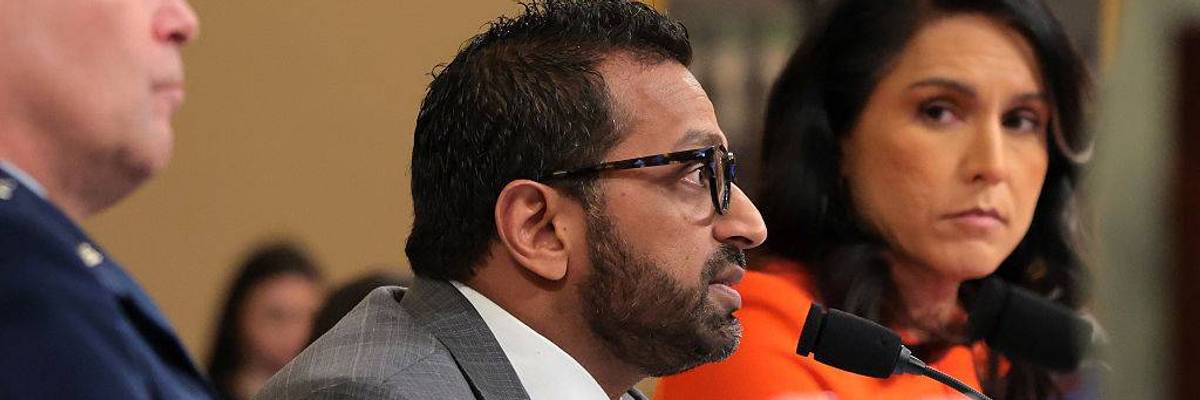
Federal Bureau of Investigation Director Kash Patel testifies as Director of National Intelligence Tulsi Gabbard looks on during a hearing at the Longworth House Office Building on March 26, 2025 in Washington, DC. 

(Photo by Kayla Bartkowski/Getty Images)

“This is repression carried out by the state for electoral purposes. It’s about stamping out your objections to their autocratic aims,” said one critic.

Brad Reed

Mar 18, 2026 (CommonDreams.org)

A Wednesday CBS News report claimed that the FBI and Internal Revenue Service are “forming a new initiative to investigate nonprofit organizations over suspected possible links to domestic terrorism.”

According to CBS News, the new initiative is the agencies’ response to a December memo written by Attorney General Pam Bondi requiring the US Department of Justice (DOJ) to compile a list of potential “domestic terrorism” organizations that espouse “extreme viewpoints on immigration, radical gender ideology, and anti-American sentiment.”

RECOMMENDED…

Internal Revenue Service CEO Frank J. Bisignano Testifies During House Hearing

Who’s Leading Trump’s IRS as Tax Dodgers Run Wild? Apparently No One

Signs supporting Prairieland protesters.

‘Serious Threat to the First Amendment’ as Trump Admin Wins First Antifa Terror Charge

A government official told CBS News that the FBI-IRS initiative would focus on “exploring potential funding streams at nonprofits that support domestic terrorism or political violence.”

But Tom Brzozowski, former domestic terrorism counsel at the DOJ’s National Security Division, told CBS News he was concerned by the broad scope of investigatory activities outlined in Bondi’s memo, and he questioned whether the DOJ had established the proper predication to justify amassing a list of nonprofit groups to be targeted in a criminal probe.

“If you’re going to pull down information and retain it in a government data set, you have to have predication to do that,” Brzozowski emphasized, “especially if you’re looking at it through an investigative lens.”

Bondi’s December memo was written in response to National Security Presidential Memorandum-7 (NSPM-7), a directive signed by President Donald Trump in September that demanded a “national strategy to investigate and disrupt networks, entities, and organizations that foment political violence so that law enforcement can intervene in criminal conspiracies before they result in violent political acts.”

Rights groups have for months been sounding the alarm about the implications of NSPM-7, which they said could be used to initiative a widespread crackdown against the Trump administration’s critics.

Melanie D’Arrigo, executive director of Campaign for New York Health, wrote that news of the FBI-IRS initiative was a “periodic reminder that Trump’s DOJ changed the indicators of domestic terrorism to include pro-immigrant, pro-LBTQ, anti-Trump, and anti-capitalist speech.”

Journalist Marcy Wheeler wrote that the FBI’s initiative with the IRS shows it’s “trying to criminalize dissent over protecting against Islamic and antisemitic terrorism that Trump has stoked with his illegal war” against Iran.

Journalist Diego Fonseca noted that going after nonprofit groups has long been a hallmark of authoritarian regimes seeking to consolidate power.

“[Salvadoran President Nayib] Bukele has treated nongovernmental organizations as ‘foreign agents,’” Fonseca observed, while Hungarian Prime Minister Viktor] Orbán “has a ‘Transparency Law’ targeting civil society orgs. Left or right, it’s the authoritarian playbook: round up and paralyze any possible criticism.”

Matt Ortega, a Democrat running to represent California’s 14th Congressional District in the US House of Representatives, warned that the FBI-IRS initiative was a sign of a widespread crackdown against political opposition.

“They called Alex Pretti a ‘domestic terrorist’ and only backtracked because witnesses had NFL-like coverage of the incident,” Ortega wrote. “This is repression carried out by the state for electoral purposes. It’s about stamping out your objections to their autocratic aims.”

Our work is licensed under Creative Commons (CC BY-NC-ND 3.0). Feel free to republish and share widely.

Brad Reed

Brad Reed is a staff writer for Common Dreams.

Full Bio >

Senate Democrats Should Kill the Filibuster

Republicans are trying to ram through Trump’s latest attack on voting rights. If they have to abolish the filibuster to do it, fine.

Ryan Cooperby Ryan Cooper March 18, 2026 (Prospect.org)

Credit: Douglas Rissing/iStock

The SAVE Act is coming up for a Senate vote soon, having passed the House back in February. On Tuesday, it cleared its first hurdle, advancing a motion to begin debate on a 51-48 vote that fell mostly along party lines; that’s well short of the 60 votes needed to clear a filibuster and ultimately pass.

This bill is probably the most sweeping abrogation of voting rights since Jim Crow. As the Brennan Center explains, it would require both voter ID and proof of citizenship to vote, as well as force the states to send their voter files to the Department of Homeland Security. Tens of millions of U.S. citizens do not have ready proof of their citizenship, and tens of millions more don’t match with the documents they do have—for instance, married women who have changed their last name.

More from Ryan Cooper

It should be viewed as the first step toward attempted election theft—though it might be ill-judged in this case, as Republicans have come to rely on low-propensity voters who tend not to have citizenship documents or a firm grasp of election procedures.

Anyway, if Democrats can bottle up this particular bill in the Senate with a filibuster, that is arguably the right move. But if some end run is proposed—Sen. Mike Lee (R-UT) has argued for a talking filibuster that would force Democrats to talk around the clock, though Senate Majority Leader John Thune (R-SD) has so far refused—Senate Democrats should insist instead on ending the filibuster altogether. If they can’t do it now, they should do it themselves at the earliest possible moment.

That might seem like a counterintuitive thing to say when massive voter suppression is at stake. But at this point, it is highly likely that Democrats will win the House in the upcoming midterms whether or not the SAVE Act passes, and maybe even the Senate. President Trump’s popularity was already near historic lows before he started a war with Iran for no reason and touched off a global energy crisis. Gas prices are already up by more than 70 cents per gallon, and diesel is now over $5. If the Strait of Hormuz remains closed, a global recession and maybe a financial crisis are likely. (One has to credit Republican consistency, at least: If they get power, they start a pointless war in the Middle East and ruin the economy, every single time.)

Trump and the MAGA cult have done catastrophic damage to American institutions.

Even if Democrats take the Senate, under the status quo they would not keep it for long. The chamber is severely slanted toward the GOP; as Lee Drutman details, the median seat has a conservative bias of something like seven points—about the same margin of victory as Barack Obama racked up in 2008. The bias is growing over time as well. Outside of two years in the ’90s, Republican senators have not represented a majority of Americans since the 1950s, and yet they have had a majority of senators much of that time.

Trump and the MAGA cult have done catastrophic damage to American institutions. It will take sweeping reforms just to return to something approximating the functioning prior status quo of 2024. That means aggressive law enforcement to deal with the crimes that have been committed throughout the regime—which probably number in the millions at this point—but it also means passing a lot of laws to shore up the American republic.

Here’s a sketch of a moderate program to save democracy and freedom: statehood for Washington, D.C., and Puerto Rico; Supreme Court reform to break the conservative majority; confiscatory taxation on ultra-billionaires; mass breakup of corporate conglomerates, particularly in media; multimember districts for the House; and updated and strengthened protections for civil and voting rights. I could aim much higher than this, of course, but that’s about what I would call a bare minimum.

Unrigging the Senate will be necessary to give Democrats a chance of ever holding it again in the future. Court reform will be necessary for anything at all to happen, because the shameless Republican hack justices have made it abundantly clear their jurisprudence boils down to: “If a Democrat does it, it is unconstitutional; Republicans are kings who can rule by decree, unless it affects my stock portfolio, or that of the billionaires who are constantly giving me large undisclosed gifts.” In any case, these justices have obliterated their own legitimacy with Trump v. United States, for my money the worst decision in the Court’s history, one that makes such a mockery of the Constitution that it is tantamount to treason.

Doing any of that stuff is going to require scrapping the filibuster. None of the above agenda would be able to get the 60 votes that have become compulsory for anything to pass in the Senate. There is no chance whatsoever that any Republican senators will support laws to eviscerate their own party’s illegitimate power base, and there is virtually no chance that Democrats will ever again have 60 votes. Even if they did, breaking a filibuster with cloture votes eats up days and days of floor time.

The main way around the filibuster, the reconciliation process, is reserved for budget matters; none of that above agenda applies. This works fine for Republicans who just want to cut taxes and cut services, but for Democrats with a broader vision, it blocks their efforts. Unless the Congress, the primary branch of government, the only branch intended to make laws in our system, will be little more than a budgetary body for the rest of its lifespan amid a relentlessly partisan tug-of-war, the filibuster has to be eliminated to have any opportunity to realize a broader agenda (as Republicans are now figuring out).

The filibuster chills debate rather than forcing compromise. Republicans enabling a talking filibuster would allow Democrats to force votes on giving people health care, which Republicans manifestly do not want. Actually forcing debates into the open would improve democracy rather than the current process of mutually assured silence.

Just on basic principles of institutional design, the filibuster is completely ridiculous. It was created literally by accident in 1806 when senators reorganized the chamber rulebook and didn’t realize they’d deleted the procedure for ending debate. For more than a century, it was almost never used except for blocking civil rights bills. Its current form requiring a 60-vote majority for basically everything except reconciliation bills—an obstruction that can be triggered by any Senate staffer making a single phone call—only dates back to about 2007. It’s pointless, undignified, an affront to the very idea of democratic self-rule, and has done great damage to both the Senate and House. It’s like someone tying his own shoelaces together and then gravely insisting that he has to hop everywhere no matter how many times he falls down and knocks out his teeth.

The common objection to scrapping the filibuster is related to moments like this: It enables the minority to stop bad things like the SAVE Act. But that only locks in a status quo that is working abominably. The filibuster is also a democracy-destroying tool. It makes it virtually impossible for politicians to keep campaign promises, while diffusing accountability for why those promises cannot be kept. A democracy involves a contest between competing visions for governance, predicated on the idea that the winner can actually implement that vision, and then the public gets to render a verdict on how it works out. This isn’t how our country works with the filibuster, making everyone (rightly) believe that government cannot work in the public interest.

As Alex Pareene once wrote regarding the various ways in which both parties throw sand in the gears of Senate procedure: “What these strategies rely on, almost uniformly, is a willingness to abuse rules that were not intended to allow a minority to block everything but that now serve only that purpose.”

America can be fixed. All it will take is control of Congress, the presidency, and the will to power. That starts with making the Senate work like every other legislative body in the world.

 Read more

How to Save Americans $70 Billion

How to Save Americans $70 Billion

With five minor tweaks to existing utility law—and a whole lot of elbow grease—policymakers could save American households $500 per year on electricity.

by James BarattaMarch 18, 2026

Special-Interest Super PACs Underperform in Illinois

Special-Interest Super PACs Underperform in Illinois

Only two of four AIPAC-backed Democratic House candidates won, despite tens of millions in spending.

by Emma JanssenMarch 18, 2026

Illinois Senate Primary Features Millions in Outside Spending, Too

Illinois Senate Primary Features Millions in Outside Spending, Too

While the Democratic House primaries have gotten more attention, overlapping situational expenditures have boosted all three main contenders.

Ryan Cooper

rcooper@prospect.org

Ryan Cooper is a senior editor at The American Prospect, and author of How Are You Going to Pay for That?: Smart Answers to the Dumbest Question in Politics. He was previously a national correspondent for The Week. His work has also appeared in The Nation, The New Republic, and Current Affairs. More by Ryan Cooper