Flower Piano returns September 10 to September 20 in the SF Botanical Garden, and as always, it is free to attend for all SF residents. (Tickets for non-residents can be purchased at the gate, or purchased ahead here.) The event runs all 11 days, with scheduled performers concentrated more heavily on the weekends.
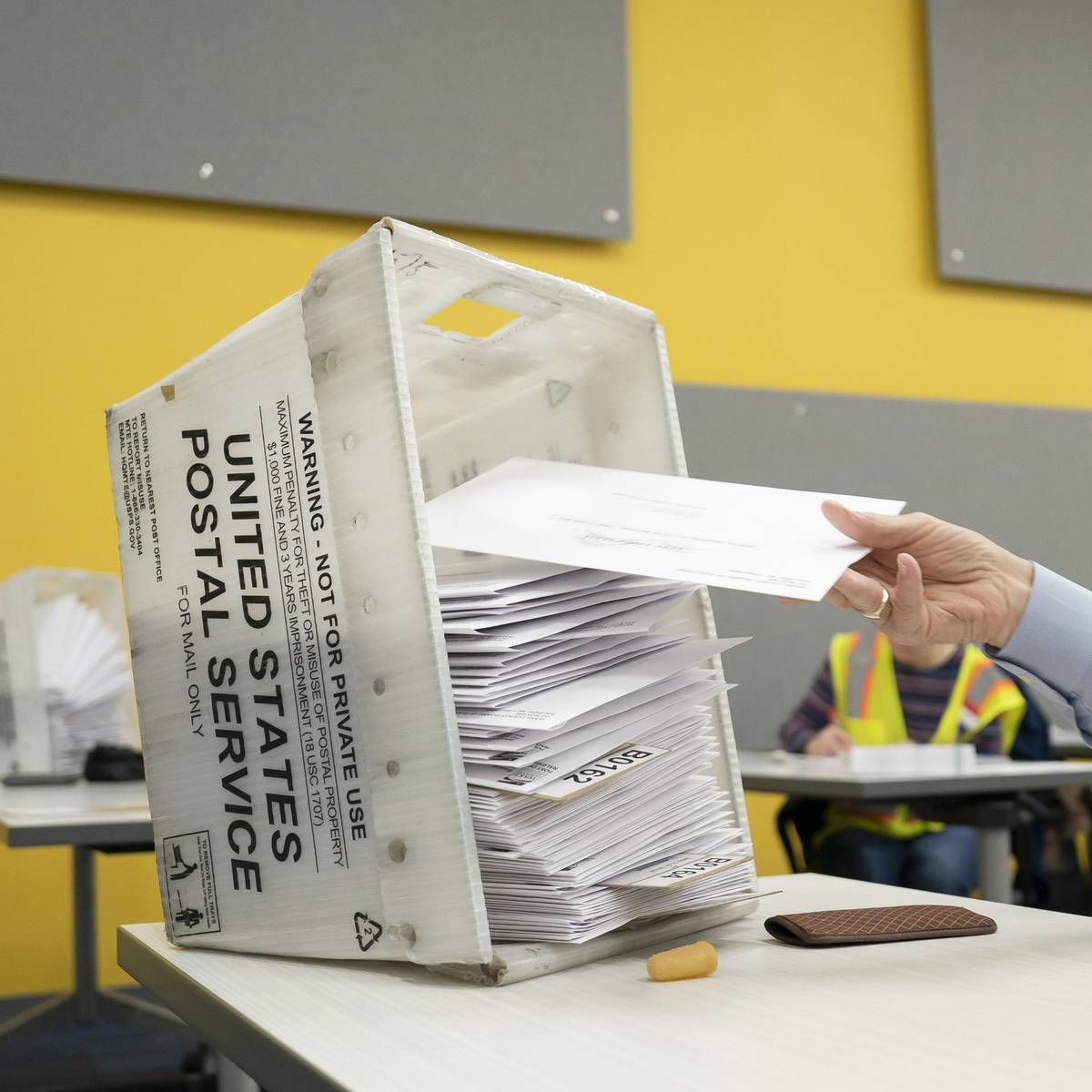
A voter places their ballot in a mailbox in Everett, Washington on July 30, 2020.
(Photo by Cindy Shebley/flickr/cc)
“These mail-in ballot restrictions threaten to disenfranchise millions of eligible voters who rely on mail voting to participate in our democracy,” said one advocate.
A day after a federal judge lifted her injunction on President Donald Trump’s executive order targeting mail-in ballots, a quartet of civil rights groups on Thursday filed fresh claims in their lawsuit challenging the administration’s weaponization of the US Postal Service to attack the right to vote under the pretense of fighting nearly nonexistent fraud.
The Lawyers’ Committee for Civil Rights Under Law, NAACP, Common Cause, and Black Voters Matter Fund argued in the US District Court for the District of Columbia that Trump’s March 31 executive order unlawfully attempts to federalize important parts of election administration—especially voter eligibility verification and mail-ballot delivery—by presidential fiat, without authorization from Congress, while creating serious risks of disenfranchisement and misuse of personal data.
The plaintiffs—and many legal experts—argue that the US Constitution gives the states and Congress the authority to regulate federal elections, not the president.
“Our democracy is under attack,” NAACP president and CEO Derrick Johnson said Thursday in a statement. “No federal entity should be allowed to implement last-minute rules that disenfranchise voters and override state election laws.”
“This new USPS rule is a direct assault on the fundamental freedoms of millions of Americans—particularly Black voters, communities of color, seniors, military members, and rural residents—just weeks before a critical election,” Johnson added, referring to November’s pmidterms. “We will not stand idly by while the voices of the people are silenced. We must protect every eligible citizen’s right to cast their ballot.”
Damon Hewitt, president and executive director of the Lawyers’ Committee for Civil Rights Under Law, warned that “these mail-in ballot restrictions threaten to disenfranchise millions of eligible voters who rely on mail voting to participate in our democracy while balancing work, caregiving responsibilities, disabilities, and other realities of daily life.”
“The Trump administration is trying to limit access to the ballot, sow confusion at the polls, and to use the ensuing chaos as an excuse to exert power over agencies and processes in a politicized way,” Hewitt added. “We will not let this or any administration further undermine our democratic process. We will fight to ensure our elections are free and fair, and that eligible voters are not shut out—especially Black voters and other voters of color, who are frequently targeted by voter suppression schemes.”
Several courts had ruled against Trump’s order. But this week, the US Supreme Courtcleared the way for the administration to proceed with its plans, and on Wednesday US District Judge Indira Talwani, an appointee of former President Barack Obama, was compelled to lift her injunction on the executive order as a result of the high court’s decision.
Also on Wednesday, the groups behind the case before Talwani moved to block the Postal Service rule, as did a coalition of two dozen Democratic state attorneys general, whose initial challenge had resulted in the ruling from the Supreme Court—which found that the AGs filed their first suit prematurely.
Republicans including Trump—who has repeatedly voted by mail—have used fearmongering and disinformation to push the nearly nonexistent “threat” of voter fraud, especially in regard to mailed ballots, and noncitizens voting in US elections.
“Mail-in voting is so safe that even the president has used it twice this year,” Common Cause president and CEO Virginia Kase Solomón said on Thursday. “The Postal Service exists to deliver our mail, not to be weaponized by this administration to silence voters. Common Cause will keep fighting to protect a democracy where people choose their leaders—not the other way around.”
Trump’s March order is part of a broader attack on voting rights that includes pushing an updated version of Republicans’ so-called SAVE America Act, which would mandate proof of citizenship and strict photo ID requirements to register to vote in federal elections. The legislation, which was passed by the House of Representatives in February, is stalled in the narrowly split Senate, where it lacks the support of 60 lawmakers needed to avoid a Democrat filibuster.
“Mail-in voting gives people the freedom and flexibility to participate in our democracy, and we should be honest about what these efforts to restrict it are really doing: creating barriers to the ballot under the guise of election security,” Black Voters Matter Fund co-founders Cliff Albright and LaTosha Brown said in a joint statement Thursday. “We are not fooled. This is the same old playbook—manufacture confusion, create unnecessary hurdles, and chip away at voting access.”
“When the same politicians who defend their own access to mail-in voting move to restrict that access for others, the hypocrisy is hard to ignore,” Albright and Brown continued. “We cannot allow voter suppression to be repackaged as voter protection or allow political interference to determine who gets to participate and whose voice counts.”
“This is not about making democracy more secure; it is about reshaping who can fully participate in it,” they added. “We will continue to call these efforts what they are and fight for every eligible voter’s freedom to make their voice heard.”
Our work is licensed under Creative Commons (CC BY-NC-ND 3.0). Feel free to republish and share widely.
Republican gubernatorial nominee Bobby Charles of Maine said in audio released by the Bangor Daily News on August 26, 2026 that he would ask the Trump administration to deploy US Immigration and Customs Enforcement agents to polling places in the state.
(Screenshot by Bobby Charles for Maine Governor Campaign Committee)
“His plan to ask Trump’s border czar to send ICE agents to Maine polling places just weeks before Election Day is not only deeply alarming—it is likely illegal,” said the head of the state Democratic Party.
By letting attendees at a Maine Young Republicans event in on his “secret” plan for the midterm elections, the state’s Republican nominee for governor detailed a proposal that, according to one public policy think tank, is wholly illegal.
In an audio clip released Wednesday by the Bangor Daily News, Bobby Charles, a lawyer and former Reagan administration staffer, boasted about his connections to the Trump administration’s border czar, Tom Homan, a key figure in President Donald Trump’s mass deportation operation.
“Here’s my secret. I have a friend named Tom Homan,” said Charles, drawing applause from the GOP voters. “I’m going to ask Tom… three or four weeks before the election, maybe three, I’m going to make an appeal for ICE and Marshals to be at our voting booths.”
🚨 NEW Audio: Bobby Charles reveals "secret" plan to invite ICE to Maine three weeks before Election Day. pic.twitter.com/nSx2o9yxjJ
Charles was referring to US Immigration and Customs Enforcement and the US Marshals, both armed federal law enforcement officers whose presence at polling sites to intimidate voters would be against the law, according to the Brennan Center for Justice .
Trump has also alluded to sending ICE and other armed federal agents to polling places during the midterm elections in November, saying in May when he was asked about the idea that he would “do anything necessary to make sure we have honest elections.”
At the Brennan Center for Justice last month, senior counsel Hayne Yoon wrote that “despite the implied threat, the law is clear.”
“Sending armed federal agents, including those from ICE, to election sites is illegal,” wrote Yoon. “Federal law and many states’ laws prohibit not only armed federal agents at polling sites, but also interference in elections or voter intimidation by any officials or private citizens. More important, using these tactics would be a flagrant attempt to hold on to power through force and intimidation and an affront to free and fair elections.”
In his comments at the Young Republicans event, Charles also asked rhetorically whether “illegals who are being paid money” to vote would “like” the deployment of ICE agents at polling places. The remark made the gubernatorial candidate one of several Republicans to push the baseless claim that undocumented immigrants or noncitizens have committed voter fraud in order to sway elections.
There are no documented reports of immigrants ever being paid to vote, and a 2024 American Immigration Council analysis of data collected by the right-wingHeritage Foundation found only 68 cases of proven noncitizen voting dating back to 2000, “amounting to less than 0.0001% of total votes.”
Democratic gubernatorial candidate Hannah Pingree said Wednesday that Charles’ comments make clear that he would push Trump’s MAGA agenda, despite his recent attempts to distance himself from the president, who is unpopular with Mainers.
“He is begging Trump’s ICE to come interfere with our free and fair elections,” said Pingree. “I think that conduct speaks for itself and I trust the Maine people to see it for what it is.”
Devon Murphy-Anderson, executive director of the Maine Democratic Party, added that Charles “continues to prove that he is a MAGA extremist who will stop at nothing to put himself and his MAGA agenda ahead of Mainers. His plan to ask Trump’s border czar to send ICE agents to Maine polling places just weeks before Election Day is not only deeply alarming—it is likely illegal. This is a blatant attempt to intimidate voters and yet another reason Bobby Charles is too extreme for Maine.”
Charles’ comments come six weeks after an ICE agent fatally shot Biddeford, Maine resident Johan Sebastián Durán Guerrero in an incident that the Trump administration has not appeared to investigate. ICE has made more arrests in Maine so far this year than it did in all of 2024-25 combined, and out of 491 arrests made, 89% of those detained had no criminal convictions.
Homan recently told a Republican state lawmaker that the state would soon “see a lot more enforcement action” due to Trump’s decision to end Temporary Protected Status for Haitians and Syrians.
The Justice Department announced this month that it would deploy at least 1,000 federal officers to polling places as people vote in the November 3 elections. The administration has suggested the public should not be alarmed by the plan because anyone who is a citizen will not be targeted by the agents, but as the ACLU noted, at least 155 citizens in eight states last year, including 32 children, were detained, targeted, or subjected to misconduct by federal immigration agents.
Our work is licensed under Creative Commons (CC BY-NC-ND 3.0). Feel free to republish and share widely.
San Francisco residents gathered at the Asian Pacific American Community Center in Bayshore to deliver public comment on issues like Prop. G and Prop. 40, as the San Francisco Democratic Party votes on its endorsement. Photo by Junyao Yang.
The San Francisco Democratic Party, as predicted, voted 17-4 on Wednesday evening to oppose the upcoming California billionaire tax — and, in so doing, made the rare choice to buck the state Democratic Party, which had narrowly endorsed the proposition in early August.
The vote fell along a neat progressive/moderate divide. The local chapter took the step two months ago to alter its bylaws to allow itself to diverge from the state party’s endorsement on California ballot measures. Previously, the local chapter’s convention was to follow the state party on statewide ballot measures and candidates.
Prop. 40, or the billionaire tax, would levy a one-time, 5 percent tax on some 200 billionaires who lived in California on Jan. 1, 2026. Most of the money would be spent on health care, patching up a $30 billion hole in Medi-Cal due to federal cuts after President Donald Trump’s “Big Beautiful Bill.” The rest would go to education and food assistance.
Members of the Democratic County Central Committee, the local party chapter, said California would suffer from billionaires fleeing the state.
“[My union is] particularly disturbed, because we feel it sets up an uneven playing field for California,” said Patrick Boileau, a DCCC member and the political director of the Operating Engineers Local 3. “The billionaires that are going to be taxed with this measure also have the ability to vote with their feet and move out of California.”
Supervisor Matt Dorsey put it bluntly: “This is terrible public policy.”
Lanier Coles, a DCCC member who was diagnosed with a chronic neurological disorder at 28 and had trouble getting healthcare coverage, said she opposed Prop. 40 because it is not “a long-term viable solution to provide affordable healthcare.”
When Democrats win Congress this fall and the White House in 2028, she said, they will “pass enduring legislation” to fund and expand the Affordable Care Act and tackle federal tax reform to address inequalities.
“That is how we will get to a place where more Americans, more working-class people will have access to healthcare for the long term,” she said.
“They’ll be dead,” quipped a Prop. 40 supporter in the audience.
“That’s why you lost to Trump twice,” added another.
A man holds a “tax the billionaires” sign in the audience, among supporters of reopening the Great Highway, at the San Francisco Democratic County Central Committee’s endorsement meeting on Aug. 26, 2026. Photo by Junyao Yang.
But for the minority of supporters of the billionaire tax on the body, the tax cannot wait.
“California needs this money now,” said Michael Nguyen, a progressive DCCC member. “There are reasonable questions here around implementation, long-term revenue projections, but those questions cannot become an excuse for doing nothing.”
Gordon Mar, another member, agreed. “The bottom line is Prop. 40 is the only proposal before voters and on the table, more generally, that approaches the scale of this crisis.”
Suzanne Jimenez, chief of staff at the health care labor union SEIU-UHW that pushed for the measure, called the local party’s vote to oppose Prop. 40 “shameful.”
“They have put the interests of a few hundred billionaires ahead of the healthcare needs of their fellow Californians,” Jimenez wrote in a statement.
The state ballot measure was endorsed by the California Democratic Party and the California Federation of Labor Unions and other elected officials including Senator Bernie Sanders. But it has faced formidable opposition from Gov. Gavin Newsom; his likely successor, Xavier Becerra; Planned Parenthood; and several labor unions.
While the tax is estimated to bolster state revenue by tens of billions of dollars, according to the nonpartisan California Legislative Analyst’s Office, it could also lead to “ongoing” deficits of less than $1 billion per year.
Opposing the billionaire tax could be a boon for the DCCC: It may benefit from heavy spending by tech billionaires already pouring millions of dollars into defeating the measure.
The campaign fighting the tax could pump money into the DCCC that the body would then use to put out slate cards, which would promote other candidates and measures the San Francisco Democratic Party has endorsed, unrelated to the tax.
“After tonight, we will be moving into full-blown campaigning mode for our endorsed candidates and campaigns,” said Nancy Tung, the chair of the San Francisco Democratic Party.
The DCCC, in a symbolic vote, then went on to unanimously pass a non-binding resolution for a “national wealth tax.”
“This is something that we can actually do that will make an impact on income inequality in this country,” said Eric Kingsbury, who introduced the measure with Emma Hare. “I ask that all of you join me in pushing for this tax that would be actually workable, viable, and not something that would hurt the economy of one city or county or state.”
Others called it performative politics.
“It is a resolution. It doesn’t have to go anywhere,” said Hene Kelly, 84, the regional director of the California Democratic Party. “We’ll work on it for years and years and years. I would like to have something before my 85th birthday and this won’t do it for me.”
“Let’s just be honest with ourselves: The resolution is just basically shouting into the void and may or may not go anywhere,” Nguyen said. “Prop. 40 will be at the voters in November.”
The local chapter also voted to:
Endorse Manny Yekutiel in District 8 supervisor race, despite a sexual assault allegation against him;
Support Prop. B, the measure to create a public bank;
Oppose Prop. G, the measure to reopen the Upper Great Highway to cars;
Oppose Prop. I, the measure to dedicate transfer-tax revenue to affordable housing.
We won’t ignore your neighborhood
When a San Francisco neighborhood has a Mission Local reporter, it means someone is there. We’re following new housing projects proposed on your block, keeping tabs on what your district supervisor is up to at City Hall, and letting you know when longtime businesses close (and new ones open). When big news breaks, we already know the context.
Most neighborhoods don’t have that. Yours could.
That’s what Mission Local is building. Our reporters don’t parachute in — they write consistently on San Francisco, so you’re never reading about your neighborhood from someone who just looked it up.
So far we are in five of San Francisco’s neighborhoods. But we know all San Franciscans deserve our kind of coverage. Will you join us?
Junyao covers San Francisco’s Westside, from the Richmond to the Sunset. She joined Mission Local in 2023 as a California Local News Fellow, after receiving her Master’s degree from UC Berkeley Graduate School of Journalism. Junyao lives in the Inner Sunset. You can find her skating at Golden Gate Park or getting a scoop at Hometown Creamery.More by Junyao Yang
Once known for pioneering progressive political counterculture, San Francisco is rapidly shedding its flowers-in-your-hair image. In recent years the city has elected mayors who are more concerned with “quality of life” issues and pledging their allegiance to big business and economic growth. Just last month, Mayor Daniel Lurie defunded the well-respected San Francisco Pretrial Diversion Project, forcing an end to 50 years of serving San Francisco’s most vulnerable population.
Following the 2022 ouster of San Francisco’s progressive district attorney, the city has seen a steady increase in the prosecution of not just theft and drug-related cases and those related to homelessness, but protest-related cases as well.
DA Brooke Jenkins has taken an unheard-of step of charging peaceful protesters with felony conspiracy
In April of 2024, following a long tradition of demonstrations in San Francisco, protestors shut down the Golden Gate bridge to bring attention to the plight of the people in Gaza. Up until the recent past, district attorneys had declined to prosecute these non-violent misdemeanors. While conspiracy was sometimes used to detain defendants after arrest, conspiracy charges were rarely, if ever, actually pursued. When prosecuted in the past, the protest cases have been resolved by dismissal after a period of community service.
In a play right out of the Trump handbook, however, DA Brooke Jenkins charged the Golden Gate Bridge demonstrators with conspiracy and an assortment of other protest related charges, along with several counts of false imprisonment. This trickle- down autocracy mirrors federal prosecutions for an assortment of protest related activity. Weaponizing the criminal justice system against perceived enemies has been routine under the Trump administration. The examples, to date, are legion.
The Department of Justice publicly arrested and then indicted a Democratic state court judge in Wisconsin on charges that she obstructed an immigration action. The department indicted a Democratic member of Congress on charges that she assaulted a federal law enforcement officer while trying to gain access to an ICE detention facility and arrested Newark Mayor Ras Baraka on trespass charges related to the same ICE facility; Federal agents forcibly removed United States Senator Alex Padilla from a press conference where he was questioning DHS Secretary Kristi Noem.
Over the past couple of years, several left-leaning organizations have been targeted by the federal government, particularly groups that have been standing up against the genocide in Palestine.
Throughout American history, conspiracy laws have been used by governments as a tool of repression to deter individuals from joining controversial political groups and causes. The law has been weaponized to chill First Amendment activities, without regard or concern for inhibiting legitimate rights protected by our democratic process. There has been an alarming nation-wide upsurge in the use of conspiracy laws aimed at stifling protest, turning traditional civil disobedience into high-stakes criminal cases.
By upping the ante in charging felony conspiracies in seven of the Golden Gate Protest cases, Jenkins forced those defendants to trial, while their fellow arrestees were able to complete community service and have their cases dismissed.
After months of trial, the jury deadlocked on the felony conspiracy charges. The defendants, therefore, faced sentencing on the same misdemeanor charges that were ultimately dismissed in the other cases. But unlike the fate of the other defendants, the judge sentenced these defendants to 30 days of actual jail time—a sentence unheard of not just for protest-related cases in San Francisco, but for most any non-violent misdemeanor, particularly where a defendant has no criminal history.
This can only be interpreted as a “test case,” not unlike the Texas anti- ICE Prairieland activist cases, where a federal judge, bowing to the Trump administration’s crackdown on left-wing activism, sentenced the defendants to a collective 450 years in prison.
In pronouncing sentence in the Golden Gate Bridge case, the judge said, “Let me be clear: You are not being sentenced for your beliefs –you are being sentenced because a jury of your peers found you guilty of the crimes.” But the message of a sentence that was disproportionately harsh was received loud and clear. Make no mistake, severe penalties and expansive liability for conduct related to nonviolent protest is meant to chill peaceful protests. This will give pause to anyone considering expressing dissent, effectively eroding social movements and destabilizing the ability to organize.
Bobbie Stein is a criminal defense and civil rights lawyer in San Francisco
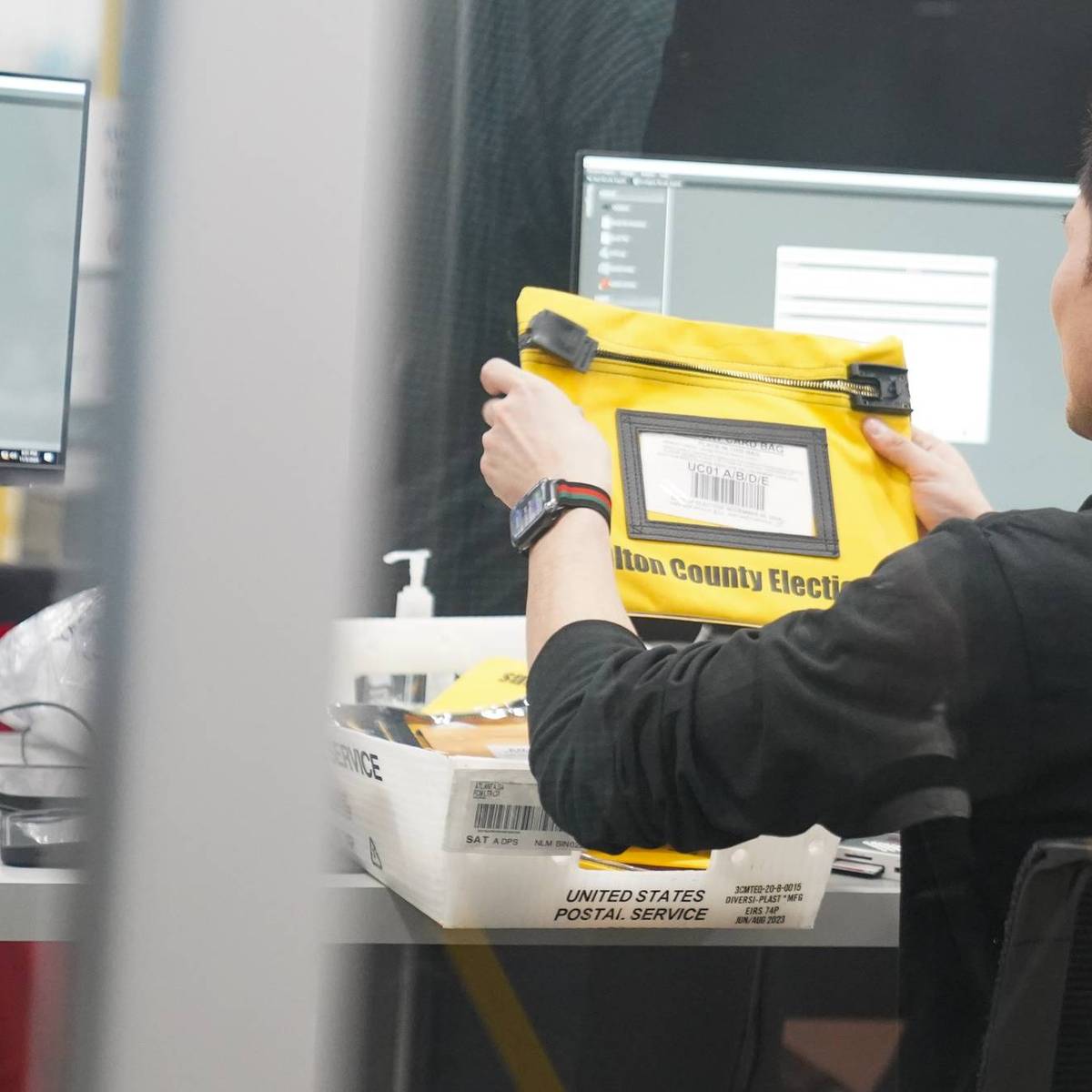
A coalition of two dozen Democratic-led states filed a lawsuit on Wednesday challenging President Donald Trump’s attempt to use the US Postal Service as a vehicle for his assault on mail-in voting, which he has targeted incessantly during both of his White House terms.
The lawsuit targets a newly finalized USPS rule under which the postal service would not deliver ballots in states that don’t provide their voter data to the federal government. Rhode Island Attorney General Peter Neronha said in a statement Wednesday that “this is yet another example of this administration’s unlawful overreach and is in direct violation of the Constitution, which makes clear that states have the primary authority to administer elections.”
“Voting by mail is a tried-and-true method of exercising our most fundamental right as American citizens,” Neronha added. “Indeed, it’s the preferred voting method of the president himself. I am confident that we will succeed here, as we have many times before, thereby protecting the right of American citizens, Donald Trump included, to vote without interference.”
The states’ lawsuit comes days after the US Supreme Court, which includes three Trump-nominated justices, stayed a lower-court injunction that had blocked implementation of the president’s March executive order instructing the US Postal Service to enact restrictions on mail-in voting to prevent “fraud,” which is rare in American elections. On Wednesday, a federal judge in Boston lifted the nationwide injunction on the mail-in voting restrictions following a request from Trump’s Justice Department.
The office of New York Attorney General Letitia James, who joined the new lawsuit, emphasized that states “would have just weeks to comply” if the USPS rule is allowed to take effect ahead of the 2026 midterms.
“Election officials will have to redesign ballot envelopes, obtain federal approval, and establish entirely new systems to transmit voter lists to USPS, all while preparing to mail ballots to millions of Americans,” James’ office warned. “If states or local election officials cannot comply in time, eligible voters could be prevented from receiving or returning their ballots.”
The US Constitution does not give the president any power over elections, but Trump has spoken repeatedly of his desire to “take over” and “nationalize” voting in the wake of his 2020 loss.
As part of his scheme, Trump has focused heavily on exerting control over the US Postal Service, which is currently led by David Steiner. The postmaster general, whom Trump boosted for the role, has faced calls to resign for allowing USPS to be used as “a partisan instrument of voter suppression.”
“The quiet attempt to restructure the leadership of the Postal Service comes as the president and his allies are trying to transform the 251-year-old agency into a central player in their quest to overhaul the nation’s elections,” the Times observed.
Last month, as Common Dreams reported, US Sen. Gary Peters (D-Mich.) called for a pause on Trump’s postal board nominees, warning that their confirmation would “undermine public confidence in the board’s ability to serve the public interest above any partisan political aims.”
“This imbalance in representation would be unprecedented,” said Peters.
Our work is licensed under Creative Commons (CC BY-NC-ND 3.0). Feel free to republish and share widely.
By Tony Bravo,Arts & Culture Columnist Aug 25, 2026
Gift Article (SFChronicle.com)
Jennifer Steinkamp’s “It’s a nice day for a white wedding.” is projected on the Humboldt Bank Building in San Francisco.Brennan Smart/For the S.F. Chronicle
A 95-foot animated artwork is about to transform a historic Market Street building into one of downtown San Francisco’s largest canvases, launching a new public art partnership among three museums.
The Yerba Buena Illuminated initiative will debut on Tuesday, Aug. 25, with Los Angeles artist Jennifer Steinkamp’s “It’s a nice day for a white wedding.” at 785 Market St. The digital art work’s title is inspired by Billy Idol’s 1982 hit song “White Wedding” and will project a cascade of animated red, white and yellow wedding flowers on the Beaux Arts-style Humboldt Bank Building.
It comes from the collection of the San Francisco Museum of Modern Art, one of the three cultural institutions collaborating with Yerba Buena Partnership, a neighborhood community benefit district.
The installation can be experienced nightly from twilight until 10 p.m. and will be on view for approximately 90 days.
“We feel strongly that beautiful artwork makes something special for the neighborhood, and we’re able to present it here on such a scale, such an amazing canvas,” said Scott Rowitz, executive director of Yerba Buena Partnership. “To work with and partner with three world-class museums, to bring their curatorial expertise to this is really a true gift to the community and the neighborhood. It was designed to be a gateway into the Yerba Buena Arts District.”
Installations curated by the Museum of the African Diaspora and Yerba Buena Center for the Arts will debut later as part of the program.
Rowitz said that while the neighborhood museums are mostly open during the day, Yerba Buena Illuminated would offer a chance to experience artwork during evening hours when people come to the area for performances, movies or festivals. He also pointed out the number of hotels and restaurants that keep people in the area, as well as residents who may see the work coming home at night.
Rowitz called the program an opportunity to demonstrate “what a 24/7 downtown neighborhood really can be.”
Yerba Buena Illuminated is presented with support from the mayor’s office and the Office of Economic and Workforce Development.
“Arts and culture are helping to drive our recovery, and public art can be a major draw for downtown,” said Mayor Daniel Lurie in a statement. “This installation will be a powerful symbol of the vibrancy and creativity that defines San Francisco and yet another reason for San Franciscans and visitors to enjoy the public spaces, cultural institutions, and all the Yerba Buena area has to offer.”
Public projections and light art have become a regular part of the civic landscape in the 21st century.
The nonprofit arts group Illuminate helped normalize such installations with Leo Villareal’s project “The Bay Lights,” which sets nearly 2 miles of the Bay Bridge’s western span aglow. In 2013, the same year that project debuted, the group’s founder Ben Davis created the Illuminate SF, an annual festival that features temporary light works downtown from Thanksgiving through New Year’s Day.
Jim Campbell’s LED installation “Day for Night” on the Salesforce Tower has also become a staple of the city since its debut in 2018.
“Great cities invest in beauty, and Yerba Buena Illuminated is a beautiful example of San Francisco doing just that,” said Matthew Goudeau, executive director of arts and culture for the city. “Bringing a piece like Jennifer Steinkamp’s out of the museum and onto Market Street is exactly the kind of bold, public-facing art the city needs and wants right now. It meets people where they are, making extraordinary art accessible to everyone.”
Tony Bravo is the Chronicle’s arts and culture columnist. His beats include visual art, the LGBTQ community, style, pop culture and hyper-local “Total SF” stories. He joined the Chronicle in 2015 as a reporter for the Style section and wrote the relationship column “Connectivity.” Bravo is also a frequent live interviewer, hosted the Show & Tell event series at Four One Nine, and is an adjunct instructor at the City College of San Francisco Fashion Department, where he teaches journalism.
How to reach Tony
To provide story tips or feedback or to obtain his Signal number, email tbravo@sfchronicle.com.
The Solano County Board of Supervisors has dealt a blow, albeit possibly a temporary one, to the group known as California Forever and its fast-tracked legislation that would pave the way for a new shipbuilding facility on the Delta.
Weeks after California Forever got some bad news in the form of a lost contract for a $3.2 billion automated shipbuilding facility, they’ve gotten some further bad news from the Solano County Board of Supervisors. The board voted 3-2 on Tuesday to table, essentially, an endorsement vote for some fast-tracked legislation that the group has been pushing, which would have allowed them to bypass environmental review for a potential shipyard.
As CalMatters explains, the proposed Solano Maritime and Manufacturing Act would exempt 1,350 acres along the Sacramento-San Joaquin River Delta in the unincorporated area of Collinsville from new, project-specific CEQA review — something that has the support of Governor Gavin Newsom — and instead rely on an 18-year-old environmental report. The draft legislation also allows for streamlined construction permitting and other concessions that California Forever says will help them bring 10,000 new jobs to the area and a new source of revenue to the county.
The shipyard is only one piece of the broader, highly controversial plan, which was hatched in secret with the financial support of a group of Silicon Valley billionaires about seven or eight years ago, to construct a new city of 400,000 residents on farmland in eastern Solano County. An earlier ballot-measure effort that would have allowed California Forever to bypass a 1984 county growth initiative — which prohibits new development outside the existing incorporated areas of the county — was aborted two years ago after pushback from county leaders and residents.
The group has so far used grand promises and AI-generated illustrations to sell local residents on the idea of a new, utopian community full of affordable housing and walkable, European-style neighborhoods — a plan that seems to have its roots in the belief that the Bay Area’s existing cities are broken and beyond fixing, and wouldn’t it be cool to just start from scratch and build a new one.
A group that goes by the name Solano Together, which has organized in opposition to California Forever, reportedly turned out with about 200 of its supporters to the Board of Supervisors meeting on Tuesday, seeking to offer public comment on the shipyard legislation, per CalMatters. And the issue of having billionaires from elsewhere trying to push legislation and new development in the county has been a sensitive one.
“The only thing unique about this is the deep pockets of the people that are promoting it and the methods they’re going about it,” said Vallejo resident Jeff Deis during the public comment session, per CalMatters.
Another county resident, Jasmine Westbrook, added, speaking to the supervisors, “Do not put billionaires over your community, your constituents, the environment, and the future of Solano County and the state. Do not set this precedent.”
As CalMatters reports, about two dozen speakers voiced support for the legislation, especially because of the job-creation potential of a shipyard.
As KPIX reports, Supervisor Wanda Williams, who voted to table the legislation, said, “Do I support shipbuilding? Yes. Do I support good-paying jobs? I definitely do… we have lost a lot of jobs in this county, and there is a serious need for jobs. Yet, I am still responsible to make sure there are protections and guardrails in.”
Jim Wunderman, head of public affairs for California Forever, tells CalMatters that the supervisors “punted.”
“There was an opportunity to move something forward that would have mattered for generations, and could really move this county forward in this region,” Wunderman said.
And as Wunderman said during the meeting, per KPIX, time is of the essence — basically because Donald Trump is in office. “The United States is investing heavily in restoring the Navy and the vessels that support the Navy,” he said. “A lot of money is in the defense department to support this. There is a chance to bring that legacy industry back, so many jobs lost, in this county and the Bay Area. There is only a small window of time here to get a bill done this year or else companies won’t come.”
Making the case for impeaching members of the Supreme Court: why the conduct is impeachable, and why penalizing it now matters even without a conviction.
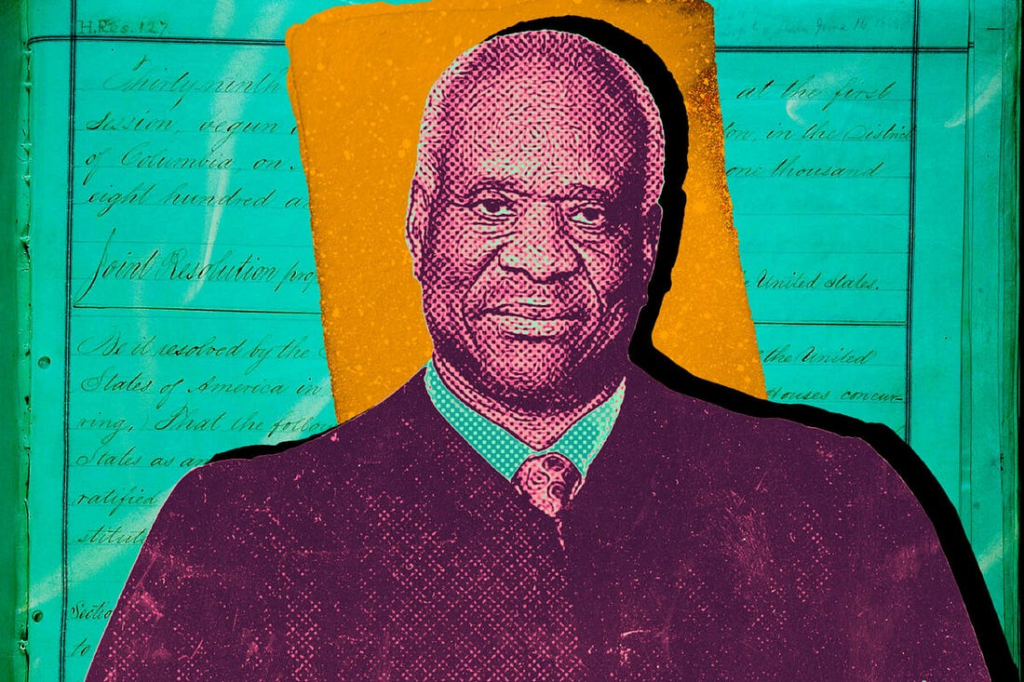
Thomas’ approach of originalism for thee but not for me is catching up to him. Cage Rivera/Rewire News Group/Wikipedia
A note from the author:Following this article, you’ll find the full articles of impeachment we drafted, for anyone who wants to send them to their U.S. House representative and request that they be endorsed and filed.
The U.S. Constitution says a Supreme Court Justice can be impeached for “high crimes and misdemeanors.” That phrase isn’t defined in the Constitution. The Constitution grants the interpretation of high crimes and misdemeanors to the U.S. House of Representatives. Not to SCOTUS. The Court has said as much itself, ruling that impeachment is a political question, rather than a judicial one. To the people’s house. The way that mechanism is assembled feels intentional, and worth note.
We elect the members of that house. We send them there to represent us, and by extension to represent our reading of the Constitution. So the question of whether a Justice’s conduct is a high crime or misdemeanor was never handed to lawyers, or to the Court itself. It comes back to us, through the people we elect.
I learned in the military that if you’re going to raise a problem or ask someone to do something, you should come with the solution. So I learned what the impeachment standard actually is, reviewed his conduct against that standard, and then drafted articles of impeachment against Justice Clarence Thomas for the conduct that met it.
The argument for drafting the articles concerns the conditions every Justice serves under, not just removing him from office. Right now a Justice who takes this kind of money runs little risk of being brought before Congress, put under investigation, and made to answer in public. Impeach Thomas, or open an inquiry into him, and things start changing. And for those concerned that a successful impeachment would just mean his retirement and a Trump-appointed successor: the next appointee, and every Justice currently seated, learns that misconduct will no longer be ignored. We need to create an environment where these justices don’t feel above the law or above consequences.
Articles of impeachment are charging counts, the House’s equivalent of an indictment, and a simple majority of the House can adopt them. The Senate then sits as a court, hears the evidence, and votes on each article separately, with a two-thirds vote required to convict and remove. A separate majority vote can disqualify the person from ever holding federal office again. The Constitution’s standard, treason, bribery, or other high crimes and misdemeanors, has no statutory definition, and the House has never adopted one. Representative Gerald Ford, leading the 1970 attempt to impeach Justice William O. Douglas, gave the definition that has governed in practice ever since: “An impeachable offense is whatever a majority of the House of Representatives considers it to be at a given moment in history.”
Frank Bowman, the University of Missouri law professor whose book is considered the standard modern history of impeachment, traces “high crimes and misdemeanors” to an English phrase that never meant indictable offenses at all, but the kind of serious bad conduct that warranted removal from office. Essentially, the standard for impeachment is not inherently criminal conduct. This is because the House of Representatives alone decides what the conduct is within that phrase, and that’s never been limited to what a prosecutor could charge. Further, the Congressional Research Service states plainly that impeachable conduct reaches serious violations of the public trust that are not necessarily indictable offenses.
In regards to the undisclosed gifts, and before most of the rest of this record was public, Jeremy Paul, former dean of Northeastern University School of Law, said: “What he did was just so clearly out of bounds that I don’t think there’s any defense of it.”
These are not the first articles drafted against Justice Thomas. Representative Alexandria Ocasio-Cortez introduced a three-article resolution on July 10, 2024, charging one count of failure to disclose gifts, income, and transactions and two counts of refusal to recuse from matters involving his wife’s interests. Hers was the first to put the conduct into articles of impeachment introduced in the House, and the articles here build on it, adding the benefactor-interest count, the false-statements count, the loan forgiveness, the Koch charter flight, and the Senate Judiciary Committee’s December 2024 findings.
So what do we get out of impeachment without conviction? Opening an inquiry gives the House the ability to investigate, with subpoena power. From there:
The investigation can yield legitimate evidence, some of which could be referred to states that may be interested parties in prosecutions, or to a future administration.
His conduct goes public, and he testifies under oath, where dishonesty can be prosecuted.
It pulls him away from his duties and his free time, a material cost.
It potentially causes reputational harm, where the conduct merits it.
It changes what a search of his name returns.
It puts a stink on him that follows him into everything else, and makes other groups less willing to work with him.
A House majority can start it the day it decides to.
The party that holds power now already knows this. The Benghazi committee ran for more than two years, brought no charges, and surfaced Hillary Clinton’s private email server. The 2023 Biden impeachment inquiry produced no articles and kept the President’s family finances in the news for a year.
And in 2024, Republicans impeached Biden’s border chief, a cabinet secretary named Alejandro Mayorkas, over immigration policy. There was no crime; the charge was essentially that he ran the border badly. The House impeached him by one vote. The Senate threw it out immediately, no trial. And Republicans considered it a win anyway, because the goal was never removal, it was a year of border hearings, headlines, and a recorded vote to campaign on. That is the tool working as designed, for the party willing to use it.
Everyone has a job in this fight, and the people we send to the House are no exception. Their power is reduced, not gone, and there is work to do every day of the week. This is one piece of it. We wrote the articles and made the case for aggressively impeaching every corrupt member of this Court because that is the baseline of what a House representative is for.
Want to learn more? Check out the free library of resources at the bottom of this article. But just so you know, it’s 10 people like yourself, 10 activists per article who subscribe by clicking the button below, that fund all of this. All 3 free books, all 12 booklets, the model legislation, and the 20–40 articles per month.
Don’t let this be the reason you miss a meal or are late on rent.
But if this helps you and you can become a subscriber, you’re one of the 10 that makes it all possible.
Will the Republican justices OK Trump’s efforts to winnow the midterm electorate?Yesterday’s ruling doesn’t foretell where they’ll go, but their Republican bias is an established fact.Yesterday, the six Republican justices on the Supreme Court—those mischievous scamps!—opened the door just a crack to President Trump’s efforts to winnow the electorate so it’s more to his liking. That opening is far from wide enough to enable Trump to wallow through so he can begin hacking Democrats from the voter rolls, but it does enable Trump’s underlings to move his winnowing project a few steps forward. The justices’ ruling stayed an injunction from a lower court that had forbidden the administration from compiling “state citizenship lists” that could be used to bounce those omitted from the lists from receiving mail ballots—assuming that the administration’s plan went on to clear other constitutional and procedural hurdles that yesterday’s decision did not address. Indeed, yesterday’s ruling merely said that the 23 states and the District of Columbia that had sought the injunction lacked standing to do so, because the list compilation project had yet to be rolled out and, accordingly, the states could not yet claim any harm from the project. Rather, the Six ruled, it was the administration that was “likely to suffer irreparable harm” if the injunction wasn’t lifted. There’s no doubt that Trump fears suffering irreparable harm if his lieutenants can’t winnow the rolls. That harm would not be administered by a mere injunction, however. His fear is that it will be administered by the American people if they are permitted to vote in a free and fair election when this year’s midterms roll around. It may be, of course, that when the Court considers the larger issues that Trump’s winnowing project raises, it will slam that door shut. After all, the Constitution’s Tenth Amendment forbids the federal government from the right to undertake projects not specifically enumerated in the Constitution, reserving those rights to the states. As election administration (which certainly includes deciding on voter eligibility) is not therein enumerated, it has been the project of the individual states since the Constitution was first ratified—actually, before the Constitution was ratified, and even before it was drafted. Of course, that the Constitution is perfectly clear on a question that may come before the Court is no guarantee that that will mean anything to those mischievous scamps on the bench. Despite the 14th Amendment’s affirmation of birthright citizenship, four of the six Republicans somehow failed to recognize it.
Still, the Republican Six will have to fail to recognize even more than that if they are to rule in the next few weeks that Trump’s plan can move forward. They will have to ignore the inconvenient fact that the basis for the administration’s intervention—that masses of noncitizens vote illegally in American elections—is devoid of any factual substantiation, despite repeated Republican investigations in fruitless search of voter fraud that have been ongoing for decades.
They will have to dismiss the equally inconvenient fact that the project’s first step—the Department of Homeland Security and the post office amassing a state citizen list of every current American citizen age 18 or older—depends on entrusting that rather large task to one department that has erroneously deported citizens and two departments with no experience at all in gathering the kind of census data aggregated decennially, after years of preparation, by a bureau of different department (Commerce). As they did in their ruling granting President Trump immunity for any misdeeds committed in an official capacity, they would doubtless declare that a ruling enabling the administration to decide who can vote and who cannot applies to any current and future administration. But it wouldn’t be just any federal administration to which they would be entrusting the winnowing of election rolls, of course. It would be the administration of Donald Trump, who still falsely claims that he actually won the 2020 presidential election, who still falsely claims that illegal voting by millions of immigrant noncitizens is the only reason why Democrats can ever claim electoral victory, who summoned several thousand goons to the Capitol on January 6, 2021, to help his efforts to violently overturn and steal a presidential election, and who pardoned and still hails as heroes those goons who were tried and sentenced to prison for their violent disruptions. There are, in short, a whole lot of hurdles the Six would have to jump were they to go beyond yesterday’s narrow ruling to one that would enable Trump to take over the upcoming election. What we know, unfortunately, is that when it comes to questions of party politics, the Court, very much led by Chief Justice John Roberts, has a long if undistinguished history of favoring Republicans. It has permitted partisan gerrymandering in a way and context that chiefly helped Republicans. It has effectively revoked the Voting Rights Act in a way that helps only the Republicans, culminating a personal crusade that Roberts embarked upon 45 years ago. It has obliterated the limits on the political contributions of corporations, which has provided the Republicans with a massive cash advantage even when the larger electorate has turned against them. It is no exaggeration to say that the most effective Republican political operatives, by far, are those who sit on the nation’s highest court. That still doesn’t mean that they will allow Trump to run amok in reshaping the electorate between now and November. Roberts in particular has a valid concern for the Court’s reputation, which these days is roughly at the same level as some particularly viral bacteria. If he doesn’t want to go down in history as the 21st-century Roger Taney—author of the Dred Scott ruling, with its unmistakable assault on the legitimacy and existence of American democracy—he’d do well not to author or support a Dred Scott ruling for our time.
Harold Meyerson Editor at Large
Help Outreach Working Group lift the fog of corporate media. Donate to help us maintain this website and distribute literature on the street.
We protest Heritage Foundation EVERY MONDAY (Join us!!!!) By admin | September 2, 2025 | Uncategorized Cliff Cash Comedy Premiered Jul 26, 2025 Every Monday at The Heritage Foundation 214 Massachusetts Ave. Washington D.C. 4pm protest 6pm pizza Every Friday at Fox News D.C. 400 N. Capitol St. Washington D.C. 4pm protest 6pm pizza We are... Continue reading →
September PAC Meeting *We will be voting on November Election endorsement recommendations for state propositions!* Date: Tuesday, 8 September, 2026 (second Tuesday of month) Time: 7-9 PM *NEW* In-person Location: Women’s Building (3543 18th St), Audre Lorde Room Remote: Via Zoom Link Here
One Million Rising: Strategic Non-Cooperation to Fight Authoritarianism Virtual Event · Hosted by No Kings Time Wednesdays 8 – 9:30pm EDT Location Virtual event Join from anywhere About this event Across the country, authoritarian forces are getting bolder and more dangerous. Trump and his allies are not hiding their agenda: mass deportations,... Continue reading →
THURSDAY, JUNE 29, 2023 AT 2 AM – 4 AM PDT How to create trust in a group? Details Event by Extinction Rebellion Empathy Circles online EMPATHY CAFE Duration: 2 hr Public · Anyone on or off Facebook How to create trust in a group? This is the question that arose in our... Continue reading →
The San Francisco Democratic Party presents The San Francisco Democratic Party 2026 Gala Thursday, September 10th 6:00 – 10:00 PM Bimbo’s 365 Club 1025 Columbus Ave San Francisco, CA 94133 TICKETS https://www.sfdems.org/gala2026
Public Banking Coalition monthly meetings Next call: Nov 11 Excitement is building for public banking and once a month, PBI hosts an hour-long Public Banking Coalition online meeting to share the excitement and successes. Find out the latest updates on the advances being made all across the country from local advocates themselves... Continue reading →
Trump Regime Takedown: Every Saturday Saturday, March 7, 2026 12:00 PM 2:00 PM Tesla San Francisco999 Van Ness AvenueSan Francisco, CA, 94109United States (map) Google Calendar ICS Keep democracy alive every Saturday by showing up, taking a stand, and sticking together for the long haul. Standing together is better than standing alone. Let’s get together... Continue reading →
This Sunday’s Town Hall: Announcing This Week’s Progressive Town Hall: Every Sunday at 4pm ET/1pm PT RSVP HERE Join PDA activists online from across the country to discuss the importance of progressives reclaiming the American story from the MAGA right, an issue of heightened importance as we’re now within one... Continue reading →
We protest Heritage Foundation EVERY MONDAY (Join us!!!!) By admin | September 2, 2025 | Uncategorized Cliff Cash Comedy Premiered Jul 26, 2025 Every Monday at The Heritage Foundation 214 Massachusetts Ave. Washington D.C. 4pm protest 6pm pizza Every Friday at Fox News D.C. 400 N. Capitol St. Washington D.C. 4pm protest 6pm pizza We are... Continue reading →
There are less than 9 weeks until the critical November election, and what we do between now and then will shape the future of our health care. We started Nurses for Democracy to fight back against fascism and protect our democracy, but also to elect candidates in key races who are committed... Continue reading →





 by
by 









 Harold Meyerson
 September PAC Meeting *We will be voting on November Election endorsement recommendations for state propositions!* Date: Tuesday, 8 September, 2026 (second Tuesday of month) Time: 7-9 PM *NEW* In-person Location: Women’s Building (3543 18th St), Audre Lorde Room Remote: Via Zoom Link HereSep9Wed5:00 pm One Million Rising @ Virtual eventOne Million Rising @ Virtual eventSep 9 @ 5:00 pm – 6:30 pm
 One Million Rising: Strategic Non-Cooperation to Fight Authoritarianism Virtual Event · Hosted by No Kings Time Wednesdays 8 – 9:30pm EDT Location Virtual event Join from anywhere About this event Across the country, authoritarian forces are getting bolder and more dangerous. Trump and his allies are not hiding their agenda: mass deportations,... Continue readingSep10Thu10:00 am Extinction Rebellion Empathy Circle @ Online via ZoomExtinction Rebellion Empathy Circle @ Online via ZoomSep 10 @ 10:00 am – 12:00 pm
 THURSDAY, JUNE 29, 2023 AT 2 AM – 4 AM PDT How to create trust in a group? Details Event by Extinction Rebellion Empathy Circles online EMPATHY CAFE Duration: 2 hr Public · Anyone on or off Facebook How to create trust in a group? This is the question that arose in our... Continue reading6:00 pm S.F Democratic Party 2026 Gala @ Bimbo's 365 ClubS.F Democratic Party 2026 Gala @ Bimbo's 365 ClubSep 10 @ 6:00 pm – 10:00 pmThe San Francisco Democratic Party presents The San Francisco Democratic Party 2026 Gala Thursday, September 10th 6:00 – 10:00 PM Bimbo’s 365 Club 1025 Columbus Ave San Francisco, CA 94133 TICKETS https://www.sfdems.org/gala2026Sep11Fri9:00 am Public Banking Coalition monthly... @ RegisterPublic Banking Coalition monthly... @ RegisterSep 11 @ 9:00 am – 10:00 amPublic Banking Coalition monthly meetings Next call: Nov 11 Excitement is building for public banking and once a month, PBI hosts an hour-long Public Banking Coalition online meeting to share the excitement and successes. Find out the latest updates on the advances being made all across the country from local advocates themselves... Continue readingSep12Sat12:00 pm Trump Regime Takedown @ Tesla San FranciscoTrump Regime Takedown @ Tesla San FranciscoSep 12 @ 12:00 pm – 2:00 pmTrump Regime Takedown: Every Saturday Saturday, March 7, 2026 12:00 PM 2:00 PM Tesla San Francisco999 Van Ness AvenueSan Francisco, CA, 94109United States (map) Google Calendar ICS Keep democracy alive every Saturday by showing up, taking a stand, and sticking together for the long haul. Standing together is better than standing alone. Let’s get together... Continue readingSep13Sun1:00 pm PDA Progressive Democrats Meeting @ Online via ZoomPDA Progressive Democrats Meeting @ Online via ZoomSep 13 @ 1:00 pm – 3:00 pm
 This Sunday’s Town Hall: Announcing This Week’s Progressive Town Hall: Every Sunday at 4pm ET/1pm PT RSVP HERE Join PDA activists online from across the country to discuss the importance of progressives reclaiming the American story from the MAGA right, an issue of heightened importance as we’re now within one... Continue readingSep14Mon4:00 pm Protest Heritage Foundation @ The Heritage FoundationProtest Heritage Foundation @ The Heritage FoundationSep 14 @ 4:00 pm – 6:00 pmWe protest Heritage Foundation EVERY MONDAY (Join us!!!!) By admin | September 2, 2025 | Uncategorized Cliff Cash Comedy Premiered Jul 26, 2025 Every Monday at The Heritage Foundation 214 Massachusetts Ave. Washington D.C. 4pm protest 6pm pizza Every Friday at Fox News D.C. 400 N. Capitol St. Washington D.C. 4pm protest 6pm pizza We are... Continue readingSep15Tue5:00 pm Nurses for Democracy General Ele... @ RSVPNurses for Democracy General Ele... @ RSVPSep 15 @ 5:00 pm – 6:00 pm
 There are less than 9 weeks until the critical November election, and what we do between now and then will shape the future of our health care. We started Nurses for Democracy to fight back against fascism and protect our democracy, but also to elect candidates in key races who are committed... Continue reading