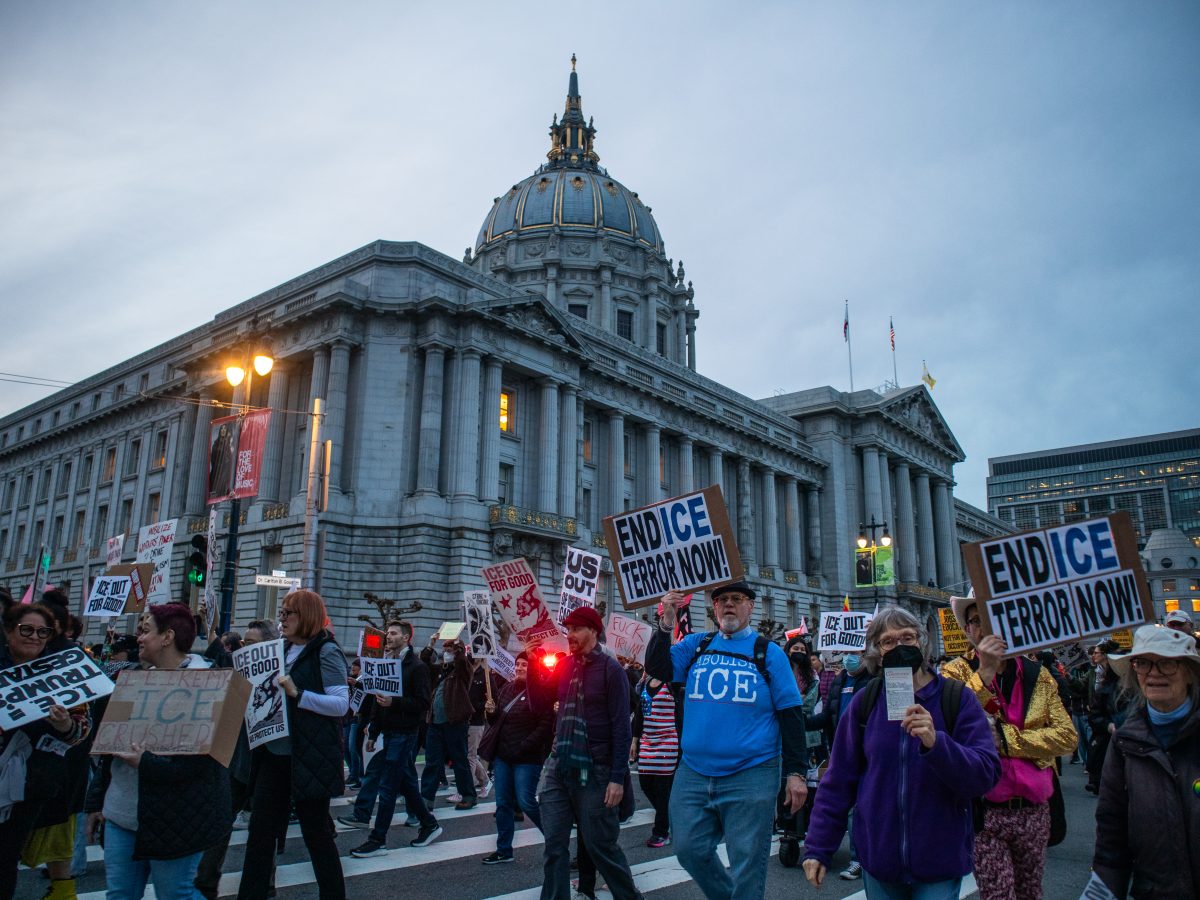
We have the power and are claiming it together. No Thrones. No Crowns. No Kings.
What began in 2025 as a single day of defiance has become a sustained national resistance to tyranny, spreading from small towns to city centers and across every community determined to defend democracy. Our peaceful movement is bigger than ever.
When our families are under attack and costs are pushing people to the brink, silence is not an option. We will defend ourselves and our communities against this administration’s unjust and cruel acts of violence.
On March 28th, rise up, take to the streets, and say it loud: no thrones, no crowns, no kings. We’re not watching history happen—we’re making it. Join us.
A core principle behind all No Kings events is a commitment to nonviolent action. We expect all participants to seek to de-escalate any potential confrontation with those who disagree with our values and to act lawfully at these events. Weapons of any kind, including those legally permitted, should not be brought to events.
Join peaceful people from San Francisco Bay communities and all walks of life for a family-friendly, inclusive and peaceful event on March 28th where we will create a new work of human art together on Ocean Beach. We have more power than we know!
The exact design for this banner is still being developed, and the message’s theme (always subject to last-minute changes) will be announced closer to the event.
When: Saturday, March 28th – Arrive by 11:30 am Location: Ocean Beach, SF – Stairwell 17
Directly across from the Beach Chalet — 1000 Great Highway, SF, CA, 94121 — closest intersection is Fulton and Great Highway.
Please Plan to Arrive at the Beach by 11:30 am – This will ensure we are all in place for photography by our drone crews at NOON SHARP. The event will wrap up by about 1:00 pm.
PLEASE REMEMBER TO REGISTER – Knowing how many people will attend really helps us with the banner design calculations. THANK YOU!
The Democratic Party has chosen again and again to abandon working people and cling to corporate power, militarism, and a feckless, out-of-touch leadership class, Norman Solomon of RootsAction says. And we’re all paying the price.
US Senate Minority Leader Chuck Schumer (L), Democrat of New York, and US House Minority Leader Hakeem Jeffries (R), Democrat of New York, hold a press conference on Capitol Hill in Washington, DC, on January 8, 2026. Photo by SAUL LOEB / AFP via Getty Images
The Democratic Party has lost to Donald Trump and MAGA twice, and is continuing to lose working-class voters by clinging to corporate power, militarism, and a leadership class increasingly disconnected from its base. In this episode of The Marc Steiner Show, Marc speaks with Norman Solomon about his new book, The Blue Road to Trump Hell, and the reality that the right can only be stopped by both confronting Democratic failures and rebuilding a grassroots politics rooted in class, peace, and social movements.
The following is a rushed transcript and may contain errors. A proofread version will be made available as soon as possible.
Marc Steiner:
Welcome to the Marc Steiner Show here on The Real News. I’m Marc Steiner. It’s great to have you all with us again. My guest today is Norman Solomon. He joins us once again. His latest work, The Blue Road to Trump Hill. This is a critically important book that wrestles with how the Democrats pave the way with its right terror that now controls the US government. Jonas Solomon is the National Director of Roots Action, executive director of the Institute for Public Accuracy. And along with this book, Ruch Action Democratic Autopsy looks at why the Democrats lost. Here’s a quote from one of the reports they did. Because their service to corporate power are still laid to the progressive wing of the party, out of control militarism, disconnection from the base of the working class, and how all that contributed to decline of support and the party’s platforming candidates, not to mention the Gaza War and our unwavering uncritical support of Israel.
And Norman, welcome. Good to have you with this.
Norman Solomon :
Hey, thanks a lot, Marc.
Marc Steiner:
Well, let me just begin with an overview and with your perspective of how and why the Democrats got to a place where they lost their base, whether it’s among the working class or progressives or in communities of color around the country, they’ve just sunk. So let’s start with how that began and why it happened.
Norman Solomon :
Well, I think Bernie Sanders summed it up very well just hours after the calamitous results came in of the reelection of Donald Trump ushering in his second term. Bernie said that it’s not surprising that the working class abandoned the Democratic Party after the Democratic Party abandoned the working class. And that pretty much sums it up. The Democratic Party was never some kind of strong left wing advocacy group for working people, but it did fight for basic, basic improvements in the working conditions and lives of most people in the United States going back to the New Deal of the 1930s. And what has happened gradually, especially over the last three or four decades, is that affinity with support from and for the rich corporations and the merger of more and more corporations into being bigger and bigger and more powerful, that has taken over the Democratic Party.
And the base has been abandoned. And when you abandon people, sooner or later, they figure it out. So the attraction of bogus, pseudo-populist, right-wing demagoguery, which is not a bad description of the current Republican Party, that’s just been appealing to all too many working people, want to be working people, those who feel that their lives are really lives of difficult uphill struggle, just basically in economic terms. That’s where we are now. And people who are listening might wonder, Mark, well, why are you talking about the Democratic Party and criticizing it when we are facing this fascistic politics coming out of the White House, coming out of the dominance of Congress? And I think the answer is really that the only electoral vehicle to turn around this horrible rightward extreme trend in the federal government is through the Democratic Party. And people may not like that.
I wish that were not so, but that’s the real world. And if AOC hadn’t run as a Democrat, if Rashida Talib or Ilhan Omar or Zoran Mandami, now the mayor of New York, if they hadn’t run as Democrats, they wouldn’t be in office. So that is a reality. And quickly, the other reaction might be, “Well, the Democrats are hopeless. Why are you trying to resuscitate this zombie party?” And in a way, the answer is similar. State power really matters. Who’s in the White House? I mean, duh, as the saying goes. Come on. We’ve seen the results of having people in power who are vicious, who are cruel, who are unabashedly pushing the power of the oligarchy.
Marc Steiner:
So this was not necessarily inside your book, but I wanted to ask you this. As I was reading your book, I started thinking about all the work and research I’ve done on 1930s Germany, not comparing this to a Hitlerian moment necessarily, but it came at a time when the left and progressives, liberals of Germany could not come together to defeat, in that case, a minority of the Nazis taking of the entire country. And there’s something about the inability, it seems to me, of different elements in this country, from liberal to progressive to left, to come together at some way to stop this right wing onslaught from taking over the country. To me, it’s almost akin to what happened in the South with the Ku Klux Klan. And some people might say this too a bit extreme, but I see sometimes the right wing taking over as the descendants of the clan taking over this country.
I think
Norman Solomon :
That’s well put. I mean, there’s a kind of a state terrorism which some of the sheriffs in the South were part of the clan and we have ICE behaving in many ways simply like terrorist thugs. It might seem like an exaggeration to some people, but for other people, it has become reality.
Marc Steiner:
So let me come back, not to digress away from your book, but I just wanted to throw that out there because as I was reading the book, this really hit me hard. And I-
Norman Solomon :
Well, I think it’s a key point, Mark, and it’s a dilemma. And as the saying goes, the required response has a dialectical element, which is these truths exist simultaneously, that the Democratic Party has been odious in so many ways, foreign policy supporting one war after another, so many other things that we could mention. At the same time, it is the electoral vehicle, the only way in which we’re going to throw these right-wing Republican thugs out of controlling the Congress and the White House. And I think we could frame our challenge right now as seemingly contradictory, but very real. We need a united front in this midterm election campaign, and then for 2028 for the presidential campaign, a united front with those who include militarists and corporatists who we find odious. At the same time, we need to fight against militarism and corporatism, and we can do that all at the same time.
It just requires some real clarity and determination
Marc Steiner:
To me what you said, it’s what they lost, they never had completely, but what they lost were their union and civil rights roots that really pushed progressive agenda inside the Democratic Party, killed segregation, built unions, fought for working people, and they’ve lost all that.
Norman Solomon :
Yeah. The focus is on identity politics. Class is out the window. Rhetorically, we hear about how the leaders of the Democratic Party are for the working class, but in fighting for the working class, I mean, basically nobody’s been home.
Marc Steiner:
Exactly. So make go through some of your major points. Let’s start with my youngest daughter and her generation and why they are losing the 20 somethings and the 30 somethings to either not voting or voting for a third party or some voting Republican, why they’re losing that group of people who are mostly fairly liberal or progressive.
Norman Solomon :
Yeah. Well, the so- called leadership of the Democratic Party intentionally had their fingers in their ears, and that really resulted in the Trump election back into the White House. When we looked at, and this is in my book, The Blue Road to Trump Hell, there were polls from the New York Times and elsewhere leading into 2022, 2023, early 2024, one poll showing that upwards of 90% of young voters did not want Joe Biden to run for reelection, and yet the so- called leadership and rank and file Democrats in Congress were like, “Oh, yes, sir,” as though he was the political commander-in-chief and just went along with it. And I think one stat I talk about in the book is that when you look at not just young people, but overall Democrats in the United States who were polled in 2022 and 2023 and asked, “Do you want Joe Biden to run for reelection?” The numbers were about 65 to 70% no.
And yet when you look at the numbers of Democrats in Congress at the same time who were saying that, it was about 1%. So what can we say about a party that has its base two-thirds saying, “Joe Biden, don’t run free election,” because they realized it would be a disaster if he did, and he wasn’t capable of serving as president for a second term, it was becoming evident. So two-thirds of the base saying, “No, no, no.” And 1% of their elected supposed representatives on Capitol Hill saying, “1% saying no.” So this is, I think, a snapshot and a politically and historically profound instance of how we’ve got a leadership of the Democratic Party that is absolutely and intentionally estranged from the base. Now, they’re tapped in with Wall Street very well
Marc Steiner:
And
Norman Solomon :
With Silicon Valley gazillionaires, I cite in the book an example where Governor Gavin Newsome, who were now told as the front runner for the 2028 Democratic presidential nomination, sent burner phones, pre-dialed with his digits put into those burner phones to a hundred CEOs of major corporations based in California with a note saying, “I’m here for you. Call me anytime.” And there’s no record of him sending one burner phone to advocates for the poor, for low-income people, for working people. So that’s another snapshot of what we’re up against.
Marc Steiner:
So let me stop there for a minute, because I think that what you just said, the Gavin Newsom is clearly a major front runner for the next nomination in South Democratic Party. And since what you describe is true, what does that portend? I mean, he has physically and oratorically the figure to do to be presidential in a kind of very superficial way.
Norman Solomon :
Hollywood.
Marc Steiner:
Hollywood, exactly. So A, what does that mean? And B, where do you see the organizing taking place to confront that and change the script?
Norman Solomon :
Well, the superficiality is screaming out at us. There’s that saying money doesn’t talk, it screams. And it’s partly confluence of his backing early on from the Getty family and so forth. And also, as you say, it’s just the surface, the tinsel and the imagery that we’ve been inculcated with about what a leadership is. He’s white, he’s slick and so forth, a guy. And at the same time, we have the potential from the base. I mean, Zurn Mandani was elected mayor because 50, 70, 80,000 volunteers went out into the streets of the five boroughs. And you can’t buy
60 or 80,000 volunteers. You can buy them to go out, but there’s not the spirit. There’s not that energy. There’s not that convincing capacity in reaching and talking with people one-on-one and so forth. So I think that’s the antidote to the poison of this kind of superficiality that we’ve seen is so toxic because when you look at these supposed leaders like Newsome and you see what they’re saying, he has moved right. He has vetoed farm worker bills in Congress for the rights of farm workers, for breaks in a hundred plus degree weather in the fields, strikers. He’s vetoed a bill to give them unemployment compensation, environmental regulations, he’s vetoed when they’ve come through. So this is part of the record. And then when he’s asked about Israel and Gaza,
Again, it’s just talking points reflexive. It’s time warned stuff about, “I love Israel. We got to support it. ” Well, Israel’s a genocidal state. And when you look again at the polls, this is another example of the gap because most Democrats say to pollsters about three quarters, Israel has committed genocide. Three quarters of Democrats, according to polls in this country, believe that arms should be cut off. There should be a weapons embargo on Israel, and yet it’s really hard to find these contenders, aside from Congressman Rokhana, we are told contending for the next presidential nomination, we’re willing to say that. So we’ve got to close that gap and the closure of that gap is not going to come from above. It’s going to come because we get organized. And I think this is the last part of the answer to your very good question, which is that’s how change has always happened.
Everything that we can be proud of in this country, Medicare, Medicaid, civil rights, gay rights, women’s rights, and so much more, environmental protection all came from the grassroots. And that’s where we are now. That’s what we need.
Marc Steiner:
And I agree. I mean, that’s where all the change came from, enforced legislation to change America in all those cases. And your governor in California is somebody that people want to like, but-
Norman Solomon :
Well, there’s a desperation. People
Marc Steiner:
Want
Norman Solomon :
Somebody who can go toe-to-toe with Trump and so forth. And he’s got tremendous press because he has done tweets and capital letters being equally stupid and abusive. Well, okay, at least it’s combative, which is perhaps an improvement over most who have been at the top of the Democratic Party, but it doesn’t do it. And we’ve learned that. And I think, again, Bernie Sanders has made this point very well. It’s not enough just to say how bad Trump is. You also have to have an alternative that gives people not only a vision, but specifics of what you want to do, like Medicare for All and so forth is something concrete for people that they can wrap their heads around, they can understand that would really change their lives. And I think we’ve seen the failure of, “Oh, Trump is so terrible. He’s going to fall under his own weight.
He’s going to destroy his own political future.” That’s what Hillary Clinton was banking on in 2016, and that’s pretty much what Kamala Harris was banking on in 2024. And the absurdity of that campaign, which I talk about in the book, Joy, the keynote theme of that campaign in August, September, October of 2024 from the Kamala Harris campaign was joy. While genocide was going on in Gaza, when people were worried about paying their bills, I mean, talk about being in the stratosphere of isolation. This continues to dog and cause tremendous problems for and from what we call the leadership of the Democratic Party.
Marc Steiner:
Remember when I read that in your book, I was thinking about how there’s nothing wrong in a campaign being joyful, but with no analysis and no fight behind it saying we want everything. Exactly. It doesn’t work. I mean, let’s talk for a moment about what you’ve written about and the role that Israel and Gaza play in this. And I think it’s a really tough one because we live in a world where many of the people in Jewish communities support the Democratic Party and there’s a growing split inside the Jewish world around Israel, Gaza at this moment. And the kind of line people are trying to thread around opposing Israel’s war and the decimation of Gaza and how that plays into the Democratic Party and how you think that plays into the future of American politics. The
Norman Solomon :
Future of American politics, if the grassroots has something to say about it, is to oppose genocide, to oppose arming any government that is committing atrocities and abusing human rights, the future should be to enforce the law. The Lehi law says you don’t arm human rights abusers around the world, and yet the Biden and Trump administrations have done just that. We’re now in a place where we cannot abide the sustaining of this kind of a policy. And as James Baldwin has written, as George Lakoff, the linguist has written as well, politics ultimately in people’s minds has to do with being moral. We would argue sometimes a very distorted view of that, but it is a moral engine that moves forward political and social movements. And not just, but especially young people in this country are revolted by and are revolting against the kind of support for genocide that the US government has continued to provide to Israel, as well as now this war of aggression, not a war of choice, a war of aggression against Iran which has the Middle East in flames as we speak.
So this is about moral politics. Martin Luther King talked about how love without power is anemic and power without love is ruthless. We need love and power energized through politics. So
Marc Steiner:
One of the things I started thinking about was, what is the alternative and how do you begin to organize and generate a movement and campaigns to change it? I mean, I watched the 20s and 30 somethings in my family. They’re all disenchanted with the Democratic Party. They’re disenchanted with the way politics is going in America. But they’re also out there in Gaza demonstrations and they’re doing other things to stand up or organizing a union in their workplace worth what they’re doing. The question is, what is the strategy to get back to union and civil rights roots for the 21st century to organize and to build something? How do you see that happening?
Norman Solomon :
Well, there’s a saying when people lead, leaders will follow, at least some of them. And the conception of so many people running for office and those in office, which is unfortunately internalized so often by so many of us, is that social movements are a subset of political campaigns, and that’s best atwards.
What we really need and what we benefit from when it happens is that political campaigns, electoral campaigns are subsets of social movements. And so when the social movements gain power, that can have a tremendous impact, not only on people’s understanding, but also on the results of the election. There’s no way that we could say, I believe, that Bernie Sanders would’ve had a ghost of a real chance to be the Democratic presidential nominee in 2016 without the Occupy Movement a few years earlier that was not only mobilizing people, but educating and agitating for millions of other people. And I think that is the future. It’s not by any means simple. I mean, it’s so much easier said than done. And I’ve written books, I’ve written a thousand articles, but the hardest thing I’m engaged with, with my colleagues at rootsaction.org is organizing because it’s messy, it’s difficult.
There’s all kinds of contradictions, but that’s how these changes get done. And if you look at the electoral arena, you see someone like I think one of the greatest members of Congress in my lifetime, Rashida Talib out of Michigan. She is immersed in social movements. She is an expression of them. She’s not simply using them for votes. And
Marc Steiner:
The time we have left, and I really having this conversation with you makes me want to have a number of them and we explore some things in depth here. But let’s talk for a moment about your organization Roots Action and what you just talked about a moment ago because the question to me, it goes back to grassroots organizing. So the question is, how do you organize that? How does that take root to seize today? Because I think that we are really on a precipice here. We’re a very dangerous precipice with this neophasistic right wing government that’s in power and Democrats in disagree not knowing what the hell to do.
Norman Solomon :
Well, we’re an extremely dangerous precipice, that’s for sure. And to mobilize means to requires that we mobilize in communities around the country. At rootsaction.org, Jeff Cohen, my longtime colleague and I founded Roots Action almost 15 years ago. And we did it in part because the online world on the left and progressive areas were dominated by outfits like MoveOn that were anti-war when Bush was in office, but then when Obama came in also tripling the number of troops in Afghanistan, for instance, they were not willing to be nearly so anti-war. We need a single standard of human rights and politics. And that’s what rootsaction.org has been about. Everybody, if you’re not already signed up in 30 seconds, you go to rootsaction.org, you can sign up to get our email action alert.
Marc Steiner:
And let me just digress and say it’s well worth to do that.
Norman Solomon :
Yeah, I’d like to say so. And then because it’s one component of organizing online. And just a couple examples. We launched the Don’t Run Joe campaign right after the midterms in 2022, and we were told, “Oh, it’s inevitable. Biden’s going to run for reelection.” We couldn’t find one other national progressive organization of any size to co-sponsor. We asked them, we invited them. So it was, so to speak, Roots Action carrying the torch throughout 2023 into 2024 saying, “For God’s sake, let’s stop Biden from being the nominee. It will be a disaster politically and in terms of his evident capacity or incapacity to run an effective campaign, let alone be in a second term.” A very recent example is that we’ve joined with the organization Peace Action to urge to call for and have constituents and thousands of them have done that in the last couple of days to contact their Democrats in House and Senate and say, “Time is up.
Chuck Schumer, Hakeem Jeffries, their leadership…” We don’t say it this way. Their leadership sucks. They are inspiring hardly anybody. They’re winking and nodding for this aggression against Iran with these really wishy-washy tactical discussions about process. And we need some explanations from the explanations from the White House. I mean, Jeffries was on Meet the Press a week after this horrible war was launched by the US and Israel against Iran. And he was saying, “Well, we need better answers from the Trump White House. This is the kind of demagoguery of its own sort that simply greenlights more war.” And so to sort of sum up, roots action is about, “Hey, we stick to principles, whoever’s in the White House, whatever party’s in control of Congress.” And I think that is part of the future we need to create.
Marc Steiner:
I think you’re right. And as you were saying that, before we close here, one of the things I thought about as you were responding, when it comes to Israel and Palestinians, it always seems to me, and I’ve been in that struggle for 50 plus years, from trying to join the Israeli army in 67 to then joining the anti-occupation forces in 68. And it’s not so difficult to create policies that people can relate to, like saying, “We have to create a world in the holy land, in Israel, Palestine for Jews and Palestinians live together, create the negotiation for it to take place so people live side by side in the same place and really push the idea of peace.” And the problem is I think Democrats have really lost their, A, their organizing roots, which I said earlier, which is where they came from, and B, their creative roots that they used to have in spades in the ’60s and ’70s.
And I think that, and not saying they’re the Democrats of the panacea, but I’m saying they’ve lost who they are.
Norman Solomon :
Yeah, creative roots is a good way to put it. And real clarity, one of the, I think, powerful forces behind the Mondami campaign, now Mayor Mandami, was to really focus on very clear examples and instances and tangible realities that needed to be created, affordability, free buses, childcare, education that would be access for everybody. And I think of something that Woody Guthrie once said, “Any damn fool can be complicated.” And I thought of it when, Mark, when you were talking about peace, I mean, peace is something very real. It’s very real for people, especially who are at risk of the opposite. I remember being in a souk in Tehran about 15 years ago. And I was talking with a guy there who spoke English and he said, “People all over the world, they want peace, but their governments won’t let them have it. ” And that’s where we really are now.
And I think it applies to what you’re saying about Israel, which is intentionally year after year, literally blowing up one country after another in the Middle East. I do want to say, I mean, I’ve listened to many of your programs on this subject of Israel and the Middle East. People should, I would recommend, go back to the Real News website and listen to some of those because in the last few years, you’ve done a really great job with various guests and in conversations talking about that peace is the core social justice is the core.
Marc Steiner:
Absolutely. And Norman Tomlin, I do really appreciate your time and the work you’ve been doing. We’re going to link to the book and link to Roots Action as well and continue our conversations together and come up with more ways to get this message out and to get this conversation out to everyone. And thank you so much for your work and your time, and I really appreciate you being here.
Norman Solomon :
Well, thanks a lot, Mark. And I do want to mention to people that in a world with so many paywalls that we shouldn’t have, I’ve been really pleased that when my book, The Blue Wrote to Trump Hell was published very recently, it went out immediately free online. So anybody who doesn’t want to
Marc Steiner:
Buy
Norman Solomon :
The book, great. Just go to this website, blueroad.info, and there are many formats you can read it online as a free ebook.
Marc Steiner:
And let me just say that it’s well worth the read because you’re really probing deeply into how the Democrats can change and what they’re failing at and how we can save our future. So I really appreciate the work you do. And we’re going to link to all that stuff right here on this conversation.
Norman Solomon :
Thanks so much, Mark.
Marc Steiner:
Thank you very much, Norm. Once again, I want to thank Norman Solomon for joining us today and remind everyone to check out his new book, The Blue Road Trumpelle, and check out his website, rootsaction.org. You can see the rest of his work there. It’s well worth the journey. Thanks to David Hebdon for running the program today, and our audio editor received Frank and producer Rosette Sewali for making it all work behind the scenes and everyone here through news for making this show possible. So please, let me know what you thought about what you heard today, what you’d like us to cover. Just write to me at mss@therealnews.com, and I’ll get right back to you. Once again, thank you to Norman Solomon for joining us today and his tireless work. So for the crew here at the Real News, I’m Marc Steiner. Stay involved, keep listening, and take care.
Host, The Marc Steiner Show Marc Steiner is the host of “The Marc Steiner Show” on TRNN. He is a Peabody Award-winning journalist who has spent his life working on social justice issues. He walked his first picket line at age 13, and at age 16 became the youngest person in Maryland arrested at a civil rights protest during the Freedom Rides through Cambridge. As part of the Poor People’s Campaign in 1968, Marc helped organize poor white communities with the Young Patriots, the white Appalachian counterpart to the Black Panthers. Early in his career he counseled at-risk youth in therapeutic settings and founded a theater program in the Maryland State prison system. He also taught theater for 10 years at the Baltimore School for the Arts. From 1993-2018 Marc’s signature “Marc Steiner Show” aired on Baltimore’s public radio airwaves, both WYPR—which Marc co-founded—and Morgan State University’s WEAA.
A Bay Bridge bike ride on April 25 seeks to breathe life back into a cherished dream of cyclists and pedestrians. But the price tag has grown to $700 million.
A rendering of a planned bicycle and walking path over the Bay Bridge from Oakland to Yerba Buena Island and into San Francisco submitted to the Metropolitan Transportation Commission and the Bay Area Trails Collaborative, which is managing the $700 million project. Credit: Arup design and engineering
On April 25, dozens of bike riders will meet in West Oakland to ride together for the annual Celebrate Trails Day ride, which highlights the East Bay’s abundant trails in nature reserves and along local roads.
This year, Bike East Bay and the event’s other organizers are focusing the day’s advocacy efforts on pushing forward a potentially game-changing project that would transform bike and pedestrian access to San Francisco: the Bay Skyway.
The biggest goal of the ride, the organizers told The Oaklandside, is to jumpstart momentum for the project among state, regional, and local legislators so that it gets the hundreds of millions of dollars needed to complete it — before they all get too old to ride.
For now, John Goodwin, the communications director for the Metropolitan Transportation Commission, told The Oaklandside, the West span path part of the project is “effectively paused” in the early planning stage. He said the soonest work on the project can advance is 2027.
“Future stages would include development and submission of Environmental Impact reports; submission of a Project Report; detailed design work; and right-of-way acquisition. All of these steps — to say nothing of securing money! — must be completed before construction can begin,” Goodwin said by email.
The design, by the Arun firm, shows a 15-foot path right next to the road on the Bay Bridge, rather than an elevated walkway above it. Source: Arup Design and Engineering
According to Robert Prinz, Bike East Bay’s advocacy director, legislators “get surprisingly little direct correspondence from constituents on most issues, so anything we can do to activate folks and encourage them to get more engaged makes a big difference.”
Never miss a story.Sign up for The Oaklandside’s free daily newsletter.Email
Prinz said a recent Emeryville City Council vote to approve a 40th Street cycle and walking track was a good example of such advocacy. Most people who showed up at the March 17 council session in-person opposed the project — but council members voted in favor because, Prinz said, most people who reached them in advance supported the project, giving them “more confidence to approve the construction.”
“Some of those comments were ones that we helped encourage, by sharing out info about the project and info on how individuals can get involved,” he said.
A 15-foot-wide walking and biking path
The path, in the upper-left corner of this image, as shown in a design rendering, would place people on the top deck of the Bay Bridge western span. Source: Arup Design and Engineering
Plans for Bay Skyway show a 15-foot-wide path that is separated from the main vehicle lanes on the Bay Bridge. It will connect to the eastern span of the Bay Bridge, whose bike lane opened in September 2013, via paths on Yerba Buena Island — with spur paths onto Treasure Island as well. Bike East Bay held an inaugural ride that year to celebrate the Oakland to Treasure Island path, which is why the Celebrate Trails Day ride has been called an “anniversary ride” in the years since.
The path of this April’s ride will take the cyclists onto the Bay Bridge and back, then to the Bay Trail next to Berkeley and Emeryville, continue onto the Albany Bulb, and end at Berkeley’s Sports Basement.
The latest design for the western span, completed by the Arup, an engineering and design firm in 2018, was originally estimated to cost up to $400 million, including full design and construction. But the estimate has gone up to $500 million for the western span and up to $700 million for the whole project that includes other paths. The price jump, Goodwin, the MTC spokesperson, and Gavin Lohry, an MTC staffer who is the bikeway project’s program coordinator, told The Oaklandside, is due to inflation and rising material and construction costs.
That $700 million includes the costs of the entire Multimodal Bay Skyway project: the western bridge span, called the Yerba Buena Island Multi-Use Pathway Project, and the West Oakland Link, which will connect the bridge path into West Oakland along West Grand Avenue and beyond. Goodwin said that $200 million is secured, with $500 million left to go.
“Money almost always is the biggest question about major transportation projects, and the funding pie for virtually all such projects includes a mix of local, regional, state, and even federal slices,” Goodwin said. “We recognize the huge gap between conception and construction. But there is not yet a plan for how to fill this gap and it’s way too early to speculate about specific fund sources. An eventual funding plan may include private support as well as public dollars.”
Goodwin further noted that, given funding availability for all projects, the top priority for bridge projects is simply to keep them in good repair.
The path, as shown in a design rendering, would drop people off at Essex Street in San Francisco, according to an early design. Source: Arup Design and Engineering
According to a summary document of the project presented to the Oakland BPAC by the Bay Trails Collaborative, securing funding involves “advocacy with elected officials, and identification of new and diversified streams of funding (grants, foundations, corporate giving).” The collaborative is a group of member and non-member organizations, agencies, and businesses that want to develop a regional trail network in the Bay Area.
The collaborative includes the city of Oakland, the SFMTA, the Metropolitan Transportation Commission, the Bay Area Toll Authority, Caltrans, the Alameda County Transportation Commission, and the Bay Area Air Quality Management District.
The ride is also a chance to convince members of the Bay Trails Collaborative in charge of the bridge, mainly Caltrans, to open the eastern span of the Bay Bridge pathway 24/7, as it currently closes at 9 p.m. each day. Bike East Bay has invited a representative from the Metropolitan Transportation Commission to answer cyclists’ questions about any of these projects before and after the ride.
Possible pollution risks
The Skyway, as reflected in a design rendering, would offer great views of San Francisco, but would also place people right next to thousands of cars. Source: Arup Design and Engineering
The Bay Skyway’s westbound bridge section is the cornerstone of a larger project that will further extend bike and pedestrian connections through the West Oakland Link, an elevated pathway that will lead into the Oakland Port, then into West Oakland to West Grand Avenue.
The West Grand Avenue project, scheduled to begin construction later this year, will renovate the old arterial road, replacing paving and adding bike lanes from Mandela Parkway to Maritime Road. According to Prinz, the city is currently preparing a grant application to the state’s Active Transportation Program that proposes a fully protected bikeway from Telegraph Avenue to Mandela Parkway and potentially from Mandela to Broadway as well. That stretch could someday connect to the Grand Avenue project, which the city is also in the process of securing funding, would add car-slowing infrastructure, such as pedestrian islands, as well as new protected bike lanes, north of Lake Merritt.
Prinz told us another goal of the April trail ride is to inform people about other major bike-and-pedestrian connectivity projects in the offing, as part of its Bridging the Bay campaign. These include an elevated pathway on 7th Street being built by the Port of Oakland and Emeryville’s 40th Street Multimodal Project, which will include a protected bikeway that will run west of the city border from Adeline Street to the Bay Bridge trail entrance.
All these projects are expected to link up, to allow cyclists to travel easily from the lake to the bridge and into the city.
Even with years of advocacy work ahead, the potential to someday ride from Oakland’s famous jewel lake all the way to San Francisco’s Embarcadero makes some of Oakland’s most hard core cyclists giddy.
Getting there may be a bumpy road. The Yerba Buena Island Multi-Use Pathway, for one, still needs to be completed. The San Francisco County Transit Authority says that should happen in summer 2028.
An environmental review is also needed to assess the potential effects of pollution on people walking or biking over the bridge right next to heavy car traffic. A brisk walk on the eastern span of the bridge today takes about 35 to 45 minutes one way; once the Yerba Buena path and the Western Path are completed, it might take close to 90 minutes or more to cross the whole bridge.
Former West Oakland Environmental Indicators Project co-director Brian Beveridge had said that his group had raised questions with members of the collaborative about human exposure to vehicle emissions, especially particulate matter that has deleterious effects when it enters the lungs. In 2022, the WOEIP was working on adding signs to the current Eastern span to warn people about their potential exposure levels. The WOEIP told the Oaklandside today that those signs are still not up on the Eastern span.
Last month, the Oaklandside reported on another project, the Prescott Greening Project, that seeks to reduce particulate matter exposure for West Oakland residents. That project is adding shrubs and trees between the freeway and residential neighborhoods to capture much of that pollution.
Horticulturist Tom Ogren told us that the areas closest to freeways, which he calls “dead zones,” are the “least healthy places to live.” Previous academic work has found that living within 500 feet of a freeway poses the greatest risk, especially for older folks, but few studies have examined the risks of temporarily biking or walking next to one. The bike-and-foot pathway on the Bay Skyway will be right next to the exhaust from up to 100,000 daily drivers.
Jose Fermoso covers road safety, transportation, and public health for The Oaklandside. His previous work covering tech and culture has appeared in publications including The Guardian, The New York Times, and One Zero. Jose was born and raised in Oakland and is the host and creator of the El Progreso podcast, a new show featuring in-depth narrative stories and interviews about and from the perspective of the Latinx community.More by Jose Fermoso
The legal advocacy organization Free Speech for People on Thursday published a full-page advertisement in The New York Times highlighting the more than 1 million people who have endorsed the group’s petition to impeach and remove President Donald Trump from office.
Free Speech for People’s (FSFP) campaign—which also includes billboard trucks and projections in Washington, DC—comes ahead of the third wave of “No Kings” demonstrations, which are set to take place Saturday in thousands of locations across the United States.
“On March 28, 2026, the people will rise up,” said FSFP digital organizing strategist Jax Foley. “The No Kings 3 protest is projected to be the largest mass comobilization in US history, with over 3,000 actions planned worldwide. People across this country are organizing, mobilizing, defending their communities, and demanding accountability.”
No Kings 3 comes amid Trump’s attacks on the rule of law and constitutional rights at home and escalating militarism abroad as the president has bombed seven countries since returning to office—and 10 or possibly even 11 over the course of his two terms—while backing Israel’s genocidal war on Gaza.
“Donald Trump poses a direct threat to our Constitution and to the rule of law,” FSFP president and co-founder John Bonifaz said in a statement. “The constitutional remedy of impeachment exists precisely for moments like this when a president abuses power, defies the law, and attacks democracy itself. Congress must act.”
FSFP’s petition, which was launched on the day of Trump’s second inauguration, urges Congress to “take action to defend our republic and Constitution” by impeaching the president again. As of Thursday afternoon, the petition had over 1,070,000 signatures and is more than halfway to its goal of 2 million signers.
“For more than a year, FSFP’s team of lawyers, election security experts, and grassroots organizers have been tirelessly and fiercely leading the campaign to impeach and remove Trump and key administration officials,” Foley said. “We have heard from people across the United States who are with us in the call for no kings, no tyrants, and the immediate impeachment and removal of Trump and his coconspirators. Put the power back in the hands of We The People.”
Trump is the only US president to be impeached twice—once in 2019 for abuse of power and obstruction of justice and again in 2021 for incitement of insurrection. A majority of senators voted to acquit Trump in 2019; a majority—but not the requisite two-thirds—voted to convict in 2021. Both chambers of Congress are now narrowly controlled by Trump’s GOP.
“The congressional power of impeachment is designed to address this tyrannical threat to our democracy,” FSFP said in the New York Times ad. “Members of Congress must abide by their oath to protect and defend the Constitution and impeach and remove Trump from office.”
Our work is licensed under Creative Commons (CC BY-NC-ND 3.0). Feel free to republish and share widely.
Rep. Gregory W. Meeks (D-NY) and House Minority Leader Hakeem Jeffries (D-NY) address a press conference in Copenhagen, Denmark, on April 25, 2025.
(Photo by Emil Nicolai Helms/Ritzau Scanpix/AFP/Getty Images)
Democrats may have enough votes to pass a war powers resolution before the two-week recess, but party leaders have still not committed to doing so, even as the president appears ready for a ground invasion.
Backlash is continuing to grow after US House Democratic leaders made the decision to push off a war powers vote on President Donald Trump’s Iran war for more than two weeks, even though they may have the votes to pass it immediately.
With Trump appearing poised to make the deathly unpopular decision to deploy ground troops into Iran within days, momentum around an act to restrict his warmaking capabilities only continues to grow.
Most of the Democrats who killed the last war powers resolution are now reportedly on board. So is Rep. Nancy Mace (R-SC), who emerged from a closed-door House Armed Services Committee briefing on Wednesday saying she was “even more” opposed to boots on the ground than when she entered.
But despite having introduced the resolution himself, Rep. Gregory Meeks (D-NY), the ranking member of the House Foreign Affairs Committee, appeared to get cold feet about bringing it to the floor for a vote before next week’s recess, a move which was met with anger and confusion from progressive critics.
A spokesperson for Democrats on the committee told Common Dreams on Wednesday that Meeks was very much committed to passing a bill to “hold President Trump accountable for his reckless war of choice,” but that one could not be pursued until April 13, after the recess, because some of the necessary “yes” votes had left Washington.
Drop Site News co-founder Ryan Grim described this as a “pathetic” excuse. “As Trump threatens a ground invasion, Democratic members of Congress are saying they won’t do the one thing they are elected to do: Show up and vote,” he wrote on social media.
Additionally, Grim reported on Thursday that Reps. Eric Swalwell (D-Calif.) and Emanuel Cleaver II (D-Mo.) had since returned to town. The only Democrat not currently in DC, he said, was Rep. Jared Moskowitz (D-Fla.), who said on Wednesday that his wife was undergoing a routine surgery.
Axios reported on Thursday afternoon that Rep. Ted Lieu (D-Calif.) is also absent due to the recent death of his father, and Rep. Jared Golden (Maine), one of the Democrats who opposed the last war powers vote, was still wavering as of Wednesday.
Even with some absences, Republicans are also not at full strength. Assuming that Republican Reps. Thomas Massie (Ky.) and Warren Davidson (Ohio) plan to vote yes, as they did in February, there may still be enough votes for the resolution to pass.
This is pretty amazing.
Rep. Greg Meeks to our Hill reporter Lily Franks on the War Powers resolution: "You go and talk to some Republicans, and come back and tell me where they are."
When asked by Drop Site reporter Lily Franks on Thursday whether there were enough votes to pass the resolution, Meeks insisted, “We can’t win the vote.”
“When you see me put the bill on the floor, that means we’re going to win,” Meeks said sharply. “I know how to count. I know how to do my job.”
When Franks pointed out that enough Republicans appeared to be on board, Meeks—continuing to interrupt—told her to “go find out” herself if there were enough votes.
“If only there were some mechanism on the House floor to find out how somebody might vote,” Grim quipped in response.
The Democratic spokesperson could not be reached for comment when asked by Common Dreams whether Meeks was now planning to push for a resolution vote before the recess, given that some Democrats have returned to Washington.
Nathan Thompson, a senior policy adviser for Just Foreign Policy, argues that even if Democrats do not have the votes to pass the resolution now, there is no reason not to bring it to a vote.
“Forcing a vote will make House Republicans own an increasingly likely ground invasion,” he said in a letter sent to House Democrats on Thursday morning, which was shared with Common Dreams. “Even a vote that falls short will be painful for House Republicans and put real pressure on the Trump administration.”
“The attendance excuse doesn’t hold,” he said. “Members can return by tomorrow to vote, and Republicans aren’t at full strength either… An unfortunate scheduling error should not prevent Congress from weighing in at a critical moment in history.”
Calls for a war powers resolution on Capitol Hill continued to grow after reports that the Trump administration is mulling several potential ground operations in Iran, potentially as early as Friday.
Axios reported on Thursday that the Pentagon is considering “invading or blockading” Kharg Island, Iran’s primary oil export hub—and sending American forces “deep inside the interior of Iran” in an effort to seize the country’s enriched uranium.
The concerns about the repercussions of a prolonged war—even for just another two weeks—are broadly shared. Speaking on MS NOW on Thursday, former Defense Secretary and CIA Director Leon Panetta warned that serious dangers exist that a short extension of the war could lead to a much more intractable situation.
“If we continue the war,” Panetta said, “if we go another 16 days of war and we incur casualties, or they incur serious casualties, then the likelihood is that you’re planting the seeds for a more permanent war.”
As the risk of a more protracted conflict was magnified on Wednesday, Trump insisted that the US is not at war at all, but is simply waging a “military operation” against Iran.
This has heightened the urgency among many Democrats on Capitol Hill, including Rep. Pramila Jayapal (D-Wash.).
“If it looks like a war, sounds like a war, and costs like a war… It’s probably a war,” the former chair of the Congressional Progressive Caucus wrote on social media Thursday. “Trump is admitting to violating the Constitution. No amount of doublespeak can change that.”
“Congress must vote on another war powers resolution,” she added.
Rep. Delia Ramirez (D-Ill.) told Axios that there was “absolutely” frustration among progressives that Democrats were planning to punt the vote to next month.
Meanwhile, critics are increasingly raising suspicion that Meeks—whom The Lever noted received more than $2.2 million from pro-Israel lobbying groups according to the watchdog group TrackAIPAC—is intentionally dragging out the vote.
A prolonged war and the resulting economic turmoil are brutally unpopular, including among Republicans, and the theory goes that Democrats may seek to let it become an albatross around their opponents’ necks in this fall’s midterms.
Independent journalist Aída Chávez has emphasized that Meeks held up the previous war powers vote by overinflating the number of Democrats likely to defect, and may have attempted to do so again.
But with Democratic stragglers on board and more Republicans “starting to break,” Chávez said: “Democratic leadership can’t keep hiding behind process.
“Bring the Iran war powers resolution to the floor right now,” she said.
Thompson of Just Foreign Policy warned Democrats that “failing to force a vote will be noticed and covered in the media,” and that “the Democratic base is watching and expects their party to put up a real fight.”
“Even if the vote falls short by a couple votes, the members who voted yes will have a powerful record to champion to their constituents,” he said. “The members who voted no will have a very difficult record to explain if troops end up being killed and injured on the ground in Iran.”
Our work is licensed under Creative Commons (CC BY-NC-ND 3.0). Feel free to republish and share widely.
Hundreds of UC Berkeley Jewish students, community members, and faculty hold a silent protest outside Zellerbach Hall on the UC Berkeley campus March 11, 2024. Credit: Ximena Natera, Berkeleyside/CatchLight
When a Jewish legal advocacy group announced last week that it had inked a $1 million settlement with UC Berkeley over allegations of antisemitic discrimination on campus, its leadership called it a “landmark” deal.
“We think it’s a major achievement in terms of trying to impact the lives and experience of Jewish students on the UC Berkeley campus,” said Paul Eckles, senior litigator at the Washington D.C.-based Louis D. Brandeis Center for Human Rights Under Law.
UC Berkeley, on the other hand, framed the agreement as largely an endorsement of the status quo.
“Are there some actions we’ve agreed to take that are new? Yes. But we believe that when you step back and look at the agreement as a whole, it’s an affirmation that the campus should continue to maintain its current policies and practices,” university spokesperson Dan Mogulof said.
The dueling narratives illustrate the complexity and political combustibility of a lawsuit that began in 2023 over complaints that law student organizations were excluding Zionist speakers, and resulted in a sweeping 19-page agreement covering everything from how UC Berkeley shares information about discrimination cases to how many security cameras there are on campus.
A Brandeis Center representative has already publicly accused the dean of UC Berkeley Law School of violating the agreement. Advocates for academic freedom said they worry the deal could squelch political speech in an era when the Trump administration has used charges of antisemitism to pressure elite U.S. universities to adopt its conservative vision. A group of pro-Palestinian students plans to challenge the deal in court, painting it as part of a pattern of capitulation to outside forces by Chancellor Rich Lyons’ administration. Multiple campus Jewish organizations and leaders either did not respond to Berkeleyside’s inquiries about the settlement or declined to comment on the record, with some citing the sensitivity of the issue.
The agreement makes changes to how UC Berkeley responds to discrimination complaints, including putting more emphasis on an often-disputed definition of antisemitism put forward by the International Holocaust Remembrance Alliance. The university also agreed to bar student organizations from having bylaws that ban Zionist speakers, and bolster mandatory antisemitism training for students, faculty and staff.
The settlement Cal will pay to the Brandeis Center will help cover its legal fees.
Defining antisemitism
The IHRA definition describes antisemitism as “a certain perception of Jews, which may be expressed as hatred toward Jews. Rhetorical and physical manifestations of antisemitism are directed toward Jewish or non-Jewish individuals and/or their property, toward Jewish community institutions and religious facilities.”
More controversial than the definition itself are the contemporary examples the organization cites, which include “claiming that the existence of a State of Israel is a racist endeavor” and “drawing comparisons of contemporary Israeli policy to that of the Nazis.” Critics say that framing can be used to suppress legitimate criticism of far-right Prime Minister Benjamin Netanyahu and his administration’s treatment of Palestinians in Gaza, the West Bank and within Israel, while supporters argue it recognizes that attacking the state of Israel can be a smokescreen for antisemitism.
UC Berkeley says it already takes that definition into consideration — among other factors — when reviewing complaints of antisemitic discrimination, following guidance from the U.S. Department of Education. But university investigators will now be required to explain in their case reports how the IHRA definition applies, and the campus office responsible for handling complaints will refer to the definition on its website. Harvard University and Pomona College made similar commitments in agreements signed with the Brandeis Center over the past year.
Israeli and Palestinian flags fly at a rally on the UC Berkeley campus in 2023. Credit: Ximena Natera, Berkeleyside/CatchLight
“Berkeley can say ‘We won because we didn’t adopt [the definition],’ but the Brandeis Center can say they won because the view of what is antisemitism will now be titrated through that document,” said Chris Hoofnagle, secretary of the Berkeley Initiative for Freedom of Inquiry, a faculty group.
While the lawsuit reflects genuine concerns about the freedom of Jewish students, Hoofnagle said, he worries about the “weaponization” of discrimination claims. “Faculty who have performed good faith research that is critical or that focuses on Israel could end up in a kind of laundry machine of complaints from people who merely disagree,” he said.
Last fall, administrators at George Mason University cited the IHRA definition of antisemitism when demanding that a student organization take down a social media post that referred to Israel as a “genocidal Zionist state.”
The American Association of University Professors has also opposed the use of the definition to restrict speech on university campuses.
“There is enormous pressure on colleges and universities from external stakeholders to adopt the IHRA definition, and that pressure is in itself highly problematic because it represents the views and the interests of external stakeholders that might be incompatible with robust cultures of academic freedom,” said Mia McIvers, the organization’s executive director.
Eckles, the Brandeis Center attorney, defended the definition, pointing out that it also explicitly says that “criticism of Israel similar to that leveled against any other country cannot be regarded as antisemitic.”
Because the agreement doesn’t force Berkeley to rely only on the IHRA definition of antisemitism, some scholars noted, it leaves room for the university to incorporate other definitions into its policies, such as the Jerusalem Declaration on Antisemitism. Some scholars see that version as more nuanced because it explicitly seeks to balance combating antisemitism with academic freedom.
Banning anti-Zionist bylaws
UC Berkeley admitted no wrongdoing in settling the suit, which stemmed from a 2023 case alleging that some law student organizations at the university had discriminated against Jews when they passed bylaws barring Zionist speakers from their events.
After the Oct. 7 Hamas-led attacks and Israel’s subsequent war on Gaza led to encampments at colleges nationwide protesting the killings of tens of thousands of Palestinians, the Brandeis Center and a second organization, Jewish Americans for Fairness in Education, amended their complaint to describe a rising tide of antisemitism at Berkeley that they said the university had failed to stem. Jewish students had been targeted with antisemitic graffiti, spat at and in at least one case physically attacked, they said, and cited a raucous protest of a February 2024 talk sponsored by pro-Israel student groups that led to the event’s cancellation.
The university says it has since taken a number of steps to improve the climate for Jewish students on campus, including instituting mandatory antidiscrimination training for all incoming students. The Anti-Defamation League earlier this month rated UC Berkeley a B – “Better Than Most” – on its campus antisemitism report card.
At the same time, Lyons has tried to reassure the campus community that he will defend their ability to speak freely about the Middle East, saying in congressional testimony last year that “if somebody is expressing pro-Palestinian beliefs, that’s not necessarily antisemitism.”
Students attach a banner to UC Berkeley’s Sather Gate, urging the University of California to “divest from war” on March 18, 2026. Credit: Ximena Natera for Berkeleyside
While the encampments are gone from campus, UC Berkeley students continue to protest Israel’s actions in Gaza, which a United Nations commission has defined as genocide. In April, students will vote on a campus referendum, put forward by the student government, that would urge the university to divest from companies involved in military weapons and surveillance technology. Pro-Palestinian student groups are backing the measure, but it does not single out Israel.
The Brandeis Center settlement says law student organization bylaws – which must be approved by the university – cannot bar Zionist speakers, but that groups remain free to choose who they will invite.
“Simply put, student organizations may continue to have the same policies that they have adopted restricting who they will invite to speak, but these policies cannot be contained within their Bylaws,” law school dean Erwin Chemerinsky wrote in an email to students last week.
“My position since this issue emerged has not wavered. I believe that student organizations have the First Amendment right to choose speakers based on their views, but I believe that these Bylaws are inconsistent with the Law School’s commitment to be a place where all ideas and views can be expressed,” Chemerinsky wrote.
In a sign of how contested the settlement language is, however, his comments drew a swift condemnation from the Brandeis Center, with Eckles telling the conservative Washington Free Beacon that they violated the “tenor and intent of the agreement … to make clear that anti-Zionism can be and is often used as a pretext for discrimination.”
Dr. Rich Lyons, Chancellor, University of California, Berkeley, testifies during a House Committee on Education and Workforce Committee hearing on “Antisemitism in Higher Education: Examining the Role of Faculty, Funding, and Ideology” on Capitol Hill, Tuesday, July 15, 2025, in Washington. (AP Photo/Rod Lamkey, Jr.)
The settlement comes as UCLA faces a lawsuit from the Trump administration claiming it has not done enough to protect its Jewish employees from harassment. That suit also demands increased antidiscrimination training and monitoring of how the university resolves complaints. UC Berkeley previously settled a separate suit with the Brandeis Center over an Israeli researcher who an internal investigation found had been denied an opportunity to teach on campus because of her nationality. The Brandeis Center is also suing the Berkeley school district over its “biased anti-Semitic learning environments.”
Shining a light on complaints
Many of the actions outlined in the recent settlement are things UC Berkeley is already doing, including running an antisemitism education initiative and a committee advising the chancellor on Jewish life, supporting Jewish and Israel studies programs, monitoring campus protests for possible discrimination, and preventing protesters from blocking entrances to campus.
The campus’s current training materials for incoming students already include the kind of contemporary examples of discrimination at universities that the agreement calls for. Freshmen at last fall’s new student orientation, for example, learned that UC policy would prohibit “posters on campus that include a cartoon image that is similar to images historically used to malign Jewish people.” If “several Jewish students are prevented from attending class because protesters block the pathway to the building and state that no Zionists can pass,” that would also be a policy violation, the training materials said.
But the Brandeis Center agreement also delves deep into the minutiae of campus security and disciplinary cases. The university promises to “add additional security cameras in prominent places around campus” and pledges not to allow exceptions to its campus protest rules because an event involves expression of views protected by the First Amendment.
Information about discrimination complaints will also be shared more widely under the agreement. The campus pledged to compile an annual tally of complaints regarding discrimination against Jewish or Israeli students, and compare the outcomes of those cases with those affecting other groups. The university will report to the Chancellor’s Advisory Committee on Jewish Life and Campus Climate whenever it receives a complaint about antisemitic discrimination related to an academic course.
Graduate student Hannah Schlacter, left, helped organized a march by Jewish students, faculty members and city residents at UC Berkeley on March 11, 2024. Credit: Ximena Natera, Berkeleyside/CatchLight
Some faculty and students said they were concerned about special reporting requirements that only apply to anti-Jewish discrimination. But the new policies could also provide ammunition for people seeking transparency about other kinds of discrimination at Cal.
Another advisory committee reporting to the chancellor, on Muslim and Palestinian student life, has previously tried to obtain data on reports of Islamophobia and anti-Palestinian racism on campus, said committee member Zaid Yousef, a law student. But the campus office in charge of handling discrimination complaints told the committee there was no such data breakdown available, Yousef said.
A legal challenge
Yousef is one of two pro-Palestinian students who are co-defendants in the Brandeis Center suit. Though not initially named in the complaint, they asked to join the case because they thought the outcome could affect their ability to express opposition to Israeli government policies and did not trust the university to defend their interests, said their attorney, Shanta Driver.
“If we invited him to campus, the students who invited him could be disciplined, which is really insane,” she said.
The student group Bears for Palestine in a statement said the university would use the settlement to “silence the lived experiences of Palestinians and to criminalize student organizing” and accused administrators of “fostering a campus climate of anti-Palestinian racism,” citing the recent removal of “Free Palestine” artwork from the campus’s Multicultural Community Center.
If the settlement stands, its biggest impact may be symbolic.
“Other schools are going to follow Berkeley’s lead,” said Muki Barkan, a dual Israeli-U.S. citizen who was a co-defendant in the suit before graduating from UC Berkeley’s law school in 2024 and is critical of the settlement.
“The fact that the university is committing to do something about antisemitism and they are doing it in a very public way is no doubt important,” said Leonard Saxe, a professor of contemporary Jewish studies at Brandeis University, which is not affiliated with the Brandeis Center.
But Saxe said there’s limited evidence that some of the efforts the university is promising, such as beefing up training for students and faculty, actually work to reduce discrimination.
“One of the things that bothers me is that the university isn’t moving to study what is effective,” he said.
Berkeleyside partners with the nonprofit newsroom Open Campus on higher education coverage.
Felicia Mello covers UC Berkeley and other East Bay colleges as Berkeleyside’s senior reporter for higher education. She works in partnership with Open Campus, a nonprofit newsroom focused on strengthening… More by Felicia Mello
A new analysis suggests at least half of arrests in San Francisco during the first ten months of President Trump’s administration occurred after private routine immigration appointments.
Over 1,000 immigration arrests took place in and around San Francisco between Jan. 20 and Oct. 15, 2025, data shows. And at least half of those took place behind closed doors at routine immigration appointments, which are inside private Immigration and Customs Enforcement field offices, a new analysis.
Unlike courthouse arrests, which have taken attracted the bulk of popular protest, these were hidden from public scrutiny.
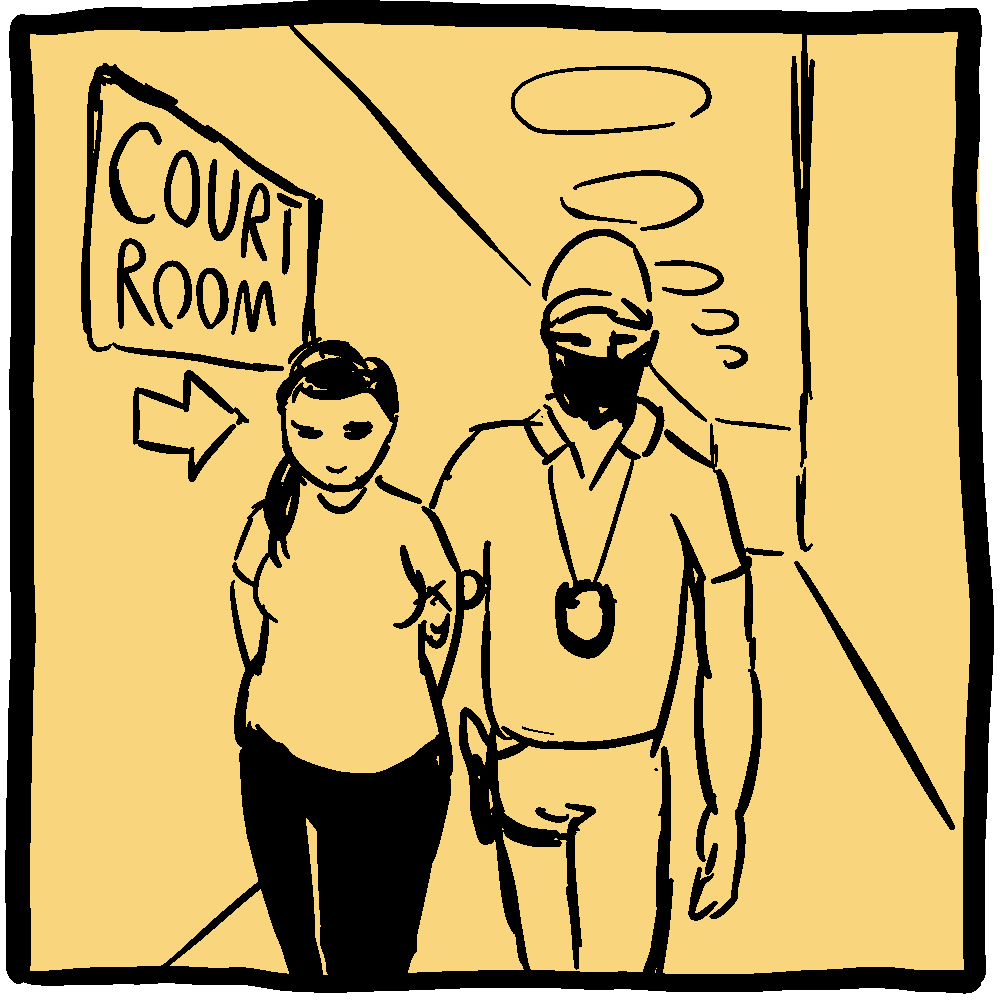
There were 539 arrests at immigration appointments, according to the data, and 193 arrests likely in the community — often in the street, or outside of people’s home or workplace. Another 147 arrests happened in hallways outside of immigration courtrooms.
Want the latest on the Mission and San Francisco? Sign up for our free daily newsletter below.Sign up
The findings reveal for the first time the approximate location of most arrests in the San Francisco area, thanks to a new analysis by Joseph Gunther, a mathematician and independent researcher who has been digging deep into ICE and immigration court data over the past year.
The data includes arrests from San Francisco proper, San Mateo County, Alameda County, Marin County, and portions of Contra Costa County and Sonoma County.
Gunther’s analysis brings detail to the nature of arrests happening in the San Francisco area, which previously were only understood on a much broader, regional level.
More than half of ICE arrests in S.F. happened at immigration appointments
Chart by Kelly Waldron. Source: Joseph Gunther. Note: Data covers ICE arrests that occurred between Jan. 20 and Oct. 15 2025 and excludes arrests that appeared to be transfers from criminal custody, or arrests originally made by non-ICE agencies.
To narrow down those arrests, Gunther looked at whether the person made a stop at the short-term ICE facility in downtown San Francisco. In the vast majority of cases, immigrants arrested around the Bay Area are sent to the holding room on the sixth floor before being sent to a longer-term ICE facility, often a few hours away in Bakersfield or McFarland, according to Milli Atkinson, the director of the Immigrant Legal Defense Program at the San Francisco Bar Association.
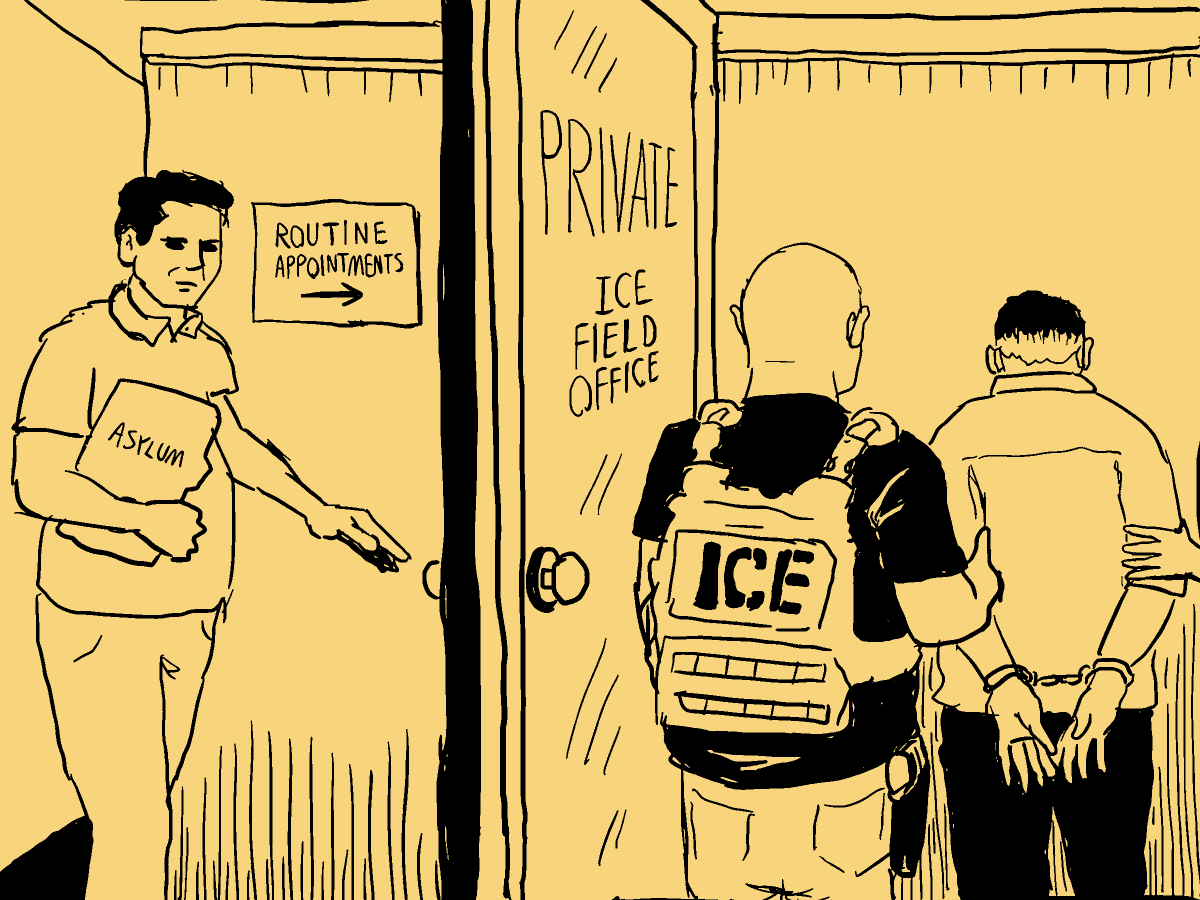
Immigrants who are seeking legal status, such as asylum, are required to periodically attend routine immigration appointments with an immigration officer at an ICE field office, and in 539 instances between January and October 2025, those appointments led to the immigrants’ arrest.
Unlike other arrests that take place at public courthouses or out in neighborhoods, these immigration appointments are held in a private field office. Immigrants are not allowed to bring in a guest, unless it is their attorney. Reporters are not allowed at these meetings.
Atkinson, who has been heavily active at the courthouse organizing pro-bono attorneys of the day, says these numbers are “very much in line with the trends that we saw.”
Unlike other cities where large scale raids have happened, such as Los Angeles or Minneapolis, fewer arrests have happened in public in San Francisco. Those that did happen in public spaces, namely those that happened outside the San Francisco immigration courtrooms, were extensively documented by Mission Local through the summer and fall.
Out of 147 people who were arrested outside of immigration court, only one person had a criminal conviction — a DUI, according to data reviewed by Gunther.
The vast majority of those courthouse arrests (128), were at the immigration court in San Francisco — a number that is confirmed by Mission Local’s reporting and data published by the immigration court. Nineteen arrests were recorded at the immigration court in Concord.
In 2025, most S.F. arrests were at immigration appointments
Chart by Kelly Waldron. Source: Joseph Gunther. Note: Data includes arrests where someone was first detained in downtown San Francisco and excludes arrests that appeared to be transfers from criminal custody, or arrests originally made by non-ICE agencies.
Around 12 percent of the arrests included in the data analysis were documented in news coverage, or in habeas petitions, which attorneys file to get their clients released after they are arrested.
Mission Local reporters read through habeas petitions to understand what these arrests look like. Here are some of their stories:
Immigration appointment
Community
Courthouse
Data methodology
The data used in this analysis was obtained through a records request made by the Deportation Data Project, a research group run by professors at U.C. Berkeley. Another dataset, available through the Executive Office for Immigration Review, was used to corroborate the courthouse arrests.
Gunther’s analysis breaks down the total arrests in San Francisco into several categories (check-in arrests, courthouse arrests and community arrests.) The arrests were narrowed down by location by obtaining information for every case where an individual was first taken into custody at the short-term ICE facility downtown, at 630 Sansome St.
Gunther gathered a sample of known arrests, where the details of where the arrest happened could be verified in habeas petition filings or news clips. That sample represents around 12 percent of the total arrests in and around San Francisco. Gunther was able to use that data sample to understand columns in the master dataset and determine where an arrest likely occurred.
The analysis excludes arrests that appeared to be transfers from criminal custody, or arrests originally made by non-ICE agencies. (For more information behind Gunther’s analysis, visit his website.)
A spokesperson for ICE did not endorse nor provide comment on this analysis; they said ICE does not provide granular data on individual arrests. How ICE categorizes arrests appears to vary by jurisdiction and the pattern identified in San Francisco is not necessarily applicable to other jurisdictions.
For around 12 percent of the arrests, how the arrest happened could not be verified or reliably drawn from the data. Those arrests are categorized as “other.”
Join the 3,300 readers who keep Mission Local free for all!
Because of you, Mission Local reached and surpassed our $300,000 year-end fundraising goal. All we can say is thank you.
Thank you for choosing to invest in a local newsroom rooted in San Francisco’s communities — one that listens first and reports deeply.
If you haven’t yet had a chance to give, it’s not too late to be part of this community. Your contribution today helps sustain the reporting our city relies on all year long.
We’re grateful you’re here — and we’d be honored to have you join our donors.
Kelly Waldron is a data reporter at Mission Local. She studied Geography at McGill University and worked at a remote sensing company in Montreal, analyzing methane data, before turning to journalism and earning a master’s degree from Columbia Journalism School. You can reach her on Signal @kwaldron.60.More by Kelly Waldron
Clara-Sophia Daly is an award-winning journalist who covers immigration for Mission Local. Previously, she reported for the Miami Herald, where she covered education and worked on the investigative team. She graduated with honors from Skidmore College, where she studied International Affairs and Media/Film, and later earned a master’s degree from Columbia Journalism School.
Her reporting portfolio includes investigations into a gymnastics coach who abused his students for more than a decade — work that led to his arrest.
She also covered the privatization of Florida’s public education system, state-funded anti-abortion pregnancy centers, and the deputization of university police officers under federal immigration programs.
A Northern California native, she first joined Mission Local as an intern for a year during the pandemic — and is excited to be back writing stories about immigration.
Nicholas was born and raised in San Francisco, and has been tracking the city’s changes and idiosyncrasies ever since. He holds a bachelor’s degree in English literature, and has written for local outlets since 2024.
Nicholas writes the “Richmond Buzz” neighborhood column, and covers culture and news across town.More by Nicholas David
Here’s how that works: In 2024, every last vestige of San Francisco political power united behind Prop. M, a sweeping rewrite of the city’s business tax formula. The issue was that San Francisco’s business tax revenue had grown top heavy: Just seven of the biggest companies accounted for 24 percent of the revenue and the 100 biggest companies paid 58 percent of it.
This left San Francisco extraordinarily susceptible to a massive financial hit if even a handful of companies relocated. In November 2024, 69.5 percent of voters approved Prop. M, and eased the burden on the city’s biggest companies (while the city did not disclose its largest companies, one needn’t be Hercule Poirot to deduce many or all of them. Just scan the city skyline, for starters.).
Here’s the thing, though: By doing so, the city raised the burden on many, many smaller companies. This, again, was by design.
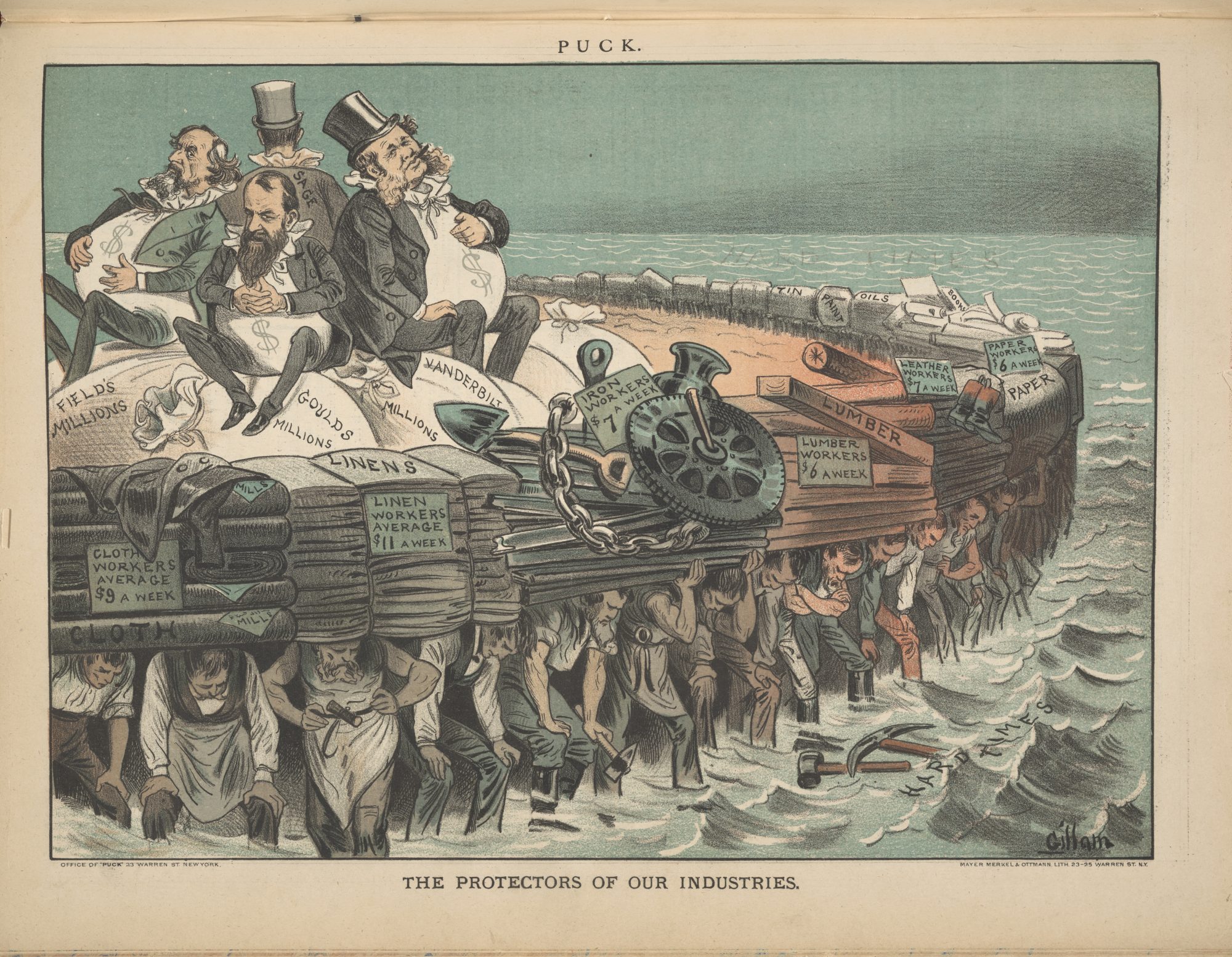
Easing taxes on the rich to raise taxes on the not-as-rich, regardless of the rationality of spreading out a tax base, was never a natural fit for San Francisco’s electorate. And, not even two years later, the city’s service employee unions have signature-gathered a tax on wealthy corporations onto this June’s ballot.
Proposition D, the so-called overpaid CEO measure, would levy taxes on companies in which the CEO earns 100 times or more his or her median income employee. At issue here is that this would undo portions of Prop. M.
If voters approve, a measure meant to instill stability and predictability for businesses with offices in San Francisco would be replaced, not so long after the ink has dried. This is the opposite of predictability for city businesses — but, as a political measure, it was very predictable.
Also predictable: the news that the Chamber of Commerce signature-gathered its own dueling June 2026 measure intended to sink Prop. D (it’ll be called Prop. C).
When questioned regarding their stance on Props C and D, some city leaders and aspiring elected officials have been straightforward. Others have been tap dancing to rival the Nicholas Brothers. The county Democratic Party will vote on whether to endorse or spurn Props. C and D on Wednesday night.
Prior to that, Mission Local asked San Francisco’s present and aspirational leaders the following:
Are you publicly supporting or opposing the CEO tax? Please state why or why not and please state how you’ll be voting on your own ballot.
And here are their responses:
Support the ‘Overpaid CEO tax’ proposal
Oppose the ‘Overpaid CEO tax’ proposal
Answered, did not address the question
Click on the photos to read more about their positions.
Daniel Lurie
Mayor of San Francisco
In 2024, San Franciscans — from labor and business to every mayoral candidate and the Board of Supervisors — came together to pass comprehensive business tax reform and boost our city’s economic recovery. But this June, and for the third time in five years, this same debate will be on the ballot once again. That’s a clear sign of a broken system that rewards insiders at the expense of everyday San Franciscans.
Neither measure moves San Francisco forward. They have no impact on the imminent budget deficit or federally imposed health care cuts we face right now.
We want to see San Francisco build more housing that works for their respective neighborhoods.
We cannot be complacent about our recovery, and dueling proposals that produce longer, more confusing ballots reward division over consensus––only benefitting those who know how to game a broken system.
It’s time to turn the page on a ballot system that obstructs the progress and accountability San Franciscans deserve. I will not support either of these measures, but I am taking steps to fix the broken system that got us here. This November, working alongside dozens of city leaders, voters will have the opportunity to fix our bloated City Charter and a deeply flawed initiative system, and keep San Francisco’s recovery moving forward.Back ↑
District 1 Supervisor and Congressional Candidate
Connie Chan
Board of Supervisors
Elected in 2020 and re-elected in November 2024
I am supportive of the overpaid CEO tax. Not only that, I, in fact, had our own version of it earlier this year. But we withdrew when we began to realize our labor partners had a very similar proposal, so we thought that signature-gathering is absolutely the way to go. It’s a lower barrier (50+1 percent vs. 66.7 percent) and I always think signature-gathering is in the San Francisco style. It’s very community-driven and allows conversations with voters.
It addresses overpaid CEOs — CEOs paid 100 times or more the median income employee of their company. It’s about, how do we address the gap between the CEOs and the workers? It really is a significant gap. We have seen, on the federal level, billionaires and corporations are getting tax breaks. At the same time, we’re getting health care cuts, food security cuts and education cuts from the federal government.
I want to see us revert to pre-Prop. M (of 2024) and make sure these corporations are paying their fair share in San Francisco.Back ↑
District 2 Supervisor
Stephen Sherrill
Board of Supervisors
Appointed by Mayor London Breed in December 2024
I’m not supporting the CEO tax right now. I’m concerned it risks accelerating the loss of grocery stores and pharmacies, which we’ve already seen with Walgreens closures in my district. We also just made major changes to our business tax structure with Prop. M in 2024, and I don’t think it’s responsible to revisit that so quickly. We need to maintain a thoughtful, long-term approach that supports downtown recovery and keeps San Francisco competitive.Back ↑
District 3 Supervisor
Danny Sauter
Board of Supervisors
Elected in November 2024
Yes, I am supporting the Overpaid CEO Tax. As we face serious budget shortalls, we need new avenues to provide essential services that our residents rely on. This measure means we can avoid drastic cuts to street cleaning, first responders and community programs.Back ↑
District 4 Supervisor
Alan Wong
Board of Supervisors
Appointed by Mayor Daniel Lurie in December 2025
I support the CEO tax as a measured, practical step. As we work through San Francisco’s budget challenges, it seems reasonable to ask large corporations to contribute a bit more to help sustain the services and infrastructure that make our city a place where businesses can thrive and succeed. My goal is for San Francisco to succeed as a city that supports both a strong business environment and a high quality of life for its residents and workers.Back ↑
District 5 Supervisor
Bilal Mahmood
Board of Supervisors
Elected in November 2024
Trump’s HR 1 created a $400 million budget hole in San Francisco, putting tens of thousands at risk of losing health care and food assistance. Prop. D is the only measure that can meaningfully close that gap, asking only the largest corporations to pay about a 1% gross receipts tax. Small businesses are protected, and similar taxes have not led to corporate flight or higher consumer costs. At a time when residents are being asked to pay more, it’s only fair that big corporations do their part.Back ↑
District 6 Supervisor
Matt Dorsey
Board of Supervisors
Appointed by Mayor London Breed in 2022 and elected in November 2022
Here’s the link to the Prop. D Opponent Argument I wrote for the Voter Information Pamphlet.
I strongly oppose Prop. D, which is asking voters to approve the largest business tax hike in San Francisco history — in some cases exceeding 900%. At a moment when we should all be united to protect the fragile economic recovery we’ve finally got underway, this divisive proposal will incentivize large employers to leave San Francisco — and it will impose a powerful disincentive for retailers and other businesses to ever come back again. It will cause countless businesses to raise prices on San Franciscans at a time when we should be doing the exact opposite — trying to improve affordability — and it won’t reduce a single CEO’s compensation.
It’s just terrible public policy, and I intend to work hard to defeat it.Back ↑
District 7 Supervisor
Myrna Melgar
Board of Supervisors
Elected in 2022 and re-elected in November 2024
Yes. The rich got a huge tax cut from Donald Trump’s “Big Beautiful Bill.” This is one thing we can do at the local level to mitigate the damage.Back ↑
District 8 Supervisor
Rafael Mandelman
Board of Supervisors
Elected in 2018, and re-elected in 2022
I am not supporting the tax. Less than two years ago I was part of the effort to develop and pass the Prop. M business tax reform. A main purpose of that measure was to encourage large employers to create jobs in San Francisco and to bring back our COVID-hollowed downtown. Prop. M was the result of broad consultation with stakeholders and involved a mix of tax cuts and increases to achieve revenue neutrality. This measure keeps the 2024 tax increases in place while reversing the tax cuts that were supposed to help revive our downtown. I share the proponents’ interest in finding additional revenue to pay for important services, but I don’t think this is the right way to do it.Back ↑
District 9 Supervisor
Jackie Fielder
Board of Supervisors
Elected in November 2024
It’s hard to say you care about affordability while opposing Prop. D. This will keep essential services affordable in a city where so much wealth is held by so few.Back ↑
District 10 Supervisor
Shamann Walton
Board of Supervisors
Elected in 2018 and re-elected in November 2022
I am in 100% support of the CEO tax. We have a large projected budget deficit and this tax will ensure that the people who earn the most play a role in addressing the city’s needs.Back ↑
District 11 Supervisor
Chyanne Chen
Board of Supervisors
Elected in November 2024
I am a supporter of the CEO tax and will proudly be voting for it in June.Back ↑
District 2 Supervisor Candidate
Lori Brooke
Founder of Neighborhoods United SF
I am not publicly supporting or opposing the CEO tax. I understand the intent behind the measure, to generate revenue to protect essential services at a time when San Francisco is facing a significant budget deficit. Those are real challenges, and we need to take them seriously.
At the same time, I have concerns about the potential economic impact of significantly increasing business taxes while the city is still working to recover and retain employers. We need to be thoughtful about any policy that could affect jobs, investment, and the overall stability of our local economy.
My focus is on finding balanced, sustainable solutions that protect critical services, support working people, and help the city recover.
On my own ballot, I am still reviewing the measure and will make a final decision after weighing its impact on the city’s budget, workforce, and long-term economic health.Back ↑
District 4 Supervisor Candidate
Albert Chow
Owner of the Great Wall Hardware and supporter of Joel Engardio recall
I will probably not support that one and probably vote for the other one that is a more gradual tax. I am not against billionaires paying their fair share, but it seems almost punitive. The way I see it, if anybody can pick up and move, it’s a billionaire or centimillionaire. If they have headquarters here and their workforce here and we do something that kind of in their mind says ‘this is the last straw, I’m done with this,’ I think that would end up hurting us more than helping us. We may get more tax in the first year or two but they may be thinking ‘I’ll move ot Austin.’ We’d lose the continued structural basis of our taxes in the long run. So, yes, they should pay their fair share, but we have to be measured in how we do it. They do have the ability to leave.Back ↑
District 4 Supervisor Candidate
Natalie Gee
Legislative aide to District 10 Supervisor Shamann Walton
Yes, I support it and actually helped gather signatures to get it on the ballot through my union, IFPTE Local 21. Working people already pay our fair share, whether it’s sales tax or property tax. Meanwhile, CEOs got double-digit tax cuts from the federal government last year. We’re just asking these big corporations, whose CEOs make 100 times what the median worker makes, to invest a little more in the city and keep our essential public services running.Back ↑
District 4 Supervisor Candidate
David Lee
Former State Assembly and District 1 supervisor candidate
Yes, I support the CEO tax. I will vote yes on D on my own ballot. A lot of billionaires already have tax breaks from the federal government. It’s time for billionaires to pay their fair share in San Francisco.Back ↑
District 8 Supervisor Candidate
Gary McCoy
Aide to Rep. Nancy Pelosi and recovery advocate
We should absolutely tax overpaid CEOs to protect San Franciscans and keep essential services in place in a time of massive federal tax and budget cuts that will impact SNAP, Medicare, and Medicaid. I will be voting yes on Prop. D.Back ↑
District 8 Supervisor Candidate
Michael Nguyen
IP attorney, LGBTQ+ activist and drag performer
Yes, I am publicly supporting the Overpaid CEO Act. San Francisco is facing devastating federal cuts to Medicaid and the programs our most vulnerable residents depend on — in-home care for seniors, mental health services and our public hospitals. We can’t just sit back and abandon our most vulnerable San Franciscans. The Overpaid CEO Act will generate over $200 million annually to protect those services. So speaking plainly, this measure means the difference between people getting care and people going without. A city that works for everyone is also a city where companies can recruit, retain, and grow. Those things are connected — not in conflict. I will be voting yes on Prop. D.Back ↑
District 8 Supervisor Candidate
Manny Yekutiel
Owner of Manny’s and founder of Civic Joy Fund
I don’t support this, and I join Mayor Lurie in his concern about this tax at this time. Our economic recovery is fragile, downtown vacancies remain high, and we’re just now starting to see forward progress on businesses choosing San Francisco again. We just passed a complete overhaul of our business taxes in 2024 (Prop. M, which I supported), which is already bringing in more business tax revenue to the City. Adding another business tax at this critical moment in the City’s recovery could backfire, resulting in businesses leaving the City or choosing elsewhere, which would hurt employment.
I totally get the appeal of taxing CEOs. But this isn’t actually a tax on CEOs. It’s a tax on gross receipts, which means companies will have to pay it whether they’re profitable or not, and the cost gets passed down to consumers. Let’s do this the right way.Back ↑
District 10 Supervisor Candidate
Theo Ellington
Policy director at legal and government relations firm Brownstein and interim executive director of Ruth Williams Opera House
My sense is that the CEO tax will pass. People are struggling and looking for relief. Particularly with the rising cost of living, income inequality and uncertainty as it relates to the local and federal budget. This is not ideal way to craft such policy, but I will vote yes, understanding my district has a high unemployment rate, concentration of public housing, and large number of students qualify for free or reduced lunch.Back ↑
District 10 Supervisor Candidate
J.R. Eppler
Business and nonprofit attorney, member of the Board of Appeals
I publicly support the CEO tax, and I’ll be voting yes on my own ballot. This is necessary to maintain essential services in the unfortunate face of lost federal funds. At a time when corporations received a tax windfall in the 2025 federal tax bill, it’s reasonable to ask the biggest companies to contribute a little more to protect the services San Franciscans rely on. This is a progressive tax that asks more from those at the top, not working families.Back ↑
District 10 Supervisor Candidate
D.J. Brookter
Chief Executive Officer at Young Community Developers Inc., a nonprofit, and Member of Sheriff’s Department Oversight Board
I support the proposed Overpaid CEO Act because it asks large, highly profitable corporations to contribute more to the communities they operate in. By generating over $200 million annually for mental health care, public hospitals, emergency services, and youth programs — especially in underserved neighborhoods like District 10 — this measure takes a meaningful step toward addressing inequality. At a time when wealth is concentrated at the top and many families are struggling, it’s a fair and timely way to strengthen essential services and invest in a more equitable San Francisco. For these reasons, I plan to vote yes on my own ballot and publicly support the measure.Back ↑
Less than two years ago, San Francisco voters came together to pass Proposition M, a broadly supported overhaul of our business tax system backed by labor, business leaders, and community stakeholders. That measure reflected a consensus-driven approach to strengthening our local economy, one that I believe we must continue to pursue, and it is far too soon to rewrite it.
This June, I will be voting no on both business tax measures because San Francisco cannot afford another divisive ballot fight when what we need is stability, certainty, and follow-through on what voters already approved.Back ↑
State Senator and Congressional Candidate
Scott Wiener
Elected in 2016 and re-elected in November 2024
F
Our city, like our state, faces a financial crisis in part because of Trump’s massive health care cuts that are paying for tax cuts for corporations and the wealthiest Americans. I have a long track record supporting progressive taxation — for example, I support increasing the state corporate tax, the extension of California’s 2012 income tax increase, and elimination of most of the Bush and Trump mega tax cuts. I am also very focused on the regional and local public transit revenue measures that are so essential for our transit systems. I do not support Props C and D.
While I understand and respect the effort to generate revenue for city services, the gross receipts tax contained in Prop. D was brokered as part of Prop. M in 2024 — a consensus business tax reform that resulted from extensive negotiation, including by labor and business and for which I campaigned. I don’t support revisiting that negotiated tax measure.Back ↑
Congressional Candidate
Marie Hurabiell
Attorney, founder of Connected SF, former Trump appointee to Presidio Trust Board of Directors
We’ve already seen what happens when we layer taxes onto large employers: businesses leave, the tax base shrinks, and the programs we were trying to fund end up worse off. 2024’s Prop. M was a recognition that we had overcorrected. This measure risks repeating that mistake at exactly the wrong moment. I’m committed to finding durable, fiscally sound ways to fund mental health and emergency services; this isn’t the right vehicle. I do not support the CEO Tax.Back ↑
Congressional Candidate
Saikat Chakrabarti
Former tech executive and former campaign manager and chief of staff for Rep. Alexandria Ocasio-Cortez
Yes. I have publicly supported the ballot measure and made a video explaining why a few months ago. I will be voting for it.
This act imposes a small surcharge on large corporations that pay their CEOs more than 100 times the wages of their median employees. Only corporations with over 1,000 employees and over a billion dollars in revenue will be affected, so small businesses will be fine.
These are the same corporations that received a big tax cut this year from Trump. At the same time, we have seen funding for our housing, public health and safety programs slashed in San Francisco. This act rectifies the situation. If we don’t pass it, we will see worse street conditions, more cuts to our healthcare system and slower emergency response times.
The War Prayer (1905) is Twain’s searing antiwar parable, in which a mysterious stranger reveals the unspoken horror beneath a congregation’s patriotic prayer for victory. Twain withheld it from publication during his lifetime, saying: “Only dead men can tell the truth in this world.”
Home, Sweet Home by Winslow Homer
It was a time of great and exalting excitement. The country was up in arms, the war was on, in every breast burned the holy fire of patriotism; the drums were beating, the bands playing, the toy pistols popping, the bunched firecrackers hissing and sputtering; on every hand and far down the receding and fading spreads of roofs and balconies a fluttering wilderness of flags flashed in the sun; daily the young volunteers marched down the wide avenue gay and fine in their new uniforms, the proud fathers and mothers and sisters and sweethearts cheering them with voices choked with happy emotion as they swung by; nightly the packed mass meetings listened, panting, to patriot oratory which stirred the deepest deeps of their hearts and which they interrupted at briefest intervals with cyclones of applause, the tears running down their cheeks the while; in the churches the pastors preached devotion to flag and country and invoked the God of Battles, beseeching His aid in our good cause in outpouring of fervid eloquence which moved every listener.
It was indeed a glad and gracious time, and the half dozen rash spirits that ventured to disapprove of the war and cast a doubt upon its righteousness straightway got such a stern and angry warning that for their personal safety’s sake they quickly shrank out of sight and offended no more in that way.
Sunday morning came-next day the battalions would leave for the front; the church was filled; the volunteers were there, their faces alight with material dreams-visions of a stern advance, the gathering momentum, the rushing charge, the flashing sabers, the flight of the foe, the tumult, the enveloping smoke, the fierce pursuit, the surrender!-then home from the war, bronzed heros, welcomed, adored, submerged in golden seas of glory! With the volunteers sat their dear ones, proud, happy, and envied by the neighbors and friends who had no sons and brothers to send forth to the field of honor, there to win for the flag or, failing, die the noblest of noble deaths. The service proceeded; a war chapter from the Old Testament was read; the first prayer was said; it was followed by an organ burst that shook the building, and with one impulse the house rose, with glowing eyes and beating hearts, and poured out that tremendous invocation — “God the all-terrible! Thou who ordainest, Thunder thy clarion and lightning thy sword!”
Then came the “long” prayer. None could remember the like of it for passionate pleading and moving and beautiful language. The burden of its supplication was that an ever–merciful and benignant Father of us all would watch over our noble young soldiers and aid, comfort, and encourage them in their patriotic work; bless them, shield them in His mighty hand, make them strong and confident, invincible in the bloody onset; help them to crush the foe, grant to them and to their flag and country imperishable honor and glory –
An aged stranger entered and moved with slow and noiseless step up the main aisle, his eyes fixed upon the minister, his long body clothed in a robe that reached to his feet, his head bare, his white hair descending in a frothy cataract to his shoulders, his seamy face unnaturally pale, pale even to ghastliness. With all eyes following him and wondering, he made his silent way; without pausing, he ascended to the preacher’s side and stood there, waiting. With shut lids the preacher, unconscious of his presence, continued his moving prayer, and at last finished it with the words, uttered in fervent appeal,”Bless our arms, grant us the victory, O Lord our God, Father and Protector of our land and flag!”
The stranger touched his arm, motioned him to step aside — which the startled minister did — and took his place. During some moments he surveyed the spellbound audience with solemn eyes in which burned an uncanny light; then in a deep voice he said
“I come from the Throne-bearing a message from Almighty God!” The words smote the house with a shock; if the stranger perceived it he gave no attention. “He has heard the prayer of His servant your shepherd and grant it if such shall be your desire after I, His messenger, shall have explained to you its import-that is to say, its full import. For it is like unto many of the prayers of men, in that it asks for more than he who utters it is aware of-except he pause and think. “God’s servant and yours has prayed his prayer. Has he paused and taken thought? Is it one prayer? No, it is two- one uttered, the other not. Both have reached the ear of His Who hearth all supplications, the spoken and the unspoken. Ponder this-keep it in mind. If you beseech a blessing upon yourself, beware! lest without intent you invoke a curse upon a neighbor at the same time. If you pray for the blessing of rain upon your crop which needs it, by that act you are possibly praying for a curse upon some neighbor’s crop which may not need rain and can be injured by it. “You have heard your servant’s prayer-the uttered part of it. I am commissioned by God to put into words the other part of it-that part which the pastor, and also you in your hearts, fervently prayed silently. And ignorantly and unthinkingly? God grant that it was so! You heard these words: ‘Grant us the victory, O Lord our God!’ That is sufficient. The whole of the uttered prayer is compact into those pregnant words. Elaborations were not necessary. When you have prayed for victory you have prayed for many unmentioned results which follow victory-must follow it, cannot help but follow it. Upon the listening spirit of God the Father fell also the unspoken part of the prayer. He commandeth me to put it into words. Listen!
“O Lord our Father, our young patriots, idols of our hearts, go forth to battle-be Thou near them! With them, in spirit, we also go forth from the sweet peace of our beloved firesides to smite the foe. O Lord our God, help us to tear their soldiers to bloody shreds with our shells; help us to cover their smiling fields with the pale forms of their patriot dead; help us to drown the thunder of the guns with the shrieks of their wounded, writhing in pain; help us to lay waste their humble homes with a hurricane of fire; help us to wring the hearts of their unoffending widows with unavailing grief; help us to turn them out roofless with their little children to wander unfriended the wastes of their desolated land in rags and hunger and thirst, sports of the sun flames of summer and the icy winds of winter, broken in spirit, worn with travail, imploring Thee for the refuge of the grave and denied it-for our sakes who adore Thee, Lord, blast their hopes, blight their lives, protract their bitter pilgrimage, make heavy their steps, water their way with their tears, stain the white snow with the blood of their wounded feet! We ask it, in the spirit of love, of Him Who is the Source of Love, and Who is ever-faithful refuge and friend of all that are sore beset and seek His aid with humble and contrite hearts. Amen.
(After a pause)
“Ye have prayed it; if ye still desire it, speak! The messenger of the Most High waits.”
It was believed afterward that the man was a lunatic, because there was no sense in what he said.
Help Outreach Working Group lift the fog of corporate media. Donate to help us maintain this website and distribute literature on the street.
Seven Days in D.C. (June 28 – July 4) Seven Days in D.C. About Schedule Support Donate Volunteer Merch Auction Washington, D.C. June 28 – July 4, 2026 View the ScheduleTicketsDonateVolunteer A Week of Democracy in Action From June 28 through July 4, organizers from across the country will gather... Continue reading →
Big news: Our Pride Breakfast speaker lineup is coming together. We’re honored to welcome Xavier Becerra, former U.S. Secretary of Health and Human Services, former California Attorney General, and the Democratic nominee for Governor of California, as a keynote speaker at the 29th Annual Alice Pride Breakfast. Throughout his career,... Continue reading →
This Sunday’s Town Hall: Announcing This Week’s Progressive Town Hall: Every Sunday at 4pm ET/1pm PT RSVP HERE Join PDA activists online from across the country to discuss the importance of progressives reclaiming the American story from the MAGA right, an issue of heightened importance as we’re now within one... Continue reading →
Seven Days in D.C. (June 28 – July 4) Seven Days in D.C. About Schedule Support Donate Volunteer Merch Auction Washington, D.C. June 28 – July 4, 2026 View the ScheduleTicketsDonateVolunteer A Week of Democracy in Action From June 28 through July 4, organizers from across the country will gather... Continue reading →
We protest Heritage Foundation EVERY MONDAY (Join us!!!!) By admin | September 2, 2025 | Uncategorized Cliff Cash Comedy Premiered Jul 26, 2025 Every Monday at The Heritage Foundation 214 Massachusetts Ave. Washington D.C. 4pm protest 6pm pizza Every Friday at Fox News D.C. 400 N. Capitol St. Washington D.C. 4pm protest 6pm pizza We are... Continue reading →
Seven Days in D.C. (June 28 – July 4) Seven Days in D.C. About Schedule Support Donate Volunteer Merch Auction Washington, D.C. June 28 – July 4, 2026 View the ScheduleTicketsDonateVolunteer A Week of Democracy in Action From June 28 through July 4, organizers from across the country will gather... Continue reading →
Seven Days in D.C. (June 28 – July 4) Seven Days in D.C. About Schedule Support Donate Volunteer Merch Auction Washington, D.C. June 28 – July 4, 2026 View the ScheduleTicketsDonateVolunteer A Week of Democracy in Action From June 28 through July 4, organizers from across the country will gather... Continue reading →
One Million Rising: Strategic Non-Cooperation to Fight Authoritarianism Virtual Event · Hosted by No Kings Time Wednesdays 8 – 9:30pm EDT Location Virtual event Join from anywhere About this event Across the country, authoritarian forces are getting bolder and more dangerous. Trump and his allies are not hiding their agenda: mass deportations,... Continue reading →
Seven Days in D.C. (June 28 – July 4) Seven Days in D.C. About Schedule Support Donate Volunteer Merch Auction Washington, D.C. June 28 – July 4, 2026 View the ScheduleTicketsDonateVolunteer A Week of Democracy in Action From June 28 through July 4, organizers from across the country will gather... Continue reading →


![NO KINGS [Human Banner-SF Ocean Beach] organized by No Kings](https://mobilizeamerica.imgix.net/uploads/organization/NK3_March%2028_16x9_20260210190658163114.png?auto=format&crop=faces&fit=crop&h=494.24083769633506&w=944)


 by
by 


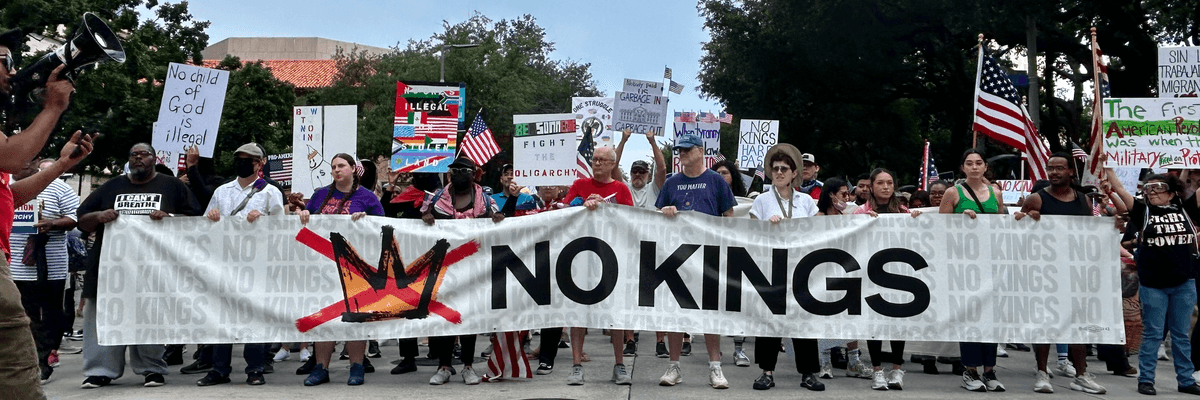
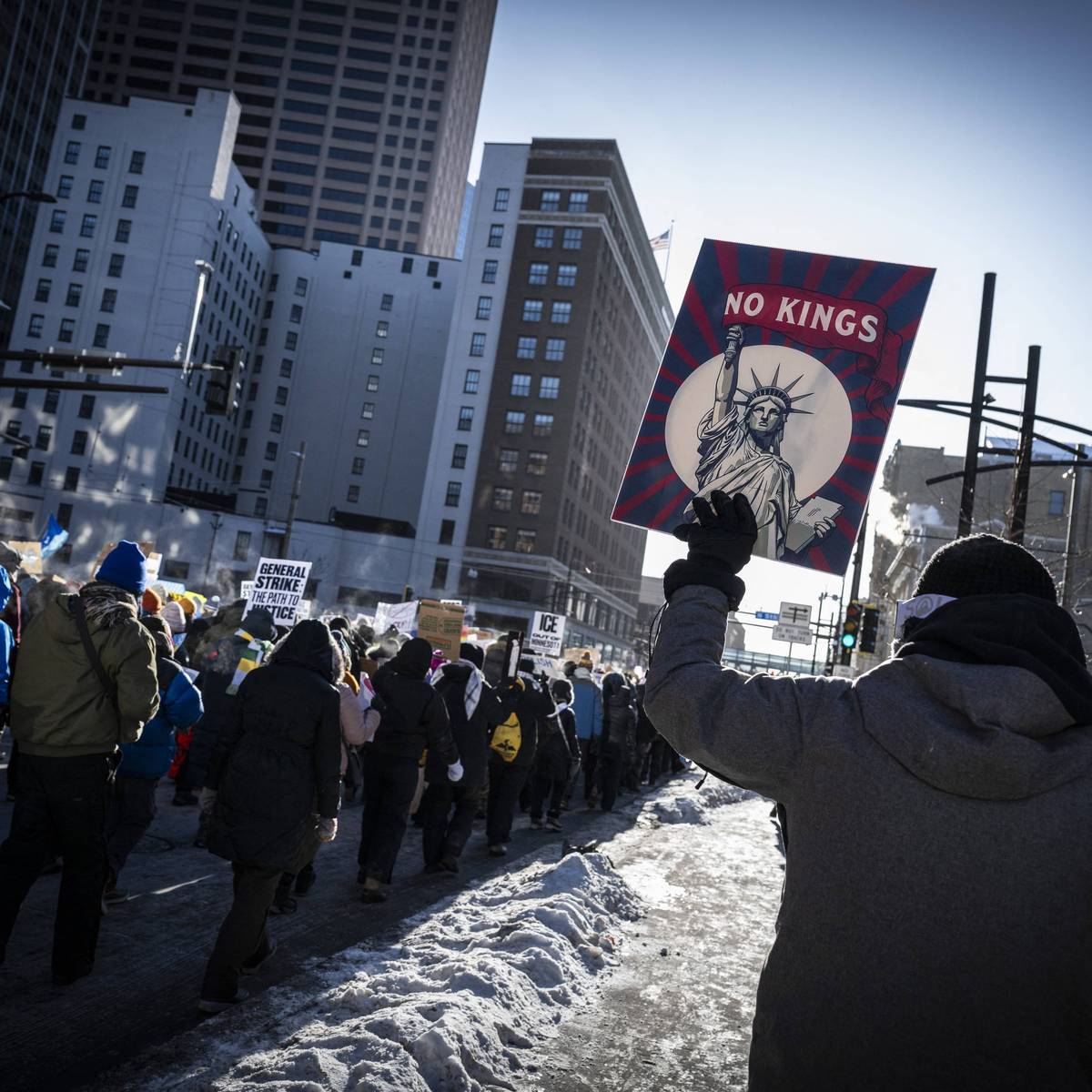
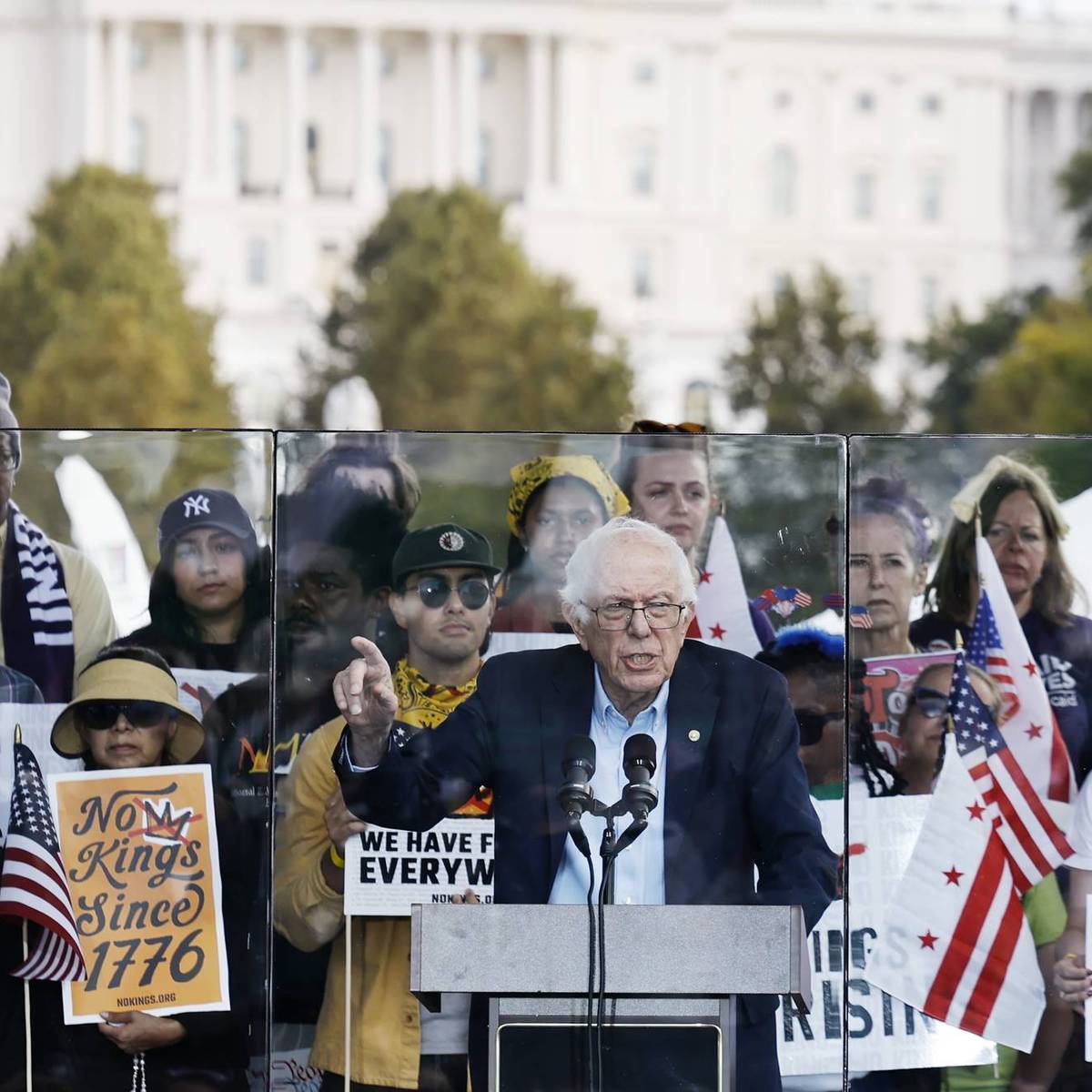
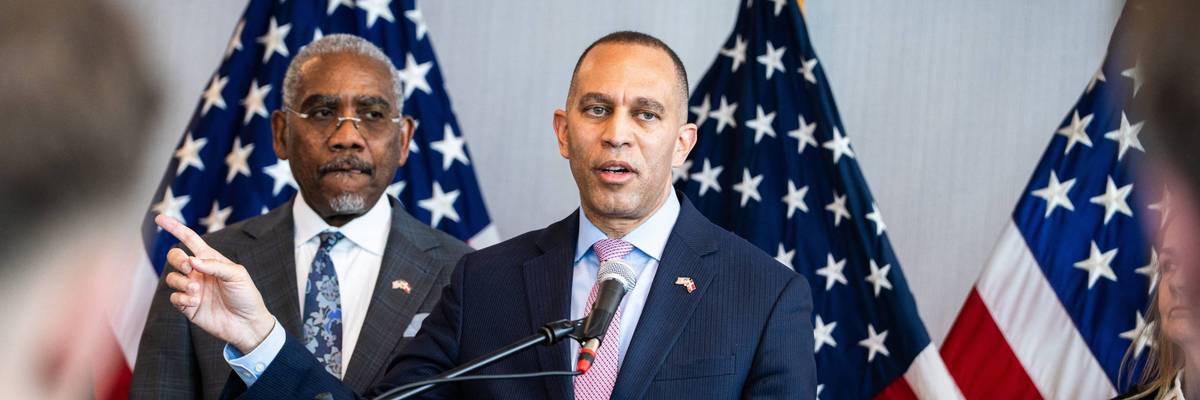


 by
by