DSASF.org

Democratic Socialists of America – San Francisco

News

Weekly Roundup: December 16, 2025

December 16, 2025

News

Weekly Roundup: December 9, 2025

December 9, 2025

News

Weekly Roundup: December 2, 2025

December 2, 2025

News

Weekly Roundup: November 18, 2025

November 18, 2025

Democratic Socialists of America – San Francisco

Democratic Socialists of America – San Francisco Chapter seeks to create a system based on justice and equality for all people. We believe everyone deserves to live their own life with dignity. We work to equalize political and economic power, because true democracy cannot coexist with inequality. We urgently fight to stop the many crises facing our most powerless members of society.

We are not a political party. We are a coalition of people, united to create a more powerful front against the worst that capitalism has to offer.

Learn more about us.

DSA San Francisco Newsletter

SUBSCRIBE FOR WEEKLY UPDATES

Welcome back, Mike!

Not Mike? Click here.

  • Opt in to email updates from DSA San Francisco

Sponsored by: DSA San Francisco

Made with ❤️ by DSA SF

9 Montana Republicans voted with 18 Democrats to lower income tax, provide Medicaid, invest in infrastructure, and provide support for their citizens.

Go to UnderReportedNews

r/UnderReportedNews•1d agocoachlife

9 Montana Republicans voted with 18 Democrats to lower income tax, provide Medicaid, invest in infrastructure, and provide support for their citizens. Because of this, the GOP censured them and kicked them out of the party.

(via Reddit.com)

Source: https://x.com/CBSMornings/status/2005642568575357263

X: https://x.com/CBSMornings/status/2005642568575357263?s=20

After the recognition of a Palestinian state in 2025, what’s next ?

Middle East

The recognition of the State of Palestine by several Western countries in September stood out as one of the key diplomatic moments of 2025. Largely symbolic for Palestinians, the move raised questions about whether it could break a decades-long geopolitical stalemate.

Issued on: 29/12/2025 – France24.com

By: Marc DAOU

This file photo shows Palestinians flying their flags during a rally in support for Gaza and celebrating the latest western nations recognitions of the Palestinian state ahead of the United Nations General Assembly meetings, in the West Bank city of Ramallah on September 23, 2025.
This file photo shows Palestinians flying their flags during a rally in support for Gaza and celebrating the latest western nations recognitions of the Palestinian state ahead of the United Nations General Assembly meetings, in the West Bank city of Ramallah on September 23, 2025. © Nasser Nasser, AP

The Palestinian cause scored a symbolic victory in 2025 as several Western countries that had long shown caution or ambiguity formally recognised the State of Palestine.

In September, on the sidelines of the 80th United Nations General Assembly in New York, France, Britain, Portugal, Canada, Australia and Belgium, among others, announced they were recognising Palestine, as Israel continued its war in Gaza and stepped up settlement expansion in the occupied West Bank.

France takes the lead

France played a driving role in the unprecedented wave of recognitions, prompting strong opposition from Israeli Prime Minister Benjamin Netanyahu, who rejected the creation of a Palestinian state and described it as “a huge reward for terrorism”, referring to Hamas and the October 7 attacks.

Advertising

After years of rhetorical support for a Palestinian state, conditioned on prior peace with Israel, Paris ultimately decided to move to formal recognition on September 22, when President Emmanuel Macron addressed the UN General Assembly.

The decision was presented as an explicit endorsement of the two-state solution, long viewed as the central framework for resolving the Israeli-Palestinian conflict.

“This recognition is unquestionably a very important moment in the history of this conflict, as well as for French diplomacy, particularly in the way it was carried out,” said Jean-Paul Chagnollaud, emeritus professor and honorary president of the Institute for Research and Studies on the Mediterranean and the Middle East (IREMMO). “There is indeed a symbolic dimension, but it is more than that, because it is a significant political act.”

“France sought to rally part of the Western world that had previously been reluctant,” he added, noting that the broader French initiative led to the New York Declaration, signed by 142 states.

France’s recognition formed part of a wider diplomatic push, including an international conference co-chaired with Saudi Arabia that culminated on September 12 in the UN General Assembly’s adoption of the New York Declaration, which described recognition of the Palestinian state as “essential and indispensable”.

The declaration laid out what was described as an “irreversible” roadmap for a political settlement based on the two-state solution and excluded Hamas from any political role in Gaza.

“Ultimately, this kind of recognition comes down to the decision of one person – the president – who, like anyone else, has doubts and hesitations,” Chagnollaud said. “Last spring, I wouldn’t have bet a euro on France recognising the (Palestinian) state. But what Emmanuel Macron saw in April, when he travelled close to Gaza during a visit to Egypt, and the atrocities then being committed, pushed him to act.”

Limited effects

Despite opening the way for closer bilateral ties and increasing pressure on the Palestinian Authority to pursue reforms, the recognitions remain largely insufficient given the realities on the ground.

Even if France said the move increased pressure on Israel to accept the Gaza ceasefire demanded by US President Donald Trump a couple of weeks after the UN General Assembly, recognition has not ended the occupation, halted settlement expansion or stopped violence against Palestinian civilians. Nor has it sidelined Hamas, which continues to control the Gaza strip.

Without concrete implementation of the New York Declaration, stronger pressure on the Israeli government and a clear US willingness to rebalance power dynamics, the recognitions risk remaining largely symbolic, with little impact on Palestinians’ daily lives.

“The effects are clearly limited and, in some respects, counterproductive,” Chagnollaud said. “They are limited because recognition has no direct impact, and because France and the Europeans lack leverage on the ground, unlike the Americans, who are clearly opposed to this recognition and to the New York Declaration.”

“The move is counterproductive if all these states that have taken the step of recognition stop there,” he added. “And unfortunately, that is the case since they have not lifted a finger to jointly impose a reality on the ground, for example through sanctions against Israel, which has waged a war that has annihilated an entire society and is doing everything, including in the West Bank, to undermine the very idea of a Palestinian state.”

The diplomatic momentum was soon overshadowed by Donald Trump’s peace plan, which succeeded in imposing a ceasefire in Gaza but was structured around US and Israeli security priorities, leaving intact the grievances that fuel violence and undermine prospects for lasting peace.

“We are heading towards the crushing of the Palestinian question, both literally and figuratively,” Chagnollaud said. “I even think that in 2026 we will witness one of the worst periods in Palestinian history.”

This article was translated from the original in French by Anaëlle Jonah.

Big Banks Are Short of Cash: Another Bailout and Recession to Come, Prof. David Cay Johnston

The Mark Thompson Show Dec 30, 2025 The Mark Thompson Show Live Daily 2p-4p ET/11a-1p PT Prof. David Cay Johnston at RIT, Pulitzer Prize winning Author & Investigative Journalist https://bsky.app/profile/davidcayjohn… Big Banks Enjoy Stealth Bailouts – A DCReport Exclusive https://www.dcreport.org/2025/12/29/n…

Walter Cronkite on freedom of the press

Cronkite in 1983

“FREEDOM OF THE PRESS IS NOT JUST IMPORTANT TO DEMOCRACY, IT IS DEMOCRACY.” 

– Walter Cronkite

Walter Leland Cronkite Jr. (November 4, 1916 – July 17, 2009) was an American broadcast journalist who served as anchorman for the CBS Evening News from 1962 to 1981. During the 1960s and 1970s, he was often cited as “the most trusted man in America” after being so named in an opinion poll. Wikipedia

New State Laws Aim to Protect Environment, Consumers as Trump Wages All-Out War on Climate

New State Laws Aim to Protect Environment, Consumers as Trump Wages All-Out War on Climate

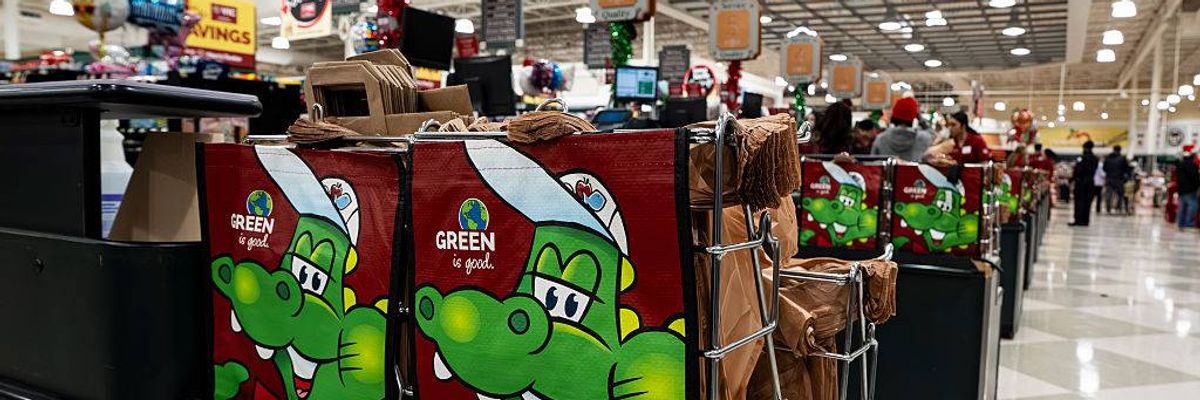
Harry the Happy Dragon, the mascot for Harris Teeter, on reusable plastic bags for sale at a grocery store on December 22, 2025 in Durham, North Carolina.

 (Photo by Al Drago/Getty Images)

“The gridlock and partisanship we see in Washington, DC can be dispiriting. But history shows that states can build momentum that eventually leads to change at the federal level.”

Brad Reed

Dec 29, 2025

Even as President Donald Trump and his administration have been ripping up environmental and consumer protection regulations, a number of state laws are set to take effect next year that could at least mitigate some of the damage.

A Monday statement from Environment America and the Public Interest Network highlighted a number of new laws aimed at curbing corporate polluters and enhancing consumer welfare.

RECOMMENDED…

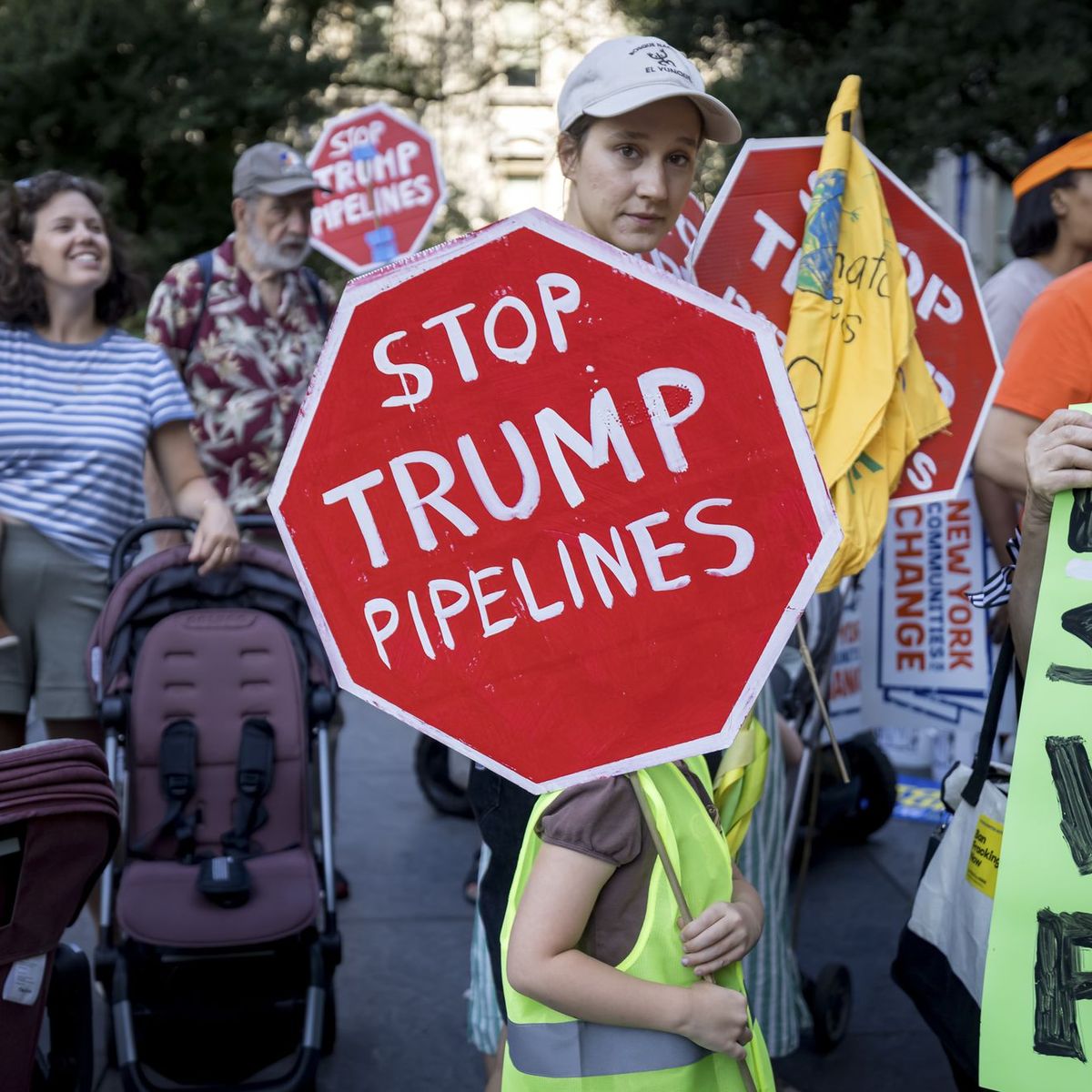
Climate activists march against the Williams Pipeline

11 House Democrats Help GOP Pass ‘Disastrous’ Pro-Polluter Permitting Bill

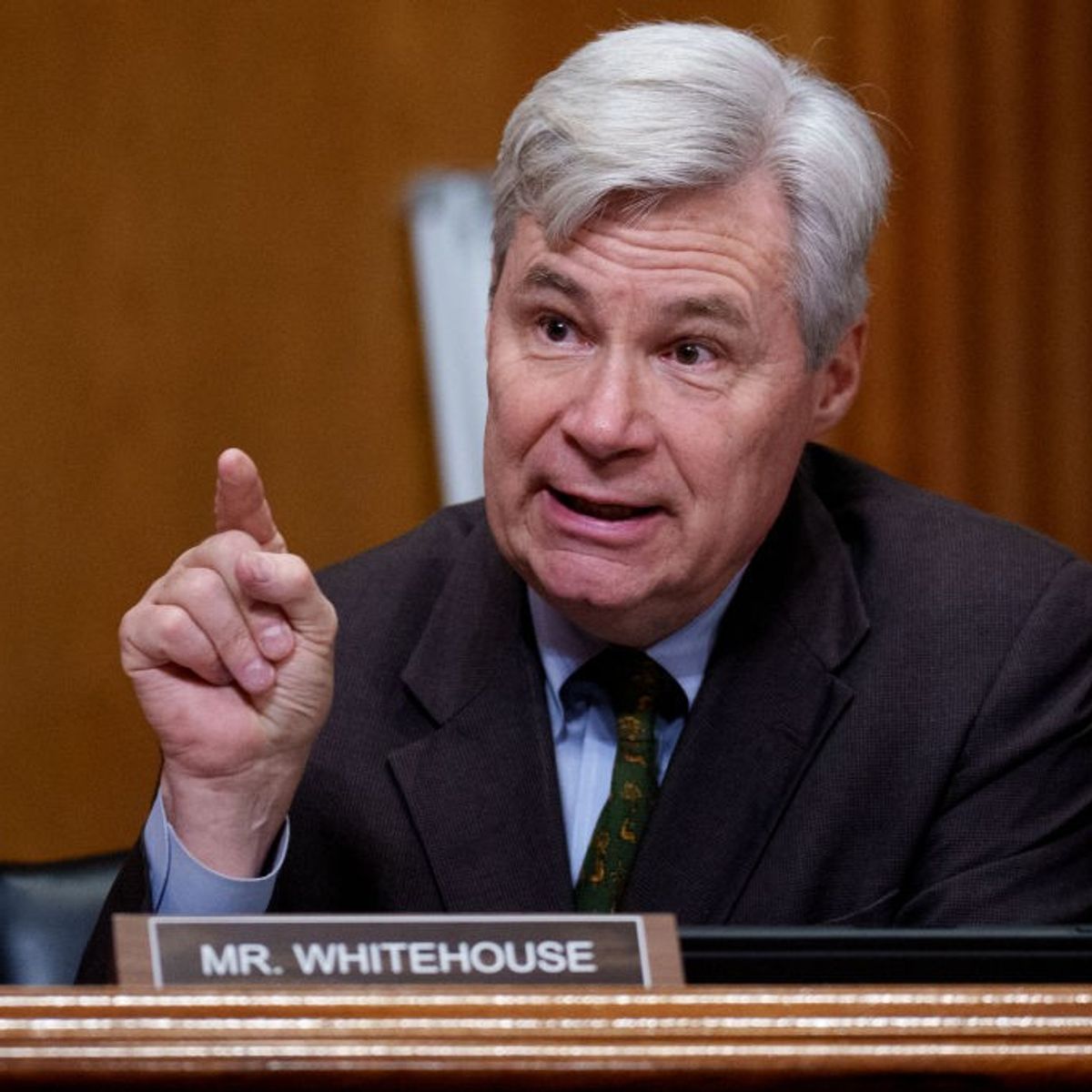
US Sen. Sheldon Whitehouse

Senate Dems Stop Permitting Talks Over Trump’s ‘Reckless and Vindictive Assault’ on Wind Power

First, the groups highlighted “Right to Repair” laws set to take effect in Washington, Nevada, Oregon, and Colorado, which give people the right to repair their own appliances and electronics without burdensome costs or barriers.

The groups lavished particular praise on Colorado’s “Right to Repair” laws that they said provide “the broadest repair protections in the country,” with new regulations that will give businesses in the state “access to what they and independent repair providers need to fix their electronics themselves.”

Illinois, meanwhile, will fully phase out the sale of fluorescent lightbulbs, which will be replaced by energy-efficient LED bulbs. The groups estimate that eliminating the fluorescent bulbs will collectively save Illinois households more than $1.5 billion on their utility bills by 2050, while also reducing energy waste and mercury pollution.

Our people-powered journalism cannot survive without you

Your support allows Common Dreams to continue covering the stories and amplifying the voices that the corporate media never will. Make a tax-deductible year-end gift to ensure we can sustain the reporting needed to meet the challenges of 2026.

about:blank

Illinois also drew praise for enacting a ban on polystyrene foam foodware that will take effect on January 1.

The groups also highlighted the work being done in Oregon to protect consumers with legislation mandating price transparency to eliminate surprise junk fees on purchases; prohibiting ambulance companies from socking out-of-network patients with massive fees for rides to nearby hospitals; and placing new restrictions on the ability of medical debt to negatively impact a person’s credit score.

California also got a mention in the groups’ release for closing a loophole that allowed supermarkets to continue using plastic bags and for creating a new privacy tool for consumers allowing them to request that online data brokers delete all of the personal information they have gathered on them over the years.

Emily Rusch, vice president and senior director of state offices for the Public Interest Network, contrasted the action being taken in the states to protect consumers and the environment with a lack of action being done at the federal level.

“The gridlock and partisanship we see in Washington, DC can be dispiriting,” said Rusch. “But history shows that states can build momentum that eventually leads to change at the federal level. As we build on this progress in 2026, we look forward to working with anyone—Republican, Democrat, or independent—with whom we can find common ground.”

Our work is licensed under Creative Commons (CC BY-NC-ND 3.0). Feel free to republish and share widely.

Brad Reed

Brad Reed is a staff writer for Common Dreams.

Full Bio >

Watchdog Warns Trump and Burgum’s Halting of Offshore Wind Projects Is Illegal

President Trump Speaks In The Oval Office

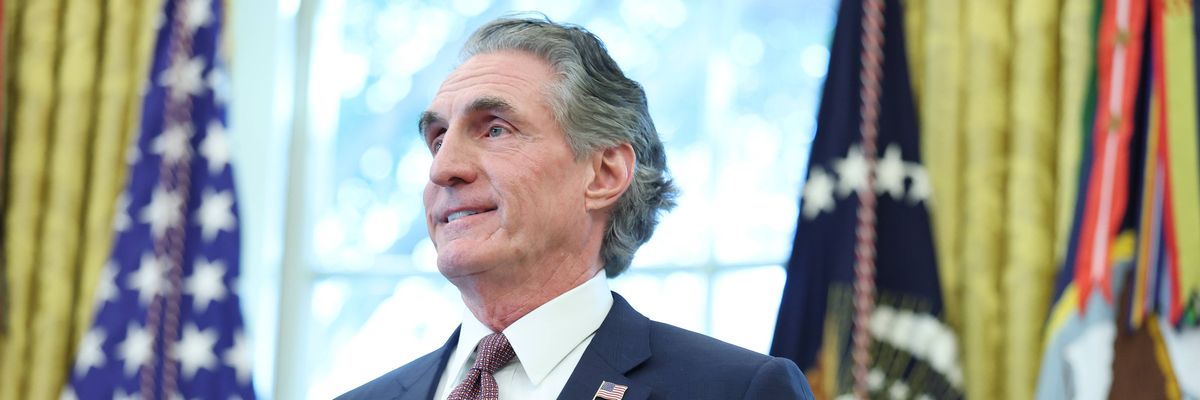
US Interior Secretary Doug Burgum speaks during an event with President Donald Trump in the Oval Office at the White House on October 6, 2025 in Washington, DC. 

(Photo by Anna Moneymaker/Getty Images)

“Burgum’s actions on offshore wind appear to be motivated by the personal financial interests of those in the administration, not our collective national interests.”

Julia Conley

Dec 29, 2025 (CommonDreams.org)

A week after the US Department of the Interior said it was immediately halting five offshore wind projects in the interest of “national security,” a watchdog group told congressional committees Monday that the move is “not legally defensible” and raises “significant” questions about conflicts of interest concerning a top DOI official’s investments in fossil gas.

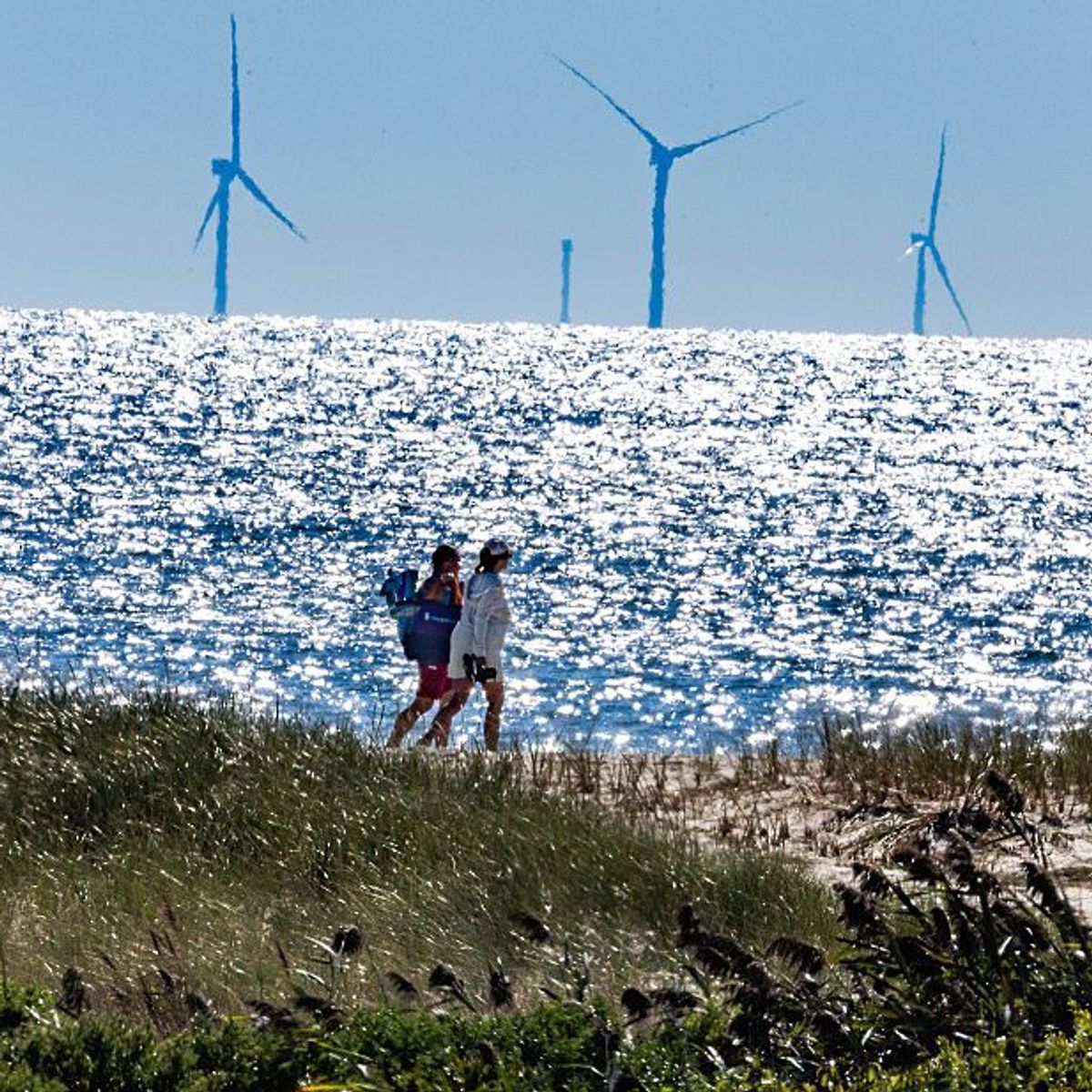
Timothy Whitehouse, executive director of Public Employees for Environmental Responsibility (PEER), wrote to the top members of the Senate Energy and Natural Resources Committee and the House Committee on Natural Resources regarding the pause on projects off the coasts of Virginia, New York, Rhode Island, Connecticut, and Massachusetts—projects that account for billions of dollars in investment, employ thousands of people, and generate sustainable energy for roughly 2.5 million homes and businesses.

RECOMMENDED…

Trump Continues 'War Against Renewables' With Halt of Five Offshore Wind Farms

Trump Continues ‘War Against Renewables’ With Halt of Five Offshore Wind Farms

US Sen. Sheldon Whitehouse

Senate Dems Stop Permitting Talks Over Trump’s ‘Reckless and Vindictive Assault’ on Wind Power

The announcement made by Interior Secretary Doug Burgum last week pertained to “five vague, perfunctory, cookie-cutter orders” halting the projects, wrote Whitehouse, but PEER is concerned that the orders were issued to evade the Congressional Review Act (CRA), under which the action to halt the projects likely constitutes a “major rule.”

Whitehouse explained:

Under the CRA, a rule that meets any one of three criteria (an annual effect on the economy of $100,000,000 or more; a major increase in costs or prices for consumers, individual industries, federal, state, or local government agencies, or geographic regions; or in pertinent part significant adverse effects on competition, employment, investment, productivity, or innovation) is a major rule. Interior’s pause likely meets all three.

As a major rule under the CRA, the pause cannot take effect until at least 60 days after BOEM provides Congress the requisite notification and report under the CRA, which, according to GAO’s database, has not yet occurred. Congress must use its oversight authority to unveil the truth and, as appropriate, and to enforce the rule of law.

He said in a statement that “Burgum’s move is designed to bypass all congressional and public input.”

Our people-powered journalism cannot survive without you

Your support allows Common Dreams to continue covering the stories and amplifying the voices that the corporate media never will. Make a tax-deductible year-end gift to ensure we can sustain the reporting needed to meet the challenges of 2026.

about:blank

The CRA states that a rule is “the whole or a part of an agency statement of general or particular applicability and future effect designed to implement, interpret, or prescribe law or policy or describing the organization, procedure, or practice requirements of an agency.”

Press statements by the DOI and by Burgum last week were “statements of general applicability and imminent future effect, designed to implement policy,” wrote Whitehouse, who also said the interior secretary embarked on “a coordinated rollout with Fox News entities.”

On December 22, Fox anchor Maria Bartiromo asked Burgum at 8:00 am Eastern, “What next action did you want to tell us about this morning?” Five minutes later, FoxNews.com published its first story on Burgum’s orders, citing a press release that had not yet been made public and including a quote from the secretary about the “emerging national security risk” posed by the offshore wind projects.

“If last week’s actions are allowed to stand, future presidents will have unchecked authority under the guise of national security to target federal leases related to entire disfavored energy industries for political purposes.”

Burgum’s announcement to Fox came at least one to two hours before Bureau of Ocean Energy Management (BOEM) acting Director Matthew Giacona provided the orders to the lessees running the five wind projects.

Further, wrote Whitehouse, “Burgum’s voluminous public comments in the hours and days since the pause further show the true purpose of Interior’s singular action.”

“The national security pretext quickly gives way to broad and spurious talking points about the ‘Green New Scam,’ how ‘wind doesn’t blow 24-7’ (evincing Burgum’s seeming unfamiliarity with energy storage technologies), and unyielding promotion of liquified natural gas projects,” wrote Whitehouse.

Aside from the alleged illegality of Burgum’s order, PEER pointed to Giacona’s potential conflicts of interest with BOEM operations and specifically with halting wind projects. Giacona is a “diligent filer” of financial disclosure forms required by the Ethics in Government Act, noted Whitehouse—but those forms point to potential benefits he may reap from shutting down offshore wind infrastructure.

Giacona reported his purchase of interests in the United States Natural Gas Fund (UNG) on September 16. The fund tracks daily price movements of “natural” gas delivered at the Henry Hub in Louisiana and is subject to regulation by the Commodity Futures Trading Commission.

“Accordingly, a government employee who has an interest in UNG also has a potential conflict of interest with the underlying holdings of UNG (currently primarily natural gas futures contracts at the Henry Hub),” wrote Whitehouse.

PEER does not know whether Giacona continues to hold a financial interest in UNG or whether the offshore wind pause will have a “direct and predictable effect on a financial interest in UNG,” but Whitehouse noted that Burgum and DIO have entwined the pause with the promotion of liquefied natural gas.

“It is disconcerting that Mr. Giacona temporarily had even a de minimis financial interest in natural gas futures while also leading the agency that manages the development of natural gas resources on the outer continental shelf,” wrote Whitehouse, adding that Giacona also sold interests in the United States Oil Fund on September 3, while overseeing BOEM.

Based on Giacona’s investments, said Whitehouse, “Burgum’s actions on offshore wind appear to be motivated by the personal financial interests of those in the administration, not our collective national interests. This is another misguided step in transforming the federal government into a franchise of the fossil fuel industry.”

“On public lands across the United States, the Department of the Interior has tens of thousands of additional active leases related to oil, gas, wind, solar, and geothermal production and mining for energy-related minerals,” he added. “If last week’s actions are allowed to stand, future presidents will have unchecked authority under the guise of national security to target federal leases related to entire disfavored energy industries for political purposes.”

Our work is licensed under Creative Commons (CC BY-NC-ND 3.0). Feel free to republish and share widely.

Julia Conley

Julia Conley is a staff writer for Common Dreams.

Full Bio >