Tell Indeed.com and other job sites to stop taking money to promote ICE jobs
Make “Good Help” Hard for ICE Warehouses to Find
Target: CEO’s & Other Key Executives at Indeed.com,LinkedIn, Glassdoor, ZipRecruiter, & other employment platforms
SIGN THIS PETITION
FIRST NAMELAST NAMEEMAIL *ZIP/POSTAL CODE *MOBILE NUMBEROpt in to mobile messages from Cat Ladies for America. Message and data rates may apply. Reply STOP to unsubscribe.
By Joe Garofoli, Political Columnist March 10, 2026 (SFChronicle.com)
Gift Article
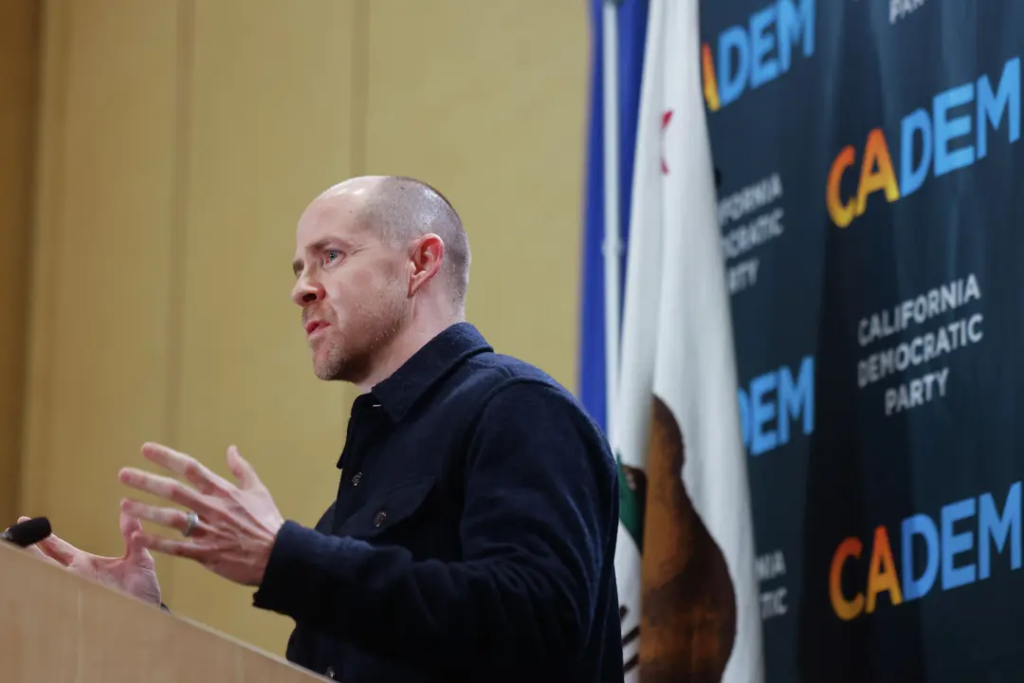
California Democratic Party Chair Rusty Hicks speaks earlier this year during a press conference at the state convention at Moscone Center in San Francisco.Lea Suzuki/S.F. Chronicle
California Democratic Party leaders are so worried about the rising chance that Democrats will be shut out of the governor’s race that they’re spending hundreds of thousands of dollars on polling in an attempt to publicly shame the lower-ranking candidates to bow out of the race.
Most polls show two Republicans — Riverside County Sheriff Chad Bianco and former Fox News commentator Steve Hilton — leading the race, with the top eight Democrats splitting the remaining support. The top two finishers, regardless of party, advance to the general election in November. The lack of a Democratic candidate in the state’s top race could depress turnout for key House races in California, hurting the party’s chances to retake control of the House and put a check on President Donald Trump’s power.
The chances of two Republicans advancing is now 24%, according to an online tool developed by political data expert Paul Mitchell that runs thousands of simulations of the race. Despite that number, California Democratic Party Chair Rusty Hicks said at a press conference Tuesday that “I take issue with the term ‘freak out,’” asserting that “I sleep very well at night.”
But Hicks appears to be sleepless enough that he announced the party is spending “multiple six figures” to conduct and post six surveys of the race. Hicks also bristled at my suggestion that this was a genteel, transparent form of public shaming — information that donors and voters could use to pressure lower-performing candidates out of the race, thus increasing the chance that at least one Democrat advances to November.
“If people are afraid of information, you have to ask why,” Hicks said. “This is simply conducting credible, real time publicly available information. And if you feel shamed by information and data that’s available, then I think everyone has to inquire exactly why. So I will leave that to others to determine how it makes them feel. Certainly, that’s not my intention.”
It is the latest step Hicks has taken to try to winnow the field. On March 3, days before the deadline for candidates to file to be on the June 2 ballot, Hicks wrote an open letter to the Democrats in the race, telling them “it is imperative that every candidate honestly assess the viability of their candidacy and campaign.” Only one candidate, former Assembly Member Ian Calderon, heeded Hicks’ imperative. Other candidates pushed back aggressively. Superintendent of Public Instruction Tony Thurmond, the only Black candidate in the race, accused party leaders of trying to push out candidates of color, who are the lowest performers in most public polls.
“Bernie Sanders was right. Our political system is rigged,” Thurmond said in a video posted on social media. “The California Democratic Party is essentially telling every candidate of color in the race for governor to drop out. Instead, they want a billionaire, a man who doesn’t even bother showing up for work in Congress, and a person who tears into her staff and reporters on the regular — all white candidates — to stay in the race,” referring to opponents Tom Steyer, Rep. Eric Swalwell and former Rep. Katie Porter.
Hicks said the letter “speaks for itself, and a response, even from a superintendent that I respect, doesn’t change its message. It also doesn’t change the facts and the reality of the race.”
Thurmond received 2% of the vote in a Public Policy Institute of California survey last month, while former Secretary of Health and Human Services Xavier Becerra, former Los Angeles Mayor Antonio Villaraigosa and former Controller Betty Yee all received 5%. None of the candidates received more than 15%. Ten percent of the respondents didn’t support any candidate, and 48% of the respondents said they weren’t following the race closely.
Thurmond and other lower-polling candidates responded to the polling effort with the same defiance they displayed toward Hicks’ letter.
“This seems like another misguided attempt from the party to put their thumb on the scales in this race in favor of D.C. Democrats or billionaires,” Thurmond said of the polling effort. “There will be plenty of public polling. For the hundreds of thousands of dollars the party is spending on this, they could instead be working to flip a congressional seat red to blue to help us win back the House and impeach Trump.”
Becerra said, “Now the race is on, and I’m not surprised that the party is engaging. … I’ve won a statewide race election in California (as attorney general) and will do it again by meaningfully engaging voters across our great state.”
Villaraigosa’s campaign manager, Ajay Mohan, said the state party “would be better off spending money winning back the House after passing Prop 50 instead of running another needless poll in the governor’s race.”
Yee agreed, saying that even though there is no shortage of polling, the state party — which she was formerly vice chair of — commissioned another costly poll “clearly aimed at narrowing the field. This unprecedented tactic raises legitimate concerns about the construction of the poll and its potential interpretations.”
The candidates also ignored a letter signed by two dozen Democratic Party county chairs last week, echoing Hicks’ missive: “If you do not have a clear, viable path to advancing to the general election as one of the top two finishers, withdraw your candidacy in order to consolidate our strength and secure a Democrat in the general election.”
On Tuesday, the author of that letter, San Diego County Chair Will Rodriguez-Kennedy, said he supported Hicks’ plan.
“I think that Chair Hicks is doing a good thing here. The more information we have is better for all of us,” Rodriguez-Kennedy said.
Rodriguez-Kennedy said that as an Afro-Latino, he is “sensitive” to Thurmond’s charge that the party is trying to purge its candidates of color. But given that his letter asked all candidates to evaluate their viability, he said, “that kind of falls flat.” Hicks said the state party’s polling will be done by California’s largest Black- and Latina-led polling firm and will over-sample Black, Latino and AAPI voters to ensure their voices are heard.
The only reason that candidates are likely to drop out at this point is the same reason they’d ever drop out: They run out of money, said Nancy Tung, chair of the San Francisco Democratic Party. She supported Hicks’ plan Tuesday.
“I think more information is always going to help people make better decisions,” Tung said.
The freak-out level among top donors is “about a middle level,” said Joe Cotchett, a prominent Burlingame attorney and Democratic fundraiser. Mark Buell, another Democratic fundraiser, said the biggest question he hears from fellow top donors is, “Who are you supporting? And I turn around and ask, ‘Who are you supporting?’ There is no buzz of any consequence with any of the candidates.”
But Rodriguez-Kennedy predicted that donors will be looking at the public polls closely.
“At some point, donors are going to look at this and (say to candidates), ‘This doesn’t look like it’s working out,’” he said.
Hicks nudged California’s most prominent and powerful Democrats — Gov. Gavin Newsom and Speaker Emerita Nancy Pelosi — to help persuade some Dems to leave the race. Newsom has waffled on whether he would get involved, telling CBS that while he agreed with Hicks’ letter, he wasn’t ready to “put his thumb on the scale” yet.
“I think we all share a responsibility, every party leader, every endorser, everybody who’s standing on the sidelines, who cares about California’s leadership, both at home and abroad, has a responsibility to be a part of what ultimately happens here,” Hicks said. “So certainly, having the leader of California, the current governor of the state being a part of that. I think he sees himself in that space. I certainly believe he is.”
Joe Garofoli is the San Francisco Chronicle’s senior political writer, covering national and state politics. He has worked at The Chronicle since 2000 and in Bay Area journalism since 1992, when he left the Milwaukee Journal. He is the host of “It’s All Political,” The Chronicle’s political podcast. Catch it here: bit.ly/2LSAUjA
He has won numerous awards and covered everything from fashion to the Jeffrey Dahmer serial killings to two Olympic Games to his own vasectomy — which he discussed on NPR’s “Talk of the Nation” after being told he couldn’t say the word “balls” on the air. He regularly appears on Bay Area radio and TV talking politics and is available to entertain at bar mitzvahs and First Communions. He is a graduate of Northwestern University and a proud native of Pittsburgh. Go Steelers!
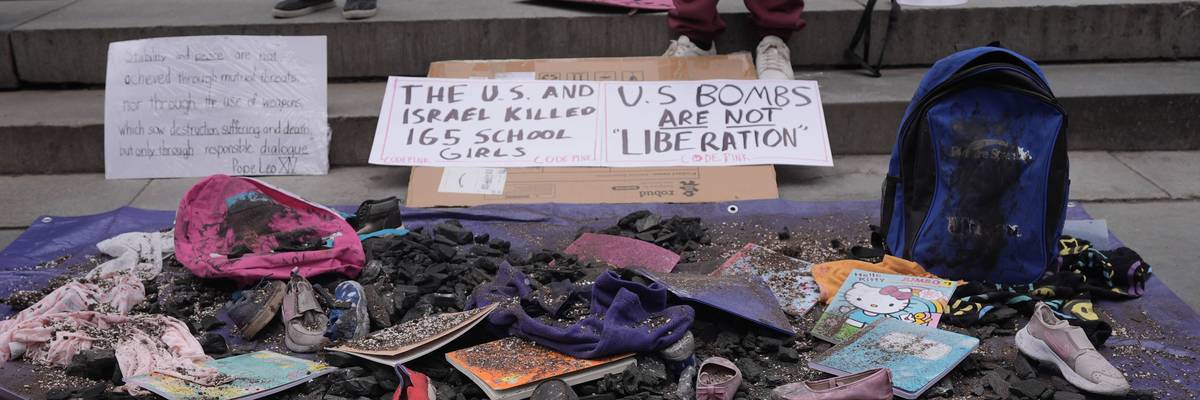
Anti-war protestors gather in front of the New York Public Library and mourn the Iranian children killed during the apparent US bombing of a girls’ elementary school in Minab, Iran on March 8, 2026 in New York City.
(Photo by Selcuk Acar/Anadolu via Getty Images)
Pentagon Secretary Pete Hegseth “should be potentially charged and prosecuted for war crimes,” said the advocacy group Just Foreign Policy.
The preliminary findings of a Pentagon investigation into the deadly bombing of an Iranian elementary school reportedly indicate that the US was responsible for the massacre—and that the building was intentionally targeted.
The findings, reported by The New York Times on Wednesday, further undercut President Donald Trump’s lie that Iran carried out the February 28 strike, which killed at least 175 people—mostly children. According to the Times, US investigators determined that the strike on the girls’ school in the southern Iranian city of Minab “was the result of a targeting mistake by the US military, which was conducting strikes on an adjacent Iranian base of which the school building was formerly a part.”
“Officers at US Central Command created the target coordinates for the strike using outdated data provided by the Defense Intelligence Agency,” the Times reported, citing unnamed people briefed on the investigation. “Officials emphasized that the findings are preliminary and that there are important unanswered questions about why the outdated information had not been double checked.”
In a social media post reacting to the new reporting, Sen. Elizabeth Warren (D-Mass.) wrote that the Iranian school massacre is “one of the most devastating military errors in decades.”
“Trump lied about it. [Pentagon Secretary] Pete Hegseth gutted the office preventing civilian casualties. 175 are dead. Most were kids,” wrote Warren. “Hegseth should be fired.”
The advocacy organization Just Foreign Policy wrote in response to Warren, “Hegseth should be potentially charged and prosecuted for war crimes.”
Al Jazeera concluded after examining satellite imagery, video footage, and other material that “either the bombing of the school was the result of a grave intelligence failure caused by reliance on outdated databases that did not keep pace with successive changes in the complex’s layout, or it was a deliberate strike based on a linkage that treats the school as part of the military system.”
“Could be criminal negligence in a war that was illegal to begin with.”
The Minab school appears to have been separated from the Iranian Navy compound a decade ago, NBC News reported last week.
Kenneth Roth, former executive director of Human Rights Watch, wrote in response to the Times’ reporting that the Trump administration should not be allowed to get away with blaming the massacre on old targeting information.
“’Outdated data’ is not an adequate explanation for why the US military attacked a girls’ school in Iran, killing 175, mostly girls,” Roth wrote on social media. “Why wasn’t the data updated before the attack? Do Iranian civilian lives not matter?”
Richard Painter, an attorney who served as the chief ethics lawyer in the George W. BushWhite House, said the apparent US strike “could be criminal negligence in a war that was illegal to begin with.”
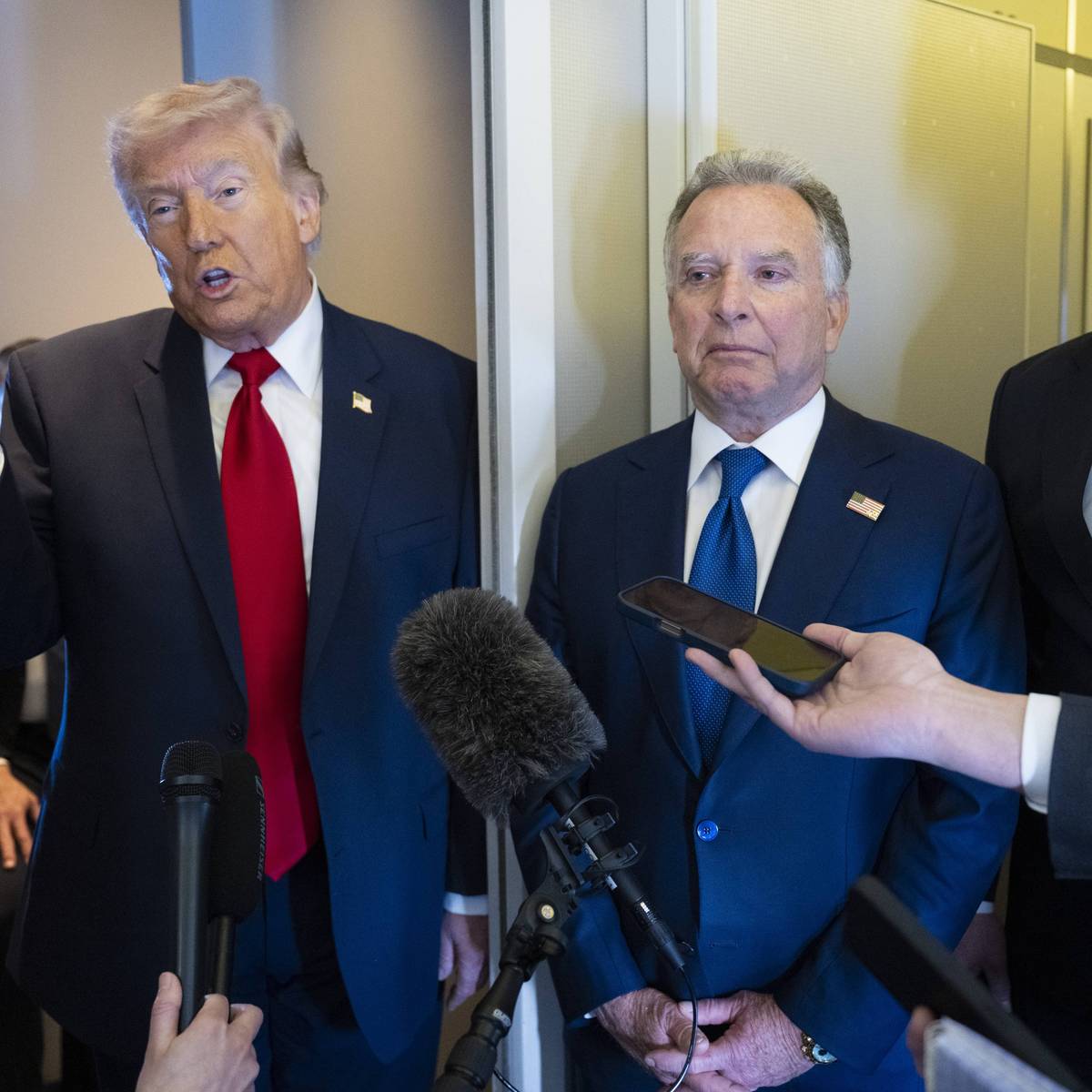
Speaking to reporters aboard Air Force One this past weekend, Trump said definitively—and without any evidence—that the school massacre “was done by Iran.”
“They are very inaccurate, as you know, with their munitions,” the president said. “They have no accuracy.”
But arms experts have argued that all available evidence indicates a precision attack, not an errant missile.
“The targeting of this site is incredibly accurate,” Jeffrey Lewis, an expert in arms control and open-source intelligence, told NBC News. “The explosion damage is incredibly precise, and it doesn’t look like really anything missed, so that would tend to argue for precision munitions delivered by aircraft.”
Rich Weir, senior adviser of the Crisis, Conflict and Arms Division at Human Rights Watch, told the outlet that “the number of individual strikes across the compound and the apparent accuracy with which they appear to have struck individual structures across the compound, shown in part through the relatively small circular holes that were points of entry for the munitions on multiple rooftops, indicate that the attack struck multiple structures on the compound base with highly accurate, guided munitions.”
The Times’ reporting came shortly after every member of the Senate Democratic caucus except Sen. John Fetterman (D-Pa.) wrote a letter to Hegseth demanding a “swift” and transparent investigation into the school massacre.
“The findings must be released to the public as soon as possible, along with any measures to pursue accountability,” the senators wrote.
Our work is licensed under Creative Commons (CC BY-NC-ND 3.0). Feel free to republish and share widely.
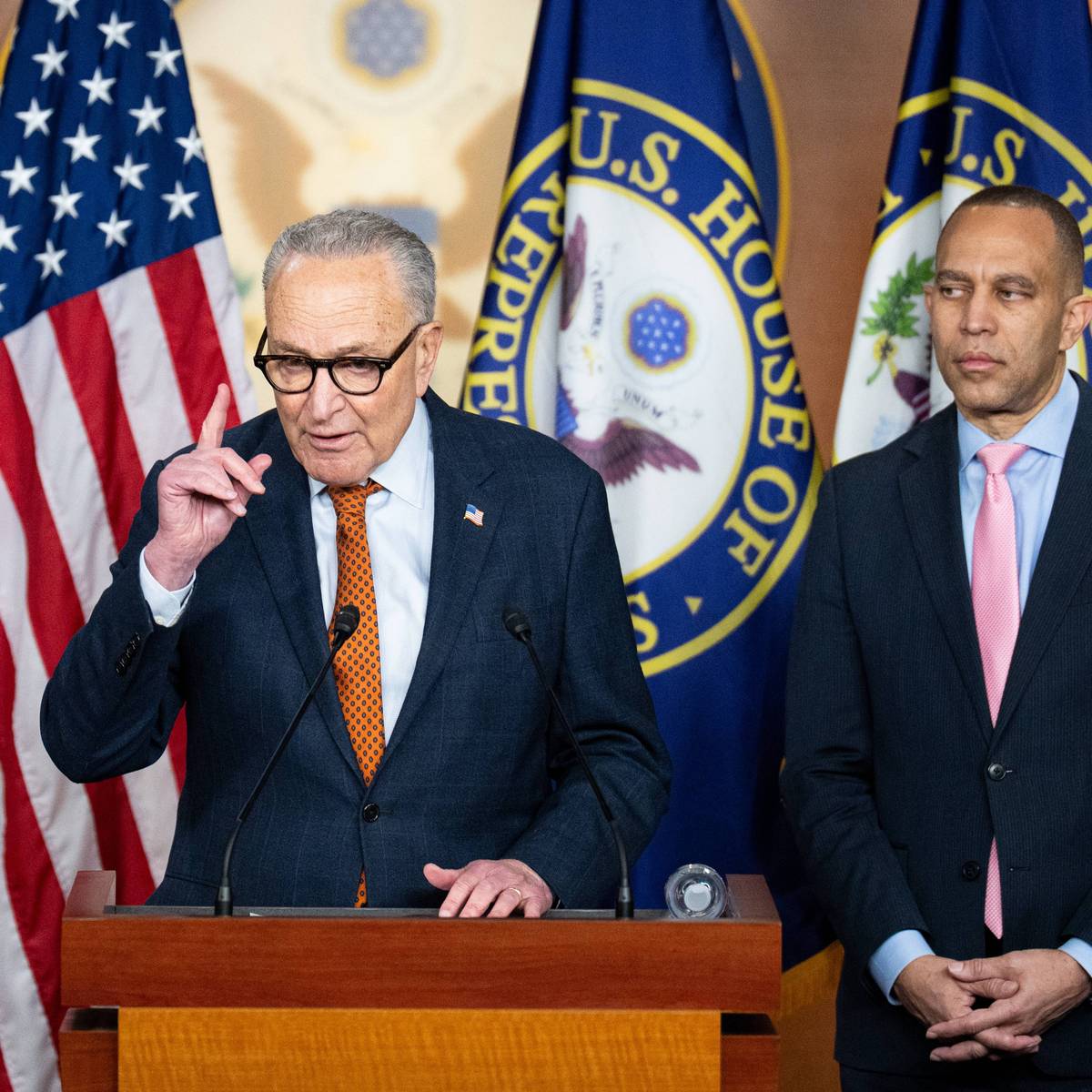
US Senate Minority Leader Chuck Schumer (D-NY) and House Minority Leader Hakeem Jeffries (D-NY) hold a press conference on January 8, 2026.
(Photo by Saul Loeb/AFP via Getty Images)
“Schumer and Jeffries have shown that they cannot be trusted to prevent more wars, more threats of wars, or the transfer of another half a trillion dollars a year into the war machine.”
A coalition of peace groups on Wednesday launched a new national campaign calling for the top Democrats in Congress—Senate Minority Leader Chuck Schumer and House Minority Leader Hakeem Jeffries—to resign from their leadership roles, citing their failure to sufficiently fight back “against a war-crazed Trump administration.”
The coalition, which includes Peace Action and RootsAction, launched a petition declaring that it is “time for congressional Democrats to replace Schumer and Jeffries with leaders who are willing and able to challenge the runaway militarism that has dragged our country into launching yet another insanely destructive war,” this time against Iran.
“Sen. Chuck Schumer and Rep. Hakeem Jeffries have not acted to prevent war on Venezuela or the current war on Iran,” the petition reads. “They worked to delay a vote on Iran until after the war had started, while failing to clearly oppose it before or after the launch of the war. Schumer and Jeffries have shown that they cannot be trusted to prevent more wars, more threats of wars, or the transfer of another half a trillion dollars a year into the war machine.”
Kevin Martin, president of Peace Action—the largest grassroots peace network in the US—said in a statement that he doubts “at this point whether many people look to Chuck Schumer and Hakeem Jeffries for ‘leadership’ in Congress, but we would settle for them getting with the program and representing their base, and the majority of Americans, who want them to stand strongly against Trump’s illegal wars and domestic terror campaigns against the American people.”
“They need to speak out loudly and clearly, and get their caucuses in line, to oppose the upcoming $50 billion or more for Trump’s illegal war of aggression on Iran, and to cut off US weapons to Israel,” said Martin. “Failing to do so will only increase calls for them to step down or be replaced by colleagues who understand where the American people are on these and other critical issues.”
Since the start of the illegal US-Israeli assault on Iran, Schumer and Jeffries have focused largely on procedural objections to the war, the Trump administration’s incompetence, and the president’s failure to clearly articulate his objectives, rather than explicitly opposing the military onslaught.
In an appearance on NBC‘s “Meet the Press” on Sunday, Jeffries declined to say whether he would oppose the Trump administration’s expected push for $50 billion in new funding for the unauthorized war on Iran.
“We’ll cross that bridge when we get to it,” Jeffries said, chiding the administration for failing to “make its case as to the rationale or justification for this war of choice in the Middle East.”
Sarah Lazare and Adam Johnson wrote for The Nation last week that “it’s not enough to check the box, to do the bare minimum, to reinforce every argument for war only to balk at the process and ask whether there’s a ‘plan’ for after the myriad war crimes have already been committed.”
“The only way to read this half-hearted response from the Democratic Party leadership,” they argued, “is de facto support.”
Our work is licensed under Creative Commons (CC BY-NC-ND 3.0). Feel free to republish and share widely.
East Bay Congressman Eric Swalwell appears to be pulling ahead of the pack of candidates for California governor, and thankfully it’s not just the two Republicans at the top of the polls anymore.
The still crowded governor’s race will likely change shape again in the coming weeks, when candidates who are polling in the single digits get strongly encouraged by the state Democratic Party to drop the eff out.
But for now, the latest poll from Emerson College Polling/Inside California Politics has Rep. Eric Swalwell pulling into first place with 17%, and Republican Steve Hilton has slipped from a previous 17% down to 14%, as KTLA reports.
Spencer Kimball, executive director of Emerson College Polling, said in a statement that “Rep. Swalwell’s support increased among Democratic voters in the past month from 23% to 27%.”
Riverside County Sheriff Chad Bianco, who could only become a serious candidate in this race in Trump’s America, is at 11.4%, down from 13.5%, where he was in a mid-February poll.
Graphic via Emerson College Polling
Former House Rep. Katie Porter, who was seen as an early favorite in this race, is now polling at 8.4%, slipping from 9.8% in that earlier poll. And it would seem that Democratic voters appear to maybe be coalescing around Swalwell and, to a lesser extent, billionaire Tom Steyer — who has been spending heavily on TV ads.
Steyer is now polling at 10.9%, up two points from mid-February, when he was polling below Porter at 8.8%. And among Democratic voters, he has surged ahead to 16%.
Splitting the vote between those three Democratic candidates, Swalwell, Steyer, and Porter, could still only do favors to the Republicans in the race, but we’ll see how this shakes out.
On Tuesday, state Democratic party chair Rusty Hicks publicly said he would be spending “multiple six figures” to shame some of the remaining candidates into dropping out of the race, given that they are polling in the low single-digits and obviously just siphoning votes that could be going to a more viable candidate. Those would include San Jose Mayor Matt Mahan, who has lost ground in the poll and sits at 3.2%; former health secretary and Attorney General Xavier Becerra who has lost half a percentage point and sits at 3.0%; and former LA Mayor Antonio Villaraigosa who is at 3.2%.
Former state Controller Betty Yee and State Superintendent of Public Instruction Tony Thurmond came in at 2.3% and 1%, respectively.
Hicks said the party would be releasing new polling every seven to ten days between March 24 and early May, to drive home the point of who is viable.
“I would simply say if people are afraid of information, you have to ask why,” Hicks said, per the Sacramento Bee.
Nearly a quarter (24.5%) of the 1,000 voters who were surveyed last week remained undecided, up from 21% who said the same last month, and it would be nice if they had fewer candidates to choose from. There were real fears as recently as a month ago that Hilton and Bianco would continue to poll in the top slots, creating a situation in which they could become the only two candidates to make it to the general election.
In the June 2 primary, the two top vote-getters will automatically advance to the general, regardless of party.
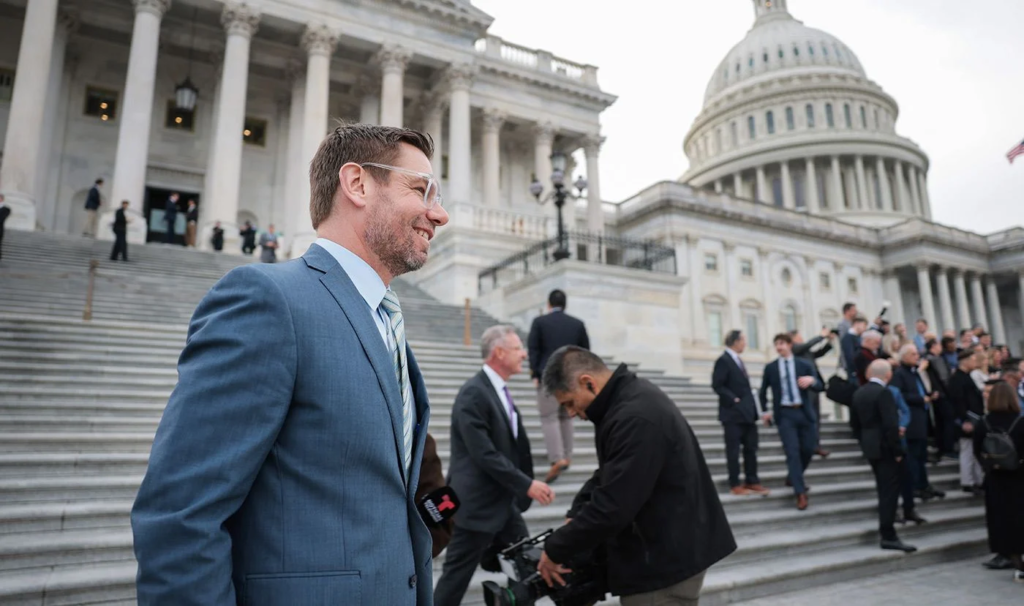
Top image: U.S. Rep. Eric Swalwell (D-CA) departs the U.S. Capitol Building after a series of votes on March 05, 2026 in Washington, DC. The House held a series of votes including a vote on funding for the Homeland Security department and a War Powers resolution on Iran. (Photo by Anna Moneymaker/Getty Images)
The FBI issued an alert in February warning of the risk
By Olivia Hebert, News Reporter Updated March 11, 2026 (SFGate.com)
FILE: A rendering of a MQ-1 Predator unmanned aerial vehicle, also known as unmanned aircraft system, flying over the West Virginia coastline at sunset.Buena Vista Images/Getty Images
LATEST March 11, 2:30 p.m. San Francisco Mayor Daniel Lurie said officials are monitoring reports of an Iranian drone threat against the West Coast tied to the escalating conflict in the Middle East.
In a statement, Lurie said city officials have been coordinating with state and federal agencies after an FBI alert surfaced, warning that Iran could retaliate against U.S. military action with drone strikes from an “unidentified vessel” stationed in an unknown and unconfirmed area off the coast of the United States.
“We are aware of the reports that were made public today, and we have been in constant communication with our state and federal partners, who have assured us there are no imminent threats to us here in San Francisco,” Lurie said. “As always, public safety is our No. 1 priority, and rest assured we are in constant communication with all of our public safety partners, and we will continue to monitor the situation, and we will always keep you posted.”
March 11, 12:30 p.m. Gov. Gavin Newsom confirmed federal authorities issued a warning of a potential drone strike in California from an Iranian offshore vessel and said state officials are collaborating with local law enforcement to protect residents.
Speaking at a news conference, Newsom confirmed that state officials had been alerted that Iran could potentially retaliate against recent U.S. military action in the Middle East
“We’ve been aware of that information,” Newsom said. “… Drone issues have always been top of mind, and we’ve assembled some work groups specifically around those concerns.”
Newsom said the State Operations Center is sharing information with local agencies through the state’s emergency coordination network, the Office of Emergency Services.
March 11, 11:50 a.m. Federal authorities recently warned law enforcement agencies in California that Iran could potentially retaliate against U.S. military action by launching drones toward targets along the West Coast, according to ABC News.
An FBI alert, distributed to police departments at the end of February, said federal officials had obtained information indicating Iran may have considered a drone attack originating from a vessel off the U.S. coastline.
“We recently acquired information that as of early February 2026, Iran allegedly aspired to conduct a surprise attack using unmanned aerial vehicles from an unidentified vessel off the coast of the United State Homeland, specifically against unspecified targets in California, in the event that the US conducted strikes against Iran,” the alert stated. “We have no additional information on the timing, method, target, or perpetrators of this alleged attack.”
SFGATE reached out to the San Francisco FBI office, which declined to comment. SFGATE reached out to the San Francisco Police Department but did not hear back prior to publication. The SF mayor’s office deferred to SFPD.
An Oakland Police Department spokesperson said the agency has been coordinating with federal partners about potential security risks tied to the conflict.
“We have spoken with our federal partners, who informed us that there may be a heightened risk due to the conflict in the Middle East,” the spokesperson said. “To ensure the safety of our community, we are maintaining close contact with local, state, and federal law enforcement.”
“OPD will keep monitoring the situation and determine if there is a need to increase police presence,” the spokesperson added.
The warning comes amid an escalating war in the Middle East that began after U.S.-Israeli airstrikes killed Iran’s supreme leader, Ayatollah Ali Khamenei, in Tehran on Feb. 28. In the days that followed, Iran’s Assembly of Experts named his son, Mojtaba Khamenei, as the country’s new supreme leader, elevating a hard-line cleric with close ties to Iran’s security establishment during the height of the conflict.
Trump has continued to launch an ongoing military campaign against Iran, which has responded with drone strikes against targets across the Middle East. More than 1,300 people in Iran have been killed since the conflict began, according to CNN. In Lebanon, where Israeli strikes began last week, at least 630 people have been reported killed.
Olivia Hebert is a news reporter at SFGATE, where she covers breaking news and a diverse array of topics. Before joining SFGATE, she wrote lifestyle news for the Independent, often exploring the intersection of health, technology, pop culture, travel and style. She’s also written entertainment news for Collider, Distractify and StyleCaster. You can reach her at olivia.hebert@sfgate.com.
Friends, American democracy has survived wars, economic collapse, and political scandal. But it has rarely faced a threat as quiet and bureaucratic as the one now unfolding: a systematic effort to use executive emergency powers to reshape how federal elections are administered. What is being attempted is not a dramatic coup but something potentially more durable — a legal architecture that would give one branch of government dominance over the machinery of voting itself.
In March 2025, President Trump signed Executive Order 14248, titled “Preserving and Protecting the Integrity of American Elections,” directing federal agencies to condition election-related grants and support on states adopting specific voting protocols, including proof-of-citizenship requirements and restrictions on mail-in balloting.¹ Pro-Trump activists — some claiming White House coordination — simultaneously circulated a 17-page draft executive order that would declare a national emergency, citing alleged Chinese interference in the 2020 election as justification for seizing sweeping control over the 2026 midterm elections.² The proposed measures include requiring hand-counted paper ballots, banning most mail voting, and forcing voters to re-register with citizenship documentation.³ States that resist face the prospect of losing federal funding tied to election administration.
Why It Matters
The danger here is structural. The Constitution grants Congress — not the president — authority to regulate the time, place, and manner of federal elections. As the Brennan Center for Justice has made clear, “the president has no role in this constitutional scheme beyond signing or vetoing federal legislation.” When the executive branch asserts emergency powers to override that framework, it doesn’t just bend a rule — it rewrites the relationship between the branches entirely.
Federal courts have already agreed. In LULAC v. Executive Office of the President, a federal district court ruled that “our Constitution entrusts Congress and the States — not the President — with the authority to regulate federal elections.” On October 31, 2025, Judge Colleen Kollar-Kotelly permanently blocked the proof-of-citizenship provisions, finding the order “contrary to the manifest will of Congress”.⁴ The Center for American Progress warns that declaring a manufactured emergency is “the next escalatory step” — one that would throw midterm elections into chaos and lock in political power outside any democratic mandate.⁵
Emergency declarations are designed for genuine crises. Using them to impose voting conditions in the absence of any documented emergency sets a precedent that future administrations of any party could exploit. The normalization of emergency power as an electoral tool is the real threat, regardless of which party wields it.
Who Is Harmed
The people most immediately harmed are those least insulated from bureaucratic barriers: low-income voters, elderly Americans, rural communities, naturalized citizens, and communities of color. As the Brennan Center notes, noncitizen voting is “almost nonexistent” given existing laws and penalties — meaning these requirements solve no real problem while creating enormous ones for millions of eligible Americans.⁶ A Washington Post–ABC News–Ipsos poll found that 54 percent of American adults — and 55 percent of independents — oppose Trump’s effort to federalize election administration.⁷
Election administrators, most of them nonpartisan local officials, are caught between federal pressure and state law, forced to navigate a legal minefield that undermines their ability to run orderly, fair elections. Civil society organizations — including the League of Women Voters, which has filed suit against the March 2025 order — are consuming litigation resources that would otherwise go toward civic engagement.
What Comes Next
Courts have pushed back decisively. But litigation is slow, and elections are not. Congress must reassert its constitutional role by passing legislation that clearly defines the limits of executive authority over elections and protects federal funding from being weaponized as a compliance tool. Election law scholar Ned Foley has stated plainly that “it would take new federal legislation to give the president or any part of the federal executive branch that kind of authority over the conduct of congressional elections”.⁸
Every emergency declaration touching election administration should require congressional approval within a defined window. Voters must demand transparency — and engagement. The machinery of democracy is only as strong as the consensus to protect it. That consensus requires active defense, not passive hope.
Democracy is not a spectator sport — and history has always belonged to those who showed up. The courts are holding, the people are paying attention, and every voice raised in defense of the ballot box is proof that the spirit of self-governance is very much alive.
Your Power in Action: What You Can Do Today.
Your Power in Action: What You Can Do Today
Tell Congress:Block Trump’s Election Denier Pick to Lead DHS
Speak out now: Tell Your Secretary of State: No ICE at the Polls.
Use your voice: Stop the next Great Recession before it starts
BONUS: Make your voice heardRegister to vote, vote in every election, and help your community do the same. Reproductive freedom is won and lost at the ballot box.
BONUS: Drive the changeSign up for the next national No Kings Day of Action and show up in solidarity with everyone whose rights are under attack.
The movement for freedom over fascism, progress, and power to the people starts here.
San Francisco’s Sixth Street is going through tough times. Many of its sidewalks are filled with substance abusers and its future appears bleak. But appearances can be deceiving. Prior to COVID, Sixth Street bars and restaurants were popping. Sixth Street was increasingly seen as a positive, happening place.
So how does Sixth Street get back on track? Mayor Lurie’s recent expansion of Urban Alchemy’s reach in the area is already making a noticeable difference. I saw much less drug activities last week, though a large open air drug market still thrives on Minna off Sixth.
Others I spoke with confirmed recent progress. Son Vo, Director of Facilities for the Tenderloin Housing Clinic which I head, said he has “personally witnessed drastic improvements on 6th Street. The streets appear cleaner, there are fewer individuals loitering in front of buildings, and I’ve observed less visible drug activity.” Son noted he is not on Sixth Street in the evening.
Sixth Street’s comeback still has a long way to go. But its challenges are not insurmountable. The roadmap to its revival starts with understanding what led to Sixth Street’s rise prior to COVID.
We begin with some very important history.
San Francisco’s Neglect
Sixth Street was the city’s Skid Row from the 1960’s through the 1989 earthquake. The city ignored it’s problems.
In 1980 Reverend Cecil Williams of Glide Church bought an 1800 square foot lot on Sixth Street for the area’s alcoholics to drink. It became known as Wino Park. As an article on Glide’s 1983 decision to sell the site described, “ ‘Wino park,’ built in a church experiment as a haven for the down-and-out in an industrial neighborhood, is being sold because it became a home base for drug dealers and muggers. ‘I didn’t know we were going to have that kind of problem,’ Williams said, speaking of the numbers of drug dealers, street hustlers and muggers who have used the site as a sanctuary.”
Williams’ failure discouraged efforts to improve the area. I spent a lot of time in Sixth Street SRO hotels during the 1980’s. The area was far more rundown than the Tenderloin.
Sixth Street Redevelopment
Sixth Street’s future took an unexpected turn when the 1989 earthquake led to the creation of the Sixth Street Earthquake Redevelopment Area. Formed in 1990, this expansion of the Redevelopment Agency promised millions of dollars for Sixth Street’s revival.
There were two contrasting visions for Sixth Street.
The coalition of SRO tenants and property owners that I helped organize felt Sixth Street should no longer be a ghetto for the poor. We urged the Agency to fund mixed-income housing on Sixth Street while targeting affordable housing outside the street. We sought to strengthen private owners while the Agency wanted to limit money to nonprofits.
We lost that fight. The Agency spent tens of millions of dollars “redeveloping” Sixth Street without meaningfully improving its quality of life. From installing palm trees at $10,000 a plant to million-dollar sidewalk widening projects, the Agency made mind-boggling foolish investments. Worst of all, it failed to understand that concentrating people with very low incomes in a handful of blocks deprived Sixth Street businesses of the customer base they needed.
The Sixth Street Project Area Committee was supposed to guide Agency actions. But Project Area Committees were only advisory. This became clear when the PAC strongly backed housing for working people at the former site of the Plaza Hotel at 6th and Howard.
Newly elected Mayor Gavin Newsom favored a different plan. Newsom “identified the Plaza Apartments as an ideal development for participation in the Direct Access to Housing Program (DAH); the DAH program was developed to combine permanent housing for chronically homeless people with on-site support services.”
The community’s consensus support for housing for working people at Sixth and Howard was ignored. Those who spent hours at meetings about the Plaza felt betrayed. Newsom’s switch contributed to feelings that City Hall saw Sixth Street as designed for homeless services, not retail businesses.
Mid-Market is Key to Sixth Street Revival
Sixth Street lack of a customer base meant its economic future depended on attracting outsiders. Mayor Ed Lee’s Mid-Market/Tenderloin tax credit proved the spark. Tech and WeWork office workers in Mid-Market went to lunch, dinner, and after-work drinks on Sixth Street. New market rate housing in SOMA also brought patrons.
Some erroneously claim that the concentration of SRO hotels on Sixth Street prevents businesses from succeeding. They ignore that Sixth Street became a happening place prior to COVID.
As Lara Hashimoto, a longtime SOMA resident active with the SOMA West Neighborhood Association, recalls, “Sixth Street was indeed on the rise. The commercial spaces were filled and places like Dottie’s True Blue Cafe, Montesacro and Bini’s attracted techie foot traffic to 6th which generally kept loiterers, drugs and crime suppressed around these areas.”
Miss Saigon, Tu Lan, and the Showdown Bar were also booming. As was a Kosher bakery, Frena. Another Kosher restaurant opened soon after COVID. As J Weekly described on July 16, 2020, “For Rabbi Yosef Langer, the opening of a new kosher restaurant along San Francisco’s Sixth Street corridor is another step toward creating his long-envisioned “Jewish thoroughfare,” complete with a synagogue and kosher eateries to draw people in. For the rest of us, it’s just damn good shwarma and falafel.”
So what happened to this progress?
Sixth Street’s Dramatic Decline
COVID had two major impacts on Sixth Street.
First, the vacation of Mid-Market office buildings devastated Sixth Street’s customer base. For example, the 100% WeWork-occupied sixteen story highrise at Sixth and Market became completely vacant. Mid-Market tech workers worked from home and firms left the area.
Sixth Street was also badly hurt by City Hall’s destructive decision to convert Seventh Street tourist hotels as well as four in the Tenderloin to Shelter in Place (SIP) hotels. This decision turned Mid-Market, Sixth Street, and Little Saigon into giant open-air drug markets.
These two COVID-spawned factors devastated Sixth Street.
Dottie’s, which had consistent long lines for its breakfast prior to COVID, did not survive.. Mission Local recently reported on Bini’s struggle to survive at 6th and Howard: “’It used to be hustling and bustling. There were lines, so many people around.’ Then the pandemic hit. Foot traffic dwindled. Poverty became more visible. Vandalism followed. In January, there were days the sisters didn’t open at all, because staff were afraid to come to work and the front entrance was so heavily soiled.”
Before COVID Miss Saigon restaurant at Sixth and Mission always had lines. Until Urban Alchemy arrived on the scene the entrance to Miss Saigon was surrounded by drug users.
Mid-Market’s Revival is Key
Sixth Street remains in decline because Mid-Market remains in decline. Filling Mid-Market offices spaces will revive both neighborhoods and also help Tenderloin businesses.
The 16-story building at Sixth and Howard is finally occupied. Last week’s purchase of the former Westfield Centre site by Presidio Bay Ventures and the Prado Group bodes well for the site’s future.
Remember the 5M project at Fifth and Mission? It was supposed to “transition the site from its current mix of office buildings and surface parking lots to a balance of residential, office, retail, cultural, and open space uses that provide a unique opportunity to connect surrounding neighborhoods.” (Emphasis added)
Unfortunately, much of 5M’s new office space remains vacant.
The city had a great chance to help Sixth Street in 2021 when a developer planned a 27-story housing tower at Stevenson and Sixth. But the Board of Supervisors rejected the project. It was re-approved in 2024 but, as JK Dineen put it “the infamous former Nordstrom valet parking lot at 469 Stevenson St. — which became a symbol of San Francisco dysfunction in 2021 when the Board of Supervisors temporarily rejected 494 units of housing there — will remain a parking lot.”
Sixth Street’s dependence on Mid-Market and SOMA office workers is why City Hall must stop the San Francisco Employees Retirement System from leaving Mid-Market. The city should be relocating workers to Mid-Market offices, not moving them away.
Fortunately, D6 Supervisor Matt Dorsey is going all out to stop the Retirement System’s departure. The total compensation package for the Chief Executive of the System is a whopping $856,000. The lowest compensation among their top fifteen workers is $433,000. I get why these highly paid officials prefer working in the Financial District. But the city needs the System in Mid-Market.
Please ask your supervisor and the mayor to join Dorsey’s opposition. This potential departure from Mid-Market has broadly negative impacts not only for Sixth Street but for Mid-Market and the adjacent Tenderloin.
Let’s ramp up the process of making Sixth Street an asset rather than a liability for SOMA and all of San Francisco.
Randy Shaw is the Editor of Beyond Chron and the Director of San Francisco’s Tenderloin Housing Clinic, which publishes Beyond Chron. Shaw’s new book is the revised and updated, The Tenderloin: Sex, Crime and Resistance in the Heart of San Francisco. His prior books include Generation Priced Out: Who Gets to Live in the New Urban America. The Activist’s Handbook: Winning Social Change in the 21st Century, and Beyond the Fields: Cesar Chavez, the UFW and the Struggle for Justice in the 21st Century.
If you haven’t yet paid attention to the California Governor’s race, the main storyline is this: a crowded Democratic Party field has raised fears that the top two finishers will be Republican. Last Friday was the deadline for candidates to remove their names from the ballot. Only one did. Tony Thurmond, among the candidates at the bottom in polls, accused the state Party of racism in urging them to withdraw.
The three leading Democrats in the late February PPIC poll are Katie Porter, Tom Steyer, and Eric Swalwell. But over half the electorate hasn’t started to follow the race. That’s a major reason why other Democrats with low poll numbers are staying in.
So how do Democrats get candidate to stand out in order to ensure there are not two Republicans in the November runoff? The only way I see this happening is for key influencers to unify behind a single candidate or at most three.
I’m thinking of Barack Obama. If Obama endorsed a candidate, wouldn’t that person automatically become the frontrunner? Wouldn’t Democrats having trouble choosing among candidates have the guidance they trust?
Obama stepping in to make a California endorsement may sound like an unlikely act of desperation. But he obviously wants a Democrat to succeed Newsom. And given the reluctance of candidates with no chance of winning to leave the field, Obama’s intervention may be necessary.
The United States faces difficult times. I think many would see an Obama Governor endorsement as a savvy move.
I can’t think of anyone else whose endorsement would immediately shake up the race. Newsom has raised the prospect of endorsing a candidate but not sure how many voters that would sway. Neither Kamala Harris nor Tim Walz have anywhere near the following as Obama. The only person as revered as him on the Democratic side is Michelle Obama.
Maybe they can both endorse! That would make their endorsed candidate even more likely to finish in the top two.
Do Political Endorsements Still Matter?
My call for Obama’s endorsement comes as political endorsements mean less than they did in the pre-Internet, pre-social media age. Voters can now access on their own so many sources of information for evaluating candidates. They are less reliant on which politicians or groups are supporting particular candidates.
Last week, California Senator Adam Schiff endorsed Connie Chan for Congress. Will Schiff supporters planning on voting for Scott Wiener switch to Chan? Does Schiff’s backing help raise money for Chan? Or will Schiff’s endorsement mean little in a race where both Chan and Wiener are well known to local voters?
My feeling is that Schiff gave Chan’s campaign increased credibility. Whether that translates into votes or just makes Chan’s supporters feel better is unclear.
When Endorsements Count
Endorsements matter most in low-profile races. Most San Francisco voters do not have kids in public schools or have any connection to City College. They don’t pay much attention to what the School Board or Community College Board does. So they look to endorsements in picking candidates.
San Francisco has long been a city where a lot of voters are new arrivals in the city and pay more attention to national politics. That’s why the Democratic Party endorsement typically carried the most weight. For decades the Democratic County Central Committee (DCCC) was seen as representing all Democrats. Now the DCCC is seen as representing either the moderate or progressive faction of the local Democratic Party; the November 2024 election results shows that its endorsements mean less.
The Obama Alternative
Should Obama not endorse a Democrat could still break through the field prior to the June primary. Tom Steyer is committing $68 million to his campaign—let’s see if polls register a steady rise. Matt Mahon is raising tons of tech money—if his numbers jump in March he could have the necessary momentum. Katie Portis has led polls and has a name recognition edge on the field.
But there is also a chance that voters remain more focused on Trump and the Mideast war than the Governor’s race. It’s hard for a candidate to make a big jump in polls when voters aren’t paying attention.
That’s why an Obama endorsement is the safest course.
Randy Shaw is the Editor of Beyond Chron and the Director of San Francisco’s Tenderloin Housing Clinic, which publishes Beyond Chron. Shaw’s new book is the revised and updated, The Tenderloin: Sex, Crime and Resistance in the Heart of San Francisco. His prior books include Generation Priced Out: Who Gets to Live in the New Urban America. The Activist’s Handbook: Winning Social Change in the 21st Century, and Beyond the Fields: Cesar Chavez, the UFW and the Struggle for Justice in the 21st Century.
This Sunday’s Town Hall: Announcing This Week’s Progressive Town Hall: Every Sunday at 4pm ET/1pm PT RSVP HERE Join PDA activists online from across the country to discuss the importance of progressives reclaiming the American story from the MAGA right, an issue of heightened importance as we’re now within one... Continue reading →
We protest Heritage Foundation EVERY MONDAY (Join us!!!!) By admin | September 2, 2025 | Uncategorized Cliff Cash Comedy Premiered Jul 26, 2025 Every Monday at The Heritage Foundation 214 Massachusetts Ave. Washington D.C. 4pm protest 6pm pizza Every Friday at Fox News D.C. 400 N. Capitol St. Washington D.C. 4pm protest 6pm pizza We are... Continue reading →
One Million Rising: Strategic Non-Cooperation to Fight Authoritarianism Virtual Event · Hosted by No Kings Time Wednesdays 8 – 9:30pm EDT Location Virtual event Join from anywhere About this event Across the country, authoritarian forces are getting bolder and more dangerous. Trump and his allies are not hiding their agenda: mass deportations,... Continue reading →
THURSDAY, JUNE 29, 2023 AT 2 AM – 4 AM PDT How to create trust in a group? Details Event by Extinction Rebellion Empathy Circles online EMPATHY CAFE Duration: 2 hr Public · Anyone on or off Facebook How to create trust in a group? This is the question that arose in our... Continue reading →
Trump Regime Takedown: Every Saturday Saturday, March 7, 2026 12:00 PM 2:00 PM Tesla San Francisco999 Van Ness AvenueSan Francisco, CA, 94109United States (map) Google Calendar ICS Keep democracy alive every Saturday by showing up, taking a stand, and sticking together for the long haul. Standing together is better than standing alone. Let’s get together... Continue reading →
This Sunday’s Town Hall: Announcing This Week’s Progressive Town Hall: Every Sunday at 4pm ET/1pm PT RSVP HERE Join PDA activists online from across the country to discuss the importance of progressives reclaiming the American story from the MAGA right, an issue of heightened importance as we’re now within one... Continue reading →
We protest Heritage Foundation EVERY MONDAY (Join us!!!!) By admin | September 2, 2025 | Uncategorized Cliff Cash Comedy Premiered Jul 26, 2025 Every Monday at The Heritage Foundation 214 Massachusetts Ave. Washington D.C. 4pm protest 6pm pizza Every Friday at Fox News D.C. 400 N. Capitol St. Washington D.C. 4pm protest 6pm pizza We are... Continue reading →
One Million Rising: Strategic Non-Cooperation to Fight Authoritarianism Virtual Event · Hosted by No Kings Time Wednesdays 8 – 9:30pm EDT Location Virtual event Join from anywhere About this event Across the country, authoritarian forces are getting bolder and more dangerous. Trump and his allies are not hiding their agenda: mass deportations,... Continue reading →
THURSDAY, JUNE 29, 2023 AT 2 AM – 4 AM PDT How to create trust in a group? Details Event by Extinction Rebellion Empathy Circles online EMPATHY CAFE Duration: 2 hr Public · Anyone on or off Facebook How to create trust in a group? This is the question that arose in our... Continue reading →
The San Francisco Democratic Party presents The San Francisco Democratic Party 2026 Gala Thursday, September 10th 6:00 – 10:00 PM Bimbo’s 365 Club 1025 Columbus Ave San Francisco, CA 94133 TICKETS https://www.sfdems.org/gala2026


 Washington County, MDPrivacy PolicySecure Contact