Sep. 2, 2022 (SFChronicle.com)
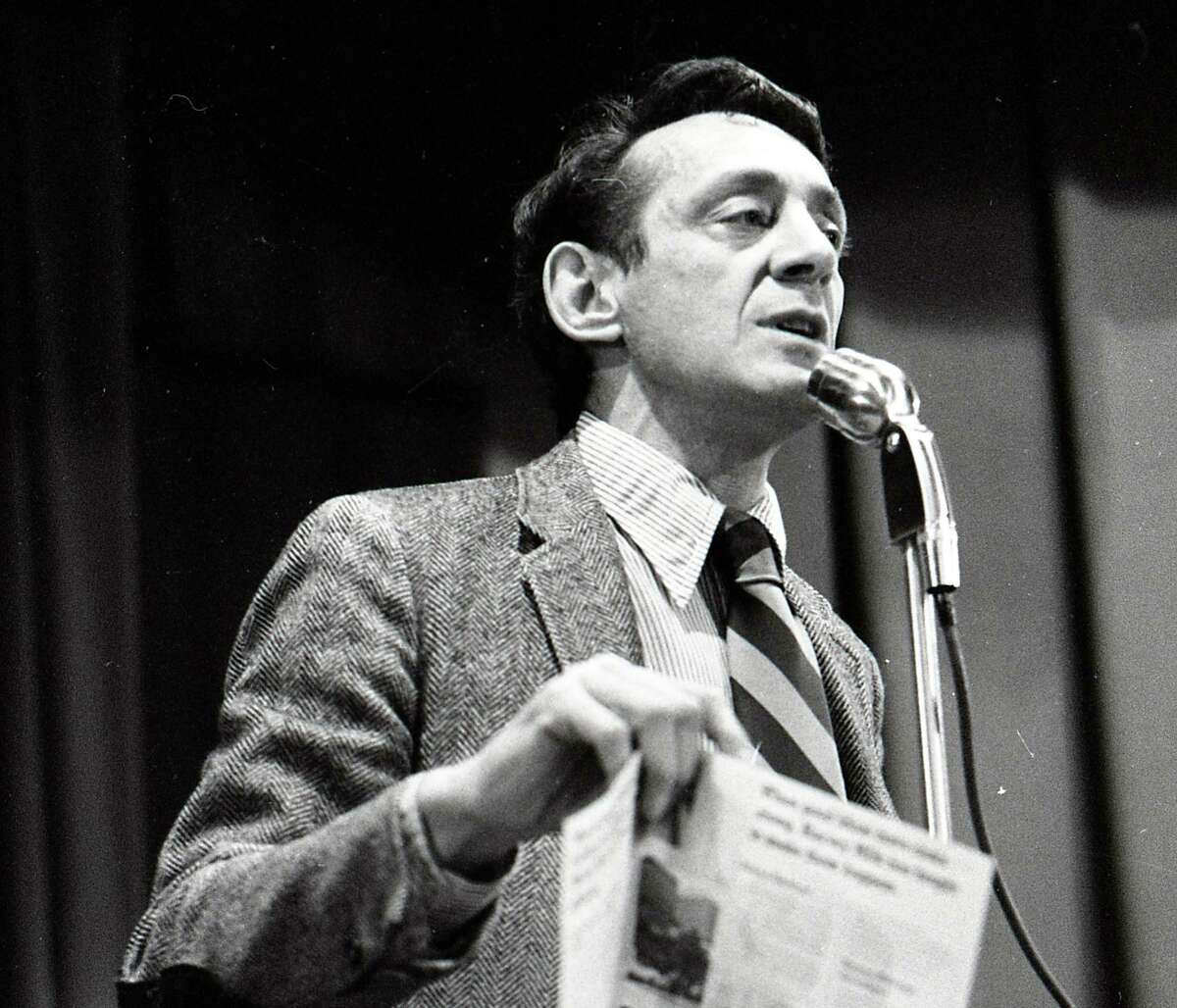
In a recently resurfaced interview from 1978 with iconic Harvey Milk and San Francisco Chronicle reporter Jerry Burns, the legendary San Francisco supervisor touched on a subject as contentious then as it is now: cars and public transportation.
During their conversation on the news segment “Viewpoint,” Milk answered questions about his policies and his dreams for how he’d like to see the city approach housing and other social issues.
While talking about housing development in the city’s South of Market neighborhood, Milk added that he wouldn’t mind seeing the neighborhood “ban the automobile,” to which the interviewer responds, “that’s the New Yorker talking in you, I guess,” referring to Milk’s birthplace.
The dismaying reality, Milk said was that San Franciscans had to visit amusement parks “to have a pleasant place to walk and stroll,” he said. “We have to go to amusement parks for a good transportation system.”
As much as the comparison may have appeared tongue-in-cheek, the conversation reflects tensions over transit and transportation in San Francisco that have endured for more than five decades. And as several recent, embittered debates have shown, the discord isn’t likely to dissipate any time soon.
More for you
- How quickly will electric vehicles take over, now that California has mostly banned gas-powered cars in 2035?
- A hump on this S.F. slow street landed at least two bicyclists in the hospital — including one in the ICU
Over the past few years, the city has been embroiled in tense battles over public space, especially as it relates to public transportation and car-use. Dueling ballot measures to keep Golden Gate Park’s John F. Kennedy Drive and the Great Highway closed — or open — to car traffic have led to marathon meetings at City Hall, new ballot measures this fall, protests and vandalism.
The snippet of the Milk interview was tweeted recently by San Francisco’s Harvey Milk LGBTQ Democratic Club as part of an effort to raise awareness about the November propositions.
Club President President Edward Wright said he was struck by how Milk — and in many ways, San Francisco residents as a whole — were still debating the same issues in 2022 that were being debated in the 1970s.
In his regular column for the Bay Area Forum, Milk once wrote that in order to have an improved Muni system, the city must have a governing board that would support a transit-first ideology and vote against attracting more cars into core areas.
“For several years I have said that the bets way to improve Muni would be to require the Mayor and the (Board of Supervisors) to ride the buses every day, to and from City Hall!,” Milk wrote.
Wright, who is also a legislative aide for Supervsior Gordon Mar, but spoke in his capacity as president of the Milk club, sees Milk’s legacy — and the transit investments he sought — as not just a public good, but both a human right and a moral imperative in the face of climate change.
“A hopeful vision of San Francisco is one that believes that the city can be better than it was,” said Wright. “And to do that, we have to move forward, not just by trying to preserve the city in amber but by really improving it.”
Harvey “ban cars” Milk!
Harvey understood the necessity of reimagining our streets to prioritize people. That’s one of many reasons we’re asking you to vote #YesOnJ #NoOnI
“We have to go to an amusement park for a good transportation system” — but we can create it here! pic.twitter.com/NRzaMQVOxh— Harvey Milk LGBTQ Democratic Club (@harveymilkclub) August 30, 2022
One of the biggest tensions around transit and cars in San Francisco has centered around JFK Drive in Golden Gate Park. After months of impassioned public debate and an initial vote to keep JFK Drive permanently closed to cars, a different chorus of voices has brought the issue to the ballot again.
Proposition I on the ballot this November could reverse that decision, permanently allowing cars on both JFK Drive and another street that has garnered strong reactions on both sides: the Great Highway by Ocean Beach. On the flip side, Proposition J would reaffirm the vote to close JFK Drive to traffic.
“Congestion has definitely increased as our population has increased, but we have also passed a lot of good policies to address that,” said Vinita Goyal, executive director of San Francisco Transit Riders. “We all know where we need to make the shift,” away from cars and congestion.
SoMa, which Milk mentioned specifically in the interview, has become a locus for traffic issues in recent years.
The neighborhood has been identified as a High Injury Network through the city’s Vision Zero Project, a SFMTA policy aiming to eliminate traffic deaths in San Francisco. The project mines severe and fatal injury data from local hospitals and agencies to create a dataset for where the most traffic accidents happen in the city.
“SoMa is a real danger for people,” said Marta Lindsey, communications director for Walk S.F. “It’s interesting and not surprising that (Milk) was throwing out (the neighborhood) 50 years ago. When you look at European cities that have shifted the balance in downtown areas to prioritze people and safety … that is not yet our reality in San Francisco.”
Annie Vainshtein (she/her) is a San Francisco Chronicle staff writer. Email: avainshtein@sfchronicle.com. Twitter: @annievain
Written By Annie Vainshtein
Annie is a reporter for The San Francisco Chronicle. She previously was a digital producer for The Chronicle’s Datebook section. She graduated from Cal Poly, San Luis Obispo in 2017 with a degree in journalism. During her time there, she spearheaded a culture column, produced radio pieces for NPR-affiliate station KCBX, and was a DJ and writer for KCPR, the campus radio station. Before joining the Chronicle, she was an associate producer at SFGATE and interned at VICE and Flood Magazine. She’s particularly interested in communities and scenes that are often misunderstood.

 ©2022 Hearst