- By Adam Shanks | Examiner staff writer |
- Mar 27, 2023 Updated Mar 28, 2023 (SFExaminer.com)

New legislation could help populate vacant store fronts like this one at the Varlow Building 207 Powell St. in Union Square.

A proposal would encourage pop-ups and housing in vacant buildings, such as this one at 200 Powell St. in Union Square.
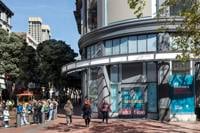
The Gap at Powell and Market streets has been vacant since the start of the pandemic. The languid post-pandemic recovery of downtown is affecting The City’s budget, which is projected to face a deficit of more than $700 million over the next two years.
- Craig Lee/The Examiner
City leaders know downtown San Francisco will never be the same again, and now they are hoping to catalyze its evolution.
Mayor London Breed and Board of Supervisors President Aaron Peskin announced sweeping legislation Monday aimed at spurring movement in The City’s listless downtown core.
If approved, the bill would remove barriers to conversions of downtown office buildings into housing, ease zoning restrictions on Union Square property owners, and encourage more pop-up events and businesses in the city core.
As a package, the proposed planning code changes would try to help break up the monocultures of retail in Union Square and offices in the Financial District.
“The challenges facing downtown require us to imagine what is possible and create the foundation for a stronger, more resilient future,” Breed said in a statement. “Working with President Peskin and the board, we can create more opportunities to fill our empty buildings, whether that’s to create housing or making it easier to fill office and retail space.”
City leaders don’t expect any one of the proposed changes to spark a massive upheaval downtown and fix its well-documented problems overnight. For example, opaque planning processes are a barrier to converting offices into housing — but so is the exorbitant cost of construction, which The City has little to no direct control over.
Still, The City’s notoriously burdensome and difficult-to-navigate processes can stymie projects before they ever come to fruition, officials acknowledged.
“Crafting and passing this legislation is only half the battle. Working with and making connections amongst a wide array of stakeholders from building owners to small businesses to arts organizations in order to realize these goals and ensuring these tools are user-friendly is our next big challenge,” Peskin said in a statement.
The stakes are high for the Board of Supervisors and Breed, who has made the revitalization of downtown a focus in 2023 and introduced a new strategy for its recovery last month.
“These changes shouldn’t be something that requires granting exceptions through lengthy paperwork and exhaustive public hearings. We need to make the process easier for getting our buildings active and full,” Breed said.
Not only is the languid post-pandemic recovery of downtown fodder for further scrutiny on San Francisco from national media outlets, it is The City’s economic engine and revenue driver. The City budget is projected to face a budget deficit of more than $700 million over the next two years, in large part due to declining sales tax and business tax revenues linked to downtown’s success.
The legislation first heads to the Planning Commission and Building Inspection Commission for review, and ultimately requires approval by the Board of Supervisors. Peskin and Breed had been separately working on legislation related to downtown before combining their proposals.
It comes on the heels of legislation — which has yet to make its way to the Board of Supervisors — introduced by Breed in February that would offer tax incentives to businesses that move to downtown San Francisco.
In a city with a housing crisis, it’s easy to see an empty office building as a future home. It’s harder to actually make it happen. Conversions of downtown office buildings into housing face numerous hurdles, but Breed and Peskin’s proposal tries to at least get The City out of the way.
The City’s zoning code already allows for housing, but the proposed legislation would nix certain requirements, including rear yards, which the bill’s proponents argue aren’t necessary downtown.
The bill also calls on the Department of Building Inspection to establish clear guidelines for prospective developers of housing in the downtown core.
The proposal comes as San Francisco races to build the more than 80,000 homes called for in its new Housing Element. While much of that development is slated to occur in The City’s less-dense west side, city leaders will take all the new housing they can get.
With the demand for retail space in decline, The City also wants to loosen its restrictions on property owners in Union Square, where offices are banned on the second floor and require a special permit up to floor six. The proposal would also widen the definition of retail to allow more uses on the ground floor of buildings. The changes already have the backing of the business group Union Square Alliance.
“This proposed legislation fills in a key puzzle piece toward the revival of Union Square,” said Marisa Rodriguez, CEO of the Union Square Alliance.
The legislation also aims to make it easier to launch pop-ups in vacant ground floor spaces.
Having more pop-ups would have the near-term benefit of ensuring that otherwise-empty storefronts remain active and utilized while downtown’s long-term future becomes more clear.