- Riley Cooke, Kiana Sezawar Keshavarz, Aarya Mukherjee, Rae Wymer
- Apr 25, 2024 (DailyCal.org)
College students across the country are taking over open spaces on their campuses in solidarity with Gaza, yet how the encampments live and operate is unknown to those who haven’t pitched their own tent.
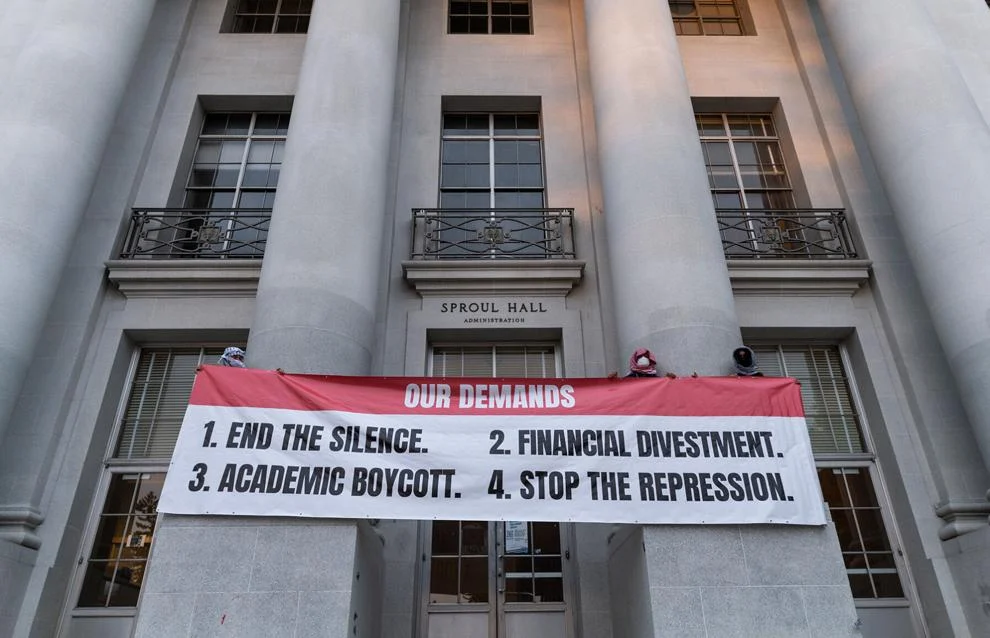
The Daily Californian spent 24 hours with the Free Palestine Encampment’s residents beginning at 5 p.m. Tuesday to better understand the motivations of the protesters leading Berkeley’s participation in a national movement for university divestment. UC Berkeley’s cohort is specifically calling for “divestment from the Israeli state and from all companies profiting from the colonization of Palestine,” among other demands.
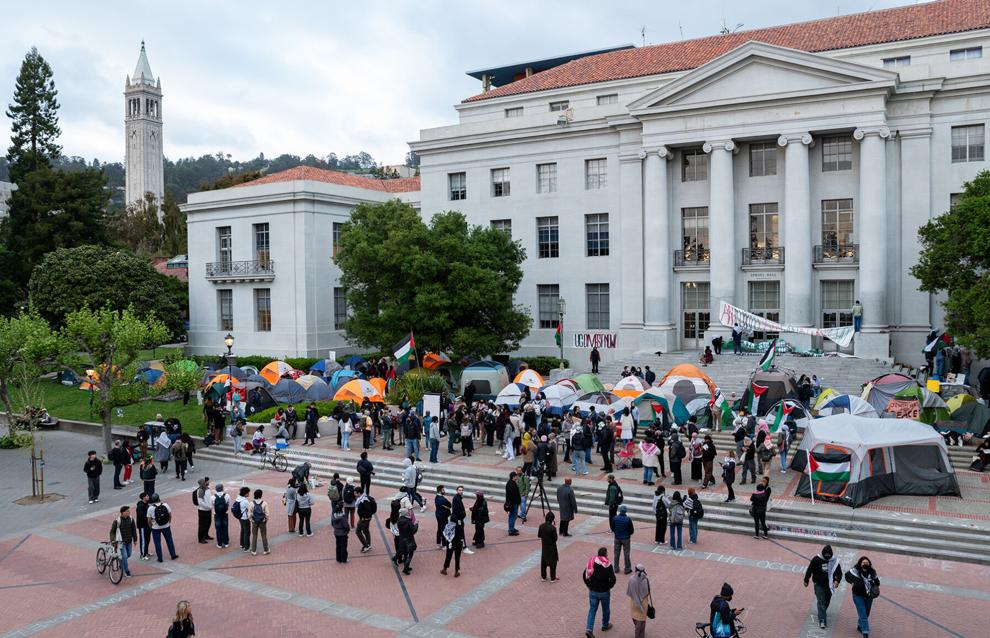
While other student protests across the country are making headlines for confrontations with police, mass suspensions and political scrutiny, the scenes at UC Berkeley are calm. There have been no reported altercations or arrests relating to the protest as of press time, and despite the encampment being on the steps of UCPD’s headquarters, police were nowhere to be seen through the night.
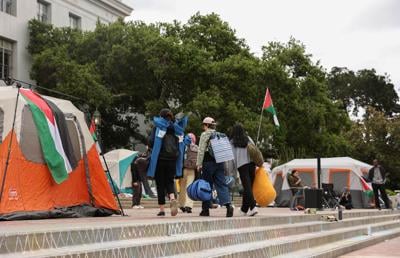
“Mostly, it’s been really beautiful to see so many students and community members so passionate about standing in solidarity with Gaza and fighting together. Honestly, it has just been very heartwarming,” said Cecilia Lunaparra, District 7 city council member-elect who slept at the encampment.
Kyle Garcia Takata | Senior Staff
Yousuf Abubakr, an undergraduate organizer, described a “mixed bag” of stress and excitement by the second night. He had been out at the encampment for 34 hours straight by then, but he said the conversations he had with students kept him going.
The encampment constituency is made up of a diverse coalition of students, community members, staff, faculty and alumni.
Throughout the night, a steady rotation of volunteer security guarded the dozens who slept in the tents — many were quietly catching up on coursework as they kept watch.

Cole, a Berkeley Law student who asked to be referred to only by his first name, described sleeping in two-hour “spurts” and studying late at night.
Leila, an organizer with Graduate Students for Justice in Palestine who asked to be referred to by just her first name, reflected on similarities between campus causes for Palestine and the Third World Liberation Movement.
“We’re realizing that our struggles are not so different from each other, and we’re finding ways to mobilize around that,” Leila said.
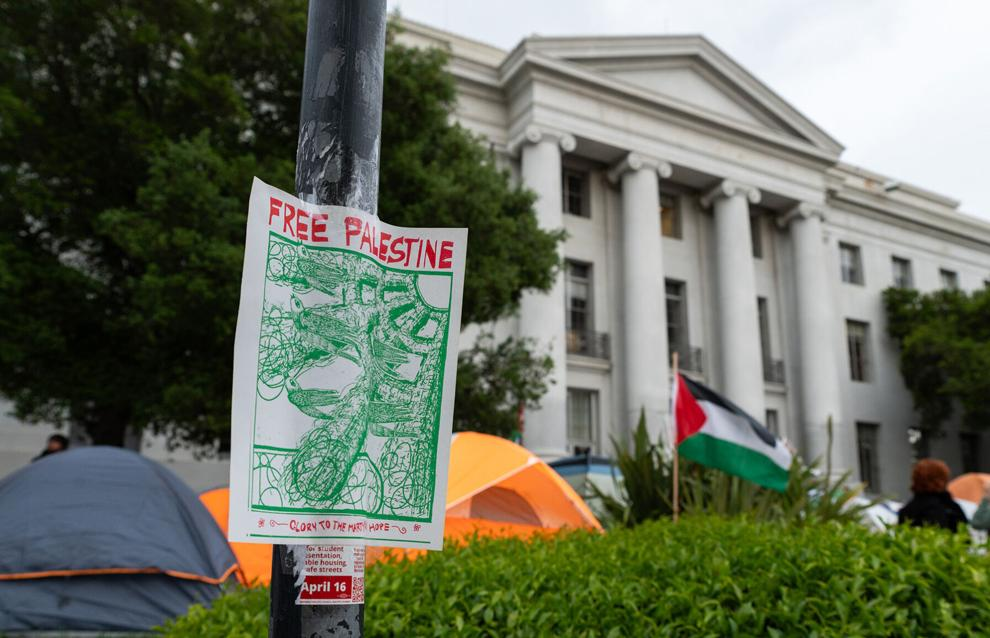

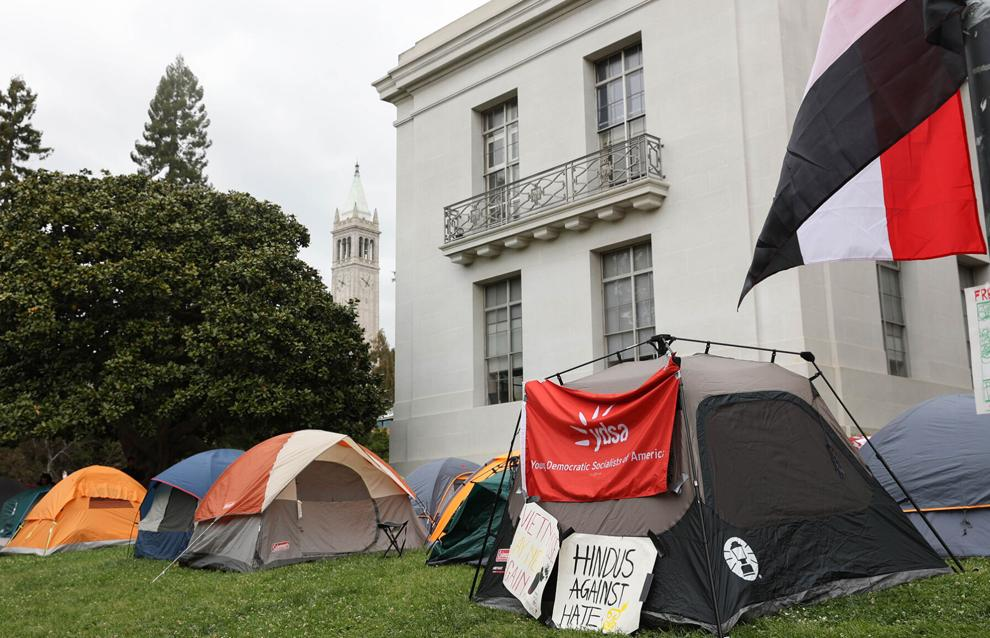
Some student organizations pitched their own tents adorned with flags and banners, including Jewish Voice for Peace, Cal YDSA and Cal Berkeley Democrats.
“The divestment coalition has over 75 organizations representing over 7000 students, so this is not a spur of the moment decision,” said Banan Abdelrahman, a member of Graduate Students for Justice in Palestine and an organizer for the UC Berkeley Divestment Coalition. “This is a very intentional decision to let everyone know that business cannot go on as usual.”
Protesters shared dinner around 8 p.m. Tuesday with food donated by community members to the encampment’s participants. On-site student volunteers helped guide those with dietary restrictions, taking observances such as Passover into account.
“We have actually asked people to stop giving food because of the abundance of food and donations,” Abdelrahman said.
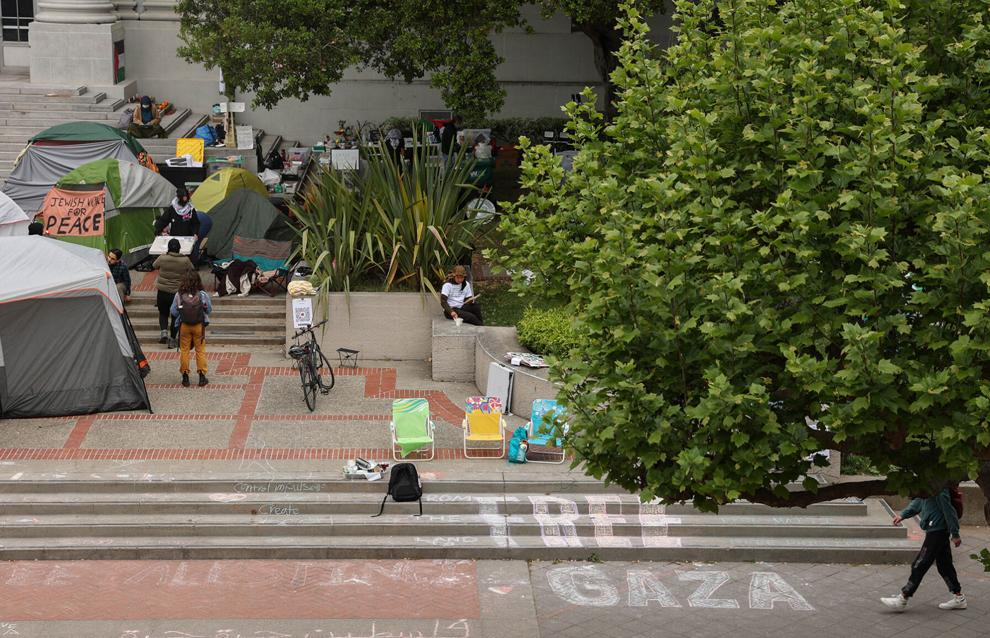

Reporters were directed to specific media contacts on-site, and organizers instructed campers not to speak to journalists in order to prevent inaccurate or outdated information from spreading. Encampments at other universities have enacted similar policies to limit the potential for outside agitators to take advantage of the movement’s publicity.
Organizers and students were being assisted by National Lawyers Guild volunteers, who wore neon green hats and orange safety vests to distinguish themselves. Camilo Pérez-Bustillo, the San Francisco chapter’s executive director, said the guild is there to inform students of their rights as protesters and take note of any police interactions.
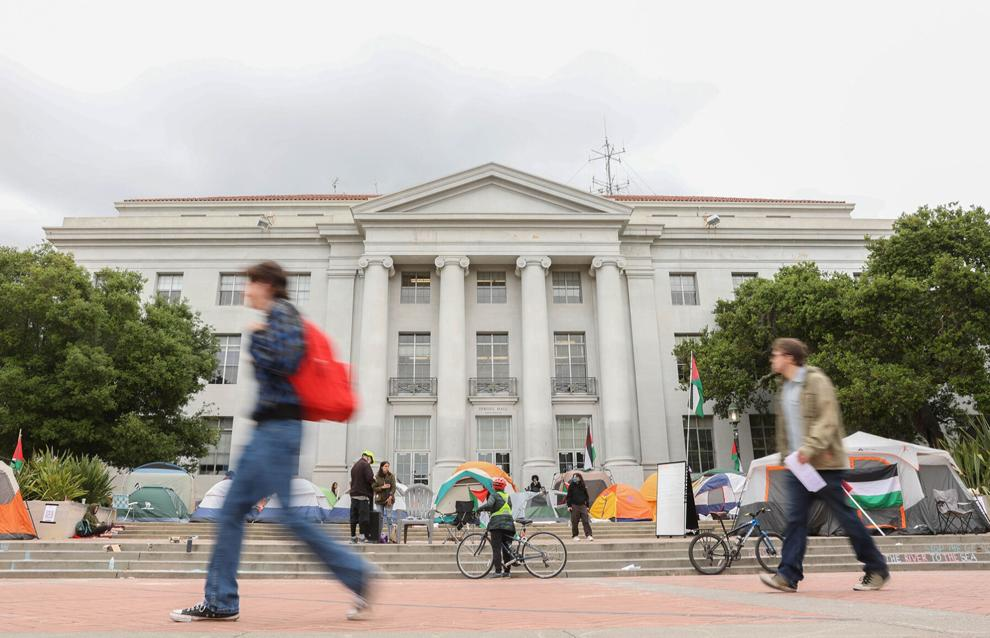

During the day, student organizers played recorded messages and hosted a range of public teach-ins delivered by graduate students, faculty and staff.
While the demonstration was inspired by similar actions at Columbia University and other colleges across the country, organizers stressed the importance of focusing attention on Palestine and the war in Gaza.
By 5 p.m. Wednesday, the encampment had expanded to more than 80 tents.
“None of us want to be here in camps. We have beds. We have finals. It is sad we have to do this to get the university’s attention,” Abubakr said. “But we have to be here for Palestine and Palestinian voices.”