


Gun-violence prevention advocate to replace ousted progressive Max Carter-Oberstone


Read Mission Local often?
Help grow our newsroom, joining the hundreds of San Franciscans who support us by giving below.
Mattie Scott, a gun-violence-prevention activist, will be Mayor Daniel Lurie’s choice to replace ousted reformist police commissioner Max Carter-Oberstone, according to several sources.
Scott (no relation to Police Chief William Scott) has considerable expertise in community organizing around gun violence. She has pushed for reinvestigations into homicide cold cases and supported gun buy-back programs, accountability for irresponsible gun sellers and dealers, and community violence intervention programs.
What Scott does not have, at least according to several Black community advocates who backed the ousted Carter-Oberstone, is specific expertise in police departments and how they function.
“Given the qualifications of the two people, there’s a vast difference,” said Cheryl Thornton, co-chair of the Harriet Tubman African American Democratic Club. “I don’t see the legal background or the labor background.”

Want the latest on the Mission and San Francisco? Sign up for our free daily newsletter below.Sign up
Scott is the president of gun control group Brady United and the founder of Healing 4 Our Families & Our Nation, a violence prevention organization. She writes and speaks about her personal connection to these issues; her youngest son, George Scott, was shot and killed almost 30 years ago at a graduation party in San Francisco.
Mattie Scott has received several awards for advocacy in her neighborhood and beyond. She has served with local groups like the San Francisco Chief of Police African American Police Advisory Forum, and has been recognized by high-profile California Democrats like Kamala Harris and Nancy Pelosi.
“She turned her agony into action, working to save lives from the scourge of gun violence,” Pelosi wrote in 2023.
“Couldn’t be a better person,” said the Rev. Amos Brown, a member of the African American Reparation Advisory Committee, regarding Scott’s selection. The reverend, who noted that he had baptized Scott’s murdered son, said that Scott would exercise common sense, be balanced, and pay attention to police reform.
He had “nothing but praise” for the activist he said had always been committed to her community and concerned about its people. In interviews with the San Francisco Chronicle, other activists echoed Brown.

Brian Hofer, a reform activist and Carter-Oberstone supporter, said he felt Scott was “qualified on paper” and that she had the subject-matter expertise needed for the role as someone personally affected by gun violence. Not everyone needs to be a lawyer or civil rights advocate, he added.
Hofer’s only concern, he said, stems from the fact that Lurie removed a commissioner who acted independently. “Does that mean she won’t be that?” he asked.
Others, however, worry that Scott could become a “yes person” for the mayor because of her lack of experience on policing issues that aren’t directly related to gun control or homicide investigations. Carter-Oberstone, in contrast, is an attorney who has studied police reform, an applicable skill in a body meant to oversee the police department.
A police commissioner, said Thornton, must be able to analyze data regarding the disproportionate impact of policing on Black residents. They must be able to understand union contracts and the complicated disciplinary process for police officers who violate protocol. They must have knowledge of the 272 reform initiatives the Department of Justice ordered the SFPD to adopt. As volunteers, commissioners are not given support staff.

Scott did not respond to multiple requests for comment. Lurie’s team also did not respond to requests for comment.
The outspoken Carter-Oberstone notably sparred with his appointing authority, Mayor London Breed, who both appointed and re-appointed him to the Police Commission. In a letter to the Board of Supervisors announcing his intent to oust Carter-Oberstone, Lurie wrote that he would seek a replacement “who will work collaboratively to make our city safer.” The supervisors sided with Lurie in a 9-2 vote. Multiple supervisors and community members said that Lurie privately told them Carter-Oberstone had been rude and disrespectful to his staff, which Carter-Oberstone denied.
While the mayor can unilaterally fire the chief of police, the replacement must be drawn from a list of names advanced to the mayor by the Police Commission. This is usually a formality, as four of the seven commissioners are appointed by the mayor and customarily receive direction, on issues both great and small, from the mayor’s office. But Breed and Carter-Oberstone’s public break in 2022 vastly altered the status quo.
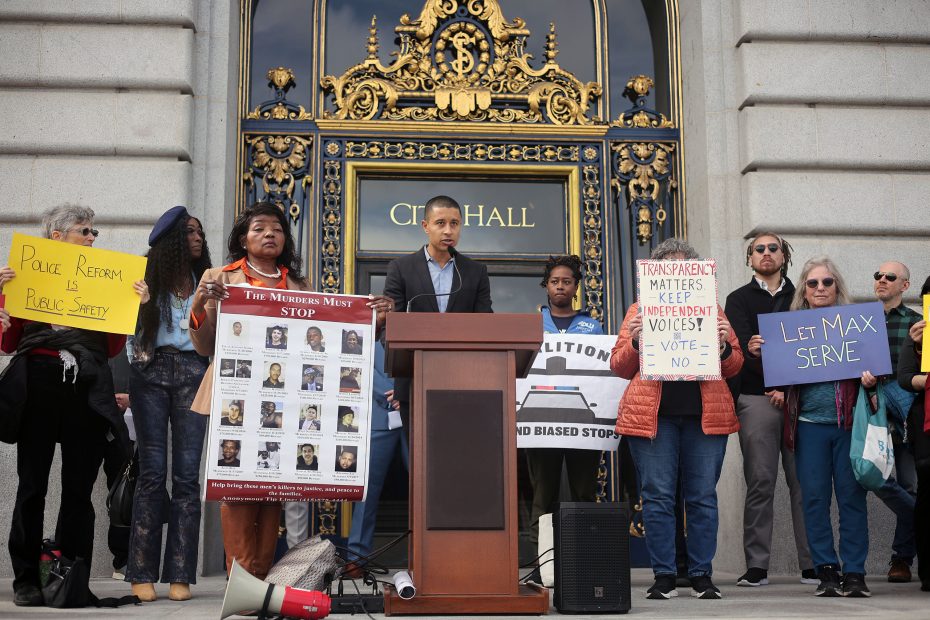
Former SFPD captain Yulanda Williams, who spoke at a rally Monday in support of Carter-Oberstone, said her reaction to hearing about Scott’s appointment was “shock” and “disbelief.”

Scott, Williams said, is a “wonderful community activist” whom she respects. Still, Williams worried that Scott does not have the technical know-how required for the job by the time her term was over; the “learning curve is far too great.” With the city’s public safety on the line, “Are we willing to risk it?” the former captain asked.
“We need qualified people of color in commissioners’ seats,” Williams added.
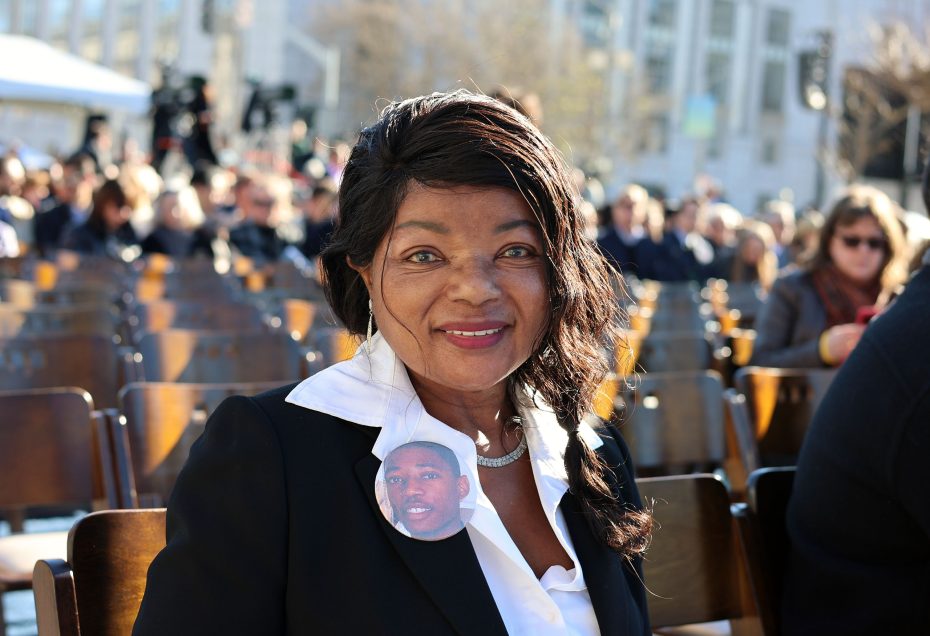
“I’m appalled,” said Paulette Brown, who has attended police commission meetings since her son was shot and killed in 2006. Brown, who also spoke at the rally in support of Carter-Oberstone, said she rarely sees Scott attend the meetings.
On Wednesday evening, Scott was seated at the end of the first row of chairs set up in City Hall for San Francisco’s Black History Month Closing Ceremony, attendees said.

In front of the standing-room-only crowd gathered around City Hall’s marble staircase, Lurie presented Scott with a certificate of honor for her advocacy work.
Scott, in her acceptance speech, thanked Lurie and other city officials for their love and support of her advocacy. She also recognized the female leaders who had come before her.
“We have a lot of work ahead of us,” she told the crowd. “It’s about all of us and none of us”
MORE POLICE NEWS
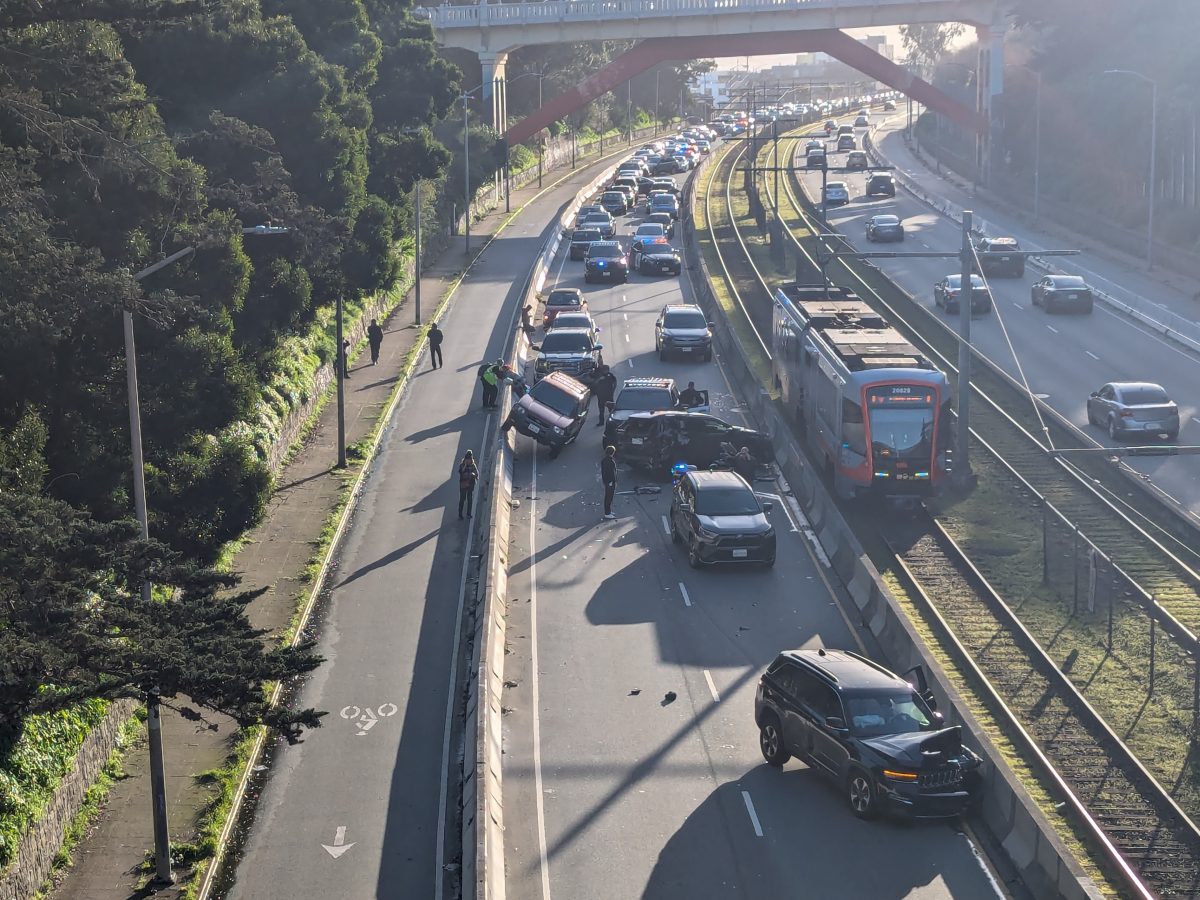
Daly City police chase into S.F. leads to multi-car crash

Curiosity, skepticism, hope on first day of SFPD Sixth Street ‘Triage Center’

S.F. expands jail capacity, anticipating ramp-up in arrests
Support the Mission Local team

We’re a small, independent, nonprofit newsroom that works hard to bring you news you can’t get elsewhere.
ABIGAIL VÂN NEELY
Abigail covers criminal justice, accountability, and behavioral health. She’s originally from New York City, where she was a youth advocate and watched hundreds of arraignments. Now, she enjoys foggy San Francisco mornings with her cat, Sally Carrera. (Yes, the shelter did in fact name the cat after the Porsche from the animated movie Cars.)More by Abigail Vân Neely


