


- By Troy Wolverton | Examiner staff writer
- Mar 30, 2025 (SFExaminer.com)

Guests including Mark Zuckerberg, Jeff Bezos, Sundar Pichai and Elon Musk, arrive before the 60th Presidential Inauguration in the Rotunda of the U.S. Capitol in Washington, Monday, Jan. 20, 2025.
- Julia Demaree Nikhinson/Associated Press, Pool
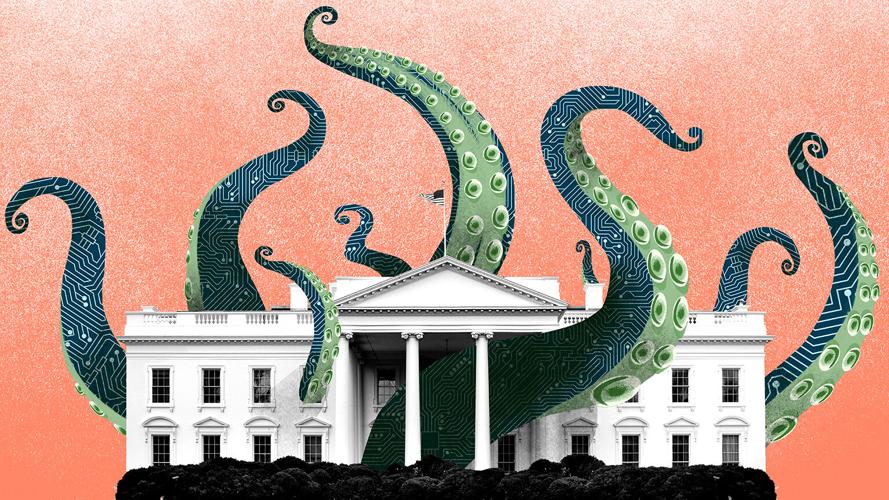
Since taking office in January, President Donald Trump and his administration have led a broad retreat from investigating and policing corporate misconduct, providing a boon to a handful of San Francisco and Bay Area companies such as Ripple, Coinbase and Meta.
Given that Trump backed off on corporate enforcement during his first administration and has taken donations from companies that are under investigation, there’s reason to think that retreat will continue, Public Citizen, a consumer rights advocacy group, said in a recent report. Should that happen, dozens of other local businesses facing federal enforcement actions — such as Apple, Uber and Wells Fargo — could also stand to benefit.
At the same time, the enforcement retreat is likely to harm regular people who interact with or are employed by those companies, said Rick Claypool, a research director at the nonprofit who wrote the report.
“It’s potentially disastrous,” Claypool said.
“If [corporate leaders] think the risk of getting caught or punished severely for misconduct is significantly decreased, then they’re going to push the edge of legality and in the process,
quite likely harm a great deal of consumers, workers, the general public,” he said.
Over the last two months, the Trump administration has taken some big steps back on enforcing rules and laws designed to prevent or punish corporate misbehavior. Among other things, it has:
• Moved to dismantle and essentially halt the work of the Consumer Financial Protection Bureau, which was designed to protect people from unfair banking and financial practices.
• Hobbled the National Labor Relations Board — which is designed to protect workers’ rights, including the right to form unions — by attempting to fire its chair, leaving it for a time without the quorum it needed to conduct business.
• Directed the Equal Employment Opportunity Commission, which enforces workplace discrimination laws, to drop cases involving transgender people.
• Sought to dismiss cases filed against Ripple and other companies for allegedly violating securities laws through the unregistered sale of cryptocurrencies.
All told, the Trump administration inherited from former President Joe Biden nearly 500 corporate enforcement actions — investigations and filed cases — taken against more than 420 individual companies, according to Public Citizen. Trump’s lieutenants have already halted, attempted to dismiss or actually dropped 109 of those actions, the nonprofit reported Thursday.
Trump administration representatives did not respond to an emailed request for comment on Public Citizen’s report.
The companies facing enforcement actions include at least 15 that are either based in San Francisco or have significant ties to The City, and another 38 headquartered in or have ties to other Bay Area cities, according to Public Citizen’s data. In addition to Coinbase and Meta, the local businesses that have already benefitted from the enforcement retreat include Robinhood, eBay, Kraken and Ripple.
It’s not a surprise that the Biden administration targeted so many local tech companies, Claypool said.
“Silicon Valley tech companies are some of the hugest and most profitable and also those that seem to be pushing the bounds of legality in many ways,” he said.
One area where Trump’s enforcement retreat has particularly benefited local companies has been in the cryptocurrency industry.
Under Gary Gensler, the head of the Securities and Exchange Commission under Biden, the SEC investigated or charged at least 14 companies that operated cryptocurrency exchanges with violating securities laws, according to Public Citizen’s data. At least four of those are based in or have significant ties to San Francisco: Ripple, Kraken, Coinbase and Rainberry, formerly known as BitTorrent. One other, Robinhood, is based in Menlo Park.
Under Trump, the SEC is halting or dismissing all those cases. The companies and their executives cheered the moves.
Kraken’s reaction was typical. In a statement earlier this month, the company which was founded in San Francisco but now considers Cheyenne, Wyoming, to be its headquarters, called the SEC’s dismissal of the case against it “a win for fairness.” Kraken didn’t pay any penalties or admit any wrongdoing to close the case, it said.
The dismissal “is more than just a legal victory — it’s a turning point for the future of crypto in the U.S,” the company said in its statement. “It ends a wasteful, politically motivated campaign, lifts uncertainty that stifled innovation and investment, and clears the path toward a stable, forward-thinking regulatory regime.”
As Public Citizen noted in its report, those actions came after many of those companies or their executives donated to Trump’s campaign or inauguration. Kraken co-founder and San Francisco resident Jesse Powell, for example, donated $1 million to Trump’s campaign, while his company donated $1 million to Trump’s inauguration.


Kraken representatives did not respond to a request for comment about those donations or whether they were connected to the dismissal of charges against the company.
The Trump pullback on enforcement is also benefitting local companies that were under scrutiny by the CFBP.
Late last year, the agency sued San Francisco-based Wells Fargo and three other companies alleging they were responsible for the $870 million their customers who used the Zelle payment service lost to scams and fraud, because they didn’t put appropriate protections in place. Earlier this month, the new administration moved to dismiss that case.
Around the same time it sued Wells Fargo, the CFPB also filed suit against The City’s Branch Messenger and Walmart, charging the companies with unfair and abusive practices, including opening accounts for Walmart delivery drivers without drivers’ informed consent. Earlier that fall, Meta announced CFPB staff were investigating it and considering recommending the agency sue the Menlo Park-based tech giant for allegedly illicitly gaining access to users’ financial information and using it to target them with ads.
The Trump administration’s move to halt enforcement actions by the agency put those and other cases on hold.
Other local companies that have gotten enforcement relief from the new administration include eBay, Neuralink and Google, according to Public Citizen’s data.
Early in his administration, Trump ordered the Department of Justice to freeze all of its environmental litigation. Among the cases put on hold was one in which the agency was trying to hold San Jose-based eBay liable for the sale of toxic chemicals on its site, according to Public Citizen.
Trump also early on fired 17 inspectors general. Among them was the one for the U.S. Department of Agriculture who was leading an investigation into Neuralink, Elon Musk’s Fremont-based brain implant company, over alleged animal welfare abuses. It’s unclear how her firing will affect the investigation, which is reportedly ongoing.
While the Trump administration is continuing the government’s antitrust cases against Google and still seeking to break up the company, it has backed off from a key Biden administration punishment request.
After a federal judge last year found the tech behemoth has an illegal monopoly in search, Biden’s Justice Department urged the judge to force Google to dispose of its investments in artificial intelligence companies, most notably San Francisco-based Anthropic. Under Trump, the agency is backing off that demand.
Dozens of other local companies are either under investigation or facing litigation filed by federal agencies, according to Public Citizen’s data. Those companies have not yet gotten relief from the Trump administration, however. Among them are at least eight San Francisco businesses: Autodesk, iRhythm Technologies, Lyft, OpenAI, Scale AI, Synapse, Uber and Visa.
Like the cryptocurrency companies, many of the local businesses still facing enforcement actions donated to Trump’s campaign or inauguration. Both Uber and its CEO, Dara Khosrowshahi, donated $1 million to the inaugural fund. So too did Apple CEO Tim Cook and OpenAI CEO Sam Altman.


It’s not clear how much such donations have factored into the new administration’s enforcement strategy, said Jonathan Karpoff, a finance professor at the University of Washington’s business school.
There are multiple factors that can affect how administrations police corporate behavior, including philosophy and policy preferences, he said. And there are legitimate debates over whether certain regulations and their enforcement does more harm than good, Karpoff said.
Based on such factors, new presidents routinely back off enforcement in some areas while pursuing it in others, he said. For example, The Trump administration has paused enforcement of the bribery provisions in the Foreign Corrupt Practices Act. But under the new president, the SEC has been stepping up the filing of cases for alleged accounting violations under the same law, Karpoff said.
“Each new administration comes in with different enforcement priorities,” he said.
But the Trump administration’s enforcement retreat has been unprecedented, at least in the last 20 years or so, said Tracy Yue Wang, a finance professor at the University of Minnesota’s management school.
While there may be arguments for rethinking how the government polices corporate behavior, the new administration has been moving so fast, it’s almost certainly doing so without giving its policies careful consideration, she said. And we should be concerned that the administration is dismissing cases against companies that have donated to his campaign or inauguration, Wang said.
If those represent actual examples of quid prod quo, “this is basically corruption,” she said.
We have laws and regulations governing corporate behavior and depend on the government to enforce them because there’s a power dynamic at play, Wang said. Individual consumers, workers and investors can face a tough challenge confronting powerful corporations when they’ve been harmed by them.
The Trump administration’s retreat is likely to encourage bad corporate behavior and, if enforcement gets below critical levels, leave people at risk, Wang said.
“This is, in the long run, not good for society,” she said.
If you have a tip about tech, startups or the venture industry, contact Troy Wolverton at twolverton@sfexaminer.com or via text or Signal at 415.515.5594.


