- By Natalia Gurevich | Examiner staff writer
- Dec 5, 2025 (SFExaminer.com)
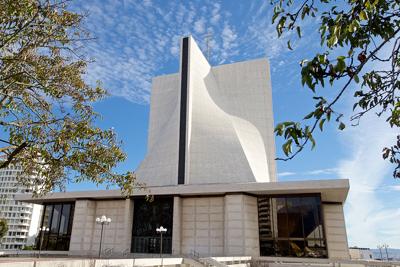
An annual emergency shelter initiative aimed at providing shelter for those experiencing homelessness in The City during the coldest months of the year is officially operational.
San Francisco’s Interfaith Winter Shelter program commemorated its 37th year on Thursday, with five participating sites opening their doors to those in need on a rotating basis over the next few months. The program, which has been expanding winter shelter capacity since 1989, remains a key resource for the unhoused in a city strapped for shelter beds and affordable housing.
The shelter program, which continues until March 29, 2026, rotates between the Canon Kip Senior Center, St. Mary’s Cathedral, St. Mark’s Lutheran Church, First Unitarian Universalist Church & Center, and the Quaker Meeting House. The number of beds available changes depending on the site, with Canon Kip the smallest at 30 beds, and St. Mary’s the largest at 80.
“Our city will not stand idle when our neighbors need a warm meal and a place to stay,” said Mayor Daniel Lurie during a visit to Canon Kip Senior Center in SoMa on Thursday. “This effort expands our shelter capacity for four months across sites supported by our interfaith leaders.”
Chris Callandrillo, the chief program officer at Episcopal Community Services, an interfaith partner that supports the program, said last year his organization served around 600 guests, providing more than 6,000 hot meals to those who needed it.
“These are not just numbers. These are real people’s lives,” Callandrillo said. “Moreover, the shelter also serves as an access point where people can get connected to the resources and services needed to help them permanently exit homelessness, as well as a hub for social connection to combat isolation, especially during the holidays.”

Those who stay at the shelter sites are all self-referrals, said Deborah Bouck, a spokesperson for the San Francisco Department of Homelessness and Supportive Housing. While bed availability changes each night starting at 6 p.m., when the sites transition from their daily operations, visitors can hold onto their bed for more than one night.
This changes as the sites rotate, she said, which happens on a monthly-ish basis and is posted online. Guests are informed of the move beforehand.
The program was created in 1989 in response to the growing homelessness crisis in The City and, over the last few decades, the need has increased, said Michael Pappas, the executive director of the San Francisco Interfaith Council.
“Over three decades, I think the greatest disruption was COVID-19,” he said of the global pandemic of March 2020. “I remember at the very beginning of COVID-19, we had to shut it down because the volunteers were preparing our meals … and nobody knew what was going to happen.”
At the end of 2020, when the program was set to resume, St. Mary’s maintained its shelter during the entire four-month stint, as it was the largest site and deemed the safest for congregate shelter.
“It is a labor of love,” Pappas said, of operating the program every year.
While there have been discussions in the past about operating this emergency shelter year-round, he said it would be too much to ask of the participating partners, as each space serves another purpose.
“A lot of them have rental space that they have to give up,” Pappas said, of the additional strain on participating sites caused by operating the program. “They get a stipend from The City, but it’s barely enough to pay for electricity. They’re doing the best that they can, and we’re always looking for new spaces.”
It was just last year that the Quaker community stepped forward and offered its space to the roster, he said.
One of the first guests staying at Canon Kip on Thursday said he found out about the shelter through a flyer at the Gubbio Project, another homelessness resource site in The City.
Gil, who asked to go by his first name to protect his privacy, said he’d been living on the streets since July of 2024, after getting evicted from his home. He’s been working with The City’s Homeless Outreach Team to find permanent housing, but the process got “derailed” during the recent holiday.
“They have good people, their hearts are in the right place,” Gil said. “It’s just about having the resources.”
But while he’s been on wait lists, living on the street has become more of a challenge in recent weeks as the weather has turned, Gil said, as he was recovering from a bout of walking pneumonia.
“I’m thankful that this place is here, that it’s a safety net,” he said. “I really don’t want to stay on the street.”