- By Natalia Gurevich | Examiner staff writer
- Apr 6, 2026 (SFExaminer.com)
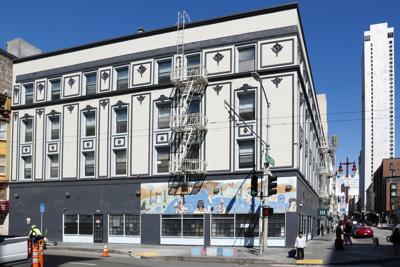
Advocates are pushing to have the interior of Compton’s Cafeteria on Taylor Street included in its historical landmark status.
Compton’s Cafeteria is the site of a watershed 1966 riot that many consider to be the beginning of the modern LGBTQ+ rights movement, as it occurred three years before a famous riot at the Stonewall Inn in New York.
The site was a common hangout for the neighborhood’s LGBTQ+ residents, particularly transgender women. After dealing with repeated harassment from local police at the cafeteria, a riot broke out between the customers and the police in August 1966.
The site at 101-121 Taylor Street is already on the California and the National Register of Historic Places. In 2022, the San Francisco Board of Supervisors designated the intersection of the two streets at the building, and the exterior walls of the building, as a historical landmark. But advocates have said that because the riot began inside, that space should be included in the landmark designation as well.
Without such protections, proponents of the change argue the site’s interior could be vulnerable to demolition that leaves only the exterior walls untouched. Including the interior would be a step towards better protecting and preserving the entire building, they say.
The battle over the interior’s historical recognition is playing out as activists hope to push out the for-profit prison company that currently uses it as transitional housing for formerly incarcerated people.
The San Francisco Historic Preservation Commission voted last Wednesday against recommending the inclusion of the interior in the site’s landmark status without further investigation into what the building’s interior currently looks like. One commissioner, however, noted that the decision did not “preclude further evaluation of interior features as part of a separate amendment process.”


The proposal voted on by the board was submitted by the Compton’s x Coalition, a community organization dedicated to preserving the site “free from carceral control and corporate profiteering.” Chandra LaBorde, an activist with the group, told The Examiner that they would amend the proposal to include this language.
The amendment would also expand the timeline of historical significance, as defined in the landmark designation, from only the year 1966 to a full decade between the mid-1960s and the mid-1970s.
The building is now operated as a reentry house, commonly referred to as a halfway house, by the for-profit prison company GEO Group.
A spokesperson for GEO Group, David Blackwell, said during the commission hearing that while GEO supports the building’s landmark status, it disagrees with the inclusion of the interior because it would hinder its ability to operate. There aren’t any physical characteristics in the interior to support the amendment, he said.
“This property has undergone so many changes since 1966; the ground floor is completely unrecognizable,” Blackwell said. “There is no vestige of a cafeteria here. It’s just, it’s just nonsense to say that there is.”
Blackwell alleged that this move is just another strategy by activists to push GEO out of the site.
“They want to essentially drive our client out of business,” he said.


In the weeks since an initial January hearing on the matter, Compton’s x Coalition commissioned a legal analysis and a review from an architectural historian of their proposal.
Ex // Top Stories
District 2 supervisor, electoral rival differ starkly on upzone plan
Incumbent Stephen Sherrill and opponent Lori Brooke diverge on mayor’s signature policy, a map for denser housing that could swing June’s election
Stakes are high in contest for the Sunset’s supervisorial seat
The June election in District 4 has already seen one group collect nearly $300,000 to protect a moderate majority — and a second race in the district will follow just …
Venture industry marked by ‘extreme’ concentration in Q1
Gonzo numbers seen in the first three months of the year, but the lion’s share of the money flowed to a handful of firms
The group challenged the San Francisco Planning Department staff’s use of a city code that only includes interiors in landmark statuses for privately owned buildings when those areas have significant architectural value.
The legal analysis, prepared by the office of local environmental attorney Thomas Lippe, argued that the historical significance of the interior building has not been lost.
“Queer sites don’t always necessarily maintain architectural integrity,” LaBorde said in an interview with The Examiner. “But they need to be recognized for their social history.”
Shayne Watson, an architecture historian and author, told the commission at the hearing that city law “doesn’t adequately evaluate civil rights sites.”
“Yes, there may have been alterations, but they’re secondary,” Watson said of the site.
Susan Stryker is a documentarian and historian whose 2005 film, “Screaming Queens: The Riot at Compton’s Cafeteria,” is credited by some for bringing the story back into the public narrative. Stryker said that it’s become clear how important the building is as she’s worked on documenting its history over the decades.
“There is so much integrity to that location that I feel, if the purpose of historical landmarking is to preserve things of historical significance, that there is something that needs to be preserved there,” Stryker said. “Besides the mere shell of the building.”
Dan Sider, a Planning Department spokesperson, told The Examiner in a statement that the proposal put forward by the community has been “compelling.” But landmark designations tend to focus on exterior building features, Sider said. Exceptions can be made for buildings with interior areas that have historically been open to the public and have extremely high architectural value, such as the Castro Theater.
“Based on what’s been presented so far, we’re not yet comfortable additionally recommending landmarking the interior of the building,” he said, noting that “identifying the specific, character-defining features of any city landmark is a critical piece of the review process.”
Wednesday’s hearing was one of several opportunities the public will have to comment on the proposal, Sider noted.
Supervisor Bilal Mahmood called for an investigation and held a hearing last year after one of the reentry house’s residents died. He confirmed to The Examiner on Tuesday, however, that the decision to make the interior of the building a landmark is a separate matter.
Mahmood, whose district includes the site, supports expanding the building’s landmark status.
“This is one of those appropriate next steps to ensure the community and their history is being recognized,” Mahmood said.
Mahmood said his office is continuing to work with the community on how they want to best protect the building.
For LaBorde, although the Historic Preservation Commission’s vote was disappointing, it won’t hamper the continued efforts to preserve the building.
“It isn’t over,” she said.