


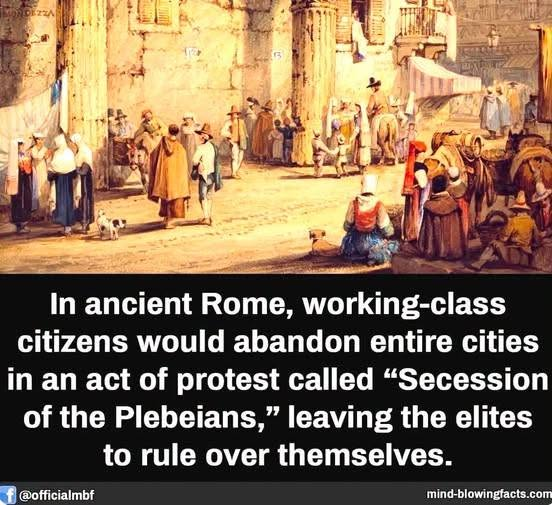
Editor: Secession of the pPlebeians. Was it a real thing?
- Google AI
Yes, the secession of the plebeians (secessio plebis) was a real historical phenomenon in the early Roman Republic. [1, 2]
Between the 5th and 3rd centuries BCE, Rome’s common citizens (plebeians) staged multiple mass walkouts to protest severe economic inequality, unfair debt laws, and a lack of political power enforced by the ruling elite (patricians). [1, 2, 3]
How It Worked
- The General Strike: Similar to a modern general strike, the plebeians would abandon the city en masse, shutting down shops, workshops, and agricultural labor. [1, 2]
- Withdrawing to a Hill: The protesters would retreat to a nearby hill outside Rome—such as the Sacred Mountain (Mons Sacer) or the Aventine Hill—leaving the wealthy patricians vulnerable, undefended, and unable to run the economy. [1, 2]
- The Impact: Because plebeians made up the vast majority of the population and filled the ranks of the military, a walkout paralyzed Rome’s commerce and left the city defenseless against outside enemies. [1, 2]
Major Results
- New Representation: The first secession around 494 BCE forced the patricians to create the office of the Tribune of the Plebs, giving commoners an official political voice with veto power. [1, 2, 3]
- Legal Reforms: Later secessions helped lead to the creation of the Twelve Tables (written Roman law) and the Lex Hortensia in 287 BCE, which made resolutions passed by the plebeian assembly binding for all Roman citizens. [1, 2]


