Hegseth Demands Anthropic Let Military Use AI However It Wants—Even for Autonomous Killer Drones and Spying On Americans

SECRETARY OF WAR PETE HEGSETH, COLORADO

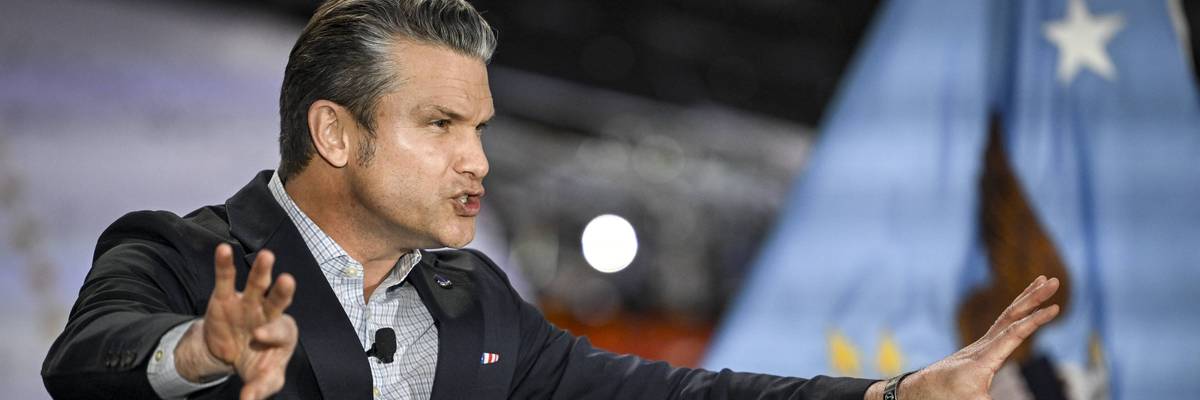
US Secretary of Defense Pete Hegseth speaks during a visit to Sierra Space in Louisville, Colorado on February 23, 2026. 

(Photo by Aaron Ontiveroz/The Denver Post)

Secretary of Defense Pete Hegseth said the company that owns the AI assistant Claude would be punished unless it drops all ethical guidelines.

Stephen Prager

Feb 25, 2026 (CommonDreams.org)

Defense Secretary Pete Hegseth has threatened to punish the artificial intelligence company Anthropic if it doesn’t let the Pentagon use its technology however it wants—apparently even to create autonomous killer drones or conduct surveillance of Americans.

Anthropic’s powerful AI model, Claude, is currently the only one permitted to handle classified military data, and the company was awarded a $200 million contract last year to develop AI capabilities for the Department of Defense to use alongside other AI firms.

RECOMMENDED…

AI Opted to Use Nuclear Weapons 95% of the Time During War Games: Researcher

AI Opted to Use Nuclear Weapons 95% of the Time During War Games: Researcher

People take photos and videos of a robot at the AI Impact Summit in New Delhi

Bucking ‘Huge Consensus’ at India Summit, Trump Admin Opposes Global AI Guardrails

However, the company’s usage policy prohibits its use for mass surveillance and for the development of autonomous weapons—such as drones that attack targets without a human operator.

These limitations have infuriated the Defense Department leadership. On Tuesday, Hegseth called Anthropic’s CEO, Dario Amodei, to a meeting at the Pentagon, where he demanded “unfettered” access to Claude without any guardrails.

This goal was outlined last month in the department’s “AI Strategy” memo, which called for the US to adopt an “AI-first warfighting force” and for companies to allow their technology to be deployed for “any lawful use,” free from ethical safeguards.

According to a senior defense official who spoke to AxiosHegseth issued an ultimatum to Amodei on Tuesday: If he does not grant the Pentagon unrestricted use of Anthropic’s technology by 5:01 pm on Friday, the department would take measures to coerce the company.

It would either declare Anthropic a “supply chain risk,” effectively blacklisting it for military use and ending its contract, or it would invoke the Defense Production Act, which would force the company to tailor the product to the military’s needs.

While it would not be an unusual step for the Pentagon to cut ties with Anthropic, threats to declare it a supply chain risk have been described as extraordinary.

Jessica Tillipman, the associate dean for government procurement law studies at George Washington University, who specializes in AI governance, wrote on social media that the threat of “declaring Anthropic a supply chain risk is deeply problematic,” as it’s “generally something we reserve for products that create security risks, and using it in this way undermines its purpose.”

As Elizabeth Nolan Brown wrote on Wednesday for Reason, it “would mean anyone who wants to work with the US military in any capacity must sever ties with the AI company,” which could deal a major blow to the business.

Last month, Amodei published an essay about how “AI-enabled autocracies” could use the technology to surveil and repress their citizens and wage war on less developed countries:

A swarm of millions or billions of fully automated armed drones, locally controlled by powerful AI and strategically coordinated across the world by an even more powerful AI, could be an unbeatable army, capable of both defeating any military in the world and suppressing dissent within a country by following around every citizen…

A powerful AI looking across billions of conversations from millions of people could gauge public sentiment, detect pockets of disloyalty forming, and stamp them out before they grow. This could lead to the imposition of a true panopticon on a scale that we don’t see today.

Amodei reportedly resisted Hegseth’s demands to lift restrictions at Tuesday’s meeting, refusing to budge on the two key issues of mass surveillance and autonomous weapons. Following reports of the meeting, the company has said it still wants to work with the government while also ensuring its models are used in line with what they could “reliably and responsibly do.”

A senior Pentagon spokesperson said the military must be free to use the technology how it sees fit. According to the Associated Press, the official argued that “the Pentagon has only issued lawful orders and stressed that using Anthropic’s tools legally would be the military’s responsibility.”

X post: https://x.com/samstein/status/2026671668878356573?ref_src=twsrc%5Etfw%7Ctwcamp%5Etweetembed%7Ctwterm%5E2026671668878356573%7Ctwgr%5Ea8d50053d7df3edef429c4bf47c3474631443d80%7Ctwcon%5Es1_c10&ref_url=https%3A%2F%2Fwww.commondreams.org%2Fnews%2Fhegseth-jawbones-anthropic

The question of whether the Pentagon has issued only “lawful” orders is in dispute—in fact, the Pentagon is fighting to cut the retirement pay of Sen. Mark Kelly (D-Ariz.), a retired Navy captain, after he made a video in November reminding active duty troops that they have a duty not to obey illegal orders.

That video was made in response to reports that Hegseth had given orders to bomb the survivors of one of the administration’s boat strikes in the Caribbean—an act described as a potential “war crime” amid a broader campaign that legal experts have said is illegal under both US and international law.

The military also reportedly used Claude as part of another legally questionable act last month: the operation to kidnap Venezuelan President Nicolás Maduro, which involved bombing across Caracas and killed at least 83 people. It is not clear how the model was used during the attack.

While the Pentagon has not specified which restricted activities it wishes to pursue using Anthropic’s technology, Sen. Ruben Gallego (D-Ariz.) said that with his demands, Hegseth was essentially telling the company, “Let us use your AI for mass surveillance, or we’ll pull your contract.”

Under President Donald Trump, Gallego added, “corporations are punished for refusing to spy on American citizens.”

Our work is licensed under Creative Commons (CC BY-NC-ND 3.0). Feel free to republish and share widely.

Stephen Prager

Stephen Prager is a staff writer for Common Dreams.
Full Bio >

Top Dems Reportedly Working to Sabotage Bill to Stop Trump War With Iran

Democratic Leaders Jeffries and Schumer

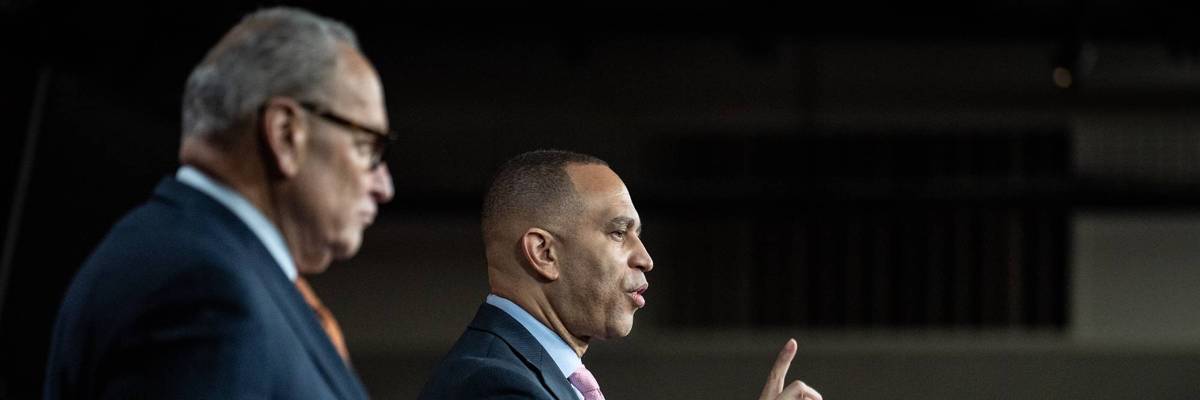
House Minority Leader Hakeem Jeffries (D-NY) and Senate Minority Leader Chuck Schumer (D-NY) hold a press conference on Thursday, January 8, 2026.

 (Photo by Sarah L. Voisin/The Washington Post via Getty Images)

Rep. Ro Khanna said the Democrats trying to kill the bill were beholden to “powerful interests that are itching to have regime change in Iran.”

Stephen Prager

Feb 25, 2026 (CommonDreams.org)

Top Democrats are reportedly working behind the scenes to stop a vote that would force them to go on the record about whether they support a Trump administration attack on Iran.

As the president amasses an armada in the Middle East in apparent preparation for an unauthorized military action, Reps. Ro Khanna (D-Calif.) and Thomas Massie (R-Ky.) planned to force a vote this week on their war powers resolution, which would require congressional authorization for any attack.

RECOMMENDED…

US-POLITICS-CONGRESS-DEMOCRATS

As Trump Marches US Toward Iran War, Critics Ask: Where’s the ‘Pushback’ From Dems and Media?

Negotiations between Iran and the US received extensive coverage newspapers in Tehran

Peace Campaigners Demand Congress Stop Trump From Waging ‘Devastating’ War on Iran

The congressmen have emphasized that time is of the essence, as Trump has signaled that a strike may come any day, and Iran has indicated it may retaliate with devastating force.

A war with Iran is overwhelmingly unpopular with the American public: According to a YouGov poll published Tuesday, just 27% said they’d support military force while 49% oppose it. Democrats are even more united, with 76% saying they’d oppose a war and just 9% support.

And yet, as independent journalist Aída Chávez reported in her newsletter Capital & Empire, Democrats on the House Foreign Affairs Committee have tried to “dampen momentum and prevent the Iran war powers vote from advancing.”

X post: https://x.com/brhodes/status/2026469987343610191?ref_src=twsrc%5Etfw%7Ctwcamp%5Etweetembed%7Ctwterm%5E2026469987343610191%7Ctwgr%5E77b84fee59cedf2b722550eef08be7c9c01307b0%7Ctwcon%5Es1_c10&ref_url=https%3A%2F%2Fwww.commondreams.org%2Fnews%2Fdems-sabotage-iran-war-powers-resolution

Multiple sources have told her that “a top Democratic HFAC staffer… deliberately inflated projections of opposition to the bipartisan measure—warning of 20 to 40 Democratic defections” in a bid to indicate the resolution would fail overwhelmingly.

She said a senior Democratic congressional staffer told her it’s “pretty clear” Democratic leadership is working to “delay or potentially sideline” the vote on the war powers resolution. “If you’ve been around the Hill, this is a familiar playbook,” the staffer said.

“Leadership rarely comes out and says they oppose these votes outright, because they know the underlying issue is popular with the base,” said the staffer, who works on foreign policy. “Instead, you see process concerns, timing objections, and caucus-unity arguments used to slow things down or keep members off the record. We’ve seen the same approach on past war powers votes and foreign policy amendments that clash with the national security elite consensus.”

Democratic leaders have largely tempered their criticisms of Trump’s buildup for what would be potentially the most consequential military action taken by the US in decades.

Schumer, one of the top recipients of funding from the American Israel Public Affairs Committee (AIPAC) and other pro-Israel donors, has limited his criticisms of Trump’s war posturing to questions of procedure rather than policy.

Asked earlier this week about potential US strikes on Iran, Schumer lamented that discussion was being held in “closed-door briefings,” saying that “the administration has to make its case to the American people as something as important as this.”

Sen. Chris Coons (D-Del.), who sits on the Senate Foreign Relations Committee, issued a similar statement that did not object to war in principle but rather the fact that Trump’s reasons for making war were unclear.

“The president and his administration have not tried to explain whether their goal is to destroy Iran’s nuclear program, protect Iranian protestors, pursue regime change, or simply distract from hisfailure to deliver on his promises at home,” Coons said in a statement posted to social media. “Congress and the American people need answers about what our objectives are in Iran.”

President Donald Trump is reportedly weighing a massive military operation that could entail assassinating Iran’s leaders. Meanwhile, Iran has said in the event of a massive attack, it would consider US military bases to be “legitimate targets,” meaning US servicemembers could be at risk.

As Drop Site News reported late last week, based on conversations with an unnamed aide to Schumer back in June—weeks before Trump attacked three nuclear sites in Iran—a number of important Senate Democrats believed that if Trump wants to start a war with Iran, they shouldn’t stand in his way.

Not only did these Democrats believe that “Iran ultimately needed to be dealt with militarily,” but they “also understood that going to war again in the Middle East would be a political catastrophe.”

“That’s precisely why they wanted Trump to be the one to do it,” the report continued. “The hope was that Iran would take a blow and so would Trump—a win-win for Democrats.”

Other Capitol Hill sources told Chávez that, in the House, Minority Leader Hakeem Jeffries (D-NY) and other leaders have not been whipping support for the Khanna-Massie resolution, while few members have openly endorsed it, even as no other war powers resolutions are up for a vote.

Two leading pro-Israel Democrats, Rep. Jared Moskowitz (D-Fla.) and Josh Gottheimer (D-NJ), came out against the war powers resolution on Friday, with Moskowitz deriding it as the “Ayatollah Protection Act.”

In a statement, they claimed that Iran was “still pursuing a nuclear weapon,” even though US intelligence agencies and the United Nations’ International Atomic Energy Agency (IAEA) have assessed the opposite.

Iran’s leaders have expressed a willingness to reach an agreement with the United States that limits their ability to develop a nuclear weapon while allowing them to pursue peaceful nuclear technology in line with the terms of the Nuclear Nonproliferation Treaty.

The IAEA assessed that at the time Trump pulled the US out of a previous nuclear agreement in 2018, Iran was complying with its terms. Since the deal’s collapse, it has begun to scale up uranium enrichment, according to a report by the agency last year.

During an interview on the podcast Breaking Points on Tuesday, Khanna said that the Democrats who have sought to kill his bill were being guided by “powerful interests that are itching to have regime change in Iran.”

“This has been a long-term goal of AIPAC and other groups,” Khanna said. “So when you stand up and say, ‘I’m going to introduce legislation to uphold the Constitution and not get us into another war,’ you make enemies.”

He said pro-war Democrats were going along with Trump’s push for the same reason they’ve resisted releasing the Democratic National Committee’s report assessing that former Vice President Kamala Harris’ position on Israel cost her votes in the 2024 election, and have balked at saying Israel is committing a “genocide” in Gaza.

“It’s not that they may disagree with it,” Khanna said. “It’s just that they don’t want billionaires and powerful people to be targeting them.”

Khanna said he plans to meet with other House Democrats on Wednesday to rally the votes for his resolution. He says he believes he’ll have enough support to force a vote on the resolution by next week, but that “it’s taking work.”

“There are a lot of people in Congress,” he said, “who just would prefer that these issues go away.”

Our work is licensed under Creative Commons (CC BY-NC-ND 3.0). Feel free to republish and share widely.

Stephen Prager

Stephen Prager is a staff writer for Common Dreams.

Full Bio >

Watched by Millions, ‘People’s State of the Union’ Counters Unhinged Trump

The People's State Of The Union Rally And Boycott Outside The Capitol In Washington D.C.

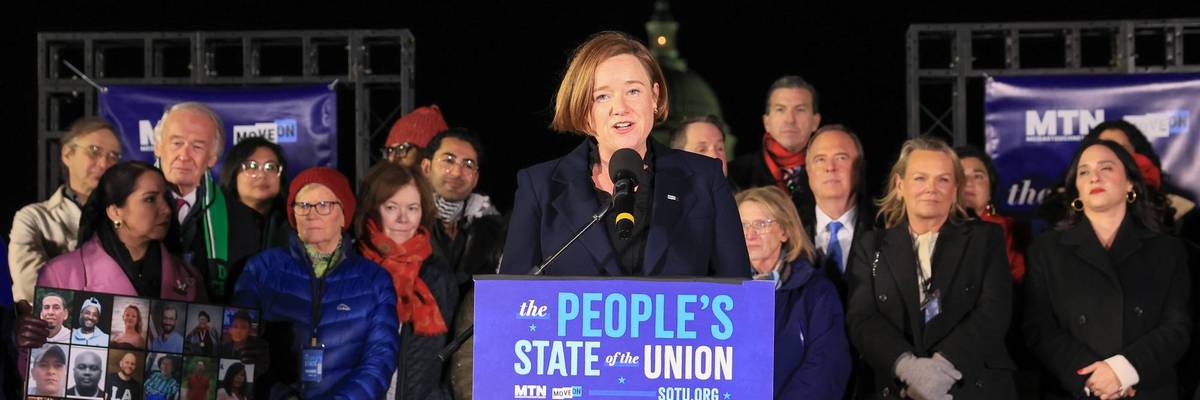
MoveOn executive director Katie Bethell speaks at the People’s State of the Union rally and boycott on the National Mall on February 24, 2026 in Washington, DC.

 (Photo by Jemal Countess/Getty Images for MoveOn)

“We live in a country where we have one reality for everyday people and another for the rich and the well-connected and the well-protected,” said Rep. Summer Lee.

Jake Johnson

Feb 25, 2026 (CommonDreams.org)

As President Donald Trump prepared to deliver his State of the Union address on Tuesday to applause from sycophantic Republicans, dozens of Democratic lawmakers, progressive advocates, and people impacted by White House policies gathered on the National Mall to present an alternative assessment of the country’s trajectory.

“We live in a country where we have one reality for everyday people and another for the rich and the well-connected and the well-protected,” said Rep. Summer Lee (D-Pa.), preempting Trump’s claim of a “golden age of America” despite rising costs, deepening inequality, and staggering corruption.

RECOMMENDED…

maga hat on fire

Three-Time Trump Voter Calls C-SPAN to Apologize for ‘Supporting This Rotten, Rotten Man’

2024 Democratic National Convention: Day 2

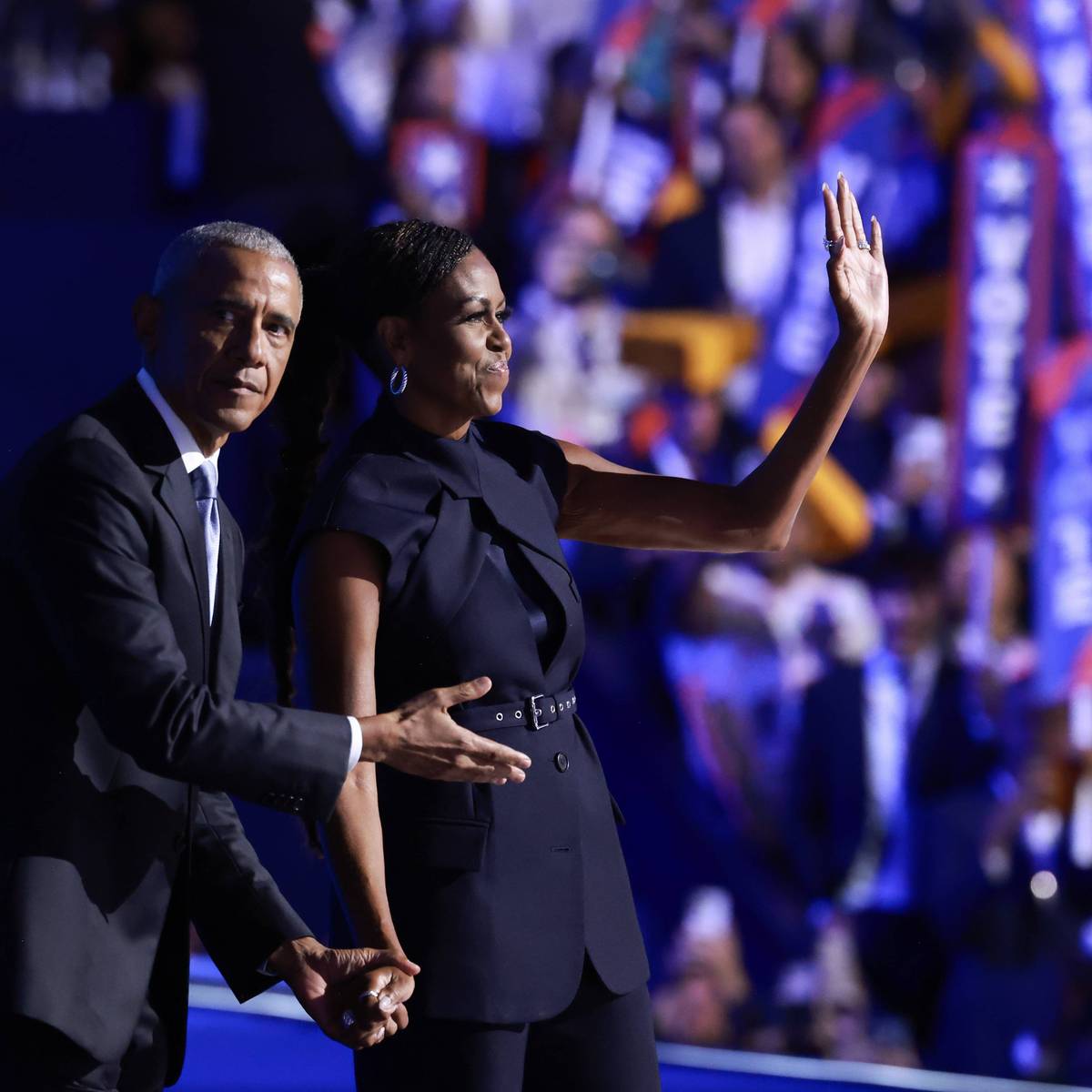
Racist Trump Denounced for Sharing Vile Video Depicting Obamas as Monkeys

While many Democratic lawmakers opted to attend Trump’s speech, saying they did not want the president to deliver his remarks to a House of Representatives full of Republicans, Sen. Chris Murphy (D-Conn.) told the crowd gathered blocks from the US Capitol that “these are not normal times, and Democrats have to stop behaving normally.”

Watch the full counter-rally, which organizers said millions watched online:

Among those who joined Democratic lawmakers at the People’s State of the Union were Epstein survivors and people harmed by the Trump administration’s lawless assault on immigrants, assault on the social safety net, and other policies.

Rep. Greg Casar (D-Texas), chair of the Congressional Progressive Caucus, said during his remarks at Tuesday’s rally that “I’m not in the Capitol building tonight because I have a pretty good idea of what’s going to happen.”

“For an hour or two or three or four, a man who’s made $4 billion off of being president is going to lecture you, the American people, about how good you have it,” said Casar. “A man who is building himself a golden ballroom is going to tell you that if you’re struggling to get by, that’s your fault, because he’s killing it.”

“Everyone but Donald Trump’s rich friends knows that it’s a disaster,” Casar added.

Our work is licensed under Creative Commons (CC BY-NC-ND 3.0). Feel free to republish and share widely.

Jake Johnson

Jake Johnson is a senior editor and staff writer for Common Dreams.

Full Bio >

San Francisco’s New Homeless Strategy Has Failed

by Randy Shaw on February 23, 2026 (BeyondChron.org)

A regular scene outside the Monarch Hotel shelter

Longterm Shelter Stays Promote Drug Tourism

From 1982 until 2022, San Francisco’s shelters provided people a temporary roof over their head. Occupants stayed for days or weeks before transitioning to  permanent housing or fulltime medical care.

But Mayor Breed changed this strategy. She converted tourist hotels to shelters and allowed residents to stay for years. Shelter residents got private baths, which they likely would not get if they paid rent for permanent supportive housing. Residents in converted hotels also got free meals.

San Francisco made staying homeless in shelters a better deal than paying rent in permanent supportive housing. This policy shift increased homelessness and sidewalk drug activities. It decimated the Tenderloin, Mid-Market and SOMA neighborhoods, along with hurting lower Polk and Lower Nob Hill.

I wrote a story about this destructive policy shift in July 2024: “SF’s Failed Shelter Policies Exposed at COVA Hotel.” I wrote a follow-up after Lurie’s election—-“How San Francisco Promotes Drug Tourism“— detailing how San Francisco was spending millions incentivizing homelessness and public drug use. After candidate Daniel Lurie heavily criticized Breed’s homeless policies, we all assumed his administration would stop offering shelter residents unlimited stays.

But the destructive strategy of unlimited shelter stays has continued.

As Erica Sandberg reported last week quoting an official running a shelter at 711 Post, “The longest stays were supposed to be a year but those guidelines have disappeared. So when people are in, they tend to stay. We have some people living here for over three years. At least 95 percent of placements are for active addiction.”

What is San Francisco doing? Has the city forgotten that shelters were designed for temporary stays? As transitional facilities leading people to more permanent housing solutions?

I disagree with those blaming Urban Alchemy for problems at 711 Post. You can’t put 280 people (most of whom are addicts) and 42 dogs in a 123-room SRO and expect success. Especially when the city’s definition of success does not require getting shelter residents permanent housing or drug treatment

As San Francisco faces massive budget cuts the city allows people with incomes to live rent-free in converted SRO hotels for years! Not paying rent means more money to spend on drugs.

No wonder San Francisco continues to attract the drug tourists Mayor Lurie pledged to stop. Where else can these drug users get free lodgings for years—and in an environment that is not drug-free?

Shelters Don’t Take People Off the Street

At a recent hearing on 711 Post, Emily Cohen of HSH claimed closing SRO’s converted to shelters would put more people on the street.  That’s a familiar justification for prioritizing shelters. Its completely contrary to the facts.

The conversion of the COVA Hotel and 685 Ellis to shelters dramatically increased sidewalk drug activities in Little Saigon and nearby areas. Converting the nearby Monarch Hotel to a shelter has kept nearby sidewalks filled with drug users. These shelters put more people on the street. The first block of Little Saigon immediately improved when the COVA closed.

Shelter residents do not spend all day in their 10 by 10 rooms. These rooms are not homes. Those with addictions find a community of drug users on the sidewalk.

It’s also true that with a fixed supply of shelter rooms, allowing them to be occupied for lengthy stays reduces opportunities for those seeking shelter. Based on the SIP hotel experience during COVID, the vast majority of shelter occupants living rent free do not choose to pay rent anywhere when their free ride is up.

Shelters serve a critical transitional function. But allowing longterm shelter stays means the city is spending millions to incentivize homelessness.  This policy primarily benefits drug dealers and stores selling pipes.

SF’s Dubious Recovery Strategy

In addition to misusing shelters, San Francisco pursues a dubious strategy for addressing drug treatment.

The city does not spend a dollar on permanent drug-free housing. Or even on interim housing that guarantees permanent housing at the end of two or three years. But it spends millions sheltering indigents who refuse treatment.

$10 million was spent on a medical facility at 822 Geary that has trouble filling even half of its twenty beds. While this program is praised for meeting people’s medical needs, that money would have been far better spent getting addicts into housing with mandatory treatment programs.

The city loves its costly RESTORE program.  Director of Public Health Dan Tsai said in 2025 that RESTORE has success rates “unlike anything we have ever seen.” At the time Tsai could provide no data to support this conclusion.

But we have data now.

According to DPH, 60% of those receiving medical care via RESTORE did not enter treatment programs. Presumably they went back to their sidewalk drug activities. While 40% entered some sort of treatment program there is no data confirming they participate for longer than a day.

Sidewalk drug addicts need medical care. But San Francisco’s priority should be funding programs that enroll people into drug-free programs through their housing.

Permanent supportive housing (PSH) programs typically have a 90% retention rate. Combining PSH with recovery services would likely maintain close to those high rates.

But San Francisco prioritizes spending its money on short-term programs lacking the longterm treatment addicts need.  That’s a misguided approach.

Nonprofits Distributing Drug Paraphernalia

Mayor Lurie’s press releases state that one way his administration is addressing the drug crisis is by introducing new policies to end the distribution of smoking supplies without connection to treatment.  This is misleading.

Lurie has prevented nonprofits from handing out drug materials on sidewalks. But addicts can go to Glide or the Gubbio Project or the SF Aids Foundation and get drug paraphernalia without any connection to treatment.

At most addicts are given a flyer about treatment (some groups don’t even bother with that). That’s not a “connection to treatment.” To the contrary, handing out pipes and other drug paraphernalia encourages drug use.

The idea that making it easier for addicts to continue using drugs “connects” them to treatment has no basis in fact.

Yet this factually-bereft belief remains official San Francisco policy.

Randy Shaw

Randy Shaw is the Editor of Beyond Chron and the Director of San Francisco’s Tenderloin Housing Clinic, which publishes Beyond Chron. Shaw’s new book is the revised and updated, The Tenderloin: Sex, Crime and Resistance in the Heart of San Francisco. His prior books include Generation Priced Out: Who Gets to Live in the New Urban America. The Activist’s Handbook: Winning Social Change in the 21st Century, and Beyond the Fields: Cesar Chavez, the UFW and the Struggle for Justice in the 21st Century.

More Posts

California Democratic Party delegates can’t agree on top endorsements

The California Democratic Party gathered in San Francisco over the weekend for a festival of political insiders, with plans to vote on whom to back in statewide elections.

But they ended up not settling on a candidate for governor or for several other top-of-the-ticket races in which Democrats were competing for endorsements.

As expected, given the eight Democratic gubernatorial candidates seeking the party’s imprimatur, nobody won the necessary 60% of the delegates’ votes at the California Democratic Party 2026 State Convention to secure an endorsement for chief executive of the state government. Current Governor Gavin Newsom is termed out in 2026, leaving an open field.

U.S. Rep. Eric Swalwell, a congressman from the East Bay who has been an energetic antagonist to President Donald Trump, led the pack with 571 votes, or 24% of delegate ballots cast. He quickly issued a statement thanking “California Democratic Party delegates for backing me to be California’s fighter and protector of working families” and looking “forward to uniting our party and leading us to victories across the state in November.” 

The party’s display of indecision came just days after a new Emerson College Polling/Inside California Politics survey showed Republican Steve Hilton leading the gubernatorial field at 17%. Swalwell tied with Riverside County Sheriff Chad Bianco — another Republican — at 14%, and 21% of respondents said they were undecided.

The nightmarish spectre thus loomed for some of those filling the halls of Moscone Center that — however remote the possibility — there could be a Democratic lockout after the top-two primary on June 2 if the nine major Democratic candidates now in the race split the vote.

“We’re staring at what would be the possibility of the greatest ever California Democratic screw-up in history,” said Assemblymember Matt Haney, who represents the eastern half of The City.

There was “uneasiness” about the gubernatorial race, even as delegates were fired up about the prospects for fighting Trump and taking back control of Congress from Republicans, which were major themes of the gubernatorial-candidate speeches at the convention, Haney said.

“There was no candidate who everyone was talking about and was excited about, at least in the governor’s race,” said Haney, who has yet to endorse anyone for the state’s top job.

How much the weekend’s insidery proceedings will reflect or influence state voters is unclear. Former state controller Betty Yee clocked in at 1.8% in the Emerson poll — but she came in second place at the convention with 411 votes, or 17%.

Yee was followed by former U.S. Health and Human Services Secretary Xavier Becerra with 14% of the votes, billionaire environmentalist Tom Steyer with 13%, former U.S. Rep. Katie Porter with 9%, state Superintendent of Public Instruction Tony Thurmond with just under 8%, former Los Angeles Mayor Antonio Villairagosa with 4.6%, and former Assembly Majority Leader Ian Calderon with less than 1%. About 8.5% of votes were to endorse no one.

Yee, a San Francisco native, hailed the voting results as a “shake-up” and a “major shift” in the governor’s race with her “underdog” campaign “overtaking most of the field.”

“I’m grateful to the party delegates who showed that working people still have the power to make change and that their votes must be earned — not bought,” Yee said in a press release.

Yee rejected concerns that California’s crowded field of Democratic candidates could end up splitting the vote, allowing a Republican candidate to be elected governor.

“There is no way California will elect a Republican Governor in 2026, no way, it’s simply not going to happen,” she said.

Nancy Tung, chair of the San Francisco Democratic County Central Committee said that Yee’s second place showing was likely a reflection of the recognition of her competence and qualifications, along with the high regard Yee enjoys in the state party — of which she was previously vice chair — rather than her electability, given her low showing in polls.

“The real question is going to be whether or not that translates into something like financial backing for her,” she said.

Money will be vital to communicating with voters because the state is so big, Tung said.

Yee’s campaign for governor had raised $1.8 million as of Jan. 25, according to the California Secretary of State’s website.

Haney expressed similar sentiments.

“People love Betty, but it hasn’t yet translated for her into competitive poll numbers or fundraising or endorsements,” Haney said.

Tung said that she thought it was “incumbent upon party leaders” to start having conversations with candidates “about whether or not their campaigns are viable” so Democrats don’t get frozen out.

“You can never say that it won’t happen, right?” Tung said of the potential for two Republicans to be the only ones left standing after the June primary. 

One candidate not considered by delegates over the weekend was San Jose Mayor Matt Mahan, who jumped into the race on Jan. 29 — too late to be eligible for voting.

Mahan attracted attention by quickly collecting $7.3 million in campaign contributions as of Feb. 12, suggesting the possibility that he could effectively build name recognition and spread his moderate message of improving government effectiveness across the state.

“Obviously, Matt Mahan got in with a splash and a lot of money, and so it remains to be seen how that translates into support,” Haney said. “He’s got to introduce himself, still, to most of the state.”

The recent Emerson poll suggested Mahan has ground to cover, finding he got 3.4% support.

“Will he be able to lift his name ID, especially in Southern California?” asked Todd David, political director of Abundant SF. “I think that’s the open question of the governor’s race right now.”

Other top state races in which the convention did not produce party endorsements included:

  • Lieutenant governor, for which current Treasurer Fiona Ma got 49%; former Stockton mayor Michael Tubbs got 24%; and Josh Fryday, the chief service officer in Newsom’s administration, got 21%.
  • Treasurer, for which current Lieutenant Governor Eleni Kounalakis got 52%, state Sen. Anna Caballero got 35%, and state Board of Equalization member Tony Vasquez got 7%.
  • Insurance commissioner, for which state Sen. Ben Allen got nearly 42%; former San Francisco supervisor Jane Kim got 40%; former state Sen. Steven Bradford got nearly 9%; and San Francisco financial analyst Patrick Wolff got 6%.
  • Superintendent of public instruction, for which Los Angeles Community College District Trustee Nichelle Henderson got nearly 25%; state Assemblymember Al Muratsuchi got just under 22%; former Assembly Speaker Anthony Rendon got 17%; former state Sen. Josh Newman got close to 17%; and San Diego Board of Education President Richard Barrera got nearly 13%.

Delegates did award endorsements in several uncontested races to candidates seeking reelection, including Shirley Weber for secretary of state, former San Francisco supervisor Malia Cohen for state controller; and Rob Bonta for attorney general.

As expected, state Sen. Scott Wiener won the party’s endorsement in the race to succeed U.S. Rep. Nancy Pelosi after he won more than 77% of the pre-endorsement balloting.

Haney said the lack of agreement on candidates in some contests showed the races were genuinely competitive, with some younger candidates bringing fresh energy.

“I think that’s a good thing,” he said.

Tung said such endorsements are nice to have, but lacking one will likely not be determinative.

“It doesn’t really move the needle,” she said.

Besides the politicking for statewide offices, Tung said the San Francisco County Central Committee used the weekend convention to publicize the policies the local party has supported since a moderate majority won election in March 2024, such as supporting public safety, housing construction and cutting burdensome government bureaucracy.

The organization also hosted a series of 15-minute fireside chats Friday at Commonwealth Club World Affairs of California with all nine major Democratic gubernatorial candidates. On Saturday night, it hosted a party sponsored by Laborers International Union of North America and the newly renamed North Coast States Regional Council of Carpenters.

“We talk a lot about serious things during the convention,” Tung said. “I think part of developing relationships is also connecting on a less serious level, and just having some music, some food and drink and making sure that people are leaving San Francisco also having had some fun.”

No, taxes on billionaires won’t destroy innovation in California

Tax opponents are putting out a line that makes no sense; just look at Bay Area tech history

By Tim Redmond

February 23, 2026 (48hills.org)

Toward the end of the program with Bernie Sanders and Ro Khanna at Stanford last week, a student posed an interesting question from the audience. He wanted the two progressives to explain why so many of the world’s most important technology advances have come from the US, and not from Europe.

The implication in the question was clear: The United States has lower tax rates and lets company founders get very, very rich, and Europe has higher taxes, so that must discourage innovation.

Sanders and Khanna gave short and modest answers, but the question is far more important, and will loom large in the fall campaign for a billionaire tax—and in the much larger issue of how the US can survive under an AI tech oligarchy that controls all the money and resources.

Bill Hewlett and David Packard started a new company when the very rich paid taxes. It worked out pretty well. Wikimedia images photo by Zinaida Good

The opponents of the billionaire tax have their campaign set: Taxing the huge profits of new companies and their founders will destroy Silicon Valley.

Let’s take a moment to look at the question the student raised—and the impacts a wealth tax might have in the long term.

Tech innovation in the Bay Area didn’t start with the Internet. Bill Hewlett and David Packard launched one of the most innovative and successful companies in the world in a Palo Alto garage in 1939. Fairchild Semiconductor, which made digital technology possible, started in Mountainview in 1957.

There are many other examples of world-changing technology invented in the US before 1980. The cell phone was invented in 1973. Vast increases in agricultural productivity happened during the “green revolution.” Pharmaceutical companies developed vaccines that saved millions of lives.

All of this happened during a period when the marginal tax on high incomes was between 70 and 90 percent, and when there were very few billionaires.

Sponsored link

David Packard died in 1996 with a net worth of $4 billion. Nice, and I think he was pretty happy with his life—but nothing compared to the likes of Jeff Bezos and Elon Musk today.

So let’s ask ourselves a question.

Would Hewlitt and Packard have sat in that garage and said: “Gee, I think we might be able to turn this oscilloscope into a bigger thing, maybe even a successful company … but then we would have to pay taxes. We might only be worth $4 billion, and not $200 billion. Never mind, let’s go work at a hardware store?”

If Microsoft were founded in 1950, Bill Gates would have been very rich, richer than the vast majority of people in the world. He would have been able to live a life most others could only dream of. Would he have given that up and gone to law school like his dad because, say, $4 billion wasn’t enough?

Be serious.

The idea that founders need tens of billions of untaxed dollars to drive innovation is silly–and dangerous.

With great wealth comes great political power these days. You want 20 very rich people to decide the future of AI? Then don’t tax billionaires.

But taxing them at a reasonable rate won’t stifle innovation. It won’t “destroy” Silicon Valley. It might start to undo a terrible culture of greed—and start the process of saving civilization.

48 Hills welcomes comments in the form of letters to the editor, which you can submit here. We also invite you to join the conversation on our FacebookTwitter, and Instagram

Tim Redmond

Tim Redmond has been a political and investigative reporter in San Francisco for more than 30 years. He spent much of that time as executive editor of the Bay Guardian. He is the founder of 48hills.

The biggest problem for California Democrats just revealed itself in San Francisco

The party chair said he was ‘appropriately concerned’ about governor’s race

Speaker Emerita Nancy Pelosi takes a selfie with supporters during the California Democratic Party State Convention at the Moscone Center in San Francisco on Feb. 21, 2026. Christina House/LA Times via Getty

By Anabel Sosa, Senior California Politics Reporter Updated Feb 24, 2026 (SFGate.com)

At the California Democratic Party’s state convention in San Francisco this weekend, the Republicans loomed large. 

The 5,000-person event, held this year at the Moscone Center downtown, is the party’s major endorsement event. The point was to emerge with a consensus as to which Democrat to back in the race to succeed Gov. Gavin Newsom. Yet what was most clear after the weekend of schmoozing was how split the party still is, as nine Democrats vie with two main Republicans to make it to the gubernatorial ticket in the general election. 

“If there are two Republicans in the general election, they’ll come looking for the chair of the party. That’s usually how this works,” said Rusty Hicks, the chair of the California Democratic Party, during a press availability on Friday evening. He was referring to potentially being in the hot seat in his role as the leader of California’s Democrats if two Republicans lead the nonpartisan primary in June, which would shut Democrats out of the general election. 

With less than four months to go until the June primary, the weekend event ended with no official endorsement of a candidate, leaving continued questions about who will lead California Democrats — and maybe California overall — going forward. But the prospect of a Democratic shutout in the governor’s race was a looming topic of conversation over the weekend, even while the party chair shrugged it off as a nonissue this early on.

“I think it’s also important for me to reiterate that I’m aware of, but not worried about that dynamic,” Hicks continued. At another point, he emphasized that he was “appropriately concerned” — as in to say, not overly so.

Yet a poll released last week revealed that two Republicans — Steve Hilton, a British-born former Fox News host, and Chad Bianco, the Riverside County sheriff — have a significant edge in the race. Hilton garnered 17% of support, and Bianco got 14%, which tied him with the leading Democrat, Rep. Eric Swalwell, a multi-term congressman who represents the Bay Area. In California’s nonpartisan, ranked-choice primary system, the top two vote-getters in June regardless of party will move on to the general election in November.

Rep. Eric Swalwell addresses his crowd of supporters at Local Edition bar in San Francisco during the California Democratic Party State Convention on Feb. 20, 2026.Christina House/LATimes via Getty

The Republican edge is, in large part, because the remaining nine Democrats are splitting the support. 

After Swalwell, the next most-supported Democrats in the February poll from Emerson College were former Rep. Katie Porter, who received 10% support, and Tom Steyer, the billionaire and former presidential candidate, who received 9%. After that was a slew of Democrats, including former Health and Human Services Secretary Xavier Becerra, who received 3.5% support; San Jose Mayor Matt Mahan, who received 3.4%; former Los Angeles Mayor Antonio Villaraigosa, who received 3%; former State Controller Betty Yee and State Superintendent of Public Instruction Tony Thurmond, who each received 2%; and former California Assembly Majority Leader Ian Calderon, who received 0.6%. 

Hicks did not specifically say any of those candidates should drop out. He did say, however, that those who continue to poll in the low single digits won’t “have the ability to get to the general election, but can make it incredibly hard for someone else to get there.”

But, polling only paints one part of the picture. Democratic delegates left the weekend with dozens of endorsements for other state races, but the governor’s race remains without one. In order for a candidate to get a party endorsement, they would need 60% support from the 3,500 state delegates. This could signal the discrepancy between delegates’ perceptions of what an eligible candidate should look like compared to what an everyday voter wants.

The top vote-getter was Swalwell, who managed to secure 24% of delegate support this weekend, mirroring his strong performance in the polls. In the running for second and third among the delegates, however, were Yee and Becerra, who got 17% and 14% of the delegate vote, respectively. That’s a huge divergence from their dismal support in the polls; RealClearPolitics’ polling average has Becerra at 4.5% support and Yee at just 1.5%. 

Yee and Becerra both have the resumes to back their campaign visions. Yee has been the state controller and a member of the State Board of Equalization. She intimately understands the state’s tax system and has revolved her campaign around fiscal sustainability for both California’s government and residents. Becerra served as state attorney general before acting as health secretary in Joe Biden’s administration, with firsthand experience working during the COVID-19 pandemic. He has emphasized health care access as his reason for running.

One delegate, Larry Leonard from the Sonoma County Democratic Party, told SFGATE that Yee’s experience is why she was his initial pick.

“I used to really like Betty Yee, and I thought she’s great, and she’d do a good job,” he said. But after looking at polling, he said he’s considering a switch, in part for the greater good come November: “She’s down at 2%, so that changed my whole way of thinking because of the risk of splitting the vote. If she doesn’t get the endorsement, I hope she’s willing to drop out.”

Sandra Lowe, Yee’s campaign manager, was passing out Nerds candies at their booth because Yee is the “nerdy candidate,” she said. Lowe defended Yee’s continued presence in the race by saying there are still too many undecided voters for anyone to drop out. A lot can change, Lowe said, pointing to Porter’s numbers, which have already begun to drop. The Emerson College poll showed the former Orange County representative’s support dropping to 10% in February from 11% in the same poll in December. 

“There’s a huge undecided,” Lowe told SFGATE. “With that big of an undecided, the race is still wide open.”

On Saturday, the convention schedule was split into morning and afternoon slots. Top Democrats, including Speaker Emerita Nancy Pelosi, Sen. Adam Schiff and San Francisco Mayor Daniel Lurie, spoke. In the afternoon, a two-hour session entailed every gubernatorial candidate, and those running for other state positions, being given four-minute slots to make their spiel to delegates. The room was deafeningly loud, with music and delegates in the audience at times overpowering the candidates on stage. 

Yet Porter did manage to make a splash, speaking bluntly and embracing profanities during her speaking slot. She waved around her infamous white board, which read “F—k Trump” and got more of a reaction from the crowd than any other candidates managed to get. She touted her platform on single-payer health care, less expensive housing, free child care for all and zero tuition at state universities. 

“I’m excited about the race. It matters so much. I don’t think ever in California’s history has it mattered so much,” Suzanne Danis, a delegate for Canyon Democrats, a PAC that organizes in southern Orange County, told SFGATE.

Danis said that she is looking for two main qualities in a candidate. The first is whether they’re capable of running the fourth-largest economy like “a CEO”; the second is whether they know Washington, D.C., intimately and can protect California from a “vindictive” federal government.

Steyer and Swalwell, she said, both meet her criteria. Becerra is also a consideration for her if he can get an “increased buzz.” As for Porter — who hails from Orange County herself —Danis called her a “brilliant professor and a policy wonk” but said that, because she has never run an organization, “this is not her race.”

Steyer, a billionaire former investor who founded the San Francisco hedge fund Farallon Capital, is pouring upward of $40 million of his own money into the campaign, according to recent state filings. In his first month campaigning, he had 4% of support from voters, but he has since managed to snag major endorsements from labor and environmental groups. Add that to a considerable ad spend — Steyer was able to pay his way into airtime during the Super Bowl this month, which he used to promote his ideas around dismantling PG&E and lowering everyday costs — and he is now polling in the high single digits.

Hicks, without naming anyone, addressed candidates like Steyer or Mahan, a favorite of Silicon Valley tech backers, who may have an edge in fundraising.

“The question is, you can have all the money in the world, but if you don’t have a story to tell, it doesn’t matter,” Hicks said. “So the question is, do the candidates with the most resources have a story that voters are interested in?”

Steyer’s story, and his billionaire status, is one he will likely have to continue to defend, particularly in a time when billionaires are the target of a controversial wealth tax proposal. He’s previously said he’d vote for the tax, but on Saturday, he deflected questions about it and suggested that a proposal to close the corporate real estate tax loophole would bring more revenue to the state than a wealth tax.

Steyer told reporters that the potential for two Republicans in the general election is “really low” but a possibility, nonetheless. But the self-proclaimed progressive articulated a different fear: “I think there’s a very serious possibility that we’ll end up with an incredibly conservative Democrat and a Republican,” he said.

That conservative Democrat, he said, would be Mahan, the San Jose mayor and the most recent candidate to jump in the race. Mahan didn’t qualify for an endorsement from the party because he declared his candidacy too late, but he was present during the weekend convention anyway. He raised $7 million in his first week, largely from Silicon Valley backers who quickly rallied behind him. A political campaign committee paid for by some tech executives, and not affiliated with Mahan, also paid for a Super Bowl ad promoting him.

Got a tip? Send us the scoop.

DO IT NOW

Speech after speech, one thing was clear from the weekend: There is no amount of money, TV ads or grassroots door-knocking that could make the crystal ball any clearer. Everyone seemed to understand there are too many Democrats in the race, but no one seemed willing to say who should be the first to go. 

Hicks, the party chair, tried to paint the overstuffed race as business as usual, saying it’d “be nice” if voter interest picked up and the field started winnowing because “we could clean this up real quick. But that’s not how it goes.”  

Feb 24, 2026

Anabel Sosa

Senior California Politics Reporter

Anabel Sosa is the senior California politics reporter at SFGATE. She previously covered the statehouse and elections for the Los Angeles Times. She has a master’s degree in investigative journalism from UC Berkeley. You can reach her at anabel.sosa@sfgate.com.

MeidasTouch x MoveOn: People’s State of the Union

MoveOn Streamed live 18 hours ago Join MeidasTouch and MoveOn as we present the People’s State of the Union alongside elected officials, partners, allies and directly impacted Americans. We’re boycotting Trump’s State of the Union and instead gathering together to hear from the everyday Americans reeling from the chaos, corruption and cruelty of the Trump administration. President Trump has spent the first year of his administration making lives worse for Americans: slashing health care, sending masked ICE agents to murder our neighbors, and passing tax cuts for the Epstein class. We cannot give Trump the attention he wants, or validate his lies to the American people. Partners: Center for Popular Democracy Climate Power Economic Security Project Action Families Over Billionaires Free DC Indivisible Interfaith Alliance Our Revolution People Power United Protect Our Care Public Citizen Social Security Works Vera Action Voto Latino Win Without War