Bay Area Reporter Editorial: SF Ballet should cancel Kennedy Center shows

by BAR Editorial Board Wednesday, February 25, 2026 (ebar.com)

San Francisco Ballet in Aszure Barton and Sam Shepherd’s “Mere Mortals.” Photo Chris Hardy via Kennedy Center

Attendance has tanked. Performers have canceled in droves. The John F. Kennedy Center for the Performing Arts in Washington, D.C. is a shell of its former self. Last year, President Donald Trump purged the center’s board, got himself elected chair by a friendly new board, and installed MAGA faithful Ric Grenell, a gay man who lacks gay sensibilities, as interim president. More recently, Trump ordered his name installed on the storied arts venue in an allegedly illegal move to rename it. Yet, the San Francisco Ballet is moving forward with its scheduled performances of “Mere Mortals” at the Kennedy Center in late May. The ballet should do the right thing and cancel those shows. A change.org petition with over 7,400 signatories urges the ballet to withdraw.

“As a devoted San Francisco resident and an ardent supporter of the San Francisco Ballet, it pains me to address something that could tarnish the name and spirit of an institution I hold dear,” Daniel Detorie wrote in the petition he started. “The decision to host a San Francisco Ballet performance at the Kennedy Center in May 2026, following a significant transformation of the venue due to a takeover influenced by policies reminiscent of the Trump administration, has stirred substantial concern among patrons, artists, and citizens alike.

“The Kennedy Center has always stood as a bastion for artistic freedom and diverse cultural expression,” Detorie continues. “However, recent developments suggest a shift towards ideologies and an atmosphere that may compromise this reputation. Donald Trump’s policies during his presidency often clashed with the values of inclusivity and equal representation. Undoubtedly, his influence on cultural institutions may carry forward principles that contradict the very essence of what the San Francisco Ballet represents – unity, diversity, and creativity without borders.”

Over at 48 Hills, critic Charles Lewis III offers some backstory, “Trump’s hostile takeover of the Kennedy Center has led some of the country’s biggest artists – many of whom normally mute their politics – to publicly take a stand. Philip Glass, Patti LuPone, Stephen Schwartz, Lin-Manuel Miranda, and the current Broadway cast of ‘Les Miz’ are just a few of the major names who would rather roll naked over broken glass than kiss the ring.”

Much like San Francisco Travel omitted LGBTQ content from its Tournament of Roses Parade float back in January – the purpose of which was to promote the city, which has a vibrant queer community – the San Francisco Ballet risks damaging its global reputation by performing at a venue that, in the last year, has rid itself of any semblance of promoting artistic excellence. What was constructed as a living memorial to President John F. Kennedy following his assassination is now hollowed out. That will quite literally happen in July, when Trump said the venue will close for two years for renovations.

Meanwhile, Kennedy Center leadership is adrift. The New York Times reported in late January that Kevin Couch, who was brought on as senior vice president of artistic programming, left the post less than two weeks after his hiring was announced.

Curiously, the San Francisco Ballet itself has remained mum. It did not respond to a request for comment when the San Francisco Chronicle wrote a story in early January about Detorie’s petition. Lewis reported that the ballet board has held at least one meeting about the issue, but hasn’t announced anything. Our own emails to the ballet seeking comment have gone unanswered.

Part of being a San Francisco cultural institution means standing up for the city’s values. Lewis recalled that the Ukrainian flag was projected onto the War Memorial Building at the ballet’s 2022 opening gala. (This week marked the fourth anniversary of Russia’s deadly war with Ukraine, which shows no signs of abating despite Trump’s promise during the 2024 campaign that he would end it within 24 hours of taking office.) The San Francisco Ballet has long been LGBTQ-friendly, including its stunning galas. Yet, the Trump administration is working overtime to erase transgender people, deny gender-affirming health care to trans youth, and recently removed the rainbow flag from the Stonewall National Monument in New York City. Trump and his administration have violently gone after immigrants, killing two U.S. citizens in Minnesota, including a lesbian mom, in the process, and Trump has revoked policies to fight climate change, among many other terrible policies. He wants to federalize elections. His zeal to implement tariffs flies in the face of a U.S. Supreme Court ruling against him last week. These actions and plans of his go against everything San Francisco, and its cultural institutions, stand for.

If the San Francisco Ballet goes ahead with the performances, it will leave an impression of supporting the president, since he is in complete control of the Kennedy Center. That, in turn, means backing his policies, as Detorie pointed out.

“This isn’t just about art,” he writes. “It’s about preserving principles that ensure our performing arts remain an unbiased reflection of our diverse society. Allowing the San Francisco Ballet to perform there under such a shadow may inadvertently suggest an endorsement of these divisive policies. This risks alienating the devoted followers of the ballet and undermines the core missions these cultural exhibits strive to achieve.”

The San Francisco Ballet must do the right thing and cancel its Kennedy Center performances.

This Calif. Democrat was falling short in the polls. She is now back on top.

By Anabel Sosa, Senior California Politics Reporter (SFGate.com)

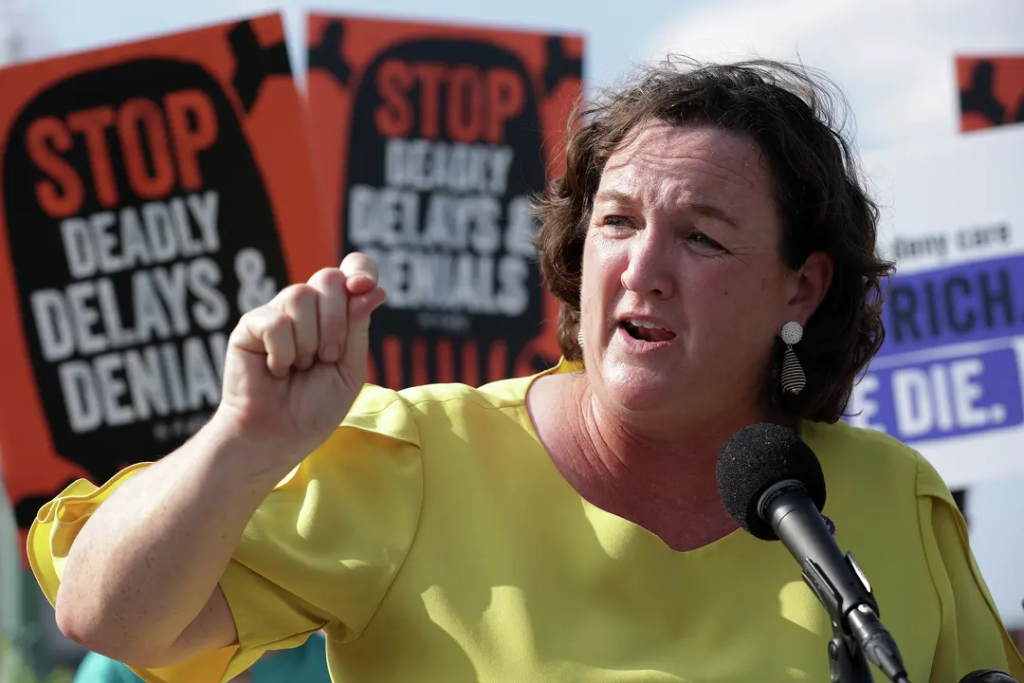
FILE: U.S. Rep. Katie Porter speaks during a news conference in Washington, DC. Porter, a Democrat and former U.S. congressmember, is running for governor of California.Alex Wong/Getty Images

Five candidates for governor of California are in a tie at the top, according to a new poll from the Public Policy Institute of California. 

After the weekend’s state Democratic Party convention ended without any official candidate endorsement, it left some questions around who the Democratic front-runner is. The latest poll about the race reflects a similar confusion.

“Right now, there is no clear favorite,” Mark Baldassare, the lead pollster at PPIC, told SFGATE in a phone call. 

The most surprising change is that voter support for Katie Porter, a Democrat and former U.S. congressmember, has resurged after her numbers began to drop in the polls. She now is the top polling Democrat, with 13% of likely support, according to PPIC’s findings.

“California voters are fired up to elect a progressive candidate who will deliver single payer health care, stand up to Donald Trump, billionaires, and special interests, and tackle California’s cost crisis,” said Peter Opitz, a campaign spokesperson, in a statement to SFGATE about the new poll.

PPIC surveyed only likely voters in California about the governor’s race. Republican Steve Hilton, a British-born former Fox News contributor, remains the top choice overall, with 14% of likely support. Hilton was once virtually unknown in California — and to many, is still an unknown name. He is just one percentage point ahead of Porter.

Chad Bianco, a Republican and Riverside County sheriff, is in the third spot with 12%; Rep. Eric Swalwell, a Democrat, is in fourth with 11%; and trailing behind in fifth is billionaire Tom Steyer, a Democrat, with 10%.

Baldassare, who has been conducting surveys since 1998, said he attributes Porter’s lead to voters who are thinking about “what they knew” and “what they know now” about candidates. 

While Porter doesn’t currently hold public office, he said he thinks voters are aware she was in Congress and formerly ran for U.S. Senate, which gives her credibility and name recognition.

He also said the two Republican candidates are in the lead because Republican voters are picking only between those two candidates, whereas Democrats have a larger pool to pick from. Baldassare said the next PPIC poll, expected in the spring, will paint a much clearer picture because presumably the candidate pool will have winnowed.

Baldassare said that the most notable difference in these returns compared with their last poll in November is that Swalwell and Steyer had not announced their bids at that time and therefore were not accounted for. This week’s release is the first from PPIC to include the two of them, although Baldassare also pointed out that this survey was done right around the time Matt Mahan, the mayor of San Jose, jumped into the race. 

“This is somebody who is in elected office now and will have resources, apparently, to get known as Steyer has,” Baldassare said. “I will be looking for our next poll to see where Matt Mahan fits into this.”

Mahan announced his bid at the end of January, and within a week, he had raised $7 million for his campaign. That money largely came from the tech industry, as Mahan has quickly emerged as the favorite of that powerful and deep-pocketed group. A separate political committee funded by some Silicon Valley execs paid for a Super Bowl ad for Mahan.

Got a tip? Send us the scoop.

DO IT NOW

Steyer, who has used $40 million of his own money to fund his campaign, continues to climb in the polls. When he announced his bid in mid-November, he had 4% support, according to Emerson College. Last week in the same poll, he rose to 9%; in the PPIC poll, he has now made it to the double digits. Swalwell, on the other hand, who was leading in the Emerson Poll with 12% support in December and 14% in February, is down a few percentage points in the PPIC poll.

Another important factor to consider, Baldassare pointed out, is the support that some of the candidates have from voters who are not registered to a party –– also known as no party preference, or NPPs. Porter has support from 15% of NPPs, Hilton has 11%, and Steyer 11%. And 16% are undecided. 

The PPIC poll surveyed just over 1,000 likely voters in California from Feb. 3 to Feb. 11. The responses were collected online in both English and Spanish. The margin of error for the results among likely voters is 3.9 percentage points.

More Politics

— California city freezes rent for all of 2026. It could be permanent.
— Marin Republicans say ‘dead’ people are voting. The county says they’re alive.
— Google’s Sergey Brin and other tech elite have a new favorite to replace Newsom
— High-speed rail chief arrested hours after governor’s press conference

Feb 26, 2026

Anabel Sosa

Senior California Politics Reporter

Anabel Sosa is the senior California politics reporter at SFGATE. She previously covered the statehouse and elections for the Los Angeles Times. She has a master’s degree in investigative journalism from UC Berkeley. You can reach her at anabel.sosa@sfgate.com.

SCOTUS: U.S. Postal Service v. Konan

ChatGPT:

What Happened in the Case

  • Lebene Konan, a Black landlord in Euless, Texas, sued the United States Postal Service after claiming that local postal employees deliberately failed to deliver mail addressed to her and her tenants. She alleges the refusal was based on racial bias — in particular, because she’s Black and owned multiple rental properties. 
  • According to court filings, the dispute began when someone at the post office changed the mailbox key for one of her properties without her permission, and thereafter mail was marked “undeliverable” or returned to sender even after she proved ownership. Her tenants missed important mail including bills and medications, and some moved out as a result, she said. 

What the Supreme Court Ruled

  • On February 24, 2026, the Supreme Court held 5–4 that the Postal Service cannot be sued for failure to deliver mail, even if employees intentionally refused delivery. The majority said a longstanding federal law (the Postal Service’s immunity under the Federal Tort Claims Act) protects the USPS from lawsuits related to undelivered mail — including intentional nondelivery. 
  • The Court’s majority opinion, written by Justice Clarence Thomas, interpreted the law broadly to cover deliberate refusal as well as accidental loss or delay. The dissenting justices argued that intentional misconduct — especially if motivated by bias — should not be protected by that immunity. 

Key Point

This case isn’t about employment rights (like Groff v. DeJoy) but about whether people can sue the Postal Service when mail isn’t delivered — and it originated with allegations tied to racial discrimination against a Black landlord and her tenants. 

‘Batshit Authoritarianism’: Trump Allies Drafting Order to Give Him ‘Extraordinary Power Over Voting’

'Batshit Authoritarianism': Trump Allies Drafting Order to Give Him 'Extraordinary Power Over Voting'

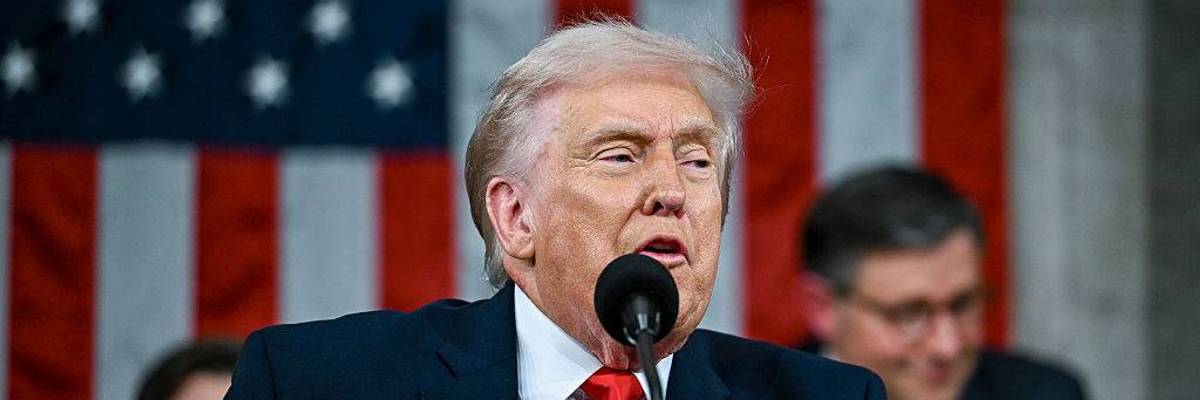
President Donald Trump delivers the State of the Union address during a joint session of Congress in the House Chamber at the Capitol on February 24, 2026 in Washington, DC.

 (Photo by Kenny Holston-Pool/Getty Images)

“This is a plot to interfere with the will of voters and undermine both the rule of law and public confidence in our elections,” said Sen. Mark Warner.

Brad Reed

Feb 26, 2026 (CommonDreams.org)

A group of right-wing activists is crafting an executive order that would let President Donald Trump unilaterally ban mail-in ballots and voting machines ahead of the 2026 midterm elections.

The Washington Post reported on Thursday that the order being drafted by Trump allies would give him “extraordinary power over voting,” even though the US Constitution explicitly gives individual states the powers to run their own elections.

RECOMMENDED…

US-POLITICS-TRUMP

Five-Alarm Fire Warning After Trump Says ‘Republicans Ought to Nationalize the Voting’

Trump Effort 'To Rig Our Elections Is Well Underway,' Experts Warn

Trump Effort ‘To Rig Our Elections Is Well Underway,’ Experts Warn

An advocate for the order, Florida attorney Peter Ticktin, acknowledged in an interview with the Post that the Constitution does not give the president any role in shaping elections, but he said Trump needed to act to prevent China from supposedly interfering with American elections.

“Under the Constitution, it’s the legislatures and states that really control how a state conducts its elections, and the president doesn’t have any power to do that,” Ticktin said. “But here we have a situation where the president is aware that there are foreign interests that are interfering in our election processes. That causes a national emergency where the president has to be able to deal with it.”

The activists drafting the emergency order said that they are working in coordination with the White House, although the extent of any cooperation isn’t clear.

However, the Post pointed to some evidence that the White House really is on board with such a strategy, such as the Trump administration’s efforts to investigate his 2020 election loss to former President Joe Biden, which the president has long baselessly claimed was due to foreign interference from a number of nations, including China and Venezuela.

As the Post noted, “a 2021 intelligence review concluded that China considered efforts to influence the election but did not go through with them.”

Additionally, Trump has publicly stated numerous times that he wants to completely do away with mail-in ballots and voting machines, both of which he has baselessly claimed are riddled with fraud.

Sen. Mark Warner (D-Va.), the ranking member of the Senate Intelligence Committee, said that the draft order was simply an attempt by the president’s allies to block democratic accountability in future elections.

“We’ve been raising the alarm for weeks about President Trump’s attacks on our elections and now we’re seeing reports that outline how they may be planning to do it,” Warner told the Post. “This is a plot to interfere with the will of voters and undermine both the rule of law and public confidence in our elections.”

Government watchdog Citizens for Responsibility and Ethics in Washington (CREW) said that the drafted order was plainly unconstitutional and would fail in court.

“The Constitution gives states power over election law with oversight from Congress,” CREW wrote in a social media post. “Notice who’s missing? The president. Trump may try to cook up a sham national emergency to try to seize control of elections but it won’t stand up to scrutiny.”

MS NOW national security contributor Marc Polymeropoulos called the draft order “batshit authoritarianism” and cautioned that “this crazy shit is possible as Trump knows Congress is all but lost at this point in a free election.”

“To save himself,” Polymeropoulos added, “anything is possible.”

Democratic Illinois Gov. JB Pritzker pointed to the Post report and warned, “Donald Trump’s plan to steal the 2026 midterm elections is already underway.”

Rep. Rosa De Lauro (D-Conn.) accused Trump of “setting the stage to steal the midterm elections and set fire to our democracy,” while vowing that Democrats would “fight for our democracy and safeguard the right to vote.”

Our work is licensed under Creative Commons (CC BY-NC-ND 3.0). Feel free to republish and share widely.

Brad Reed

Brad Reed is a staff writer for Common Dreams.

Full Bio >

Check the temperature, the water is boiling and we need to jump out.

198 Things the Trump Regime Exposed, Broke, or Burned Down in 13 Months, With Receipts

Christopher Armitage Feb 25, 2026

Image from Jim Nichols, The Progressive

Find any of our books an democracy merch at TheExistentialistRepublic.com. Get them and every guide, booklet, and piece of model legislation for free at BuyMeACoffee.com/TheER.

Check the temperature, the water is boiling and we need to jump out.

I originally put this information together to drop into MAGA comment sections, to send to friends who voted for Trump but “aren’t political,” and to send to representatives who may not be acting with the urgency needed. A subscriber asked if I’d share it with all of you too. Every fact is sourced, every link works. I labeled the original file “The Fax Machine.” If you do one thing with it, I would suggest sharing it in any online space and encouraging people to take a look at the scope and urgency of where we are today.

Share

But first: what we do about it. We have drafted four pieces of model legislation that use powers states already have to prosecute corruption immune from presidential pardon, protect their own tax revenue, and build systems that function whether the federal government cooperates or not. The most urgent is the Child Sex Trafficking Investigation and Accountability Act, which gives every state independent power to investigate and prosecute trafficking connected to the Epstein files. A governor can authorize it by executive order. In some states, the attorney general can act now. In every state, a representative can introduce it tomorrow. Find yours at openstates.org/find_your_legislator and tell them to pass it. Then share this with someone who will do the same.

Here are 198 reasons why.

  1. Trump pardoned approximately 1,500 January 6 defendants on his first day in office, including people convicted of assaulting police officers, and ordered the DOJ to dismiss roughly 300 pending indictments.
  2. Among those pardoned: a man who repeatedly tased a police officer in the neck, a man who crushed an officer in a doorframe with a riot shield, and a man who pepper-sprayed an officer who died the next day.
  3. By October 2025, at least 33 pardoned insurrectionists had been rearrested or charged with new crimes, including 6 for child sex crimes and 5 for illegal weapons possession.
  4. In November 2025, Trump pardoned 77 more allies tied to the fake electors scheme, including Rudy Giuliani, Mark Meadows, Sidney Powell, John Eastman, and 67 people who submitted fraudulent electoral certificates.
  5. AG Pam Bondi established the Weaponization Working Group inside the DOJ, led by a man who promised to charge Trump’s political enemies wherever possible and “name and shame” those who could not be charged.
  6. James Comey and Letitia James were indicted in September and October by Lindsey Halligan, a former insurance lawyer with no prosecutorial experience sworn in as interim U.S. Attorney three days earlier. A federal judge dismissed both indictments, ruling her appointment unlawful. A grand jury then refused to re-indict James.
  7. John Bolton was indicted on 18 Espionage Act counts. His Secret Service protection had been stripped within 24 hours of the inauguration despite active Iranian assassination threats.
  8. The DOJ moved to drop Eric Adams’ corruption charges in February, arguing the case interfered with immigration enforcement. The federal judge dismissed with prejudice, writing: “Everything here smacks of a bargain: dismissal of the indictment in exchange for immigration policy concessions.” Eight federal prosecutors resigned in protest.
  9. Trump fired 17 inspectors general in a single night, by email, without the legally required 30-day Congressional notice. Republican Senator Chuck Grassley publicly demanded an explanation. A federal judge ruled the firings unlawful. Over 75% of IG positions sat vacant throughout the year. The “unlawful” ruling was not acknowledged or addressed by the Trump regime.
  10. The DOJ’s Civil Rights Division lost approximately 75% of its attorneys, roughly 400 people. New mission statements included “Protecting Children from Chemical and Surgical Mutilation” and “Eradicating Anti-Christian Bias.”
  11. Job creation collapsed from over two million in 2024 to 181,000 in 2025, the weakest year outside a recession since 2003.
  12. The economy was 862,000 jobs weaker than anyone was told. The BLS annual benchmark revision revealed the March 2025 numbers had been overstated by nearly a million.
  13. Employers cut 744,308 jobs in the first half of 2025, the highest six-month total since COVID.
  14. 85% of all jobs created in 2025 existed before the April tariffs hit. Almost nothing was created after.
  15. Manufacturing lost 103,000 jobs in twelve months.
  16. Blue-collar workers lost 166,000 jobs. College-educated workers captured 76% of all gains.
  17. Unemployment reached 4.6% in November 2025, a four-year high. 21 states plus D.C. saw it climb year-over-year.
  18. One in four unemployed Americans had been out of work for 27 weeks or more, up 9% from the year before.
  19. 9.3 million Americans worked two or more jobs in November 2025, the most since tracking began in 1994 and the highest share in 25 years.
  20. Four in ten Americans now earn income from side jobs.
  21. 4.9 million people worked part-time because they could not find full-time work in January 2026, 410,000 more than the year before.
  22. Michigan had the largest unemployment jump in the country, 1.4 points, with 70,000 more people out of work. Motor vehicle parts employment fell to 120,600, half its peak.
  23. Ohio: 42,077 announced job cuts. Texas: 55,681. Florida jumped from 3.4% to 4.3% unemployment with 26,650 announced cuts.
  24. The administration issued executive orders targeting law firms that had represented Trump’s opponents. Steve Bannon stated the goal: “What we are trying to do is put you out of business and bankrupt you.” Paul Weiss agreed to $40 million in pro bono work for administration-aligned causes. Skadden, Milbank, and Willkie Farr agreed to $100 million each. A judge permanently struck down the orders, calling them an “overt attempt to suppress and punish certain viewpoints.”
  25. Judge John McConnell, who blocked the federal funding freeze, received over 400 threatening voicemails and 6 credible death threats, including someone searching the dark web for his home address. A congressman posted his face on a “wanted” poster. Judge Coughenour was targeted by a swatting incident. Amy Coney Barrett’s sister received a bomb threat.
  26. Eight federal judges faced GOP-introduced impeachment resolutions. House Speaker Mike Johnson endorsed judicial impeachments in January 2026.
  27. Federal courts ruled in over 4,400 cases, from over 400 judges, that the administration acted illegally. In New Jersey alone, the DOJ violated court orders more than 50 times across 547 immigration cases. A Minnesota federal judge held a Trump administration attorney in civil contempt, the first federal attorney sanctioned during the second term.
  28. House Republicans passed legislation designed to defund enforcement of contempt orders, attempting to make court defiance consequence-free. The DOJ sued every sitting federal judge in Maryland.
  29. Cleveland-Cliffs cut over 2,000 workers across four states: 600 in Dearborn, Michigan; 655 miners in Minnesota; 559 at the Steelton Mill in Pennsylvania, America’s first rail mill, built in 1865, shut permanently; 420 more in Illinois and Pennsylvania. The company lost $495 million in Q1 alone.
  30. Stellantis laid off 2,450 at Warren Truck Assembly in Michigan, 900 more at Warren and Sterling Heights, and idled 1,100 at the Toledo Jeep plant.
  31. GM permanently cut 1,140 workers at Factory Zero. Ultium Cells at the former GM Lordstown plant in Ohio laid off 1,334.
  32. Ford cut all 1,600 employees at its Glendale, Kentucky EV battery plant, 750 at its Dearborn Lightning plant, and killed a $1.5 billion Ohio EV project, erasing 1,800 planned jobs.
  33. Whirlpool cut 650 workers in Amana, Iowa, a third of the workforce. Goodyear cut 815 in Danville, Virginia, the largest single layoff in the state.
  34. Howard Miller, a 99-year-old Michigan furniture and clock company, shut permanently. Tariffs were “a main culprit.” 195 jobs gone.
  35. Tyson Foods cut 1,761 at its Amarillo, Texas beef plant. Southwest Airlines executed its first-ever mass layoff: 1,726 jobs. Chevron slashed 15-20% of its global workforce.
  36. SK On killed a $2.8 billion battery project in Tennessee. 3,300 jobs vanished.
  37. Companies canceled $34.8 billion in clean energy projects in 2025 while announcing only $12.3 billion in new ones, a 3-to-1 loss ratio. Republican districts absorbed $19.9 billion and 24,500 jobs worth of cancellations. Michigan alone lost 14 projects, $7.7 billion, and 9,800 jobs.
  38. John Deere ate $600 million in tariff costs, saw profits drop 26%, cut more than 2,000 jobs, froze salaried wages, and projected a 15-20% drop in large machinery sales.
  39. iRobot filed bankruptcy in December 2025, owing $3.4 million in unpaid tariffs, U.S. revenue down 33%. SplashZen in Bonney Lake, Washington lost its owner’s life savings. Bunnies By The Bay in Anacortes, Washington laid off six.
  40. Over 51 days, the U.S. conducted over 1,000 airstrikes on Yemen at a cost exceeding $1 billion. Airwars documented 224 civilians killed, nearly matching the previous 23 years of U.S. operations in Yemen combined. No congressional authorization was sought or obtained. On April 28, U.S. strikes hit a detention center holding African migrants, killing 68 people and injuring at least 47.
  41. Seven B-2 stealth bombers struck three Iranian nuclear facilities, deploying the 30,000-pound bunker buster for the first time in combat. Later reporting showed Iran’s nuclear program was set back by months, not years.
  42. The National Security Advisor accidentally added a journalist to a Signal group chat containing 18 senior officials including the VP, Secretary of State, and CIA Director. The Secretary of Defense shared real-time Yemen strike details: weapons, targets, and timing. He also shared them in a separate chat with his wife, brother, and personal lawyer. The Pentagon Inspector General found he “risked compromising sensitive military information.”
  43. On September 2, Hegseth gave a verbal order to “kill everybody” aboard a suspected drug boat in the Caribbean. After the first missile left two survivors in the water, a SEAL Team 6 commander ordered a second strike to comply. Former Judge Advocates General called it “war crimes, murder, or both.” Since September, 22 boats have been struck, killing at least 86 people. The administration has produced no public evidence confirming the identities of anyone on those boats. The Pentagon IG found Hegseth’s Signal use risked troop safety and that information he shared matched material classified SECRET/NOFORN. He refused to sit for an interview with the inspector general.
  44. Farm bankruptcies surged 46% to 315 filings. The first half alone produced 181, nearly matching all of 2024. Wisconsin: up 700%. Minnesota: up 300%. Iowa: up 220%. Montana: up 200%. Missouri: up 167%. Georgia: up 145%. Arkansas hit its highest total this century; one farmer estimated a third of Arkansas farmers could go bankrupt or quit.
  45. USDA cut its 2025 farm income forecast by $25 billion. Median farm household income went negative: minus $1,498. Only 52% of borrowers expected to turn a profit. Crop farmers collectively lost $34.6 billion. North Dakota State economists project another $44 billion in losses from 2025-26 crops.
  46. Soybeans sold at harvest for $8.65 a bushel. It costs $10.75 to $11.50 to grow them. Soybean farmers lost $89 per planted acre. Corn growers lost over $150.
  47. China stopped buying American soybeans entirely for six months. Exports to China fell more than 50% in value. Beef exports fell more than 90%. In 2016, China bought 40% of its soybeans from the U.S. By 2024, that share was 21%.
  48. Brazil expanded soybean acreage 35% since the first trade war and now plants 121 million acres. China invested $285 million in Brazil’s Port of Santos to permanently replace American supply chains.
  49. Running a 310 HP tractor costs $255.80 an hour, up from $181.10 in 2021. Tariffs on agricultural inputs jumped from 1% to 12%, with herbicides and pesticides above 20%.
  50. Farm expenses hit $467.4 billion, the highest ever. Interest costs will reach $33 billion in 2026. Total farm debt will hit $624.7 billion. All three are new highs.
  51. Taxpayer bailout payments to farmers surged to $40.5 billion, a 301% increase from 2024. Taxpayers now cover nearly 25% of total net farm income.
  52. Kilmar Abrego Garcia, a sheet metal worker living legally in Maryland with a wife and American-citizen children, had a court order barring his deportation. The government deported him anyway to El Salvador’s CECOT mega-prison and conceded it was “an administrative error.” The Supreme Court unanimously ordered his return. Trump acknowledged he could bring him back but refused.
  53. The DOJ fired the career attorney who told the Supreme Court about the Abrego Garcia deportation error.
  54. Trump invoked the 1798 Alien Enemies Act to deport Venezuelan nationals, the first use outside a congressionally declared war. Three planes carried over 260 people to El Salvador’s CECOT prison. A 60 Minutes investigation found no criminal records for 75% of them: 179 men sitting in a mega-prison with no charges, no trial, and no release date. The Fifth Circuit ruled 2-1 that no “invasion or predatory incursion” justified the Act.
  55. ICE conducted 1,912 removal flights to 79 countries by August 2025. Thirty-two people died in ICE custody during 2025.
  56. Since October, more than 400 federal judges have ruled in at least 4,421 cases that ICE detained people illegally. Over 20,200 habeas corpus petitions have been filed since Trump took office; before this administration, no single month going back to 2010 had seen even 500. ICE kept people locked up even after judges ordered their release. The number of people in ICE custody reached 68,000, up 75% from inauguration day.
  57. Tariffs went from 2.4% to 16.8%, the highest rate since 1935. At their April peak they reached 28%, the highest since 1901.
  58. Without tariffs, inflation would have been roughly 2.2%, essentially at the Fed’s target. Instead, tariffs added 0.7 points to the CPI and pushed it to 2.9%.
  59. American consumers and businesses bore almost 100% of tariff costs. Goldman Sachs confirmed the split: 82% fell on the U.S. side. The Fed projects inflation at 3.0% in 2025 and 2.6% in 2026, still above its 2% target.
  60. Tariffs cost the average household $1,700 a year.
  61. Someone earning under $29,000 paid an effective tax increase of 6.2% from tariffs. The top 1% barely noticed. The poorest Americans carried more than 3 times the burden of the richest as a share of income: 2.7% versus 0.8%.
  62. American businesses and consumers paid $233 billion in tariffs from March to December 2025. Tariff collections more than doubled year-over-year.
  63. Small businesses absorbed an average of $151,000 in extra costs from April to September, roughly $25,000 a month. One shoe importer took a $250,000 loan at 32% interest to pay tariffs on a single shipping container from India.
  64. Tariffs will shrink GDP by 6% and wages by 5% over the long run, costing a middle-income household $22,000 across their lifetime.
  65. Every 10% tariff increase raised producer prices roughly 1% and destroyed 220,000 jobs, rising to 320,000 when Chinese retaliation kicked in.
  66. 65% of jobs targeted by Chinese retaliatory tariffs sit in Trump-voting counties. The EU, Canada, and China all deliberately aimed retaliation at Republican-held states.
  67. The goods trade deficit hit $1.24 trillion for 2025, an all-time high, despite the tariffs that were supposed to close it.
  68. Tariff costs by state: Texas $11.4 billion. Georgia $7.1 billion. Ohio $6.5 billion. Pennsylvania $6.3 billion. South Carolina $5.2 billion. North Carolina $5 billion. Kentucky $4 billion. Michigan $3.3 billion.
  69. Indiana has 154% of GDP exposed to tariffs, the highest in the country. Michigan and West Virginia face the steepest import cost increases at 22%.
  70. Texas has a $281 billion trade relationship with Mexico supporting 3.6 million jobs. Tariffs would cut Texas GDP growth nearly in half, from 3.2% to 1.7%, killing 100,000 jobs. The Perryman Group projected $45 billion in lost output and 360,000 jobs.
  71. Brownsville-Harlingen unemployment jumped 2 points to 7.5%. Eagle Pass jumped 2 points to 8.9%.
  72. Ohio farmers watched Chinese export sales collapse 74% in a single year. The state’s $7.5 billion soybean industry saw per-bushel prices fall 8.8%.
  73. Trump froze all military aid to Ukraine on March 3, 2025, affecting over $1 billion in approved arms. On August 15, he hosted Putin at Joint Base Elmendorf-Richardson in Alaska, the first invitation to a Western country since the invasion. Zelenskyy was not invited.
  74. The leaked 28-point peace plan would require Ukraine to cut its army by 50%, renounce NATO membership, and grant the United States 50% of profits from a joint reconstruction fund, with the agreement “guaranteed by the Peace Council, headed by President Donald J. Trump.”
  75. Trump withdrew from the World Health Organization and the Paris Climate Agreement on his first day. On January 7, 2026, he signed a presidential memorandum withdrawing from 66 additional international organizations, including the UN Framework Convention on Climate Change, a Senate-ratified treaty from the 1990s. The U.S. became the first and only nation to leave the parent treaty of the Paris Agreement.
  76. Credit card debt reached $1.28 trillion, the highest since the New York Fed started tracking in 1999. Total household debt: $18.8 trillion.
  77. Subprime auto loan delinquencies (60-plus days) hit 6.9%, surpassing the 2008 financial crisis peak, the worst since tracking began in the 1990s.
  78. Even people with near-perfect credit scores (781-850) saw auto delinquencies spike 300%. Non-prime delinquencies surged 59% in low-income ZIP codes since 2021.
  79. Car repossessions are projected to exceed 3 million in 2025, a level last reached in the Great Recession, up 43% since 2022.
  80. Americans carry $1.66 trillion in auto debt. Average monthly payment on a new car: $761, about $300 more than 2019.
  81. Nearly one in three federal student loan borrowers with payments due were 90-plus days behind by April 2025, the worst ever tracked. By October, 5.5 million borrowers owing over $140 billion were in default. Three-quarters had never defaulted before.
  82. Nearly half of Black borrowers and roughly 30% of Hispanic borrowers are delinquent on student loans. The administration blocked income-driven repayment plans and mass-denied 328,000 applications in a single month.
  83. Two million student loan borrowers watched their credit scores drop an average of 100 points, from 680 to 580, with 76% plunging into deep subprime. Another 1.2 million Americans became subprime borrowers overall.
  84. The personal savings rate collapsed to 3.5%, less than half the pre-pandemic rate. The $2.1 trillion in pandemic savings was gone.
  85. 401(k) hardship withdrawals hit all-time highs, running 28% above 2024 and 365% above the 2016-2021 average. The top reason: avoiding foreclosure or eviction.
  86. Bankruptcies climbed 11% to 565,759. Small business filings hit 2,446, a new high. Corporate bankruptcies reached 717 through November, the most since 2010. Georgia business bankruptcies jumped 184%. Wyoming: 366.7%.
  87. Credit card delinquency maps almost perfectly onto Trump country. Mississippi leads at 37%. Louisiana 32%. Alabama 31%. The fastest-growing rates concentrated in red and swing states: Minnesota (+33%), Iowa (+32%), Kansas (+30%), Ohio, Mississippi, Michigan, Tennessee, Alabama, Wisconsin.
  88. One in three Gen Z Credit Karma users holds a subprime credit score. Gen Z carries more credit card debt than any prior generation at the same age.
  89. Eggs hit $6.23 a dozen, up 49.3% year-over-year and 368% from mid-2020.
  90. Beef up 16%. Coffee up 20%. Ground beef up 15%. Orange juice up 28%. Clothing up 14%. Furnishings up 8%. Cumulative grocery inflation since December 2019: 29.5%.
  91. A low-income family spends 32.6% of after-tax income on food. A wealthy one spends 8.1%.
  92. More than half of all renters now spend over 30% of income on housing, the highest share ever measured. Renters earning under $30,000 are left with $250 a month after rent, the lowest on file. The country is short 7.1 million affordable rental homes.
  93. Tariffs added $7,500 to $10,900 to every new home and $30 billion in total costs to residential construction. Aluminum up 30.5%. Steel up 17%. Copper wire up 22.3%.
  94. Home prices rose 53% since 2019. Wages rose 24%. A household earning $75,000 could afford 21.2% of homes on the market in March 2025, down from 48.8% in 2019.
  95. First-time homebuyers fell to 21% of purchases, the lowest ever measured, down from 44% in 1981. The median first-time buyer turned 40.
  96. Housing starts dropped 7%. Building permits dropped 3.6%. Builder sentiment stayed negative for over 20 consecutive months. Two-thirds of builders offered incentives; 36-40% were cutting prices.
  97. Tariffs added $2,000 to $10,000 to the price of a car depending on where it was made.
  98. Four million households had their power shut off at some point in 2025. Pennsylvania alone saw 280,000 involuntary shutoffs in eight months, up 21%. Electricity prices jumped 10.5%, more than 3 times the overall inflation rate.
  99. Regulators approved $34 billion in utility rate increases in nine months, more than double the year before. Low-income families spend 6-10% of income on energy, 3-5 times what wealthier households pay.
  100. LIHEAP, the federal heating assistance program, was cut from $6.1 billion to roughly $4 billion, reaching only 17% of eligible households. The administration fired the entire LIHEAP staff and proposed killing the program.
  101. Child care: $15,570 a year70% of Americans said raising kids is too expensive, a 13-point jump from 2024.
  102. North Carolina recorded 202,861 eviction filings, the most on file. Denver ran 72% above pre-pandemic levels. Nashville ran 46% above. Minnesota hit 23,000-25,000 filings, 30% above pre-pandemic average.
  103. The administration froze approximately $6 billion in federal funding across at least nine major universities. Harvard lost $2.2 billion in grants and $60 million in contracts after rejecting demands that included screening international students for beliefs “hostile to American values.” A judge ruled the freeze a “targeted, ideologically-motivated assault” using “antisemitism as smokescreen.”
  104. Columbia had $400 million canceled and ultimately settled for $221 million. Northwestern: $75 million. Cornell: $60 million. Brown: $50 million.
  105. The Pentagon identified 4,240 active-duty service members with gender dysphoria for discharge under a new ban on transgender military service. The Supreme Court allowed the ban to take effect while litigation continues.
  106. The birthright citizenship executive order would deny citizenship to children born on American soil whose parents lack legal status. Every lower court that reviewed it found it unconstitutional. One judge called it “blatantly unconstitutional.” The order has never been enforced.
  107. An executive order required documentary proof of citizenship to register to vote using the federal form, such as a passport. Only about 48% of Americans hold an unexpired passport. A judge issued a permanent injunction: “Our Constitution entrusts Congress and the States, not the President, with the authority to regulate federal elections.”
  108. Trump announced a census that would exclude people without legal status, unprecedented since the first census in 1790. At least 1,300 Census Bureau employees departed, with more than a fifth of leadership positions vacant.
  109. The One Big Beautiful Bill Act cut $900 billion to $1 trillion from Medicaid over ten years, the deepest cut in the program’s 60-year history. 11.8 million people will lose coverage.
  110. The same law triggered $536 billion in automatic Medicare cuts over nine years.
  111. Medicaid work requirements of 80 hours a month will push 4.8 million people off coverage by 2034. Modeling shows up to 5.2 million adults losing insurance, GDP declines of $43-59 billion, and 449,000 job losses.
  112. Medicaid enrollment dropped from 94 million to 76.8 million, a 19% decline. 69% lost coverage over paperwork, not because they were ineligible.
  113. Texas had a 65% disenrollment rate. Louisiana and Virginia face the steepest federal cuts at 21%. Twelve states have “trigger” laws that automatically end Medicaid expansion if the federal match drops.
  114. Half of American children are on Medicaid or CHIP10.9 million Americans will become uninsured under the OBBBA.
  115. ACA premium tax credits expired. Average marketplace premiums more than doubled, from $888 a year to $1,904. Insurers raised 2026 rates by a median of 18%, the largest hike since 2018.
  116. Eighteen rural hospitals closed or converted in the year ending February 2025, 182 total since 2010. Another 432 are vulnerable and 756 are at financial risk. 87% of Kansas’ rural hospitals operate in the red. 70% of Oklahoma’s. 70% of Wyoming’s.
  117. Rural maternity wards closed at an accelerating rate: 27 in 2025, up from 21 the year before. Only 41% of rural hospitals still deliver babies.
  118. The CDC confirmed 2,281 measles cases in 2025, the most in over 30 years, across 45 states. Three people died, including two unvaccinated children in Texas, the first measles deaths in a decade. HHS Secretary RFK Jr. spent months refusing to recommend the vaccine, promoted vitamin A as treatment, and called the outbreak “not unusual.” Kindergarten MMR coverage dropped to 92.5%, below the 95% herd immunity threshold, leaving 286,000 kindergartners unprotected.
  119. In January 2026, the CDC formally demoted six vaccines from the routine childhood schedule, including rotavirus, influenza, hepatitis A, hepatitis B, and meningococcal disease, based on no new clinical data. HHS modeled the new schedule after Denmark’s, a country with universal free healthcare, without explaining why. Major insurers pledged to cover the old schedule through 2026, but that pledge expires at year’s end. The New England Journal of Medicine warned that a 10% drop in MMR vaccination could produce 11.1 million measles cases over 25 years.
  120. SNAP was cut by $187 billion over ten years, the deepest in the program’s history. Four million people will see food assistance cut or eliminated, losing $146 a month on average.
  121. Work requirements alone will push 2.4 million off SNAP. Roughly one million children will see food benefits slashed.
  122. The administration killed the $471.5 million Local Food Purchase program, froze $500 million in emergency food funds, and canceled the USDA’s annual food security survey, ending 30 years of hunger tracking right before the cuts landed.
  123. Planned Parenthood covered $45 million in care in September 2025, the first month it could not bill Medicaid.
  124. The government shut down for 43 days, October 1 to November 12, 2025, the longest in American history.
  125. SNAP benefits for 42 million Americans froze during the shutdown, the first disruption in the program’s 60-year history.
  126. Food insecurity hit 16% of the general population and 46% of SNAP recipients.
  127. Food banks were overwhelmed past COVID levels. A West Virginia food bank saw a 1,800% increase in families. Philadelphia’s Share Food Program saw a 12-fold spike in new registrants. A Colorado food bank went from 300 people a day in 2020 to 1,700 in 2025. A Wisconsin food bank logged 101,859 first-time visits. SNAP provides 9 times the food of the entire food bank network. The system was never built to absorb that kind of demand.
  128. The shutdown permanently destroyed $11 billion in GDP. That money does not come back.
  129. A Senate investigation found DOGE generated $21.7 billion in waste, not savings. The breakdown: $14.8 billion paying 200,000 federal workers to sit at home for up to eight months, $6.1 billion on 100,000 more removed from jobs but still collecting paychecks, and $263 million in lost interest at the Department of Energy.
  130. Federal spending rose $248 billion in 2025 despite all the cuts.
  131. DOGE actually cost taxpayers $135 billion when accounting for severance, legal costs, and rehiring.
  132. Elon Musk’s companies had $2.37 billion in avoided liability facilitated through DOGE access.
  133. Three days before inauguration, Trump launched the $TRUMP cryptocurrency token. His companies control 80% of the supply. A forensic analysis found 813,294 wallets lost $2 billion trading the coin while Trump’s entities collected roughly $350 million in token sales and fees. He then invited the top 220 coin holders to dinner at his golf club, including foreign nationals who cannot legally donate to U.S. campaigns. The SEC under his appointees declared meme coins are not securities, meaning zero investor protection. The Senate Permanent Subcommittee on Investigations launched a probe into whether the coin functions as a channel for untraceable foreign payments to the president.
  134. 322,049 federal employees left government by February 2026. 154,000 took deferred resignations, the largest mass resignation in American history. Another 25,000 probationary employees were fired using what courts called “sham” performance citations.
  135. USAID went from 4,500 employees to 15.
  136. The Consumer Financial Protection Bureau lost 88-90% of its staff. The Department of Defense lost 61,600 positions.
  137. The FDA shut down two of seven food-testing labs. The CDC cut foodborne pathogen tracking from 8 diseases to 2.
  138. Virginia alone lost 23,500 civilian federal jobs.
  139. The Department of Energy’s Loan Programs Office lost 60% of its staff to DOGE buyouts, freezing new loans from a $400-plus billion fund. One battery company canceled a factory in Arizona. Another canceled a factory in Georgia and moved it to China.
  140. GSA sent 800-plus cancellation notices to landlords targeting half its 7,500 leases, often without telling the government workers inside. Hundreds of purged employees were later asked to come back after months on paid leave.
  141. The IRS lost a quarter of its workforce, from 103,000 to 76,000, with two-thirds of cuts hitting enforcement.
  142. The IRS lost 31% of its auditors, 18% of revenue officers, and 10% of tax examiners in three months. The unit that audits the ultra-rich lost 38% of its staff.
  143. ProPublica documented a team of fewer than 10 IRS engineers who had recovered $5 billion in tax returns over four years. That team no longer exists.
  144. IRS cuts will cost $350 billion over a decade in uncollected taxes. Treasury officials projected a $500-plus billion shortfall for 2025 alone.
  145. The Wage and Hour Division was cut to 611 investigators for 165 million workers: one per 278,000, a 52-year low.
  146. Wage theft enforcement collapsed 97%: 91 cases resolved versus a typical 3,500. Penalties dropped 83%. At least 4 million workers are illegally paid below minimum wage every year, costing them $3,000 each. That enforcement is now effectively gone.
  147. OSHA inspections dropped 20%, with the agency down to 736 inspectors from 878. “Willful violations” found dropped 42%. A bill to abolish OSHA entirely was introduced in Congress.
  148. Trump fired an NLRB board member in January, leaving the board without a quorum for 345 days, unable to rule on unfair labor cases.
  149. The Fifth Circuit ruled the NLRB’s structure likely unconstitutional, freezing all enforcement in that circuit. Union elections fell 30% to 1,498, with 59,000 fewer workers participating.
  150. Executive orders stripped more than one million federal workers of collective bargaining rights. Labor historians called it the largest single act of union-busting in American history.
  151. The Social Security Administration lost 6,645 staff, more than 11% of its workforce. Six of ten regional offices closed. Disability waits exceeded 236 days.
  152. Phone wait times doubled. Then phone service for benefit claims was eliminated entirely on March 18, forcing disabled and elderly Americans to go online or travel to offices that may have closed.
  153. The SSA plans to cut field office visits by 50% in FY2026, from 31.6 million to no more than 15 million. More than 7 million Americans over 65 get 90% or more of their income from Social Security. More than 11 million disabled Americans under 65 depend on SSA benefits.
  154. The VA lost roughly 17,000 workers by July 2025. Over 6,000 veterans themselves were fired from federal jobs.
  155. The VA’s suicide crisis hotline staff were fired twice and reinstated both times.
  156. DOGE terminated 585 VA contracts including those supporting PTSD treatment and electronic health records, directly undermining the PACT Act’s mandated expansion of care for burn pit and Agent Orange exposure.
  157. The bottom fifth of households gained 0.6% in income from the OBBBA’s tax provisions but lost 7.4% from Medicaid cuts, netting a loss of 6.8%. The top 1% gained 3.9%.
  158. Black unemployment reached 7.5% by late 2025, with the Black-white ratio hitting 1.9-to-1 nationally and 3.9-to-1 in Washington, D.C.
  159. An estimated 300,000 Black women were pushed out of the labor force between May and August 2025. The Black jobs deficit stands at 1.8 million positions and $87 billion in lost income.
  160. Black workers make up 18% of the federal workforce versus 12% of the overall workforce, making DOGE cuts disproportionately devastating.
  161. Trump promised during the 2024 campaign to release the Epstein files. AG Bondi told Fox News in February 2025 they were “sitting on my desk.” On July 7, the DOJ announced it found no “client list” and no further files would be released. Trump called Epstein “somebody nobody cares about” on July 12 and the files “a big hoax” on July 16. In May, Bondi had privately told Trump his own name appeared in the files. Congress forced release through a discharge petition. The House passed the Epstein Files Transparency Act 427 to 1. Trump signed it without reporters present. The DOJ missed the legally mandated 30-day release deadline, released files in waves with hundreds of pages entirely blacked out, and a bipartisan group of senators called for an investigation into DOJ compliance.
  162. An NPR investigation found the DOJ removed or withheld Epstein files specifically related to accusations that Trump sexually abused a minor. The FBI interviewed the accuser four times; only the first interview, which does not mention Trump, is publicly available. Of 15 documents listed in discovery material for a second accuser who described being taken to Mar-a-Lago as a child, only seven appear in the public database. The DOJ removed at least one interview from the public database after initial publication and declined to explain why.
  163. The administration banned the Associated Press from the Oval Office and Air Force One because AP refused to exclusively use “Gulf of America.” A judge ruled the ban violated the First Amendment. It has not been reversed.
  164. The administration seized control of the White House press pool from the White House Correspondents’ Association, which had managed it for over 100 years, and removed Reuters, AP, and Bloomberg. The Pentagon required journalists to pledge they would not gather information not “expressly authorized for release.” At least 30 news organizations refused.
  165. The administration deployed 4,000 National Guard and 700 Marines to Los Angeles and sent CBP and ICE agents with automatic weapons and full combat gear to downtown Chicago. Trump directed ICE to “FOCUS on our crime ridden and deadly Inner Cities,” explicitly naming Los Angeles, Chicago, and New York as “the core of the Democrat Power Center.”
  166. A 60-foot-wide, 170-mile strip along the southern border was designated a “military installation”, authorizing military personnel to detain and search people without invoking the Insurrection Act.
  167. Projected retail closures: roughly 15,000 stores. Joann Fabrics shut all 800 stores across 49 states. Rite Aid shut all 1,600. Party City shut 700. Forever 21 shut 215.
  168. Washington, D.C. set a new mark: 92 restaurant closures through November. 83% of operators cited immigration enforcement and federal layoffs.
  169. The national debt grew $2.25 trillion in one year to $38.4 trillion. It grows $68,902 every second.
  170. Interest payments on the debt exceeded $1 trillion, surpassing defense spending for the first time. Projected to hit $2.1 trillion by 2036.
  171. The FY2025 deficit: $1.78 trillion, 5.9% of GDP. Debt-to-GDP reached 99.8%, up from 97.4% the year before. Cumulative deficits over the next decade: $24.4 trillion, averaging 6.1% of GDP against the 50-year average of 3.8%.
  172. Moody’s stripped the United States of its top credit rating on May 16, 2025, a rating held since 1917. All three major agencies have now downgraded U.S. sovereign debt. The 30-year Treasury yield jumped above 5%.
  173. The One Big Beautiful Bill Act adds $3.4 trillion to the deficit over ten years and will shrink GDP by 4.6% over 30 years.
  174. Federal debt will surpass the post-WWII high of 106% of GDP by 2030, reaching 120% by 2036.
  175. After the April 2 “Liberation Day” tariff announcement, the S&P 500 fell nearly 21% in five days, the second-fastest bear market in history. Bearish sentiment hit its highest level since March 2009.
  176. The February 20 semiconductor tariff announcement erased $359 billion in shareholder wealth. The next day destroyed $1.2 trillion more. During Liberation Day, over $6 trillion evaporated, roughly 20% of 2024 GDP.
  177. Stocks in redder counties fell harder during Liberation Day, directly contradicting the claim that tariffs would help Trump country.
  178. GDP growth came in at 2.2% for 2025, the slowest since the pandemic year of 2020. Forecasts for 2026 range from 1.8% to 2.5%, all below the 2.8% achieved in 2024.
  179. Consumer sentiment hit 50.3 in November 2025, the second-lowest reading since 1952. Consumer confidence fell to 84.5 in January 2026, lowest since 2014. The partisan gap reached 50 points, the widest ever measured.
  180. The Economic Policy Uncertainty Index hit all-time highs in April 2025. Uncertainty alone cut investment by an estimated 1 to 2 percentage points.
  181. Declining immigration cut GDP growth by 0.75 to 1 full percentage point below projections.
  182. The combined cost of all Trump immigration policies: $1.9 trillion in lost GDP from 2025-2028, $5,612 per person, with the labor force 6.8 million workers smaller by 2028.
  183. Foreign investment in the U.S. collapsed 62.5% in a single quarter. New facilities on American soil fell from $17 billion to $8 billion, with expansions down 78% and greenfield FDI falling to 0.03% of GDP.
  184. International tourism fell 5.4%, the only decline among major nations while global arrivals grew 4%. The U.S. will lose $12.5 billion in visitor spending, the only country among 184 to see a decline.
  185. Canadian visits collapsed 25.2% through July, with 1.75 million fewer visits in the first half alone. Western European arrivals dropped 17% in March.
  186. International student enrollment fell 17%, the largest non-pandemic drop ever tracked, costing $1.1 billion in revenue and 23,000 jobs. Student visa issuance dropped 12% from January to April, then fell another 22% in May.
  187. Three out of four U.S. scientists are considering leaving the country. Applications to the European Research Council from Americans nearly tripled.
  188. Europe is recruiting American scientists with cash. The EU put up 500 million euros. France added 100 million. Germany, the Netherlands, Norway, and Spain launched parallel programs. France’s platform attracted 30,000 visitors from 157 countries, 34% from the United States.
  189. Roughly 2,100 NIH grants worth $9.5 billion were cut by June 2025. NIH issued 24% fewer R01 grants than its 10-year average. The NSF terminated 1,400 grants worth $1 billion. New grant spending fell 53%. Estimated cost: $10-16 billion a year and 70,000 jobs.
  190. The FY2026 budget proposes cutting NIH by roughly 40% and NSF by 57%.
  191. The dollar fell 9-11% in 2025, its worst year since 1973. Its share of global reserves fell to 56.32%, the lowest since 1995, down from 72% in 2001. Central banks replaced dollars with gold, which rose from below 10% of reserves in 2015 to over 23%.
  192. Chinese exports to the U.S. fell 20%. But they grew 8% to Europe, 13% to Southeast Asia, 7% to Latin America, and 26% to Africa. The trade is being permanently rerouted around the United States.
  193. The EU hit back with tariffs on $28 billion in U.S. goods. Canada retaliated on C$155 billion. China exceeded 100%.
  194. The oil-directed rig count fell 33% from its 2022 peak to 397. WTI crude averaged under $70 a barrel, below breakeven for many Permian Basin producers. The Dallas Fed Energy Survey showed activity negative the entire year.
  195. The United States dropped to 57th of 180 countries in press freedom.
  196. The V-Dem Institute classified the U.S. as undergoing “the fastest evolving episode of autocratization in modern history” and reclassified it as an “electoral autocracy” by September 2025.
  197. The Century Foundation dropped the U.S. democracy score from 79 to 57 out of 100 in a single year.
  198. The American Bar Association’s Task Force for American Democracy concluded: “Our American democracy is under threat… we are, in fact, in the midst of a constitutional crisis.”
  199. At the November 2025 Melbourne summit, CPTPP held its first official talks with the EU and ASEAN, building a new global trading system. The United States was not in the room.

Those are the 198 reasons to pass these oppositional laws. Civil litigation has won real victories in court, but civil suits cannot match the speed or scale of what we just read. Authoritarians are not afraid of injunctions. They are afraid of handcuffs.

The four model laws and legislator lookup tool help you influence the process. Three countries opened Epstein investigations the day those files dropped. Not one American state has matched them. Find your legislators. Tell them to pass these laws. And send this to someone who will do the same.


Buy any of the books and democracy merch at TheExistentialistRepublic.com. Get them and every guide, booklet, and piece of model legislation for free at BuyMeACoffee.com/TheER.

Upgrade to paid

In Brazil and South Korea, leaders who attempt a coup are in prison. In US, they deliver the State of the Union!

Trump is still a threat to our democracy!

Dean Obeidallah

Feb 25, 2026

Donald Trump should not have been delivering the State of the Union last night. He should’ve been in prison for attempting a coup after the 2020 election and inciting the Jan. 6 terrorist attack. We all know that.

But Trump speaking Tuesday in the very chamber he sent his MAGA terrorists to attack on Jan. 6 is made even more atrocious given that two other democratic nations have recently sentenced their leaders to long prison sentences for similar actions.

First, there is Trump’s good friend, former Brazilian leader Jair Bolsonaro who plotted in 2022 to remain in power despite losing his own re-election. Bolsonaro’s illegal scheme included plans to kill then President-elect Luiz Inácio Lula da Silva, Vice President-elect Geraldo Alckmin and a top judge. However, he failed to get the backing of the army and air force commanders.

That is when like Trump he turned to Plan B—which was having his supporters storm the Capitol to prevent the transfer of power.

In Brazil, authorities moved swiftly to send a message that attempts to end their nation’s democracy would not be tolerated. Just seven months after his coup attempt, Bolsonaro was barred by the courts from seeking office until 2030. That removed him from the world of politics.

Bolsonaro was later charged with crimes in connection with his coup attempt. Like Trump, he slammed the investigation as a “witch hunt.” At his trial, the Supreme Court found that the rioters had been incited by Bolsonaro, whose plan was for the military to step in and return him to power. He was rightfully convicted.

In response, Trump and his Secretary of State Marco Rubio threatened Brazil’s government if they dared imprison Trump’s close friend and like-minded aspiring tyrant. In fact, during Bolsonaro’s trial, Trump imposed a 50% tariff on goods from Brazil’s expressly to punish the government for its “politically motivated persecution” of Bolsonaro.

But the leaders in Brazil were undeterred in protecting their democracy. That is why Bolsonaro currently sitting in a prison cell where he will serve for 27 years. In other words, the rest of his life given he’s 70 years old. That is how a nation sends a message to all that if you attempt to end our democracy, this will be your fate.

Same goes for South Korea, where just last week former South Korean President Yoon Suk Yeol was found guilty of leading an insurrection and sentenced to life in prison. In Yoon’s case, he sent the military in December 2024 to surround the National Assembly and imposed martial law where he suspended political activities, took control of the media and publications and allowed arrests without warrants. (This is Trump’s dream.)

Yoon claimed he was taking these extreme measures to protect the country from “anti-state” forces that sympathized with North Korea. He even declared his actions were intended “to protect the freedom and sovereignty of the people and to preserve the nation and its constitution.”

That was a lie. The reality was Yoon was driven by domestic troubles given the opposition party held a parliamentary majority, leaving him a lame duck president. In addition, his wife was the center of various corruption allegations that he wanted to block.

After being formally removed from office in April 2025, Yoon was swiftly charged and held in prison since July pending his trial. And just last week, Yoon was convicted of masterminding an “insurrection” by trying to impose military rule. He was sentenced to life in prison. In addition, former prime minister Han Duck-soo was handed a 23-year jail term for his part in the insurrection, while ex-defense minister Kim Yong-hyun, who advised Yoon to impose martial law, was jailed for 30 years.

As the chief justice stated at the time of sentencing of Yoon, his actions fundamentally damaged South Korea’s democracy and deserves a harsh punishment. Despite this reality, huge crowds of Yoon’s supporters gathered outside the court hours during the hearing–holding banners reading: “Yoon, again.” Many even broke down in tears following the verdict.

That is no different than how the GOP has treated Trump. Despite his clear efforts to end our Republic, they still chanted at rally after rally in the years after his attempted coup, “Trump!”

During his State of the Union on Tuesday, Trump had the audacity to claim Democrats “want to cheat” in our elections, adding, “They have cheated.” He even pretended to care about our elections saying he wants to ensure “voting in our sacred American elections” is protected. This coming from a man convicted of 34 felonies for falsifying business records to cheat in the 2016 election and who was charged with numerous felonies for attempting a coup after the 2020 election!

When you look at Brazil and South Korea, those nations leaders are sending a clear message that if you attempt a coup, you will die in a prison cell. In the United States, the message is that if you are rich and powerful you can attempt a coup, traffic women and even rape children. I ask you which nation looks like banana Republic?!

Stephen Schwartz on the SOTU

Wednesday, February 25th, 2026

Editor’s Note — What We Witnessed in Trump’s State of the Union Speech

Author:     Stephan A. Schwartz
Source:     Schwartzreport
Publication Date:     25 February 2026
Link: Editor’s Note — What We Witnessed in Trump’s State of the Union Speech

Stephan:  

Tonight, like many of you, I listened to the longest State of the Union speech any President has ever delivered. Two hours. It made me think about Franklin Roosevelt, who did more than any President to get the United States through a devastating depression, a World War that killed millions, and that created the middle class.  This is what I found: Franklin Roosevelt’s State of the Union addresses varied in length, but his wartime in-person speeches, such as the 1941 address, generally ran for approximately 30 to 35 minutes. What I heard tonight was a reality TV production designed to produce applause. Most of it was to get people to applaud others: the American Olympic ice hockey team, the general, and the child who survived.  By design, Trump wanted applause because he felt that many Americans would take that as approval of him. I didn’t hear a word about the violence of his  ICE, Border Patrol Gestapo. Nothing about the building of a network of concentration camps. I heard nothing but lies about the wellbeing of Americans. Not a word about what happened in Minneapolis. Nothing about the devastation of healthcare, science, and education in America. Nothing about climate change, or the failure to help Americans who have already experienced a climate disaster. Every word of the speech was about how the wellbeing of Americans has never been greater. And yet, we all know reality, because we are living it.

DOJ under fire for withholding Epstein files related to alleged Trump child sex assault

U.S. Attorney General Pam Bondi testifies before the House Judiciary Committee in the Rayburn House Office Building on February 11, 2026 in Washington, DC. Photo by Win McNamee/Getty Images

Posted in Politics and Movements: US

“Covering up direct evidence of a potential assault by the president of the United States is the most serious possible crime in this White House,” said one Democratic congressman.

by Brett Wilkins February 25, 2026 (therealnews.com)

U.S. Attorney General Pam Bondi testifies before the House Judiciary Committee in the Rayburn House Office Building on February 11, 2026 in Washington, DC. Photo by Win McNamee/Getty Images

Get fearless, uncompromising truth in your inbox. Subscribe to The Real News.

Common Dreams Logo

This story originally appeared in Common Dreams on Feb. 24, 2026. It is shared here under a Creative Commons (CC BY-NC-ND 3.0) license.

The top Democrat on the House Oversight Committee announced Tuesday that an investigation will be opened into the US Department of Justice’s withholding of Epstein files related to an alleged sexual assault on a 13-year-old girl committed by President Donald Trump decades ago.

“For the last few weeks, Oversight Democrats have been investigating the FBI’s handling of allegations from 2019 of sexual assault on a minor made against President Donald Trump by a survivor,” Oversight Committee Ranking Member Robert Garcia (D-Calif.) said in a statement.

“Yesterday, I reviewed unredacted evidence logs at the Department of Justice. Oversight Democrats can confirm that the DOJ appears to have illegally withheld FBI interviews with this survivor who accused President Trump of heinous crimes,” he continued. “Oversight Democrats will open a parallel investigation into this.”

“Under the Oversight Committee’s subpoena and the Epstein Files Transparency Act, these records must immediately be shared with Congress and the American public,” Garcia added. “Covering up direct evidence of a potential assault by the president of the United States is the most serious possible crime in this White House cover-up.”

https://embed.bsky.app/embed/did:plc:gou6onm5jvccxt3i7ywvs7mr/app.bsky.feed.post/3mfn7brknr22s?id=5974344466051598&ref_url=https%253A%252F%252Ftherealnews.com%252Fdoj-withholding-epstein-files-trump-child-sex-assault

The Trump administration is accused of continuously flouting the Epstein Files Transparency Act—which mandated that all materials related to convicted child sex criminal and longtime former Trump friend Jeffrey Epstein be released by December 19. But critically, the law gives Attorney General Pam Bondi wide discretion to redact large amounts of information that could harm “national security.”

Files on Epstein—who died under mysterious circumstances in a New York City jail cell in 2019 while awaiting trial on federal sex trafficking charges—that have not been released to the public despite the transparency law “include what appears to be more than 50 pages of FBI interviews, and notes from conversations with a woman who accused Trump of sexual abuse decades ago when she was a minor,” NPR reported Tuesday.

That minor was allegedly introduced to Trump around 1983, when she was 13 years old.

“[REDACTED] stated Epstein introduced her to Trump, who subsequently forced her head down to his exposed penis which she subsequently bit,” a DOJ file on the alleged incident states. “In response, Trump punched her in the head and kicked her out.”

The child is one of more than two dozen women who have accused Trump of raping, sexually assaulting, or sexually harassing them.

In 2023, a civil jury in New York City found Trump civilly liable for sexually abusing and defaming journalist E. Jean Carroll and awarded her $5 million. In a separate defamation trial, Trump was ordered to pay Carroll another $83.3 million.

Trump, who denies any wrongdoing, is challenging these civil awards. Trump also denies an allegation that he and Epstein “brutally raped” a 13-year-old girl identified by the pseudonym “Katie Johnson” at a 1994 party.

As NPR reported Tuesday:

Other files scrubbed from public view pertain to a separate woman who was a key witness for the prosecution in the criminal trial of Epstein’s co-conspirator, Ghislaine Maxwell, who is serving a 20-year prison sentence for sex trafficking. Maxwell is seeking clemency from Trump. Some of those documents were briefly taken down and put back online last week, while others remain hidden, according to NPR‘s comparison of the initial dataset from January 30 with document metadata of those files currently on the Justice Department website.

Earlier this month, Rep. Jamie Raskin (D-Md.) said that the unreacted Epstein files, which he had viewed, contained “more than million” references to Trump.

Robert Glassman, an attorney representing a woman who testified against Maxwell, blasted the DOJ for its “ridiculous” handling of the Epstein files.

“The DOJ was ordered to release information to the public to be transparent about Epstein and Maxwell’s criminal enterprise network,” he told NPR. “Instead, they released the names of courageous victims who have fought hard for decades to remain anonymous and out of the limelight. Whether the disclosures were inadvertent or not—they had one job to do here and they didn’t do it.”

Responding to the NPR report, Rep. Ted Lieu (D-Calif.) said on X, “I guarantee if these files exonerated Trump, they would have been released,” adding that Bondi “must resign, and she must be prosecuted.”

Democratic National Committee Rapid Response Director Kendall Witmer released a statement Tuesday asserting that “Donald Trump continues to lie about his relationship with Jeffrey Epstein, while his administration works overtime to hide the truth about Epstein’s heinous crimes from the American people.”

“Tonight at the State of the Union, Trump will be in the same room as survivors of Epstein’s crimes, whom he has denied transparency and justice,” Witmer added. “He and his administration must be held accountable for protecting pedophiles.”

Democratic lawmakers including Garcia, Raskin, and Senate Minority Leader Chuck Schumer (D-NY) have invited Epstein survivors as guests to Tuesday night’s speech by Trump.

Elisa Batista, campaign director at the advocacy group UltraViolet Action, said in a statement Tuesday that we are in solidarity with the courageous survivors showing up in defiance of Trump’s attempts to change the conversation at the State of the Union tonight.“

Batista continued:

Their bravery represents the will of millions of Americans who are demanding accountability not just for all those who enabled Jeffrey Epstein, but also for public officials like Attorney General Pam Bondi who continue to protect those abusers and enablers by refusing to release all of the Epstein files.

When it comes to the Epstein class, the real state of the union remains unchanged: These powerful abusers and enablers believe they will be shielded by their wealth, networks, or influence. Now, like before, it’s been the fearless insistence of survivors that’s stood in the way of efforts by politicians like Trump and Bondi to sweep the full legacy of Epstein’s child sex trafficking network under the rug.

“No matter how much Trump and Bondi try to distract us from the fact that they broke the law to keep the public in the dark about the extent of Epstein’s child abuse, we, survivors and allies, will not allow them to forget their role in offering cover for Epstein and his enablers,” Batista added.

Brett Wilkins

Brett Wilkins is a staff writer for Common Dreams.More by Brett Wilkins