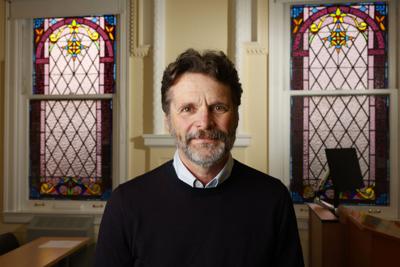
Jennifer Welch of the podcast “I’ve Had It” speaks onstage on June 26, 2025 in Brooklyn, New York.
(Photo by Bryan Bedder/Getty Images for GLAAD)
The Democratic leaders, said the outspoken I’ve Had It podcast co-host, have refused to show up for the NYC mayoral candidate because they are “beholden to the same corporations that helped Donald Trump get elected.”
With less than a week to go until Election Day in New York City, the top Democratic leader in the US Senate has yet to endorse his party’s candidate for mayor of the city he calls home—and a podcaster who’s become increasingly known for catching establishment politicians off guard with her pointed questions was clear about her view on the matter this week.
“Listen up, Democratic establishment,” said Jennifer Welch, the co-host of the podcast I’ve Had It. “You can either jump on board with this shit or we’re coming after you in the same way we come after MAGA. Period… Stop missing out on these big rallies.”
Welch spoke on I’ve Had It the day after 13,000 New Yorkers packed Forest Hills Stadium in Queens to hear progressive Democratic mayoral candidate Zohran Mamdani speak alongside some of his biggest allies: US Sen. Bernie Sanders (I-Vt.), Rep. Alexandria Ocasio-Cortez (D-NY), and New York Gov. Kathy Hochul.
Despite the enthusiasm around Mamdani’s campaign, in which he’s focused relentlessly on making the city more affordable for working people and ensuring corporations and the rich pay fair taxes, New York Democrats Senate Minority Leader Chuck Schumer and House Minority Leader Hakeem Jeffries, both of whom live in New York City, were no-shows—a fact that Welch proclaimed “an embarrassment.”
“Hakeem and Chuck should have been front and center, introducing the next mayor of New York City,” said Welch. “But no, they wouldn’t show up—because they’re pussies. They’re pussies that are beholden to the same corporations that helped [President] Donald Trump get elected.”
Jennifer Welch from the I've Had It Podcast rebukes "embarrassing" Democratic Party leadership for completely failing to meet the moment. pic.twitter.com/6HSbPNnHM0
Jeffries offered a tepid, last-minute endorsement of Mamdani late last week, but both leaders have refused to give their full-throated support to the popular state assemblyman as he faces disgraced former Gov. Andrew Cuomo, who is running as an independent after losing the Democratic primary to Mamdani by 12 points in June. Schumer ignored a question about the mayoral race at a press briefing on Tuesday.
Progressives have condemned the two leaders for not backing the party’s nominee, a move that could be seen by some voters as a tacit endorsement of Cuomo, who resigned in disgrace after being accused by numerous women of sexual harassment, has employed racist stereotypes in his attack ads on Mamdani, and has reportedly spoken with Trump about the White House potentially intervening in the mayoral race on Cuomo’s behalf.
Welch warned Schumer, Jeffries, and other establishment Democrats that with candidates and leaders like Mamdani and Ocasio-Cortez, the party “is moving on.”
“These Democrats, they continue to play patty cake with corporations and lobbyists,” she said. “Nobody wants that. Nobody wants you. We want politicians to speak freely, and look at what the benefit is. Look at what’s happening in New York. And you dipshits are sitting on the sidelines, running your social media like complete dorks. It’s embarrassing. Get your shit together, Hakeem. Chuck, seriously, get your shit together.”
Welch has taken numerous politicians to task in recent months for accepting campaign donations from the American Israel Public Affairs Committee (AIPAC) and other pro-Israel interest groups—from which Schumer and Jeffries have each taken more than $1.7 million.
She advised the leaders to “stop taking AIPAC money” and “go on an ‘I’m sorry, I took AIPAC money atonement’ tour, if you want to stay in power.”
She added that Sanders, Ocasio-Cortez—often known by her initials, AOC—and Mamdani “are all doing something” that corporate Democrats can’t: getting working-class Trump supporters to “cross over and vote for them.”
"The Democratic establishment is MAGA lite…they're pussies that's beholden to the same corporations that helped Donald Trump get elected" pic.twitter.com/33lYf9gUci
Sanders and Ocasio-Cortez spoke to large crowds in both red and blue areas of the country earlier this year, focusing on government corruption and inequality, on Sanders’ Fighting Oligarchy Tour. This week, a photo of a man wearing a “MAGA for Mamdani” T-shirt went viral, with the man telling a reporter: “This’ll be the first time I’m voting for a Democrat. I like his policies.”
According to Welch, “Why Democratic leadership and why the Democratic National Committee is not hopping on those coattails and fucking riding the wave, tells you everything you need to know.”
“That the Democratic establishment is MAGA lite,” she said. “They have the same corporate donors. That’s why when you ask them a blunt question you get a word-salad answer. And this is why Zohran Mamdani is rising. This is why AOC is rising.”
Our work is licensed under Creative Commons (CC BY-NC-ND 3.0). Feel free to republish and share widely.
US Marines from 2nd Battalion, 7th Marines, 1st Marine Division walk to their assignment at the Wilshire Federal Building, ahead of nationwide “No Kings Day” protests, in Los Angeles, on June 13, 2025.
(Photo by Stephen Lam/San Francisco Chronicle via Getty Images)
“Our military exists to defend the nation and protect our freedoms, not to be weaponized against American cities,” said critics.
President Donald Trump alarmed many critics this week when he once again mused about deploying the military on the streets of US cities.
As reported by The New York Times, Trump told a group of American troops stationed in Japan on Tuesday that he could send the military into US cities under the pretense of fighting crime.
“We have cities that are troubled, we can’t have cities that are troubled,” Trump said. “And we’re sending in our National Guard, and if we need more than the National Guard, we’ll send more than the National Guard, because we’re going to have safe cities.”
Trump has deployed the National Guard to cities including Los Angeles, Chicago, Memphis, and Portland in recent months, but local and state officials have opposed the deployment in most cases and have filed legal challenges. Most recently, a federal appeals court voted on Tuesday to rehear the administration’s case pushing to send the National Guard to Portland—vacating an earlier decision that allowed Trump to federalize Oregon’s troops.
On Wednesday, Trump was asked by a New York Times reporter to specify what he meant when he said he could send “more than the National Guard” into American cities, and he replied that he could send any branch of the military he wanted without any oversight from courts or from Congress.
“If I want to enact a certain act, I’m allowed to do it,” Trump said. “I’d be allowed to do whatever I want. The courts wouldn’t get involved. Nobody would get involved. And I could send the Army, Navy, Air Force, Marines—I could send anybody I wanted.”
Q: What did you mean last night when you said you were prepared to send 'more than the National Guard' into American cities?
TRUMP: Sure, I'd do that. As you know I'm allowed to do that
Q: Do you mean other branches of the military you'd send in?
The president threatened to invoke the Insurrection Act earlier this month, falsely claiming the law gives him “unquestioned power.” The Insurrection Act allows presidents to deploy federal troops to enforce US laws in cases of extreme emergency, such as violent rebellions—but local officials in the cities Trump has targeted so far have categorically denied that anti-Trump protests there meet the high threshold for invoking the law.
The co-chairs of the Not Above the Law Coalition—Lisa Gilbert, co-president of Public Citizen; Praveen Fernandes, vice president of the Constitutional Accountability Center; Kelsey Herbert, campaign director at MoveOn; and Brett Edkins, managing director for policy and political affairs at Stand Up America—condemned Trump’s threats on Tuesday as “unlawful and un-American.”
“Our military exists to defend the nation and protect our freedoms, not to be weaponized against American cities,” they said. “In his remarks today, Trump claimed that he and his administration cronies ‘can do as we want to do.’ That is as dangerous as it is unlawful and un-American.”
Trump’s use of the American military for domestic law enforcement purposes was also condemned by Ret. Maj. Gen. Randy Manner, a former top official at the National Guard.
Writing in the Home of the Brave newsletter, Manner condemned Trump’s National Guard deployments to US cities as “un-American and wrong.”
Manner noted that the National Guard has traditionally existed to augment US forces overseas during times of war, and also to serve at the request of state governors during times of emergencies. Using the National Guard to do standard police work, Manner added, is simply unprecedented.
“Our military is not trained in law enforcement,” he argued. “There are absolutely zero situations where our National Guard should be on the streets of America as a status quo measure, absent some acute short-term crisis. We would never send our sheriff’s deputies to Afghanistan for a special operation; it’s just as illogical to send highly trained combat soldiers and put them into civilian law enforcement roles.”
Trump first began musing about deploying the US military on American soil during the 2024 election campaign, when he said he could use it to take down a group of US citizens whom he described as “the enemy from within.” Trump ratcheted up his threats last month when he told a group of assembled US generals that “we should use some of these dangerous cities as training grounds for our military.”
Our work is licensed under Creative Commons (CC BY-NC-ND 3.0). Feel free to republish and share widely.
The SF Public Press put in a records request for call logs of Mayor Lurie’s famed call with President Trump where Trump called off the cavalry of an impending federal troop invasion. Lurie’s office refuses to disclose details.
You can see Lurie (very mildly) spiking the football in the video above. “Late last night, I received a phone call from the President of the United States,” Lurie said in the address. “The President told me clearly that he was calling off any plans for a federal surge in San Francisco.”
For his part, Trump said on Truth Social that “I spoke to Mayor Lurie last night and he asked, very nicely, that I give him a chance to see if he can turn it around.”
Those two versions of the conversation do not square up entirely. So the SF Public Press put in a Sunshine Ordinance request for records of that phone call, a fairly standard journalistic practice that would have produced information like who else might have been on the call. But as the Public Press reports, Lurie’s office is refusing to release any informational details about the call.
Well, they did release some information, though it did not really contain anything that was not already known. As the Public Press reports, “the mayor’s office provided a one-page summary of Lurie’s activities for Wednesday, which included the entry: ‘7:30 pm – 7:55 pm Phone Call with Donald Trump, President of the United States re: calling off potential federal deployment in San Francisco. Attendee: Donald Trump, President of the United States.’”
Lurie’s office said they were withholding any further information “on the basis of attorney-client privilege.” The Public Press adds that “The [mayor’s] office said the request was now considered closed.”
Attorney-client privilege is an unusual explanation, considering that neither Trump nor Daniel Lurie is an attorney.
Trump’s Truth Social post also name-checked “Jensen Huang, Marc Benioff, and others” in talking him out of deploying troops here. (Jensen Huang is the Nvidia CEO who owns a mansion on SF’s “Billionaire Row”). Further reporting from the New York Times says that Lurie “power mapped” other connections he has in Trump’s orbit, and had OpenAI CEO Sam Altman and big-time tech investor Ron Conway lobby Trump, or people close enough to him.
There has been some degree of fair criticism that this all took place behind closed doors and orchestrated among billionaire oligarchs. But folks, we elected a mayor whose inheritance and eventualy billionaire status (his mother is worth an estimated $1 billion, he is not yet) is his primary political resume, so don’t be surprised that an oligarchy is running the city.
And Lurie’s office is probably playing it close to the vest on this one because he doesn’t want to piss off Trump. For the last week, we have enjoyed a tenuous peace when we could have had masked ICE troops running amok across the Bay Area. Lurie’s office probably does not want to threaten that peace that Lurie apparently had a significant hand in negotiating.
An unidentified federal agent fires a chemical weapon into Rev. Jorge Bautista’s face during a protest outside of Coast Guard Island in Oakland on Thursday Oct. 23, 2025. Credit: David Bacon
Rev. Jorge Bautista showed up to Dennison Road in East Oakland early in the morning of Oct. 23 with other clergy to protest the Trump administration’s planned law enforcement “surge” in the Bay Area. He stood in the road with dozens of others as part of a Sanctuary Faith Vigil as approximately 10 trucks carrying Customs and Border Protection agents sped to the entrance of the lone bridge that ties Oakland to Coast Guard Island. The agents would be supported by the Coast Guard base for the operation, a spokesperson confirmed, and Oaklanders braced for the kind of controversial crackdowns that have upset Chicago and Los Angeles.
According to three eyewitnesses who spoke to The Oaklandside and photographs from three photographers who were on the scene, a few CBP agents got out of their vehicles when they got stalled by the crowd. Other vehicles made it onto the bridge, where some CBP agents got out and returned to the cluster of protesters, who were all gathered on the city side of the blue line marking the edge of federal property.
One of the agents, wearing a camo helmet with a chin guard hiding much of his face and a ballistic vest with a CBP badge and “POLICE” emblazoned on the front, locked eyes with Bautista and stepped toward him, crossing the blue line and exiting federal land. The agent raised a large weapon, one that shoots “less lethal” projectiles, leveling it at the reverend’s head.
Bautista didn’t think anything would happen. The agents had just lobbed some stun grenades toward the protesters, many of whom quickly retreated, but Bautista and others stayed in place. He was hoping to mediate, not believing they would fire anything directly at people’s bodies, he said. “We’re here in peace,” he recalls saying to the agent.
Then “boom!” The agent, standing roughly five feet away, shot a cloud of noxious chemicals right into Bautista’s face. The toxic vapors soon enveloped him. The caustic powder entered his mouth and coated his face and coat. He couldn’t breathe. One witness, Jerome Parmer, said Bautista’s face was covered with white dust and was bleeding from his chin.
The shooting, which was recorded on video and in photos and witnessed by dozens of bystanders, raises many of the same questions that communities in other cities subjected to unpopular federal law enforcement operations have been grappling with. Similar attacks on clergy became the subject of a temporary restraining order in Chicago earlier this month, when a federal judge barred agents from using violence or riot control weapons against journalists, protesters, or religious practitioners unless they posed an immediate threat to the agent.
Was the federal agent’s use of force during the Oakland protest justified? Or was it a crime — an unprovoked assault?
If it were a crime committed on city or state property, within Oakland city limits, who had jurisdiction to hold the agent accountable?
Trump administration officials have repeatedly dismissed such concerns, claiming agents’ use of force during operations in Democrat-led cities has been “exemplary” and necessary to protect federal officers and the public.
In response to questions from The Oaklandside about the shooting, a Department of Homeland Security spokesperson sent a statement claiming that the protesters “swarmed, attacked, and refused to move out of the way” of CBP vehicles and attempted to obstruct law enforcement. The spokesperson said the agents “provided ample notice to these individuals to clear the street and used appropriate force to clear the area for the safety of law enforcement.”
The agency did not respond to queries about whether the agent who shot Bautista was following CBP protocol or whether the agency was investigating the incident. A CBP use of force policy issued in 2021 states that agents “shall not intentionally target the head, neck, groin, spine, or female breast” with less-lethal chemical munitions, which is what appears to have been used against Bautista.
Democratic Party elected officials opposed to the militarized operations have repeatedly expressed concerns about federal agents’ use of force. Some have gone so far as to say federal agents who brutalize people should face consequences, including criminal prosecution.
Never miss a story.Sign up for The Oaklandside’s free daily newsletter.Email
The day before protesters in Oakland, including Bautista, confronted CBP agents at the entrance to Coast Guard Island, Rep. Nancy Pelosi, of San Francisco, issued a statement warning that California law enforcement agencies could step in to protect the public against federal officers.
“Our state and local authorities may arrest federal agents if they break California law — and if they are convicted, the President cannot pardon them,” Pelosi said.
The same day, San Francisco District Attorney Brooke Jenkins told the media she would prosecute federal agents who break the law. “If the agents cross the bounds of the law, if they do things that we believe are criminal themselves, then I have an obligation as the district attorney to ensure that they’re held accountable, too,” she told the San Francisco Chronicle.
The next day, U.S. Deputy Attorney General Todd Blanche fired off a letter to Pelosi, Gov. Gavin Newsom, and others, warning that the arrest of federal agents would be “illegal and futile.”
Legal experts say it’s true that states face barriers to prosecuting federal agents for crimes perpetrated in the line of duty. However, federal agents do not have absolute immunity. Although rare, they can and have been arrested and charged for violations of state law, said Michael Mannheimer, a professor at Northern Kentucky University and constitutional law scholar.
Whether California’s police and prosecutors have the political stomach to do so — and pick a fight with the Trump administration — is a whole other question.
“We’re going to hurt you, and we don’t care”
An unidentified federal agent fires a chemical weapon into Rev. Jorge Bautista’s face during a protest outside of Coast Guard Island in Oakland on Thursday Oct. 23, 2025. Behind the agent, a blue line painted in the road shows the boundary between the federal military base and the public intersection. Credit: David Bacon
Last week wasn’t the first time Bautista found himself subjected to forceful treatment by a CBP agent.
In 2019, Bautista, who lives in Oakland, was at the U.S.-Mexico border in Southern California, protesting its increased militarization. As he and other protesters locked arms and walked to the beach, the pastor told us he was the first person agents targeted in an intense attack. He said agents took him out of the line, restrained him on the ground, and put their knees on his neck. He was taken into a van on U.S. soil, where agents took photos of him without explanation. He was returned to the border an hour later with severe bruises.
The U.S. government charged him with a petty offense, violating rules of conduct on federal property. The case ultimately went to trial, and he was acquitted.
The pastor didn’t participate in protests for years after that. But he said what he saw occurring in Palestine over the last two years, and then with the mass deportation decrees under the Trump administration this year, pulled him out of the church and back onto the streets for protests.
When the CBP agents showed up in their vehicles last Thursday, Bautista said they came in “hot,” revving their engines and braking abruptly in front of the protesters. The agents all poured out around the same time, “screaming and making threats.”
Bautista stood his ground but stayed safely in front of the blue line, respecting the federal property boundary. Because the agents were moving around fast, he wanted to make sure they knew the protesters were not trying to elicit a violent reaction.
“The idea was to do a vigil, not civil disobedience, not blocking the road,” Bautista said.
But the situation got tense, and the CBP agents shouted at the protesters to move out of the way or they would run them over with their vehicles. Some reacted angrily, especially because they said they were not in the way and because there were children in the crowd.
“‘We’re going to hurt you, and we don’t care,’ was the feeling coming” from the agents, Bautista said.
Bautista raised his voice to be heard. He said he wanted them to know he was not afraid.
That’s when the agent shot him with the chemical irritant, and he went into shock. At first, the pain was so harsh that he thought his jaw was broken from a hit by the stun grenade.
“Looking back, I think to myself — I’ve been in a variety of protests — and ask myself, ‘Why did I trust him?’” Bautista said. “Was I foolish enough to give him the benefit of the doubt?”
Friends gave him water and Mylanta to clear the powder from his throat. He tried to listen to his body and not panic, as his heart raced. His first instinct was to get back up and stay at the vigil, but other protesters urged him to go to the hospital. The chemical irritant was coating his body so densely that it was making other people sick.
Bautista said he could see no reason why he was shot. He doesn’t believe the officer followed policy or the law. The officer who shot him did not speak to him before he opened fire, did not identify himself, did not provide a verbal warning that he might use force, and did not provide medical attention after the incident. No CBP or Coast Guard officers tried to help him.
“No matter who you are, you should not be assaulted that way for any reason,” he said.
Since Bautista was shot, the images and video of the incident have spread on the web. He’s gotten calls from press around the world. And locally, some community members have questioned whether Bautista was the victim of an assault — one without any legal justification.
Can state and local police and prosecutors charge a federal agent with a crime?
A federal officer at the entrance of Coast Guard Island blasts a riot control agent, likely a pepper-spray round, into the crowd of protesters, hitting Jorge Bautista, a pastor with the United Church of Christ in San Mateo, wearing all black at right, in the face, Thursday, Oct. 23, 2025. Again, the blue line is visible marking the edge of federal property. Credit: Jerome Parmer Credit: Jerome Parmer
If local authorities were going to investigate the CBP agent’s shooting of Bautista, the case would probably fall to the Oakland Police Department.
The shooting, according to videos and photos of the incident, occurred in a public Oakland intersection, several steps away from the blue line on the road that demarcates where federal government property begins at the entrance to Coast Guard Island Bridge.
Asked whether OPD is investigating the shooting, the department said it “has no authority to oppose or prevent federal investigations” and referred further questions to DHS.
After the shooting, Bautista was rushed to Kaiser Permanente’s Oakland Medical Center, where he was greeted by emergency room staff who treated him “amazingly,” he said. They made him shower to get rid of the pepper spray, checked his vitals, and asked about his mental health. A doctor told him he was lucky he hadn’t ingested more of the pepper agent, which could have seriously choked him; if more had gone into his eyes, the doctor said, it could have affected his eyesight.
Bautista said he appreciated the solidarity he felt from the medical staff, who were outraged to learn what had happened. A nurse informed him that he had a right to report the incident to police. She took down his version of events, told him that she called law enforcement, and said to expect a visit from the police at his home later that evening.
OPD declined to confirm with us whether or not the department had taken a report.
A Customs and Border Patrol vehicle pushes through protesters as a convoy arrives to Coast Guard Island Bridge on Oct. 23. Credit: Florence Middleton for The Oaklandside
Should OPD or another law enforcement agency investigate the incident and recommend criminal charges, the decision of whether to prosecute would most likely rest with the Alameda County District Attorney’s Office.
Last Thursday, DA Ursula Jones Dickson stood with Oakland Mayor Barbara Lee, Rep. Lateefah Simon, and other leaders at a press conference where they voiced opposition to a federal operation in Oakland. The DA issued a statement the following day reaffirming that her office will not work with federal agents to enforce immigration laws, and cautioning that her office “cannot thwart lawful activities by the federal government.”
The DA’s office declined to provide an on-the-record statement on the hypothetical question of whether it would prosecute the federal agent who shot Bautista if presented with a case from OPD or another investigating agency.
Asked about the law, the DA’s office pointed to a legal precedent known as the supremacy clause, which constrains when state prosecutors can charge federal agents. However, the office declined to weigh in on the record with its interpretation of the supremacy clause.
Former Alameda County DA Pamela Price, who was recalled last November, told The Oaklandside she believes there is room for local law enforcement and state prosecutors to go after federal agents for clear and obvious violations.
“An assault by a federal agent is illegal,” Price said when asked about Bautista’s shooting. “It’s unconstitutional, and it should be addressed by local law enforcement authorities, including the district attorney.”
Price said she believes OPD should investigate the shooting as a criminal assault — and the DA should consider charging the agent.
“There’s a duty on behalf of local law enforcement and the district attorney to protect the residents of Alameda County,” Price said. “That’s the job.”
State Attorney General Rob Bonta’s office could also consider charges in the shooting incident.
Bonta has strongly criticized Trump’s deployment of the National Guard to cities. Calling these deployments illegal, Bonta pledged last week to sue the administration if troops were deployed to San Francisco. Bonta has also opposed ICE agents’ use of masks to hide their identities, and he’s joined lawsuits opposing some of ICE and CBP’s tactics during immigration raids in Southern California earlier this year, including stopping people without reasonable suspicion of a crime. But this pushback has taken the form of civil lawsuits — not criminal prosecutions.
The Oaklandside emailed and called the AG’s office multiple times, asking if the office was conducting an investigation into the use of force by CBP in Oakland last week, including the shooting of Bautista. We have not yet heard back.
Avoiding a “pissing match” between the feds and the state
A protester sits in the road at the entrance to Coast Guard Island. The wide blue line painted in the road demarcates the boundary of federal property and the city of Oakland. Credit: Florence Middleton
While law enforcement officers enjoy substantial legal protections for their conduct while on duty, Erwin Chemerinsky, the dean of the UC Berkeley School of Law and a constitutional law expert, told The Oaklandside that federal officers can be criminally prosecuted for unreasonable conduct that violates the law.
Chemerinsky pointed to Idaho v. Horiuchi, a 2001 case in which Idaho attempted to prosecute federal officers after a standoff at Ruby Ridge turned violent and three people were killed. The U.S. Court of Appeals for the 9th Circuit refused to dismiss Idaho’s prosecution of the federal officers, saying that federal agents’ immunity from state prosecution has limits.
“When an agent acts in an objectively unreasonable manner, those limits are exceeded, and a state may bring a criminal prosecution,” the 9th Circuit wrote in its opinion.
“I believe that courts should conclude that there is no reasonable need for ICE agents to be wearing masks and never a need for excessive force,” Chemerinsky said. “Being a federal officer is not a ‘get out of jail free’ card that excuses all wrongdoing committed while on the job.”
Michael Mannheimer, the regents professor of law at Northern Kentucky University, also said state police have the lawful ability to investigate federal agents who may have broken the law, and state prosecutors can charge federal agents.
When these sorts of cases have come before courts in the past, Mannheimer said, judges have drilled down on two questions. First, was the federal agent acting under the scope of their federal job? And second, did the federal agent believe their actions were appropriate and reasonable?
If the answer to both questions is yes, then judges will dismiss the case. But if an agent’s actions were not appropriate and reasonable, even if they were in uniform and on the job, they can still be charged with a crime, he explained.
It’s rare, however, for state prosecutors to do this. “When it does happen, it’s typically where you have something like the present moment, where you have an unpopular federal policy at the state and local level,” he said. “Prohibition, for example, or the standoff at Ruby Ridge.”
Mannheimer said state law enforcement and prosecutors may hesitate to weigh in on particular cases for political reasons.
“Let’s give the Alameda County DA the benefit of the doubt that they understand the law better than they’ve addressed it,” he said. “They probably don’t want to get involved in this pissing match between the feds and state.”
A likely lawsuit
Bautista spent three days at home recuperating from the attack. By Sunday, he felt well enough to return to his San Mateo congregation and preach.
“You know, I’m still in the ring, with a lot of hope,” he said. “ I’ve been dreaming that this is a time for us to do whatever it takes to stop criminalizing migrants, to see the bigger picture — that the criminalization of migrants is one of the worst violations of human rights anywhere.”
Pastor Bautista took a long path to the church. More than 25 years ago, he said, he was a teenager who ran with the wrong crowd.
Growing up in a gang-laden area of San Jose, a child of a Mexican immigrant, Bautista got into trouble, went to jail, and, on the most critical day of his life, had a gun pointed at his head. He remembers being in his room afterward, crying, asking for God’s help for the first time — asking God to let him live so he could find a different path. Soon after, a friend took him to a community center that helped him develop a more positive outlook on life and then to an evangelical church where, in October 1998, he was called to serve.
“ I was sick and tired of being sick and tired,” he said. “I wanted my life turned around. I got tired of being harassed by cops and being arrested, and seeing my mom be miserable. I remember her visiting me once in jail and saying, ‘You know, I didn’t migrate for you to be incarcerated.’”
It took him years, including ministry stints in Chicago and South Korea and then a seminary degree in Berkeley, but he eventually became the type of mentor he never had growing up. He became a pastor at an Evangelical church, often ministering to people in local prisons, where he sought to offer them spiritual guidance to help them endure and, eventually, be set free. But he disagreed with what he thought was the denomination’s detached stance toward social justice advocacy.
“My mom worked in asparagus fields in Stockton as a farmworker, she was a janitor, and eventually worked in a variety of companies’ assembly lines,” he said. “I started learning about the works of the German Lutheran Dietrich Bonhoeffer, who fought against the Nazis. I learned that as a Christian, we are to be involved in social justice work.”
Bautista noted that in the Bible tale of the birth of Jesus Christ, the Christian family migrated from Bethlehem to Egypt as refugees, for safety, when an angel warned Joseph, Jesus’ father, that King Herod would seek to find and kill his son.
So Bautista became a religious leader at the United Church of Christ, an egalitarian Protestant denomination aligned with his beliefs about the divinity and human rights of all people. When rhetoric in the United States around undocumented immigrants ratcheted up about a decade ago, Bautista could be found preaching from the pulpit about the injustices they faced.
Bautista said he is proud of the role many religious leaders are playing in the fight against the Trump administration’s abuses. Several have already served as frontline peace messengers during protests — and some have ended up assaulted like him.
“I follow what Pope Leo is doing because most migrants coming from Latin America are Catholics,” he said. “As someone who identifies themselves as ecumenical, we’re about standing on the side of love of Christians first and foremost. But regardless of their school of thought — like Jesuits tending to be more active in the spirit of activism than Franciscans — we all need each other. We are all in agreement about migrant justice.”
Since arriving home from the hospital, as he waits to tell his side of the story to the police, Bautista said he has begun to consider filing a civil rights lawsuit. As of today, Bautista still hasn’t heard from OPD or any other law enforcement agency about what happened to him.
Jose Fermoso covers road safety, transportation, and public health for The Oaklandside. His previous work covering tech and culture has appeared in publications including The Guardian, The New York Times, and One Zero. Jose was born and raised in Oakland and is the host and creator of the El Progreso podcast, a new show featuring in-depth narrative stories and interviews about and from the perspective of the Latinx community.More by Jose Fermoso
Roselyn Romero covers public safety for The Oaklandside. She was previously The Oaklandside’s small business reporter as a 2023-24 Poynter-Koch Media & Journalism Fellow. Before joining the team, she was an investigative intern at NBC Bay Area and the inaugural intern for the Global Investigations team of The Associated Press through a partnership with the Ida B. Wells Society for Investigative Reporting. She graduated from Cal Poly San Luis Obispo in 2022 with a bachelor’s in journalism and minors in Spanish, ethnic studies, and women’s & gender studies. She is a proud daughter of Filipino immigrants and was born and raised in Oxnard, California.More by Roselyn Romero
Before joining The Oaklandside as News Editor, Darwin BondGraham was a freelance investigative reporter covering police and prosecutorial misconduct. He has reported on gun violence for The Guardian and was a staff writer for the East Bay Express. He holds a doctorate in sociology from UC Santa Barbara and was the co-recipient of the George Polk Award for local reporting in 2017. He is also the co-author of The Riders Come Out at Night, a book examining the Oakland Police Department’s history of corruption and reform.More by Darwin BondGraham
Esther Kaplan was most recently the investigations editor at Business Insider. Before that, she was executive editor at Reveal from The Center for Investigative Reporting, where she oversaw a reporting team that led investigations for a national podcast, and editor-in-chief at the New York City nonprofit Type Investigations. She launched the Ida B. Wells Fellowship, a program dedicated to diversifying the field of investigative reporting.More by Esther Kaplan
Once again, democracy is in danger. I am well aware that this is every incendiary late night news program’s favorite saying. For as long as I have been alive, the political ethos has always echoed the sentiment that if X were to happen, democracy, America, the picket-fenced lawn that you so delicately care for, is gone. Erased. Never to be seen again. And every time, the worst has happened, and we still exist. However, I truly believe that the future of democratic processes in America is being held by a little boy with his thumb in the dam, and unfortunately, we are that little boy.
I am alluding to the upcoming special election that features Proposition 50, a temporary amendment to the California Constitution that would redistrict congressional boundaries, adding new seats intended for Democrats. And why would they propose such a divisive future? Well, this amendment is a strategic response to a recent Texas redistricting, which gave the Lone Star State — and more specifically, Republicans — a partisan edge in Congress.
But you probably know this — Sproul is filled to the brim with ardent undergrads explaining and proselytizing both sides. For a quick recap, the average “yes” voter wishes to stand up for democracy, maintain normal order and offset Texas’s newfound power. They are most likely concerned about President Trump’s brazen power grabs, the future of this country and also enjoy Sunday brunch. The average NO voter wishes to stand up for democracy, slow the rate of polarization in America and avoid setting hastily made precedents. They are most likely concerned with the maintenance of the status quo, the permanence of temporary government programs, and they, too, enjoy Sunday brunch.
Caesar stood at the banks of the Rubicon River. Crossing it meant Roman civil war. It was the point of no return, a choice that would determine history. Now, this is America’s Rubicon. Will we dig deeper into partisan trenches to avoid the artillery? Or will we continue on as is, hoping that these next few years are just a rough patch? Will we cross this river? Now this is the opinion section of The Daily Californian, and you are probably expecting an opinion. So, I, Anav Oommen, The Daily California’s grizzled veteran soapbox writer, will be voting “yes” on Proposition 50. But prior to reaching “yes,” I was set on “no.” But even more prior to that, I was not voting. I felt that I could not vote for either side in good conscience: I could neither endorse the amplification of polarization nor the blatant erosion of democracy. Thus, I chose to be democratically abstinent.
This is who I am trying to reach: the undecided voter, not in regard to side, but those lovely, torn people who choose to not choose. I guess what I am asking is: Is there ever a good reason to not vote?
The most frequent reason cited for democratic abstinence in winner-take-all electoral systems is that both options suck — they are all bad, the shiniest of two turds, etc. Usually, I am hesitant to accept this reason because one option will always be better regarding your core issues. Take the most recent presidential election between Kamala Harris and President Trump. Yes, both options are not ideal, but in retrospect, one was better for the general quality of life.
This special election presents an even greater challenge, as there is no evident “better-than” answer. I have been “yes,” I have been “no,” I have seen both fields and neither are greener. I was so drawn to abstinence because I could not willingly vote for the idea of increasing polarization and minimizing minority voices, or vote to bequeath Trump an increasingly adroit grip on strong-arming American institutions.
But this paralysis is exactly the point. The goal of maladaptive change is to lapidify action, enveloping you between the rock and the hard place. It is easier to choose indecision when the issue forces you to confront the foundation of your beliefs because that process is not enjoyable. That process is hard and it is taxing, but it is worth it. It is your civic duty to make it worth it. So no, there is never a good reason to abstain from the democratic process. Abstaining from voting is a signal to the powers that be that you are willing to roll over. Therefore, don’t. Rise, cross the Rubicon and take action.
What is often omitted when discussing voting is its purpose. Of course, there is the obvious objective: to elect a person or pass a policy. Yet, there is a purpose that is overlooked — democracy directly translates as people-power, derived from the ancient Greek roots “demos” meaning people and “kratis” meaning power. One way to interpret this is that of a large-scale collective taking back the reins of society and distributing power amongst the people. But the other way — and the one I am partial toward — is that voting empowers you, the individual, by restoring your sense of efficacy.
There is a seemingly infinite well of novel cartoon villain schemes that hurt — and I really mean hurt — the valued members of your local, state and national community. The goal is to turn you into a statue, sitting in a chair with the news open and your hands trying to soothe your head, because no rational person can deal with this. By choosing to vote, you choose to act. “People-power” means the individual has power and the ability to reclaim it if lost.
Tyranny’s best citizen is not the fervid zealot but the nice person who lets the world choose for them. Embarking upon the uphill path of civic duty is an arduous task but a necessary one. My goal for this article was not to convince you to vote a certain way; my goal was to convince you to vote. The future of democratic institutions is at stake in this upcoming special election, prompting questions that prod at the eroding bedrock we have built our homes atop. Answer the question as you see fit, because your vote is not only valuable to us, but to yourself. The riverbed lies just beyond the Rubicon. I’ll see you in Valhalla.
Another week of Court Watch at 100 Montgomery! See all relevant fliers and programs!
This past week has been overwhelming for many of us, but court watch remains a critical way to directly protect our communities and form organizing connections. So bring some candy, wear a witch hat, and join us for some music, strategizing, community building, and let’s be spoooooky to ICE!
The “invasion” may have been “called off” but the fight against ICE is far from over.
ICE has been kidnapping our neighbors when they go to their court hearings
3. Friday, 10:30am – 12:30pm, Protest Against Israeli Consulate
Israeli Consulate 456 Montgomery St SF
israeli consulate NOT welcome in the Bay Area
Come and join Noisemakers Against Genocide (NAG) and autonomous activists in letting the israeli consulate know that they are NOT welcome in San Francisco/ Bay Area
Bring noisemakers, drums, banners, whistles, horns and flags to make a proper ruckus! No business as usual for mass murderers. Let’s keep showing up for a Free Palestine!
We do not consent to Trump and his billionaire allies taking a chainsaw to our government and our economy for their benefit! San Francisco is a sanctuary city and We the People need to defend the values that make it so. Let’s stand united and oppose the endless assaults on our communities, our civil rights, the rule of law, and our democracy.
Keep democracy alive every Saturday by showing up, taking a stand, and sticking together for the long haul. Standing together is better than standing alone. Let’s get together and call out the Trump/MAGA regime as a community. Plus, it’s fun! Think of it as our democracy corner—a place for you to voice your opinion, hang out with like-minded fellow protesters, and experience a cathartic moment together.
What you can do: • If you’ve got signs, flags, cardboard cutouts, or any protest visuals you want to make, bring ’em! We also have spare signs to lend. • If you have whistles, drums, cowbells, or other noisemakers, bring ’em! • Musicians are welcome and encouraged. Sing the song of democracy! • Many of our regular protesters are part of local activist groups who are happy to chat with anyone who wants to pair their indignation with direct action beyond street protest.
Signs and chants will be provided. Bring your energy and tambourines!
Israel’s genocide machine couldn’t run without power from Chevron. Israel’s war on Gaza and Occupation of Palestine contributes to the climate catastrophe. Chevron supplies light and energy via its operation and co-ownership of two major Israeli-claimed fossil gas fields in the Mediterranean.
Chevron’s extraction activities are funneling millions of dollars in tax revenues to Israeli government coffers, directly fueling Israel’s system of settler colonialism and violence against all Palestinians. In 2022, those revenues amounted to over $462 million. BDS is a global nonviolent Palestinian led movement, and we demand that Chevron immediately cut its contracts with genocidal Israel, and end its role in climate devastation globally.
Following in the tradition of the anti-apartheid gas station boycotts of the 60s & 70s, Palestinians and allies are building a global movement to hold Chevron accountable for its crimes through a coordinated boycott of Chevron gas stations and products around the world.
Join the campaign: Pledge to #BoycottChevron now at bit.ly/boycottchevron.
7. Sunday, 2:30pm – 5:00pm, Walk of Remembrance for Timothy Charles Lee
Event in Concord
2:30pm Meet at Rainbow Community Center, 2380 Salvio Street, Concord 3pm, Walk through Todos Santos Plaza 4pm; Speakers, Day of the Dead Altar, vigil at the Concord Bart Parking Lot
It has been 40 years since Timothy Charles Lee was found hanging from a tree near the Concord Bart station. He was 23 years old AND he was a Luiseño Rincon, Native American & Black, & Gay young man.
The Concord Police Investigators of the time and Coroner, chose to accept the lynching of a Black and Native American man, as a suicide!
We want the case reopened and converted to a “cold” case. Part of reopening the case, calls for discrediting the ruling of suicide! And not just reclassifying it as a murder, but also a hate crime by lynching.
We walk in his name. The event will feature speakers, poets, family, community, libations (non alcoholic), and we can offer rituals to loved ones across the globe.
To participate in our walk or support the event or if you have any memory or information of that time period or of Timmy: email Justice4Timmy [at] gmail.com
Sign up to join our virtual phonebank to have conversations with voters in New York City about Zohran!
You’ll learn how to have positive conversations about freezing the rent, free and fast buses, universal childcare and more!
No experience is required. We will start with brief training. We can’t wait to see you!
Phonebank for Zohran!
Can you speak any of these languages? No other languages Arabic ASL Bangla Cantonese Farsi French Fujianese Greek Gujarati Haitian Creole Hebrew Hindi Kannada Korean Mandarin Marathi Nepali Punjabi Russian Spanish Tagalog Tamil Telugu Tibetan Turkish Urdu Uzbek Vietnamese
Phonebank for Zohran! – Thu, Oct 30, 6:00pm – 9:00pm EDT
Phonebank for Zohran (English)! – Fri, Oct 31, 3:00pm – 6:00pm EDT
Get Out The Vote For Zohran Phonebank! – English – Sat, Nov 01, 9:00am – 12:00pm EDT
Get Out The Vote For Zohran Phonebank! – English – Sat, Nov 01, 12:00pm – 3:00pm EDT
Get Out The Vote For Zohran Phonebank! – English – Sat, Nov 01, 3:00pm – 6:00pm EDT
Get Out The Vote For Zohran Phonebank! – English – Sat, Nov 01, 6:00pm – 9:00pm EDTShow More Sign Up
Your privacy is guaranteed. By submitting the form, you allow Zohran For NYC to call and/or text you at the phone number provided.
by Randy Shaw on October 27, 2025 (BeyondChron.org)
6th and Market, Oct 20, 1:00am
A San Francisco comeback requires reviving Market Street. Hundreds of drug users and dealers inhabit the area after midnight. This must stop. It badly hurts the city’s image and is unfair to Market Street’s hotels, theaters, housing and businesses. The city solved a similar drug crisis at UN Plaza. Why not apply similar strategies to Market Street?
Market Street Has Gotten Worse
After decades of decline, Twitter’s arrival in 2011 began historic Mid-Market’s revival. Market Street was finally on a path toward greatness.
But COVID halted this progress. It arrived at the worst possible time. Multiple developments were under construction and they opened to a pandemic that closed the street down. Market Street between 5th and 9th Streets—historically known as Mid-Market—saw drug activity skyrocket. It was not until UN Plaza and the Pelosi Federal Building were both cleared of open air drug markets that Mid-Market’s progress resumed.
But Mid-Market drug activity from midnight to 6:00 am is off the hook. Videos from October 20 posted on X by FriscoLive415 show a drug scene as bad as the dark days of the Linkage Center. JJ Smith, who regularly videos the Mid-Market drug scene, shows the same scene on October 23 from a different angle . An October 24 video from @TL2Active described the sidewalk-filled drug market as “crazy.”
Drug markets have also expanded on Market between Eighth and Ninth Streets.
So what should the city do?
How about using what worked for clearing UN Plaza? It took two strategies developed by Rec and Parks Director Phil Ginsburg. Both are needed to rescue Mid-Market.
Adding Local Resources
First, more resources are needed. Ginsburg added park rangers to SFPD’s staffing at UN Plaza. They made a huge difference. UN Plaza is under Rec and Park control, which would not be the case on Market Street. Yet many city-funded ambassadors, DPW, DPH, and HSH staff, retired officers and others could be dispatched to Market Street for enough time to disrupt and dismantle sidewalk drug activities.
Currently, SFPD and DPW combine to push the drug crowd off Market by 6am. But the images from the post-midnight crowd linger. And they discourage positive daytime pedestrian traffic in the area.
Adding a handful of officers and/or additional staff won’t get the job done. We’ve seen on Sixth Street how understaffed, short-term efforts bring no permanent change. To clear Mid-Market drug markets, physical changes are necessary.
Physical Changes
Ginsburg exiled drug activity by transforming UN Plaza into a skateboard park. Comparable physical changes can make Mid-Market less hospitable for mass drug activities.
I attended last week’s SPUR event on Market Street Reimagined: ULI Award Winning Visions to get a glimpse of what physical changes could work. Unfortunately, the winning designs for Market Street had one common feature: they were disconnected from the reality of Market Street between Sixth Street and Ninth Street.
To be fair, the contest asked designers to reimagine Market Street without considering real world challenges. But instead of funding a contest to “reimagine” a fictional Market Street, how about bringing together these great urban design minds to produce physical changes that help close Mid-Market’s open air drug markets? Designs that are impervious to vandalism? Designs, like the never implemented Better Market Streets Plan, that are connected to the real world?
Obvious design strategies include tall planters that drug users cannot sit or sleep in. Heavy and vandal-proof planters of all sizes would reduce the space for drug activities. I heard a lot of brilliant minds last week. How about unleashing them in redesigning Mid-Market to stop drug activities?
I’d love to invite these design teams to 6th and Market to get their ideas. I’m sure JJ Smith would be happy to give them a late evening tour.
They will soon realize that their goal of making Market Street more “welcoming”—one winning design included a continuous bench from the Ferry Building to Civic Center—would primarily benefit drug users and dealers. What those rooting for Mid-Market want is to make the area less welcoming for undesirables and more appealing for the people Market Street theaters, housing and businesses are trying to attract.
No SF Comeback Without Market Street
Former Mayor Ed Lee’s strategy for Mid-Market revival brought Twitter, Zendesk, Dolby and other internationally known businesses to long neglected sections of Market Street. On the day before COVID, new apartments, condos, and tourist hotels were under construction and the 16 story office tower at 6th and Market was filled.
Some even claimed (falsely) that Mid-Market had “gentrified.” Mid-Market’s revival highlighted the city’s boom.
The closure of Whole Foods and the almost complete vacation of the San Francisco Centre (formerly the Westfield Centre) reflect how open air drug markets destroy Mid-Market’s and the city’s economy. How many other businesses must close before the additional resources and physical changes are made?
<I>Randy Shaw is the Editor of Beyond Chron and the Director of San Francisco’s Tenderloin Housing Clinic, which publishes Beyond Chron. Shaw’s new book is the revised and updated, The Tenderloin: Sex, Crime and Resistance in the Heart of San Francisco. His prior books include Generation Priced Out: Who Gets to Live in the New Urban America. The Activist’s Handbook: Winning Social Change in the 21st Century, and Beyond the Fields: Cesar Chavez, the UFW and the Struggle for Justice in the 21st Century. </I>
by Randy Shaw on October 27, 2025 (BeyondChron.org)
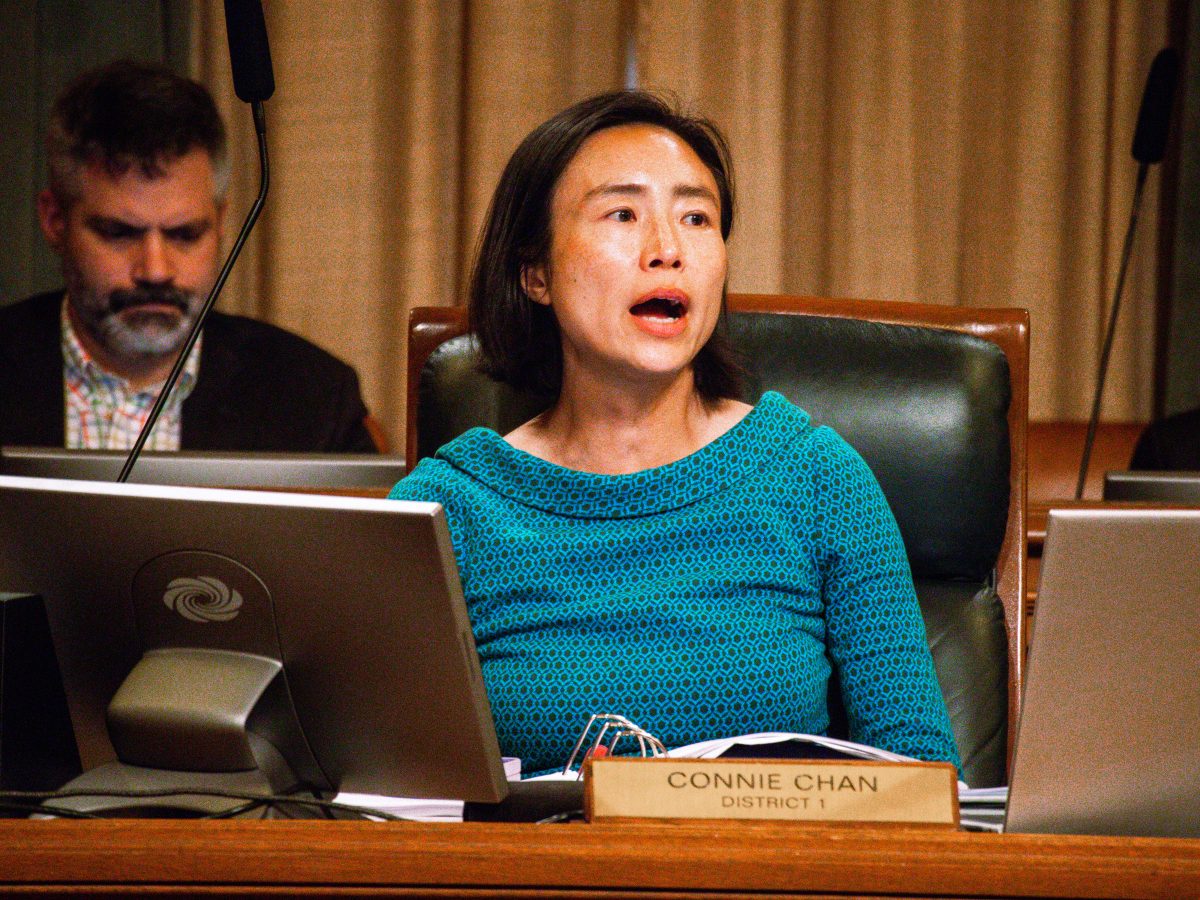
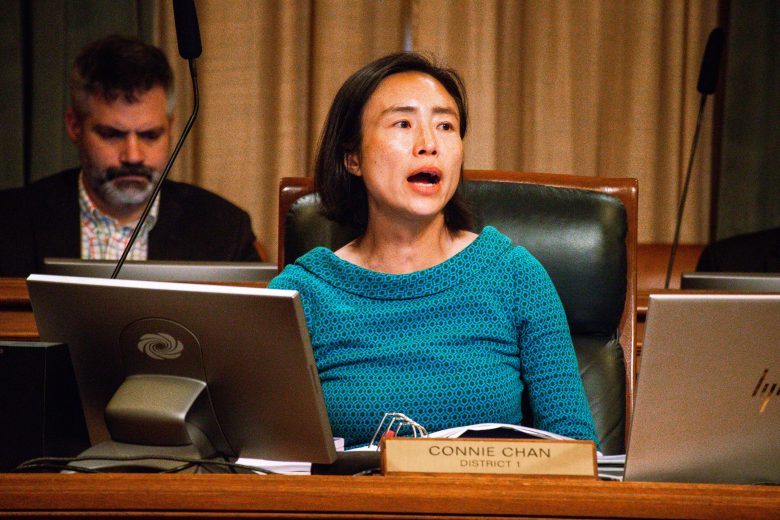
On October 6 I assessed a likely three-way race to succeed Congressmember Nancy Pelosi. She is expected to announce her decision not to run after the November elections. Evidence has since emerged that Pelosi’s daughter, Christine, will not run and that the legendary former Speaker would back D1 Supervisor Connie Chan.
As stated in Politico, “Chan was the only local elected official to speak alongside Pelosi at a related labor event to rally support for Democrats’ gerrymandering proposal. The two posed together for photos at a union hall surrounded by dozens of workers. Many local political observers interpreted the event as an indicator of Pelosi’s thinking — especially after Chan’s reelection fight last year, when she narrowly defeated a moderate challenger with the help of Pelosi’s endorsement and union money.”
My sources tell me that Chan planned on running for State Senate in the special election following Wiener’s election to Congress. But some Chan supporters have a larger goal. They think Chan can curtail Wiener’s political career by defeating him in the congressional race. Even if she lost, running a strong campaign would make her the clear favorite in the state senate contest in early 2027.
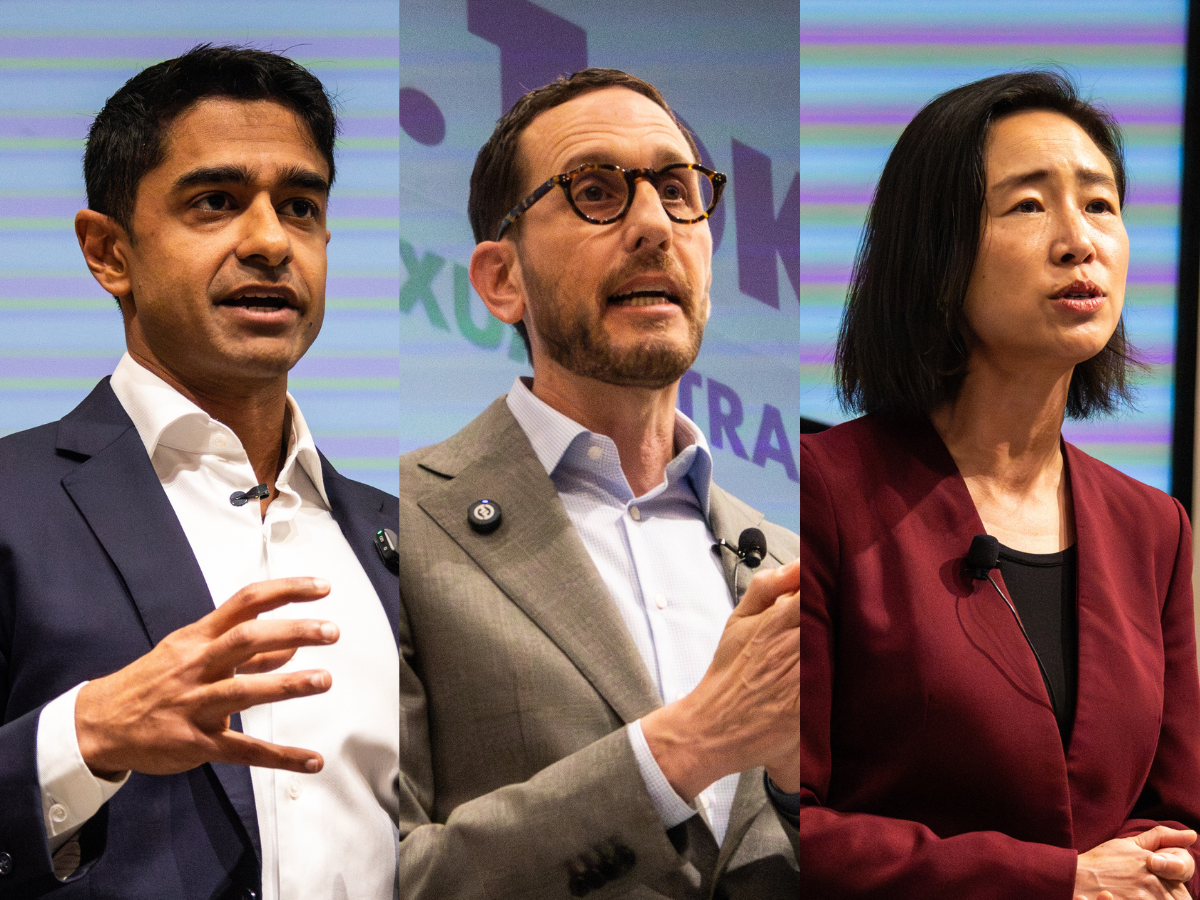
Would Chan pose a serious threat to Wiener? He announced his candidacy last week with a powerful video about his family background and political legacy. Here’s how the race looks.
Chan’s Strengths
Chan has a much stronger Chinese-American voter base than Wiener. He won strong support from this community in his 2016 State Senate race as Korean-American Jane Kim could not get votes that Chan will secure.
Wiener’s strong support for Joel Engardio and Prop K (the Great Highway measure) hurts him among the Westside’s Chinese-American voters. In contrast, Chan is pushing for a citywide vote to reverse Prop K. A repeal Prop K measure on the June ballot would lose citywide but the fact that she is talking about reversing Prop K boosts her with the moderate to conservative Westside voters she needs to win.
Stereotypes about Westside Chinese-American voting depict the constituency as too moderate or conservative to back Chan. Yet she has twice won election from that demographic in D1. In 2024 Chan won by over 1000 votes despite redistricting adding conservative Sea Cliff voters to her district.
As with Harry Britt’s campaign against Nancy Pelosi in 1987, a theme of Wiener’s effort is likely to be San Francisco electing its first LGBTQ congressmember. But Chan can offer a counter-narrative: she would be the city’s first Chinese-American elected to that office.
Chan is a great campaigner. People like her.
Chan would be universally supported by progressive voters. If she runs, Saikat Chakrabarti will either drop out or get far fewer votes than if Christine Pelosi were Wiener’s chief opponent. If you combine progressives with her support from Westside Chinese-Americans and moderates who don’t like Wiener for one reason or another, a path for a Chan victory is there.
Chan’s Challenges
Chan will need money to get her message out. Never having run outside of D1, she has nowhere near the financial backing and name recognition as Wiener (Wiener raised $730,000 within days of announcing his candidacy).
The union money that helped Chan win in 2024 may not be as available in the congressional race. Labor’s priority is stopping Trump. Does it make sense for unions to divert money from swing congressional races to fund Chan against a rival who, if elected, will vote with labor 100% of the time? Plus Wiener also has strong labor support.
I understand that the June election is a primary. But money labor spends in June is not available in the historically significant November 2026 national elections.
Can Nancy Pelosi find ways to fund Chan’s campaign? I had always heard that Pelosi had $5 million to spend on her daughter’s effort. I recently had that number confirmed by a political insider. Nancy Pelosi would not back a candidate in San Francisco and then not ensure the campaign had sufficient funds.
Chan’s biggest challenge is that Scott Wiener is a political powerhouse. I described his strengths in my October story. Since that time Wiener has been aggressively attacking Trump on social media. He is sending a message that he is the fighter San Francisco needs in Washington DC.
Can Chan convince voters she can outdo Wiener in fighting for the city? That won’t be easy.
Post-November Election Announcements
If Chan is running I assume she will announce after the November elections.That post Prop 50 marker may also answer a question on many people’s minds: Will California Senator Alex Padilla run for Governor?
Would potentially strong Democrats like Lieutenant Governor Eleni Kounalakis drop out of the race unless they assumed Padilla was going to be in? Padilla would be the immediate front runner. He can assemble the broad coalition necessary to win.
As a big fan of the Senator, here’s hoping the answer to whether he is running for governor is Yes.
<I>Randy Shaw is the Editor of Beyond Chron and the Director of San Francisco’s Tenderloin Housing Clinic, which publishes Beyond Chron. Shaw’s new book is the revised and updated, The Tenderloin: Sex, Crime and Resistance in the Heart of San Francisco. His prior books include Generation Priced Out: Who Gets to Live in the New Urban America. The Activist’s Handbook: Winning Social Change in the 21st Century, and Beyond the Fields: Cesar Chavez, the UFW and the Struggle for Justice in the 21st Century. </I>
by Sebastian on October 27, 2025 (BeyondChron.org)
Van Ness Avenue & Eddy Street, 2 years after the Feds’ drug raid
Graffiti appears in every neighborhood in the city, like mushrooms after a rainstorm. It’s the gateway to crime if it’s not nipped in the bud. Any signal of a lack of community oversight can create an environment where more serious crime and additional vandalism is likely to happen.
Last year, I wrote about the graffiti-covered abandoned Civic Center City College of San Francisco building at 750 Eddy Street, which became a magnet for drug dealers. They ran open-air drug markets in front of and behind the building, where hardcore drugs flowed like “candy” on Halloween, which devastated residents and businesses nearby.
Seniors who live in the Eastern Park Apartments across the street from the CCSF building felt trapped in their seniorliving home, as the sidewalks were clogged with drug dealers and users. Neighbors on Van Ness and Eddy were fed up with the out-of-control open-air drug market in front of 799 Van Ness, the former Mini Cooper dealership.
As soon as the city shut it down on October 4, 2023, the open-air drug market relocated across the street, in front of the former Walgreens store at 790 Van Ness, the next day.
Frustrated with the city playing whack-a-mole, the neighbors reached out to the FBI directly to shut down the open-air drug market. At approximately 6:45 p.m. on October 16, 2023, a few months after the neighbors contacted them, the FBI raided the open-air drug market in front of 790 Van Ness.
I shared the video footage of the raid, which was posted on Reddit, with the Northern District Police Station Captain at that time, Jason Sawyer. He told me via email that SFPD was not aware of and part of the October 16 raid.
On October 26, the former Police Chief, Bill Scott, visited Van Ness and Eddy while the neighbors were installing planters in front of and on the Eddy side of 790 Van Ness.
Former Police Chief Bill Scott on Eddy and Van Ness, observing the neighbors install garden planters after the Feds’ drug raid. Oct.26, 2023
Since the raid, the area has shown significant improvement. It’s much cleaner and safer now than 2 years ago, and open-air drug markets haven’t returned to that corner.
How do the neighbors maintain Van Ness and Eddy clean and safe?
*Planters
The property owners of 790 and 799 Van Ness installed planters as soon as the open-air drug market was shut down.
*”Mural mural on the wall”
It took a call from the former San Francisco Board of Supervisors President, Aaron Peskin, for CCSF to clean up the graffiti on the Tenderloin CCSF building.
On May 28, 2024, CCSF started its graffiti clean-up project. And it was completed on June 14, 2024. However, by the end of August 2024, the building had been covered with graffiti again.
In early October of this year, CCSF painted a mural on its building to prevent repeat graffiti.
New mural on the Civic Center CCSF building
Mario Vasquez, the Police Chief of the CCSF Police Department, told me that in addition to the mural, 4 CCTV cameras will be installed to monitor the building. A week ago, someone cut the padlock of one of the lot gates (the one next to the Le Nain hotel next door) to dump a mattress and a pile of trash. “The area around here is sketchy. There used to be many drug dealers hanging out in front of and behind the building,” he said.
The Le Nain hotel next door also painted a mural on their wall to deter graffiti.
The new mural on the Le Nain hotel wall, 730 Eddy
The city’s beautification and community engagement block by block
Mayor Daniel Lurie challenges San Franciscans to beautify their neighborhood:
Murals and art: The “Love Our Neighborhoods” program aims to make it easier for residents to install murals and planter boxes with city support.
Expansion of free graffiti removal: A pilot program for free graffiti removal on private property, originally started under former Mayor London Breed has been made permanentby the Board of Supervisors and is supported by Mayor Lurie’s administration. It allows owners in commercial corridors to request a free cleanup.
“Have you ever wanted to improve your neighborhood? The Community Challenge Grant program helps San Franciscans turn that vision into reality—funding projects that bring people together and strengthen our city, block by block,” Said Mayor Lurie.
Supervisor Bilal Mahmood, who represents the Tenderloin, encourages his constituents to join the Graffiti Watch program: “Studies show that removing graffiti within 24 hours of popping up is proven to reduce return tags from reappearing. Keeping our streets safe and clean requires all of us to pitch in, and many of you already do your part by sending 311requests for graffiti abatement, but if you want to take a more hands-on approach in your neighborhood, roll up your sleeves, get your hands dirty, join Graffiti Watch,” said Supervisor Mahmood.
Combating drug markets in the city
Mayor Lurie invites stronger coordination between the San Francisco Police Department and federal law enforcement, including the FBI, DEA, ATF, and the U.S. Attorney’s Office, to disrupt drug markets and multinational cartels, just like what the neighbors of Van Ness and Eddy did 2 years ago on their own, asking the Feds for help to save their neighborhood.
According to KQED, some city leaders push back on the Mayor’s call for more Federal involvement to combat the fentanyl crisis, while other city leaders, like Supervisor Matt Dorsey, want to see more Feds assistance.
“If drug dealers are undocumented immigrants and committing a crime in our city, they should be deported,” said Supervisor Dorsey, who represents the South of Market neighborhood, where open-air drug markets are thriving, as captured on FriscoLive415’s video footage on X.
What the city can do to help neighbors revitalize Van Ness and Eddy
To revitalize Van Ness and Eddy, as part of the city’s “SF Is On The Rise/Coming Back” campaign, the neighbors suggest:
Sell the vacant CCSF building and build affordable housing.
The back side of the CCSF building on Willow
Close down Burger King on Van Ness, as it is a blight with its broken windows covered with plywood.
The neighbors have been complaining to Burger King’s headquarters and the Department of Building Inspection (DBI) about the blight where drug users hang out around the building every day. DBI has sent Burger King a notice of violation for their broken windows on Van Ness and Willow. But there is still no solution so far.
Drug users gather around the Van Ness Burger King
Activate the former Walgreens (790 Van Ness) and Mini Cooper dealership (799 Van Ness), which have been vacant for years, before open-air drug markets return. Bring foot traffic back to the area!
They would like to see a gym, such as the YMCA or Planet Fitness, open at 799 Van Ness
799 Van Ness, the former Mini Cooper Dealership
After 2 years of the Feds’ drug raid on Van Ness and Eddy, there is still plenty of work to be done on Van Ness before we can finally say that Van Ness is “Coming Back For Real”.
Help Outreach Working Group lift the fog of corporate media. Donate to help us maintain this website and distribute literature on the street.
THURSDAY, JUNE 29, 2023 AT 2 AM – 4 AM PDT How to create trust in a group? Details Event by Extinction Rebellion Empathy Circles online EMPATHY CAFE Duration: 2 hr Public · Anyone on or off Facebook How to create trust in a group? This is the question that arose in our... Continue reading →
MARK YOUR CALENDARS FOR THIS THURSDAY We’re so honored to have the opportunity to host Mahmoud Khalil alongside his lawyer Mark Van Der Hout. ️ 4/23 Thursday SFSU Knuth Hall ⏰ DOORS OPEN: 3:30 pm (Start at 4:00 pm) On March 8th 2025, Mahmoud Khalil was kidnapped and illegally arrested... Continue reading →
When you volunteer for Saikat, it’s on us to give you a great experience and a genuine chance to make a difference. We don’t want to waste a second of your time. That’s why we’re always optimizing. And I’m excited to report that this Saturday we talked with 300% more... Continue reading →
San Francisco – Communities Not Cages: National Day of Action to Stop ICE Warehouse Detention Solidarity Event · Volunteer organized Time Saturday, April 25 12 – 2pm PDT Location In front of San Francisco Tesla, corner of Van Ness and O’Farrell St. 999 Van Ness Ave San Francisco, CA 94109 Map About... Continue reading →
Trump Regime Takedown: Every Saturday Saturday, March 7, 2026 12:00 PM 2:00 PM Tesla San Francisco999 Van Ness AvenueSan Francisco, CA, 94109United States (map) Google Calendar ICS Keep democracy alive every Saturday by showing up, taking a stand, and sticking together for the long haul. Standing together is better than standing alone. Let’s get together... Continue reading →
This Sunday’s Town Hall: Announcing This Week’s Progressive Town Hall: Every Sunday at 4pm ET/1pm PT RSVP HERE Join PDA activists online from across the country to discuss the importance of progressives reclaiming the American story from the MAGA right, an issue of heightened importance as we’re now within one... Continue reading →
We protest Heritage Foundation EVERY MONDAY (Join us!!!!) By admin | September 2, 2025 | Uncategorized Cliff Cash Comedy Premiered Jul 26, 2025 Every Monday at The Heritage Foundation 214 Massachusetts Ave. Washington D.C. 4pm protest 6pm pizza Every Friday at Fox News D.C. 400 N. Capitol St. Washington D.C. 4pm protest 6pm pizza We are... Continue reading →
Milk Club Trans Caucus Meeting Date: Tuesday, April 28 Time: 5-7 PM Location and Zoom Link: Meeting info available to members of the Milk Club Trans Caucus. Please reach out to trans@milkclub.org if you would like to join the Milk Club Trans Caucus.