Good morning. A far-right leader who has won an important state election in Germany has thanked Elon Musk for his support, as voices in Europe warn the result is a serious moment for the continent. No far-right party has led or formed a government in Germany since the defeat of nazism at the end of the second world war.
Ulrich Siegmund, the Alternative für Deutschland’s lead candidate, thanked Musk on X after the tech billionaire said “Well done!” in German to the AfD co-founder Alice Weidel. The populist, far-right, anti-immigration party won the vote in the eastern state of Saxony-Anhalt.
During its campaign, the AfD sought to capitalise on a mood of nostalgia for the communist East Germany and discontent among east Germans. The party has promised a remigration and deportation offensive, to ban rainbow flags in schools and halt the building of new windfarms. It wants to change the slogan of the state from “Think Modern” to “Think German”, and reintroduce the singing of the country’s national anthem in schools.
Will the AfD be able to form a state government? Despite its resounding victory, the party fell just short of a majority. It was seeking an absolute majority in the state legislature to govern alone and overcome the so-called “firewall” of the mainstream parties, which refuse to work with it. The final results showed the AfD falling three seats short, with 39 lawmakers in an 83-member legislature.
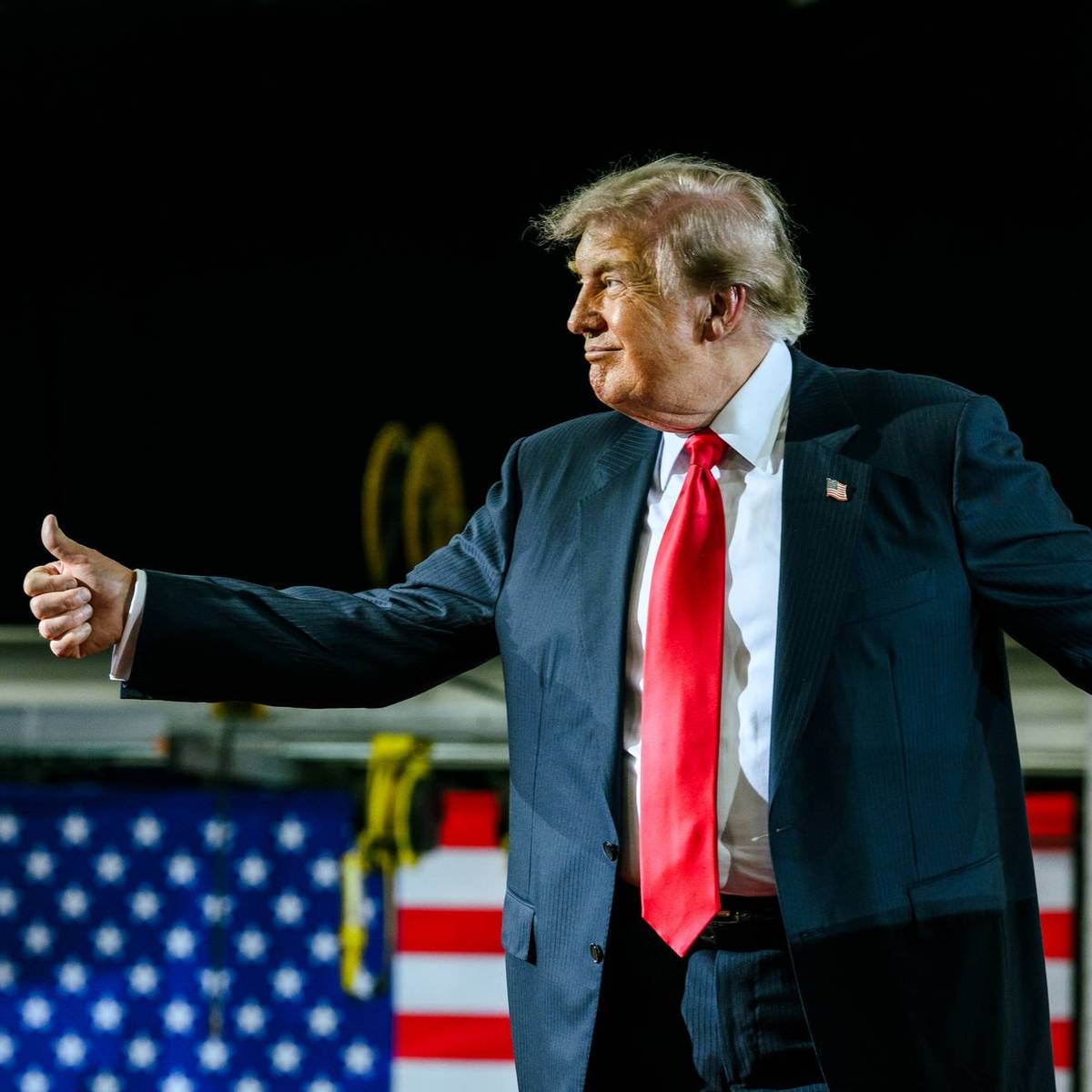
What has been the reaction in Washington and Moscow? Donald Trump posted a screenshot of the election projection without comment on his Truth Social site. The Russian presidential envoy Kirill Dmitriev took a screengrab of Trump’s post and praised a “historic win for the pragmatic AfD”. The AfD is pro-Kremlin, urging a stop to support for Ukraine and pushing for Ukrainians in Germany to no longer receive refugee status.
The new city agency intends to connect workers who want to unionize with resources and organizing contacts, and use worker stories of exploitation to inform policy.
New York City Mayor Zohran Mamdani has established the Office of Worker Power, a first-in-the-nation initiative to connect workers with education, resources, and organizations to help them form a union or demand better working conditions on the job. The office will also allow workers more input into city labor policies and assist them in reporting violations by their employers, Mamdani wrote in an executive order. Julie Su, the deputy mayor for economic justice and a former acting U.S. labor secretary, will coordinate efforts on the office, and Tony Perlstein, a longtime union organizer most recently with the United Auto Workers, will become its first executive director. The staff head count of the office and its budget have yet to be determined. Mamdani signed the executive order in front of workers in the construction, hotel, caregiving, and food service industries. It builds upon a series of efforts to empower workers in New York City, like backing delivery drivers in their fight with Amazon over employee misclassification that denies benefits. The Mamdani administration has secured $104 million in tips for delivery workers by enforcing the law on deceptive tipping practices, and recently partnered with New York County District Attorney Alvin Bragg to enforce laws against wage theft. The announcement also comes on the heels of a new report on inequality in New York City, showing that the top 0.1 percent received more than half of all New Yorkers’ income growth between 2019 and 2024, while real median incomes in the city fell. “History has proven that worker power is the solution when an economy becomes too skewed,” said Deputy Mayor Su in a press briefing. “When workers can organize, everything changes. When they can build lasting, durable power, power that lets them transform their work experience, and by extension their lives, everything changes.” The Office of Worker Power is intended to work across agencies to connect and inform workers. It will not engage in direct union organizing and will not replace any unions or worker centers. Its mission is to help workers who may want a union but don’t know how to go about it with the information they need to get started, as well as the contacts with groups that can assist them further. This, officials said, will give workers the knowledge and the courage to assert themselves on the job. The Mamdani administration also envisions public hearings on worker rights issues and other convenings that bring workers together, along with research that highlights key topics and informs policy proposals for the city council. The communication is intended to be two-way, with workers explaining their challenges to the office and having that lead to policy positions on things like workplace safety, misclassification, the use of new technology like artificial intelligence, or exploitation based on citizenship status. “The Mayor’s Office of Worker Power will make sure workers have a seat at the table before exploitation becomes a crisis and violations become routine,” Mayor Mamdani said in a statement. Perlstein, who will run the office, is a former longshoreman at the Port of New York and New Jersey who became secretary-treasurer of the local longshore worker union. He has a background in organizing workers across several sectors, most recently as a director in the UAW’s organizing department. “I’ve been part of many campaigns, some successful, some not,” Perlstein told reporters. “For me this is not just about the material gains that workers win, but it’s also the transformative process that workers go through as they learn to build together and struggle … through the process of organizing, people transform.”
The executive order also charges Deputy Mayor Su with establishing enforcement principles on worker protections across city agencies, signaling a strong push to hold employers who violate the law accountable. In particular, the order states that city agencies should investigate workplace violations even when no complaint has been filed. Traditionally, agencies have waited for a complaint to start investigating. “Oftentimes the most vulnerable workers do not report,” Su said, citing reasons like fears of retaliation or a lack of understanding about their rights. “So it is not enough for government to simply wait until workers come forward.” The order stresses that companies with large numbers of low-wage workers and “a history of labor violations or other indicators of poor compliance with labor standards” should be prioritized for investigation. In addition, the order seeks to protect workers from being targeted or discriminated against for any reason, but particularly for their immigration status. “The right to organize and … the right to be protected by New York City’s labor laws do not depend on immigration status,” Su said. But the Office of Worker Power, putting the administration in New York City firmly on the side of worker organizing, is the showpiece. Considering that the administration also represents management in negotiations with public employees, it’s an unusual position for a city government, but it’s necessitated, officials say, by the severe drop in union density over the past half-century. New York City has union density among private-sector workers of around 12.5 percent, according to the School of Labor and Urban Studies at the City University of New York. This is far above the national average, but that number was double in the 1980s. “There was a poll taken that 70 percent of Americans support unions,” Perlstein said. “And yet, even in this city, 13 percent are in a union. So there is a huge gap between what workers want and what workers have.” Given the Trump administration’s assault on worker organizing through rulings at the National Labor Relations Board and cutbacks at the Labor Department, a counterweight in the nation’s largest city is vital but also may run into the stone wall that is federal labor law. I asked Deputy Mayor Su about this. “For this mayor, he’s been very clear that we are going to do the right thing regardless of what the federal government does,” she said. “People are also watching what happens in New York City … What is possible when you have a strong municipal government doing the right thing and delivering for the people of a city?”
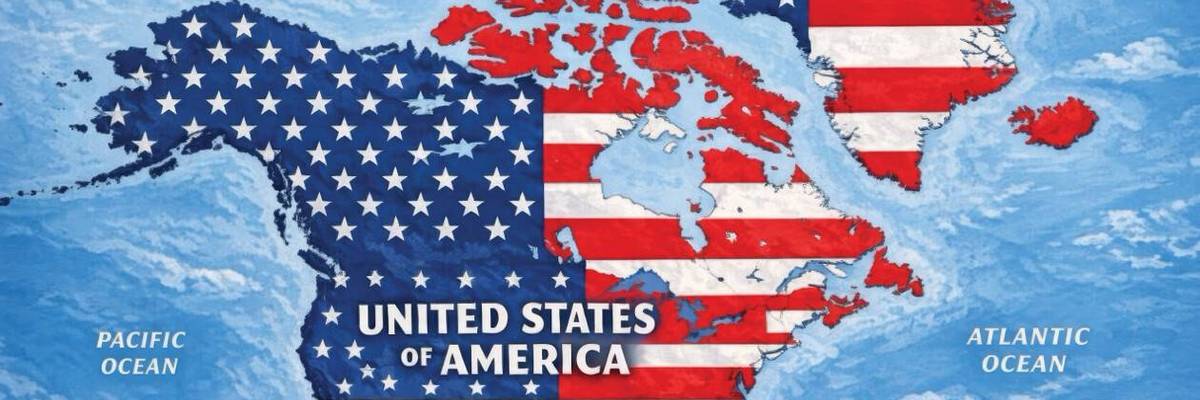
President Donald Trump posted on his Truth Social platform a map showing the US flag over not only the United States but also Canada, Greenland, Iceland, the Caribbean, Mexico, and multiple countries in Central America.
(Image via President Donald Trump/Truth Social)
“As always, he is telling us what the plan is,” said one critic. “We must take it seriously.”
The map on Trump’s Truth Social platform shows the US flag over not only the United States but also Canada, Greenland, Iceland, Mexico, and multiple countries in Central America and the Caribbean.
Journalist Stephen Robinson wrote on X that “another world leader posting something like this would have to apologize before their immediate removal.”
Amy McGrath, a retired Marine fighter pilot and former Democratic US Senate candidate from Kentucky, wondered, “What would we do and say if the Chinese president posted a map of China taking over the Western Pacific?”
Carl Bildt, co-chair of the European Council on Foreign Relations and former prime minister of Sweden, similarly said: “What would happen if Xi Jinping posted a map where [China] has taken over all of East Asia, and [President Vladimir] Putin one of [Russia] having absorbed all of Western Europe? It would have been seen as either insane or dangerous—or both.”
While some critics called Trump “absolutely bonkers” and “f*cking insane,” Dr. Brian Goldman, a Canadian emergency physician who’s also an author and broadcaster, asserted: “That’s not insanity. That’s intention.”
Democratic strategist Michelle Kinney agreed, saying: “As always, he is telling us what the plan is. We must take it seriously.”
Melanie D’Arrigo, executive director of the Campaign for New York Health, suggested that “the reason why Republicans attack education is so that people don’t recognize the history that repeats itself.”
Without directly mentioning Trump or his map, Mexican President Sheinbaum said in Spanish on Monday, “We reaffirm that Mexico is neither nor will be a colony or protectorate of any foreign country. Proudly we are a free, independent, and sovereign nation.”
While Trump is a prolific poster, the map followed a series of posts from Sunday—including other maps and images produced with artificial intelligence—that led progressive influencer Harry Sisson to conclude that the president was “having a mental health episode online” and call for his removal from office.
“This man is unwell. 25th Amendment NOW,” Sisson said, cataloging posts on a range of topics, from Trump’s recent renaming of Lake Ontario amid toughtrade talks with Canada, to the suggestion that New Mexico should be dubbed “New America.”
The latter was ripped by several Democratic officials, including New Mexico’s governor, Michelle Lujan Grisham, who responded that her state’s name “isn’t up for debate—it’s been ours since before the United States existed.”
“What is up for debate? Who’s showing up for working families,” she continued. “While the president tries to distract Americans from his disastrous war in Iran, gas prices keep soaring. Americans are also spending more at the grocery store, losing access to healthcare and wondering if they’ll ever be able to afford a home. Under Democratic leadership here in New Mexico, we’re providing families with free childcare and college, protecting access to healthcare, and investing in housing. While the White House wastes time coloring on maps, Nuevo México is busy doing the work.”
In addition to waging an illegal war on Iran, Trump this term has invaded Venezuela to abduct President Nicolás Maduro and take control of the country’s oil reserves, become the US commander-in-chief to bomb the most countries, and killed over 225 people by blowing up boats allegedly smuggling drugs through international waters. He’s also threatened to seize the Panama Canal and possibly attack nations including Colombia and Mexico.
As Iran has responded to Trump’s war by restricting traffic through the Strait of Hormuz, the president has teased declaring the key waterway a US territory and naming it after himself. He’s also dubbed the Gulf of Mexico “the Gulf of America” and fought to put his name on the John F. Kennedy Center for the Performing Arts in Washington, DC.
With the US midterm elections less than two months away, some Democrats in Congress have stepped up their critiques of Trump’s foreign policy—including a delegation of progressive congressional lawmakers and candidates who headed to Uruguay last month for the third Pan-American Congress.
Shortly after that gathering, delegation member Congressman Jesús “Chuy” García (D-Ill.) stressed that “progressives reject the violent, imperialistic Donroe Doctrine, and believe in a foreign policy rooted in cooperation, diplomacy, and sovereign equality.”
Our work is licensed under Creative Commons (CC BY-NC-ND 3.0). Feel free to republish and share widely.
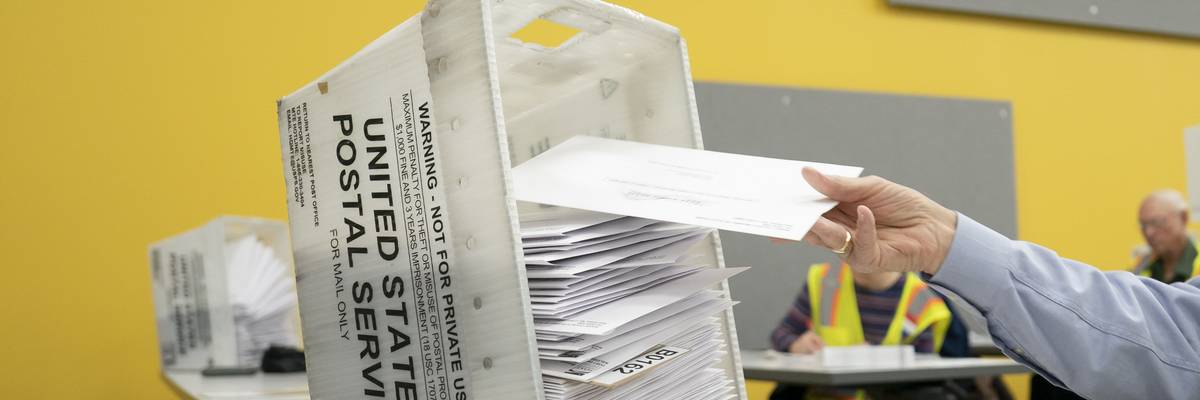
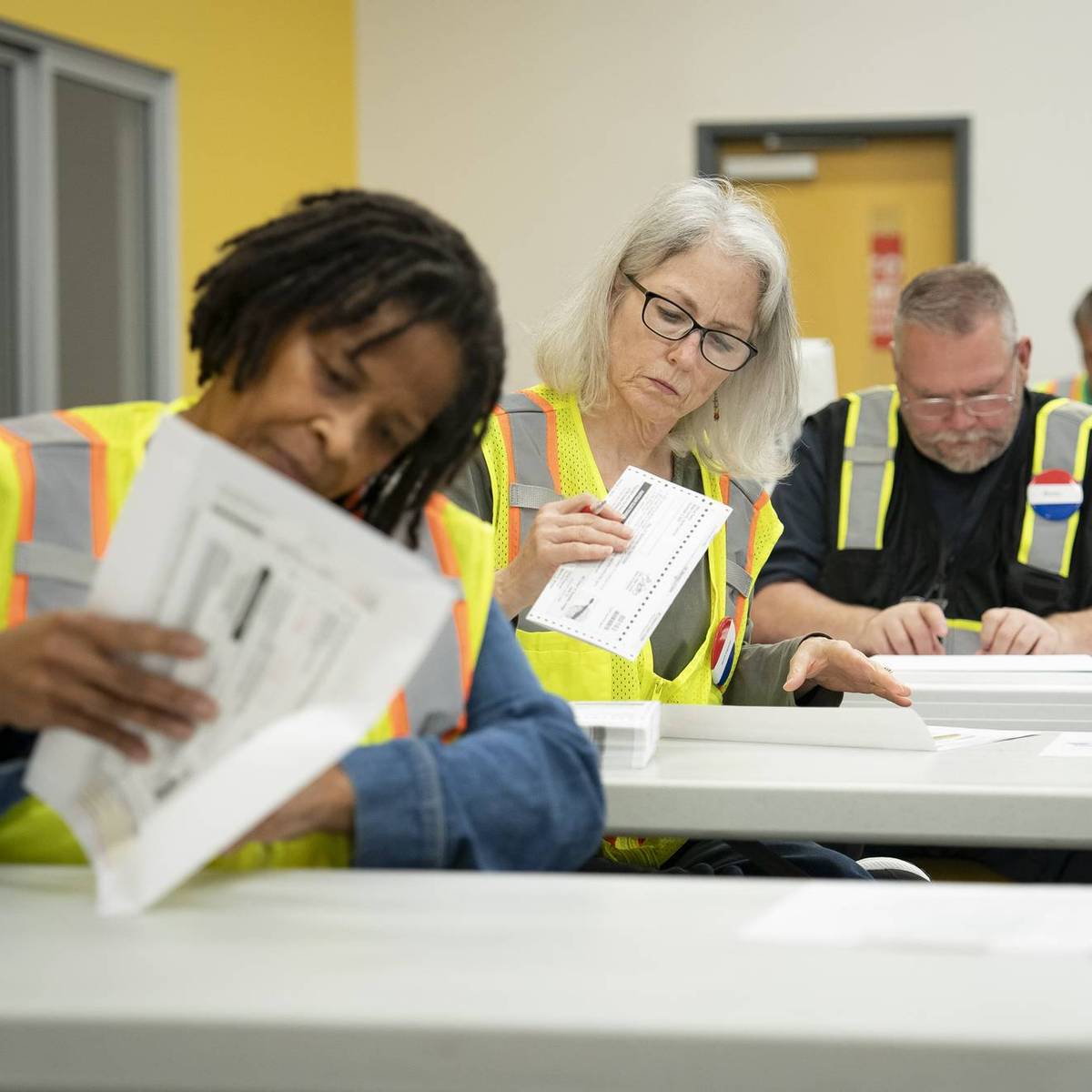
President Donald Trump’s crusade against mail-in voting is running into a brick wall, although many critics are warning that the dangers to democracy are far from over.
The Washington Postreported on Sunday that Trump is “running out of options” to change mail-in voting rules that “don’t involve significant upheaval,” as states have already started sending out ballots to voters.
In March, Trump signed an executive order that instructed the United States Postal Service to not deliver ballots in any states that have not given the federal government access to its voter lists.
However, that order is currently tied up in court, and both Wisconsin and North Carolina last week began mailing out ballots to voters, the Post reported.
Don Millis, a Republican who chairs the Wisconsin Elections Commission, told the Post that “there’s no practical way for Wisconsin clerks to comply” with Trump’s orders, adding that the president’s schemes targeting mail-in voting are likely to “hurt the Republican turnout more than the Democratic turnout.”
However, as noted in a Politico report published on Friday, nine other states are set to send ballots to voters over the next two weeks, which would make a last-minute ruling by the court an unprecedented disruption in the democratic process.
“It would be so outrageous to try to let this go into effect,” Ben Hovland, senior fellow for democracy at the Center for American Progress, told Politico. “It’s hard to even imagine… It would be a break-glass moment for our democracy.”
However, Hovland said that Trump’s election meddling effort could still do real damage to the country because it can “dissuade people from participating or coming out to vote” and “establish a pretext to make bad faith claims about election results.”
Hovland’s concerns about the president’s intentions were echoed in a Sunday report in The New York Times, which found voters across the country expressing confusion about the voting process and anxiety over whether their votes will be counted this year.
Pima County, Arizona Recorder Gabriella Cázares-Kelly told the Times that her office has received a flood of calls from worried voters, and she said that the president’s relentless push to restrict voting by mail has left her unable to provide reassuring answers.
“I wish that I could tell my constituents to not worry,” said Cázares-Kelly, “and I can’t.”
Rich Cooper, elections manager in Clark County, Washington, similarly told the Times he has been unable to ease voters’ worries about what rules will govern this year’s elections.
“The biggest thing they want to know is if things are going to change,” Cooper said of voters expressing concerns. “We have to tell them we just don’t know yet.”
Our work is licensed under Creative Commons (CC BY-NC-ND 3.0). Feel free to republish and share widely.
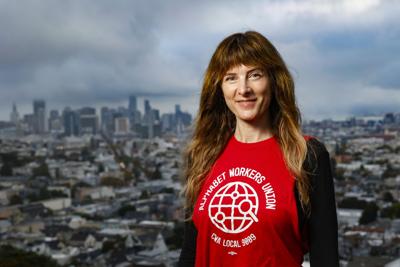
Emma Jackson, who works at Google and is the communications chair for the Alphabet Workers Union: “This is why we need a union — so that we can have solidarity with each other and we have … the infrastructure to support each other.”Craig Lee/The Examiner
Lucas said he’s been in the Bay Area working in the tech industry for 10 years — primarily at startups, but also at one of the big tech companies. He’s worked as a software engineer and managed small teams. Currently, he works for a 500-person company that makes software for biologists.
So far, so normal in Silicon Valley.
But Lucas’ present ambition is a bit different from many of his tech-industry peers, past and present. He isn’t aiming to found his own unicorn or invent some new, mega-popular product or service.
Instead, he’s working to form a union at his company and trying to help other tech workers who have similar ideas.
Lucas, who asked not to use his real name for fear of putting his job at risk, said he sees the organizing efforts as a way for workers like himself to build power, form a community, have more say over their jobs and working conditions — and counter the influence of billionaire tech CEOs and venture capitalists.
“I want the tech industry to serve the community around me,” Lucas said.
“There’s a lot of folks that feel that way,” he said.
California is one of the most union-friendly states in the nation, and the San Francisco region is one of the most unionized metro areas in the state. Despite that, labor organizers have never made many inroads in the tech industry; exceedingly few tech workers are represented by unions or have even been involved in organizing efforts.
Labor activists such as Lucas say they believe the tide is turning. Support for unions among the American public is at its highest level in about 60 years, according to Gallup. Younger workers, which make up much of the tech industry’s ranks, are particularly pro-union.
Meanwhile, the massive layoffs of recent years, the wholesale moves by companies to push artificial-intelligence tools into the workplace and their products, and a growing sense of precarity and powerlessness have spurred some tech workers to look into organizing in their industry, Lucas and other activists say. So, too, have the increasingly close ties between certain companies and the military.
“Most of the people that we get in touch with find us right now, rather than us finding them,” said Joshua Carroll, one of the leaders of the Bay Area chapter of the Tech Workers Coalition, a grassroots group trying to raise awareness of unions among industry workers and help with organizing efforts.
“People are very happy to find out they’re not alone,” said Carroll, a product manager at Google Cloud.
Union efforts and labor activism in the tech industry date back to at least the mid-1970s, when workers at IBM started organizing themselves. Such activity has ebbed and flowed over the years, typically rising amid economic downturns or uncertainty such as the dot-com bust or the Great Recession, said Ron Hira, a political-science professor at Howard University who focuses on labor issues and policies.
But outside of the digital publishing industry, which has seen a slew of unions, few of those efforts succeeded in forming unions that were able to collectively bargain on behalf of workers.
The IBM effort, for example, existed for decades as a member organization that represented workers and pressured management, but it never sought or formed a bargaining unit that was recognized by the company or the National Labor Relations Board. It shut down in 2016 in the wake of job cuts at the company.
Generally speaking, it’s hard to form a recognized union in this country, labor experts say. Companies often fight organizing efforts and frequently retaliate against organizers. Even without that opposition, it can take years to build enough support to win a majority vote within a discrete group of workers.
As union membership has dwindled in the country— compared with its peak in the middle of the last century — fewer people are growing up in union households or know people who are in unions, Hira said. Labor representatives are rarely on TV, he said.
“If you’re not exposed to them, you’re not even thinking that way,” Hira said.
The tech industry has been particularly tough for the labor movement to crack. Even within antiunion corporate America, the tech industry has fought particularly hard against organizing efforts.
But there are plenty of other reasons for the industry’s dearth of unions, labor experts say. Tech jobs have tended to be high paying, with lots of benefits and stock-based compensation offering a chance for even bigger paydays.
That factor has addressed some of the key issues that often prompt workers to organize, noted Marcus Courtney, who helped lead a union effort at Microsoft in the late 1990s and early 2000s.
There are also cultural and class considerations. The industry has long been known for its libertarian streak, and many workers see themselves as individuals who succeed or fail based on their own merit rather than as part of a collective. What’s more, engineers — including computer programmers — identify more as managers or professionals than workers, Hira said.
On top of all that, workers are divided from each other in numerous ways, he said. Tech jobs come in many different flavors and are spread across numerous companies and regions, he said. Even within particular companies, workers are often split between contractors and full-time workers.
All that makes tech workers hard to organize, and the result is that they are among the least unionized workforces in the country. Across all occupations, 10% of workers belong to unions — but as of last year, just 3.7% of computer and mathematical professionals were union members, according to data from the Bureau of Labor Statistics.
“The tech industry is probably the only industry in the history of the United States that [has] … become an industrial pillar of the nation’s economy that is basically union-free,” Courtney said.
Perhaps the surprising development of the most recent effort is that there are now unions at two of the major tech companies.
When Microsoft was trying to buy Activision Blizzard in 2022, it pledged to be neutral toward a nascent organizing drive at the video-game producer and publisher. Thousands of workers at Microsoft’s games units have since organizedacrossmultiple unions.
Workers at Alphabet launched a union in 2021. Unlike the unions at Microsoft, it hasn’t sought recognition by the company or the NLRB. But the Alphabet Workers Union has signed up members from across the country and has successfully lobbied management on behalf of workers, said Emma Jackson, who works at Alphabet-owned Google and is the communications chair for the labor group.
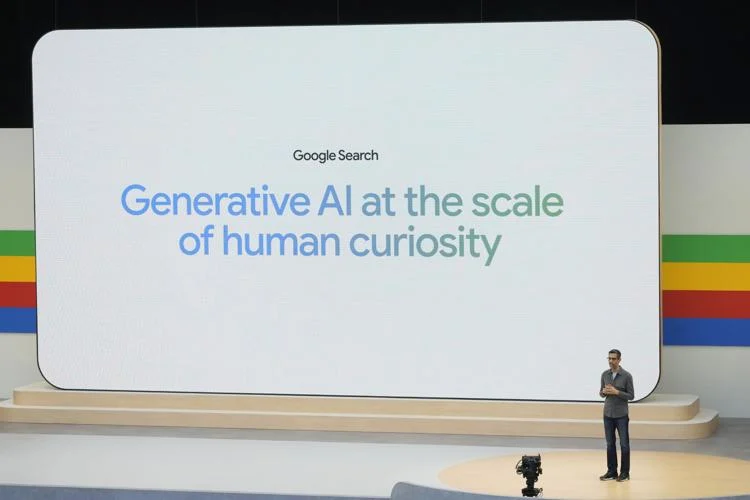
Workers at Alphabet, Google’s parent company (seen during an event in Mountain View in May 2024), launched a union in 2021. In general, tech workers have been slow to unionize, but organizers say they see an opportunity as artificial intelligence takes over the industry.Jeff Chiu/Associated Press
Jackson declined to say how many workers were in the union, but she said it includes both full-time employees and contractors.
As Google has cut staff over the last two years, it has prioritized buyouts — in which employees volunteer to leave in return for severance packages — over layoffs. That came in response to the union, Jackson said.
“While we weren’t across the bargaining table for that, our pressure and our demands helped us win that offer,” she said.
Jackson, who said she has worked at Google for 22 years, had bought into the notion that the company was different. She believed in its initial — and since abandoned — “don’t be evil” motto.
She said she got involved with the union effort in part because she felt like the company had strayed from those values. She was also motivated by seeing how — even after employees tried to hold it to its values — their gains were often short-lived.
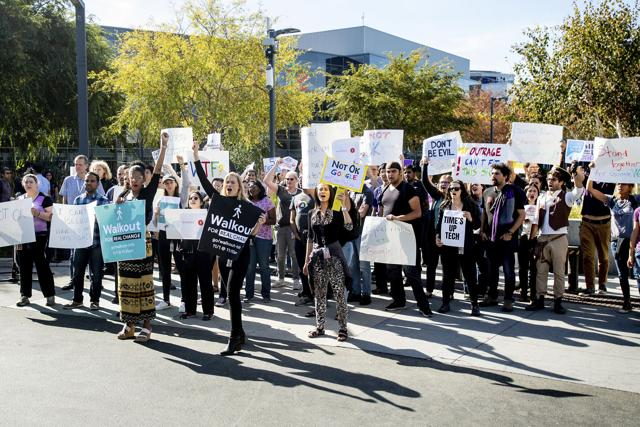
Following a massive walkout by workers in 2018 protesting its handling of sexual-harassment claims, Google ended its policy of requiring arbitration to deal with such incidents. But two of the leaders of the walkout effort alleged the company retaliated against them, a charge it denies.
Workers outside Google’s Mountain View headquarters in November 2018 protest the company’s handling of sexual-misconduct allegations.Noah Berger/Associated Press
Employees at the time didn’t have a union to back them up, Jackson said. She and her coworkers have learned from this experience, she said.
“This is why we need a union — so that we can have solidarity with each other and we have … the infrastructure to support each other,” she said.
In the Bay Area, there are reports of tech organizing beyond what’s happening at Google and Lucas’ company.
Lucas, who is also active in the Tech Workers Coalition, said he is aware of other early-stage union efforts at other companies. Carroll said some coalition members are working to organize inside some of San Francisco’s big tech companies.
Lucas said those efforts are likely going to be slow and deliberate as organizers talk with employees, find out what they’re upset about and build an organization.
Despite his awareness of the past history of union efforts and his own involvement in the movement, Courtney said he thinks now is a propitious time to be organizing the industry, thanks to artificial intelligence. The rapid adoption of the technology has given rise to widespread concern about how it’s affecting jobs and fears that it could lead to mass unemployment.
At the same time, the AI industry is increasingly reliant on unionized workers to build the data centers that will run and train its models, Courtney said. And industry leaders such as OpenAI CEO Sam Altman and Anthropic CEO Dario Amodei have talked about needing to address the potential for AI-induced job losses.
Such factors are creating an opportunity, stoking tech workers’ appetite for organizing, while potentially making companies more receptive to unions, he said.
“I think there’s an opportunity there,” Courtney said.
Here is every Democrat who voted to take funding away from universities that boycott Israel:
Jake Auchincloss (Massachusetts) Kathy Castor (Florida) Gilbert Ray Cisneros Jr. (California) Jim Costa (California) Joe Courtney (Connecticut) Henry Cuellar (Texas) Donald G. Davis (North Carolina) Lois Frankel (Florida) Laura Gillen (New York) Jared F. Golden (Maine) Vicente Gonzalez (Texas) Greg Landsman (Ohio) George Latimer (New York) Susie Lee (Nevada) John W. Mannion (New York) Jared Moskowitz (Florida) Donald Norcross (New Jersey) Jimmy Panetta (California) Marie Gluesenkamp Perez (Washington) Josh Riley (New York) Bradley Scott Schneider (Illinois) Hillary J. Scholten (Michigan) Kim Schrier (Washington) Brad Sherman (California) Darren Soto (Florida) Haley M. Stevens (Michigan) Thomas R. Suozzi (New York) Shri Thanedar (Michigan) Dina Titus (Nevada) Ritchie Torres (New York) Juan Vargas (California) Eugene Simon Vindman (Virginia) Debbie Wasserman Schultz (Florida)
H. Three-quarters of US college students say Israel is committing genocide – September 3, 2026
Chevron Corporate Station 5500 Telegraph Ave (Telegraph @ 55th) Oakland
FIRST SUNDAY OF THE MONTH, 1-3 PM (RAIN CANCELS)
Signs and chants will be provided. Bring your energy and tambourines!
Israel’s genocide machine couldn’t run without power from Chevron. Israel’s war on Gaza and Occupation of Palestine contributes to the climate catastrophe. Chevron supplies light and energy via its operation and co-ownership of two major Israeli-claimed fossil gas fields in the Mediterranean.
Chevron’s extraction activities are funneling millions of dollars in tax revenues to Israeli government coffers, directly fueling Israel’s system of settler colonialism and violence against all Palestinians. In 2022, those revenues amounted to over $462 million.
BDS is a global nonviolent Palestinian led movement, and we demand that Chevron immediately cut its contracts with genocidal Israel, and end its role in climate devastation globally.
Following in the tradition of the anti-apartheid gas station boycotts of the 60s & 70s, Palestinians and allies are building a global movement to hold Chevron accountable for its crimes through a coordinated boycott of Chevron gas stations and products around the world.
Join the campaign: Pledge to #BoycottChevron now at bit.ly/boycottchevron.
2. Sunday, 2:00pm, SF Mime Troupe: WRECKAGE: A Musical Tragicomedy – Mission Dolores Park SF
Mission Dolores Park Dolores Street & 19th Street SF
FREE or donation. Bring your own lawn chair or blanket.
LIVE MUSIC STARTS 30 MINUTES PRIOR TO SHOWS
The Tony Award-Winning San Francisco Mime Troupe Opens their 67th Season with:
WRECKAGE: A Musical Tragicomedy
Hallucinating robots, economic collapse, protesting frogs, people praying for the End of the World. This is not the future, or the democracy, we were promised! But the real question is: When it’s all over will there be enough left to build something new out of this… wreckage?
Join us for a new musical packed with live music, political satire, and the search for hope amid the wreckage.
Written by Michael Gene Sullivan
Music and Lyrics by Daniel Savio
Directed by Lisa Hori-Garcia
Music Direction by Daniel Savio and Will Durkee
Featuring a four-person cast that includes veteran SFMT collective members,
Michael Gene Sullivan, Jed Parsario, Keiko Shimosato Carreiro, and Chloris Li!
Show will also be held on Monday at Dolores Park2:00pm
A Webinar Hosted by Taxpayers Against Genocide Featuring Nida Liftawiya
Nida Liftawiya is a Palestinian refugee living in California on occupied Ohlone lands. She is an activist, artist, educator, and an organizer with the Arab Resource and Organizing Center (AROC). In this webinar, she will share experiences and analysis from recent trips to Palestine and Cuba where she personally witnessed how U.S. tax dollar are fueling genocide and how the people are resisting.
Following her presentation, there will be a discussion about how we, as U.S. taxpayers, can elevate and practice more effective international solidarity at this moment.
Endorsers: Alongside of the Haiti Action Committee and Taxpayers Against Genocide, Bay Area Cuba Solidarity, Task Force on the Americas, Arab Resource Organizing Center, ANSWER Coalition, the All-African People’s Revolutionary Party, and many others.
Join Zoom Meeting 9/7/26 10AM PST/12PM CST/1PM EST
Workers in this country need democratic unions to fight back against union busting employers and a government that wants to eliminate all union and human rights. This panel will have trade unionists who are fighting against concession bargaining, the introduction of AI and robotics that threaten jobs and also top down corporate unionism. This will include Teamsters, SEIU members and other unionists.
5. Tuesday, 12:00Noon – 1:00pm, Canadians Are Not The Enemy! STOP The Trade War NOW! No Tariffs & Trade War With Canada
Middle Harbor Shoreline Park Port Of Oakland 2777 Middle Harbor Road Oakland
Rally & Speak Out
The growing trade war between the US and Canada and the rest of the world is leading to more attacks on working people here and around the world. Canadians are not the enemy. It is the billionaires who run the US and the world who want to pit workers here against workers in Canada and around the world.
This trade war will hurt airline workers, hotel and tourist workers and workers both union and non-union who are connected to international trade. It is an attack on workers on border states and in California and the West Coast who will pay the costs of this anti-working class trade war with more inflation and union busting.
At the same time Trump, who is a racist and fascist is demanding that Canada no longer use French as one of their national languages. This fascist who is using ICE gestapo agents against Black and Brown immigrants is demanding that Canada start attacking their own people to get a trade deal. This use of trade war to create national divisions is part of the game book of fascists and Nazis.
ILWU port workers on the West Coast, Teamsters in the airlines and tourist workers are already facing the brunt of trade war along with increasing costs and inflation making it difficult to live and pay the bills.
The major decline of US capitalism is a direct result of the same billionaires outsourcing our industrial base to China to make more profits.
6. Tuesday, 3:00pm – 10:00pm, Annual 9/11 Truth Film Festival
Grand Lake Theatre 3200 Grand Avenue Oakland, California 94610
Honoring those seeking peace, justice, liberty, and the truth of the events of September 11, 2001 for the past 25 years. Northern California 9/11 Truth Alliance invites you to their 22nd Annual 9/11 Truth Film Festival with films and speakers.
Seeking to cast light on the truth and to deconstruct the lies that lead to wars, loss of civil liberties, the surveillance state, as well as the deaths, displacement, injuries and impoverishment of multitudes and ecological disasters. Showing how truth change this trajectory…
Featured Films Include:
A sneak preview of the new documentary-
The Responders: Breaking the Silence,
The untold story of September 11th, 2001, both from the uncensored experience of the first responders who risked their lives that day and from those who have since responded to the call to speak the truth, whatever the cost…
Four Died Trying [Prologue]
The unflinching examination of the four earthshaking political murders of the 1960s that radically curtailed human progress around the world. The murders of President John F. Kennedy, Malcolm X, Rev. Martin Luther King, Jr., and Robert Kennedy accelerated the United States government’s slide into becoming an imperial power untethered from its founding ideals.
The Demolition of Truth: Psychologists Examine 9/11
Respected social scientists examine America’s cognitive dissonance – its inability to reconcile the observable facts and science of 9/11 with our government’s official story that doesn’t add up.
Speakers Include:
Bruce de Torres, author of “God, School, 9/11 and JFK: The Lies That Are Killing Us and the Truth that Sets Us Free”
Carol Brouillet Co-Founder of the Northern California 9/11 Truth Alliance
Demand that congressional representatives do all that they can to save Temporary Protective Status (TPS),a program that provides protection from deportation to people when it is unsafe to return to their home countries.
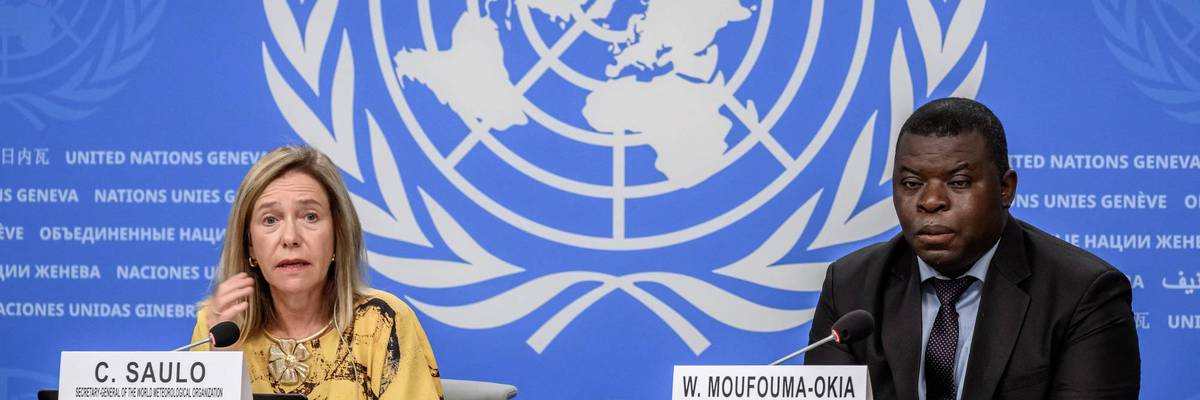
World Meteorological Organization Secretary-General Celeste Saulo and chief of climate prediction Wilfran Moufouma-Okia attend a press conference in Geneva, Switzerland on September 3, 2026.
(Photo by Fabrice Coffrini/AFP via Getty Images)
“The science leaves no room for doubt: the planet is in uncharted waters, and those waters are heating up.”
Officials at the United Nations are warning that governments around the world must urgently prepare for the impacts of an El Niño climate pattern that is being “supersized before our eyes.”
The UN’s World Meteorological Organization (WMO) on Thursday provided an update on El Niño, projecting with near certainty that it would persist at least through Februrary 2027.
El Niño is a phenomenon that produces above-average temperatures in the Pacific Ocean, which then disrupt weather patterns elsewhere in the world. In its update, WMO said that this year’s El Niño projects to be historically intense.
“Forecasts indicate further strengthening of El Niño in the coming months, with the event forecast to reach very strong intensity before peaking towards the end of the year,” WMO said. “A very strong El Niño increases the likelihood of significant shifts in temperature and rainfall patterns in many parts of the world.”
The organization emphasized, however, that El Niño’s impacts are not predictable and vary widely by region.
WMO Secretary-General Celeste Saulo said the latest projections show that El Niño “has the potential to deliver a massive blow to communities and economies across the world” in the form of droughts, floods, and other climate-related disasters made more intense by the continued extraction and burning of fossil fuels.
“This exceptional El Niño demands exceptional preparation and response,” Saulo said. “Never before in the 50-year history of the World Meteorological Organization have we launched such a major mobilization with National Meteorological and Hydrological Services who are on the frontline of delivering the forecasts and services to save lives and livelihoods.”
While speaking with reporters in Geneva, Switzerland on Thursday, Saulo noted that the current El Niño “may be stronger than anything since our monitoring began,” making it “literally off the charts we have used for the past four decades.”
UN Secretary-General António Guterres warned that “El Niño is being supersized before our eyes,” and said the ramifications could be severe.
“The science leaves no room for doubt: the planet is in uncharted waters, and those waters are heating up,” said Guterres. “Sea surface temperatures are rising, temperatures keep climbing, and the world is in the danger zone of extreme weather.”
Daniel Swain, climate scientist at the University of California Agriculture and Natural Resources, echoed UN officials’ warning about El Niño in an interview with Wired published Thursday.
“This is probably one of the larger, if not the largest, climate events… that anybody alive is potentially ever experiencing,” said Swain. “That’s a very big deal. And I think there’s certainly going to be dramatic outcomes from this.”
Our work is licensed under Creative Commons (CC BY-NC-ND 3.0). Feel free to republish and share widely.
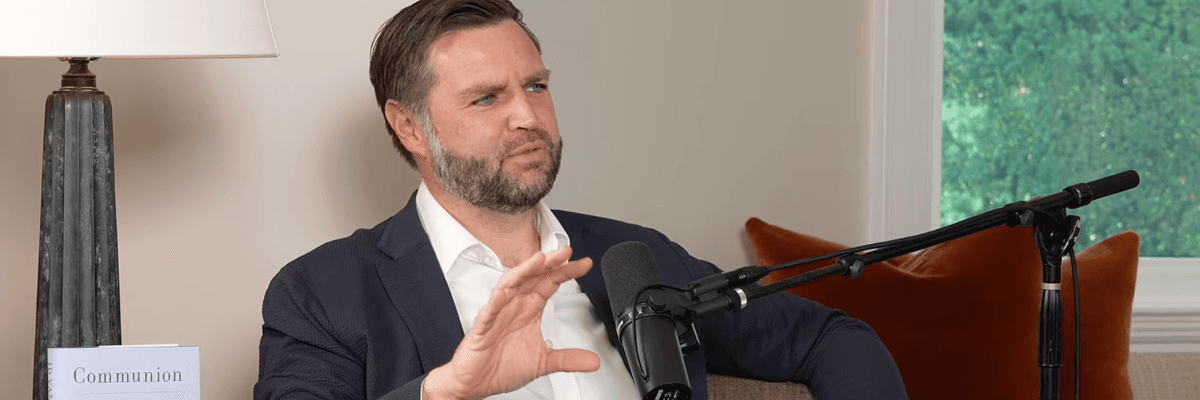
Shortly before US President Donald Trump on Tuesday spurred fresh fears that he’ll use nuclear weapons in his illegal war on Iran, Vice President JD Vance told a Christian podcaster that he’s fine with the administration’s work leading to the end times.
“Do I think that we’re in the end times? I don’t know,” Vance told 22-year-old podcaster Bryce Crawford nearly an hour into a lengthy video interview released Monday. While admitting his fascination with the theories, the VP said that “I think that it’s probably bad for me, spiritually, to focus too much on it.”
As The New Republic’s Ellie Quinlan Houghtaling explained: “The Christian end times refer to the religion’s interpretations of the final days of humanity. That’s detailed in the Bible as a period involving widespread turmoil and deception (such as wars, earthquakes, and a false prophet), a seven-year stretch of unprecedented hardship known as the Great Tribulation that will end in Armageddon, the emergence of the Antichrist and a cadre of their followers who reject Christ’s teachings, and a final judgment by God.”
As Vance sat beside a propped-up edition of his new book on his religious journey, including his conversion to Catholicism, he said that “I think that there are… things about the world that make me feel like not shocked if the Antichrist was walking among us, but again, I try not to focus too much on it.”
“One of the things that I think that Catholics are very focused on, that I think is very good for me, is this idea that… we don’t know when God is coming, but we’re commanded to try to, as much as possible, try to make the world the kind of world that God wants it to be,” the vice president continued.
“While I wouldn’t be shocked if we are living in the end times,” he added, “what I’m trying to focus on is doing as much of God’s work as possible right now, and if that leads to the end times, OK, and if that leads to, you know, us building a better world that thrives and survives for a very long time after I’m gone, that’s great, too.”
Those remarks—from a man expected to compete with figures such as Donald Trump Jr. and Secretary of State Marco Rubio for the GOP’s 2028 presidential nomination, if the president doesn’t try for an unconstitutional third term—were met with alarm.
Critics wrote that “this should concern us all” and wondered: “WTF does that mean? Is he OK with using nuclear weapons?”
Sharing a clip of Vance’s comments on social media, Iranian-American writer Alex Shams noted that “these guys are trying to convince you Iran is ruled by a crazed messianic theocracy.”
Podcaster and writer Katie Halper said, “Show this clip to anyone who says Iran is run by religious lunatics.”
As Vance’s video interview began circulating on Monday, over six months into the Iran War, a reporter in the Oval Office asked Trump if he’s ruled out using a nuclear weapon against the Mideast country.
While suggesting he has ruled out nuclear war, Trump also said: “What a stupid question that is, actually. Here they are, they’re totally defeated militarily, so now I defeat them, and now I should use a nuclear weapon on top of them?”
Just a day later, Trump triggered speculation that he’ll pursue a nuclear attack. On Tuesday, while bombing alleged Iranian military targets, he wrote on his Truth Social platform, “If the failed Nation of Iran retaliates for this very justified attack, they will be hit again at a much harder and higher level, but it will not be the biggest attack of them all, that is waiting in the wings and, when it is over, there will be very little left of the Islamic Republic of Iran!”
Our work is licensed under Creative Commons (CC BY-NC-ND 3.0). Feel free to republish and share widely.
A George Washington University student wearing a graduation cap with the message “Our Tuition Killed Gaza’s Class of ‘25” shouts slogans during a walkout at the National Mall as President Ellen Granberg delivers her commencement address on May 18, 2025.
(Photo by Probal Rashid/LightRocket via Getty Images)
“The goal here is to basically say every university not only cannot refuse cooperation with Israel but must actively seek every opportunity to cooperate with Israel,” said one analyst.
The US House of Representatives on Thursday passed what critics say could be one of the most severe infringements on free expression in recent memory—a bill that could effectively require colleges and universities to do business with Israel or risk losing federal funds.
As Israel’s genocide in Gaza and accelerating ethnic cleansing of Palestinians in the West Bank continue to fuel protests, the bill is the latest piece of legislation aimed at punishing the Boycott, Divestment, and Sanctions (BDS) movement, which uses nonviolent economic tactics to pressure Israel to end its illegal occupation of Palestinian territory and human rights abuses.
HR 4795, introduced in July 2025 by Reps. Virginia Foxx (R-NC) and Josh Gottheimer (D-NJ), is known as the Protect Economic and Academic Freedom Act. But Lara Friedman, the president of the Foundation for Middle East Peace, described it as an “Orwellian” turn of phrase for what the legislation actually does.
“The goal here is to basically say every university not only cannot refuse cooperation with Israel but must actively seek every opportunity to cooperate with Israel,” she told Responsible Statecraft. “And if they’re not doing that, they’re pro-BDS and anti-Israel.”
[The bill] would bar colleges that receive federal funds from engaging in what it defines as a “nonexpressive commercial boycott” of Israel, including “refusals to deal” or terminating business relationships in order to limit commercial ties without a “valid business reason.” The law would require these institutions to submit annual certification that they were giving students and faculty access to academic programs in Israel on the same terms as programs in other countries.
In a brief opposing the bill, Friedman argued that it was not just forcing universities to do business with Israel, but with its settlements in the West Bank, which are considered illegal under international law. With backing from the Israeli state, violence by Israeli settlers against Palestinians in the West Bank has exploded to never-before-seen highs this year, according to the United Nations.
“This legislation,” Friedman wrote, “sets up a situation in which the alleged absence of engagement with any Israeli partner/party, including in settlements, will become the basis for an accusation of boycott, putting universities in the position where, if they universities want to avoid being accused of boycotting Israel/settlements, they will need to adopt an affirmative policy of prioritizing maximal engagement/partnership with Israeli entities (including in settlements).”
The bill passed by a 237-169 vote, with support from all but two Republicans—Reps. Thomas Massie (R-Ky.) and Warren Davidson (R-Ohio). And although the vast majority of Democratic voters now hold negative views of Israel, 33 Democrats also voted in favor of the bill.
The legislation now heads to the narrowly Republican-controlled US Senate, where it would need 60 votes to advance.
Introducing the bill last year, Gottheimer said it was necessary because BDS was an “antisemitic, hate-fueled… movement” that “seeks to destroy Israel—and has no place on our college campuses.”
But even critics of the BDS movement, like Rep. Jerry Nadler (D-NY), chafed at its potential chilling effect on protected speech.
“No matter how strongly I oppose the BDS movement, I also believe that those who engage in BDS have a First Amendment right to do so,” Nadler said before voting against the bill. “The First Amendment right to free speech does not apply only to agreeable speech.”
He cited a letter sent to Congress by the ACLU opposing the bill’s contention that schools should need a “valid business reason” to cut ties with Israel.
“Many of those engaged in boycotts of Israel do so not for commercial reasons, but because they wish to express their political opposition to the policies of the Israeli government—matters of overwhelming public concern and debate in the present moment. HR 4795’s labeling such boycotts as ‘non-expressive’ does nothing to change this reality,” the letter said.
The bill comes as members of Congress, especially Democrats, are under increasing scrutiny for their support from pro-Israel lobbying groups like the American Israel Public Affairs Committee (AIPAC), whose political spending arm has poured more than $104 million into supporting its preferred candidates this election cycle.
Meanwhile, President Donald Trump has spent more than six months embroiled in a costly war with Iran that Israeli Prime Minister Benjamin Netanyahuplayed a key role in persuading him to launch.
"Let's leave universities alone."
A bill coming up for a vote in the House would deny federal funding to any university that chooses to divest from Israel, Israeli companies, or Israeli institutions — including those in the occupied West Bank and settlements.
“We just got dragged into a war by Benjamin Netanyahu. He’s bragging about it,” Rep. Mark Pocan (D-Wis.) told Julian Andreone of Drop Site News. “That’s about as embarrassing as you can get… So let’s leave universities alone.”
Aaron Regunberg, a contributing editor at The New Republic, described it as outrageous that Democrats who supported the bill were “actively joining the far-right’s war on higher education in order to shield a genocidal ethnostate that most Americans increasingly want nothing to do with.”
Dylan Williams, the vice president for government affairs at the Center for International Policy, said the bill was “another effort to single out Israel for special treatment and erode Americans’ rights on its behalf.”
“Will it be your child who can’t afford to go to college after 33 Democrats voted with Republicans to help Trump defund US universities? Because it certainly won’t be any of theirs,” he said. “Shame on them for joining the attack on our schools and constitutional rights on behalf of Israel.”
Our work is licensed under Creative Commons (CC BY-NC-ND 3.0). Feel free to republish and share widely.
THURSDAY, JUNE 29, 2023 AT 2 AM – 4 AM PDT How to create trust in a group? Details Event by Extinction Rebellion Empathy Circles online EMPATHY CAFE Duration: 2 hr Public · Anyone on or off Facebook How to create trust in a group? This is the question that arose in our... Continue reading →
The San Francisco Democratic Party presents The San Francisco Democratic Party 2026 Gala Thursday, September 10th 6:00 – 10:00 PM Bimbo’s 365 Club 1025 Columbus Ave San Francisco, CA 94133 TICKETS https://www.sfdems.org/gala2026
Public Banking Coalition monthly meetings Next call: Nov 11 Excitement is building for public banking and once a month, PBI hosts an hour-long Public Banking Coalition online meeting to share the excitement and successes. Find out the latest updates on the advances being made all across the country from local advocates themselves... Continue reading →
Trump Regime Takedown: Every Saturday Saturday, March 7, 2026 12:00 PM 2:00 PM Tesla San Francisco999 Van Ness AvenueSan Francisco, CA, 94109United States (map) Google Calendar ICS Keep democracy alive every Saturday by showing up, taking a stand, and sticking together for the long haul. Standing together is better than standing alone. Let’s get together... Continue reading →
This Sunday’s Town Hall: Announcing This Week’s Progressive Town Hall: Every Sunday at 4pm ET/1pm PT RSVP HERE Join PDA activists online from across the country to discuss the importance of progressives reclaiming the American story from the MAGA right, an issue of heightened importance as we’re now within one... Continue reading →
We protest Heritage Foundation EVERY MONDAY (Join us!!!!) By admin | September 2, 2025 | Uncategorized Cliff Cash Comedy Premiered Jul 26, 2025 Every Monday at The Heritage Foundation 214 Massachusetts Ave. Washington D.C. 4pm protest 6pm pizza Every Friday at Fox News D.C. 400 N. Capitol St. Washington D.C. 4pm protest 6pm pizza We are... Continue reading →
There are less than 9 weeks until the critical November election, and what we do between now and then will shape the future of our health care. We started Nurses for Democracy to fight back against fascism and protect our democracy, but also to elect candidates in key races who are committed... Continue reading →
September General Membership Meeting *We will be voting on November Election endorsements for state propositions!* Date: Tuesday, 15 September, 2026 (third Tuesday of month) Time: 7-9 PM *NEW* In-person Location: Women’s Building (3543 18th St), Audre Lorde Room Remote: Via Zoom Link Here
Join us in person for a deep discussion on the upcoming November election. We’ll break down what’s on the ballot, why it matters, what you need to know before you vote. Featuring: Juliet Williams, CalMatters Ben Trefny, KALW Public Media Lila LaHood, San Francisco Public Press This election is pivotal.... Continue reading →
One Million Rising: Strategic Non-Cooperation to Fight Authoritarianism Virtual Event · Hosted by No Kings Time Wednesdays 8 – 9:30pm EDT Location Virtual event Join from anywhere About this event Across the country, authoritarian forces are getting bolder and more dangerous. Trump and his allies are not hiding their agenda: mass deportations,... Continue reading →