“As an adjudicated insurrectionist, Trump is an illegitimate president according to Section 3 of the 14th Amendment, and therefore every official act as president will be illegitimate.”
–Mike Zonta, co-editor of OccupySF.net
The 14th Amendment states: “No person shall be a Senator or Representative in Congress, or elector of President and Vice President, or hold any office, civil or military, under the United States, or under any state, who, having previously taken an oath, as a member of Congress, or as an officer of the United States, or as a member of any state legislature, or as an executive or judicial officer of any state, to support the Constitution of the United States, shall have engaged in insurrection or rebellion against the same, or given aid or comfort to the enemies thereof. But Congress may, by a vote of two-thirds of each House, remove such disability.”
Call your Congressperson and your U.S. Senators at (202) 224-3121
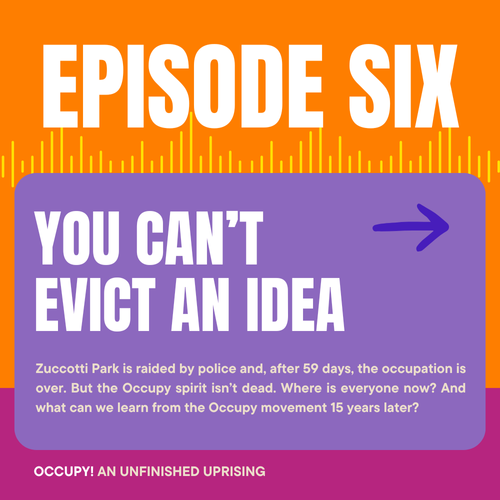
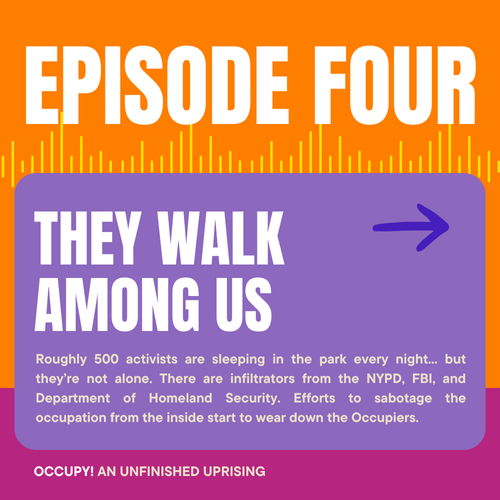
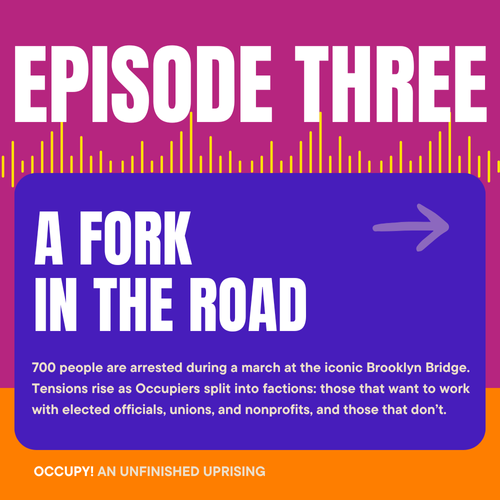
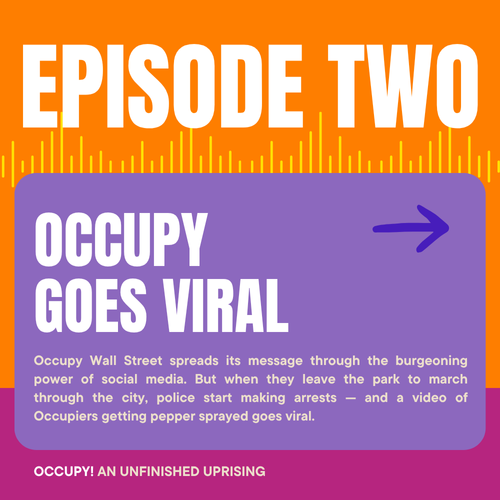
The story of the improbable becoming possible — told by the people who slept in the park.
About The Series
In 2008, a Wall Street crash gutted millions of lives. It took until 2011 for the Left to answer — a call to protest went out, thousands came, and they tried to build an anti-capitalist village in a small Manhattan park.
Told through the voices of activists who camped in Zuccotti Park for almost two months, Occupy! An Unfinished Uprising gets inside a movement that grew fast, felt transcendent and chaotic at once, and then violently flamed out. The press called it a failure. It changed the national conversation about capitalism, gave us the language of the 99%, and trained a generation of organizers.
As Occupy’s 15th anniversary arrives this September, it’s a reminder that collective action can still reshape what looks impossible.
Voting early gives us the power to make our voices heard on our own terms, before Election Day and before anyone else gets to decide what happens next. But making a plan takes more than intention. It takes information and resources.
Below are some resources to help you know your rights, make your plan, and get help if you need it, before October 17 and beyond.
Make Your Voting Plan
*COMING SOON* Vote Early Day: Make Your Plan
A full slate of tools in one place: check your registration, find your polling place, request an absentee ballot, or look up early voting hours where you live.
Check Your Voter Registration
Make sure you’re ready to vote by checking your voter registration and making sure it’s up to date, to help avoid issues when you go to vote early.
Voter ID rules are different in every state. VoteRiders breaks down exactly what you need to bring to the polls where you live, and connects you with free help if you need an ID.
Run by a coalition of nonpartisan legal organizations led by the Lawyers’ Committee for Civil Rights Under Law, the Election Protection Hotline connects you with real people who can answer voting questions and help if something goes wrong, before and on Election Day.
We know voting can raise a lot of questions, especially when the rules are different depending on where you live. Below are answers to what people are asking most about No Kings: Vote Early, how to make your plan, and what to expect on October 17.
Can’t find what you’re looking for? Reach out to the Election Protection Hotline above and a real person will help you out.
What makes No Kings: Vote Early different from past No Kings mobilizations?
Why October 17?
What about states that don’t have early voting?
No Kings events are nonpartisan and are designed to increase participation from all eligible voters.
A core principle behind all No Kings events is a commitment to nonviolent action and no civil disobedience. We expect all participants to seek to de-escalate any potential confrontation with those who disagree with our values and to act lawfully at these events. Weapons of any kind, including those legally permitted, should not be brought to events.
In one of the most expensive cities in the world, some parcels of land have sat empty for years — as if to mock housing-seekers desperate for more options.
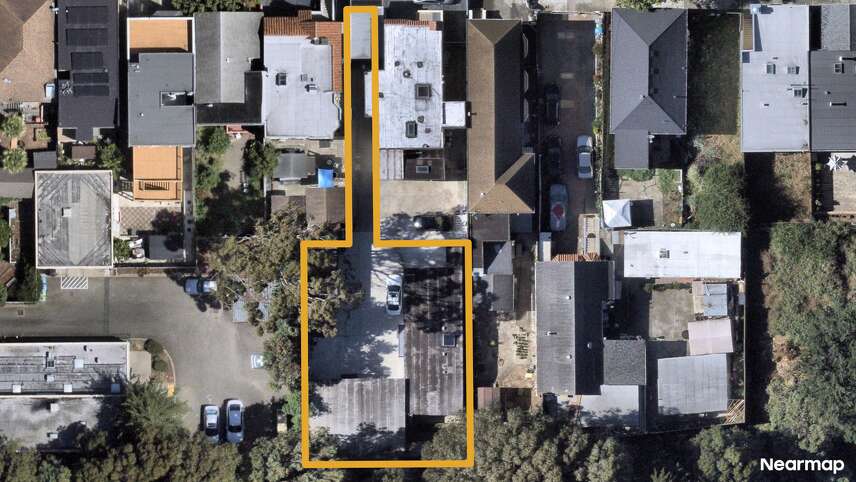
Take 1125 Market St., an empty 12,000-square-feet lot that hides behind a wall of boards directly across from Civic Center Plaza. The parcel sticks out like a missing tooth, yawning between two four-story buildings. But the vacant lot, which has remained undeveloped since the Embassy Theater was demolished 30 years ago, is not the only one of its kind.
Out of the city’s roughly 230,000 active parcels, about 2,000 privately owned lots sit undeveloped. That means less than 1% are vacant, according to a Chronicle analysis of data from the San Francisco Planning Department. But in a city where squares of dirt are worth seven figures, and where the city is trying to boost housing production to meet demand, why are any lots empty at all?
The list of potentially vacant lots the Planning Department gave us isn’t perfect. Some lots are obviously not vacant, while others are active streets or passageways. A few lots were literally underwater.
We removed parcels that probably aren’t vacant, as determined by us or the Planning Department, as well as publicly owned ones. We also added in a few that were excluded from the original data. That gave us these 2,000 parcels, out of an original 5,000.
Even with this slimmed-down list, some vacant parcels aren’t eligible for housing at all. Lots like this one are zoned for “production, distribution and repair,” a district the city created in the early 2000s in an attempt to protect blue-collar jobs by banning new housing and large offices.
Others have likely remained empty because of their shape or position. These can be super narrow, surrounded by other buildings or just plain tiny. In some cases, the owners of these lots even stop paying property taxes on the land, eventually allowing the city to auction off the parcel.
Yet other pieces of empty land are actively being used, often as private parking lots, driveways or yards. While they may not be ideal building locales, recent changes to state housing laws have made it easier for homeowners to construct small units on their adjacent lots.
There are signs of growth on some vacant parcels. A developer has received a permit to build a fourplex on an empty infill lot at 1750 Oakdale Ave.
Others are stuck in the development pipeline. A developer demolished three structures at 360 Fifth Street several years ago, intending to build apartments. The hole in the ground later became a swamp, though a new developer aims to build an eight-story tower there.
When the opportunity to develop one of these lots arises, developers can have a field day.
“Every time a client calls us saying, ‘I have a vacant lot,’ the smile grows on my face,” said Geoff Gibson, whose firm is developing the 1750 Oakland Ave. project. “We have a lot more elbow room of what we can do.”
All else being equal, it’s usually easier to build on a vacant lot than one that already has a structure. An empty parcel means no demolition, which can be costly. And San Francisco generally requires developers to replace affordable or rent-controlled units they demolish.
But changes to local and state housing laws have made it easier to replace single-family homes and small storefronts with multifamily buildings, meaning vacant lots don’t quite carry the advantage they used to, Gibson added.
Still, some experts say vacant lots will have a role to play in providing more homes. Emmanuel Proussaloglou, who helped lead aproject identifying empty lots in Los Angeles that could be turned into middle-density buildings, explained that building on undeveloped land allows builders to sidestep potential displacement impacts, unlike redeveloping a property with an existing residence.
“It’s not that every development always needs to happen on vacant land, but we think that’s the door that’s a little bit ajar,” said Proussaloglou, who co-directs UCLA’s cityLAB think tank.
But as the Planning Department argues, there just aren’t many vacant lots left in San Francisco, and that many of those that do exist aren’t necessarily primed for construction — the tiny slivers of land squeezed between more regular parcels, for example.
And there’s plenty of reasons why even parcels well-suited for development remain unbuilt, said Mike Reilly, a housing data scientist for the UC Berkeley-affiliated Terner Labs. Some might serve as a backyard or other open space. Parking lot owners might prefer their regular income and low upkeep over selling to a developer. A few could be holding out for land prices to rise even more.
To those owners, “that vacant lot is useful as it is — vacant,” Reilly said. “It might not make sense to you and me, but to the person who owns it … they want it that way.”
If San Francisco seriously wants to expand its housing supply, it can’t depend on a handful of vacant parcels alone: The city is going to have to demolish some existing buildings if it wants to tackle its housing shortage, Reilly said.
But that’s a whole other can of worms. Demolition, Reilly said, tends to raise fears of displacement and loss of neighborhood character.
In a city that generally loves how it looks, Reilly added, demolishing old buildings to make way for new ones “is a pretty sensitive topic.”
Are there vacant lots you know about that aren’t on this list? Or do you see lots we’ve erroneously displayed as vacant? If so, please write to Harsha Devulapalli (sriharsha.devulapalli@sfchronicle.com) or Christian Leonard (christian.leonard@sfchronicle.com).
Use ⌘ + scroll to zoom the map
Addresses may only be approximate in some cases. Map: Harsha Devulapalli and Christian Leonard/S.F. Chronicle • Source: San Francisco Planning Department
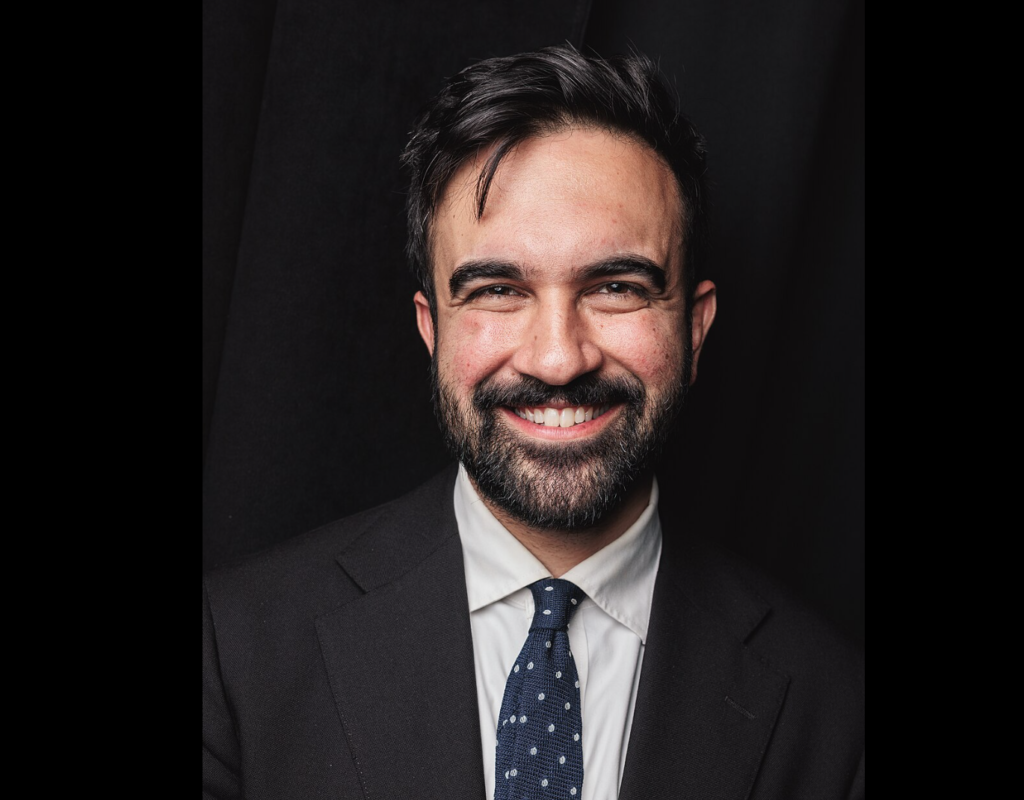
Castro small business owner Jeffrey Wang, left, whose store, Entour, is closing, talked with District 8 supervisor candidate Emanuel “Manny” Yekutiel, who stopped by with former supervisor Bevan Dufty during a September 1 tour of the LGBTQ Neighborhood. Photo: JL Odom
There’s a simple way to get a sense of a place: Go there.
San Francisco District 8 supervisor candidate Emanuel “Manny” Yekutiel recently did just that, spending a sunny Tuesday afternoon walking Market, Castro, and 18th streets to get a firsthand look at one of the LGBTQ neighborhood’s most visible problems: vacant storefronts.
Accompanied by campaign staff, civic leaders, and business owners, Yekutiel stopped at empty storefront after empty storefront, noting their locations, discussing what they could become and keeping count.
He’s determined to bring an end to the vacancies that have become fixtures along the Castro’s commercial corridors.
“This is the beginning of the final chapter of all these vacancies,” Yekutiel said. “We’re all collectively witnessing them.”
Yekutiel’s September 1 walk came just days after the San Francisco Democratic Party narrowly endorsed him in the race for the open District 8 seat on the Board of Supervisors, a closely watched contest on the November 3 ballot, as the Bay Area Reporter previously reported.
The party’s Democratic County Central Committee voted 12-10 after three rounds of voting to sole endorse Yekutiel rather than make no endorsement. The D8 seat is being vacated by termed-out gay Supervisor Rafael Mandelman, currently board president, who endorsed Yekutiel early in the race and has continued to support him after gay San Francisco resident Brad Chapin accused Yekutiel of sexually assaulting him at a private party in 2020. Yekutiel has strongly denied the allegation.
Yekutiel, who owns an eponymously named cafe and events space in the Mission District, centers on three priorities in his campaign plan for vacant storefronts: working directly with landlords to identify prospective tenants and reduce unnecessary red tape; supporting temporary pop-ups while permanent tenants are found; and strengthening the city’s vacancy tax to discourage property owners from leaving storefronts empty indefinitely.
His campaign has identified 63 vacant storefronts across District 8. Joel Gentes, the campaign’s director of technology and data, rode his bike throughout the district, photographing empty storefronts and recording their addresses before compiling the information into a spreadsheet.
“We physically went throughout the district because there were no good data sets that were publicly available – we created our own,” Yekutiel said.
The campaign will also compare its findings with the Castro Merchants Association’s list of vacant storefronts. But, as the B.A.R. has noted in previous coverage, the number of such vacancies is fluid and somewhat misleading, as spaces that appear empty sometimes have been leased to new tenants whose openings can be delayed by either construction or permitting issues.
Nate Bourg, a gay man who is the president of the Castro Merchants Association and co-founder of The Academy, a private social club, expressed support for Yekutiel’s approach during the walk. (The merchants group does not endorse candidates in political races, though Bourg has personally endorsed Yekutiel in the contest.)
“It’s really exciting how many opportunities there are in the Castro to fill, especially some of the notable vacancies, but even down to the smaller ones,” Bourg said. “We’re not going to make big progress if we think incrementally.”
Now that the campaign has pinpointed the locations of the vacant storefronts, Yekutiel said the next step is to contact the landlords behind each to learn the backstory.
“We want to understand why it’s vacant, if they’ve actively been trying to see tenants, if there’s an issue with the city, [or] if there’s a physical infrastructural issue with the space,” said Yekutiel, who rented a former bank location on 24th Street in Noe Valley for his campaign headquarters.
Sign up today to receive trusted LGBTQ news in your inbox.Please select the newsletters you’d like to subscribe to:Bay Area Reporter newsletterNews is Out weekly newsletterBay Area Reporter health newsletterSubmit
Yekutiel said his campaign is focused on storefronts without active businesses, even if a space has technically been leased.
“From the perspective of a resident, I think a vacancy is a vacancy, so it’s really about having them be filled,” he said. “Sometimes you can have a storefront that’s leased, but they never actually move in, or it takes years to get the construction done, so I still consider it vacant.”
Some previously empty storefronts elsewhere in District 8 have recently been filled, he noted, including the former Pharmaca Integrative Pharmacy space in Cole Valley, now home to Double Black SF cafe, and the long-vacant 24th Street Cheese Company space in Noe Valley, where Sala Thai Massage was approved to open last September by the city’s planning commission but has yet to do so. New storefronts have opened in Glen Park as well.
“There’s been some action in the outer neighborhoods – we’ll have to see how the Castro compares,” Yekutiel said.
The early legwork, he said, is intended to give him a head start if voters elect him.
“We don’t want to have to do all this work starting in November – we want to have it all ready so that we can get to work as soon as possible,” he said.
Yekutiel supports converting underused sites along Castro and Market streets – including existing gas stations and the long-vacant Pottery Barn site at the intersection – into housing.
During the walk, Yekutiel stopped at a particularly dilapidated storefront at the corner of Sanchez and Market streets. The space was boarded up and covered in graffiti, as work to demolish it for new housing has stalled. (Plans to turn the prominent corner space into a mixed-use development with apartments over retail have been in the works for more than a decade, as the B.A.R. noted in a 2016 story about several housing redevelopments proposed for upper Market Street in the Castro, with SF Yimby noting in 2024 that construction on an even larger building at the site was to begin earlier this year.)
“It’s in the middle of the district – a prime location,” Yekutiel said. “It’s been vacant for years and years and years, basically functioning as a parking lot. It should be housing with a ground floor for a retail establishment, restaurant, nightclub, or something [else].”
He also wants to help businesses open in vacant storefronts through grants of up to $100,000, which could be used for construction, materials, or other costs associated with getting a business up and running.
Other proposals include simplifying zoning rules that make it difficult to open businesses in neighborhood commercial areas and offering tax incentives to businesses that stay open later. His broader platform calls for a 4 a.m. closing time for bars, 24-hour Muni service and cleaner, safer and more vibrant streets.
He has his eyes on rebuilding and renovating Harvey Milk Plaza and Jane Warner Plaza as well. The Friends of Harvey Milk Plaza has spearheaded a renovation for Milk plaza above the Castro Muni Station that is expected to break ground later this year, while a decadelong-planned new four-stop elevator within the public parklet for the subway station is scheduled to open this fall.
As for Jane Warner Plaza across the street, Mandelman had city transit officials draw up potential plans for how to revamp the outdoor piazza carved out of a section of 17th Street between Castro and Hartford streets. As the B.A.R. reported two years ago, the suggested ideas would cost millions of dollars to implement, with no funding source secured at the moment.
“We’d work with the community to figure out what the community wants, but, in my mind, I feel like finding a way to change the F-line [streetcar] turnaround so it’s not through Jane Warner Plaza,” said Yekutiel, who previously served on the San Francisco Municipal Transportation Agency’s board of directors.
His vision includes removing the rails, raising the concrete, and creating “an actual plaza” with landscaping, seating, activations, and entertainment, including music and theater performances.
District 8 supervisor candidate Darshini Patel. Photo: Courtesy the candidate
Fellow District 8 candidates weigh in Yekutiel’s approach to vacant storefronts is not unique among the District 8 candidates in that all seek to address the issue head-on.
District 8 candidate and Noe Valley resident Darshini Patel, a bisexual and queer woman who used to work at DoorDash, said the city first needs to better enforce its existing vacancy tax and close loopholes that allow some persistently empty properties to avoid it.
“My understanding is the city largely tracks vacancies based on that vacancy tax,” Patel said in a phone call with the B.A.R. “Because they’re not enforcing it, we actually don’t have an accurate count of how many stores are vacant.”
She said the city should also work more closely with merchants who are already tracking vacant storefronts themselves.
“I know that, at least in the Castro, some of the merchants here have started their own database where they’re tracking which stores are vacant and which have been vacant for a while,” said Patel, who is renting a vacant retail space on the 500 block of Castro Street for her campaign headquarters. “They have a more robust system than what the city does, which is unfortunate.”
She wants to pair that focus on stronger enforcement with an expansion of the city’s Vacant to Vibrant program , which helps activate empty storefronts with temporary businesses.
She also proposed a community fundraising model in which residents could raise money for projects and receive matching public funds, allowing vacant spaces to be used for more than traditional retail.
“It could be performance spaces if we wanted,” she said. “Maybe someone wants to help to raise funds for a short-term gallery. It could be any number of things – it doesn’t have to be stores.”
For the long-vacant Pottery Barn space on Market Street, Patel said she would want to involve the community before deciding what should go there. One possibility she has explored is a daytime drop-in center for unhoused people, offering a community lounge space, showers, and laundry facilities. The site has been eyed for various uses, such as affordable housing or a LGBTQ cultural institution, but the property owner has sought too high a price for the city to purchase it, Mandelman said during a discussion several years ago.
“We talk a lot about how to get people off the street, but then not enough about how do we then help them find and maintain jobs so they can earn a living and stay off the street,” Patel said.
District 8 supervisor candidate Gary McCoy. Photo: Rick Gerharter
District 8 candidate Gary McCoy, a gay longtime political aide to Congressmember Nancy Pelosi (D-San Francisco) who’s on leave from her healthcare campaign, said the city should both penalize property owners who keep storefronts vacant and create incentives for them to fill the spaces, even temporarily. He leased a vacant retail space fronting Jane Warner Plaza for his campaign headquarters.
“A lot of the challenge – in the Castro in particular – is that we’ve got two or three property owners that just refuse to rent out their property and it’s been sitting vacant [and] boarded up for a very long time,” McCoy said in a phone call with the B.A.R.
McCoy said he has seen the problem firsthand. While serving as Pelosi’s political director, he helped look for space for her Castro volunteer hub. The campaign used Les Natali’s space at 541 Castro on a month-to-month basis for several years, McCoy said, but the property owner declined to negotiate a longer-term lease because he was holding out for a formula-retail tenant.
In addition to finding ways to encourage property owners to make their spaces available, including for short-term pop-ups for artists, entertainers, and startups, McCoy said the city also needs to do more to help existing small businesses stay open.
“I want to look at what we can be doing for them in terms of potentially reforming a lot of the annual permits that are required for them and see where we can waive fees on some of those and eliminate the ones that aren’t posing any type of safety concerns,” he said.
He pointed to Castro Coffee Co. and Castro Nail Salon, small businesses he said he helped try to keep in the neighborhood after they struggled to find suitable long-term leases. Castro Nail Salon eventually moved to 18th and Eureka streets, while Castro Coffee Co. moved into a smaller space on Castro Street. Both businesses previously flanked the Castro Theatre, as the B.A.R. previously reported. Their leases were not renewed by the Nasser family that owns the historic movie house, which includes the storefronts.
McCoy is widely viewed as Yekutiel’s strongest challenger and has secured endorsements from both of San Francisco’s leading LGBTQ political clubs, the Alice B. Toklas and Harvey Milk LGBTQ Democratic clubs. Alice endorsed McCoy outright, while Milk designated him as its first choice, as previously reported by the B.A.R.
District 8 supervisor candidate Michael Trung Nguyen. Photo: Courtesy the candidate
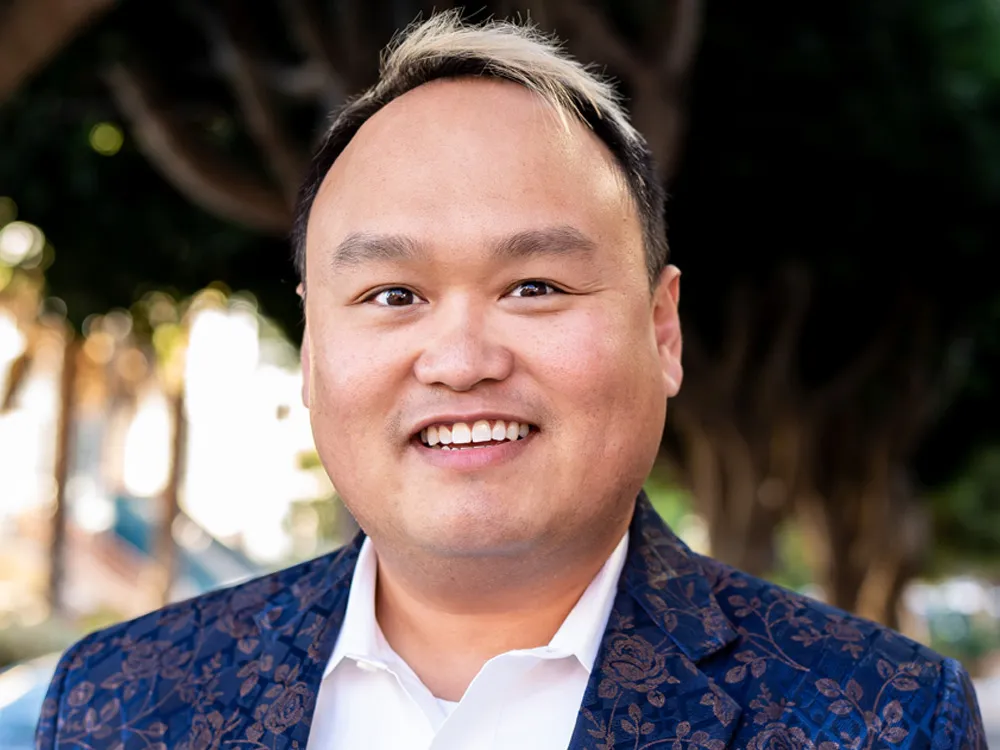
District 8 candidate Michael Trung Nguyen, a gay patent attorney also known by his drag persona Juicy Liu, received Milk’s second-choice endorsement in the race, which will be decided by ranked choice voting. He has yet to announce finding a space to rent for his campaign, recently telling the B.A.R. there weren’t many good options to do so in the supervisorial district.
Commenting on the need to fill retail vacancies to create a safer district, Nguyen echoed Patel’s support for the city’s Vacant to Vibrant program.
“D8 has 63 empty storefronts right now, and every one of them is a corridor that’s less safe and less alive,” he wrote in a statement to the B.A.R. “I’ve proposed a Vacant to Vibrant program that extends city investment and support to a full two years, instead of the current three months, so small businesses actually have a shot at getting established. I’d pair that with commercial rent stabilization, so existing businesses aren’t priced out the moment their lease turns over.”
“Active storefronts are also a public safety strategy. Well-lit corridors with real foot traffic give us the eyes on the street that actually keeps people safe, and that’s the kind of vibrancy I want to bring back to our commercial corridors,” he continued.
Envisioning future occupancies Those who joined Yekutiel on the Castro walk had their own ideas for what the vacant storefronts could become: a doughnut shop, a coffeehouse, a new restaurant.
Suzanne Ford, who is the executive director of San Francisco Pride and the first trans woman to hold the office, said she would like to see a treatment center open in the Castro, as well as a trans-owned business. She emphasized that she was at the walk in her personal capacity and not representing SF Pride.
“[It] would be revolutionary,” Ford, a Castro resident, said of a trans-owned establishment.
In fact, the Lobby bar on 18th Street across from the Castro’s Mollie Stone’s Market is owned by Grace Huntley, a trans woman, as the San Francisco Standard reported last September.
Bevan Dufty, a gay man and former D8 supervisor, who currently sits on the city’s Homelessness Oversight Commission, was also among the group, occasionally stopping in open stores with Yekutiel to greet owners.
“Manny has run a very strong campaign focused on small businesses, which really are the life’s blood of the Castro and the whole city,” said Dufty, who has endorsed Yekutiel. “It creates our identity. It builds community with these businesses that mean so much to people in their neighborhood.”
Dufty also served two terms as an elected board member of the regional BART transit system.
“I see business owners talk to him, and they speak the same language, and he’s very passionate,” Dufty said of Yekutiel. “He’s somebody who’s proven that he can get things done, no matter how complex they are.”
For Yekutiel, the walk was about identifying vacant storefronts while envisioning what could replace them – and laying the groundwork to begin making that happen.
“I won’t be able to do any of this alone,” he told the group. “It’s going to be a big community effort – CBD merchants, the neighborhoods, nonprofits, all together – to get them filled.”
Former federal judge Nancy Gertner speaks during a news conference regarding provisions in the One Big Beautiful Bill Act, June 5, 2025, at the Capitol in Washington. Rod Lamkey Jr./AP Photo.
By all indications, the midterm elections should produce a massive blue wave, unless of course Trump and his thugs manage to steal it. How likely is he to succeed?
I put the question to one of America’s most thoughtful and public-minded experts on the subject, retired federal district judge Nancy Gertner, who now teaches at Harvard Law School. Judge Gertner was a lead organizer last year, along with retired circuit court judge Michael Luttig, a conservative, of more than 150 former judges who sent a letter rebuking then-Attorney General Pam Bondi for her attacks on the judiciary.
In late May of this year, Judge Gertner once again teamed up with Luttig, and organized some 35 former jurists to sign a motion urging Judge Kathleen Williams to reopen her provisional approval of a sweetheart deal in which Trump got immunity from IRS claims in exchange for the now-defunct “Anti-Weaponization Fund.” The motion called the deal a fraud on the court. On July 15, Judge Williams voided the $1.8 billion settlement between President Donald Trump and the IRS, ruling that the underlying lawsuit was a collusive exercise in bad faith designed to manipulate the judicial process.
What follows is a lightly edited transcript.
Robert Kuttner: Which of the possible strategies that the Trump administration is likely to pursue to undermine the election are you most concerned about? Much of the remedy boils down to what the courts will do, whether the courts will act in a timely fashion, and whether the Supreme Court will do its usual slow roll.
Nancy Gertner: To overgeneralize somewhat, there are three buckets here. One is what they’re doing in advance of the elections, the other would be what they were doing after the elections, and the third would be what they do during the elections. What I most worry about is what they do during the election.
For instance, suppose they send in ICE to intimidate voters, or the FBI to seize ballots; or suppose they try and harass election officials, like they did in some red counties last time. In principle, you have federal district judges standing by to issue injunctions, but they might not be able to act in time.
There are rules within each election jurisdiction about what people can or can’t do near the polling place. Assuming an ICE agent tries to pull someone out of line or otherwise tries to intimidate voters, arguably there are rules in each of the states. Local DAs can even arrest and bring charges against federal officials. To be sure, as Hennepin County [Minnesota] has shown, it is not easy to do, and it will require a district attorney with some guts.
And not likely in red states.
In general, things that are happening on Election Day are the most difficult things for a court to respond to; the intimidation will take place before you can get to court and before a judge can act.
Suppose the FBI comes in and seizes ballots.
That is the worst scenario of all. In principle, the FBI would need a judge to sign off on that seizure. But if they seize without a warrant, they could basically taint the election.
Can that illegal behavior by the FBI be enjoined in advance?
Not unless there’s a policy that we know of in advance. That’s the problem.
The Prospect in your inbox
Analysis that goes beyond the noise with in-depth, progressive reporting.Sign up
No paywall, no programmatic ads — just the reporting. Unsubscribe anytime. Submitting your email signs you up for The Daily Prospect, Today on TAP, Aftermath, and Weekend Reads.
So a citizen can’t go into court and say, there’s a clear and present danger that the FBI is going to meddle with this election. Judge, please enjoin that behavior.
There has to be a basis for that. You have to hope for a whistleblower who would have some notion of what the plans are. You’d have to look to what Trump said. And yes, the more clear that Trump policy is spelled out in advance, the more you might have a basis to stop it.
What else would you put at the top of the list of things that are alarming, that would be difficult to undo in the moment?
Well, there’s a rumor that he would declare the Insurrection Act. He makes a declaration like that, and that could be challenged in a second, in court. I don’t think the Supreme Court would tolerate that.
You think the Supreme Court could act in time.
Yes, I do. I think Roberts is primed for it.
Let’s switch to the other alarming scenario currently in the news, where Trump uses the U.S. Postal Service to deliberately gum up mail-in ballots, and the administration keeps playing a cat-and-mouse game where judges keep saying, you can’t do this, and the Postal Service does it anyway. At what point does the Supreme Court have to get off the dime and decide this?
Well, they have to get off the dime now. I do not think that there are five votes to say that the post office changes are lawful.
That’s hopeful.
It’s also the case that if people seeking mail-in ballots don’t get them, they can still go to the polls. To be sure, it’ll diminish the vote, and there’ll be places in which that’s impossible to do, or difficult to do. But it may even increase voter motivation. It may be that the biggest danger here is violence at polling places.
Violence both by renegade vigilante Trumpers like on January 6, and by Trump-inspired ICE agents. Trump is perfectly capable of inspiring that violence and calling for it again.
Ordinarily, state officials and state police would be there to protect voters. So there are people talking to state DAs about what their authority is under these circumstances, and they do have authority, if they use it.
It is creepy to imagine an Election Day standoff between state or local and federal officials.
The best protection may be an overwhelming Democratic vote. The model, you might say, is Hungary. The repudiation of Orbán was so total that he stood down.
There were rumors of a deal between Magyar and Orbán, where if Magyar won overwhelmingly and Orbán didn’t fight it, Magyar would not prosecute Orbán. So far, there has been no personal prosecution, but Magyar’s government has prosecuted his corrupt allies and destroyed his machine. The analogy isn’t perfect, because Trump wants to steal the election to avoid being impeached.
That’s a whole other issue you should write about, that if the House goes blue, he will be impeached. I don’t think the Democrats should run on that, but if they do win the election the likelihood is that he will be impeached.
Unlike Orbán, if Trump’s party loses the election, he is still president for two more years, probably even crazier, and the practical question becomes how to contain him. First, there needs to be a relatively honest election. Let’s hope you are right that an outright coup would be too much even for the Roberts Court and that Trump will obey the Court.
Why the Prospect Deserves To Exist
We do things differently at the Prospect. We haven’t put up a paywall—we’re free for all readers regardless of their ability to pay—and we don’t run programmatic advertising.
Why? We believe that quality journalism should be available to everyone, even if they cannot afford a monthly subscription.
Everything we’re doing now and in the future at the Prospect centers around you, our readers. From the stories we write to the business model we use, we place you at the center of all our decision making.
To stay true to our values, we need you to support us. If you believe in our journalism and our independence, make a donation today.
Robert Kuttner is co-founder and co-editor of The American Prospect, and professor at Brandeis University’s Heller School. His latest book is Notes for Next Time: Surviving Tyranny, Redeeming America. More by Robert Kuttner
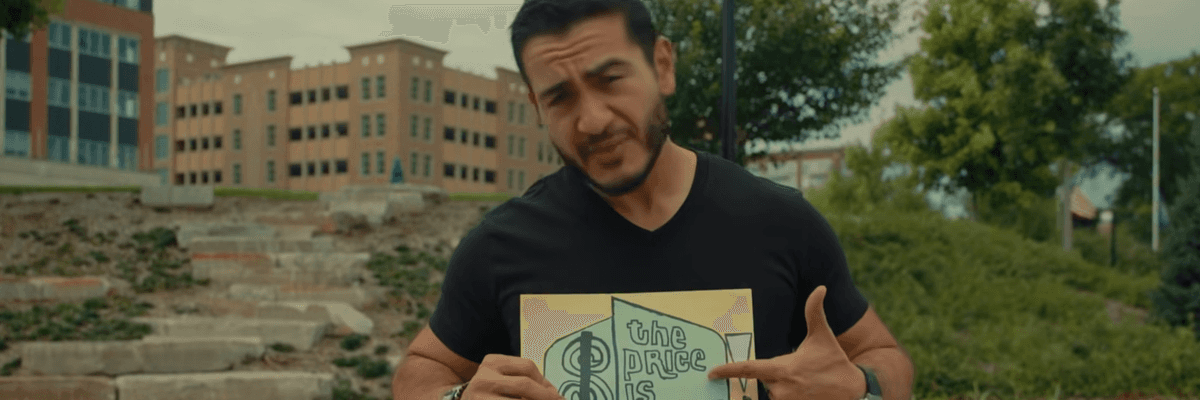
Modeled on the familiar logo of a long-running daytime game show, US Senate candidate Abdul El-Sayed displayed a hand-drawn picture of a dollar sign along with the words “The Price Is Wrong” in a video posted to his official social media accounts Tuesday—and offered Michigan voters the chance to play his version of the game, inspired by President Donald Trump’s policies.
“This is probably true of everything you’re buying right now,” said El-Sayed, who is running against former Republican Rep. Mike Rogers after winning the Democratic primary election last month, as he pointed to the handmade sign. “We’re going to ask Michiganders about just how much everything has gotten more expensive over the last year because of Trump’s tariffs and his war in Iran.”
First up, a voter learned that a container of 100 Tide detergent pods, which now costs nearly $30, cost just under $22 a year ago at this time—before Trump joined Israel in attacking Iran, leading to the retaliatory measure of Iran’s closure of the Strait of Hormuz and the resulting spike in oil and gas prices.
“That’s almost a 30% increase in price for the same Tide pods,” said El-Sayed.
Come on down! All this could be yours…except the price is WRONG because of Trump's tariffs. pic.twitter.com/OsyFoeebEi
A package of Target brand toilet paper cost $6 last year, and another voter guessed it’s currently marked at $8.50—off by 50 cents, said El-Sayed, who revealed the package would now cost $9 at a Target store in Michigan.
Target-branded protein powder cost $40 last year, and Trump’s policies have raised the price to $54 this year, said El-Sayed, while a one-pound bag of coffee beans from Tim Hortons is nearly a dollar more than it was last year, priced now at $9.32.
El-Sayed released the video as Canada imposed its new retaliatory tariffs targeting about $20 billion in US imports, in response to the 50% tariffs Trump announced late last month on a range of Canadian goods including dairy products, paper, and cement.
According to a June poll by Epic-MRA, 63% of Michiganders—including 35% of Republicans—opposed Trump’s tariffs on Canadian goods, which he first announced last year along with levies on numerous other countries that he said had treated the US unfairly in trade.
About three-quarters of voters in that poll said they thought Trump’s tariff policy was fueling higher prices for everyday goods.
The Midwest Economic Policy Institutefound in July that due to Michigan’s shared border with Canada and the close ties shared between the auto industries in Michigan and Ontario, Michigan households were paying as much as $3,200 in extra costs due to Trump’s tariffs—about 142% more than the rest of the US.
“Donald Trump is launching this trade war for his own vanity, and he’s asking Michigan families to pay the price,” El-Sayed said in a statement last month. “Trump has been failing Michigan through these chaotic tariffs and bad trade deals for far too long, and Mike Rogers won’t do anything but rubber-stamp them.”
At Michigan Advance, columnist Rick Haglund warned last month that Michigan would likely “pay a steep price for Trump’s reckless actions.”
“Canada is Michigan’s largest trading partner with about $70 billion in goods flowing across their borders in 2024, the latest available data,” said Haglund. “Thousands of jobs are connected to Michigan auto parts manufacturers, farmers, and others who export goods to Canada.”
Trump’s unprovoked war on Iran has also been linked to spiking diesel prices, which is driving uptransportation costs—and as a result, consumer prices—for many everyday goods like those featured in El-Sayed’s mock game show.
“Americans are paying way more for everyday goods they have to buy at the grocery store, all because of this insane war that is spiking the price of gas, spiking the price of diesel, spiking the price of your everyday goods,” said El-Sayed. “And now, a trade war that’s expanded with Canada.”
“Americans are sick and tired of playing ‘The Price Is Wrong,’” he added. “I think it’s time for us to play ‘The Price Is Right.’”
Our work is licensed under Creative Commons (CC BY-NC-ND 3.0). Feel free to republish and share widely.
Israeli Prime Minister Benjamin Netanyahu gives a press conference in Jerusalem on March 19, 2026.
(Photo by Ronen Zvulun/POOL/AFP via Getty Images)
Haaretz also reported that Hamas immediately offered to release all the Israeli hostages it had taken in the attack, demanding nothing in return, but Israel refused the deal.
Policy experts in the US and Middle East on Tuesday were among those responding to an “astonishing” new investigation from Haaretz, which detailed how Israeli Prime Minister Benjamin Netanyahu was alerted weeks before the Hamas-led October 7, 2023 attack that a “major event” was being planned by the Palestinian group—an assault that killed more than 1,200 Israelis and which Israel has responded to by slaughtering more than 73,000 Palestinians so far in Gaza.
Highlighting revelations contained in an upcoming book called Hostages: 843 Days of Abandonment, by journalists Shlomi Eldar and Ruth Yuval, the Israeli newspaper reported that Netanayahu dismissed a warning about the attack from United Arab Emirates President Mohammed bin Zayed, which came in a phone call in September 2023.
An adviser to bin Zayed said that according to the president, Hamas leader Yahya Sinwar “was preparing for a major event” and “Israel should be ready.”
The UAE leader advised Netanyahu to “find an economic solution” for Gaza and to calm tensions in the West Bank to “prevent escalation.”
At the time, Hamas had been holding talks for months with intermediaries in hopes of pushing Israel to lift its blockade on Gaza, which it had imposed at varying levels of intensity for nearly two decades, since Hamas won legislative elections in 2006. Before the 2023 attack and Israel’s retaliatory assault on Gaza—which has been called a genocide by human rights groups and Holocaust experts—Israel’s blockade had left 80% of Palestinians in Gaza dependent on aid and had raised the poverty rate from 40% in 2005 to 61.6% in 2023.
Hamas’ talks had also focused on exchanging four Israeli prisoners who had been held in Gaza for several years for Palestinian prisoners, more than 5,200 of whom were being held in Israel at the time.
Haaretz reported that an intermediary known as “coal eyes,” a member of the Fatah political party in Palestine who was trusted by both Hamas and the Israeli security agency Shin Bet, was told by Sinwar: “Convey a message to them that I am preparing the mother of all surprises. A terrifying operation. Something extraordinary.”
The intermediary then conveyed the message to bin Zayed, who spoke directly to Netanyahu.
🚨Haaretz exposé: Israeli Prime Minister Benjamin Netanyahu received an explicit warning from UAE President bin Zayed days before October 7. He didn't brief Israel's security chiefs. @shlomieldar
The Israeli prime minister, who is facing several opponents as he aims to hold onto power in Israel’s upcoming elections, scheduled for October 27, reportedly told the UAE president that Israel was prepared for any attack and that the government believed Hamas was planning to operate in the West Bank.
He did not inform security or intelligence leaders about the information he received from the bin Zayed, Haaretz reported.
Netanyahu called the Haaretz report an “absolute lie” on Tuesday, while his top rival in the elections, former military commander Gadi Eisenkot, said on social media that the prime minister “received dozens of warnings for October 7 and ignored them all.”
“His is unfit,” said Eisenkot.
As Middle East Eye noted Tuesday, it has previously been reported by media outlets in Israel and elsewhere that Netanyahu had received a warning from Egyptian intelligence in the days before the Hamas-led attack.
Haaretz also reported that Hamas offered to release all the civilians it had taken captive during the October 7 attack, in the immediate aftermath of the attack. The group did not demand anything in return, but Israeli officials reportedly rejected the offer.
The Israel Defense Forces have bombed schools, hospitals, and refugee camps and have killed thousands of children as well as journalists and aid workers in Gaza—all while claiming to be targeting Hamas. Attacks have continued, killing hundreds of Palestinians, even after a ceasefire deal was reached last October.
Settler attacks have also ramped up in the West Bank as Israeli officials have pushed to further annex the territory and make the creation of a Palestinian state impossible.
Our work is licensed under Creative Commons (CC BY-NC-ND 3.0). Feel free to republish and share widely.
One of Canadian Prime Minister Justin Trudeau’s “10 Books Everyone Should Read”.
This fascinating study of democracy in the 21st century is a much-needed call for citizens to reach across the aisle and put power back into the hands of individuals—not Big Government.
Eric Liu and Nick Hanauer outline a simple but revolutionary argument for why our most basic assumptions about democracy need updating for the 21st century. They offer a roadmap for those looking for a way forward from an American life marked by divisive conversations.
In a world with widespread political upheaval, a deep wellspring of civic engagement and collective action is emerging. America is finding that our cultural and political dialogue is spiking over everything from racial and social justice to fighting the ever-widening income gap, to climate change—even how we might best collaborate as active citizens to heal our democracy.
Timely, inspiring, and highly charged, The Gardens of Democracy is a much-needed call to action for citizens to embrace their roles in a democratic society. To model positivity and good citizenship, plus ensure liberty and justice for all, we must achieve compromise by reaching across the aisle and putting the power to execute programs back in the hands of individuals, not big government.
We must redefine how we view prosperity in order to move from a dog-eat-dog mentality that perpetuates the top 1% to a communal and inclusive movement that illustrates that we’re all better off when we’re all better off.
Argo meets Spotlight, as journalist Craig Unger, New York Times bestselling author of American Kompromat and House of Bush, House of Saud, reveals his thirty-year investigation into the secret collusion between Ronald Reagan’s 1980 presidential campaign and Iran, raising urgent questions about what happens when foreign meddling in our elections goes unpunished and what gets remembered when the political price for treason is victory.
It was a tinderbox of an accusation. In April 1991, the New York Times ran an op-ed alleging that Ronald Reagan’s 1980 presidential campaign had conspired with the Iranian government to delay the release of 52 American hostages until after the 1980 election. The Iranian hostage crisis was President Jimmy Carter’s largest political vulnerability, and his lack of success freeing them ultimately sealed his fate at the ballot box. In return for keeping Americans in captivity until Reagan assumed the oath of office, the Republicans had secretly funneled arms to Iran. Treasonous and illegal, the operation—planned and executed by Reagan’s campaign manager Bill Casey—amounted to a shadow foreign policy run by private citizens that ensured Reagan’s victory.
Investigative journalist Craig Unger was one of the first reporters covering the October Surprise—initially for Esquire and then Newsweek—and while attempting to unravel the mystery, he was fired, sued, and ostracized by the Washington press corps, as a counter narrative took hold: The October Surprise was a hoax. Though Unger later recovered his name and became a bestselling author on Republican abuses of power, the October Surprise remained his white whale, the project he worked on late at night and between assignments.
In Den of Spies, Unger reveals the definitive story of the October Surprise, going inside his three-decade reporting odyssey and sharing startling truths about what really happened in 1980. The result is a real-life political thriller filled with double agents, CIA operatives, slippery politicians, KGB documents, wealthy Republicans, and dogged journalists. Timely and provocative, with powerful echoes of our Trump-era political scandals, Den of Spies demonstrates the stakes of allowing the politics of the moment to obscure the writing of our history.
About the author
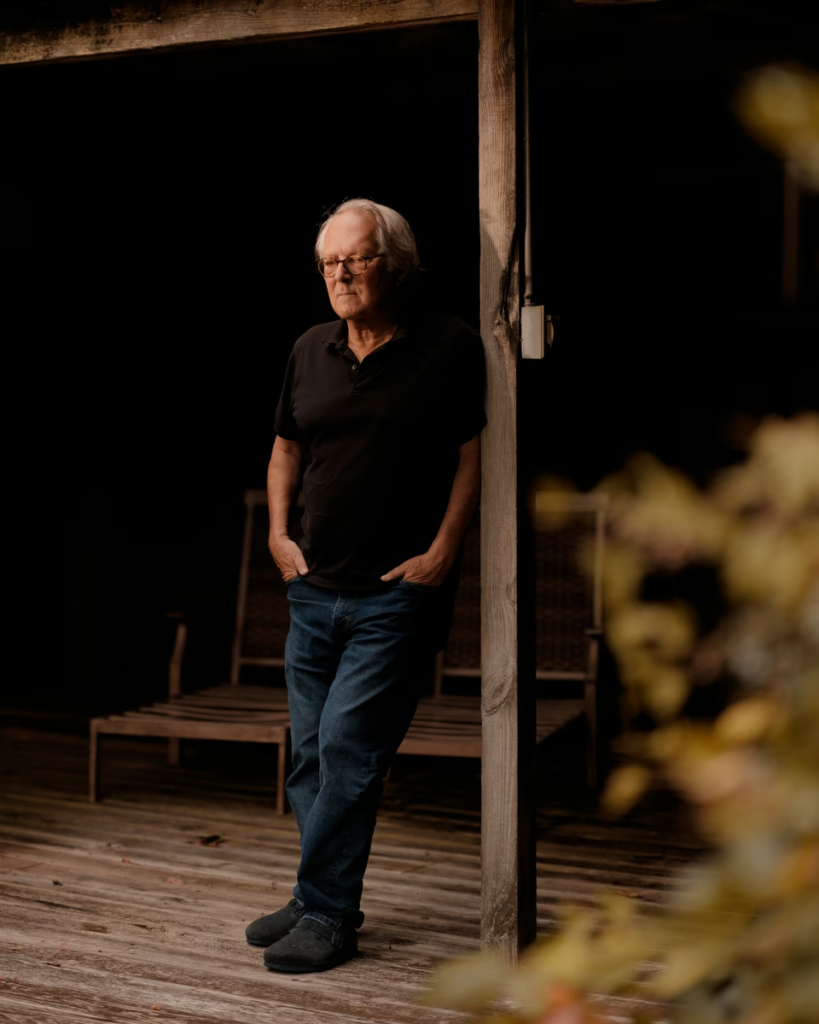
“I don’t like to be wrong,” says Craig Unger, the author of a new book that sets out to prove the infamous October Surprise conspiracy. “And worse, I don’t like to be called wrong when I’m right.” (Benedict Evans for The Atlantic)
Craig Unger is an American journalist and writer. His most recent book is The Fall of the House of Bush, about the internal feud in the Bush family and the rise and collusion of the neoconservative and Christian right in Republican party politics, viewing each group’s weltanschauung and efforts concerning present and potential future US policy through a distinctly negative prism. His previous work, House of Bush, House of Saud explored the relationship between the Bush family and the House of Saud. Craig Unger’s work is featured in Michael Moore’s film Fahrenheit 9/11. Unger has served as deputy editor of the New York Observer and was editor-in-chief of Boston Magazine. He has written about George H. W. Bush and George W. Bush for The New Yorker, Esquire Magazine and Vanity Fair.
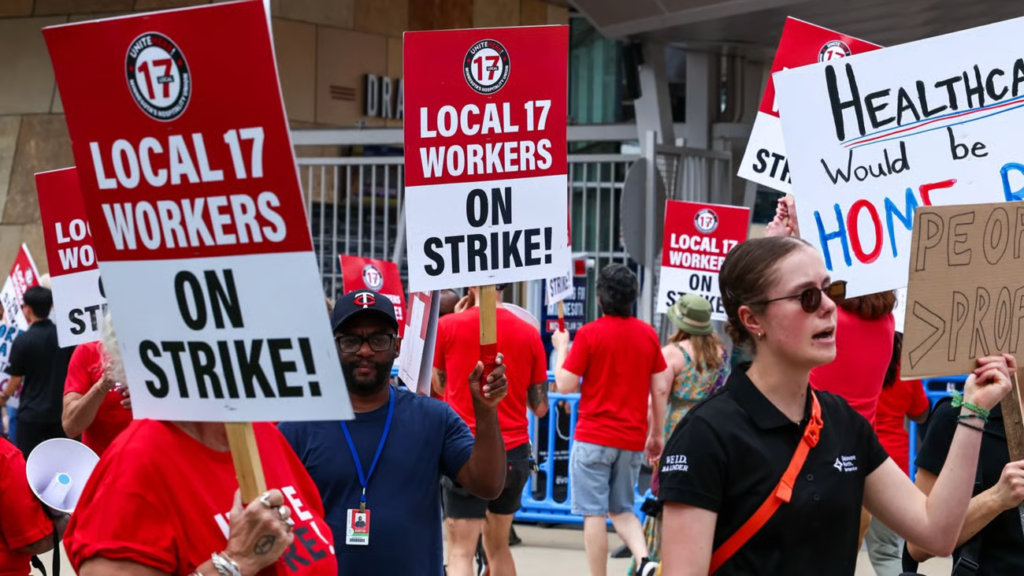
UNITE HERE Local 17 hospitality workers strike outside Target Field in Minneapolis, June 22, 2026. Steven Garcia/NurPhoto via AP.
September 7, 2026 (Prospect.org)
Americans really like unions. Last week, Gallup released its annual survey of the public’s assessment of the labor movement, and found that unions’ approval rating stood at 71 percent—the highest it’s been since 1957. While 89 percent of Democrats and 70 percent of independents approved of unions, even 52 percent of Republicans felt that way as well. Moreover, fully 47 percent of our fellow Americans said they wanted unions to have more influence than they currently have, which is a record high for this century. Only 23 percent said they wanted unions to have less influence. Gallup wasn’t the only entity asking questions about unions’ influence last week. On Thursday, the Bureau of Labor Statistics released its own survey, which found that the share of the nation’s economic output—its work product—going to wages and benefits was, at 52.8 percent, the lowest since the Bureau began measuring it in 1947. This followed another government study in May that found that wages and benefits comprised the lowest share of the nation’s income—51 percent—since, again, the government started measuring such matters in 1947. As the labor share has been declining, the capital share has been rising. The same May study showed that profits’ share of the nation’s income had risen to 12.1 percent, the highest level since 1950. The gap between wages and profits has ballooned over the past six years. Inflation-adjusted wages have increased by just 3 percent since late 2019, while profits have risen by 50 percent. Pundits who wonder why the number of American socialists is growing should contemplate that last set of statistics. There are any number of reasons why the share of America’s economic output and Americans’ income is at record lows for workers, but the evisceration of unions—the only real vehicle through which workers can exert power—over the past seven decades is the primary cause. In the early 1950s, more than a third of the nation’s private-sector workers were unionized, and in many states outside the South, the unionized share stood at 40 percent or even higher. Unions’ power—strikes and the threat of strikes—was such that companies with union contracts regularly raised wages and benefits in the quarter-century following World War II, and many companies with no union contracts were compelled to match the wages and benefits of the unionized companies in their industry, for fear of losing their workers to them. As labor historian Nelson Lichtenstein recently noted in our pages, the power of unions like the United Auto Workers “forced managers of America’s greatest industry, and all those who followed the patterns it set, to double the real wages of American industrial workers in little more than a generation. That was a singular accomplishment, never repeated in American history, before or since.” That, however, was then. Since that time, the erosion of workers’ legal protections when they seek to form or join a union (an erosion propelled by employers, judges, and Republicans and not significantly countered by Democrats) has defeated countless organizing campaigns, while financialization, offshoring, and legislation that facilitated wealth concentration and capital’s political influence have combined to decimate unions. Where once they represented one-third of the nation’s private-sector workers, today they represent a mere 6 percent. None of the tech giants or retail behemoths that dominate today’s economy are unionized; the merest hint of workers seeking to organize prompts a level of management retaliation for which the word “disproportionate” is laughingly inadequate. Baristas at 700 Starbucks vote to unionize; the company refuses to bargain with them. Employees at an Amazon warehouse in Staten Island voted to unionize in 2022; the company has yet to begin bargaining with them—and when its warehouse workers in one Quebec warehouse were able to unionize, thanks to Canada’s more equitable labor laws, Amazon’s response was to shutter not just that warehouse but all seven of its warehouses in Quebec. Democrats have periodically sought to put some teeth back into the National Labor Relations Act, under whose current version management faces no meaningful punishment for violating its terms by illegally firing a worker involved in organizing. Going all the way back to the Johnson administration, Democrats seeking to restore workers’ rights have never been able to surmount the Senate’s 60-vote filibuster hurdle. If they have trifecta control of the federal government after the 2028 elections, and move to scrap the filibuster so they can enlarge the Supreme Court, Democrats must also scrap it when it comes to reforming labor law. And merely passing their current version of that reform, the PRO Act, won’t be enough to rebalance the relations between owners and workers. Unless they’re resigned to perpetuating an economy in which a half-decade’s rise of 3 percent in workers’ wages requires a rise of 50 percent in profits, they must repeal the 1947 Taft-Hartley Act. By so doing, they would not only end right-wing states’ use of “right to work” statutes to block unionization, but they would also restore workers’ freedom to boycott companies—not those at which they themselves were employed—whose workers are on strike. It was through such measures that American worker power soared in the 1930s and ’40s, and how labor stays strong in nations where secondary boycotts are still legal. (When McDonald’s attempted to break the labor system in Denmark, it was brought to its knees by boycotts that blocked the delivery of everything from menu paper to food.) If workers in this country are to regain the power they once had, and if America’s current race to become the most economically unequal nation on the planet is not arrested and reversed, the Democrats are going to have to curtail much of capital’s clout and, as the new Gallup poll shows record support for, increase labor’s influence. (If repealing Taft-Hartley strikes some Democrats as extreme, they might remember that the bill was vetoed by that dangerous radical, Harry Truman, before it was overridden by Republicans and Southern Democrats.) And if the Democrats are at all serious about regaining the long-term support of the working class, they’re going to have to do what Franklin Roosevelt’s Democrats did 90 years ago to win that support in the first place: empower America’s workers. That would entail alienating most big-time investors and C-suite occupants who dominate our political economy, of course, but that’s a necessary condition for American restoration.
It’s hard to avoid comparisons between Zohran Mamdani and Daniel Lurie these days. Two unlikely mayors, taking over troubled cities. There are the contraststories.
But as we get close to the one-and-two-year anniversaries of the elections that put them in office, it’s worth looking at some basic facts. They show that Mamdani and Lurie have operated at the opposite ends of the political spectrum.
Mamdani froze the rent on 1 million apartments. Wikimedia images photo
Mandani is using local government to make the city safer and more affordable. Lurie is allowing Big Tech to take over local government, celebrating a boom that has caused rents to soar and evictions to rise to alarming levels.
The Big Tech takeover of local politics, which has turned the SF Democratic Party into a laughingstock, just gets worse and worse. Last week, crypto billionaire Chris Larsen put $500,000—that’s right, half a million—into an independent expenditure committee to support Theo Ellington for D10 supe. We have never seen anything close to this kind of IE money is a district supe race.
Larsen doesn’t live in D10. He doesn’t, as far as I know, have any businesses in D10. Why does he care that much who the D10 supervisor is?
A few thoughts.
Big Tech wants total control of the city. Right now, a majority of the supes side with the mayor and the tech companies, but there’s an election in November, and it’s possible, if unlikely, that the situation could change.
The incumbent Supervisor Shamann Walton has been in independent voice, unafraid to take on the mayor and Big Tech. Walton has endorsed D. J. Brookter. Brookter supports rent control, affordable housing, a public bank, and development that doesn’t displace existing residents. From his platform:
We should not demolish existing affordable or rent-controlled housing to build new housing when viable alternatives exist on vacant or underutilized sites that would not displace tenants.
He’s not the kind of candidate that the libertarian Big Tech folks want to see in office.
I think it’s pretty disgusting to see something like this happen in San Francisco. This truly makes me wonder what could be going on behind the scenes. We have never seen a donation like this in a supervsior’s race. I believe voters will see right through this because District 10 is not for sale. Elections have always been competitive (as they should); it’s hard to understand why this is legal.
Whatever the specific motivations, this is another profound and serious step in the Big Tech takeover of City Hall.
The Planning Commission will consider Thursday/10 an application that would allow a developer to demolish a seven-story downtown building that once housed Golden Gate University and build … we don’t know.
It’s a weird application. The developer wants to tear down the building at Mission and First, but it’s not clear what would replace it. The application says the developer will build
one of two distinct land use programs (“variants”). The first variant (the “Commercial Variant”) is a 700-foot-tall (752 feet to the top of the parapet), approximately 1.22-million-square-foot building that would include a mix of office space and laboratory space. The Project Sponsor proposes two options for the Commercial Variant in terms of relative amounts of office and laboratory uses: one option with 813,214 square feet of office space and 403,518 square feet of laboratory space (“Commercial Variant Option 1”) and one option with 555,390 square feet of office space and 661,342 square feet of laboratory space (“Commercial Variant Option 2”). The second variant is a 649-foot-tall (698 feet to top of the parapet), approximately 992,000- square-foot building that would include a mix of office space and 385 residential dwelling units consisting of 64 studio, 221 one-bedroom, 60 two-bedroom, and 40 three-bedroom units.
Those are pretty different proposals.
The AI boom is making office space attractive again, but lost of empty space remains downtown. And the city seems to be trying to prioritize housing, although this would be the top of the luxury market.
I’ve been covering city planning for 40 years, and I can’t remember the last time a commission approved a project without knowing exactly what it is. This will be a test of the new commission.
The meeting starts at noon.
48 Hills welcomes comments in the form of letters to the editor, which you can submit here. We also invite you to join the conversation on our Facebook, Twitter, and Instagram.
Tim Redmond has been a political and investigative reporter in San Francisco for more than 30 years. He spent much of that time as executive editor of the Bay Guardian. He is the founder of 48hills.
Help Outreach Working Group lift the fog of corporate media. Donate to help us maintain this website and distribute literature on the street.
THURSDAY, JUNE 29, 2023 AT 2 AM – 4 AM PDT How to create trust in a group? Details Event by Extinction Rebellion Empathy Circles online EMPATHY CAFE Duration: 2 hr Public · Anyone on or off Facebook How to create trust in a group? This is the question that arose in our... Continue reading →
The San Francisco Democratic Party presents The San Francisco Democratic Party 2026 Gala Thursday, September 10th 6:00 – 10:00 PM Bimbo’s 365 Club 1025 Columbus Ave San Francisco, CA 94133 TICKETS https://www.sfdems.org/gala2026
Public Banking Coalition monthly meetings Next call: Nov 11 Excitement is building for public banking and once a month, PBI hosts an hour-long Public Banking Coalition online meeting to share the excitement and successes. Find out the latest updates on the advances being made all across the country from local advocates themselves... Continue reading →
Trump Regime Takedown: Every Saturday Saturday, March 7, 2026 12:00 PM 2:00 PM Tesla San Francisco999 Van Ness AvenueSan Francisco, CA, 94109United States (map) Google Calendar ICS Keep democracy alive every Saturday by showing up, taking a stand, and sticking together for the long haul. Standing together is better than standing alone. Let’s get together... Continue reading →
This Sunday’s Town Hall: Announcing This Week’s Progressive Town Hall: Every Sunday at 4pm ET/1pm PT RSVP HERE Join PDA activists online from across the country to discuss the importance of progressives reclaiming the American story from the MAGA right, an issue of heightened importance as we’re now within one... Continue reading →
We protest Heritage Foundation EVERY MONDAY (Join us!!!!) By admin | September 2, 2025 | Uncategorized Cliff Cash Comedy Premiered Jul 26, 2025 Every Monday at The Heritage Foundation 214 Massachusetts Ave. Washington D.C. 4pm protest 6pm pizza Every Friday at Fox News D.C. 400 N. Capitol St. Washington D.C. 4pm protest 6pm pizza We are... Continue reading →
There are less than 9 weeks until the critical November election, and what we do between now and then will shape the future of our health care. We started Nurses for Democracy to fight back against fascism and protect our democracy, but also to elect candidates in key races who are committed... Continue reading →
September General Membership Meeting *We will be voting on November Election endorsements for state propositions!* Date: Tuesday, 15 September, 2026 (third Tuesday of month) Time: 7-9 PM *NEW* In-person Location: Women’s Building (3543 18th St), Audre Lorde Room Remote: Via Zoom Link Here
Join us in person for a deep discussion on the upcoming November election. We’ll break down what’s on the ballot, why it matters, what you need to know before you vote. Featuring: Juliet Williams, CalMatters Ben Trefny, KALW Public Media Lila LaHood, San Francisco Public Press This election is pivotal.... Continue reading →
One Million Rising: Strategic Non-Cooperation to Fight Authoritarianism Virtual Event · Hosted by No Kings Time Wednesdays 8 – 9:30pm EDT Location Virtual event Join from anywhere About this event Across the country, authoritarian forces are getting bolder and more dangerous. Trump and his allies are not hiding their agenda: mass deportations,... Continue reading →




















 by
by