House Democrats Move to Impeach Noem Over Deadly ICE ‘Reign of Terror’

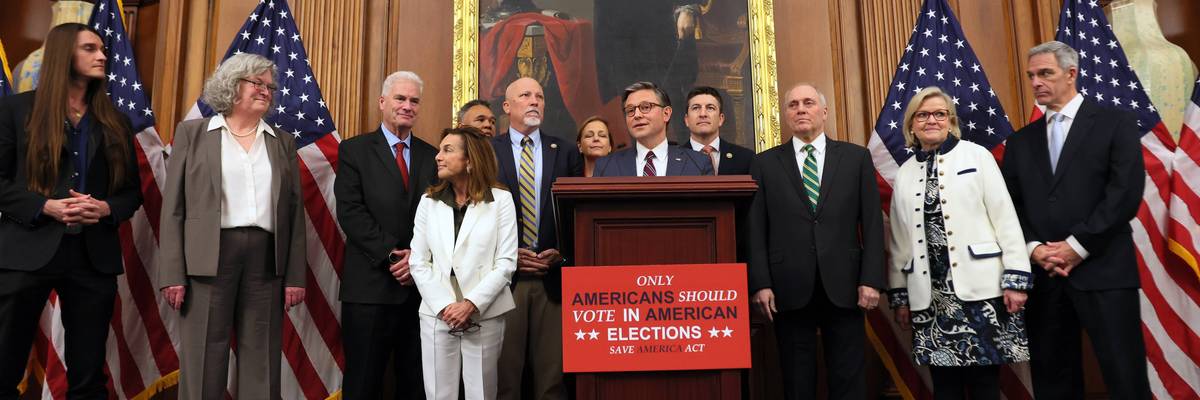
Rep. Robin Kelly Discuess Articles Of Impeachment Against DHS Secretary Noem

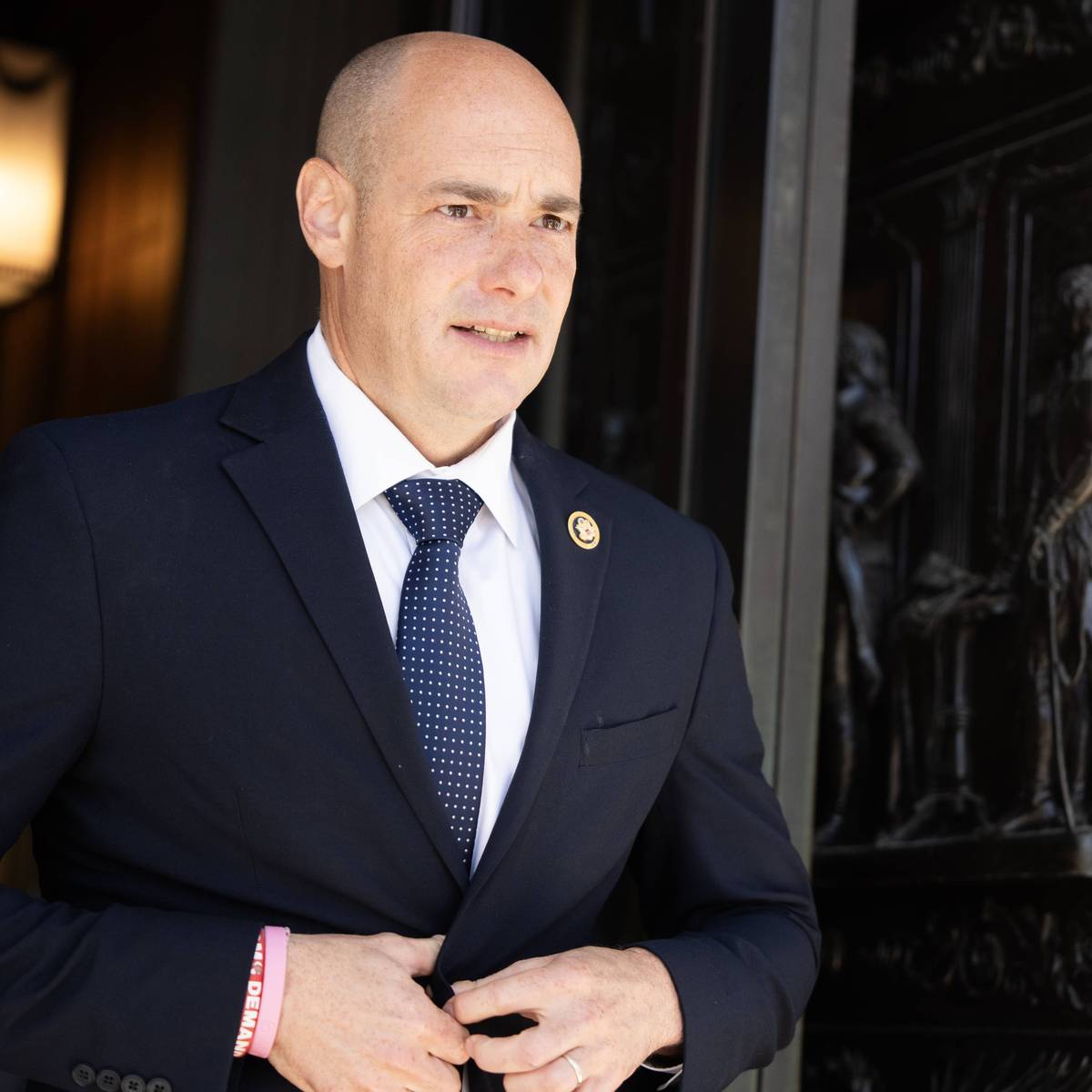
Congresswoman Robin Kelly (D-Ill.), joined by fellow House Democrats, speaks a news conference on articles of impeachment against US Secretary of Homeland Security Kristi Noem at the US Capitol in Washington, DC on January 14, 2026.

 (Photo by Kevin Dietsch/Getty Images)

“Noem and her rogue agents are the ones terrorizing our communities, and she is breaking the law to do so,” said Rep. Robin Kelly.

Brett Wilkins

Jan 14, 2026 (CommonDreams.org)

Citing the deadly “reign of terror” unleashed by President Donald Trump’s immigration enforcers against both migrants and US citizens, a Democratic congresswoman on Wednesday formally introduced articles of impeachment against Homeland Security Secretary Kristi Noem.

Rep. Robin Kelly of Illinois filed three articles of impeachment against Noem for alleged obstruction of justice, violation of public trust, and self-dealing. The move—which Kelly first announced on January 7— followed last week’s killing of Renee Nicole Good, an American citizen, by Immigration and Customs Enforcement (ICE) officer Jonathan Ross in Minneapolis.

RECOMMENDED…

US Rep. Ilhan Omar

‘Real Justice’ for Renee Good Begins With Impeaching Noem, Omar Says as Protests Continue

Kristi Noem

Kristi Noem Goes on TV and Lies Through Her Teeth (Again) About ICE Killing of Renee Nicole Good

“Secretary Noem has brought her reign of terror to the Chicagoland area, LA, New Orleans, Charlotte, Durham, and communities north to south to east to west,” Kelly told reporters at a Wednesday press conference. “She needs to be held accountable for her actions.”

Speaking on the House floor earlier, Kelly said that “Operation Midway Blitz has torn apart the Chicagoland area.”

https://twitter.com/i/status/2011142881470541891

During the Department of Homeland Security (DHS) operation, ICE agents shot and killed Silverio Villegas González and then allegedly lied about the victim’s behavior in a bid to justify the killing. Federal enforcers have attacked protesters and bystanders with tear gas, pepper balls, flash-bang grenades, and other weapons during Midway Blitz and other operations across the country.

“President Trump declared war on Chicago and then he brought violence and destruction to our city and our suburbs in the form of immigration enforcement,” Kelly said.

“In my district, federal agents rappelled down from Blackhawk helicopters and burst into an apartment building in the South Shore area,” the congresswoman continued. “The dragged US citizens and noncitizens alike out of their beds in the middle of the night.”

“They claim the apartment was infiltrated by members of a Venezuelan gang. I don’t understand this president’s obsession with Venezuela, but they did not arrest a single member from that gang,” she added, alluding to Trump’s illegal attacks on the South American country and abduction of its president and his wife.

Moving on to Minneapolis, Kelly said that “an ICE officer shot and killed Renee Nicole Good in cold blood.”

“Without knowing any of the facts or an investigation, Secretary Noem lied about what happened,” the congresswoman said. “She called a beloved 37-year-old mom a ‘domestic terrorist.’ Secretary Noem and her rogue agents are the ones terrorizing our communities, and she is breaking the law to do so. I will hold her accountable.”

Kelly’s articles of impeachment accuse Noem of:

  • Obstructing Congress by refusing to allow lawmakers into federal immigration facilities and withholding congressionally designated disaster relief funds from states that refused to cooperate with Trump’s crackdown;
  • Violating public trust by denying people detained by ICE their due process as guaranteed under the Constitution; and
  • Self-dealing by allegedly giving $220 million in contracts to a business run by the husband of her spokesperson.

“These are not policy disagreements,” Kelly said during her House floor remarks. “These are violations of her oath of office, and she must answer for her impeachable actions.”

As of late Wednesday morning, more than 70 House Democrats had signed on as co-sponsors of the effort.

https://x.com/sethmoulton/status/2011169775460757825?ref_src=twsrc%5Etfw%7Ctwcamp%5Etweetembed%7Ctwterm%5E2011169775460757825%7Ctwgr%5E28670f2b0c9fdf6936a375397f020dd24cf4268f%7Ctwcon%5Es1_c10&ref_url=https%3A%2F%2Fwww.commondreams.org%2Fnews%2Fkristi-noem-impeachment

“I’ve signed on to impeach Secretary Noem,” Rep. John Larson of Connecticut said on X. “She must be held accountable for her corruption and her attacks on the Constitution. She’s hypercharged ICE’s lawlessness and cheered as it has terrorized our communities. She has to go.”

Rep. Bonnie Watson Coleman of New Jersey, who also joined the impeachment effort, said that Noem’s “malicious and incompetent leadership has led to chaos across the nation.”

Rep. Summer Lee of Pennsylvania said on X: “People are being hunted. Families torn apart. A woman was just shot in the face. And DHS seem to think it’s acceptable. It’s past time to impeach Kristi Noem.”

A DHS spokesperson called the impeachment effort “silly.”

“As ICE officers are facing a 1,300% increase in assaults against them, Rep. Kelly is more focused on showmanship and fundraising clicks than actually cleaning up her crime-ridden Chicago district,” the spokesperson said. “We hope she would get serious about doing her job to protect American people, which is what this department is doing under Sec. Noem.”

The effort to impeach Noem came after state and city officials in Minnesota and Illinois on Monday sued the Trump administration in a bid to block federal forces “from conducting civil immigration enforcement” without “express congressional authorization.”

“People are being racially profiled, harassed, terrorized, and assaulted,” Democratic Minnesota Attorney General Keith Ellison said earlier this week. “Schools have gone into lockdown. Businesses have been forced to close. Minnesota police are spending countless hours dealing with the chaos ICE is causing. This federal invasion of the Twin Cities has to stop, so today I am suing DHS to bring it to an end.”

Our work is licensed under Creative Commons (CC BY-NC-ND 3.0). Feel free to republish and share widely.

Brett Wilkins

Brett Wilkins is a staff writer for Common Dreams.

Full Bio >

‘ICE-free zones’ among ideas Alameda County is considering to defend against Trump immigration crackdown

Following the fatal shooting of Renee Good in Minneapolis, county officials are gearing up to ban ICE agents from certain areas.

by Eli WolfeJan. 14, 2026 (Berkeleyside.org)

An ICE agent taking part in an operation in Florida in 2018. Credit: Courtesy of DHS.

Alameda County officials will gather on Thursday to discuss two initiatives designed to shield residents from federal immigration agents and the kinds of violence and chaos they’ve stoked in Minneapolis and other cities. 

One of the proposals is to draft a county-wide plan for dealing with immigration enforcement. This would include rapid-response protocols for government agencies and community partners, plus training for staff and public communication strategies. 

The other plan would involve the creation of “ICE-Free Zones” on properties owned by Alameda County. The county would develop a policy to restrict immigration agents from using its properties for staging civil enforcement actions, surveillance or processing people.

Supervisor Nikki Fortunato Bas introduced both proposals last November, citing lessons learned from other cities that have experienced heavy immigration enforcement, including Los AngelesChicago and Portland. The proposals were continued to this week’s meeting so supervisors can incorporate feedback from the sheriff, district attorney, probation department and public defender. 

“Our goal is simple: every resident should be able to access health care, courts, schools, and public services without fear,” Bas said in a statement. “Coordinate response plans and ICE-Free Zones are essential tools in building community safety and power during this time.” 

Since Donald Trump’s inauguration last year, Alameda County officials have been preparing for a surge in immigration enforcement. Tensions rose in October after Customs and Border Protection agents arrived at a Coast Guard base in Alameda in preparation for a major enforcement action. But the operation was cancelled by President Trump at the last moment following his conversations with San Francisco Mayor Daniel Lurie and several tech billionaires.  

Last week, an ICE officer named Jonathan Ross shot and killed a 37-year-old unarmed woman named Renee Good in Minneapolis. Trump and other administration officials have attempted to label Good as a domestic terrorist, claiming she tried to ram Ross with her car. But videos of the shooting show Good speaking calmly to Ross and attempting to drive away from him before he shot her multiple times. 

That footage has sparked an uproar and launched hundreds of protests across the country, including in Berkeley. The shooting has also spurred conversation in the Bay Area about how local law enforcement should handle similar situations. 

Henry Benjamin Whipple

Whipple is memorialized by the Bishop Whipple Federal Building in Fort Snelling, Minnesota

From Wikipedia, the free encyclopedia

1898 studio portrait by George Prince

The Right Reverend
Henry Benjamin Whipple
D.D.
Bishop of Minnesota
1898 studio portrait by George Prince
ChurchEpiscopal Church
DioceseMinnesota
ElectedJune 30, 1859
In office1859–1901
SuccessorSamuel Cook Edsall
Orders
OrdinationJuly 16, 1850
by William H. DeLancey
ConsecrationOctober 13, 1859
by Jackson Kemper
Personal details
BornFebruary 15, 1822
Adams, New York, United States
DiedSeptember 16, 1901 (aged 79)
Faribault, Minnesota, United States
BuriedCathedral of Our Merciful Saviour
DenominationAnglican (prev. Presbyterian)
ParentsJohn Hall Whipple & Elizabeth Wager
SpouseCornelia Ward Wright​​(m. 1842; died 1890)​Evangeline Marrs Simpson​​(m. 1896)​
Children6

Henry Benjamin Whipple (February 15, 1822 – September 16, 1901) was an American religious leader and activist. He was the first Episcopal bishop of Minnesota and gained a reputation as a humanitarian and an advocate for Native Americans.

Born in Adams, New York, he was raised in the Presbyterian church but became an Episcopalian through the influence of his grandparents and his wife, Cornelia, whom he married in 1842. Whipple attended Oberlin College from 1838 to 1839 and worked in his father’s business until he was admitted to holy orders in 1848.

After ordination Whipple served parishes in Rome, New York, and Chicago, where he gained a reputation for his service to poor immigrant groups. His Chicago ministry drew him to the attention of the newly formed Episcopal Diocese of Minnesota, which elected him its first bishop in 1859. He served until his death in 1901.

Although concerned with establishing his denomination in the new state of Minnesota, Whipple soon began to champion the cause of Native American groups in the state against what he saw as an abusive and corrupt Federal policy towards Native Americans. He is best known for his clemency pleas in favor of a group of Dakota who fought against the United States government in the U.S.-Dakota War of 1862 in the area around New Ulm, Minnesota. On December 26, 1862, the largest mass execution in U.S. history occurred in Mankato during the pause in US military operations. Thirty-eight Dakota were hanged for war crimes in the conflict. A total of 303 were sentenced to be hanged but President Lincoln commuted 265 in the largest mass commutation on record. Lincoln’s intervention was not popular at the time. Two commemorative statues are located on the site of the hangings (now home to the Blue Earth County Library and Reconciliation Park). He was referred to as “Straight Tongue” by some Dakota because of his honesty in dealing with them.

Whipple is memorialized by the Bishop Whipple Federal Building in Fort Snelling, Minnesota, which houses, among other things, offices for members of Minnesota’s congressional delegation. His name is also found on a building on the campus of Concordia College in Moorhead, Minnesota, called Bishop Whipple Hall, a building which was originally a prep school built by Episcopalians but which was purchased by Norwegian Lutherans in 1891 as the main building of their newly founded Concordia College.[1]

Shattuck School (now coordinated with St. Mary’s Hall and St. James School as Shattuck-St. Mary’s School, formerly The Bishop Whipple Schools: Shattuck, St. Mary’s, St. James)[2] is a prominent Episcopal boarding preparatory school in Faribault, Minnesota, which grew up around the campus of Seabury Divinity School, which Whipple founded. (The seminary itself merged with Western Theological Seminary in Evanston, Illinois, and the campus of Seabury-Western Theological Seminary was in Evanston until its merger with Bexley Hall, and what is now known as Bexley Seabury Seminary has its campus on the south side of Chicago.) The main boy’s dormitory at Shattuck is called Whipple Hall. He is buried beneath the altar of the Cathedral of Our Merciful Saviour in Faribault, Minnesota.

Early life

Henry Benjamin Whipple was born on February 15, 1822, in Adams, New York. He was educated at a private boarding school in Clinton[disambiguation needed], New York, and at Jefferson County Institute in Watertown, New York. In 1839, he attended Oberlin Collegiate Institute, but his health failed and his physician recommended an active business life.

Career

Photograph taken by Mathew Brady about 1860

After several years working for his father, a country merchant, Whipple began studying for the ministry in the Episcopal Church. He was ordained a deacon on August 17, 1849, became rector of Zion Church in Rome, New York, in November 1849, and was ordained priest on July 16, 1850.[3] Whipple served as rector of Zion Church from 1849 to 1857, becoming known both for the size and wealth of his parish and for his work among the poor. In 1857, Whipple helped organize and became the first rector of the Church of the Holy Communion on Chicago‘s South Side, the first free church in the city. He drew his parishioners from “the highways and the hedges” – clerks, laborers, railroad men, travelers, and derelicts – sought converts among the city’s Swedish population, and regularly officiated in a Chicago prison.

On June 30, 1859, Whipple was elected the first Episcopal bishop of Minnesota, an office he held until his death more than forty years later. He was consecrated bishop on October 13, 1859, the feast day of James, brother of Jesus, at St. James Episcopal Church during the General Convention in Richmond by bishops Jackson KemperLeonidas Polk, and William H. DeLancey, with George Burgess delivering the sermon.[4] In December of that year, Whipple made his first visitation of his diocese, including the Ojibwe missions of E. Steele Peake and John Johnson Enmegahbowh. In the spring of 1860 he moved his family to Faribault, establishing it as the see of the diocese.

During his episcopate, Whipple guided the development of the Episcopal Church in Minnesota from a few missionary parishes to a flourishing and prosperous diocese. For many years, especially during the first two decades of his episcopate, he made regular missionary sojourns by wagon or coach through the rural areas of the state, often in mid-winter, preaching in cabins, school houses, stores, saloons, and Native American towns. Until the diocese was financially secure, he pledged himself to personally support several of its missionary clergy and assumed many other financial obligations of the church. He unified a diocese that at the time of his election was divided into two quarreling factions.

In 1860, Whipple incorporated the Bishop Seabury Mission in Faribault, building it upon the foundations laid by James Lloyd Breck and Solon W. Manny, who in 1858 had founded a divinity school and school for boys and girls. With the help of gifts from eastern donors, the mission developed into three separate but closely connected schools: Seabury Divinity School, Shattuck School for boys, and St. Mary’s Hall for the education of daughters of the clergy. Whipple also helped found the Breck School in Wilder, Minnesota, to educate the children of farmers.

Advocate for Native Americans

Whipple was best known outside of Minnesota for his dedication to the welfare of the Native Americans and for his missionary work among Dakota and Ojibwe in Minnesota. He returned from his first visitation of his diocese with a firm commitment to establish Native American missions and reform of the United States American Indian system. Whipple regularly included Native American towns on his visitations, built up the Episcopal mission to the Ojibwe based at the White Earth Reservation, and appealed for support of Native American missions by lectures throughout the United States and in Europe.

In the early years of his episcopate, Whipple’s espousal of American Indian reform and commitment to Native American missions earned him the enmity of many white settlers who hated Native Americans, and led some of his fellow bishops to look upon him as a fanatic. His attitude was denounced most bitterly after the Dakota War of 1862, when, in appeals to President Lincoln and through the press, Whipple opposed wholesale executions and extermination or deportation of the Dakota. Whipple even criticized his distant cousin and former Minnesota governor, Colonel Henry Sibley in such matters.

More at: https://en.wikipedia.org/wiki/Henry_Benjamin_Whipple

Progressive Caucus Vows to ‘Oppose All Funding’ for ICE Without ‘Systematic Reforms’

Call your Congressperson and your U.S. Senators at (202) 224-3121

US Rep. Ilhan Omar

US Rep. Ilhan Omar (D-Minn.) speaks at a press conference with other members of the Congressional Progressive Caucus on January 13, 2026.

 (Photo by Nathan Posner/Anadolu via Getty Images)

“We want this terror to stop,” said Rep. Ilhan Omar, deputy chair of the CPC.

JAKE JOHNSON

Jan 14, 2026 (CommonDreams.org)

The leadership of the nearly 100-member Congressional Progressive Caucus said Tuesday that it will “oppose all funding” for US immigration enforcement in any upcoming government appropriations bills without substantial reforms, a position laid out as federal agents unleashed by President Donald Trump continued to terrorize communities across the country.

Rep. Ilhan Omar (D-Minn.), deputy chair of the CPC, said during a press conference alongside other caucus members that “demanding accountability is not radical.” Omar represents the district where 37-year-old Renee Good was shot and killed by Immigration and Customs Enforcement (ICE) agent Jonathan Ross last week.

RECOMMENDED…

Chuck Schumer and Hakeem Jeffries

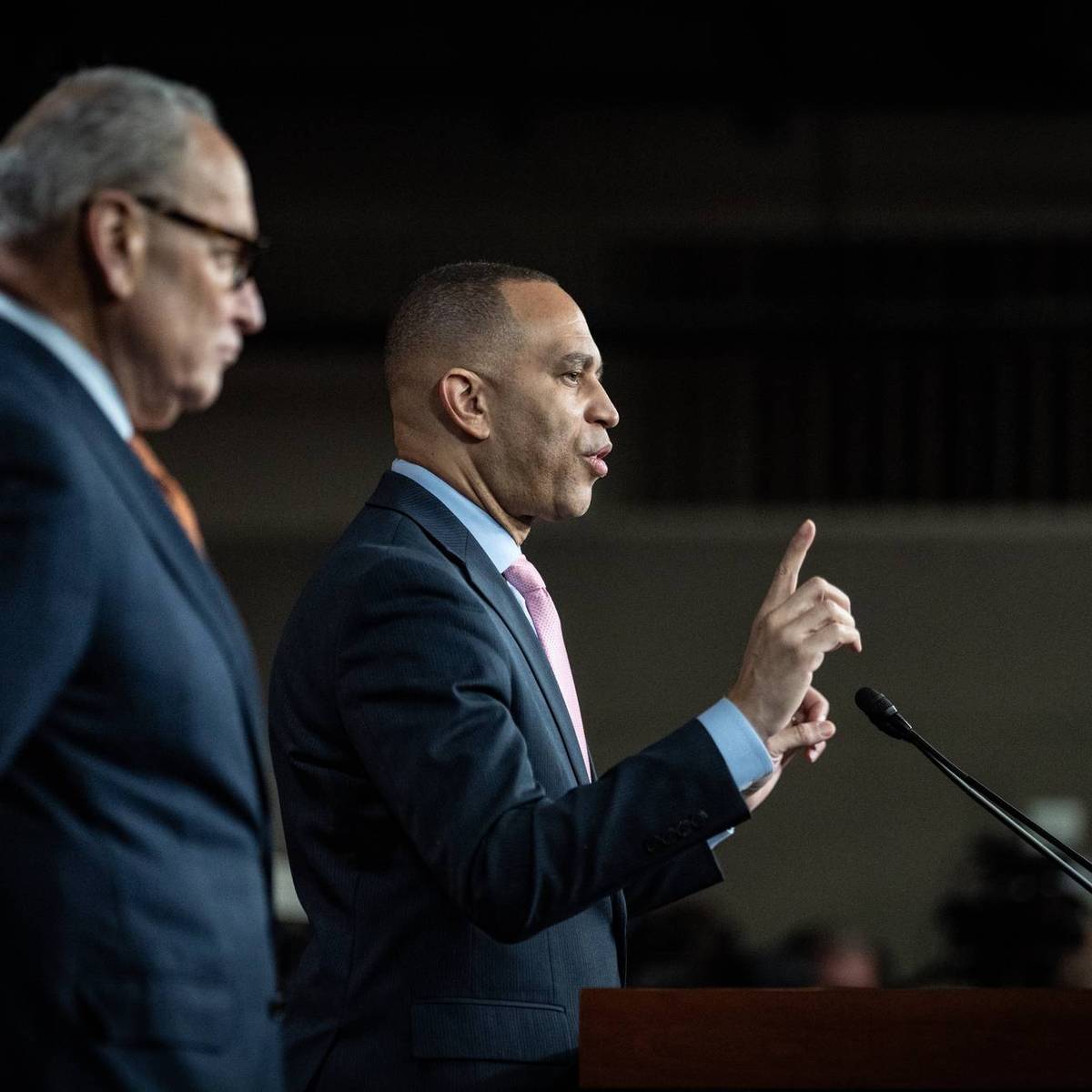
Schumer, Jeffries Refuse to Join Democrats’ Growing Calls to Slash ICE Spending

Minneapolis Labor, Community Leaders Join Call for Jan. 23 General Strike to Demand ICE Out

Minneapolis Labor, Community Leaders Join Call for Jan. 23 General Strike to Demand ICE Out

“Calling for systematic reforms is not extreme,” Omar continued. “This is the bare minimum required to restore safety and justice back to our communities.”

Omar, a frequent target of Trump’s bigotry, said the CPC’s official position is to “oppose all funding for immigration enforcement in any appropriation bills until meaningful reforms are enacted to end militarized policing practices.”

“We cannot and we should not continue to fund agencies that operate with impunity, that escalate violence, and that undermine the very freedoms this country claims to uphold,” the congresswoman said. “ICE has no place in terrorizing Minneapolis or any American community.”

The CPC’s press conference marked an intensification of a fight over Department of Homeland Security (DHS) funding that erupted in the wake of Good’s killing in Minneapolis last week. ICE, which is part of DHS, currently has a larger budget than that of a dozen national militaries, thanks to a massive infusion of funding approved by congressional Republicans and Donald Trump last summer.

NBC News reported Tuesday that “Democratic opposition has already frozen a DHS measure that was slated to be added to an appropriations package getting a Senate vote this week.”

“Congress may have to fall back on a stopgap bill to prevent a funding lapse for DHS,” the outlet added. “That’s where things get trickier for Democrats. If House Republicans pass a continuing resolution on their own, which would keep DHS running on autopilot, Senate Democrats would again have to choose between accepting it and forcing a partial shutdown.”

Rep. Rosa DeLauro (D-Conn.), the top Democratic appropriator in the House, said Tuesday that she does “not support increasing funding for ICE” and is “looking at policy riders in the homeland security funding bill to rein in ICE.”

“ICE is terrorizing our communities, and I have called on masked, armed ICE agents to leave our towns,” DeLauro added.

An Economist/YouGov poll released this week found that, for the first time, more Americans support abolishing ICE entirely (46%) than oppose it (43%). Democratic support for abolishing ICE is currently at 77%, according to the survey.

In an appearance on MS NOW, Omar said that “we want this terror to stop.”

“People are angry. People are frustrated. They’re confused. They don’t understand why this chaos is necessary,” said Omar. “And they certainly do not want this level of militarized ICE and border agents just roaming the streets, harassing and terrorizing their neighbors.”

Our work is licensed under Creative Commons (CC BY-NC-ND 3.0). Feel free to republish and share widely.

JAKE JOHNSON

Jake Johnson is a senior editor and staff writer for Common Dreams.

Full Bio >

From The Guardian: https://www.theguardian.com/us-news/2026/jan/13/dhs-funding-congress-progressives?CMP=share_btn_url

Our Gorgeous Soul Power

We insist on beauty and truth and love

Rob Brezsny Jan 13, 2026

Fighting ICE’s Violence While Preserving Our Gorgeous Soul Power

Thirty-seven-year-old poet and mother of three children Renee Nicole Good was murdered by a masked, cursing ICE agent. It was yet another in a series of tragic atrocities perpetrated by Trumps’ gang of thugs.

It was also a clarification: The masks ICE agents wear aren’t about anonymity but about removing the last vestiges of accountability. They’re the final erasure of the human face from state violence. This is what tyranny looks like when it stops pretending.

Sorry to be so blunt, but it’s the sad and shocking truth.

So how do we fight the escalating brutality without becoming brutalized ourselves? How do we resist the fascist creep without letting it colonize our inner landscape?

+

The Insurrectionary’s Paradox

Here’s the challenging practice: We need wrathful compassion, that fierce Buddhist concept where love becomes so intense it manifests as holy rage against those who harm the vulnerable. Not hatred, which damages the hater, but a righteous anger that’s an expression of care extended so far it won’t tolerate cruelty.

We can think of it this way: If someone were beating a child in front of us, our immediate intervention wouldn’t come from hatred of the abuser but from love of the child. The force we would use to stop the violence would be an expression of our care.

This is the alchemy we need now. ICE’s violence against immigrants (and even non-immgrants) demands our intervention because we love what they’re destroying: human dignity, sanctuary, and refuge.

+

Practical Insurgency as Self-Care

On our behalf, I’m tempted to ask the question “how do we fight while caring for ourselves?” But that contains a false premise. Done right, the fighting is the self-care. Here’s why:

We stay sane by taking vigorous action. Helplessness is the real psychological poison. Every practical thing we do is an antidote to the corrosive feeling of complicity through inaction: joining rapid response networks, contributing to immigrant defense funds, participating in ICE office disruptions, providing sanctuary, and documenting abuses.

We preserve joy by defending it collectively. The authoritarian gangsters want to steal our capacity for delight, to make us so despairing and exhausted that we forfeit our imagination.

But we refuse. We organize potlucks for undocumented neighbors. We hold dance parties outside detention centers. We make beauty while we make trouble. The exuberance isn’t separate from the resistance; it’s one of the main points of the resistance.

We resist mass hallucination by grounding ourselves in embodied reality. The fascist atrocity project depends on abstractions: immigrants as “invaders” and humans as “illegals.”

We counter this with fierce particularity. We learn the name of every person ICE detains. We tell their specific stories, as in: Renee Nicole Good was an award-winning queer poet who was renowned for her kindness. Her last words on earth, uttered to her killer, were, “That’s fine, dude. I’m not mad at you.”

We make the violence concrete and the humanity undeniable. This refusal to let brutality be normalized into abstraction is both activism and meditation.

+

Can Our Struggle Be a Form of Play?

The question might ostensibly seem frivolous given the stakes. But consider the possibility that rigid seriousness is just another form of the authoritarian rigidity we’re fighting against. What if we approach resistance with the spirit of serious play—not frivolous, but creative, surprising, and uncontainable?

For example: street theater that mockingly reenacts ICE raids with agents played as cowardly masked thugs. Paint or chalk murals that celebrate immigrants’ contributions, impossible to remove without admitting some fascist is trying to erase these truths. Flash mobs singing lullabies outside detention centers in multiple languages. Memes that make ICE agents’ violence so recognizable as un-American that even moderate citizens recoil.

The playfulness isn’t disrespectful to the horror. It’s a refusal to let the horror dictate the terms of engagement entirely. It keeps our imaginations wild and hungry and free because the authoritarian mind can’t comprehend or predict creative insurgency.

+

Constructive Anger, Unconsumed

How do we summon a righteous blend of practical love and constructive anger? Here’s the recipe:

We root the anger in specific compassion. We don’t let it become abstract fury at “the system” or “fascism.” We focus it: The ICE agent named Jonathan Ross shot Renee Nicole Good in the face at pointblank range and then cursed her as she died.

Honduran asylum seeker Mirian G. was detained in Texas and held in an ICE-run detention center while her 18‑month‑old son was taken to a separate facility 120 miles away, with no chance to comfort him or say goodbye.

A farmworker in Ventura County, California, Jaime Alanís García / Alanís, died after falling 30 feet from a greenhouse roof while fleeing an ICE raid at Glass House Farms in Camarillo on July 10, 2025.

Specificity like this keeps the anger clean, purposeful, and constructive.

And we channel it into action that empower us. Because anger that just churns inside us becomes acid. Whereas we can turn our anger into sacred fuel: Use it to build mutual aid networks, fund legal defense, disrupt deportation operations, create sanctuary spaces.

We also tend the opposite pole equally. For every hour of wrathful organizing, we spend time cultivating beauty. We register the power and glory of our loved ones, our creative practices, our moments of sensory pleasure, and our moments of imagining better worlds.

They’re what we’re defending. They keep us from becoming burned-out husks who’ve won some battles but lost our souls.

+

Cheerful Buoyancy as Revolutionary Technology

The authoritarian thugs are counting on our despair. Our cheerful buoyancy (which isn’t the same as naive optimism) can disrupt their evil plans. (And yes, they are EVIL.)

So we hold the full weight of the terror, cruelty, and fascist acceleration . . . AND we ALSO experience joy, pleasure, and fun. Because joy, pleasure, and fun aren’t contingent on circumstances being good. They’re our choice to remain alive to beauty even amidst dire situations.

This is embodied spirituality in action. Disembodied spirituality would tell us to transcend the political horror and not let it disturb our inner peace. But a path of embodied spirituality says: No. We feel it all. The rage, the grief, the fear . . . AND the delight, the sensory pleasure, the connection, the hope.

Practical applications:

– Start meetings with a genuinely delightful burst like a poem, a song, or good news

– Build regular sabbath time into our activism (one day a week, no news, no organizing, just pleasure)..

– Practice what adrienne maree brown calls “pleasure activism”—the insistence that what we’re fighting for should be present in how we fight.

– Cultivate absurdist humor about the situation. It’s not dismissive, but recognizes how cartoonishly evil masked federal agents are.

+

How Do We Refrain From Being Consumed by Hatred?

Even as we fight against the hatred and danger unleashed by masked bullies perpetrating harm under the aegis of ICE, we remember: Hatred corrodes the hater. It’s a toxin that poisons from within.

The answer isn’t to suppress the rage or pretend we don’t feel it. Instead, we transform rage by grounding it in love: love for the victims, love for the possibility of justice, and love for the world we’re trying to build.

Here’s a practice: When we feel hatred rising toward an ICE agent, a collaborating judge, or a politician enabling this violence, pause, we ask ourselves: What am I really feeling?

Beneath the hatred is often grief. That’s the deeper feeling.

We let ourselves feel that grief all the way down to the bottom of the grief. It connects us to life’s deep sources. And from the grief comes the fierce determination that can sustain a long struggle without consuming us.

This doesn’t mean being soft on perpetrators. It means staying human while fighting inhumane systems.

+

Building While Burning

How do we remain dedicated to building beauty and truth and justice and love even as we keep our imaginations wild and hungry and free?

The key insight: We don’t build these things AFTER we have defeated fascism. We build them as one of the methods of defeating fascism.

Every one of our mutual aid networks is doing prefigurative politics. We are showing what a caring society looks like. Every sanctuary space is a liberated zone. Every community defense training is both practical skill-building and a demonstration that we protect each other, not the corrupt state.

Our art, writing, music, and poetry aren’t separate from the fight. They comprise our consciousness-building infrastructure. They give people the philosophical and imaginative resources to resist authoritarian simplicity with complex, embodied alternatives.

When we write a poem, we’re not escaping the struggle. We’re modeling the attention and beauty and truth-telling the world needs. When we make music, we’re creating the soundtrack for resistance and joy. When we build community, we’re establishing the networks that will sustain us through the fight ahead.

+

OUR ALIVENESS IS A THREAT TO THEM

Remember: our aliveness is a threat to them. The autocrats want to turn everyone into fearful, passive, joyless subjects. Every moment we choose vitality, creativity, connection, we are already winning a small battle. We’re proving that their project of domination is incomplete, that something in us remains untamed and unbowed.

So here’s the practice, the working, the way forward:

We wake each morning and feel the full weight of what’s happening. Don’t numb ourselves to the ongoing terror.

Then we choose, deliberately, to also feel joy. Make breakfast with sensuous attention. Notice beauty. Connect with our beloveds.

Let both feelings be true simultaneously. This is embodied spirituality: not transcending the difficulty but fully inhabiting our life within it.

Take action, any action, toward protecting immigrants, disrupting ICE, building sanctuary. Even small actions break the paralysis and feed the soul.

Do it with others. Isolation is the enemy; connection and community are the medicine.

Be creative, surprising, and playful in our methods. The autocrats expect grimness and despair. Give them something they can’t predict or control.

Tend our own beauty and truth and joy as fiercely as we fight for others’. We are what we’re defending.

The fight is long. We must pace ourselves. This is a marathon, not a sprint.

And finally: Our art, our relationships, our pleasures, and our wild imagination aren’t separate from the resistance. They’re the point of it. They’re what makes us dangerous to authoritarianism. We know that life can be beautiful, strange, free, and we won’t forget it, won’t let their brutality have the final word.

The masked ICE agents think the masks make them powerful. But we see through them to the cowardice, the complicity, and the abandonment of humanity. And we will fight them with everything we have: rage and love, seriousness and play, practical solidarity and wild imagination.

Because the fight itself is how we stay human while they choose to be monsters.

This is a shorter version of a longer essay. To read the whole thing, go here: tinyurl.com/OurAlivenessIsThreatening

To read a companion essay, “The Demise of MAGA,” go here: tinyurl.com/DemiseOfMAGA

TrainDems.org

Democratic Campaign Training: Month-by-Month Roadmap for Winning Candidates

Democratic Campaign Training: Month-by-Month Roadmap for Winning Candidates

Table of contents

  1. Why Year-Round Campaign Training Matters
  2. NDTC’s Month-by-Month Campaign Training Roadmap
  3. Who Should Train With Us in 2026?
  4. Start Your Campaign Training Journey Today

2026 NDTC Programming

Running for office is one of the most important decisions you’ll ever make in politics. Whether you’re a teacher ready to transform your school board, a community organizer fighting for better representation, or a working parent advocating for family-friendly policies, successful campaigns don’t start a few months before Election Day — they begin with strategic campaign training and skill development months in advance.

At NDTC, we’ve helped thousands of Democratic candidates win their races by providing comprehensive campaign training when it counts. Our proven approach takes candidates (and campaign staff) from initial planning through Election Day and beyond.

Why Year-Round Campaign Training Matters

Critical races happen in every community, every year. National races capture the big headlines, but state and local elections set the bar for daily quality of life. They determine policies that affect the education, healthcare, and infrastructure in individual communities. The candidates who win these races share one thing in common: they start preparing early with quality campaign training.

We know this works because we trained over 960 candidates who won their races in 2025 by investing in campaign training months before Election Day. They learned essential skills from building effective campaign teams to crafting compelling messages, raising money strategically, and connecting authentically with voters. The difference between a strong campaign and a winning one comes down to early preparation.

NDTC’s Month-by-Month Campaign Training Roadmap

We’ve designed a strategic training roadmap for 2026 that develops the skills you need right when you need them.

Building Your Foundation. Starting your campaign journey with a solid foundation is crucial. That’s why our first focus is helping you understand campaign structure and plan your first 90 days effectively. We’ll help you lay down some structure, map out a realistic timeline, and set achievable goals.

Building Your Campaign Team. Our campaign training will shift to answer one of the most critical questions every candidate faces: who’s on your team? We have trainings on volunteer recruitment strategies, campaign staff structure, and team management practices on the schedule in this phase. Your team is your campaign’s engine, and investing time in building a strong, cohesive team pays dividends throughout your entire race.

Crafting Your Campaign Message. Effective political messaging transforms authentic community listening into a compelling narrative about why you’re running and what you’ll fight for. Ourroadmap covers how to develop your core campaign message, create persuasive talking points for different audiences, and tell your personal story. Your message is what voters remember, so making it clear and resonant is essential to campaign success.

Fundraising With Confidence. For many first-time candidates, fundraising feels uncomfortable. But our campaign training reframes this essential skill as an invitation for people to invest in the change they want to see. You’ll learn about building a comprehensive fundraising plan, identifying donors, making effective asks, and understanding campaign finance compliance requirements. We’ll train you to become a successful fundraiser who builds relationships and creates a shared vision.

Staying Strategic Online. In today’s fragmented media landscape, knowing where and how to reach voters online is non-negotiable. And since the majority of Americans use social media regularly, effective digital strategy is essential. Our training in this phase is set to cover social media tactics, digital advertising fundamentals, email marketing, and analytics for measuring effectiveness.

Organizing on the Field. All the planning in the world doesn’t matter without strong execution on the ground. Even in the digital age, in-person voter contact remains one of the most effective campaign tactics. Your field operation is where candidates win one conversation at a time. Our field training covers traditional canvassing practices, phone banking strategies, and youth organizing

Getting Out The Vote. GOTV represents the make-or-break final moments of a campaign when all your preparation comes together. Our comprehensive training includes voter contact strategies for the final push, volunteer management during high-intensity periods, and Election Day operations planning. A well-executed GOTV operation is critical for victory in the Midterms. 

Navigating the Post-Election Phase. Regardless of the outcome, taking time to reflect on your campaign is essential. Our post-election training helps you conduct effective campaign debriefs, identify what worked and what didn’t, and apply lessons learned to future efforts. Success in politics requires long-term thinking, and our training ensures you’re ready for whatever comes next.

Who Should Train With Us in 2026?

NDTC’s training calendar is designed for candidates for local, state, or federal office, campaign managers and staff looking to sharpen their professional skills, political organizers transitioning into electoral work, and volunteers who want to contribute more strategically. You don’t need political experience to run — you need the willingness to learn and the commitment to serve your community.

Start Your Campaign Training Journey Today

Whether you’re running for school board, city council, state legislature, or another office that matters to your community, NDTC is here to help you build a winning campaign from the ground up. Explore our training calendar, subscribe to our newsletter to stay informed about upcoming opportunities, and access free resources to start planning your campaign today.

Anyone can run for office, but NDTC trains you to WIN. The best time to start is right now.

Related Content

Democratic Campaign Training: Month-by-Month Roadmap for Winning Candidates

With Your Support

Help us continue to train Democrats and win elections with top-tier training programs, mentorship, and resources that fuel the success of progressive leaders across the nation. With your generous contributions, we can build a stronger, more inclusive democracy, one step at a time.

Choose any amount to get started! If you’ve saved your information with ActBlue Express, your donation will go through immediately.

Organization

AboutFor PartnersTeamCareersImpact

Expert Insights

SubstackArticles

Help

FAQContact UsTech Support

Sign up for TL;DR, our weekly newsletter

Terms of ServicePrivacy PolicyAccessibility

© 2026 National Democratic Training Committee

Paid for by the National Democratic Training Committee (NDTC), traindemocrats.org, not authorized by any candidate or candidate’s committee.

The Shots Heard ‘Round the World

Misuse of State power killed Renee Good and is being used to suppress dissent and condition the public to fear government

In this article I lay out the constitutional rights ICE agents routinely violate with impunity; Rights which belong to all persons in the United States:

Dennis Kucinich Jan 13, 2026

The killing in Minneapolis of Renee Good, by an agent of the Immigration and Customs Enforcement, (ICE) marks an inflection point in American history, not unlike the famous “shot heard ‘round the world,” that sparked a revolution in the American colonies.

As a member of Congress, I voted against the creation of the Department of Homeland Security. I understood then, as I understand now, that the expansion of federal police power inevitably endangers freedom. That danger is no longer theoretical. Federal police power has entered our communities and is a menace. This is no longer a debate about immigration policy. We are in a Constitutional crisis.

In a democratic society there are safeguards to prevent the abuse of power. This Administration has stripped those safeguards. None of us are safe when government agents, gestapo-like, bring terror to our streets, arbitrarily detaining people based on skin color, ethnicity, or accent, denying due process, and acting as police, prosecutor, judge, jury and executioner.

Americans are flooding streets in major cities with massive marches and other acts of resistance, which will be further fueled by the federal government’s complicity and the transparently calculated attempt by top officials to cover-up the murder.

The killing of Renee Good comes at a moment when Americans are already weary of escalating government intrusion into their private life: Mass surveillance, facial recognition, warrantless searches, investigation of journalists, monitoring of protestors, and the expansion of artificial intelligence for domestic law enforcement further erode Americans’ expectation of privacy.

The specter of the National Guard activated by the President, for obvious partisan purposes, was a clear violation of the Posse Comitatus Act of 1878 which was passed to prevent federal troops from being involved in local law enforcement.

As protests against wars abroad and conflicts at home escalate, the possibility exists that this President will invoke the Insurrection of Act of 1807, placing Posse Comitatus in abeyance, federalizing the National Guard and sending the Guard and the US military to quell civil disorder which the President himself has incited.

Before our eyes America is being transformed from a republic in which the rights of citizens are protected by law into something very dark, an authoritarian order in which individual rights are nullified.

Our government, acting as though unbridled by law, has licensed itself to accost, beat up, drag, kidnap and imprison people within the United States, including American citizens, while abroad it wages war wantonly and kills with abandon. ICE has stormed into American cities, not in a manner consistent with lawful immigration enforcement, but as a show of force, directed at the public itself.

The clear purpose in intimidation. State power is being used to suppress dissent and condition the public to fear its own government.

A timid public, cowed by the knock at the door and armed agents roaming neighborhoods, schools, workplaces, and places of worship, may forfeit their rights, unless it understands the urgency of knowing and then asserting them.

Here are the constitutional rights ICE agents routinely violate with impunity; rights which belong to all persons in the United States:

First Amendment rights to freedom of speech, peaceful protest, freedom of the press, to record public officials, and the right to freedom of association.

Fourth Amendment rights to be secure against unreasonable search and seizures.

Fifth Amendment rights to avoid custodial interrogation without being read Miranda rights.

Sixth Amendment rights include assistance of legal counsel, prevention of indefinite detention, notice of charges, right to know the nature of the accusation.

Fourteenth Amendment right to due process and equal protection, including protection from racial profiling, excessive use of force and unjustified deadly force

Taken together, ICE’s violations threaten the life and liberty of every person in this country.

None of us are safe when agents of the federal government aggressively roam the streets of our cities, invade our schools, our places of worship, our workplaces, our businesses without warrants, and arbitrarily arrest people based on their skin color, their ethnicity, their accents, denying due process as though storm troopers.

Like many Americans, I have carefully studied the videos of the killing of Renee Good. As a former chair of a congressional investigative subcommittee on Domestic Policy, I am committed to a careful review of all available evidence.

The evidence supports but one conclusion. Renee Good was killed by an agent of the United States government who was visibly not in imminent danger when, in less than a second, he fired three shots, point blank, at Renee Good as her vehicle slowly turned away from him.

At least two rounds from the agent’s 9mm Glock struck her in the head, killing her instantly. This happened almost immediately after (with her driver’s window rolled down), she calmly told the agent: “I’m not mad at you.”

After the fatal shots were fired, as the car careened, the agent added a chilling, dehumanizing punctuation which could lead to first degree murder charges: “Fcking btch.” The agent walked away from the site, unmoved and unscathed.

Renee Good was not a domestic terrorist, despite false and defamatory claims made by high-ranking officials attempting to smear the dead woman to deflect accountability. The fictionalized account of her “running over” the agent, the lack of an immediate interview of the agent by his supervisor, the spiriting away of the agent from the scene, the concoction of an official narrative at odds with observable facts, will raise profound questions about a cover up which could shake the foundations of this country.

Upgrade to paid

Renee Good was a mother of three. An award-winning poet. A wife. She had just dropped her six-year-old child at school. Her car contained stuffed animals children hug for comfort. The car’s rear window was covered with decals from visits to America’s National Parks.

What makes her death so searing is the violent collision on the streets of an American city between a gentle soul expressing warmth and compassion to the very government agent who then murdered her.

We must not direct hate toward the agent, or toward the government itself, which remains our government. But accountability is not negotiable. That accountability extends to every official who authorized, condoned, or excused the killing of Renee Good.

Her death is a warning to the nation: Government power without restraint leads to deadly repression. A silent Congress enables it. A passive public invites it.

We the People must know our constitutional rights and be prepared to assert them. The Founders pledged their lives, fortunes, and sacred honor to secure our Independence, our Constitution,and our Bill of Rights. If we fail to defend freedom now, we risk losing everything.

We must all become peacefully visible, everywhere, to affirm we heard the shots, that we saw what happened to Renee Good, and that we will challenge our government to honor the Constitution of the United States.

After the shooting, Renee Good’s wife, Becca, in heartbreaking grief, sat in the snow alongside the couple’s dog. She called out, plaintively, in a voice that surely must have touched Heaven itself: “What are we going to do?!”

What Must Now Be Done

Renee’s killing provokes deep grief and outrage. It necessarily requires lawful action to restore constitutional boundaries and to reassert civilian control over the use of federal police power.

First, Legal Accountability Must Occur. An independent special prosecutor should be appointed to fully investigate Renee Good’s killing, including the actions of the federal agent involved, the chain of command and any officials who participated in the construction or dissemination of a false narrative. Illegal use of lethal force must be prosecuted, as should concerted attempts to construct a cover-up.

ICE must be Investigated for Civil Rights Violations. A special, independent prosecutor must be appointed to initiate a wide-spread probe into practices of ICE which have violated the constitutional rights of countless persons in America. If sufficient evidence exists that ICE has systematically violated the U.S. Constitution, ICE must be abolished.

Courts must impose constitutional restraint. The federal courts exist to check executive overreach. Judges must rigorously enforce limits on search, seizure, detention, interrogation and the use of force. Suppression of unlawfully obtained evidence, civil liability for rights violations, and injunctive relief against abusive practices all must be considered. The rule of law must be restored to its fullness.

Congress must reclaim its rightful role as a co-equal branch of government. Congressional oversight has been abdicated. That abandonment of duty must end. Congress must investigate the militarization of ICE, its violent enforcement tactics and the erosion of constitutional safeguards.

Congress must reclaim its power of the purse, conditioning department funding on strict constitutional compliance and full adherence to due process rights. Legislation must limit federal police activities within states and municipalities, place further prohibitions on the use of military force for civilian law enforcement, and require transparency regarding the action of federal agents who use force.

The Constitution does not defend itself.

Citizens must act, lawfully and visibly.

Rights survive only when people know them, can recite them and insist upon them. Citizens must document encounters with federal agents, assert their right to remain silent, demand warrants and refuse unlawful searches, consistent with constitutional rights.

Peaceful protest is not disorder. It is one of the highest expressions of our freedom. Communities must organize peaceful, visible, nonviolent assemblies that affirm constitutional rights and reject intimidation.

It is time to return to campuses with teach-ins about the individual rights granted by the Constitution and the legal means to assert those rights. Faith communities, civic organizations and local governments must publicly affirm constitutional protections apply to all persons, without exceptions.

The Founders understood that the principles they inscribed upon parchment could be guaranteed only by an informed and engaged public. When government forgets its limits, it is the duty of the people to remind it. This is the sacred obligation of citizenry.

The shots that killed Renee Good must not be answered with fear or silence. They must be answered with law, with accountability and the unyielding insistence that the Constitution still governs this nation.

(Passed along by Marianne Williamson)

A Mid-Market Comeback in 2026?

by Randy Shaw on January 12, 2026 (BeyondChron.org)

San Francisco’s Market Street between Fifth and Ninth Streets features historic buildings, dazzling new housing and hotels, and legendary theaters. It has the city’s only IKEA, two MUNI and BART stations, and many small businesses. So why is Mid-Market struggling? And does the city have a plan for a Mid-Market comeback in 2026?

Drug Activities Remain

After his election, I wrote a story “How Mayor Lurie Can Revive Mid-Market,” November 18, 2024. I argued that Mid-Market needed a targeted economic strategy. One that started with closing the area’s drug markets. I also backed a new tax credit that could replicate Mayor Lee’s 2011 payroll tax measure that led to Mid-Market’s boom.

Today, the giant 6th and Market post-midnight drug market remains. While daytime drug activities along Market Street have been reduced, the nighttime markets tarnish the neighborhood’s image and hold it back economically.

In my August 2025 story on Mid-Market (“Here’s What SF’s Mid-Market Needs Most”) I urged expansion of an anti-drug paraphernalia distribution law that was helping the Tenderloin. Supervisors Dorsey and Mahmood introduced the necessary legislation last week.

The City’s Strategy

Mayor Lurie has helped raise $60 million for the newly-created San Francisco Downtown Development Corp. Mid-Market will get a share of these funds.

The city is also helping secure private funding for small business subsidy programs operated through SF New Deal. Its Vacant to Vibrant program, which fills ground-floor retail spaces, covers Mid-Market. Whether these businesses stay on after the subsidies end is not guaranteed but the program is pushing a “Pop-Up to Permanent” strategy.

The challenge in applying rent subsidy programs to Mid-Market is that much of the new housing on the north side of Market has still not built out its ground floor retail. Many commercial spaces that have opened since COVID quickly failed.

Before COVID I went to Equator Coffee at 986 Market Street twice a week . It was always bustling, fueled by workers from the 16-story WeWorks building across the street. Equator closed during COVID. The renamed and repurposed 16 story office building still appears largely vacant.

That’s the story of Mid-Market’s post-COVID small retail decline in a nutshell.

Ending the Car Ban

Mayor Lurie also moved on my recommendation to end the Mid-Market car ban. He exempted rideshare vehicles, which is a good start.

Lurie has taken unfair hits on this decision from citywide groups ignoring the strong opposition to the ban from Mid-Market stakeholders. Business owners believe that the area’s economic viability depends on cars returning. The car ban that passed in 2015 was premised on full implementation of the Better Market Street Plan. That never happened. It also preceded COVID’s reversing the neighborhood’s progress.

At the time I strongly favored removing cars from Mid-Market. But that was a different world.

Mid-Market Theater District

Mid-Market currently lacks a clear identity. It’s been described as part of Union Square and downtown. Its western border gets confused with Upper Market.

D5 Supervisor Bilal Mahmood’s plan for a Mid-Market Theater District solves this identity crisis. His plan harkens back to Mid-Market’s heyday as the Bay Area’s movie theater capital. In 2006 I organized an exhibition of historic Mid-Market and its theaters based on the photo collection of Jack Tillmany. The exhibit at 1035 Market gave the city a chance to see what a great neighborhood Mid-Market once was and could be again (See “Forgotten Mid-Market Opens,” January 26, 2006)

Currently, the Orpheum, Golden Gate, ACT-Strand, and Warfield lack a specific geographic identity. A Mid-Market Theater District would address this.

Key Challenge: The Loss of Retail and Offices

Shoppers and office workers don’t want to come to areas filled with sidewalk drug activities. When City Hall sanctioned drug use and sales in Mid-Market and UN Plaza, shoplifting at the Westfield Center and the new Whole Foods exploded. These two community assets then failed.

Big name retail is not coming back to Mid-Market. Nor is office space. Mid-Market never had the quality office space to compete with downtown. It only took off after the Mid-Market tax credit and rising downtown office prices motivated businesses to relocate there. Office workers then provided the customer base the area’s dining establishments and cultural venues needed.

But COVID vacated these office spaces. Working from home became even more desirable when coming to Mid-Market offices meant contending with drug users and dealers. As a result, Mid-Market’s office market collapsed.

A recent SF Chronicle story described plans to turn a former office building at 1049 Market into 400 housing pods. I know the building well. 400 people at that site is impossible. But that a buyer would convert office space into such a use reflects the fall of the Mid-Market office market.

Tourism

Prior to COVID, Mid-Market’s tourist market was sufficiently strong to convince Joy Ou to build the Hotel Timbri. The hotel opened with a ground-floor restaurant that won rave reviews. But it soon closed for lack of business. The Timbri and Proper Hotels both represent major investments in a San Francisco tourist industry that was first damaged by COVID and then by Donald Trump.

Thanks to Mayor Lurie’s convention push, tourists have come back. And the Super Bowl and World Cup could lead to a banner year for San Francisco hotels. But Mid-Market hotels still must combat late night drug activities on Market Street. That must stop.

A Bigger Move is Needed

I don’t see anything currently on the table launching a Mid-Market comeback this year. Most believe the area’s future hinges on plans for the former Westfield Center. Could it be home to a Time Out Market? A mixed housing/retail/office complex like Embarcadero Center? A concert venue?

We’ll find out the answer soon. Just announcing a bold future for the site could trigger the new investment and support for Mid-Market businesses that the area desperately needs.

Randy Shaw

<I>Randy Shaw is the Editor of Beyond Chron and the Director of San Francisco’s Tenderloin Housing Clinic, which publishes Beyond Chron. Shaw’s new book is the revised and updated, The Tenderloin: Sex, Crime and Resistance in the Heart of San Francisco. His prior books include Generation Priced Out: Who Gets to Live in the New Urban America. The Activist’s Handbook: Winning Social Change in the 21st Century, and Beyond the Fields: Cesar Chavez, the UFW and the Struggle for Justice in the 21st Century. </I>

More Posts

“ONE OF OURS, ALL OF YOURS.”

January 13, 2026 (info@e.thesaveamericamovement.org)

The media has reported on the occupation of Minneapolis as a “surge” of agents into the Twin Cities. But this has really become more of a siege than a surge.

Reports now confirm that the Department of Homeland Security has amassed a force of 3,000 ICE and CBP agents in the Twin Cities. To put that number in perspective: The Minneapolis Police Department has roughly 600 sworn officers.

The federal paramilitary force occupying Minneapolis is now more than TRIPLE the size of the local police force.

Go on social media right now, and you can see dozens, if not hundreds, of videos of contentious, illegal, and sometimes violent clashes with these agents throughout the city because they have overwhelmed the city entirely. They are patrolling the streets, armed for war, with a mandate that clearly has nothing to do with public safety and everything to do with public subjugation.

But if the numbers don’t chill you to the bone, the rhetoric will.

Kristi Noem, the face of this operation, has been holding press conferences behind a podium emblazoned with a new slogan:

“ONE OF OURS, ALL OF YOURS.”

History tells us exactly where this language comes from. It is a direct pull from the darkest chapters of the Nazi SS. It references the policy of collective punishment used to terrorize cities, towns, and villages in occupied Europe—the promise that if a single officer was harmed, the entire civilian population would be arrested, deported, or shot in retaliation.

This is the logic of fascism that says: We are your masters, and you are the subjects. If you resist, we will not just punish the individual; we will burn down the community.

We are witnessing the end of the rule of law and the beginning of the rule of force. We see that might equals right fundamentally informs how this regime deals with every single issue, ranging from immigration to tariffs to the drug war.

Our team is on the ground in Minneapolis documenting the tensions and the ICE deployment. We are tracking the numbers, recording the threats, and working with local groups to stand witness to this atrocity because if we don’t, history will only remember the lie.

We need your help to keep our cameras rolling in the face of this tyranny. Please consider supporting our work on the ground in Minneapolis.

If you’ve saved your payment information with ActBlue Express, your donation will go through immediately:

Do not look away.

With determination,
Steve Schmidt