January 13, 2026 (info@e.thesaveamericamovement.org)
The media has reported on the occupation of Minneapolis as a “surge” of agents into the Twin Cities. But this has really become more of a siege than a surge.
Reports now confirm that the Department of Homeland Security has amassed a force of 3,000 ICE and CBP agents in the Twin Cities. To put that number in perspective: The Minneapolis Police Department has roughly 600 sworn officers.
The federal paramilitary force occupying Minneapolis is now more than TRIPLE the size of the local police force.
Go on social media right now, and you can see dozens, if not hundreds, of videos of contentious, illegal, and sometimes violent clashes with these agents throughout the city because they have overwhelmed the city entirely. They are patrolling the streets, armed for war, with a mandate that clearly has nothing to do with public safety and everything to do with public subjugation.
But if the numbers don’t chill you to the bone, the rhetoric will.
Kristi Noem, the face of this operation, has been holding press conferences behind a podium emblazoned with a new slogan:
“ONE OF OURS, ALL OF YOURS.”
History tells us exactly where this language comes from. It is a direct pull from the darkest chapters of the Nazi SS. It references the policy of collective punishment used to terrorize cities, towns, and villages in occupied Europe—the promise that if a single officer was harmed, the entire civilian population would be arrested, deported, or shot in retaliation.
This is the logic of fascism that says: We are your masters, and you are the subjects. If you resist, we will not just punish the individual; we will burn down the community.
We are witnessing the end of the rule of law and the beginning of the rule of force. We see that might equals right fundamentally informs how this regime deals with every single issue, ranging from immigration to tariffs to the drug war.
Our team is on the ground in Minneapolis documenting the tensions and the ICE deployment. We are tracking the numbers, recording the threats, and working with local groups to stand witness to this atrocity because if we don’t, history will only remember the lie.
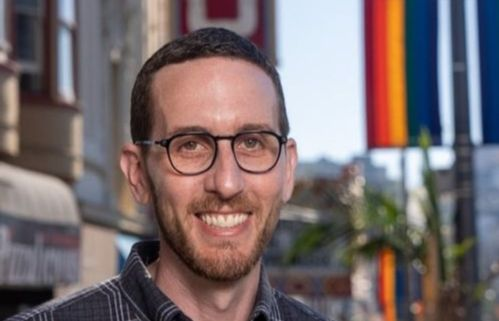
Early Endorsement: Scott Wiener for Congress, CA-11
Alice is proud to early-endorse Scott Wiener for Congress in California’s 11th Congressional District. Senator Wiener is a longtime member and former co-chair of Alice, and a proven champion for LGBTQ people. In the State Senate, Scott has led with courage on housing affordability, healthcare access, and civil rights, passing landmark laws that have increased housing supply, expanded mental health coverage, capped insulin costs, and protected transgender youth, LGBTQ seniors, immigrants, and people living with HIV.
Scott has consistently taken on entrenched interests and extremist attacks to deliver real results for our communities, while fighting for climate action, public transportation, science, public safety rooted in compassion, criminal justice reform, and a fair, open internet.
Thank you to Alice members who showed up and participated in our endorsement process. Your time, care, and engagement make Alice’s endorsements meaningful and strong. This early endorsement reflects our confidence that Scott Wiener will be a strong and principled voice for San Francisco in Congress.
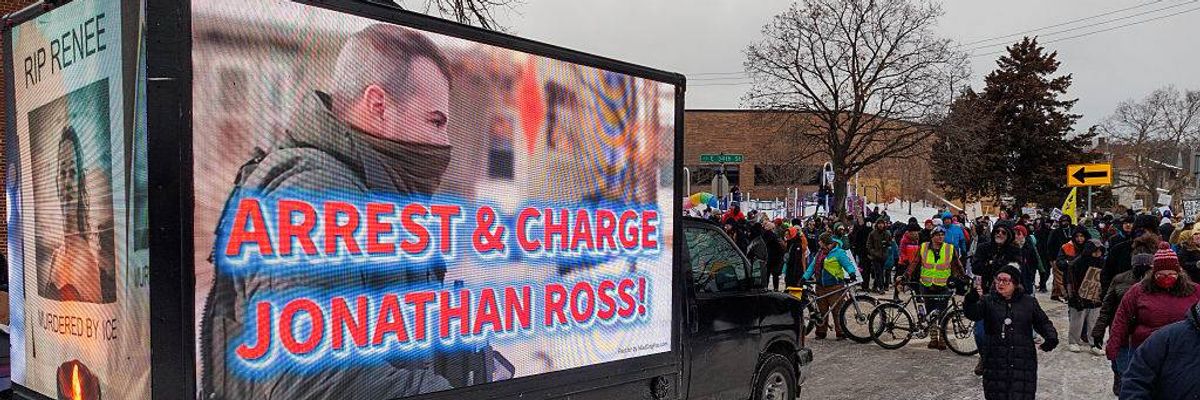
A van’s banner calls for the arrest and prosecution of Johnathan Ross, the federal agent who shot and killed 37-year-old Renee Ross, during the ICE out of Minnesota rally in Minneapolis, Minnesota, on January 10, 2026.
(Photo by Madison Thorn/Anadolu via Getty Images)
“We need to hold ICE accountable and we need to uphold human rights in ICE facilities. This is the time for Americans to speak up.”
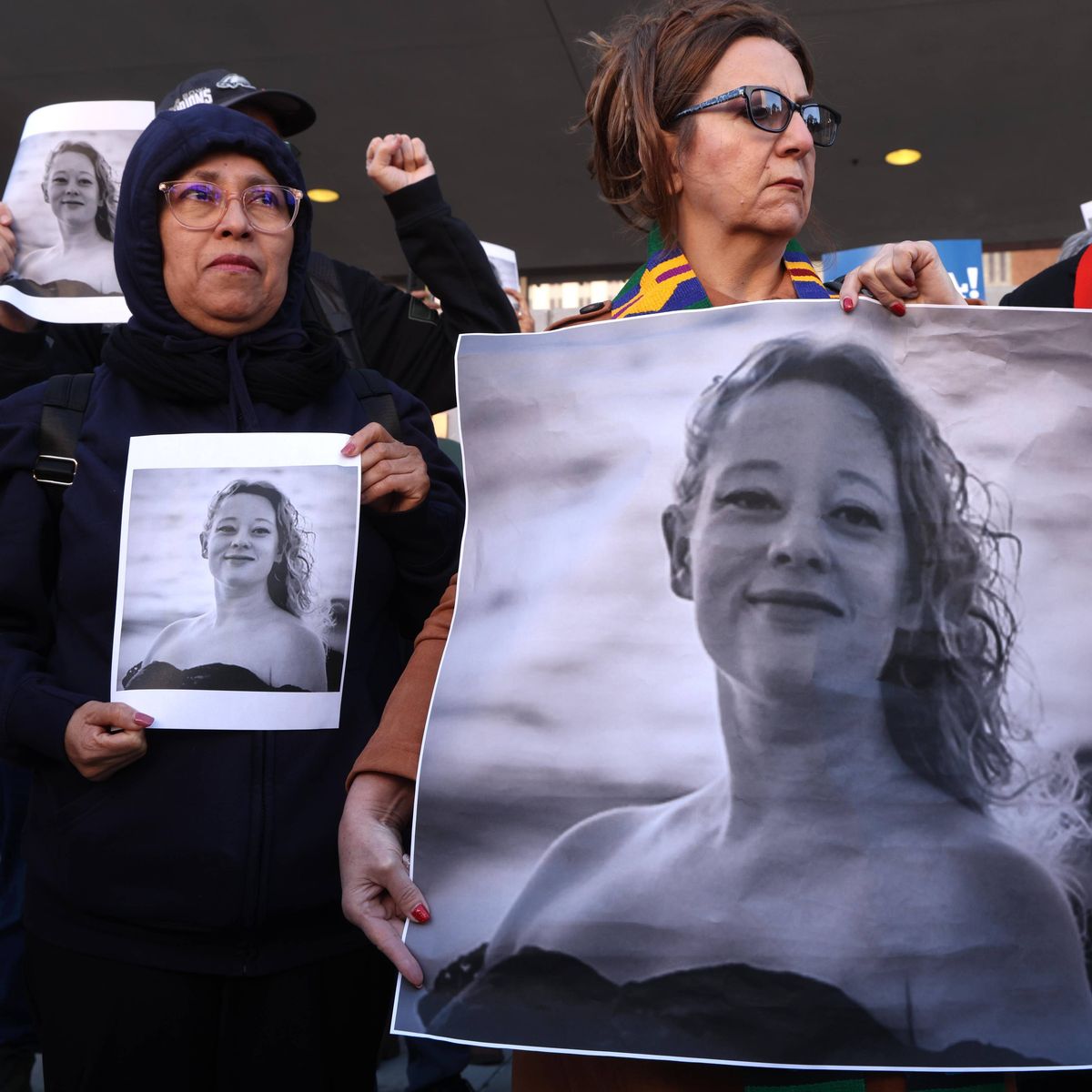
Rep. Ro Khanna on Monday called for the arrest and prosecution of the federal immigration officer who killed Minneapolis resident Renee Good last week.
In a video posted on social media, Khanna (D-Calif.) made the case for arresting Immigration and Customs Enforcement (ICE) officer Jonathan Ross, who has faced accusations of murder after he fatally shot the 37-year-old Good and left her 6-year-old son an orphan.
Khanna also said that the problems with ICE weren’t merely from one trigger-happy agent.
“ICE has gone rogue,” Khanna said. “We need accountability.”
I am calling for the arrest and prosecution of the ICE agent that shot and killed Renee Good.
I am also calling on Congress to support my bill with @JasmineForUS to force ICE agents to wear body cameras, not wear masks, have visible identification, and ensure ICE has independent… pic.twitter.com/BmoufcF0fx
He then referenced legislation he had written with Rep. Jasmine Crocket (D-Texas) that would force ICE agents to wear body cameras and carry visible identification, and would also bar them from wearing masks to conceal their identities while conducting operations.
Khanna also described a recent trip he made to an immigration detention facility in California, where he said he witnessed deplorable treatment of detainees, including one man who reported having blood in his urine but who had not seen any medical professional for the past seven days.
“We need to hold ICE accountable and we need to uphold human rights in ICE facilities,” he emphasized. “This is the time for Americans to speak up.”
As Khanna called for greater ICE accountability, new videos emerged on Tuesday of chaos caused by federal immigration officials in Minneapolis.
In one video posted by extremism researcher Amanda Moore, federal agents can be seen smashing a woman’s car windows, cutting her seat belt, and then dragging her out of the vehicle to be arrested.
Today at 34 & Park in Minneapolis, a woman tried to drive down the street where a protest had broken out in front of a home ICE was raiding, saying she had a doctor apt to get to. ICE agents busted out her windows, cut off her seatbelt, and pulled her out before arresting her. pic.twitter.com/Y9bDF1xfKW
Status Coup News reporter JT Cestkowski shared footage of federal agents lobbing tear gas canisters and firing pepper balls at demonstrators, which he described as “an everyday occurrence in America.”
Immigration agents again fired tear gas and pepper balls at Twin Cities area residents today while out raiding neighborhoods. This is now an everyday occurrence in America.
NPRnational correspondent Sergio Martínez-Beltrán posted a video of immigration agents walking around a Minneapolis parking lot and demanding shoppers offer proof that they were legally in the US.
“The drivers were people of color,” Martínez-Beltrán observed.
In Minneapolis federal agents are asking people for the immigration status. In this video you can see agents at a parking lot asking people charging their cars to show proof of their immigration status. The drivers were people of color. pic.twitter.com/y8tuI3G88O
Despite multiple videos showing Minneapolis residents angrily confronting federal immigration officials, President Donald Trump dismissed the demonstrations as “fake” during what was supposed to have been a speech on the US economy.
“One of the reasons they’re doing these fake riots—I mean they’re just terrible,” Trump said, referring to largely peaceful demonstrations in Minneapolis. “It’s so fake. ‘Shame! Shame! Shame!’ You see the woman. It’s all practiced. They take hotel rooms and they all practice together. It’s a whole scam. We’re finding out who’s funding all this stuff too.”
Our work is licensed under Creative Commons (CC BY-NC-ND 3.0). Feel free to republish and share widely.
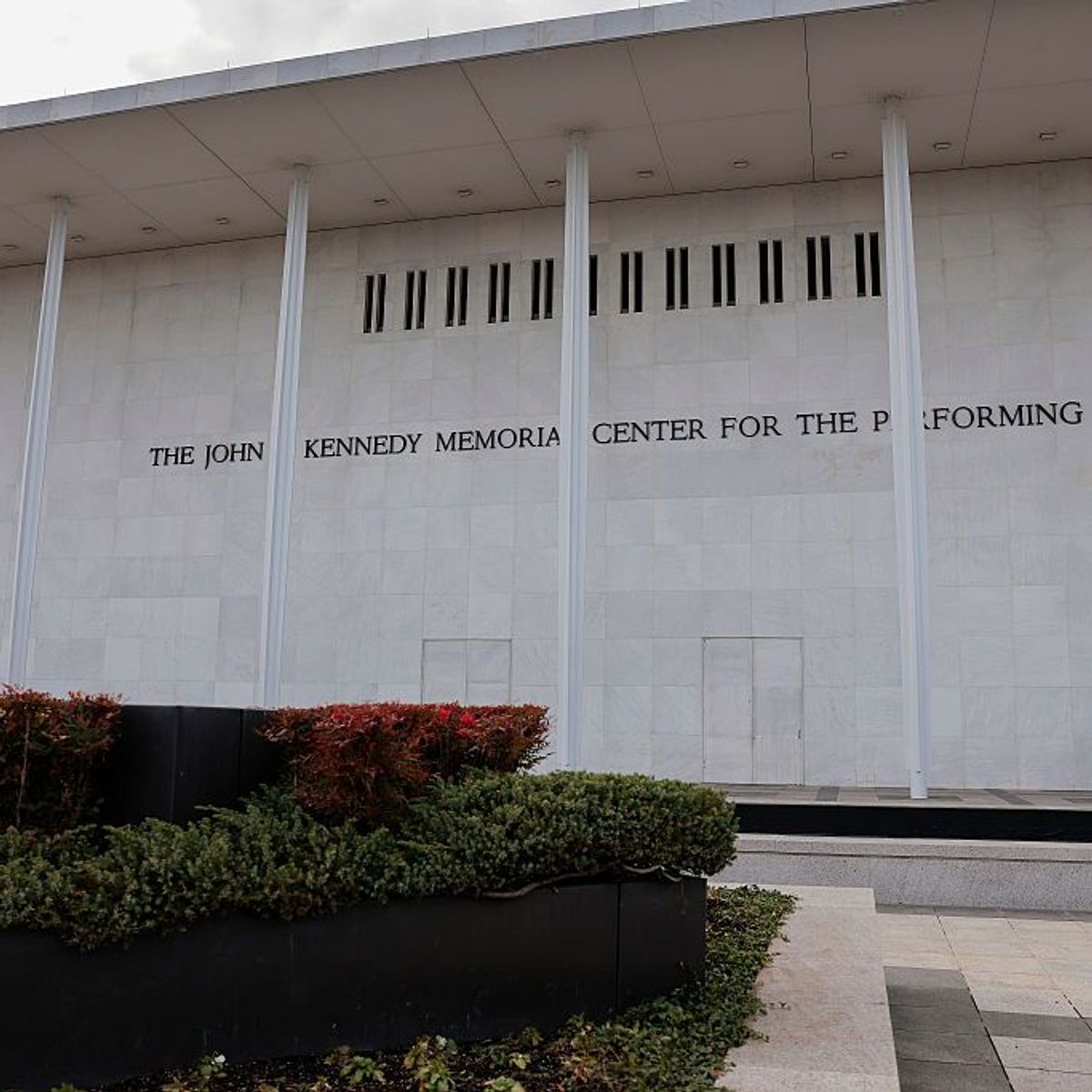
Workers adjust the name of the John F. Kennedy Memorial Center for the Performing Arts on December 19, 2025 in Washington, DC.
(Photo by Heather Diehl/Getty Images)
“It’s no secret that President Trump is undermining democracy and moving this country toward authoritarianism,” said US Sen. Bernie Sanders. “Part of that strategy is to create the myth of the ‘Great Leader’ by naming public buildings after himself.”
Legislation introduced Tuesday in the US Senate would prohibit the naming or renaming of federal buildings, land, and other assets after sitting presidents, an effort to counter President Donald Trump’s moves to attach his personal brand to government infrastructure and programs.
The measure’s backers have filed the two-page proposal as an amendment to government funding legislation that senators are taking up this week.
US Sen. Bernie Sanders (I-Vt.), one of the new bill’s lead sponsors, said in a statement that Trump’s penchant for adding his name to federal structures and initiatives is not mere symbolism. It is of a piece, Sanders argued, with his broader assault on US democracy and attempts to impose his will on the country.
“It’s no secret that President Trump is undermining democracy and moving this country toward authoritarianism,” said Sanders. “Part of that strategy is to create the myth of the ‘Great Leader’ by naming public buildings after himself—something that dictators have done throughout history.”
“For Trump to put his name on federal buildings is arrogant and it is illegal,” the senator added. “We must put an end to this narcissism—and that’s what this bill does.”
If passed, the Stop Executive Renaming for Vanity and Ego (SERVE) Act would apply retroactively, “returning any federal assets named for the current sitting president to the name given under United States Code,” a summary of the bill notes.
The New York Times on Monday published a list of “some federal initiatives and places that have been named (or renamed) for him, or feature his image, in the last year alone”:
The Donald J. Trump and The John F. Kennedy Memorial Center for the Performing Arts;
Donald J. Trump United States Institute of Peace;
Trump-class U.S.S. Defiant;
The Trump Gold Card;
Trump Accounts;
TrumpRx;
A proposed 2026 Semiquincentennial $1 coin; and
America the Beautiful National Parks pass.
“Our country desperately deserves leaders focused on working for the people—not their own ego or narcissism,” said Sen. Angela Alsobrooks (D-Md.), one of the bill’s lead sponsors. “This necessary legislation prohibits the naming, or renaming, of any federal building or land in the name of a sitting president.”
“And even more importantly, at a time when Americans can’t afford to put food on the table, pay their rent, or afford health care, this bill prohibits the use of any federal funds for these meaningless vanity projects,” Alsobrooks added.
Our work is licensed under Creative Commons (CC BY-NC-ND 3.0). Feel free to republish and share widely.
Arrest at the age of 15 in Montgomery, Alabama for refusing to give up her seat to a white woman on a segregated bus, nine months before the similar Rosa Parks incident.
Children
2
Claudette Colvin (born Claudette Austin; September 5, 1939 – January 13, 2026) was an American pioneer of the 1950s civil rights movement and nurse aide. On March 2, 1955, she was arrested at the age of 15 in Montgomery, Alabama, for refusing to give up her seat to a white woman on a crowded, segregated bus. It occurred nine months before the similar, more widely known incident in which Rosa Parks, secretary of the local chapter of the National Association for the Advancement of Colored People (NAACP), helped spark the 1955 Montgomery bus boycott.[1]
Colvin was one of four plaintiffs in the first federal court case filed by civil rights attorney Fred Gray on February 1, 1956, as Browder v. Gayle, to challenge bus segregation in the city. In a United States district court, Colvin testified before the three-judge panel that heard the case. On June 13, 1956, the judges determined that the state and local laws requiring bus segregation in Alabama were unconstitutional. The case went to the United States Supreme Court on appeal by the state, which upheld the district court’s ruling on November 13, 1956. One month later, the Supreme Court affirmed the order to Montgomery and the state of Alabama to end bus segregation. The Montgomery bus boycott was then called off after a few months. The court subsequently declared all segregation on public transportation unconstitutional.
For many years, Montgomery’s black leaders did not publicize Colvin’s pioneering effort. She said, “Young people think Rosa Parks just sat down on a bus and ended segregation, but that wasn’t the case at all.”[2] Colvin’s case was dropped by civil rights campaigners because she was unmarried and pregnant during the proceedings.[3][4] It is now widely accepted that she was not accredited by civil rights campaigners due to her circumstances. Rosa Parks said, “If the white press got ahold of that information, they would have [had] a field day. They’d call her a bad girl, and her case wouldn’t have a chance.”[3][5]
In 2021, the record of Colvin’s arrest and adjudication of delinquency was expunged by the district court in the county where the charges against her had been brought more than 66 years earlier.
Early life
Claudette Colvin was born Claudette Austin in Montgomery, Alabama, on September 5, 1939,[6][7] to Mary Jane Gadson and C. P. Austin. When Austin abandoned the family, Gadson was unable to financially support her children. Colvin and her younger sister, Delphine, were taken in by their great aunt and uncle, Mary Anne and Q. P. Colvin, whose daughter, Velma, had already moved out.[7] Colvin and her sister referred to the Colvins as their parents and took their last name.[8] When they took Claudette in, the Colvins lived in Pine Level, a small country town in Montgomery County, the same town where Rosa Parks grew up.[7][9] When Colvin was eight years old, the Colvins moved to King Hill, a poor black neighborhood in Montgomery where she spent the rest of her childhood.[10][11]
Two days before Colvin’s 13th birthday, Delphine died of polio.[7][12] Not long after, in September 1952, Colvin started attending Booker T. Washington High School.[7][13] Despite being a good student, Colvin had difficulty connecting with her peers in school due to grief.[7] She was a member of the NAACP Youth Council, where she formed a close relationship with her mentor, Rosa Parks.[14]
Bus incident
In 1955, Colvin was a student at the segregated Booker T. Washington High School in the city. She relied on the city’s buses to get to and from school because her family did not own a car. The majority of customers on the bus system were African American, but they were discriminated against by its custom of segregated seating. Colvin was a member of the NAACP Youth Council and had been learning about the civil rights movement in school.[15] On March 2, 1955, she was returning home from school when she boarded a Highland Gardens bus and sat down near an emergency exit in a middle row.[16]
If the bus became so crowded that all the “white seats” in the front of the bus were filled until white people were standing, any African Americans were supposed to get up from nearby seats to make room for whites, move further to the back, and stand in the aisle if there were no free seats in that section. When a white woman who got on the bus was left standing in the front, the bus driver, Robert W. Cleere, commanded Colvin and three other black women in her row to move to the back. The other three moved, but another black woman, Ruth Hamilton, who was pregnant, got on the bus and sat next to Colvin.[3]
The driver looked at the woman in his mirror. “He asked us both to get up. [Mrs. Hamilton] said she was not going to get up and that she had paid her fare and that she didn’t feel like standing,” recalls Colvin. “So I told him I was not going to get up either. So he said, ‘If you are not going to get up, I will get a policeman.’” The police arrived and convinced a black man sitting behind the two women to move so that Mrs. Hamilton could move back, but Colvin still refused to move. She was forcibly removed from the bus and arrested by the two policemen, Thomas J. Ward and Paul Headley.[17][18][3] This event took place nine months before the NAACP secretary Rosa Parks was arrested for the same offense.[2] Colvin later said: “My mother told me to be quiet about what I did. She told me: ‘Let Rosa be the one. White people aren’t going to bother Rosa[,] her skin is lighter than yours and they like her.’”[2] Colvin did not receive the same attention as Parks for a number of reasons: she did not have “good hair”, she was not fair-skinned, she was a teenager, and she was pregnant. The leaders in the Civil Rights Movement tried to keep up appearances and make the “most appealing” protesters the most seen.[15][19]
When Colvin refused to get up, she was thinking about a school paper she had written that day, about the local customs that prohibited Black people from using the dressing rooms in order to try on clothes in department stores.[20] In a later interview, she said: “We couldn’t try on clothes. You had to take a brown paper bag and draw a diagram of your foot … and take it to the store”.[15] Referring to the segregation on the bus and the white woman, Colvin recalled: “If she sat down in the same row as me, it meant I was as good as her.”[2]
“The bus was getting crowded, and I remember the bus driver looking through the rearview mirror asking her [Colvin] to get up for the white woman, which she didn’t,” said Annie Larkins Price, a classmate of Colvin. “She had been yelling, ‘It’s my constitutional right!’. She decided on that day that she wasn’t going to move.”[21] Colvin recalled, “History kept me stuck to my seat. I felt the hand of Harriet Tubman pushing down on one shoulder and Sojourner Truth pushing down on the other.”[22] Colvin was handcuffed, arrested, and forcibly removed from the bus. She shouted that her constitutional rights were being violated.[2][18] Colvin said, “But I made a personal statement, too, one that [Parks] didn’t make and probably couldn’t have made. Mine was the first cry for justice, and a loud one.”[23]
The police officers who took her to the station made sexual comments about her body and took turns guessing her bra size throughout the ride.[7] After one officer jumped in the back seat of the police car, Colvin recalled, “I put my knees together and crossed my hands over my lap and started praying.”[24] This made her very scared that they would sexually assault her because this happened frequently. Price testified for Colvin, who was tried in juvenile court. Colvin was initially charged with disturbing the peace, violating the segregation laws, and battering and assaulting a police officer. “There was no assault”, Price said.[21]
A group of black civil rights leaders including Martin Luther King Jr. was organized to discuss Colvin’s arrest with the police commissioner.[25] She was bailed out by her minister, who told her that she had brought the revolution to Montgomery.[15]
Through the trial Colvin was represented by Fred Gray, a lawyer for the Montgomery Improvement Association (MIA), which was organizing civil rights actions.[26] She was convicted on all three charges in juvenile court. When Colvin’s case was appealed to the Montgomery Circuit Court on May 6, 1955, the charges of disturbing the peace and violating the segregation laws were dropped, although her conviction for assaulting a police officer was upheld.[26]
Colvin’s moment of activism was not solitary or random. In high school, she had high ambitions of political activity. She dreamed of becoming the President of the United States. Her political inclination was fueled in part by an incident with her schoolmate, Jeremiah Reeves. His case was the first time that she had witnessed the work of the NAACP.[27] Reeves was sentenced to death and executed for raping a white woman when he was 16. Although there is evidence that Reeves, who was the prime suspect in the rapes or attempted rapes of five other white women,[28] was actually guilty, the case drew protests not due to questions about his guilt, but the racial disparities in sentencing. Martin Luther King Jr. noted that the controversy stemmed not from the question of guilt or innocence, but the clear racial disparities in sentencing that were further emphasized by Reeves’s young age.[29][26]
Claudette Colvin was one of four plaintiffs in the first federal court case filed by civil rights attorney Fred Gray on February 1, 1956, Browder v. Gayle, which challenged bus segregation in Montgomery, Alabama. Colvin testified before a three-judge panel in the United States District Court that heard the case. On June 13, 1956, the court ruled that state and local laws enforcing bus segregation in Alabama were unconstitutional.[30] The state appealed the decision to the United States Supreme Court, which upheld the lower court’s ruling on November 13, 1956. One month later, the Supreme Court affirmed the order for Montgomery and the state of Alabama to end bus segregation.[31] As a result, the Montgomery Bus Boycott, which had lasted over a year, was officially called off. The ruling ultimately led to the declaration that all segregation on public transportation was unconstitutional.
Life after activism
Colvin gave birth to a son, Raymond, in March 1956. Colvin left Montgomery for New York City in 1958,[3] because she had difficulty finding and keeping work following her participation in the federal court case that overturned bus segregation. Similarly, Rosa Parks left Montgomery for Detroit in 1957.[32] Colvin stated she was branded a troublemaker by many in her community. She withdrew from college, and struggled in the local environment.[33]
In New York, Colvin and her son Raymond initially lived with her older sister, Velma Colvin. In 1960, she gave birth to her second son, Randy.[34] Claudette began a job in 1969 as a nurse’s aide in a nursing home in Manhattan. She worked there for 35 years, retiring in 2004. Raymond Colvin died in 1993 in New York of a heart attack at age 37.[34][2] Her son Randy is an accountant in Atlanta and father of Colvin’s four grandchildren.[34]
Death
Colvin died under hospice care in Texas, on January 13, 2026, at the age of 86.[35][36]
Legacy
Colvin was a predecessor to the Montgomery bus boycott movement of 1955, which gained national attention. But she rarely told her story after moving to New York City. The discussions in the Black community began to shift toward black entrepreneurship rather than focusing solely on integration, although national civil rights legislation did not pass until 1964 and 1965. NPR‘s Margot Adler said that black organizations believed that Rosa Parks would be a better figure for a test case for integration because she was an adult, had a job, and had a middle-class appearance. They felt she had the maturity to handle being at the center of potential controversy.[15]
Colvin was not the only woman of the Civil Rights Movement who was left out of the history books. In the south, male ministers made up the overwhelming majority of leaders. This was partially a product of the outward face the NAACP was trying to broadcast and partially a product of the women fearing losing their jobs, which were often in the public school system.[37]
In 2005, Colvin told the Montgomery Advertiser that she would not have changed her decision to remain seated on the bus: “I feel very, very proud of what I did,” she said. “I do feel like what I did was a spark and it caught on.”[38] “I’m not disappointed. Let the people know Rosa Parks was the right person for the boycott. But also let them know that the attorneys took four other women to the Supreme Court to challenge the law that led to the end of segregation.”[32]
In an interview in 1998 with Paul Hendrickson, Colvin reflected back on her protest and why she did what she did. She stated, “I was done talking about “good hair” and “good skin” but not addressing our grievances. I was tired of adults complaining about how badly they were treated and not doing anything about it. I’d had enough of just feeling angry about Jeremiah Reeves [a classmate who had been sentenced to death in 1953 on specious charges that he had sexually assaulted white women]. I was tired of hoping for justice. When the moment came I was ready.” This statement reflected on how African Americans were feeling in the years leading up to the civil rights movement in Montgomery, Alabama. It shows the growing frustration held and the want for change. Colvin’s determination to stand up for herself paved the way for others to do the same.[39]
On May 20, 2018, Congressman Joe Crowley honored Colvin for her lifetime commitment to public service with a Congressional Certificate and an American flag.[40]
Colvin often said she was not angry that she did not get more recognition; rather, she was disappointed. She said she felt as if she was “getting [her] Christmas in January rather than the 25th.”[41]
I don’t think there’s room for many more icons. I think that history only has room enough for certain—you know, how many icons can you choose? So, you know, I think you compare history, like—most historians say Columbus discovered America, and it was already populated. But they don’t say that Columbus discovered America; they should say, for the European people, that is, you know, their discovery of the new world.[42]
— Claudette Colvin
In 2016, the Smithsonian Institution and its National Museum of African American History and Culture (NMAAHC) were challenged by Colvin and her family, who asked that Colvin be given a more prominent mention in the history of the civil rights movement. The NMAAHC has a section dedicated to Rosa Parks, which Colvin does not want taken away. Still her family’s goal is to get the historical record right, and for officials to include Colvin’s part of history. Colvin was not invited officially for the formal dedication of the museum, which opened to the public in September 2016.[43] “All we want is the truth, why does history fail to get it right?” Colvin’s sister, Gloria Laster, said. “Had it not been for Claudette Colvin, Aurelia Browder, Susie McDonald, and Mary Louise Smith, there may not have been a Thurgood Marshall, a Martin Luther King or a Rosa Parks.”[43]
In 2000, Troy University at Montgomery opened the Rosa Parks Museum in Montgomery to honor the town’s place in civil rights history. Roy White, who was in charge of most of the project, asked Colvin if she would like to appear in a video to tell her story, but Colvin refused. She said, “They’ve already called it the Rosa Parks museum, so they’ve already made up their minds what the story is.”[44]
In 2010, the street Colvin lived on when she was a young girl was named Claudette Colvin Drive in her honor. It is located off Upper Wetumpka Road in Montgomery, Alabama.[45]
Reverend Joseph Rembert has said, “If nobody did anything for Claudette Colvin in the past why don’t we do something for her right now?” He contacted Montgomery Councilmen Tracy Larkin (whose sister was on the bus in 1955 when Colvin was arrested) and Charles Jinright. In 2017, the Council passed a resolution for a proclamation honoring Colvin. March 2 was named Claudette Colvin Day in Montgomery. Mayor Todd Strange presented the proclamation and, when speaking of Colvin, said, “She was an early foot soldier in our civil rights, and we did not want this opportunity to go by without declaring March 2 as Claudette Colvin Day to thank her for her leadership in the modern day civil rights movement.” Rembert said, “I know people have heard her name before, but I just thought we should have a day to celebrate her.” Colvin could not attend the proclamation due to health concerns.[46]
In 2019, a statue of Rosa Parks was unveiled in Montgomery, Alabama, and four granite markers were also unveiled near the statue on the same day to honor the four plaintiffs in Browder v. Gayle, including Colvin.[47][48][49]
In 2021, Colvin applied to the family court in Montgomery County, Alabama to have her juvenile record expunged. Daryl Bailey, the District Attorney for the county, supported her motion, stating: “Her actions back in March of 1955 were conscientious, not criminal; inspired, not illegal; they should have led to praise and not prosecution”.[50] The judge ordered that the juvenile record be expunged and destroyed in December 2021, stating that Colvin’s refusal had “been recognized as a courageous act on her behalf and on behalf of a community of affected people”.[51]
Former US Poet LaureateRita Dove memorialized Colvin in her poem “Claudette Colvin Goes To Work”,[53] published in her 1999 book On the Bus with Rosa Parks; folk singer John McCutcheon turned this poem into a song, which was first publicly performed in Charlottesville, Virginia’s Paramount Theater in 2006.[54]
A re-enactment of Colvin’s resistance is portrayed in a 2014 episode of the comedy TV series Drunk History about Montgomery, Alabama. She was played by Mariah Wilson.[56]
In the second season (2013) of the HBO drama series The Newsroom, the lead character, Will McAvoy (played by Jeff Daniels), uses Colvin’s refusal to comply with segregation as an example of how “one thing” can change everything. He remarks that if the ACLU had used her act of civil disobedience, rather than that of Rosa Parks’ eight months later, to highlight the injustice of segregation, a young preacher named Dr. Martin Luther King Jr. may never have attracted national attention, and America probably would not have had his voice for the Civil Rights Movement.[57]
The Little-Known Heroes: Claudette Colvin, a children’s picture book by Kaushay and Spencer Ford, was published in 2021.[58]
In 2022, a biopic of Colvin titled Spark written by Niceole R. Levy and directed by Anthony Mackie was announced, with Saniyya Sidney as Colvin.[59][60]
Tell Congress: No More Tax Dollars for ICE & CBP. We Demand Accountability.
Urgent: Members of Congress are considering more funding for ICE & CBP as they negotiate the government spending bill before the January 30th deadline.
Congress cannot give ICE and CBP another dollar while they continue to visit terror on our communities. We demand real limits, strict accountability, and an end to this violence.
Send a message to your legislators now >>>
The following fields are required to ensure your message is delivered:Prefix Mr. Mrs. Ms. Mx. Dr. -Select- First NameLast NameAddressCityState -Select- Alabama Alaska American Samoa Arizona Arkansas California Colorado Connecticut Delaware District of Columbia Florida Georgia Guam Hawaii Idaho Illinois Indiana Iowa Kansas Kentucky Louisiana Maine Marshall Islands Maryland Massachusetts Michigan Minnesota Mississippi Missouri Montana Nebraska Nevada New Hampshire New Jersey New Mexico New York North Carolina North Dakota Northern Mariana Islands Ohio Oklahoma Oregon Palau Pennsylvania Rhode Island South Carolina South Dakota Tennessee Texas Utah Vermont Virginia Virgin Islands Washington West Virginia Wisconsin Wyoming Zip CodeEmail AddressCell PhoneTAKE ACTIONI’d like to subscribe to NILC’s email list
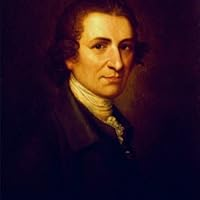
“We have it in our power to begin the world over again.”
― Thomas Paine
Thomas Paine (February 9, 1737 – June 8, 1809) was an English-born American Founding Father, French Revolutionary, inventor, political philosopher, and statesman. His pamphlets Common Sense and The American Crisis framed the Patriot argument for independence from Great Britain at the outset of the American Revolution. Wikip
From the hosts of The War on Cars podcast, a searing indictment of how cars ruin everything—and what we can do to fight back
When the very first cars rolled off production lines, they were a technological marvel, predicted to make life easier and better for all Americans; yet a hundred years later, that dream is running on empty.
Instead of unbounded freedom, the never-ending proliferation of automobiles has delivered a host of costs, among them the demolition of our neighborhoods, towns, and cities to make way for car infrastructure; an epidemic of violent death; countless hours lost in traffic; isolation from our fellow human beings; and the ongoing destruction of the natural world. Globally, SUVs alone now emit more carbon than the nations of Germany, South Korea, or Japan.
That’s why we need Life After Cars. Through historical records, revealing interviews, and unflinching statistics, Sarah Goodyear and Doug Gordon, hosts of the podcast The War on Cars, and former host Aaron Naparstek unpack the scale of damage that cars cause, the forces that have created our current crisis and are invested in perpetuating it, and the way that the fight for better transportation is deeply linked to the fight for a more equitable and just society.
Cars as we know them today are unsustainable—but there is hope. Life After Cars will arm readers with the tools they need to implement real, transformative change, from simply raising awareness to taking a stand at public forums. It’s past time to radically rethink—and shrink—society’s collective relationship with the automobile. Together, let’s create a better Life After Cars.
In George Orwell‘s Nineteen Eighty-Four, 2 + 2 = 5 appears as a possible statement of Ingsoc (English Socialism). The Party slogan “War Is Peace, Freedom Is Slavery, Ignorance Is Strength” is a dogma which the Party expects the citizens of Oceania to accept as true. Writing in his secret diary in the year 1984, the protagonist Winston Smith ponders if the Party might declare “two plus two equals five” as fact, as well as whether or not belief in such a consensus reality substantiates the lie.[19] About the falsity of “two plus two equals five”, in the Ministry of Love, the interrogator O’Brien tells the thought criminal Smith that control over physical reality is unimportant to the Party, provided the citizens of Oceania subordinate their real-world perceptions to the political will of the Party; and that, by way of doublethink: “Sometimes, Winston. [Sometimes it is four fingers.] Sometimes they are five. Sometimes they are three. Sometimes they are all of them at once”.[19]
Orwell used the idea of 2 + 2 = 5 in an essay of January 1939 in The Adelphi; “Review of Power: A New Social Analysis by Bertrand Russell“:[20]
It is quite possible that we are descending into an age in which two plus two will make five when the Leader says so.
In propaganda work for the BBC during the Second World War, Orwell applied the illogic of 2 + 2 = 5 to counter the reality-denying psychology of Nazi propaganda, which he addressed in the essay “Looking Back on the Spanish War” (1943):
Nazi theory, indeed, specifically denies that such a thing as “the truth” exists. There is, for instance, no such thing as “Science”. There is only “German Science”, “Jewish Science”, etc. The implied objective of this line of thought is a nightmare world in which the Leader, or some ruling clique, controls not only the future, but the past. If the Leader says of such and such an event, “It never happened”—well, it never happened. If he says that “two and two are five”—well, two and two are five. This prospect frightens me much more than bombs—and, after our experiences of the last few years [the Blitz, 1940–41] that is not a frivolous statement.[21]
In addressing Nazi anti-intellectualism, Orwell’s reference might have been Hermann Göring‘s hyperbolic praise of Adolf Hitler: “If the Führer wants it, two and two makes five!”[22] In the political novel Nineteen Eighty-Four, concerning the Party’s philosophy of government for Oceania, Orwell said:
In the end, the Party would announce that two and two made five, and you would have to believe it. It was inevitable that they should make that claim sooner or later: the logic of their position demanded it. Not merely the validity of experience, but the very existence of external reality, was tacitly denied by their philosophy. The heresy of heresies was common sense. And what was terrifying was not that they would kill you for thinking otherwise, but that they might be right. For, after all, how do we know that two and two make four? Or that the force of gravity works? Or that the past is unchangeable? If both the past and the external world exist only in the mind, and if the mind itself is controllable—what then?[23]
The 1951 British edition of the text, published by Secker & Warburg, erroneously omitted the “5”, thus rendering it simply as “2 + 2 =”. This error, likely the result of a typesetting mistake, remained in all further editions of the text until the 1987 edition, whereafter a correction was made based on Orwell’s original typescript.[24] This misprint did not exist in the American editions of the text, with British students of the text in the meanwhile misinterpreting Orwell’s original intentions.[25]
We protest Heritage Foundation EVERY MONDAY (Join us!!!!) By admin | September 2, 2025 | Uncategorized Cliff Cash Comedy Premiered Jul 26, 2025 Every Monday at The Heritage Foundation 214 Massachusetts Ave. Washington D.C. 4pm protest 6pm pizza Every Friday at Fox News D.C. 400 N. Capitol St. Washington D.C. 4pm protest 6pm pizza We are... Continue reading →
Milk Club Trans Caucus Meeting Date: Tuesday, April 28 Time: 5-7 PM Location and Zoom Link: Meeting info available to members of the Milk Club Trans Caucus. Please reach out to trans@milkclub.org if you would like to join the Milk Club Trans Caucus.
San Francisco Young Democrats meet with SFDems Chair Nancy Tung Wednesday, April 29th | 2pm Location: SC T-160 (third floor of Student Center) Register The San Francisco Young Democrats at SF State are teaming up with SFDems to make sure their voices are heard. Want to get more plugged into San Francisco... Continue reading →
One Million Rising: Strategic Non-Cooperation to Fight Authoritarianism Virtual Event · Hosted by No Kings Time Wednesdays 8 – 9:30pm EDT Location Virtual event Join from anywhere About this event Across the country, authoritarian forces are getting bolder and more dangerous. Trump and his allies are not hiding their agenda: mass deportations,... Continue reading →
THURSDAY, JUNE 29, 2023 AT 2 AM – 4 AM PDT How to create trust in a group? Details Event by Extinction Rebellion Empathy Circles online EMPATHY CAFE Duration: 2 hr Public · Anyone on or off Facebook How to create trust in a group? This is the question that arose in our... Continue reading →