‘Disband ICE’: Democratic Congressman Reacts to Murder in Minneapolis by Mehdi Hasan
Rep. Joaquin Castro also talks to Mehdi about Trump’s illegal invasion of Venezuela and whether the president will actually make a move to acquire Greenland. View video and Read on Substack
Violence is nothing new for Trump’s secret police force. But this killing is a tragic escalation in the racist campaign of terror being carried out against communities across our nation. It’s proof of what happens when armed thugs are unleashed into our neighborhoods without oversight or accountability.
And it needs to be a galvanizing moment for every American to join the activists who’ve been fighting this brutality day in and day out for years in saying: ENOUGH.
Our call will feature concrete actions you can take to address abuses by ICE and demand accountability.
Arresting the agent that pulled the trigger is an essential first step. But let no one be under the illusion that this is an isolated incident. Trump and the ghouls in his cabinet have stoked a culture of violence at ICE that’s manifested in near-daily atrocities. Already, they’re spreading lies about what happened in Minneapolis and lionizing the agents involved — emboldening more brutality, unless we act.
Our response needs to be loud. It needs to be nationwide. It needs to be peaceful. And it needs to address the full rottenness of Trump’s fascist police force and the system that’s allowed it to rampage our country with the budget of a national army.
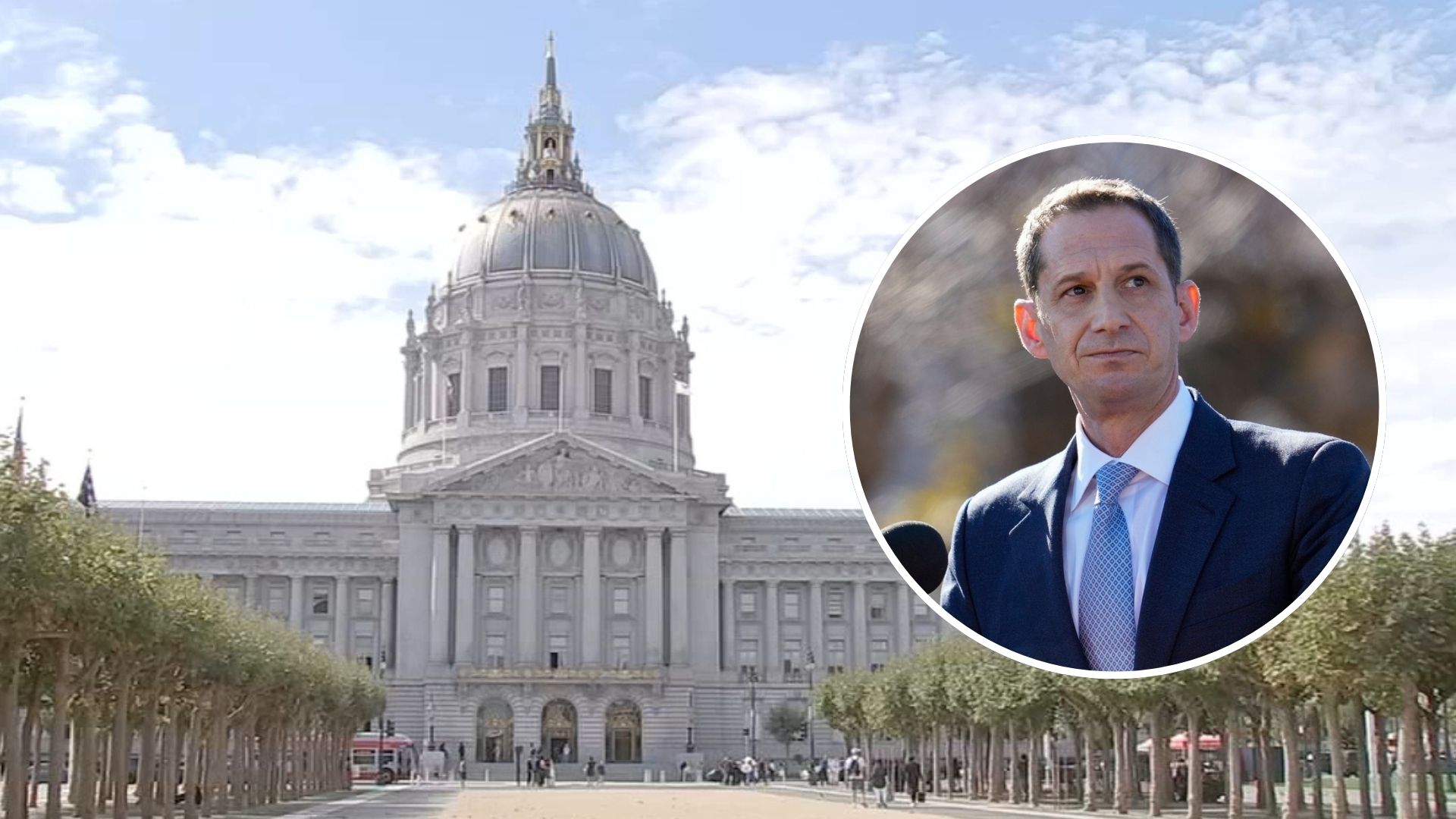
San Francisco Mayor Daniel Lurie signed a measure last week that would create a fund to help Black people who have been harmed by past city laws.
SAN FRANCICO (KGO) — San Francisco is taking another step towards possibly paying reparations to some African-American citizens.
Mayor Daniel Lurie signed a measure last week to create a fund to help Black residents harmed by past city laws.
The measure, however, does not allocate any city dollars for those payouts; Lurie says the city doesn’t have the money for it. Instead, it’s establishing a place to hold contributions.
Lurie issued a statement, saying in part: “For several years, communities across the city have been working with government to acknowledge the decades of harm done to San Francisco’s Black community…If there is private funding that can be dedicated to this fund, we stand ready to ensure that funding gets to those who are eligible for it.”
San Francisco lawmakers on Tuesday voted to create a reparations fund for Black residents without the initial city funding.
Mayor Daniel Lurie’s full statement:
“For several years, communities across the city have been working with government to acknowledge the decades of harm done to San Francisco’s Black community, including in the Western Addition and the Bayview, and ensure that everyone in our city has the opportunity to provide for their family. While that process largely predates my administration, I am signing the legislation to create this fund in recognition of the work of so many San Franciscans and the unanimous support of the Board of Supervisors.
“Every day I’ve been in office, my administration has worked to strengthen our investment in San Francisco’s Black residents and improve the services they rely on to live in this city — from public safety and street cleaning to affordable housing and education. As we go through the budget process, we are preparing to close a nearly $1 billion deficit — that means identifying key priorities for funding so we can continue delivering those services well. Given these historic fiscal challenges, the city does not have resources to allocate to this fund. My administration has regularly supported the use of private funds to support our communities, and if there is private funding that can be legally dedicated to this fund, we stand ready to ensure that funding gets to those who are eligible for it.”
by Randy Shaw on January 5, 2026 (BeyondChron.org)
Handicapping the Key Races
San Francisco in 2026 faces an electoral blizzard. Its first contested congressional race since 1987, two tight June supervisor races on top of the November contests, and at least three high-profile ballot measures. San Franciscans will also be involved in the governor’s race and helping Democrats take back the House and Senate.
For campaign professionals, hardworking volunteers, and political junkies, 2026 should be a great year.
Here’s our early forecast of the key San Francisco races along with the governor’s contest.
Wiener v. Chan for Congress
Many thought State Senator Scott Wiener would face Christine Pelosi in the race to succeed Nancy Pelosi in Congress. He is instead challenged by D1 Supervisor Connie Chan (Pelosi opted to run for State Senate should Wiener win).
First, people question whether Chan can raise enough money to win. Even with a massive volunteer base it is hard to win a citywide election without sufficient funds. Chan needs money to respond to the avalanche of hit pieces that “independent” pro-Wiener committees have already launched. She also needs money to build citywide name recognition.
Nancy Pelosi’s endorsement of Chan’s re-election led many to believe she would endorse Chan for Congress. That has not happened. This means that Pelosi’s $1.5 million in surplus campaign funds and the political power of her endorsement may never go to Chan.
Chan’s first financial report should prove illuminating.
The other new development in this race is the 25 story Marina Safeway project. It puts Wiener’s historic leadership for state upzoning legislation front and center. Chan was already criticizing his aggressive pro-housing advocacy but the Marina Safeway project puts meat on the proverbial bone.
Wiener has been surprisingly defensive about his role in the project. He has even gone so far as to blame Aaron Peskin in multiple forums. I don’t see many voters viewing it that way.
We will learn a lot from this congressional race whether a candidate’s stance on upzoning meaningfully impacts San Francisco voters.
Saikat Chakrabarti, the third candidate for Congress, cannot overcome Wiener or Chan. I don’t care how much money he spends; he’s up against two candidates with very loyal constituencies.
Under California’s “top two” law, Wiener and Chan will follow June with a November rematch. In the June 2016 State Senate race Jane Kim narrowly beat Wiener; he came back to win in November.
June Supervisor Races
D2’s Steven Sherrill and D4’s Alan Wong must run in June to finish prior terms. The June outcome still requires a race for a four-year term in November. So as with the congressional contest, these two June supervisor races are likely to be repeated in the fall.
D2: Sherrill v. Brooke
Before the Marina Safeway project, Supervisor Stephen Sherrill was a clear favorite over anti-upzoning activist Lori Brooke. Sherrill actively works to combat open-air drug markets and has been very accessible to constituents. Mayor Lurie endorsed him, which likely means more in D2 than in any other district.
Brooke is the quintessential neighborhood activist. A highly personable candidate, Brooke has been saying “I Told You So” since the Marina Safeway project confirmed her predictions about upzoning.
Sherrill’s vulnerability comes from the Marina Safeway project coming on the heels of his vote for the Family Zoning Plan. Even though the Plan could not have stopped state law from allowing the 25-story towers, many voters won’t see it that way.
Will enough voters who align with Sherrill on most issues care so much about the project that they’ll reject the mayor’s ally?
Expect mailings from the mayor urging D2 voters to elect a reliable member of Team Lurie. That may do the trick for Sherrill in a race that is now a tossup.
D4: A 3-Way Race?
Since writing about how appointee Alan Wong can win in June, I’ve heard enough feedback to elevate the chances of Albert Chow and Natalie Gee. The politics of D4 voters are complex.
Considered the city’s most conservative district, D4 elected progressive Gordon Mar in 2018. While that victory was seen as a fluke due to a weak moderate appointed opponent, Mar nearly won re-election against Joel Engardio in 2022.
No wonder progressive Natalie Gee entered the D4 race. Gee’s energy and personal popularity along with being the only major woman candidate gives her a real chance to win—if D4 voters are again willing to elect an outspoken progressive.
But what if most D4 voters are conservative? In 2006 D4 elected conservative outsider Ed Jew over multiple strong candidates. I had a good relationship with Jew before he ran for office and wish he had not taken political advice from prior D4 Supervisor Leland Yee. That advice led to Jew’s removal from office— and imprisonment.
Albert Chow has the same conservative outsider politics as Jew. He could easily get the most first-place votes and then win by getting second place votes from others.
Alan Wong can still win in D4. But this race will remain a tossup until all votes are counted. And the June winner still must run in November for a full term.
Other November Supervisor Elections
D8 and D10 will also see tough battles. The two leaders in the D8 contest are Manny Yekutiel of Manny’s fame and HealthRIGHT360 official Gary McCoy. Both backed the Family Zoning Plan so the winner may be the candidate who can attract votes from those opposed to this housing strategy.
I’ll hold off discussing D10 until the field is complete. There is currently no clear front runner. I am not aware of any serious challenger to Matt Dorsey in D6. I
San Francisco Ballot Measures
San Francisco voters will also face three major ballot measures in 2026.
The Overpaid CEO Act
San Francisco labor unions are leading an effort for a June ballot measure that would increase taxes on CEO’s that earn dramatically more than the average worker. As explained by SEIU Local 2015, “The Overpaid CEO Act places a small surcharge on large corporations whose top executives earn more than 100 times the median salary of their workers. Only companies with at least 1,000 employees and more than $1,000,000,000 in revenue—truly the biggest corporations—whose CEOs make over one hundred times the median salary of their employees will pay this surcharge.”
The tax would bring an estimate $200 million annually to the general fund.
With Trump health-care and housing cuts looming, increasing taxes on billionaires hardly seems radical. But billionaires and their allies don’t see it that way. And we know how they impact the information that reaches voters.
I’ll hold off analyzing the measure’s chances until it qualifies.
Parcel Tax for MUNI
Mayor Lurie and a large coalition are backing a progressive parcel tax measure for the November 2026 ballot to fund Muni. It aims to raise about $187 million annually to close budget deficits and expand services. It would cost smaller homes around $129/year with larger properties paying more based on size.
I’m convinced that MUNI’s survival depends on passing this tax. But there could be strong opposition. I’ll hold off a political analysis until the fall.
Charter Reform
It has yet to be decided what the planned charter reform ballot measure will cover and whether it will be on the June or November ballot (or both). Here’s what I previously wrote about all those claiming that San Francisco’s biggest problem is its charter:
Charter reform will not close open-air drug markets. It will not fill downtown office vacancies. It will not solve MUNI’s financial troubles. It will not lower health care or housing costs. It will not get lenders to make loans to build new housing. It will not boost the international tourism that Donald Trump has deterred. Charter reform will make San Francisco government operate more effectively. But it will not address the top ten problems facing the city.
Governor’s Election
California heads to June without a clear Democratic Party favorite. Kamala Harris and Senator Alex Padilla both declined to run.
The big outstanding question is whether Attorney General Rob Bonta enters the race.
Bonta previously rejected running when it appeared that Harris would run. He is now publicly reconsidering, no doubt recognizing that he would become the leading progressive in the large field.
Bonta would bring a Mamdani-type progressive to the governor’s race. But winning is no sure thing. Whether Bonta rolls the career dice by giving up being Attorney General —where he has done an A+ job—-is a tough call. I expect he will announce his future very soon.
We’ll have a separate analysis of the governor’s race once the field is final.
<I>Randy Shaw is the Editor of Beyond Chron and the Director of San Francisco’s Tenderloin Housing Clinic, which publishes Beyond Chron. Shaw’s new book is the revised and updated, The Tenderloin: Sex, Crime and Resistance in the Heart of San Francisco. His prior books include Generation Priced Out: Who Gets to Live in the New Urban America. The Activist’s Handbook: Winning Social Change in the 21st Century, and Beyond the Fields: Cesar Chavez, the UFW and the Struggle for Justice in the 21st Century. </I>
by Randy Shaw on January 5, 2026 (BeyondChron.org)
A Make or Break Year
I have seen a lot of ups and downs in my 46 years working in San Francisco’s Tenderloin. And as my new book on the neighborhood describes, past forecasts for the Tenderloin’s revitalization have gone astray.
Consider the 1986 opening of a Sizzler restaurant at the Cadillac Hotel. It seemed to signal the Tenderloin’s economic revival. It followed six transformative years for a longtime prosperous neighborhood that fell on hard times in the 1960’s.
The Tenderloin’s future looked bright.
But City Hall failed to protect this momentum. After the Sizzler opened City Hall allowed the neighborhood to decline. Economic investment abruptly stopped. Federal money coming to the Tenderloin under the Reagan budgets was slashed. Sidewalk drug activities increased.
Seven years of progress soon stopped. The Tenderloin remained stagnant until 2005, when Elaine Zamora won property owner support for creating the Tenderloin Community Benefit District (TLCBD). The TLCBD brought new resources into the neighborhood. It sent a message that property owners cared about its future.
I began refocusing on reviving the Tenderloin after the TLCBD’s passage. Believing the Tenderloin should play to its strengths, I got city funds from a special historical committee to create the Uptown Tenderloin National Historic District (thanks to the late GG Platt). Finalized in 2009, the District includes 409 buildings on the National Register of Historic Places.
The Tenderloin then got lucky when Ed Lee was appointed mayor in 2011 (Gavin Newsom was elected Lieutenant Governor). Lee was a great friend and ally for the Tenderloin. Lee’s Tenderloin/Mid-Market tax break and constant public boosting of the neighborhood brought a flurry of positive new businesses and cultural venues.
New housing developments would bring the resident customer base that Tenderloin businesses needed. Four large developments bordered Mid-Market, also reviving after decades of neglect. The two neighborhoods long had a shared fortune (See my story for SPUR, “ Linked Fortunes: Mid-Market and the Uptown Tenderloin”)
In January 2020—“A Tenderloin Breakthrough in 2020?”—I listed several new investments that would improve the neighborhood. I did not foresee how COVID’s arrival in March would halt these plans. Nor did I foresee City Hall making a series of destructive policy decisions designed to convert the Tenderloin from a residential neighborhood on the rise to a drug-containment zone.
2026: A Tipping Point
Six years after COVID reversed the Tenderloin’s progress, the neighborhood is at a tipping point. Here’s the good news.
New businesses are starting to take advantage of city subsidy programs. A Falafel restaurant opened on Golden Gate and in January a tea shop and micro cinema will use city support to open at the entry to Little Saigon. New Police Chief Derrick Lew has a record of prioritizing closing drug markets.
The revised Tenderloin Police Station boundaries will begin by June. This will increase police visibility in the Tenderloin neighborhood (the radically expanded 2015 boundaries were predicted to increase Tenderloin crime and they did). Tenderloin Housing Clinic Organizing Director Pratibha Tekkey became the first neighborhood advocate to sit on the Police Commission.
By March 31 the city will end its destructive conversions of the Monarch and Adante tourist hotels to shelters. No City Hall policy did more to wreck Little Saigon than the conversion of four nearby tourist hotels to shelters that allow drug use (the COVA and 685 Ellis are the others). The city spent lavishly to replace tourists who were Little Saigon customers with shelter residents who got free meals.
Shelter residents don’t stay in their rooms all day. Many openly used drugs on Little Saigon sidewalks. I wrote a story in November 2023—-“While City Fiddles, Little Saigon Falls.” Yet City Hall took no action to stop the destruction of Little Saigon until it closed the COVA shelter in February 2025.
The city-promoted drug scene killed many Little Saigon businesses. It is a flat out tragedy.
Reviving Little Saigon
Efforts have emerged to revive Little Saigon.
I’ve been involved with legislation to bring tourists back to Little Saigon. It should be introduced this month. There’s also talk of a public private investment partnership to revitalize Larkin Street. 2026 could prove a comeback year for the once thriving Little Saigon area.
Adding to the good news is the planned expansion of the Tenderloin Museum. It will triple in size! The Museum plays a key role in attracting people to the Tenderloin. Venues that did this pre-COVID—like Piano Fight, Turtle Tower and Exit Theater—are no longer in the neighborhood. The museum’s exhibition space at 398 Eddy and its Compton’s Cafeteria Riot play at 835 Larkin has likely made it the Tenderloin’s leading cultural attraction for tourists and non-residents.
My hope in founding the museum was that, in addition to highlighting the Tenderloin’s remarkable lost history, it would bring people into the Tenderloin to patronize other venues. The expanded space with two new exhibits of national interest—one for neon signs and another tracing the Indian-American hotel industry whose roots are in the neighborhood- will facilitate this.
The Tenderloin Brand
The city’s failure to end the extreme post-COVID sidewalk drug use has badly damaged the Tenderloin’s brand. Restoring the Tenderloin’s reputation requires the public seeing drug-filled sidewalks in the neighborhood as the exception, not the norm.
Can this finally happen in 2026? I think it can for three reasons.
First, in addition to the positive developments mentioned above, Mayor Lurie still believes in the Tenderloin’s future. The mayor does not want the Tenderloin to be a drug containment zone.
Second, David Kennedy, the director of the Center for Crime Prevention & Control at John Jay College of Criminal Justice, should soon bring his talents to the Tenderloin (and other neighborhoods with drug markets). Kennedy is known for closing drug markets across the nation. D6 Supervisor Matt Dorsey has spent two years trying to get Kennedy here and the obstacles seem to be gone. The Tenderloin will benefit from his expertise.
Third, San Francisco hosts two major events this year—the Super Bowl and World Cup—that will attract media from across the world. Mayor Lurie wants their stories to focus on the city’s Comeback, not its drug-filled sidewalks.
While there is always a risk that major events push drug users into the Tenderloin, the neighborhood improved around APIC in 2023. These events are far bigger than APIC.
Which Way for Tenderloin?
If the Tenderloin does not improve in 2026 many will give up on the neighborhood. Instead of a working-class neighborhood filled with immigrants and children who deserve a safe quality of life, it will be seen as San Francisco’s dumping ground for those with drug and mental health problems. The “geographic equity” measure that the Board passed in 2025 does not apply to non-city funded programs. If small businesses don’t open in the Tenderloin in 2026, nonprofit service providers will fill retail spaces.
I’m betting on 2026 returning the Tenderloin to its rosy 2019 path. But nobody with experience in the Tenderloin takes anything for granted.
<I>Randy Shaw is the Editor of Beyond Chron and the Director of San Francisco’s Tenderloin Housing Clinic, which publishes Beyond Chron. Shaw’s new book is the revised and updated, The Tenderloin: Sex, Crime and Resistance in the Heart of San Francisco. His prior books include Generation Priced Out: Who Gets to Live in the New Urban America. The Activist’s Handbook: Winning Social Change in the 21st Century, and Beyond the Fields: Cesar Chavez, the UFW and the Struggle for Justice in the 21st Century. </I>
WASHINGTON—As he wandered aimlessly through the halls of the U.S. Capitol building, lost Jan. 6 rioter Alex Morris told reporters Tuesday that he was still searching for former Vice President Mike Pence. “Oh my God, how am I back in Statuary Hall again? Where the hell is Pence?” said Morris, tucking a noose under his arm while opening Google Maps and reorienting himself in the direction of the National Mall. “At this point, I can barely remember why I wanted to hang the guy in the first place. It feels like I’ve circled the Senate Chamber a million times. Does anyone know where Ashli Babbitt is? She knows her way around here.” At press time, Morris reportedly attempted to jog his memory by taking a shit in the office of Rep. Nancy Pelosi (D-CA).
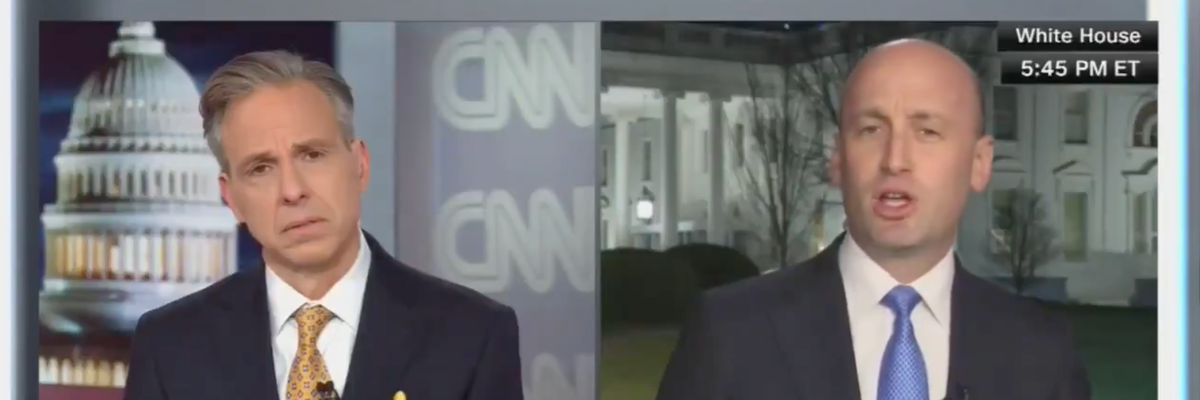
CNN anchor Jake Tapper listens as White House Deputy Chief of Staff Stephen Miller says the US has the right to take over Greenland in an interview on January 5, 2026.
(Photo: screenshot/CNN)
The White House adviser offered “a very good definition of imperialism,” said Sen. Bernie Sanders.
“Belligerent” was how one Democratic lawmaker described a diatribe given by top White House adviser Stephen Miller on CNN Monday evening regarding the Trump administration’s right to take over Venezuela—or any other country—if doing so is in the supposed interest of the US.
To Sen. Bernie Sanders (I-Vt.), however, Miller was simply providing viewers with “a very good definition of imperialism” as he described the worldview the administration is operating under as it takes control of Venezuela and eyes other countries, including Greenland, that it believes it can and should invade.
“This is what imperialism is all about,” Sanders told CNN‘s Jake Tapper. “And I suspect that people all over the world are saying, ‘Wow, we’re going back to where we were 100 years ago, or 50 years ago, where the big, powerful countries were exploiting poorer countries for their natural resources.’”
The senator spoke to Tapper shortly after Miller’s interview, in which the news anchor asked whether President Donald Trump would support holding an election in Venezuela days after the US military bombed the country and abducted President Nicolás Maduro and his wife.
Miller refused to directly engage with the question, saying only that it would be “absurd and preposterous” for the US to install Venezuelan opposition leader María Corina Machado as the leader of the country, before asking Tapper to “give [him] the floor” and allow him to explain the White House’s view on foreign policy.
“The United States is using its military to secure our interests unapologetically in our hemisphere,” said Miller. “We’re a superpower and under President Trump we are going to conduct ourselves as a superpower. It is absurd that we would allow a nation in our backyard to become the supplier of resources to our adversaries but not to us.”
Instead of “demanding that elections be held” in Venezuela, he added, “the future of the free world depends on America to be able to assert ourselves and our interests without an apology.”
MILLER: The US is using its military to secure our interests unapologetically in our hemisphere. We're a superpower and under President Trump we are going to conduct ourselves as a superpower. It's absurd that we would allow a nation in our backyard to become the supplier of… pic.twitter.com/wXK2UxnqUj
The Trump administration has repeatedly claimed that Venezuela “stole” oil from the United States. The country is believed to have the largest oil reserves in the world, and the government nationalized its petroleum industry in 1976, including projects that had been run by US-based ExxonMobil. The last privately run oil operations were nationalized in 2007 by then-President Hugo Chavez.
Miller offered one of the most explicit explanations of the White House’s view yet: that “sovereign countries don’t get sovereignty if the US wants their resources,” as Rep. Seth Moulton (D-Mass.) translated in a social media post.
Moulton called Miller’s tirade “genuinely unhinged” and “a disturbing window into how this administration thinks about the world.”
Miller’s remarks followed a similarly blunt statement at a UN Security Council emergency meeting by US Ambassador Michael Waltz.
“You cannot continue to have the largest energy reserves in the world under the control of adversaries of the United States,” said Waltz.
Miller’s description of the White House’s current view on foreign policy followed threats from Trump against countries including Colombia, Mexico, and Greenland, and further comments suggested that the administration could soon move to take control of the latter country—even though it is part of the kingdom of Denmark, which along with the US is a founding member of the North Atlantic Treaty Organization (NATO).
“Greenland should be part of the United States,” said Miller. “The president has been very clear about that, that is the formal position of the US government.”
Miller: “Greenland has a population of 30,000 people. By what right does Denmark assert control over Greenland? The United States is the power of NATO. Greenland should be part of the United States.”
He dismissed the idea that the takeover of Greenland, home to about 56,000 people, would involve a military operation—though Trump has said he would not rule out using force—and said that “nobody’s going to fight the United States militarily over the future of Greenland.”
The vast island is strategically located in the Arctic Circle and has largely untapped reserves of rare-earth minerals.
Danish and Greenlandic officials have condemned Trump’s latest threats this week, with Denmark’s prime minister, Mette Frederiksen, warning that, in accordance with the NATO treaty, “everything would come to an end” if the US attacks another NATO country.
“The international community as we know it, democratic rules of the game, NATO, the world’s strongest defensive alliance—all of that would collapse if one NATO country chose to attack another,” she told Danish news channel Live News on Monday.
The Danish government called an emergency meeting of its Foreign Affairs Committee on Tuesday to discuss “the kingdom’s relationship with the United States.”
On CNN, Sanders noted that as Trump sets his sights on controlling oil reserves in Venezuela and resources in Greenland, people across the president’s own country are struggling under rising costs and financial insecurity.
“Maybe instead of trying to run Venezuela,” said Sanders, “the president might try to do a better job running the United States of America.”
Our work is licensed under Creative Commons (CC BY-NC-ND 3.0). Feel free to republish and share widely.
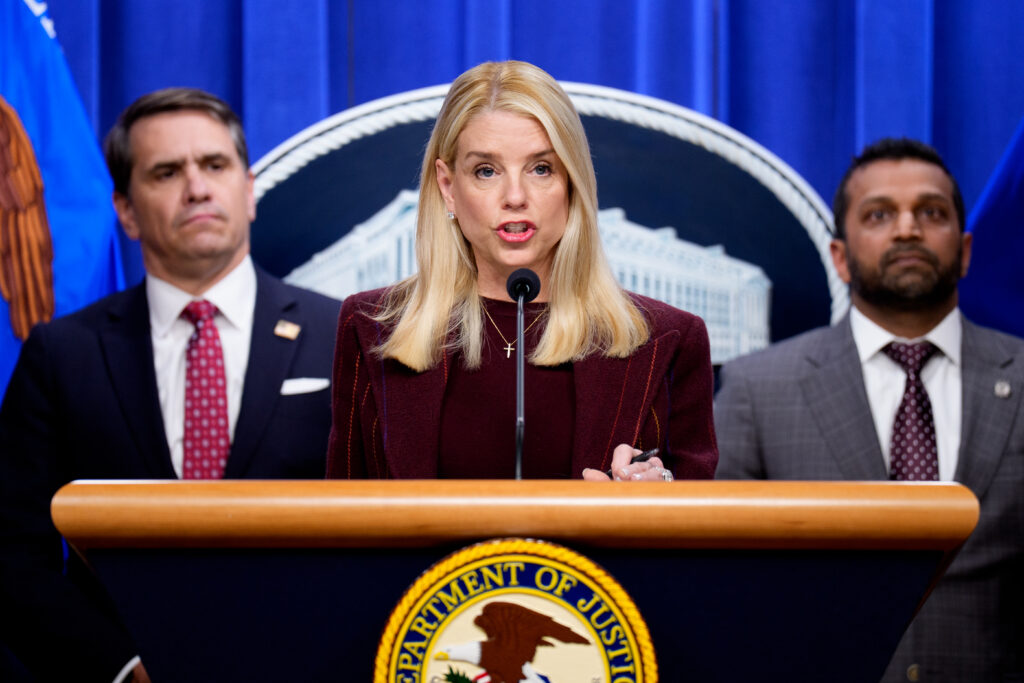
Attorney General Pam Bondi (C), accompanied by Deputy Attorney General Todd Blanche (L) and FBI Director Kash Patel (R) in Washington, D.C., in November 2025. (Photo: Andrew Harnik/Getty Images)
In November, Congress passed, and President Donald Trump signed into law, legislation mandating the Department of Justice (DOJ) to publicly release all of the files it has on convicted sex offender Jeffrey Epstein by late December.
More than two weeks past that deadline, the DOJ has released less than 1% of its Epstein documents and it will continue to be in violation of the law for the foreseeable future, according to a new letter the department sent a New York-based federal judge Monday.
In the letter, Jay Clayton, the top federal prosecutor in the Southern District of New York, said the department has so far published only 12,285 documents and that more than 2 million documents remain unreleased in “various phases of review and redaction.”
SIGN UP TODAY
Get updates straight to your inbox — for free
Join 350,000 readers who rely on our daily and weekly newsletters for the latest in voting, elections and democracy.
According to Clayton’s disclosure, the around 12,000 documents released so far represents only 0.6% of the remaining outstanding documents currently under review.
The Epstein Files Transparency Act, which passed Congress with near unanimous approval, required Attorney General Pam Bondi to release “all unclassified records, documents, communications, and investigative materials” it had on Epstein, his associates or entities with ties to his trafficking or financial networks by Dec. 19, 2025.
The DOJ, however, has slow-rolled its release of the Epstein file in violation of the new law, which does not allow the department to delay. The law had already given the department 30 days to process the documents for release, and the FBI started an extensive review and redaction process on the documents in March.
Senior DOJ officials have claimed that the department needs additional time to redact the files in order to protect victims. The department also suddenly discovered over a million more documents potentially related to Epstein that it did not include in its initial review and that could be covered by the act.
In the letter, Clayton acknowledged that many of the discovered documents were duplicates of materials that the department already collected for review but still had to “undergo a process of processing and deduplication.”
“This work has required and will continue to require substantial Department resources,” Clayton wrote, adding that the DOJ has detailed “over 400 lawyers” to review the files “for the next few weeks.”
From suddenly removing and re-releasing images of Trump to preemptively rejecting accusations against him within the documents, the DOJ also appears to be playing defense for the president with the release of documents.
Epstein, who died by suicide in a New York prison in 2019, was a longtime associate of Trump’s.
While he has acknowledged his past friendship with Epstein, Trump denied involvement in, or knowledge of, Epstein’s sex-trafficking operation and claimed they had a falling out in the mid-2000s.
However, the president, his former attorneys now at the DOJ, and his allies in Congress have also repeatedly attempted to prevent the release of the Epstein files. Emails from Epstein’s estate released by the House Oversight Committee last month also indicated that the convicted sex offender believed Trump knew of his abuses.
Reps. Ro Khanna (D-Calif.) and Thomas Massie (R-Ky.), the co-sponsors of the Epstein Files Transparency Act, have slammed the DOJ’s delay and have said they were exploring bringing contempt or impeachment charges against Bondi and other senior officials responsible for the incomplete release.
In addition to its unlawful publication delay, the DOJ hasn’t complied with other aspects of the law.
The act also required the department to give Congress a report detailing why it made redactions in the released documents, as well as a list of “all government officials and politically exposed individuals” named in the files within 15 days after publication.
However, the DOJ blew past the Jan. 3 deadline for the report and list without explanation.
Monday afternoon, Senate Minority Leader Chuck Schumer said on social media that lawmakers still had yet to receive any submission from the DOJ.
“It’s been 17 DAYS since the Trump DOJ first broke the law and failed to release all the Epstein files,” Schumer wrote. “It’s been 14 DAYS since Trump’s DOJ released anything at all – with the DOJ doing everything in its power to delay and obfuscate.”
“What are they trying to hide?” Schumer added.
In a letter sent late last month, a group of bipartisan senators also asked Don Berthiaume, the DOJ’s acting inspector, to audit the department’s compliance with the act, saying full transparency was “essential in identifying members of our society who enabled and participated in Epstein’s crimes.”
The DOJ made the new disclosure about the Epstein files in a letter to U.S. District Judge Paul Engelmayer, who has presided over aspects of the department’s criminal case against Epstein’s longtime accomplice and girlfriend, Ghislaine Maxwell.
Maxwell was found guilty of five federal counts related to the sexual abuse and trafficking of minor girls in connection with Epstein and was sentenced to 20 years in prison. However, Maxwell has continuously sought to challenge her convictions and sentence through appeals.
In addition to the appeals, she and her legal team appear to have been preparing an application for commutation to be reviewed by the Trump administration, which granted her forms of relief from her prison sentence last year.
In July, Deputy Attorney General Todd Blanche, one of Trump’s former defense attorneys, interviewed Maxwell in prison.
After the prison interview, the federal Bureau of Prisons abruptly transferred Maxwell from a prison in Florida to a minimum-security prison in Texas. Maxwell’s sex offender conviction should have precluded her serving her sentence in a less restrictive prison facility unless she received a special waiver, according to Bureau of Prisons policy.
Last month, Blanche defended Maxwell’s transfer, claiming she faced unspecified “threats against her life” in the Florida prison. He also appeared to acknowledge that he gave the final approval for her move.
“I am responsible for the bureau of prisons,” Blanche said. “Every decision they make lands on my desk to the extent it needs to.”
After President Trump invaded Venezuela and deposed President Nicolás Maduro Friday night, the Bay Area reacted fast, as protests took over both San Francisco and San Jose by Saturday afternoon.
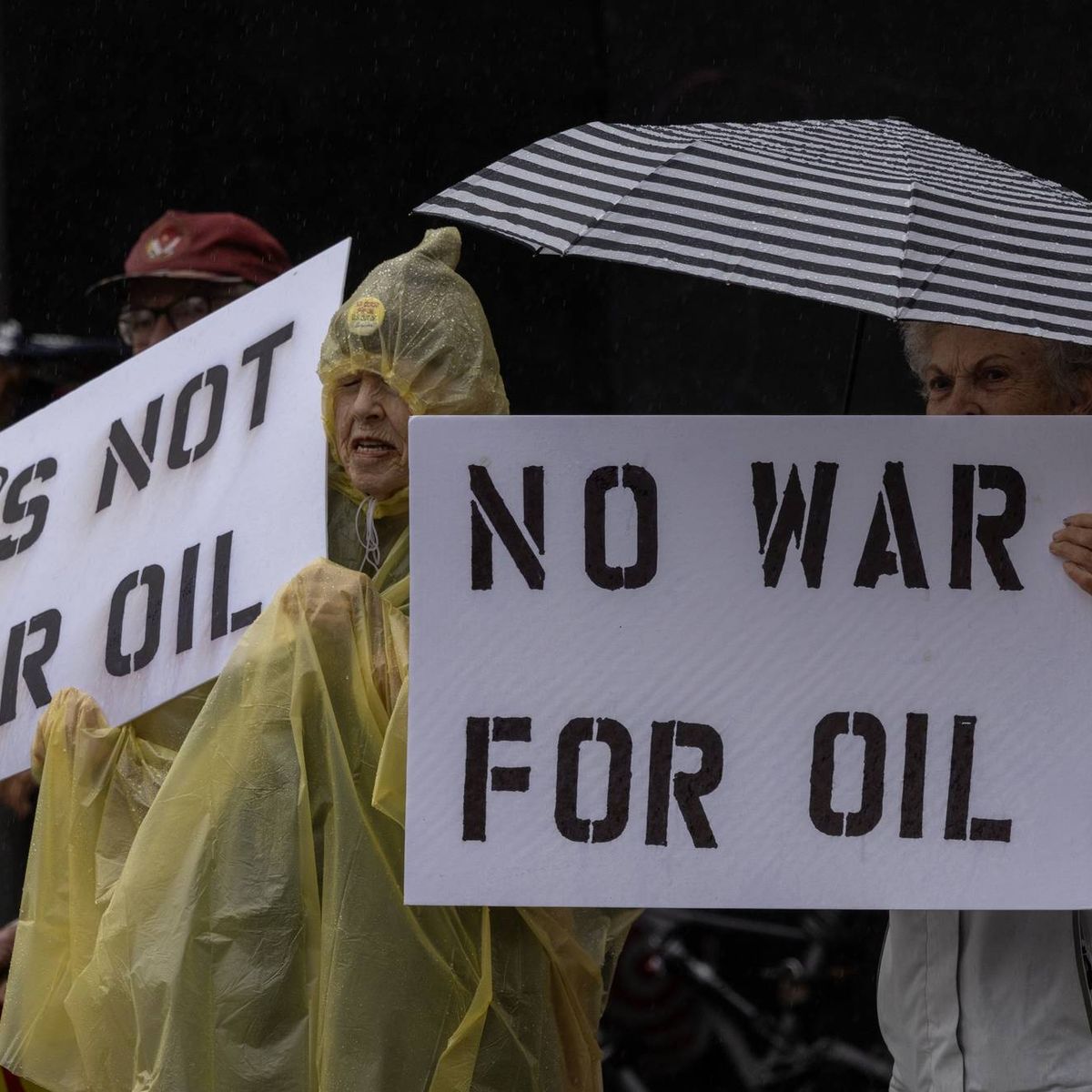
The big international news this weekend was Donald Trump’s invasion of Venezuela and capture of Venezuelan President Nicolás Maduro and his wife Friday night. The whole canard is being sold as fighting narcoterrorism, but Trump pretty much gave away the game Saturday when he said, “We’re going to have our very large U.S. oil companies, the biggest anywhere in the world, go in, spend billions of dollars, fix the badly broken infrastructure, the oil infrastructure, and start making money.”
Needless to say, by Saturday, protests were breaking out across the Bay Area.
A massive crowd in San Francisco has taken the streets to oppose Trump's war drive against Venezuela –– the people demand money for people's needs, not the war machine!
— Party for Socialism and Liberation (@pslnational) January 3, 2026
Mission Local reports that about 400 protesters took to Market Street in SF on Saturday, and made their way to the Civic Center statue of renowned South American revolutionary Simón Bolívar. “No more coups, no more wars, Latin America isn’t yours!,” protesters reportedly chanted at the San Francisco rally. Meanwhile in San Jose, KPIX reports there was also a protest of the Venezuelan invasion in that city.
NOW IN SAN FRANCISCO: Hundreds are rallying against the Trump administration's illegal military aggression towards Venezuela. More than 80 cities have mobilized across the country to oppose a new war. pic.twitter.com/Tkhyn2ji4G
An estimated 80 Venezuelans were killed in Friday night’s invasion. “We saw them destroy the very fundamental rights that all Latin American countries and all countries of the world share,” Palestinian Youth Movement member Omar Khoury said in a speech, per Mission Local.
Though one thing you may not have seen much at SF’s Saturday protest of the Venezuelan invasion was, well, Venezuelans. Mission Local spoke to one unidentified Venezuelan protester, and reports “She went to the rally today after hearing about it, hoping to see other Venezuelan people, but relatively few were there and none spoke at the rally.”
“I was like, I want to see my people and hug them, and I want to tell them everything is going to be okay,” that woman told Mission Local. “Then I encounter these people that are a little fed with lies also.” (The speakers were often sympathetic to the deposed dictator Maduro.)
We protest Heritage Foundation EVERY MONDAY (Join us!!!!) By admin | September 2, 2025 | Uncategorized Cliff Cash Comedy Premiered Jul 26, 2025 Every Monday at The Heritage Foundation 214 Massachusetts Ave. Washington D.C. 4pm protest 6pm pizza Every Friday at Fox News D.C. 400 N. Capitol St. Washington D.C. 4pm protest 6pm pizza We are... Continue reading →
Milk Club Trans Caucus Meeting Date: Tuesday, April 28 Time: 5-7 PM Location and Zoom Link: Meeting info available to members of the Milk Club Trans Caucus. Please reach out to trans@milkclub.org if you would like to join the Milk Club Trans Caucus.
San Francisco Young Democrats meet with SFDems Chair Nancy Tung Wednesday, April 29th | 2pm Location: SC T-160 (third floor of Student Center) Register The San Francisco Young Democrats at SF State are teaming up with SFDems to make sure their voices are heard. Want to get more plugged into San Francisco... Continue reading →
One Million Rising: Strategic Non-Cooperation to Fight Authoritarianism Virtual Event · Hosted by No Kings Time Wednesdays 8 – 9:30pm EDT Location Virtual event Join from anywhere About this event Across the country, authoritarian forces are getting bolder and more dangerous. Trump and his allies are not hiding their agenda: mass deportations,... Continue reading →
THURSDAY, JUNE 29, 2023 AT 2 AM – 4 AM PDT How to create trust in a group? Details Event by Extinction Rebellion Empathy Circles online EMPATHY CAFE Duration: 2 hr Public · Anyone on or off Facebook How to create trust in a group? This is the question that arose in our... Continue reading →