Luigi, a Year Later: How to Build a Movement Against Parasitic Health Insurance Giants

The widespread support for Mangione shows America is ready to mobilize to build a more humane health care system.

Sam Beard

December 4 2025 (TheIntercept.com)

NEW YORK, NEW YORK - DECEMBER 02: Luigi Mangione appears for the second day of a suppression of evidence hearing in the killing of UnitedHealthcare CEO Brian Thompson in Manhattan Criminal Court on December 02, 2025 in New York City. Mangione's lawyers will argue to have the evidence thrown out because police officers allegedly did not read Mangione his Miranda rights and did not have a proper warrant when they searched his backpack at a Pennsylvania McDonald's last December. He is accused of fatally shooting UnitedHealthcare CEO Brian Thompson and faces state and federal murder charges. (Photo by Curtis Means-Pool/Getty Images)
Luigi Mangione appears for the second day of a suppression of evidence hearing in the killing of UnitedHealthcare CEO Brian Thompson in Manhattan Criminal Court on Dec. 2, 2025 in New York City. Photo: Curtis Means/Pool via Getty Images

Sam Beard is a spokesperson for the December 4 Legal Committee, whose book Depose: Luigi Mangione and the Right to Health is available for pre-order at illwilleditions.com.

Luigi Mangione’s legal defense fund has swelled to more than $1.3 million and is still growing daily. As the December 4 Legal Committee, we created that fund — but it would mean nothing without the donations, prayers, and support of people from around the world. As corporate social media platforms censored support for Luigi, the fundraiser page became a place for people to share stories of senseless death and suffering at the hands of the for-profit health insurance industry in this country.

There is a deep irony in the widespread support for Luigi. People celebrate an alleged murderer not because they hate reasonable debate or lust for political violence, but out of respect for themselves and love for others. Across the political spectrum, Americans experience the corporate bureaucracies of our health care system as cruel, exploitative, and maddening. They feel powerless in the face of the unnecessary dehumanization, death, and financial ruin of their neighbors and loved ones.

One year ago, the December 4 killing of United Healthcare CEO Brian Thompson temporarily suspended the usually intractable left vs. right polarization of America. Ben Shapiro’s audience revolted when he accused Luigi supporters of being “evil leftists.” Donors to Luigi’s fund come from across the political spectrum, and a common theme among them is their acute realization that the political differences of the culture war are largely manufactured to benefit the powerful. This was a crucial difference between Mangione’s alleged act and, for example, the assassination of Charlie Kirk. While the latter intensified existing political divides, the former seemed to strike upon the common ground of a different political landscape: from red vs. blue, or left vs. right, to down vs. up.

Luigi Mangione’s mugshot painted by the artist Sam McKinniss. Courtesy: Sam McKinniss

But a year on, it is clear that even bipartisan public support for killing a health care CEO on the street and the endless stories of suffering and death as a result of insurance claim denials are not enough to depose the for-profit health care system. Today, Medicare for All looks even more politically unrealistic than when Bernie Sanders made it the centerpiece of his presidential campaign.

This fact poses a challenge for Luigi’s supporters: Will his alleged act be remembered as nothing more than a salacious contribution to the true crime genre? Will we settle for him being installed as an edgy icon of celebrity culture, used to market fast-fashion brands and who knows what next?

We do not think his supporters, or anyone else who believes that health care is a human right, should accept that. But what would it take to make the events of last December 4 into a movement to build a more humane health care system in America?

The time has come for the long struggle for the right to health care to make a strategic shift from protest to political direct action.

For the last year, we have been asking this question of medical professionals, community organizers, scholars, and ourselves.

In our forthcoming book, “Depose: Luigi Mangione and the Right to Health,” we offer the beginnings of an answer: The history of the struggle for the right to health in America shows that it is indeed politically unrealistic to expect politicians to deliver it from above — but our own dignity and intelligence demands that this right be asserted by all of us from below. The widespread support for Luigi shows that the time has come for the long struggle for the right to health care to make a strategic shift from protest to political direct action.

A courtroom sketch of Mangione by the artist Molly Crabapple. Courtesy: Molly Crabapple

Consider the sit-in movements to end Jim Crow laws and desegregate American cities. These were protests, insofar as participants drew attention to unjust laws — but they were also political direct actions. Organizers were collectively breaking those laws, and in doing so, were enacting desegregation. Activists organized themselves to support and protect each other in collectively nullifying laws that had no moral authority and, in the process, acted as if they were already free. This is what we mean by a shift from protest to direct action.

Less well known is the role of direct action in winning the eight-hour workday. For half a century, industrial workers had been struggling to shorten their hours so they could have some rest and joy in their lives. One decisive moment in this struggle came in 1884, when the American Federation of Labor resolved that two years later, on May 1, their workers would enact the eight-hour day. After eight hours, they would go on strike and walk off the job together. They called on other unions around the country to do the same and a number did — including in Chicago, where police deployed political violence to attack striking workers, killing two. While this action did not immediately win the struggle everywhere, it did succeed in beginning to normalize the 8-hour day and raised the bar for everywhere else to eventually do the same. The key is that this could only happen when workers stopped demanding something politically unrealistic and started changing political reality themselves.

Related

The Persistent Push to Depict Luigi Mangione and His Supporters as Terrorists

The struggle for the right to health care has been ongoing in the United States for at least a century. At every turn, it has been thwarted by industry lobbyists and the politicians they control. But what would it look like to strategically shift the struggle for the right to health care in the U.S.? How would health care providers go on strike or engage in direct action without harming patients?

We found the beginning of an answer from Dr. Michael Fine, who has called on his fellow physicians to organize for a different kind of strike: not halting all their labor, but stopping the aspects of their work that are unrelated to their responsibility as healers. Fine writes, “We need to refuse, together, to use the electronic medical records until they change the software so that those computers free us to look at and listen to patients instead of looking at and listening to computer screens.”

All of us could organize to free the labor of health care from the corporate bureaucracies that act as parasites on the relationship between caregiver and patient.

A strike by health care workers could mean not the cessation of care, but liberating this critical work from the restraints imposed by profit-seeking companies. Beginning from this idea, all of us could organize to free the labor of health care from the corporate bureaucracies that act as parasites on the relationship between caregiver and patient.

If we step outside of our usual political bubbles and into a direct action movement to assert the universal right to health care, we might find that the common ground that Luigi’s alleged actions exposed is the precise point from which the wider political landscape may be remade.Share

Donate

Contact the author:

Sam Beardd4legalcomm@gmail.com

The most dangerous corporation in America is building Trump’s police state

on Dec 06, 2025 (Schwartzreport from info@schwartzreport.net)

Robert Reich,   Carmel P. Friesen Professor of Public Policy at the Goldman School of Public Policy at the University of California, Berkeley, and a Senior Fellow at the Blum Center for Developing Economies.  –  Raw Story | Commentary

Stephan: Fact-based journalism is a fading skill, just as magazines and newspapers are disappearing, replaced by manipulated, weaponized social media misinformation driven by AI. The views and attitudes of the already barely literate majority of Americans is being shaped by a fascist coup that plays to their fears, resentments, and racism. The United States is a nation going backwards to something much like the country in the 1950s.

“king” Trump and billionaire Peter Thiel

The most dangerous corporation in America is one you may not have heard of. It’s called Palantir Technologies, a Silicon Valley tech company that may put your most basic freedoms at risk.

Palantir gets its name from a device used in Tolkien’s The Lord of the Rings, in which a “palantir” is a seeing stone — something like a crystal ball — that can be used to spy on people and distort the truth. During the War of the Ring, a palantir falls under the control of the evil Sauron, who uses it to manipulate and deceive.

Palantir — co-founded by far-right billionaire Peter Thiel and its current CEO Alex Karp — bears a striking similarity.

It sells AI-based data platforms that let their clients, including governments, militaries, and law enforcement agencies, quickly process and analyze massive amounts of your personal data.

Whether it’s social media profiles, bank account records, tax history, medical history, or driving records, the tools that Palantir sells are used to help clients identify and monitor individuals — like you.

Why should this matter to you? Billions of […]

Read the Full Article »

Another S.F. protester charged with assault after downtown confrontations with ICE

By Megan Cassidy, Staff Writer Dec 5, 2025 (SFChronicle.com)

Gift Article

An ICE Out of the Bay protester kneels in front of police near ICE headquarters on Sansome Street in San Francisco on Sunday, June 8, 2025.Scott Strazzante/S.F. Chronicle

U.S. prosecutors on Friday charged a man with assaulting an Immigration and Customs Enforcement officer and destroying government property, marking at least the second criminal case to stem from clashes between protesters and federal agents in San Francisco this summer.  

Caleb Ranney faces up to a year in prison and a $100,000 fine for each of the two charges, which are misdemeanors, if convicted. 

Prosecutors allege that on Aug. 8, Ranney “forcibly assaulted, resisted, opposed, impeded, intimidated and interfered” with a federal agent who was performing his official duties near the ICE field office at 630 Sansome St., but provided no further details of the allegations in court records.

Ranney is also accused of damaging a sally port on the Jackson Street side of the building, causing less than $1,000 in damages. 

Court records filed on Friday stated that Ranney had not been arrested. His initial court appearance was scheduled for Dec. 19 in San Francisco. 

The Chronicle was not able to reach Ranney for comment, and it was unclear whether he had retained an attorney. 

Video footage of the Aug. 8 incident, published by Mission Local, showed ICE officers tackling and handcuffing two protesters before marching them into the nearby building. It’s unclear whether Ranney was one of the people seen in the video, or what happened immediately prior to the confrontation.  Some of the earlier protests resulted in violent clashes between protesters and ICE agents.

Ranney faces the same charges as Angelica Guerrero, another person who was arrested during a San Francisco ICE protest this summer. 

Officials said Guerrero slashed the tires of an ICE van on Aug. 20 while agents were attempting to put an arrestee in it, and “made repeated threats” to one agent, including threatening to stab the agent.

Guerrero was held on a $10,000 bond and detained for a day in Alameda County’s Santa Rita Jail before being released. She is due back in court Dec. 15.

Dec 5, 2025

Megan Cassidy

Crime Reporter

Megan Cassidy is a crime reporter with The Chronicle, also covering cops, criminal justice issues and mayhem. Previously, Cassidy worked for the Arizona Republic covering Phoenix police, Sheriff Joe Arpaio and desert-area crime and mayhem. She is a two-time graduate of the University of Missouri, and has additionally worked at the Casper Star-Tribune, National Geographic and an online publication in Buenos Aires. Cassidy can be reached on twitter at @meganrcassidy, and will talk about true crime as long as you’ll let her.

New Face of GOP Healthcare Fix Is Senator Linked to Largest Medicare Fraud Scheme in US History

Sen. Rick Scott

Sen. Rick Scott (R-Fla.) talks with reporters after the Senate luncheons in the U.S. Capitol on Tuesday, December 2, 2025. 

(Photo: Tom Williams/CQ-Roll Call, Inc. via Getty Images)

Sen. Rick Scott is warning fellow Republicans of a “slow creep” toward single-payer healthcare if they don’t craft an alternative to the Affordable Care Act.

Jake Johnson

Dec 03, 2025 (CommonDreams.org)

US Sen. Rick Scott, former CEO of the company that was at the center of the biggest Medicare fraud scheme in American history, has emerged as the most vocal Republican proponent of healthcare reform, warning his fellow GOP lawmakers that continued refusal to engage with the issue risks a “slow creep” toward single-payer healthcare.

On Thursday, according to Axios, Scott (R-Fla.) is “convening a group of House and Senate conservatives on Capitol Hill to pore over fresh polling to develop GOP alternatives to the Affordable Care Act.”

RECOMMENDED…

Medicare for All Backers Argue It's a Better Solution Than Whatever Trump Is Cooking Up

Medicare for All Backers Argue It’s a Better Solution Than Whatever Trump Is Cooking Up

Sen. Bernie Sanders Reintroduces The "Medicare For All Act"

Trump Healthcare Payment Proposal Sparks Fresh Medicare for All Demands to Fix ‘Broken’ Healthcare System

Late last month, Scott unveiled his own proposal titled the More Affordable Care Act, which would keep ACA exchanges intact while creating “Trump Health Freedom Accounts” that enrollees could use to pay for out-of-pocket costs. Scott’s plan, as the health policy group KFF explained, would allow enhanced ACA tax credits to expire and let states replace subsidies in the original ACA with contributions to the newly created health savings accounts.

“Unlike ACA premium tax credits, which can only be used for ACA Marketplace plans, the accounts in the Scott proposal could be used for any type of health insurance plan, including short-term plans that can exclude people based on preexisting conditions,” KFF noted. “States could also waive certain provisions of the ACA, including the requirement to cover certain benefits.”

“While ACA plans would still be required to cover people with preexisting conditions under the Scott proposal,” the group added, “it is likely that the ACA marketplace would collapse in states that seek a waiver under his approach.”

Last month, amid the longest government shutdown in US history, Scott leapt at the opportunity to champion possible Republican alternatives to the healthcare status quo, despite his ignominious record.

In 2003, the US Justice Department announced that the hospital chain HCA Inc.—formerly known as Columbia/HCA—had agreed to pay hundreds of millions of dollars in penalties and damages to settle what the DOJ characterized as the “largest healthcare fraud case in US history.”

Scott resigned as CEO of Columbia/HCA in 1997, days after federal agents raided company facilities as part of the sweeping fraud probe. The federal government and company whistleblowers said the hospital giant “systematically defrauded” Medicare, Medicaid, and other healthcare programs through unlawful billing and other ploys.

“In 2000, Scott invoked the Fifth Amendment 75 times in a deposition as part of a civil case involving his time leading the company,” Florida Phoenix reported last year. A former HCA accountant accused Scott, who was never directly charged in the case, of leading “a criminal enterprise.”

Scott later served two terms as governor of Florida and is now one of the wealthiest members of Congress, and he maintains he was the victim of a politically motivated DOJ investigation.

“The Clinton Justice Department went after me,” Scott complained during his 2024 Senate reelection campaign.

It’s unclear whether Scott’s healthcare ideas will gain sufficient traction with President Donald Trump and Republican lawmakers, who have seemed content to bash the existing system without proposing anything concrete or viable to replace it. Trump was supposed to unveil his own healthcare proposal last month, but the White House pulled the plug amid GOP pushback.

Some members of the Democratic caucus, meanwhile, are making the case for the very system Scott is warning his colleagues about.

“Let’s finally create a system that puts your health over corporate profits,” Sen. Chris Van Hollen (D-Md.) said earlier this week. “We need Medicare for All.”

Our work is licensed under Creative Commons (CC BY-NC-ND 3.0). Feel free to republish and share widely.

Jake Johnson

Jake Johnson is a senior editor and staff writer for Common Dreams.

Full Bio >

Platner 20 Points Ahead of Mills in Maine Senate Race as Critics Spotlight Her Anti-Worker Veto Record

A crowd holds up "Graham Platner for US Senate" signs

A crowd holds up “Graham Platner for US Senate” signs at a campaign event in Maine on November 22, 2025. 

(Photo: @grahamformaine/X)

The new poll, said the progressive candidate, “lays clear what our theory is, which is that we are not going to defeat Susan Collins running the same exact kind of playbook that we’ve run in the past.”

Julia Conley

Dec 03, 2025

https://trinitymedia.ai/player/trinity-player.php?pageURL=https%3A%2F%2Fwww.commondreams.org%2Fnews%2Fgraham-platner-poll&contentHash=8865f11b8724a77e4b566b6d76d6272c00e1255cb70435e616eb53d56adb6d38&unitId=2900021701&userId=5752cafe-a61d-4177-b146-0c8454dc0ef8&isLegacyBrowser=false&version=20251204_a1803c65117dad72dc3cf3229b2b426cbf8c7842&useBunnyCDN=0&themeId=478&isMobile=0&unitType=tts-player&integrationType=web

It’s been more than a month since a media firestorm over old Reddit posts and a tattoo thrust US Senate candidate Graham Platner into the national spotlight, just as Maine Gov. Janet Mills was entering the Democratic primary race in hopes of challenging Republican Sen. Susan Collins—a controversy that did not appear at the time to make a dent in political newcomer Platner’s chances in the election.

On Wednesday, the latest polling showed that the progressive combat veteran and oyster farmer has maintained the lead that was reported in a number of surveys just after the national media descended on the New England state to report on his past online comments and a tattoo that some said resembled a Nazi symbol, which he subsequently had covered up.

RECOMMENDED…

Maine Senatorial Candidate Graham Platner Speaks To Voters During Town Hall

Maine Senate Candidate Graham Platner Says ‘Nobody Works Hard Enough to Justify $1 Billion’

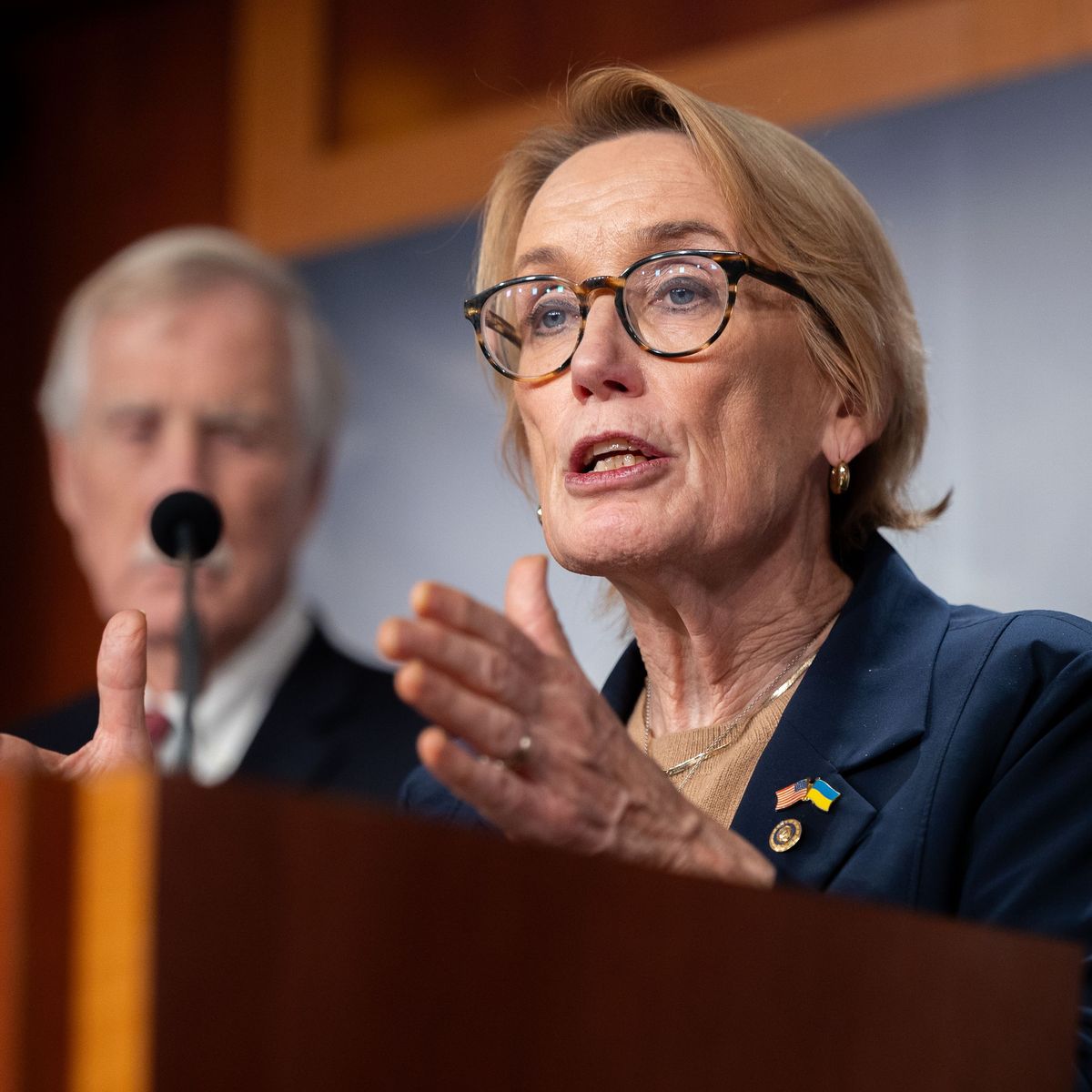
US Sen. Maggie Hassan

Million-Dollar Ad Blitz Targets Senate Dems Who Voted for ‘Trump Loyalist Judges’

The Progressive Change Campaign Committee (PCCC), which endorsed Platner on Wednesday, commissioned the new poll, which showed him polling at 58% compared to Mills’ 38%.

https://x.com/ryangrim/status/1996290533031837708?ref_src=twsrc%5Etfw%7Ctwcamp%5Etweetembed%7Ctwterm%5E1996290533031837708%7Ctwgr%5E9da0e4a68cdbe76b56128362755b30a05e576da6%7Ctwcon%5Es1_c10&ref_url=https%3A%2F%2Fwww.commondreams.org%2Fnews%2Fgraham-platner-poll

Nancy Zdunkewicz, a pollster with Z to A Polling, which conducted the survey on behalf of the PCCC, said the poll represented “really impressive early consolidation” for Platner, with the primary election still six months away.

“Platner isn’t just leading in the Democratic primary. He’s leading by a lot, 20 points—58% are supporting him,” Zdunkewicz told Zeteo. “Only 38% are supporting Mills. There are very few undecided voters or weak supporters for Mills to win over at this point in the race.”

Platner has consistently spoken to packed rooms across Maine since launching his campaign in August, promoting a platform that is unapologetically focused on delivering affordability and a better quality of life for Mainers.

He supports expanding the popular Medicare program to all Americans; drew raucous applause at an early rally by declaring, “Our taxpayer dollars can build schools and hospitals in America, not bombs to destroy them in Gaza”; and has spoken in support of breaking up tech giants and a federal war crimes investigation into Defense Secretary Pete Hegseth over his deadly boat strikes in the Caribbean.

Mills entered the race after Democratic leaders including Senate Minority Leader Chuck Schumer (D-NY) urged her to. She garnered national attention earlier this year for standing up to President Donald Trump when he threatened federal funding for Maine over the state’s policy of allowing students to play on school athletic teams that correspond with their gender.

But the PCCC survey found that when respondents learned details about each candidate, negative critiques of Mills were more damaging to her than Platner’s old Reddit posts and tattoo.

Zdunkewicz disclosed Platner’s recent controversy to the voters she surveyed, as well as his statements about how his views have shifted in recent years, and found that 21% of voters were more likely to back him after learning about his background. Thirty-nine percent said they were less likely to support him.

The pollster also talked to respondents about the fact that establishment Democrats pushed Mills, who is 77, to enter the race, and about a number of bills she has vetoed as governor, including a tax on the wealthy, a bill to set up a tracking system for rape kits, two bills to reduce prescription drug costs, and several bills promoting workers’ rights.

Only 14% of Mainers said they were more likely to vote for Mills after learning those details, while 50% said they were less likely to support her.

At The Lever, Luke Goldstein on Wednesday reported that Mills’ vetoes have left many with the “perception that she’s mostly concerned with business interests,” as former Democratic Maine state lawmaker Andy O’Brien said. Corporate interests gave more than $200,000 to Mills’ two gubernatorial campaigns.

Earlier this year, Mills struck down a labor-backed bill to allow farm workers to discuss their pay with one another without fear of retaliation. Last year, she blocked a bill to set a minimum wage for farm laborers, opposing a provision that would have allowed workers to sue their employers.

She also vetoed a bill banning noncompete agreements and one that would have banned anti-union tactics by corporations.

“In previous years,” Goldstein reported, “she blocked efforts to stop employers from punishing employees who took state-guaranteed paid time off, killed a permitting reform bill to streamline offshore wind developments because it included a provision mandating union jobs, and vetoed a modest labor bill that would have required the state government to merely study the issue of paper mill workers being forced to work overtime without adequate compensation.”

Speaking to PCCC supporters on Wednesday, Platner suggested the new polling shows that many Mainers agree with the central argument of his campaign: “We need to build power again for working people, both in Maine and nationally.”

The survey, he said, “lays clear what our theory is, which is that we are not going to defeat Susan Collins running the same exact kind of playbook that we’ve run in the past—which is an establishment politician supported by the power structures, supported by Washington, DC, coming up to Maine and trying to run a kind of standard race… We are really trying to build a grassroots movement up here.”

Our work is licensed under Creative Commons (CC BY-NC-ND 3.0). Feel free to republish and share widely.

Julia Conley

Julia Conley is a staff writer for Common Dreams.

Full Bio >

Here’s what you can do right now

Here’s what you can do right now:

  1. Sign the primary pledge. This will be Indivisible’s biggest primary campaign yet — as long as y’all show up with the same energy you did for Aftyn. Sign the pledge if you’re all-in to help elect the best candidates — authentic leaders who will fight for working people and democracy. We’ll be in touch with volunteer opportunities and ways to plug into this work.
  2. Can’t wait for 2026 to get started? Click here to help us build an opposition party that’ll resist fascism with the urgency the moment requires.  

The Voice of Hind Rajab – Official Trailer

Madman Films Nov 25, 2025 Coming to Australia & New Zealand cinemas March 5: https://www.madman.com.au/the-voice-o… January 29, 2024. Red Crescent volunteers receive an emergency call. A 5-year old girl is trapped in a car under fire in Gaza, pleading for rescue. While trying to keep her on the line, they do everything they can to get an ambulance to her. Her name was Hind Rajab. Our Website: http://www.madmanfilms.com.au

BOOK: “DYING OF WHITENESS: HOW THE POLITICS OF RACIAL RESENTMENT IS KILLING AMERICA’S HEARTLAND”

Dying of Whiteness: How the Politics of Racial Resentment Is Killing America’s Heartland

Jonathan M. Metzl

A physician reveals how right-wing backlash policies have mortal consequences—even for the white voters they promise to help.

In the era of Donald Trump, many lower- and middle-class white Americans are drawn to politicians who pledge to make their lives great again. But as Dying of Whiteness shows, the policies that result actually place white Americans at ever-greater risk of sickness and death.

Physician Jonathan M. Metzl’s quest to understand the health implications of “backlash governance” leads him across America’s heartland.Interviewing a range of everyday Americans, he examines how racial resentment has fueled pro-gun laws in Missouri, resistance to the Affordable Care Act in Tennessee, and cuts to schools and social services in Kansas. And he shows these policies’ costs: increasing deaths by gun suicide, rising dropout rates, and falling life expectancies. White Americans, Metzl argues, must reject the racial hierarchies that promise to aid them but in fact lead our nation to demise.

About the author

Jonathan M. Metzl

Professor and Director of the Center for Medicine, Health, and Society at Vanderbilt University; a Psychiatrist; and the Research Director of The Safe Tennessee Project, a non-partisan, volunteer-based organization that is concerned with gun-related injuries and fatalities in America and in Tennessee.