Trump’s Indiana Redistricting Scheme Crashes and Burns in Overwhelming Defeat

Trump's Indiana Redistricting Scheme Crashes and Burns in Overwhelming Defeat

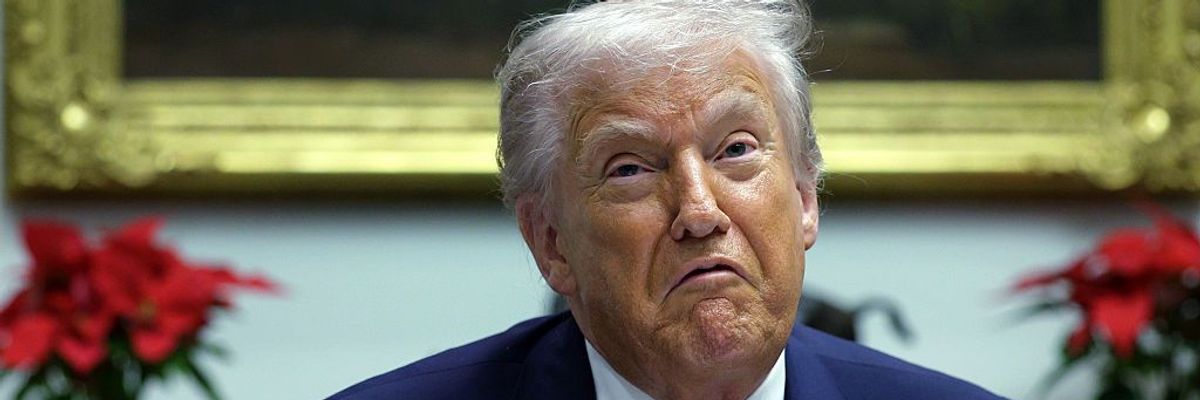
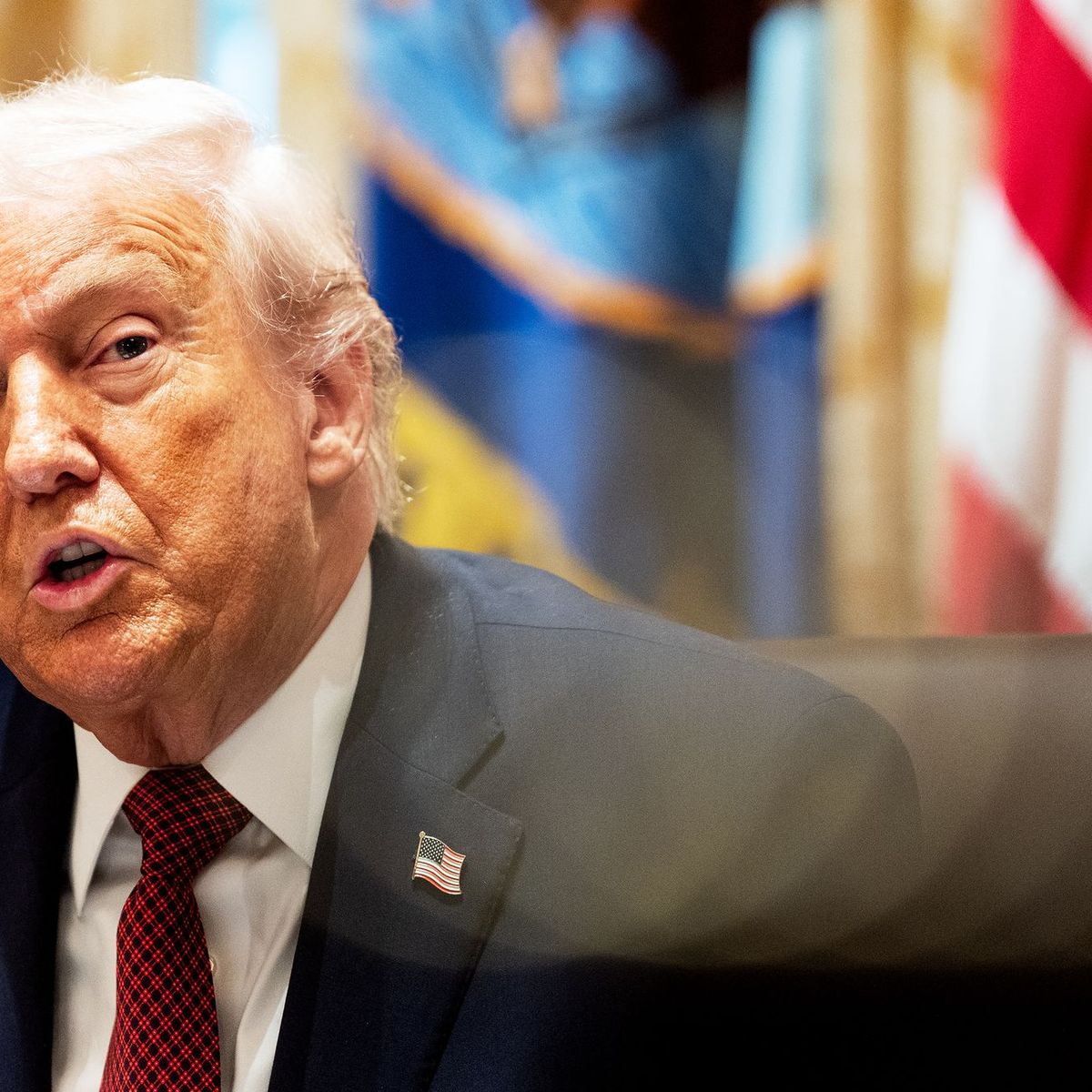
President Donald Trump speaks during a roundtable discussion with top business leaders in the Roosevelt Room at the White House on December 10, 2025 in Washington, DC.

 (Photo by Alex Wong/Getty Images)

The vote came after an emotional debate in which some Republican lawmakers detailed threats and harassment they’d received for opposing the president’s redistricting scheme.

Brad Reed

Dec 11, 2025 (CommonDreams.org)

President Donald Trump’s push to get Indiana Republicans to redraw their congressional map ahead of the 2026 midterm elections went down in overwhelming defeat in the Indiana state Senate on Thursday.

As reported by Punchbowl News’ Jake Sherman, the proposal to support a mid-decade gerrymander in Indiana was rejected by a vote of 19 in favor to 31 opposed, with 21 Republican state senators crossing the aisle to vote with all 10 Democrats to torpedo the measure, which would have changed the projected balance of Indiana’s current congressional makeup from seven Republicans and two Democrats to a 9-0 map in favor of the GOP.

RECOMMENDED…

A protester holds a sign reading "Save our Democracy"...

Indiana House Unveils New Map Rigged for GOP After Months of Trump Threats

Top Indiana Republican Claims Trump Pledged to Withhold Funds If State Didn’t Approve Rigged Map

Top Indiana Republican Claims Trump Pledged to Withhold Funds If State Didn’t Approve Rigged Map

The Senate vote came after the state House’s approval of the bill and an emotional debate in which some Indiana Republicans opposed to the president’s plan detailed violent threats they’d received from his supporters.

According to a report published in the Atlantic on Thursday, Republican Indiana state Sen. Greg Walker (41) this week detailed having heavily armed police come to his home as the result of a false emergency call, a practice commonly known as swatting.

Walker said that he refused to be intimated by such tactics, and added that “I fear for all states if we allow threats and intimidation to become the norm.”

Indiana’s rejection of the effort is a major blow to Trump’s unprecedented mid-decade redistricting crusade, which began in Texas and subsequently spread to Missouri and North Carolina.

Christina Harvey, executive director for Stand Up America, said that the Indiana state Senate’s rejection of the Trump plan was an “important victory for democracy.”

“For weeks, Indiana residents have been pleading with their state leaders to stop mid-decade redistricting and the Senate listened,” Harvey said. “Despite threats to themselves and their families, a majority of Indiana senators were steadfast in rejecting this gerrymandered map.”

John Bisognano, president of the National Democratic Redistricting Committee, praised the Republicans who rejected the president’s scheme despite enduring threats and harassment.

“Threats of violence are never acceptable, and no lawmakers should face violent threats for simply standing up for their constituents,” Bisognano said. “Republicans in other states who are facing a similar choice—whether to listen to their constituents or follow orders from Washington—should follow Indiana’s lead in rejecting this charade and finally put an end to the national gerrymandering crisis.”

Our work is licensed under Creative Commons (CC BY-NC-ND 3.0). Feel free to republish and share widely.

Brad Reed

Brad Reed is a staff writer for Common Dreams.

Full Bio >

Today’s Calls to Action

  • Heads up—we’re working on this year’s member survey. Please keep an eye out in the coming days and be ready to share what you’re looking forward to in 2025, along with how we can better empower you to champion freedom over fascism, progress, and power to the people.
  • Click here to Stop Skyrocketing Costs and Chaos — Pass Medicare for All
  • Click here to Restore Roe v. Wade Protections Now
  • Click here to Tell Congress: Invest In Climate Resilience and Clean Energy
  • Click here to Stop Congress from banning AI regulation nationwide
  • Volunteer to help elect leaders that will ensure safe, secure elections and are committed to protecting democracy
  • Register to vote, vote, and help elect leaders that will ensure safe, secure elections and are committed to protecting democracy
  • Support our work by upgrading your subscription or gifting to someone

BONUS

UC Berkeley suspends lecturer for sharing pro-Palestinian views in his classroom

Peyrin Kao, who went on a hunger strike for Gaza, said he believes Cal “is capitulating to the demands of the Trump administration and using me as bait.” The university said it was responding to student complaints.

by Felicia Mello Dec. 9, 2025 (Berkleyside.org)

We work for you — and we’re matching your donation 1:1! Our journalists attend city council and school board meetings, follow tips and make the calls to keep you informed on the important issues in Berkeley. Will you chip in today?

Yes, double my Berkeleyside donation with your matching gift!

Peyrin Kao, a UC Berkeley computer science lecturer, stands in an empty classroom on Oct. 2 during his month-long hunger strike protesting “the use of tech in Israel’s genocide in Gaza and starvation of Palestinians.” Credit: Estefany Gonzalez for Berkeleyside

Just a few months after UC Berkeley said it had released the names of 160 students, faculty and staff mentioned in antisemitism complaints to the Trump administration, the university has suspended one of them for sharing his pro-Palestinian political beliefs with his students.

Peyrin Kao, a computer science lecturer whose 38-day hunger strike made him one of the campus’s most high-profile faculty critics of the war in Gaza, said he learned Thursday that UC Berkeley is placing him on six months of suspension without pay beginning in January.

The suspension, first reported by The Daily Californian, comes after student complaints, according to a letter signed by Professor Jelani Nelson, chair of the university’s Electrical Engineering and Computer Sciences department. Several academics within and outside the university decried it as an assault on academic freedom that is likely to chill political speech on a campus already at the center of the Trump administration’s crackdown on colleges.

At issue are two lectures Kao delivered, one in April 2024 and the other in August 2025, that university officials say violated a University of California policy barring “misuse of the classroom” and “political indoctrination” of students. 

In the first, which took place as UC Berkeley students were protesting the Gaza war, Kao took about five minutes after the last class of the semester had officially ended to talk about political dialogue and the role of technology companies in providing tools used by the Israeli military. He called the war a genocide and said conversations about the ethical use of technology were important to engage in as part of recruiting and retaining diverse people to computer science. He ended by expressing solidarity with student protesters and Palestinians.

In the second instance, Kao told students, “I might be a little fatigued because I’m doing a starvation diet for a cause that I believe in.” He did not say what the cause was, but provided students with a link to his personal website, where they could find additional information.

“No one can deny that, outside the classroom, Mr. Kao’s First Amendment rights allow him to advocate for causes he supports,” Executive Vice Chancellor Benjamin Hermalin wrote in a review of Kao’s conduct. But Kao’s hunger strike, he wrote, qualified as a “nonverbal” form of in-class advocacy due to “the visible physical toll it presumably was taking and the adverse consequences it may have had on the quality of his instruction.” Kao also drew attention to the strike by mentioning it in class and being interviewed about it in the press, Hermalin wrote. 

Hermalin said Kao’s teaching should be “monitored” until the suspension takes effect and that he had “no objection” if the department chose to terminate Kao.

Kao says he’s been careful not to run afoul of university rules

Kao said in an interview that he believes he was specifically targeted because of his pro-Palestinian views, and that the university had not raised any questions about the April 2024 lecture until late October 2025, when he was summoned to an investigatory meeting.

“The timing of this one raises some very serious questions about whether the university is capitulating to the demands of the Trump administration and using me as bait,” he said.

After being warned by the university in 2023 to keep his pro-Palestinian advocacy out of the classroom, Kao said he had been careful not to run afoul of university rules. He said the April 2024 conversation took place after an end-of-term class session that had been billed as optional, in which other topics of conversation included what books he and his co-instructor were reading, and that he had told students before he began speaking that they were free to leave. 

“I explicitly said, ‘It’s OK if you don’t agree with me,’” he said. “When I talk about these things to students, it’s not like I’m trying to indoctrinate them or coerce them to think a certain way. It’s really just that I think students are capable of thinking critically and having these conversations among themselves.”

A Palestinian family from San Francisco visits the “Free Palestine Camp” at the UC Berkeley in May 2024. File photo: Ximena Natera, Berkeleyside/CatchLight

That distinction is key, said Jonathan Zimmerman, a historian at Penn State’s Graduate School of Education who focuses on free speech.

“Expression and indoctrination are not the same thing,” Zimmerman said. “This professor has a right to say anything he wants about Palestine. He doesn’t have the right to impose his views on his students.”

In the absence of any evidence that Kao was grading his students in a biased manner or otherwise pressuring them to agree with him, Zimmerman said, the suspension “seems really draconian.”

But he said it fits a nationwide pattern of increased restrictions on in-class speech, pointing to a September incident in which a Texas A&M professor was fired after a student recorded her making comments about gender identity that incensed Republican lawmakers. The Trump administration is currently investigating allegations of antisemitism at dozens of colleges and universities, including UC Berkeley, a campaign that has been welcomed by some conservative and Jewish scholars but that critics — including other Jewish academics — describe as a thinly veiled effort to exert control over higher education and silence political dissent.

UC Berkeley spokesperson Janet Gilmore said the university doesn’t comment on confidential personnel matters. 

“The university will always take a viewpoint-neutral approach when it comes to supporting freedom of expression and actions that align with policy,” she said.

She did not answer whether the university has disciplined any other professors this year for violating the same policy.

Peyrin Kao, a UC Berkeley computer science lecturer, on Oct. 2. Credit: Estefany Gonzalez for Berkeleyside

UC Berkeley faced a public backlash in September when it announced it had shared the names of the 160 students, faculty and staff with Education Department officials investigating the campus’s handling of antisemitism complaints. This appears to be the first publicized case since then of the university disciplining someone named in the documents. UC Berkeley officials have said they were directed by UC system leaders to share the unredacted documents and notified those named in the interest of transparency.

Judith Butler, a prominent gender studies scholar whose name was also forwarded to the Trump administration, called Kao’s suspension a “terrible decision.”

“The consequences will not only be to chill political speech on campus, but to further ruin UC Berkeley’s reputation as upholding the principles of free speech,” they said.

In the letter announcing the suspension, Nelson told Kao that his failure to comply with university policies “continues to make students in your courses very uncomfortable.”

“I received reports that your actions made CS 61B a hostile environment for them and they disguised their identity for fear of retaliation.”

Other students spoke out in support of Kao. A spokesperson for the student organization Stem4Palestine said it was planning campus demonstrations in Doe Library on Wednesday and Sproul Plaza on Thursday to protest his suspension.

“Peyrin’s suspension shows that the university will selectively retaliate against pro-Palestine speech, even if it means depriving EECS students of an educator who has always prioritized his students and the quality of their education,” the group said in a statement.

Planned hunger strike would protest the suspension

UC Berkeley students protest the Israeli military campaign in Gaza at a 2023 demonstration. File photo: Ximena Natera, Berkeleyside/CatchLight Local

Some members plan to launch an extended hunger strike Wednesday to demand Kao’s reinstatement, the group said.

A field representative for the University Council-AFT, which represents campus lecturers, said the union planned to file a grievance over Kao’s suspension. 

“We don’t find that UC Berkeley had any just cause for this suspension,” said the field representative, Jessica Conte.

Kao said he planned to continue speaking out about Palestine. 

“When you make a choice not to talk about something, that’s also a political decision,” he said. “You are making a decision to uphold the status quo.”

Related stories

Cal sent his name to the Trump administration. He’s still kept up a 38-day hunger strike for Gaza.

Cal sent his name to the Trump administration. He’s still kept up a 38-day hunger strike for Gaza.

October 3, 2025

UC Berkeley shares 160 names of students, staff with Trump administration in ‘McCarthy era’ move

UC Berkeley shares 160 names of students, staff with Trump administration in ‘McCarthy era’ move

September 12, 2025

UC Berkeley chancellor tells Congress ‘more work’ is needed to fight antisemitism while defending free speech

UC Berkeley chancellor tells Congress ‘more work’ is needed to fight antisemitism while defending free speech

July 15, 2025

felicia@berkeleyside.org

Felicia Mello covers UC Berkeley and other East Bay colleges as Berkeleyside’s senior reporter for higher education. She works in partnership with Open Campus, a nonprofit newsroom focused on strengthening… More by Felicia Mello

Indiana Republicans Just Defied Trump’s Pressure Campaign to Rig Their Congressional Maps

A 9-0 GOP gerrymander goes down in flames.

December 11, 2025 (motherjones.com)

Advertise with Mother Jones

An opponent of gerrymandering in Indiana holds a sign saying protect the vote during a rally featuring former Transportation Secretary Pete Buttigieg

A protestor holds a sign opposing gerrymandering during a rally at the Indiana state House, Indianapolis, September 18, 2025.Michael Conroy/AP

Get your news from a source that’s not owned and controlled by oligarchs. Sign up for the free Mother Jones Daily.

In an extraordinary rebuke to Donald Trump on Thursday, the Indiana state Senate rejected a gerrymandered congressional map relentlessly pushed by the president and his allies that would have given Republicans a lopsided 9-0 advantage in the state’s House delegation by eliminating the seats of two Democratic members of Congress. The final vote was 31-19 in the state Senate, where Republicans have a supermajority: Twenty-one Republicans joined 10 Democrats to defeat the legislation.

Republican state senators who opposed the gerrymandered map sharply criticized the months-long pressure campaign by Trump and his allies, which led to threats of violence and intimidation against at least 11 state lawmakers.

“I fear for this institution,” Republican state Sen. Greg Walker, chair of the Senate Committee on Elections, said during an emotional speech this week. “I fear for the state of Indiana and I fear for all states if we allow intimidation and threats to become the norm.”

Ultimately, the heavy-handed tactics employed by Trump backfired on the president and his allies.

Advertise with Mother Jones

Republican state Sen. Greg Goode, a key swing vote whom Trump called out by name and who was a victim of a swatting attack, cited the climate of fear and intimidation as a reason why he was opposing the bill.

“Misinformation. Cruel social media posts. Over the top pressure from inside and outside the statehouse. Threats of primaries. Threats of violence. Acts of violence,” Goode said on the Indiana Senate floor on Thursday. “Friends, we’re better than this, are we not?”

Trump reprised the playbook he used to attempt to overturn the 2020 election, attacking, bullying, and harassing Republican state officials in Indiana who would not automatically bend to his will.

The president summoned Republican state legislators to the White House and sent Vice President JD Vance to Indiana twice to lobby the state legislature. He vowed to support primary campaigns against Republicans who opposed the redistricting plan, calling out individual state legislators by name, and attacking the leader of the state Senate, Rodric Bray, as a “weak and pathetic RINO” after Bray said the senate didn’t have the votes to pass the measure.

Advertise with Mother Jones

Trump posted another rant on Truth Social against Bray on the eve of the state Senate vote, calling the Senate leader “either a bad guy, or a very stupid one!” and once again threatening “a MAGA Primary” against “anybody that votes against Redistricting.” That same night, a Republican member of the state House who voted against the redistricting bill was the victim of a bomb threat at his home.

Another GOP state senator opposed to gerrymandering who received a pipe bomb threat at her home posted on X that it was the “result of the D.C. political pundits for redistricting.”

Trump’s allies, including Turning Point USA and another dark money group led by former Trump campaign officials, escalated the pressure campaign by vowing to spend seven figures supporting primary challengers to Republican opponents of the map. Indiana Republican Gov. Mike Braun, who eventually fell in line, suggested the state could lose resources if it didn’t comply with Trump’s dictates.

“If we try to drag our feet as a state on it, probably, we’ll have consequences of not working with the Trump administration as tightly as we should,” Braun said.

Advertise with Mother Jones

Heritage Action, the dark money arm of the Heritage Foundation, claimed that Trump threatened to strip all federal funding from the state if redistricting failed, a new low in his authoritarian playbook if true.

“President Trump has made it clear to Indiana leaders: if the Indiana Senate fails to pass the map, all federal funding will be stripped from the state,” the group wrote on X. “Roads will not be paved. Guard bases will close. Major projects will stop. These are the stakes and every NO vote will be to blame.”

Other top Republicans went so far as to invoke the death of right-wing activist Charlie Kirk as a reason why the legislature should pass the new gerrymandered map. “They killed Charlie Kirk—the least that we can do is go through a legal process and redistrict Indiana into a nine to zero map,” US Sen. Jim Banks (R-Ind.) said a few days after Kirk’s murder.

Mid-decade gerrymandering is bad enough on its own. It’s even worse when accompanied by economic and political terrorism. The intimidation against Indiana state legislators, which included warnings of a pipe bomb and fake threats against lawmakers designed to produce a law enforcement response, called to mind the ire Trump and his supporters directed at former Indiana Gov. Mike Pence when insurrectionists broke into the Capitol on January 6 and said they wanted to “hang” the vice president because he refused to go along with the president’s unconstitutional plan to overturn the 2020 election.

Advertise with Mother Jones

But now, instead of overturning an election, Trump is trying to rig and predetermine the next one so that his party doesn’t lose power next November.

The 9-0 map was designed to eliminate all traces of Democratic representation at the congressional level in the state, giving Republicans 100 percent of seats in a state where Trump won 58 percent of the vote in 2024. Under the proposal, Trump would have carried every one of the new districts by at least 12 points. Indiana’s current map received an A from the Princeton Gerrymandering Project. The new one got an F.

To oust Democratic Rep. André Carson, the city of Indianapolis, which he largely represents, would be split four ways, creating districts that border three different states in the process. Carson’s new district would have shifted from favoring Kamala Harris by 40 points to Trump by nearly 20 points, one of the most outlandish examples of gerrymandering anywhere in the country. It would go from a compact urban district that is roughly 50 percent non-white to a sprawling rural district that is 80 percent white, dramatically diluting the power of minority voters in Indianapolis.

“Splicing our state’s largest city—and its biggest economic driver—into four parts is ridiculous,” Carson said in a statement. “It’s clear these orders are coming from Washington, and they clearly don’t know the first thing about our community.” (Republicans confirmed the map was drawn by a DC-based group, the National Republican Redistricting Trust, that has drawn pro-Republican gerrymanderers in other states, including Texas, this year.)

Advertise with Mother Jones

The targeting of Carson, who is Black, continued the trend of Republicans drawing new maps in 2025 that seek to dismantle districts held by Black Democrats, which has also occurred in Texas, Missouri, and North Carolina.

The Trump-backed map also attempted to oust Democratic Rep. Frank Mrvan, who represents a district in northwest Indiana alongside Lake Michigan that Trump narrowly lost. Mrvan’s district would sprawl from two counties to eight, with the Democratic cities of East Chicago and Gary outnumbered by the red countryside, in another example of how the map disenfranchises Black and urban voters.  

The egregious nature of this gerrymander was too much for even the Republican supermajority in the Indiana state Senate to ignore. The map’s defeat is further evidence of how, despite the Supreme Court reinstating Texas’ gerrymander last week, Trump’s gerrymandering arms race hasn’t become the lopsided victory he initially envisioned. The parties may break mostly even in the end.

Voting rights supporters in Missouri submitted more than 300,000 signatures this week to hold a ballot referendum that could ultimately block the gerrymandered map passed by Republicans in September, although Missouri’s Republican Secretary of State is now absurdly claiming he can unilaterally declare the new referendum unconstitutional, which is sure to provoke another court battle. New Democratic districts in California, Utah, and potentially Virginia could also minimize Trump’s advantage heading into the midterms. 

Advertise with Mother Jones

Trump is doing everything he can to break American democracy. For one day, at least, he failed.

THE PROVISIONS OF OXFORD

  • Google AI Overview

The Provisions of Oxford in 1258 were constitutional reforms that forced King Henry III to accept a new, baronial-led government and were considered by some to be England’s first written constitution. Key provisions included establishing a 15-member council to advise the king, mandating that Parliament meet three times a year, and reforming local administration by replacing most sheriffs with knights. These reforms aimed to limit the king’s power and ensure he governed according to the law and the advice of his barons.  

Key provisions of the 1258 agreement

  • Council of Fifteen: A 15-member council was created to advise the king on all important matters and to oversee the administration. 
  • Regular Parliament: Parliament was to be summoned three times a year to consult on reforms. 
  • Reformed government: The provisions aimed to reform the king’s household and reform specific governmental roles, such as the Chief Justice and Chancellor. 
  • Local administration: Reforms were put in place for local governance, including replacing most sheriffs with local knights and establishing a system for addressing local grievances. 

Context and outcome

  • Background: The Provisions were created during a period of crisis during Henry III’s reign, including financial problems, military defeats, and a general dissatisfaction with his rule and favoritism towards foreign advisors. 
  • Leadership: The reforms were imposed on the king by a group of powerful English barons, led by Simon de Montfort, during the “Mad Parliament” of 1258. 
  • Consequences: King Henry III later repudiated the provisions with the Pope’s permission, which escalated into civil war (the Second Barons’ War). Though the provisions limiting monarchical authority were annulled, some legal clauses were later reaffirmed in the Statute of Marlborough in 1267. 
  • Google AI Overview

The “Community of the Realm” (or communitas regni) refers to the collective body of a kingdom’s political actors—nobles, clergy, and eventually burghers—acting as a political entity, particularly in medieval Scotland, as seen in documents like the Declaration of Arbroath (1320). It represents a developing idea of a unified, sovereign nation capable of self-governance, even in the monarch’s absence, and is central to understanding medieval state formation and national identity, especially during Scotland’s Wars of Independence. 

Key aspects:

  • Political Body: It’s not just the king but the kingdom’s key figures (Three Estates) collectively asserting their rights and governance, functioning as a corporate entity.
  • Historical Context (Scotland): The concept became prominent in Scotland (1249-1424) as a way to maintain the kingdom’s independence and continuity, especially when the monarchy was weak or contested, like during the succession crisis after Alexander III’s death.
  • Key Documents: Documents like the Declaration of Arbroath (1320) and the Regiam Majestatem (foundational law) are key examples, articulating this collective identity.
  • Modern Study: A major digital humanities project, “The Community of the Realm in Scotland,” studies this concept through digital editions and research, exploring how this political community was formed, functioned, and changed.
  • Scholarly Importance: Geoffrey Barrow’s classic book, Robert Bruce and the Community of the Realm of Scotland, was pioneering in highlighting this concept, linking it to national identity and state-building. 

In essence, the Community of the Realm signifies the medieval idea of a nation as a self-governing political community distinct from just the person of the king. 

Sonia Sotomayor silences Supreme Court chamber with blistering challenge to Trump lawyer

on Dec 10, 2025 (Schwartzreport from info@schwartzreport.net)

Travis Gettys,  Senior Editor  –  Raw Story

Stephan: Most of the media coverage about the Supreme Court is focused on the Trump-supporting fascist majority. But it is important to remember that there are three Associate Justices, all women, who still behave ethically, and want the United States to remain a democratic republic. Here is why I say this.

Associate Justice Sonia Sotomayor Credit: The Guardian

An exchange between Justice Sonia Sotomayor and Donald Trump’s Solicitor General D. John Sauer briefly silenced the U.S. Supreme Court chamber Tuesday.

Sauer argued in Trump v. Slaughter – a case that could redefine the limits of presidential power over independent agencies and give the Trump more authority to fire officials – that the Constitution vests full removal authority in the president and that a 90-year precedent insulating officials inside those agencies should be discarded — showing how far the government intended to take the challenge, reported Newsweek.

“You’re asking us to destroy the structure of government and to take away from Congress its ability to protect its idea that the government is better structured with some agencies that are independent,” Sotomayor said.

Justice Samuel Alito asked Sauer to respond, and he assured the court that overturning the Humphrey’s Executor precedent – allowing President Donald Trump to fire independent agency leaders – would not fundamentally reshape the government.

“The sky will not fall,” Sauer said. “The entire government will move toward accountability to the people.”

The court’s liberals appear inclined to believe those removal protections preserve congressional intentions in creating the […]

Read the Full Article »

Senate GOP Healthcare Plan Decried as ‘Utter Joke’ That Would Devastate Sick Americans

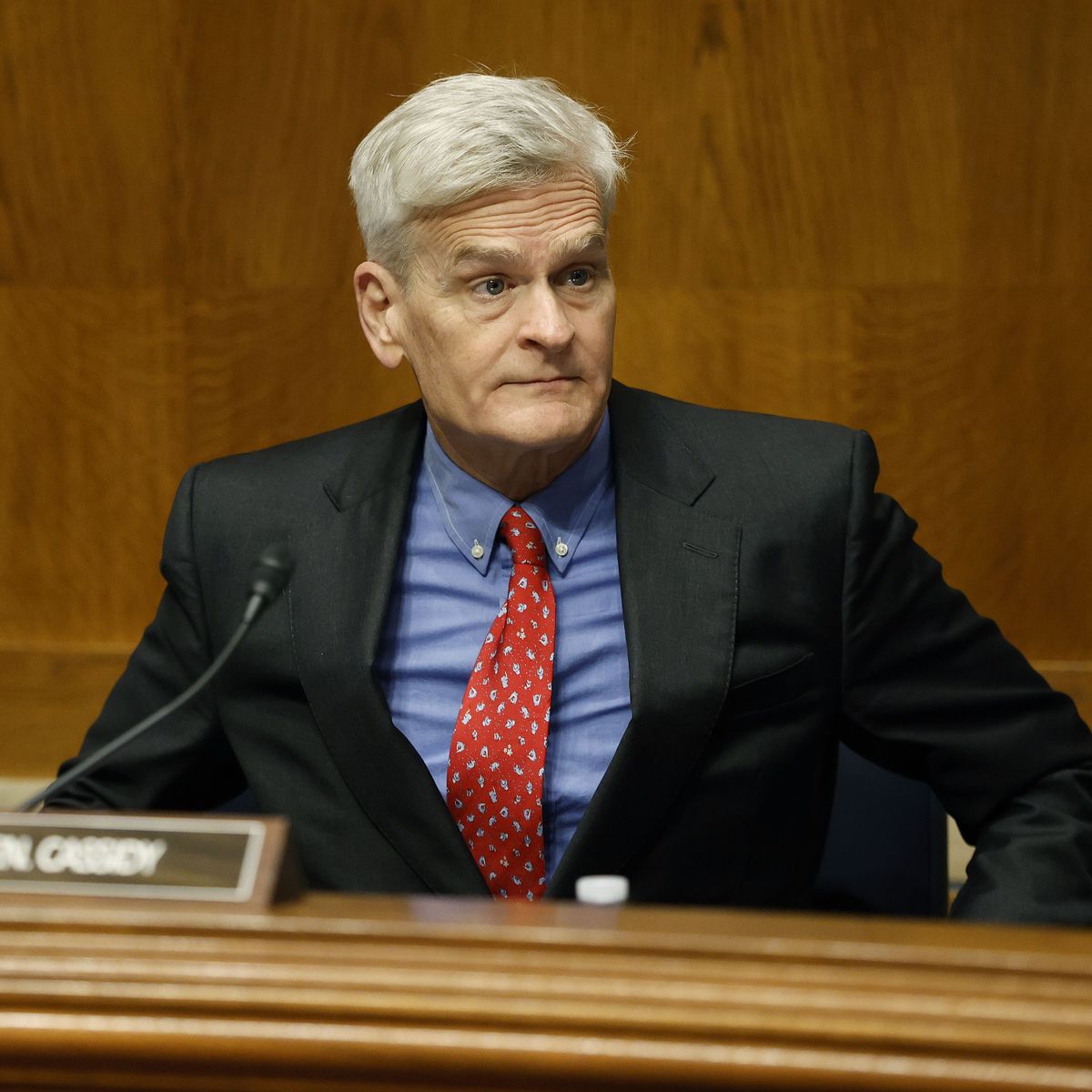
Sen. Bill Cassidy

US Sen. Bill Cassidy (R-La.) speaks to reporters on December 3, 2025. 

(Photo by Bill Clark/CQ-Roll Call, Inc. via Getty Images)

One campaigner said Republicans want to force people “onto junk plans that leave them at risk of crippling medical debt.”

Jake Johnson

Dec 10, 2025

https://trinitymedia.ai/player/trinity-player.php?pageURL=https%3A%2F%2Fwww.commondreams.org%2Fnews%2Fsenate-republican-healthcare-plan&contentHash=7e8513c0bc6fd24f14838bd2c9bc704b56bac963da68d8ee12b3155ea920043d&unitId=2900021701&userId=5752cafe-a61d-4177-b146-0c8454dc0ef8&isLegacyBrowser=false&version=20251211_d8c2a2719b0712ca9e219672b9456ae9de1a7181&useBunnyCDN=0&themeId=478&isMobile=0&unitType=tts-player&integrationType=web

The Republican healthcare proposal that’s set for a vote in the US Senate on Thursday would not prevent insurance premiums from skyrocketing for tens of millions of Americans and would likely harm sicker people by promoting high-deductible plans.

The GOP bill, led by Sens. Mike Crapo (R-Idaho) and Bill Cassidy (R-La.), would allow enhanced Affordable Care Act (ACA) tax credits to expire, replacing them in 2026 and 2027 with an annual payment of up to $1,500 in tax-advantaged health savings accounts to help cover out-of-pocket costs.

RECOMMENDED…

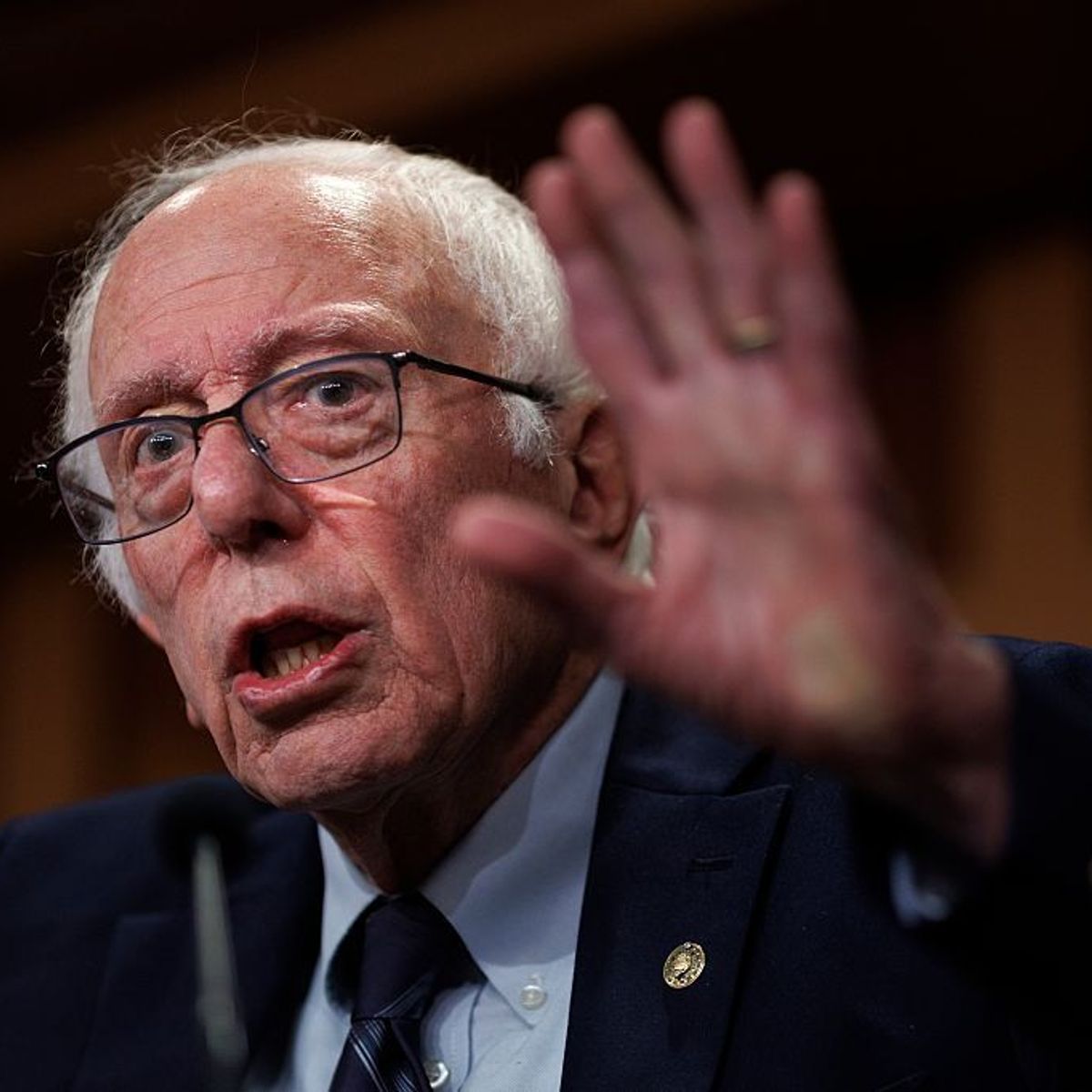
Sanders Denounces Trump-GOP Healthcare Proposal as 'Absurd'—and Deadly

Sanders Denounces Trump-GOP Healthcare Proposal as ‘Absurd’—and Deadly

Sen. Bill Cassidy arrives for a Senate hearing

Report Details How ‘Half-Baked’ GOP Healthcare Scheme Would Further Enrich Insurance Giants

The catch is that only Americans enrolled in high-deductible bronze or catastrophic plans on the ACA exchanges would be eligible for the funding, which could not be used on monthly premiums. In 2026, the average individual deductible for bronze plans is $7,476, and the average for catastrophic plans is $10,600.

Larry Levitt, executive vice president for health policy at KFF, said Tuesday that “premium payments would still more than double next year” under the GOP plan, which does not have enough support to overcome the Senate’s 60-vote filibuster.

“Healthy people could be better off in a high deductible plan with a health savings account,” Levitt noted. “People who are sick would face big premium increases or a deductible they can’t afford.”

Brad Woodhouse, president of the advocacy group Protect Our Care, called Senate Republicans’ legislation “an utter joke that would set healthcare progress back by decades and leave Americans high and dry without the care and coverage they deserve.”

“Republicans are proving once again how unserious they are,” said Woodhouse. “Instead of protecting hard-working families, Sens. Cassidy and Crapo want to force them off the insurance plans they like and onto junk plans that leave them at risk of crippling medical debt. That’s not what American families want, and it’s certainly not what they deserve.”

Asked earlier this week if he supports the Crapo-Cassidy bill, President Donald Trump responded, “I like the concept.”

The Senate GOP plan was introduced as a counter to Democrats’ push for a clean three-year extension of the enhanced ACA subsidies. Republicans, who passed legislation over the summer that enacted the largest-ever cuts to Medicaid, are expected to vote down the Democratic plan on Thursday.

The Center on Budget and Policy Priorities estimates that if the ACA tax credits lapse at the end of the year, “a couple making $44,000 (208% of the poverty level) will see their monthly marketplace premium rise from $85 to $253—an annual increase of $2,013.”

With the Senate vote looming, House Speaker Mike Johnson (R-La) is “still trying to figure out” his healthcare proposal, Politico reported Tuesday.

“The goal is for GOP lawmakers to have ‘something’ to vote on before the end of next week, according to one of the senior House Republicans involved in the talks,” the outlet added, “even if there is no time left for the Senate to pass it before the subsidies lapse.”

Our work is licensed under Creative Commons (CC BY-NC-ND 3.0). Feel free to republish and share widely.

Jake Johnson

Jake Johnson is a senior editor and staff writer for Common Dreams.

Full Bio >

Trump Escalates in Venezuela With ‘Illegal’ US Seizure of Oil Tanker

Trump Escalates in Venezuela With 'Illegal' US Seizure of Oil Tanker

A Venezuelan navy patrol boat escorts Panamanian flagged crude oil tanker Yoselin near the El Palito refinery in Puerto Cabello, Venezuela on November 11, 2025.

 (Photo by Juan Carlos Hernandez/AFP via Getty Images)

“Millions of civilians will be at risk if the economy deteriorates and tensions rise,” warned one anti-war group.

Brad Reed

Dec 10, 2025 (CommonDreams.org)

The US military on Wednesday seized an oil tanker off the coast of Venezuela in the latest act of aggression against a nation that President Donald Trump has been openly threatening for several weeks.

Bloomberg, which described the move as a “serious escalation” in tensions between the US and Venezuela, reported that the seizure of the tanker by US forces “may make it much harder for Venezuela to export its oil, as other shippers are now likely to be more reluctant to load its cargoes.”

RECOMMENDED…

Donald Trump

Trump Says Ground Attack on Venezuela Imminent—Plus Colombia, Mexico Also in US Crosshairs

US-POLITICS-TRUMP-MILITARY-HOLIDAY

Trump Claims Venezuelan Airspace Is Closed in Latest Illegal, ‘Dangerous Escalation’

The seizure was described to Bloomberg by a Trump administration official as a “judicial enforcement action on a stateless vessel” that had been docked in Venezuela.

Shortly after the seizure occurred, Trump boasted about it during a meeting with business leaders at the White House, declaring that the tanker was the “largest one ever seized.”

Just Foreign Policy, a progressive think tank and advocacy group, condemned the seizure of the tanker, describing it as an “illegal US move to take control of Venezuela’s natural resources and strangle the economy, which is already struggling under indiscriminate US sanctions,” and warning that “millions of civilians will be at risk if the economy deteriorates and tensions rise.”

The seizure of the oil tanker is just one of many aggressive maneuvers that the Trump administration has been making around Venezuela.

Starting in September, the administration began a series of murders of people aboard boats in the Caribbean Sea off the coast of Venezuela and in the Pacific Ocean.

The Trump administration has claimed those targeted for extrajudicial killing are drug smugglers and accused Venezuelan President Nicolás Maduro of leading an international drug trafficking organization called the Cartel de los Soles, despite many experts saying that they have seen no evidence that such an organization formally exists.

Trump late last month further escalated tensions with Venezuela when he declared that airspace over the nation was “closed in its entirety,” even though he lacks any legal authority to enforce such a decree. Trump has also hinted that strikes against purported drug traffickers on Venezuelan soil would occur in the near future.

Our work is licensed under Creative Commons (CC BY-NC-ND 3.0). Feel free to republish and share widely.

Brad Reed

Brad Reed is a staff writer for Common Dreams.

Full Bio >

Heist: Who stole the American dream? (2025 movie)

HEIST (7).png

Santa Barbara International Film Festival 2012

OFFICIAL SELECTION

HEIST (5).png

Santa Cruz Film Festival

OFFICIAL SELECTION 2012

OFFICIAL SELECTION 2011

Mill Valley Film Festival

Menu

Here’s how the billionaires stole America

The 50 year old Billionaire Conspiracy to undermine democracy and impoverish working people.

WATCH THE DOCUMENTARY

The biggest theft in American history wasn’t a crime of passion, but a secret plan launched in the 1970s—funded by a handful of billionaire families—designed to make them richer while robbing you and your family.

Heist reveals how that plan, known as the Powell Memo, became a blueprint for corporate control of Congress, the courts, the presidency, our schools, and the media. More than a film, Heist is both a guide to understanding this theft and a rallying cry to reclaim our democracy.

How is the Heist unfolding?

10 Richest Americans Have Gained $700 Billion in Wealth Since Trump Reelection

“The new American oligarchy is here,” said the CEO of Oxfam America. “Billionaires and mega-corporations are booming while working families struggle to afford housing, healthcare, and groceries.”

Read more

How the Trump Administration is Giving Even More Tax Breaks to the Wealthy

The Treasury Department and Internal Revenue Service are issuing rules that provide hundreds of billions of dollars in tax relief to big companies and the ultrarich.

Read more

Like what you see? Throw us a few bucks here to
keep Heist free for everyone.

(heist-themovie2025.com)

Alaska Permanent Fund

  • Google AI Overview

The Alaska Permanent Fund (APF) is a massive sovereign wealth fund created from oil revenues to benefit all Alaskans, investing in stocks, bonds, and real estate for long-term growth, while the annual Permanent Fund Dividend (PFD) distributes a portion of these earnings directly to eligible residents, with the 2025 payment confirmed at $1,000, requiring Alaskans to live in the state for a full year before applying and intending to stay indefinitely.

How the Fund Works (APFC)

  • Purpose: To convert non-renewable oil wealth into a sustainable resource for current and future generations, managed by the Alaska Permanent Fund Corporation (APFC).
  • Structure: It has a Principal (savings) and an Earnings Reserve Account (ERA) for distributions.
  • Investments: The APFC invests globally in a diversified portfolio, including stocks, bonds, and real estate.

The Permanent Fund Dividend (PFD)

  • What it is: An annual cash payment to qualifying residents from the Fund’s investment earnings.
  • 2025 Payment: Confirmed at $1,000, with payments starting in October.
  • Eligibility: Must be a permanent resident of Alaska for the entire calendar year before applying and intend to remain indefinitely.
  • Application: Check status on the official pfd.alaska.gov website.
  • Tax: Federal taxes apply to the dividend.

AI responses may include mistakes. For financial advice, consult a professional. Learn more