Berkeley Law threatens student protesters ahead of panel titled ‘Why Israel won the war’

  • Alice Conry & Ayah Alsheikha | Staff
  • Nov 19, 2025 (DailyCal.org)
israel_Diego Alcantar_staff.jpg
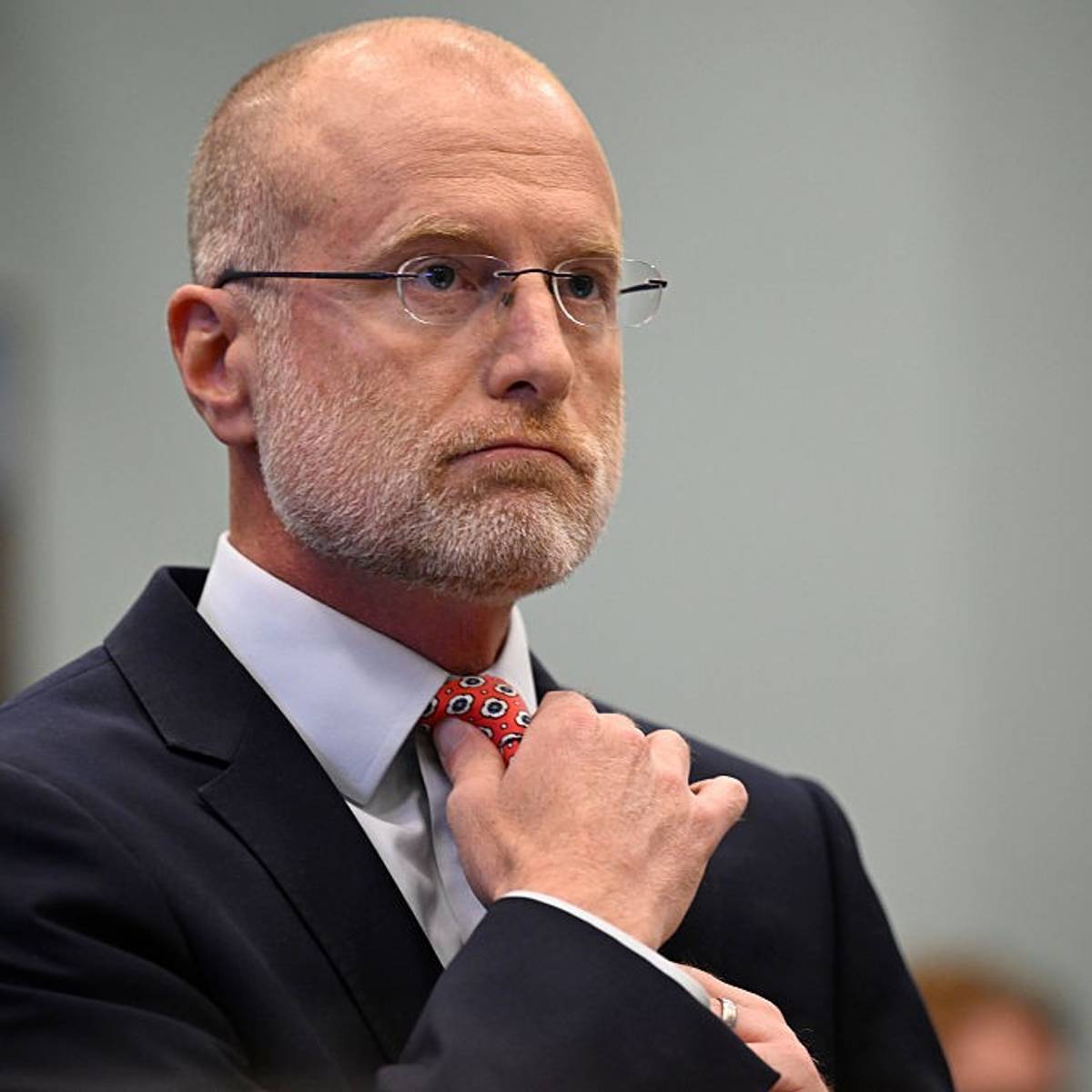
The Berkeley Federalist Society’s panel featured Berkeley Law professors John Yoo and Steven Solomon, as well as history and public policy professor Daniel Sargent.   Diego Alcantar | Staff

The Berkeley Federalist Society hosted a panel on Tuesday at the UC Berkeley School of Law titled “Why Israel Won: A Panel on Oct 7th and the Wider War.” The event drew a crowd of roughly 50 people while an equal number of protesters challenged the topic of the panel and the controversial speakers from outside.

Ahead of the event, Berkeley Law sent an email to Berkeley Law Students for Justice in Palestine, or Berkeley LSJP, a campus group that organized the protest. The email threatened to report demonstrators to the state bar if they were found to violate Time, Place, and Manner regulations. 

“We planned to host our rally at Heyman Terrace, a space on the perimeter of the law school where we’ve held several unpermitted, impromptu gatherings in the past,” Berkeley LSJP said in a statement. “However, yesterday we received an email from the opaque Building Oversight Committee, warning that since we hadn’t reserved the space, proceeding with the event ‘could’ result in suspended organizational privileges and disciplinary action that would be reported to the State Bar.”

While the panel features three speakers, Berkeley LSJP flyers targeted two speakers, namely John Yoo, a Berkeley Law professor who is infamous for his role in former President George W. Bush’s administration as an author of the “torture memos.”

The memos provided the legal justification for Abu Ghraib — a detention facility used during the Iraq War that led to widespread outrage as the United Nations deemed many of the tactics used to be in violation of international law. 

The other notable speaker, Berkeley Law professor Steven Solomon, has been an outspoken critic of campus administration’s response to alleged antisemitism. 

In February, Solomon authored an op-ed for the Wall Street Journal titled “Mr. Trump, Investigate My Campus,” after which a joint Department of Education and Department of Justice Taskforce to Combat Anti-Semitism announced an investigation into campus. Solomon is now on the payroll of the federal task force as an adviser on legal issues.

The last speaker, history and public policy professor Daniel Sargent, drew less criticism online as he has not been outspoken on social issues. His research focuses mainly on American foreign policy.  

During opening statements before general discussion and audience questions, Sargent identified “four factors” that signified Israel’s victory in the war: institutions, autonomy, persistence and openness. 

Solomon discussed the “morality” of Israel’s actions and specifically why the term “genocide” is misused when discussing the country’s military actions in Gaza. Yoo focused on how the war fit into U.S. grand strategy as well as the future implications of the war and its effect on future conflicts in the Middle East.

Regarding Palestine, Sargent said he believes Palestinians deserve rights and dignity, and that “a just peace demands the Palestinian dignity be affirmed.” While Solomon claimed Israel had acted “morally higher” than other nations in a “war like this,” he said he sees people dying in the conflict as a “tragedy.” 

During the panel, a group of nearly 50 protesters, led by student group Berkeley LSJP, gathered outside the building around 1 p.m. to denounce Berkeley Law for hosting the event. 

The protest remained removed from the building itself as the email from administration warned against violations of Time, Place, and Manner, including the use of amplified sound during the demonstration. A violation of this rule would result in “either (or both) disciplinary action and suspension of the group’s ability to reserve space within the Law School,” according to the email, which was provided to the Daily Cal. 

Protesters gathered for less than an hour, chanting “Free Palestine” and taking turns addressing the audience in front of Heyman Terrace. 

“I think a lot of faculty and students on this campus are afraid to speak out for justice,” said Brooke Lober, a protester and campus lecturer in gender and women’s studies. Lober earlier condemned Yoo, stating, “It’s unbelievable that he still has an office on this campus.”

Lober claimed that in the past, she was doxxed and received death threats after speaking out for a ceasefire resolution at an Oakland City Council hearing. 

“Even someone like me, who’s a lecturer at the school, who doesn’t have security of employment, I feel compelled to use my voice, nonetheless,” Lober said.

The Berkeley Federalist Society, the organizer of the panel, is a conservative and libertarian organization that aims to bring a conservative view to the theory and philosophy of law on campus, according to the group’s president, Shneur Gansburg. 

Gansburg said the group was aware the panel would be protested and some of their previous events surrounding Israel had also been protested.He claimed that protesters attempted to pull the fire alarm at the event but it had been shut off. 

“We are in an academic environment and I feel like these events should happen and people should be able to hear differences in opinions and thoughts,” Gansburg said. 

While protests occurred outside, the proceedings inside remained uninterrupted. A number of police were present both inside and outside of the event. The lack of disruption even prompted Yoo to comment, saying that he was glad he was able to make it to the end of his remarks uninterrupted. 

“To Berkeley Law and its Building Oversight Committee (we know you’re reading this!): shame on you,” Berkeley LSJP wrote in the statement. “We will not be cowed by your threats. We broke no rules today, but we adhere to increasingly restrictive and draconian policies only to the extent that doing so advances the struggle for Palestinian liberation.”

Trump Trashes ‘Big, Fat, Rich Insurance Companies.’ Progressives: ‘Wait Until We Tell You About Medicare for All’

President Trump Announces Plan To Reduce The Cost Of Prescription Drugs

President Donald Trump joined by Human Services Secretary Robert F. Kennedy Jr. (C) and Administrator for the Centers for Medicare & Medicaid Services (CMS) Mehmet Oz, speaks during a press conference in the Roosevelt Room of the White House on May 12, 2025, in Washington, DC.

 (Photo by Andrew Harnik/Getty Images)

“If we had Medicare for All everyone would have healthcare with no premiums, deductibles or co-payments and we’d save $650 billion and 68,000 lives a year.”

Jon Queally

Nov 19, 2025 (CommonDreams.org)

President Donald Trump on Tuesday proclaimed he would not sign any fix to the nation’s healthcare crisis that would send money to what he termed, in all capital letters, as the “BIG, FAT, RICH INSURANCE COMPANIES, WHO HAVE MADE $TRILLIONS, AND RIPPED OFF AMERICA LONG ENOUGH”—and progressives did not hesitate to point out that by taking for-profit, private insurers out of the healthcare equation, one would quickly—if they cared about covering more people with less money—be left with something more akin to the kind of universal, publicly-supported healthcare systems that most nations in the developed world already enjoy.

“Just wait until we tell you about Medicare for All,” said Dr. Abdul El-Sayed, a Democrat running for the US Senate in Michigan, in response to Trump’s Truth Social post.

RECOMMENDED…

Sen. Bernie Sanders Reintroduces The "Medicare For All Act"

Trump Healthcare Payment Proposal Sparks Fresh Medicare for All Demands to Fix ‘Broken’ Healthcare System

Sen. Bill Cassidy arrives for a Senate hearing

Report Details How ‘Half-Baked’ GOP Healthcare Scheme Would Further Enrich Insurance Giants

The president has been openly railing against the insurance companies that benefit from federal subsidies that are central to the healthcare plans made available on exchanges created by the Affordable Care Act (ACA), but his solution—a nebulous call for direct payments to individuals who could then somehow purchase “THEIR OWN, MUCH BETTER INSURANCE” with those same federal dollars.

With significant cuts to Medicaid—the largest in the program’s history—and an end to ACA subsidies that could see premiums double or more for over 20 million people in the coming year, Democrats are warning of a healthcare crisis in 2026 like nothing the nation has ever seen.

https://x.com/BernieSanders/status/1989026386821149120?ref_src=twsrc%5Etfw%7Ctwcamp%5Etweetembed%7Ctwterm%5E1989026386821149120%7Ctwgr%5E13c85bc42aacfc0b16e6eda45c68bf7970329a67%7Ctwcon%5Es1_c10&ref_url=https%3A%2F%2Fwww.commondreams.org%2Fnews%2Ftrump-trashes-big-fat-rich-insurance-companies-progressives-wait-until-we-tell-you-about-medicare-for-all

But the solution being offered by Trump and his GOP allies in Congress, according to progressive critics, would only further entrench the crisis.

“Trump’s ‘healthcare’ plan will bankrupt and kill millions of Americans,” warned Melanie D’Arrigo, executive director of the Campaign for New York Health, a single-payer advocacy group. “We can eliminate the private insurance industry, and save $650 billion per year with Medicare for All—which would cover everyone, save families money, and include dental, vision, prescriptions, and long-term care.”

“We can eliminate the private insurance industry, and save $650 billion per year with Medicare for All.”

On Sunday, Sen. Bill Cassidy (R-La.), went on “Face the Nation” in order to put some “meat on the bone” regarding direct payments and said his office was working closely with Trump’s White House on the proposal.

Essentially, what the Cassidy-Trump plan would do is replace federal subsidies for inadequate health plans with high deductibles from private insurance giants with federal cash payments that people could only use to purchase—wait for it—inadequate health plans with high deductibles from private insurance giants.

After Administrator for the Centers for Medicare & Medicaid Services Dr. Mehmet Oz, also on Sunday, played a similar card on behalf of the Trump administration by saying, “If you had a check in the mail, you could buy the insurance you thought was best for you,” immediate pushback followed.

Warren Gunnels, a longtime policy advisor to Sanders in the Senate, was among those who slammed Oz’s efforts to deceive the American people by pushing the Trump administration’s direct payments.

“If we had Medicare for All, everyone would have healthcare with no premiums, deductibles, or co-payments, and we’d save $650 billion and 68,000 lives a year,” said Gunnels in response to Oz’s remarks. “If we gave cancer patients, at most, a check for $6,500 for a $150,000 treatment, they’d go bankrupt and die an early death.”

Our work is licensed under Creative Commons (CC BY-NC-ND 3.0). Feel free to republish and share widely.

Jon Queally

Jon Queally is managing editor of Common Dreams.

Full Bio >

Supes toss homeless advocate off the oversight commission she helped create

Move signals a shift away from the ‘housing first’ model, which has proven effective all over the country

By Tim Redmond

November 18, 2025 (48hills.org)

In a move that signals a shift away from the proven and effective strategy of “housing first,” the Board of Supes today replaced one of the authors of the housing measure Prop. C from the board that oversees its spending.

The board voted 7-3 to replace Coalition on Homelessness Director Jennifer Friedenbach with William Lemon, who runs the Castro Country Club, a sober space.

Friedenbach was the driving force behind Our City, Our Home, which raised taxes on the city’s biggest corporations to pay for supportive housing and services for unhoused people or people at risk of homelessness.

Jennifer Friedenbach was ousted ‘in retaliation for her support for housing first.’ Sfgov.org image

Sup. Jackie Fielder, who spoke highly of Lemon, said the move was more than a simple decision to replace one qualified activist with another. “I fear her removal is in retaliation for her support of housing first,” Fielder said. “Her removal further undermines Our City Our Home.”

Friedenbach has also argued that spending money on short-term shelters is nowhere near as effective as permanent supportive housing. In a statement to the supes, she noted:

 There has been much said about the Prop. C categories and the desire of some electeds to move money from housing to shelter.  Their idea is typically explained that shelter is quicker to get up and running and less expensive.  Neither are true. Housing First is an evidence-based model, has been massively researched and it works across the country.  In SF, our supportive housing has a 97% success rate. Regardless of current political winds, nothing solves homelessness like a home.  Obviously, building housing takes time and is expensive; however it does save money in both the long run and in the short term.  It is worth the effort.

Housing first starts with the concept that the most important and effective way to combat street homelessness is to get people into supportive housing. Once they are housed, there’s a chance for them to work on substance use issues, mental health issues, and employment readiness.

Sup. Matt Dorsey, a close ally and supporter of Lemon, wants to take a different approach: He’s pushing for recovery housing that would mandate sobriety.

Dorsey said he wanted to see an advocate for sobriety on the oversight panel because “we are starting to make progress on drug-free housing. Sometimes there are appointments that reflect needed directional change.

A majority of the supes apparently agree. Board President Rafael Mandelman said that he wants to “make a change in this body.”

Friedenbach noted:

We continue to be faced with a revolving door in our system.  Folks are leaving the hospital, treatment programs, shelters and other institutions and falling back into homelessness. This requires system changes that ensure unhoused people leave the streets behind, are able to stabilize in housing, and are simultaneously able to address whatever issues they are facing, be that behavioral health, physical health, or lack of employment.  Currently, San Francisco spends about 5% of its budget on solving homelessness.  It spends a whole lot more keeping people homeless.

Only Sups. Fielder, Connie Chan, and Chyanne Chen voted to keep the most qualified advocate who has devoted her life to exactly what the Our City Our Home oversight board does.

The board also rejected a Chan proposal that would have protected legacy businesses from demolition or displacement under the mayor’s Rich Family Zoning Plan.

Stephen Sherrill went even further, saying that some chain stores might help with neighborhood “vibrancy” and that “supporting local business is different from protecting local business.”

Wow.

Six supes voted to protect legacy businesses: Fielder, Mandelman, Myrna Melgar, Shamann Walton, Connie Chan, and Chyanne Chen. Since the motion required eight votes, it failed.

48 Hills welcomes comments in the form of letters to the editor, which you can submit here. We also invite you to join the conversation on our FacebookTwitter, and Instagram

Tim Redmond

Tim Redmond has been a political and investigative reporter in San Francisco for more than 30 years. He spent much of that time as executive editor of the Bay Guardian. He is the founder of 48hills.

SF Supervisors Approve Program for New Affordable Artist Housing on Mid-Market, Courtesy of Anonymous Donor

18 November 2025/SF News/Jay Barmann (SFist.com)

The SF Board of Supervisors voted Tuesday to approve a new affordable-housing program based in a new building on mid-Market Street that would be dedicated to housing artists and creative types who are largely being priced out of the city.

“The story of San Francisco cannot be told without its artists,” says Supervisor Rafael Mandelman in a statement. “This program is an important step toward honoring that legacy and ensuring artists remain at the heart of our city’s future.”

Mandelman adds that this is a “major step toward ensuring artists can afford to live, create and thrive in San Francisco.”

The Artist Housing Certification Program is the first-ever housing program in the city dedicated to providing affordable housing to artists, and the legislation establishing it was introduced by Mandelman last month.

The program will operate in conjunction with a new 90+-unit development that is still in the predevelopment stages, to be constructed on the site of the McRoskey Mattress store at Market and Gough streets (1687 Market Street). As SFist reported in May 2024, an anonymous benefactor gifted $100 million to two non-profits for the purpose of building what’s been dubbed Artists Hub on Market, or just 1687 Market. The non-profit developer who shared in the gift is Mercy Housing.

The project received its Planning approvals back in March, and construction is expected to begin in early 2026. The finished development will have over 90 units designated affordable and for local artists, and the building will also include a black-box theater and other designated creative spaces.

The San Francisco Arts Commission will be administering the new program, and it’s not yet clear when applications might begin. Eligible applicants will need to be artists or arts administrators and their families, making at or below 80% of area median income or AMI (2023 AMI levels are shown here).

A press release for today’s announcement cites a 2023 annual report by the Arts Commission that cited a 2018 survey that found that 19% of artists who responded said they had been displaced from their housing in the last two years.

A driving force behind 1687 Market is Randall Kline, a founder of SFJazz who oversaw the construction of that organization’s $64 million SF Jazz Center, completed in 2013. Kline apparently was the one who solicited donors for a project to build artist housing in the city.

“SFJazz was built to serve the local artist community,” Kline told the Chronicle last year. “Over the past 40 years, as I saw more and more artists leaving the city, I talked with potential funders about this idea to see if we could provide affordable housing. One donor stepped forward.”

Previously: Some Anonymous Donor Just Gave $100 Million to Build Affordable Housing for Artists on Market Street

Yet Another Safeway Site, In Mission/Bernal, Slated For Possible Redevelopment With Housing

19 November 2025/SF News/Jay Barmann (SFist.com)

SF-based developer Align Real Estate does, in fact, have a larger strategy to redevelop Safeway properties in the city and turn them into multi-story residential complexes with retail on the ground floor, including replacement Safeway stores.

With Tuesday’s announcement that Align, the same developer behind the project to redevelop the Fillmore Safeway property, was working to potentially redevelop the Ocean Beach Safeway in similar fashion, we surmised there could be a larger strategy at play. And we wondered aloud if the Castro Safeway and shopping center with its sprawling parking lot might also be on the list.

And while we still don’t know if it is, the Chronicle reports today that a third Safeway store location, the Mission/Bernal store at 3350 Mission Street, is also in Align’s sights. The developer has plans in the works to redevelop the 2.2-acre site — which extends between Mission Street and San Jose Avenue — into a six-story, 370-unit residential complex, with a much larger Safeway store in its base.

According to the preliminary plan, the units will be rentals, with a mix of studios, 1-, 2-, and 3-bedroom units, with 51 units designated affordable. And the current 32,000-square-foot Safeway will be replaced with a 56,000-square-foot Safeway — though, as in the case of the Ocean Beach property, the neighborhood will be without a grocery store during demolition and construction, which could take a couple of years.

The Safeway entrance appears to be on the San Jose Avenue side of the building in this rendering from Perry Architects.
The Mission Street fontage of the building, rendering by Perry Architects

A Safeway exec struck a very different tune than in the case of the Fillmore store, which the company closed in part due to rampant theft, well ahead of the development schedule at that property — with plans not even yet approved. The company has committed to returning to this property after construction is complete.

Kelly Mullin, president of Northern California operations for parent company Albertsons, gave a statement to the Chronicle acknowledging this store’s “long-standing role as a critical neighborhood anchor” in an area where “many families depend” on it. The Fillmore neighborhood likely feels the same, and while Align has committed to putting a smaller grocery tenant into that planned development, it does not sound like Safeway will be that tenant.

The site, as it stands, from the Mission Street side. Photo via Google Street View

This project still could face pushback — especially because of its size. As at the Fillmore site, Align is hoping to take advantage of the state’s density bonus program to achieve that six-story, 370-unit count, but this will make it the tallest thing in the immediate neighborhood, save for the CPMC hospital a few blocks away. Most of the blocks surrounding the Bernal Safeway, which is also at the edge of Noe Valley, are low-slung residences that are two and three stories.

Align promised when they unveiled the Fillmore plans last week that they had more projects to announce — with a prospective new-unit total of 3,500. With today’s announcement, it brings the total to 2,746 units (1,800 at the Fillmore site, 526 at Ocean Beach, 370 in Bernal). That leaves one or two more projects to announce, possibly at other Safeway sites, with a total of 750 more units.

It should be noted that none of these projects yet have their entitlements from the city, and plans may change.

S.F. mayor to share weekly reports on controversial OpenGov project, warts and all

A person with short black hair is standing outdoors, wearing a black leather jacket. The background features green grass and trees. by Yujie Zhou and Io Yeh Gilman November 18, 2025 (MissionLocal.com)

A man in a blue suit talks on the phone while holding papers in a crowded indoor setting with several people in the background.
Ned Segal, Mayor Daniel Lurie’s policy chief, at a town hall on PermitSF and OpenGov on Oct. 15, 2025. Photo by Yujie Zhou.

San Francisco Mayor Daniel Lurie will commit to releasing weekly reports on how the tech firm OpenGov is overhauling the city’s embattled permitting systems — a contract it won even though city staff said it was not the best suited for the task.

PermitSF, Lurie’s initiative to tackle city permitting, was a key promise on the campaign trail. It launched earlier this year, with the goal of streamlining and centralizing permitting so that all city permits can be obtained through a single web portal.

The decision to release the weekly progress reports comes a month after media reports revealed that the mayor’s office went outside normal procedure to award the $5.9 million contract to build the new permitting system to OpenGov. The company’s costs were far higher than competitors, and it scored poorly with a panel of city staffers.

Mission Local logo, with blue and orange lines on the shape of the Mission District

Want the latest on the Mission and San Francisco? Sign up for our free daily newsletter below.Sign up

The company’s leadership also has ties to Lurie including past donations to his campaign and his former nonprofit. The deal prompted Supervisor Jackie Fielder to call for a hearing to investigate the process. 

Ned Segal, the mayor’s policy chief for housing and economic development, “unilaterally” overruled a staff recommendation in awarding the contract to OpenGov, according to the San Francisco Standard.

The weekly updates will serve as “something public, so people can read it themselves without our explanation or yours, and it’s just out there in the open for people,” Segal said in an interview Tuesday. He hoped that the updates would bring some “transparency benefit” to the project, Segal added.

Valencia Cyclery 62325

The documents, the mayor’s office said, will be shared whether they report good progress, bad progress or no progress. 

The first three weekly status reports, written by OpenGov’s project manager, Angelica Au, were sent on Oct. 31Nov. 7 and Nov. 14. The latest memo indicates that the goal of rolling out fire permits, building permits and events permits by February is realistic. 

Earlier this year, many in the city felt that goal was aggressive at best, and unrealistic at worst.

Rarefield ad 8

Between late October and mid-November, the project health of PermitSF moved from a red status, indicating the presence of major issues, to a stable yellow status, indicating only potential risks to project delivery.

Meanwhile, over the three weeks, some due dates have been postponed by several days to several weeks, including one that has been pushed back by as long as four weeks. 

The weekly updates also identified small potential barriers to meeting the February deadline including the day off for Veterans Day. 

Back to the Picture SR

“What we’re looking for is to see that, each week, you are making progress, that you’re having new challenges come up,” said Segal in the interview, whether it’s about collaboration between departments, or how to tie two software systems together.

In an interview today, Florence Simon, director of the Mayor’s Office of Innovation, added that meeting the February deadline to roll out a subset of permits is “a big deal.”

“The last time somebody tried to do this, which was Accela before Ned and I got here, it was like an eight-year project that cost $12 million and no permits,” she said.

11/1-11/27

Lurie has steadfastly stood by the controversial contract in the past month, and Segal spoke highly of the collaboration with OpenGov.

“OpenGov have been great partners because they’ve done this implementation many times, they are able to look around corners and help us understand what challenge might come next,” he said.

The 13-year-old firm says that it has worked with more than 2,000 governments across the country. It is unclear, however, whether it has worked with any clients similar to the size and complexity of San Francisco.

The two references OpenGov listed in its response to the PermitSF Request For Information were Cambridge, Massachusetts, and Chattanooga, Tennessee.

The former has a population of about 121,000 and the latter has a population of around 191,000, though the city’s request for information required references from public sector clients that can speak to the vendor’s experience with cities “at a similar scale to San Francisco.”

Regarding the upcoming hearing called for by Supervisor Fielder, Segal said, “We’re just going to keep plugging away on the implementation.”

Three people do acrobatics and hula hoop in a park with city buildings and palm trees in the background. A cartoon computer screen stands with them, displaying "missionlocal.org.

Keep Mission Local free—match your gift today!

We have a big year-end goal: $300,000 by Dec. 31. Thanks to generous donors, every dollar donated up to $76,500 will be doubled!

It’s more important than ever that everyone has access to news that reports, explains and keeps them informed. Paywalls don’t serve anyone. 

Your support makes it possible for Mission Local’s content to be forever free — for everyone.

about:blank

Donate

Latest News

Supervisor Connie Chan announces run for Congress

Supervisor Connie Chan announces run for Congress

S.F. anti-graffiti workers paint over the Valencia Art Wall

S.F. anti-graffiti workers paint over the Valencia Art Wall

DoorDash wants to test drones in the Mission. Teamsters are pushing back. 

DoorDash wants to test drones in the Mission. Teamsters are pushing back. 

Yujie Zhou

yujie@missionlocal.com

I’m reporting from Bayview-Hunters Point and Chinatown. I came on as an intern after graduating from Columbia University’s Graduate School of Journalism and became a full-time staff reporter as part of the Report for America and have stayed on. Before falling in love with the Mission, I covered New York City, studied politics through the “street clashes” in Hong Kong, and earned a wine-tasting certificate in two days. I’m proud to be a bilingual journalist. Follow me on Twitter @Yujie_ZZ.More by Yujie Zhou

Io Yeh Gilman

io@missionlocal.com

REPORTER. Io is a staff reporter covering city hall as a part of Report for America, which supports journalists in local newsrooms. She was born and raised in San Francisco and previously reported on the city while working for her high school newspaper, The Lowell. Io studied the history of science at Harvard and wrote for The Harvard Crimson.More by Io Yeh Gilman

Navy apologizes for delaying disclosure of radioactive material at S.F.’s Hunters Point Shipyard

By Laura Waxmann, Staff Writer Nov 17, 2025 (SFChronicle.com)

Gift Article

Camilla Ealom, All Things Bayview executive director, listens to an audience comment during the Hunters Point Shipyard Citizens Advisory Committee meeting in San Francisco on Monday.Scott Strazzante/S.F. Chronicle

For weeks, San Francisco residents and officials have been slamming the Navy for waiting nearly a year to disclose that a radioactive heavy metal was found on the former Hunters Point Naval Shipyard, a Superfund site the federal government has been cleaning up for decades.   

On Monday evening, Navy officials took a rare step during a community meeting full of angry residents: They apologized.

The Navy took 11 months to report the discovery of plutonium 239, used primarily in nuclear weapons and power plants, to its regulatory partners, which include the U.S. Environmental Protection Agency, the California Department of Toxic Substances Control, the Regional Water Quality Control Board and the California Department of Public Health. San Francisco health officials have told the Chronicle that they weren’t informed about the finding until last month. 

“I have really thought about the situation that’s occurred … on this issue, we did not do a good job,” Michael Pound, the Navy’s environmental coordinator who for the past two years has been overseeing the toxic cleanup at what is now a development called the San Francisco Shipyard, told a room full of residents who gathered at 451 Galvez St. for a briefing from the Navy on the incident.

“We were too busy being engineers and scientists and trying to think through (the data) and did not put ourselves in the community’s shoes,” Pound said. “I can’t undo what’s been done but … we need to do better.”

But for community members who for years have asked for transparency in a cleanup already marked by fraud claims, the meaning of the discovery was clear: The Navy and its partners had failed them, once again.

Hundreds of homes have already been built at the Shipyard, and thousands more are planned for the site but can’t get underway until the cleanup is complete. 

Pound described the sample as an “outlier” and attempted to calm concerns: The airborne heavy metal sample measured as a dose of 0.04 millirem —  “far below” levels that could pose a health risk to workers and the local community.

And yet, that level was higher than the “action level” agreed upon by the Navy and its regulatory partners in the plan that governs the Superfund site’s cleanup, and triggered a reevaluation of the air sample by a Navy contractor. 

“We then had a non-detect,” said Pound, describing a situation in which Navy officials were perplexed by two different results for the same sample: one that showed elevated levels of plutonium 239, and one that did not. 

“This was concerning for us,” admitted Pound, adding that the datasets were next sent to a third-party laboratory for analysis. That laboratory’s procedures were subject to an audit, which concluded that “the plutonium results are valid” and that the sample showing the exceedance was an outlier.

Pound said it’s still unclear why there was a higher level of plutonium 239 than expected. The contaminant was detected in an area of the Shipyard known as Parcel C, which sits below a hill where new homes were built a decade ago, and near a community of artists that occupy studio spaces in buildings at the Shipyard. It was discovered as the Navy’s contractors were “grinding” and “moving” asphalt on Parcel C. But the asphalt, which Pound said was placed around 2015 — decades after irradiated ships that were brought to the shipyard after atomic bomb tests could have contaminated it — was an unlikely source.

Pound said that the Navy received the “outlier result” in March and that the laboratory analysis was completed by April. Between May and September, the incident was further investigated — it took months before an audit of the laboratory’s procedures was finalized, he said. 

Ahimsa Porter Sumchai, medical director of the Hunters Point Community Biomonitoring Program, which screens residents and workers of the area for toxic metals and other hazardous chemicals, was angry about the situation. She pointed out that the Navy had a real-time dust monitor placed on Parcel C, meaning the Navy should have known about the contaminant sooner.

Sumchai described the Navy’s failure to disclose information about the plutonium 239 sample after it became aware of it, as “proof of concealment and fraud.”

Steve Castleman, an attorney specializing in environmental law, pointed out that the Navy has assured the community in the past that parts of the Shipyard were cleaned to regulatory standards — and yet, radioactive objects have continued to turn up. 

“In Parcel A, you found a (radioactive deck) marker you claimed could never be there,” Castleman said. “In Parcels B and C, you found another deck marker and a glass shard that had high concentrations of radioactivity that you also said could never be there. In Parcel G you found 62 strontium 90 samples that exceeded the cleanup goal. … And you ask us to trust you?”

State and federal regulators tasked with overseeing the Navy’s activities at the Shipyard said Monday that they were also kept in the dark. 

“Unfortunately the EPA did not learn about this until Oct. 23. We were sent an email with the details. I have adequately expressed to Michael Pound how we feel about that. We were not happy about the late notification,” said Michael Collins, a remedial project manager with the Environmental Protection Agency. 

But Collins said the EPA agrees with the Navy’s assessment that the plutonium 239 sample did not pose a “human health risk” even though the agency had yet to fully verify the Navy’s data as of Monday, having only received it last week. 

“They haven’t given us everything we asked for or require,” he said, when pressed by community members about the timeline.

Michael Howley of the California Department of Toxic Substances Control said the state agency “did not learn about this until about the same time as the public.”

“Our agencies have not been able to participate in the Navy’s review to date,” Howley said. “We have prepared our own information request to make sure we can validate the Navy’s analysis.” 

Others, too, said they were still waiting for the Navy to share all of its data supporting how it arrived at the conclusion that residents are safe.

Castleman, the attorney, confronted Navy officials: “When are you going to provide the data to the public?” 

Danielle Janda, the Navy’s base closure manager for the Shipyard, said the Navy was still finalizing its report on the incident — but promised it is working to “get it up on our website shortly.”

Nov 17, 2025

Laura Waxmann

Reporter

Laura Waxmann covers the business community with a focus on commercial real estate, development, retail and the future of San Francisco’s downtown. Prior to joining The Chronicle in 2023, she reported on San Francisco’s changing real estate and economic landscape in the wake of the COVID-19 pandemic for the San Francisco Business Times.

Waxmann was born and raised in Frankfurt, Germany, but has called San Francisco home since 2007. She’s reported on a variety of topics including housing, homelessness, education and local politics for the San Francisco Examiner, Mission Local and El Tecolote.

Trump Rebuked by Federal Ruling Against Unlawful Racial Gerrymandering in Texas

Texas senate redistricting vote SED 1009.JPG

Texas Sen. Pete Flores, (R-24) looks at the proposed redistricting map as the Texas Senate prepares to take a vote on the redistricting bill passed by the Texas House of Representatives, Aug. 22, 2025. 

(Sara Diggins/The Austin American-Statesman via Getty Images)

“The Trump-Abbott maps are clearly illegal, and I’m glad these judges have blocked them,” said Rep. Greg Casar.

Stephen Prager

Nov 18, 2025 (CommonDreams.org)

In a direct rebuke to President Donald Trump’s hopes that mid-decade redistricting in key states could help Republicans retain control of Congress in next year’s midterm elections, a federal court Tuesday ordered Texas to halt the use of its new congressional maps, redrawn earlier this year as part of a GOP effort to maximize its advantage in the Lone Star State.

The unprecedented mid-decade power grab was expected to net Republicans an extra five seats in the House, which, in tandem with other redistricting efforts in Missouri and North Carolina, may have proven critical in their efforts to blunt a blue wave by Democrats in next year’s midterms.

RECOMMENDED…

GOP's Redistricting Power Grab One Step Closer to Spectacularly Backfiring

GOP’s Redistricting Power Grab One Step Closer to Spectacularly Backfiring

Trump DOJ Sues California Over Redistricting Initiative

Trump DOJ Sues California Over Redistricting Initiative

But those efforts ran into an unexpected obstacle when Tuesday’s 2-1 ruling by a panel of three federal judges in Texas determined the maps were “racially gerrymandered,” disempowering nonwhite voters in violation of the Voting Rights Act (VRA). With a preliminary injunction, the court ordered the state to instead rely on the boundaries it drew in 2021.

In the majority opinion, District Judge Jeffrey V. Brown, a Trump appointee, wrote that while “politics played a role” in Trump’s request for Texas to redraw its maps, the White House explicitly “reframed its request as a demand to redistrict congressional seats based on their racial makeup.”

Specifically, Brown’s decision cited a claim made in a letter to Texas officials from Harmeet Dhillon, the head of the Justice Department’s Civil Rights Division, that the existence of four “coalition districts,” where no racial group had a 50% majority, in the 2021 map, was “unconstitutional.” The DOJ threatened legal action against Texas if it did not immediately move to redraw these districts, which it promptly did at the direction of Republican Gov. Greg Abbott.

This is despite the fact that, as Brown points out, “attorneys employed by the Texas Attorney General—who professes to be a political ally of the Trump Administration—describe the DOJ letter as ‘legally unsound,’ ‘baseless,’ ‘erroneous,’ ‘ham-fisted,’ and ‘a mess.’”

“The governor explicitly directed the legislature to draw a new US House map to resolve DOJ’s concerns,” Brown wrote. “In other words, the governor explicitly directed the legislature to redistrict based on race. In press appearances, the governor plainly and expressly disavowed any partisan objective and instead repeatedly stated that his goal was to eliminate coalition districts and create new majority-Hispanic districts.”

“The legislature adopted those racial objectives,” he continued. “The redistricting bill’s sponsors made numerous statements suggesting that they had intentionally manipulated the districts’ lines to create more majority-Hispanic and majority-Black districts. The bill’s sponsors’ statements suggest they adopted those changes because such a map would be an easier sell than a purely partisan one.”

Republicans will almost certainly appeal the ruling to the US Supreme Court. But as the Texas Tribune points out, “time is short,” as “candidates only have until December 8 to file for the upcoming election,” which means that the district lines must be determined before then.

Chad Dunn, a lawyer for the plaintiffs, said: “It seems they’d have a limited chance of success at the Supreme Court because the evidence is so overwhelming. Everyone involved said they were drawing the lines on the basis of race. I don’t see how the Supreme Court sets that aside.”

The Supreme Court’s 6-3 conservative majority has signaled that it intends to strike down Section 2 of the VRA entirely. But that case is currently scheduled for early next year and could not be brought onto the shadow docket in time to override the ruling blocking the Texas map for 2026.

While it could have major implications for future elections, likely allowing the GOP to net over a dozen additional seats, in the near term, Trump’s gambit for aggressive racial gerrymandering may blow up in his and his party’s face—at least temporarily.

Texas’ maps kicked off a retaliatory gerrymandering push by Democrats to redraw maps to their advantage in blue states. That effort culminated in California voters’ overwhelming passage earlier this month of Proposition 50, which overrode the state’s independent redistricting commission and allowed the state legislature to draw maps that handed Democrats an additional five seats. Similar efforts may soon be underway in New York and Virginia.

With the cushion provided by Texas suddenly yanked away, Democrats now appear to be the clear winners of the gerrymandering war if things stand as they are. Instead of gaining the GOP five extra seats, Trump’s gambit could end up costing it five.

“Today’s ruling is a rebuke of Texas Republicans who caved to Donald Trump and trampled the voting rights of their constituents,” said Adrian Shelley, the Texas director of Public Citizen. “Gov. Abbott and his allies in the Legislature have forgotten their independent streak as Texans. Perhaps they can find the courage that Republicans in a few other states have to tell the president no.”

Meanwhile, Texas Democrats previously at risk of being gerrymandered out of their seats, rejoiced in the wake of Tuesday’s ruling.

This includes Austin Reps. Greg Casar and Lloyd Doggett, who, in anticipation of seeing their districts smushed into one, have spent the past several months engaged in a sort of shadow primary, which resulted in Doggett saying he’d retire if the maps were upheld. If Tuesday’s ruling holds, both of their districts would remain intact.

“The Trump Abbott maps are clearly illegal, and I’m glad these judges have blocked them,” Casar said after Tuesday’s ruling. “If this decision stands, I look forward to running for reelection in my current district.”

While he celebrated the ruling, he said, “no matter what, we must fight to pass a federal ban on gerrymandering once and for all.”

Our work is licensed under Creative Commons (CC BY-NC-ND 3.0). Feel free to republish and share widely.

Stephen Prager

Stephen Prager is a staff writer for Common Dreams.

Full Bio >

Short of Medicare for All, Sanders Offers Democrats 6 Other Ways to Tackle Healthcare Crisis

Sen. Bernie Sanders (I-Vt.) speaks at an impromptu press conference

Sen. Bernie Sanders (I-Vt.) speaks at an impromptu press conference in Washington, DC on November 5, 2025.

 (Photo by Nathan Posner/Anadolu via Getty Images)

“There are a number of much-needed reforms to the healthcare system that we could offer now that would substantially improve the lives of the American people and are also incredibly popular.”

Jessica Corbett

Nov 18, 2025 (CommonDreams.org)

As Americans face soaring health insurance premiums and a vote to extend expiring Affordable Care Act subsidies looms, Sen. Bernie Sanders argued in a Tuesday letter to Democratic lawmakers that “it is imperative that we all support that legislation, but we must do much more.

Congressional Democrats’ fight for ACA subsidies led to the longest government shutdown in US history—which ended last week, after eight members of the Senate Democratic Caucus caved without securing any guarantees. Instead, as Sanders (I-Vt.) noted, Majority Leader John Thune (R-SD) agreed to hold a vote on extending the tax credits no later than the second week of December.

RECOMMENDED…

Sen. Bernie Sanders Reintroduces The "Medicare For All Act"

Trump Healthcare Payment Proposal Sparks Fresh Medicare for All Demands to Fix ‘Broken’ Healthcare System

Congressional Democrats Reintroduce The Medicare For All Act

As Dr. Oz Helps Prove ‘There Is No Republican Health Care Plan,’ Democrats Have Solution Most Refuse to Embrace: Medicare for All

“At a time when the Republicans have been forced to finally talk about the healthcare crisis facing our country, it is essential that the Democratic Caucus unify behind a set of commonsense policies that will make healthcare more affordable and accessible,” Sanders wrote. “The American people are paying attention. Now is the time to act.”

Sanders, who caucuses with Democrats, is the ranking member of the Senate Committee on Health, Education, Labor, and Pensions. The panel’s chair, Sen. Bill Cassidy (R-La.), is now pushing President Donald Trump’s proposal to encourage Americans to shift to high-deductible plans and have the government put money directly into their health savings accounts.

“What Republicans are proposing is a bad deal for hardworking Americans, but a good deal for the wealthy,” Jessica Schubel, who was a healthcare adviser to former President Joe Bidenexplained Tuesday in a Fox News op-ed. “This new proposal could push millions into buying high-cost plans that make you pay thousands of dollars before they start paying for your care. Healthcare costs could skyrocket while undermining the entire Obamacare system—putting care at risk for millions of Americans.”

Sanders’ letter similarly warns that “while President Trump and some other Republicans in Congress are rightfully going after what they call ‘the money sucking, BIG, BAD Insurance Companies,’ the policies they have been discussing would make a bad situation even worse” by leading to “more medical bankruptcies, more unaffordable care, and more Americans going without the healthcare they desperately need.”

The country’s current debate over ACA subsidies has sparked fresh calls for a shift to government-funded universal healthcare, for which Sanders has long led the fight in Congress. He acknowledged that “while I believe that the long-term solution to the healthcare crisis is Medicare for All, and I appreciate the 16 cosponsors we have on that legislation in the Senate, and the more than 100 cosponsors we have in the House, this bill does not yet have majority support in the Democratic Caucus.”

“The good news, however, is that there are a number of much-needed reforms to the healthcare system that we could offer now that would substantially improve the lives of the American people and are also incredibly popular,” he continued.

Specifically, Sanders called for:

  • Extending the ACA tax credits;
  • Repealing Trump and congressional Republicans’ $1 trillion in cuts to the ACA and Medicaid;
  • Expanding Medicare to cover dental, vision, and hearing;
  • Cutting the cost of prescription drugs by at least 50% with legislation requiring pharmaceutical companies to charge no more for medications in the United States than they do in Europe or Canada;
  • Expanding primary healthcare with investments in the National Health Service Corps as well as community and teaching health centers; and
  • Banning stock buybacks and dividends, and restricting CEO compensation.

“At a time when the vast majority of Americans understand that our current healthcare system is broken, dysfunctional, and cruel, we must offer serious proposals which begin to address the systemic deficiencies within American healthcare,” he stressed. “We should not be defending a system which is not only, by far, the most expensive in the world, but one which numerous international studies describe as one of the worst.”

For example, last year the US-based Commonwealth Fund examined 10 peer countries—Australia, Canada, France, Germany, the Netherlands, New ZealandSwedenSwitzerland, the United Kingdom, and the United States—and found that “the US continues to be in a class by itself in the underperformance of its healthcare sector.”

Without federal intervention, conditions in the US sector are on track to get worse. Thanks to expiring subsidies, soaring premiums, and Trump and GOP lawmakers’ recent cuts in their so-called One Big Beautiful Bill Act, an estimated 15 million Americans could lose health insurance altogether over the next decade.

Our work is licensed under Creative Commons (CC BY-NC-ND 3.0). Feel free to republish and share widely.

Jessica Corbett

Jessica Corbett is a senior editor and staff writer for Common Dreams.

Full Bio >