


Jul 13, 2026 –News (Axios.com)

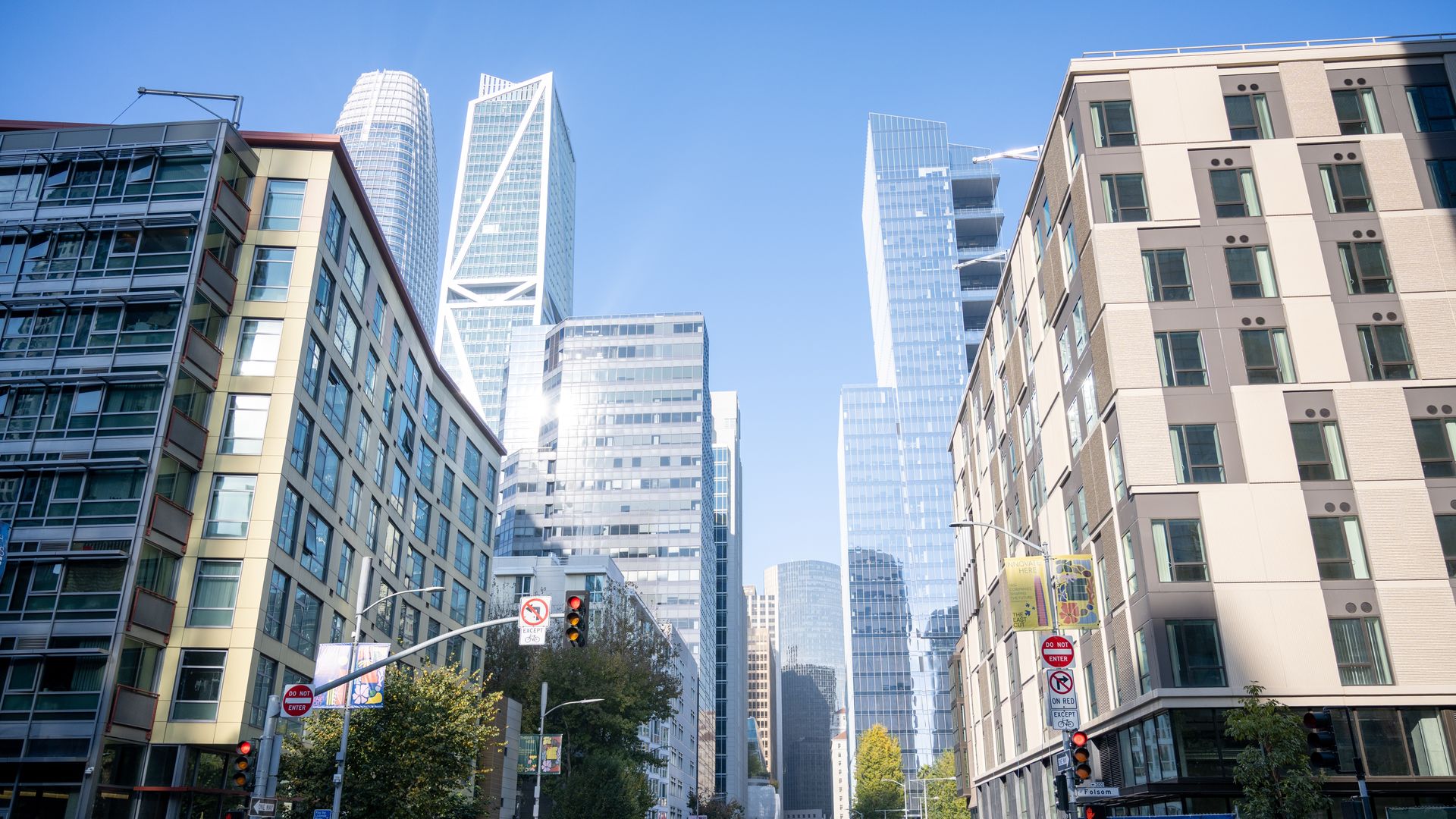
After years of promises, a meaningful wave of office-to-housing conversions is finally moving into the development pipeline.
Why it matters: Even as AI companies help fuel an office market rebound, nearly a third of San Francisco office space remains vacant, making conversions a key part of downtown’s recovery and the push to build more housing.
Driving the news: Three projects are expected to submit applications this month, marking the strongest evidence yet that a package of zoning changes, tax incentives and streamlined approvals is unlocking conversions that developers previously said didn’t pencil out, the Chronicle reports.
- The projects, totaling roughly 300 units, include plans to convert office buildings at 901 Market St., 2300 Stockton St. and 150 Hayes St.
The big picture: Converting aging office buildings into homes has been viewed as one way to address two of San Francisco’s biggest challenges post-pandemic: a persistent housing crunch and high office vacancy rate.
Between the lines: A few hundred units is modest compared with the city’s overall housing needs, but the latest plans represent an important milestone under the city’s new conversion framework.
- For years, developers have argued the math rarely worked and such conversions couldn’t be profitable. Older buildings often require costly structural upgrades, while permitting, fees and taxes added more hurdles.
- The city has spent roughly five years addressing those barriers by reshaping its rules and rolling out new incentives such as expedited approvals, fee reductions and a new program allowing qualifying projects to recoup part of future property tax growth to help cover construction costs.
What they’re saying: Developers told the Chronicle that the changes have finally made these projects financially feasible.
- If developers can buy a building cheaply enough, projects like 150 Hayes can produce apartments for $500,000 to $600,000 per unit — well below the roughly $1 million per unit cost of new construction, Jack Sylvan of SDG told the Chronicle.
What we’re watching: The projects could provide a blueprint for much of downtown’s aging and unused office stock.
- Officials hope to create a repeatable model for converting aging, lower-rent offices in particular — the ones that often lack the amenities of newer towers.
- Those buildings are often cheaper to buy and may be less attractive to companies seeking space amid the return-to-office push.


