

(Courtesy of Robert Reich)


by Randy Shaw on July 6, 2026 (BeyondChron.org)

New Mid-Market housing above vacant retail
San Francisco’s Storefront Opportunity Grant program has made grants of $50,000-100,000 to 39 businesses which have opened or will do so by 2027. Restaurant and small business permits are being expedited. Entertainment zones facilitate outdoor drinking. San Francisco’s vacancy tax has had a positive impact.
But San Francisco still has far more vacant storefronts than before Covid. Is there more the city can do? Or has online purchasing permanently reduced the city’s retail demand?
San Francisco’s retail vacancies primarily impact the Mission, Castro, SOMA, Mid-Market, downtown, Cathedral Hill, lower Polk, lower Nob Hill and the Tenderloin. These were once known as the “ring” neighborhoods as they collectively form a ring spreading out from downtown,
Four factors have driven this retail decline.
First, there are fewer daily customers coming into San Francisco. Blame the steep reduction in BART ridership into the city and the huge rise in working at home. Downtown office space is still 29.7% vacant.
Second, these areas still suffer from the post-Covid boost in sidewalk drug activities. Negative perceptions remain even where sidewalk drug use has declined. As I have written about the Tenderloin, neighborhood improvements are not seen by those who have given up on area businesses.
Past and present drug activity discourages opening businesses. Labor and business costs are the same in Noe Valley or the Marina. Why would investors choose a more troubled neighborhood? Particularly when rents are not that much lower.
Third, some landlords benefiting from rising apartment rents feel no pressure to rent their retail spaces. They keep them vacant until someone meets their unrealistic price.
Fourth, changes in consumption practices have hurt restaurants and bars. The younger generation has reduced alcohol consumption. The widespread use of Ozempic—which reduces spending on food between 5-8%-–has people ordering less food.
Tenderloin bars were once recession-proof. But since Covid even historic Tenderloin bars have closed. Their spaces are either still vacant or have been converted to the now pervasive mini-markets. Several of which have been sued by the City Attorney’s office for being fronts for the drug trade.
City Hall’s targeted, well-funded efforts to revive Union Square and Downtown should expand. For example, Mid-Market desperately needs help filling its ground floor retail. The retail situation is so bad that two major new housing developments at 50 Jones and 1028 Market (the Prism) haven’t even built out their retail spaces years after opening (see photo above).
Market Street between 7th and 5th streets is desolate due to the lack of retail. IKEA’s purchase in 2020 of the long vacant 250,000-square-foot building at 945 Market Street has not galvanized the area. Its Saluhall food hall has had a complete turnover of businesses
The closure of the former Westfield Centre sharply reduced foot traffic on that stretch of Market Street. No destination business in the area now exists.
Mayor Lurie’s San Francisco Downtown Development Corporation has yet to make the major investment that the core of Mid-Market needs. Plans to label Mid-Market the “Theater District” will help but a lot more is needed to return retail customers to the area.
Some trumpet the city’s renting more office space at 1455 Market as a boost for Mid-Market. But Market and 11th Street has not been a challenging area. “Mid-Market is customarily seen as between Ninth and Fifth Streets.
That’s where investment in Mid-Market also benefits SOMA and the Tenderloin. And where City Hall and its donor allies should invest a lot more time and money.
In 2019 I wrote “Cure for Vacant Storefronts? Build Housing.” But the hundreds of new housing units that opened in Mid-Market after Covid have not produced successful retail. Building six to eight story buildings under the Family Zoning Plan or state law will fill vacant storefronts in neighborhoods where retail already thrives. That’s where upzoning will most likely encourage housing to actually be built.
Filling Tenderloin Vacancies
I have spent years trying fill Tenderloin retail vacancies. We had great success leading up to Covid. It’s a challenge in 2026 for the reasons stated above.
The Tenderloin has very few blocks with continuous retail. Little Saigon has long been the Tenderloin’s core commercial district.
In November 2023 I counted eighteen vacant storefronts in the two-block stretch of Larkin between Eddy and O’Farrell. There were still eighteen in February 2026. And the same number last week. It’s hard to attract businesses when Larkin between O’Farrell and Geary still has ongoing day and night sidewalk drug activities.
Businesses that have received city grants for Larkin Street on blocks without drug activities have still not opened.
But the situation could soon dramatically improve.
Chris Larsen has donated $5 million to revive Larkin Street and Little Saigon. This sends a clear message that the area is set for revival.
The Tenderloin has many landlords eager to give good rent deals to fill retail spaces. But Little Saigon has some owners uninterested in renting storefronts. They don’t post “For Rent” signs. They allow their spaces to physically deteriorate.
San Francisco enacted a vacancy tax to pressure such landlords. One idea that has been floated by a close Lurie ally is to strengthen the tax by increasing fines and have them kick in faster. The city would also get the power to put liens on buildings with longterm vacancies.
Areas like Little Saigon need enhanced penalties. Owners should not be able to hold once thriving retail districts hostage.
Has Online Shopping Forever Reduced Demand?
Some believe online shopping has permanently reduced in store demand. Yet that doesn’t explain why retail is booming in the city’s more affluent neighborhoods. After all, those customers also buy online.
Online shopping also doesn’t explain vacant dining spaces. Prior to Covid, restaurants, bars and cafes filled many of the now vacant storefronts in the ring neighborhoods. The city must focus on bringing these dining spots back.
So can San Francisco fill vacant storefronts? Yes the City Can.
Randy Shaw is the Editor of Beyond Chron and the Director of San Francisco’s Tenderloin Housing Clinic, which publishes Beyond Chron. Shaw’s new book is the revised and updated, The Tenderloin: Sex, Crime and Resistance in the Heart of San Francisco. His prior books include Generation Priced Out: Who Gets to Live in the New Urban America. The Activist’s Handbook: Winning Social Change in the 21st Century, and Beyond the Fields: Cesar Chavez, the UFW and the Struggle for Justice in the 21st Century.

Troy Jackson speaks during a May Day rally organized by local unions on May 1, 2026 outside City Hall in Portland, Maine.
(Photo by Graeme Sloan/Getty Images)
Jul 07, 2026 (CommonDreams.org)
Former Maine Senate President Troy Jackson filed federal paperwork on Tuesday to explore a US Senate bid after a sexual assault allegation against current Democratic nominee Graham Platner prompted a torrent of calls for him to drop out of the race.
Jackson, a fifth-generation logger who lost Maine’s Democratic gubernatorial primary last month, was among those urging Platner to end his Senate campaign following Politico’s reporting late Monday, writing on social media that “there is no place in our politics for sexual violence.”
RECOMMENDED…

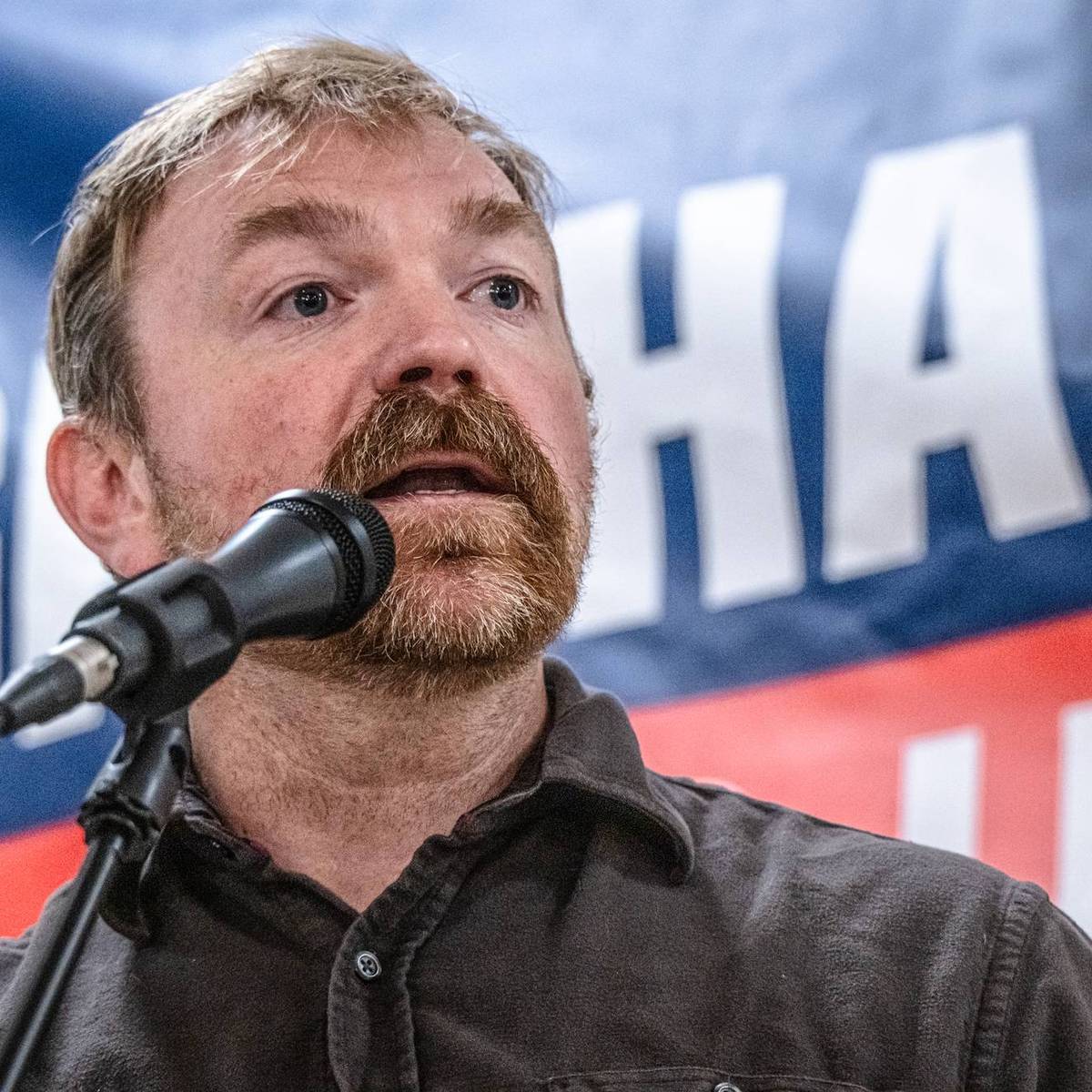
In an interview with the Bangor Daily News, which first reported the news of Jackson’s filing, the former gubernatorial candidate said that “if Graham’s stepping away, I am very, very interested and think I’m the best person to replace him.”
Platner denied the sexual assault allegation and, as of this writing, has yet to drop out of the race, though his departure is widely seen as a foregone conclusion as his most prominent supporters—including Sen. Bernie Sanders (I-Vt.)—push him to exit. One unnamed source told The New York Times that Platner is seeking a “guarantee” that he “would be replaced by someone in agreement with ‘the values and vision and policy agenda’” that he articulated throughout his campaign.
Jackson, like Platner, was endorsed by Sanders and has expressed support for Medicare for All, stronger union protections, wage increases, and other progressive priorities. In recent months, Jackson has joined Sanders and Platner at “Fighting Oligarchy” rallies where the former Maine Senate leader said American workers are being robbed by a billionaire class bent on enriching itself no matter the societal costs.
“I am running for the people who worked their entire lives and still can’t afford to retire because the economic system in this country is rigged against them,” Jackson said during a Labor Day rally last year. “And I’m running for all the workers… who’ve been told that they’re replaceable and that their lives are disposable.”
Platner, who backed Jackson’s gubernatorial bid, can be replaced as the Democratic nominee in the US Senate race against Republican incumbent Sen. Susan Collins if he withdraws by July 13. By a process yet to be determined, the Maine Democratic Party would have until July 27 to select a replacement.
The New York Times reported that “the options under discussion include a convention or a statewide caucus in late July.”
Our work is licensed under Creative Commons (CC BY-NC-ND 3.0). Feel free to republish and share widely.
Jake Johnson is a senior editor and staff writer for Common Dreams.

United States’ Folarin Balogun fouls Bosnia’s Tarik Muharemovic resulting in a red card during the World Cup round of 32 soccer match between the United States and Bosnia Wednesday, July 1, 2026 in Santa Clara, Calif. (Jeff Chiu / AP)
By RONALD BLUM Updated July 7, 2026
SEATTLE (AP) — Images told the story of the United States’ World Cup downfall.
Christian Pulisic sprawled on the field in agony after hurting an ankle.
Matt Freese holding his hands on his head after his gaffe gifted a goal.
Chris Richards crumpling to the ground, his face pressed on the grass.
Mauricio Pochettino kicking a rack in front of the American bench, sending four water bottles flying.
American hopes for a deep World Cup run at home ended when Charles De Ketelaere scored twice and assisted on another goal, helping Belgium expose the U.S. defensive liabilities in a 4-1 win Monday night that earned a quarterfinal berth.
“It stinks,” Tyler Adams said. “This was a moment to have an opportunity to advance and really try and do something special. We fell short.”
The AP’s Jennifer King reports US World Cup dreams crashed down to earth in a decisive 4-1 defeat by Belgium.
While the U.S. was boosted by the presence of star forward Folarin Balogun, whose one-game red-card suspension was controversially lifted by FIFA, American defenders were at fault in a pair of first-half goals and Freese’s howler gave the Red Devils a third early in the second half.
Second-half substitute Romelu Lukaku added Belgium’s final goal in the third minute of stoppage time after Richards’ giveaway. The U.S. hadn’t allowed that many goals in a World Cup game since a 5-1 loss to Czechoslovakia in the Americans’ 1990 opener, when they returned to soccer’s biggest stage after a 40-year absence.
Related Stories
Colombia falls short in shootout vs. Switzerland and fails to match its best World Cup performance
Members of Haiti’s national soccer team tour their capital after playing in the World Cup
One Extraordinary Photo: Ronaldo reacts to the end of his World Cup career
“A very bad day,” said Pochettino, the U.S. coach. “It’s not like you are in a rocket and you improve and you grow. … It’s not linear.”
This loss was a painful reckoning for a team that hoped to boost the sport but instead failed to shake a quarter-century of stagnation since 20-year-old Landon Donovan led the Americans to the 2002 quarterfinals. Since then, the U.S. has lost four times in the round of 16.
“Everyone had nerves, right, because we knew how much this meant for the whole country, not just our team,” said 21-year-old defender Alex Freeman, the youngest U.S. player.
Belgium knocked out the U.S. in the round of 16 for the second time in 12 years and extended its unbeaten streak to 18 games. The Red Devils play 2010 champion Spain on Friday at Inglewood, California, for a semifinal berth against France or Morocco.
“We showed that we’re ready and we want to perform,” captain Youri Tielemans said.
All six CONCACAF nations have been eliminated, with the three co-hosts falling in the round of 16.
Malik Tillman tied the score 1-1 midway through the first half when he became the first player since France’s Bernard Genghini in 1982 to have two free kick goals in a World Cup, but the Americans conceded less than a minute after the ensuing kickoff.
American star Christian Pulisic could only watch the end from the bench after injuring his right ankle when he hit Tielemans’ boot on a 52nd-minute shot attempt. Pulisic was replaced seven minutes later, finishing the tournament with no goals.
“I didn’t quite have the moments I was hoping to and to try to help us to really push and get over this next step of beating a really good team,” he said. “I’m disappointed with myself, of course, but I’m going to try and stay positive. I did a lot of good things and the team did, as well.”
After winning three World Cup games for the first time in this expanded 48-nation tournament, the U.S. lost its seventh straight match to Belgium. The Americans have dropped 11 of their last 12 games against European opponents, winning only their round of 32 match against Bosnia-Herzegovina.
A heralded generation led by Pulisic, Adams and Weston McKennie only partially accomplished their mission of lifting soccer’s stature closer to that of the NFL, MLB and the NBA.
“A goal was obviously to inspire people that the sport was growing in the U.S., which I think we saw. The support was unbelievable,” Adams said. “In this moment we let them down.”
De Ketelaere put Belgium ahead in the eighth minute and Tillman’s goal in the 31st energized a largely red-white-and-blue crowd of 66,925 at Lumen Field. De Ketelaere damped that and assisted on Hans Vanaken’s 57th-minute goal after Freese lost control of the ball in front of his net.
“Obviously disappointed for my involvement and error in judgment on the third goal,” Freese said.
Belgium, which didn’t start stars Jérémy Doku as and Kevin De Bruyne, pressed from the start and exposed a defense regarded as the Americans’ weak spot.
Dodi Lukébakio made a long diagonal pass to the opposite corner, leading to the opening goal. Leandro Troussard controlled the ball and his cross was blocked by Freeman and popped into the air. Freeman headed the ball into the penalty area and Timothy Castagne charged after it and hooked a centering pass around Richards. De Ketelaere split Antonee Robinson and Tim Ream, at 38 the oldest American ever in a World Cup, then with his right foot redirected the ball into an open net.
Pochettino held out his arms, as if to ask: What was going on?
Tillman scored after Brandon Mechele knocked down Balogun about 25 yards from goal. Tillman’s kick deflected off Vanaken’s head and deflected to the left of goalkeeper Thibaut Courtois, who had dived right.
Troussard got around Sergiño Dest for a cross and De Ketelaere outjumped Ream and headed the ball past Freese in the 33rd minute for his eighth international goal.
Belgium built a two-goal lead when Mechele lofted a long ball that Freese chested after two hops. Freese hesitated with a touch, then scrambled and kicked the ball off De Ketelaere. Vanaken one-timed a shot from 35 yards that deflected in off Ream.
Lukaku entered in the 67th minute and scored his 93rd international goal.
Pochettino replaced Gregg Berhalter after first-round elimination at the 2024 Copa America. His contract expires this summer and he hasn’t decided whether to stay through the 2030 World Cup.
Instead of focusing on Spain, Pochettino has a different near-term agenda.
“To rest a little bit, to think, to have conversation,” he said, “and then see what the decision is from the federation and from us.”
___
AP Sports Writer Andrew Destin and Associated Press writer Eugene Johnson contributed to this report.

Branding political opponents on the left as communists is a century-old American tradition.
From the Red Scare of the 1920s to the McCarthy era of the 1950s, labeling someone a “commie,” Marxist or “pinko” is a tried-and-true method of stirring nationalistic passions.
When 68 people were arrested at San Francisco City Hall in 1960 for trying to attend a congressional hearing on “un-American” activities, they were quickly vilified as communists.
“I only wish every American could have been in San Francisco and could have seen what I saw there,” the late U.S. Sen. Strom Thurmond said of the protests that greeted the House Un-American Activities Committee.
“It reminded me of a bunch of howling wolves to see the communists and the communist led-people with thwarted minds, and misled people — college professors, students and others — being led by communists and being sucked into that movement.”
In fact, not one of the protesters arrested that day was a communist, nor were any convicted of crimes (among them was Albert Einstein’s granddaughter, Eveylyn, who — like many of the protesters — was a student at UC Berkeley).
Propaganda, however, does not require truth.
This past week, with his popularity at an all-time low, his party facing potentially devastating losses in November’s elections, and perhaps concern that his new term “Dumocrats” isn’t having much effect, President Donald Trump resurrected the “communism” attack in hopes of scaring voters about the Democratic Party.
Trump told religious leaders at the Faith and Freedom Coalition that his top priority was “to stop this horrible threat of cancer that’s permeating our country called communism.”
A few days later, he told reporters in the Oval Office that communism is the “biggest threat to our nation … maybe since our founding. That includes World War I, World War II, Sept. 11. It includes the Pearl Harbor attack.”
And where does the president see the red menace rising, posing a greater danger perhaps than the Civil War, the Great Depression or Covid-19?
It’s the election of social democrats such as New York Mayor Zohran Mamdani and Los Angeles City Councilwoman Nithya Raman, the latter of whom placed second in the Los Angeles mayoral race and will face incumbent Karen Bass in a November runoff.
“These are not social Dumocrats — these are hardcore, godless communists,” Trump said. “This is the most serious threat to our country since its existence, in my opinion, 250 years ago. They use the word social democrat because its sounds so nice, but it’s really communism you’re talking about.”
No, it’s not.
San Francisco’s waterfront will host ‘Red Flags,’ a monumental exhibition making its West Coast debut
Storied military base played a role in every major American conflict from the Civil War through Desert Storm before becoming a hugely popular national park
The Storefront Opportunity Grant Program is infusing commercial corridors with commerce and assisting proprietors with up to $100,000 in funding
Communism is an economic system in which the public, rather than private entities, owns all resources and the means of production. Communists favor a classless society, in which profit motives and other capitalist notions are replaced by communal ownership.
Social democrats are capitalists who call for regulating private ownership, distributing profits more equitably, and providing widespread access to education, housing and healthcare.
Mamdani has called for strict rent control and programs to expand home ownership. Social democrats in Congress, such as Rep. Alexandria Ocasio-Cortez, have proposed a Green New Deal to rein in carbon emissions, not a government takeover of the energy sector.
The one political leader who has openly boasted about public ownership of private companies is none other than Trump. Earlier this year, he bragged about the U.S. government taking a 10 percent ownership share of chipmaker Intel in exchange for a subsidy to promote its products. He said the government was taking a “golden share” of U.S. Steel as part of Japanese firm Nippon Steel’s purchase of the company. He has talked about similar arrangements with OpenAI and Anthropic.
It’s not what Karl Marx had in mind, but it’s a lot closer to communism than what Democrats have proposed.
Trump might believe communism is evil, but — true to form — he boasts that if he chose to become a communist, he’d be very good at it.
“I’ll be honest — I think I’d be the greatest communist in history” he said last week. “It would be so easy.”
Why? Because it involves making false promises, he said, such as promising free rent and free food — not to be confused with his pledges to cut energy bills in half or end the Russia-Ukraine war in 24 hours.
And just in case the label has lost any of its sting in the 100 years since the Bolsheviks led by Vladimir Lenin took control of Russia, Trump spelled out in easy-to-understand terms what happens if such candidates win.
“Communism is very easy to sell, but you’ll start living in squalor,” Trump said. “There will be no food; there will be no housing; there will be no military; there will be no law and order. There will be nothing. You’ll be a third world [nation] in every way, and everyone will suffer or die.’
In 1948, as Senator Joseph McCarthy was building momentum, President Harry Truman warned that reckless cries of “communism” threatened the country more than they protected it.
“There is nothing that the communists would like better than to weaken the liberal programs that are our shields against communism,” Truman said.
Marc Sandalow has been writing about California politics from Washington, D.C., for more than 30 years.
Sport
Belgium have been granted the right to appeal FIFA’s decision to overturn US striker Folarin Balogun’s suspension, The Athletic reported on Monday, which reportedly took place after an intervention from US President Donald Trump.
Issued on: 06/07/2026 – Modified: 06/07/2026
By: FRANCE 24
Video by: Selina SYKES

Belgium have been granted the right to appeal FIFA‘s decision to suspend the one-game ban to United States national team striker Folarin Balogun, according to a report by The Athletic.
Balogun had been slated to miss Monday’s round of 16 match after being issued a direct red card, which carried an automatic one-match suspension. However, FIFA announced on Sunday that the one-game ban had been suspended.
The ruling triggered widespread debate as well as a statement from the Royal Belgian Football Association (RBFA) that said it was exploring “all potential options”.
According to The Athletic, the RBFA formally wrote to FIFA to appeal the matter, which was granted. The RBFA and US Soccer were reportedly asked to make submissions by 5am PT – exactly 12 hours before the scheduled start of the match at Seattle Stadium.
A member of the FIFA appeals committee has been selected to hear the case, according to the report. The member is not associated with a federation in either UEFA or CONCAFAF.
Belgium have not been guaranteed that a ruling will be made before Monday’s match.
Balogun is currently eligible to play and is expected to start. The 25-year-old has a team-best three goals during this World Cup, including what turned out to be the game-winning goal against Bosnia and Herzegovina last Wednesday.
However, Balogun was later issued a red card following a VAR review. He was slated to have to sit out against Belgium until Sunday’s surprising ruling by FIFA.
Read moreFIFA lifts Balogun’s World Cup suspension after Trump calls Infantino
US President Donald Trump reportedly called FIFA president Gianni Infantino to ask him to review the matter, while secretary of commerce Howard Lutnick and other White House officials were also involved.
Trump praised the decision in a Truth Social post, writing, “Thank you to FIFA for doing what was right, and reversing a great injustice!”
A red card or suspension officially cannot be appealed. FIFA, however, posted this message to its website Sunday about its use of the rule book in the case: “By operation of Article 27 FDC, the implementation of the automatic match suspension for USA player Folarin Balogun is suspended for a probationary period of one (1) year.”
US Soccer issued its own statement in response to the action: “We accept the decision of the Disciplinary Committee and are pleased that Folarin Balogun is eligible to complete tomorrow.
“Our full attention is focused on the Round of 16 match against Belgium in Seattle, and we look forward to the continued support of our amazing fans.”
The RBFA countered with a lengthy statement from its football federation decrying FIFA’s decision and citing other pieces of the disciplinary code and competition regulations that made red-card decisions sound final.
“In order to safeguard the legitimate rights of all participating teams and to protect the fundamental principles of fair play in our sport, both at this FIFA World Cup and at future editions of the tournament,” the statement concluded, “the RBFA is investigating all potential options.”
US team’s Folarin Balogun free to play after Trump lobbies FIFA to remove ban

Belgium coach Rudi Garcia began his pre-match press conference Sunday afternoon by declaring he didn’t know the fifth of July had turned into April Fool’s Day.
“A lot of our thoughts and opinions are in the release,” Garcia said. “We’re not defending the national team or the federation, we are defending football.”
European soccer body UEFA criticized FIFA for an “incomprehensible and unjustifiable decision”, saying in a statement that FIFA had “crossed a red line”.
“Sometimes rules are open to interpretation. In this case not,” UEFA said, adding, “the integrity of the game is at stake and the credibility of a competition is undermined.”
Before the start of the World Cup last month, Portugal star Cristiano Ronaldo faced a three-match suspension, with the final two potentially keeping him out of group-stage matches. Instead, he sat one match, with the other two suspended and converted to a one-year probation period.
US coach Mauricio Pochettino defended FIFA’s decision to suspend Balogun’s ban.
“For me, there isn’t much debate here, though I do understand Belgium’s perspective and Rudi’s point of view,” Pochettino told reporters Sunday. “I understand why people conflate issues – people always do, because there’s often an agenda to mix things up – but in this case, I don’t think it’s right.”
“If anyone was harmed in this whole situation, it was the United States. Can anyone justify the idea that we weren’t punished? I mean, playing 30 or 35 minutes a man down in a World Cup knockout match? It’s not as if we’re benefiting. No, no. There’s no extraordinary gain we’re getting out of all this. I mean, ultimately, we aren’t victims, but we aren’t the villains of this story either.”
(FRANCE 24 with Reuters)
While establishment Democrats argue socialists are confined to the coasts, DSA chapters have helped elevate more than 300 candidates nationwide.


July 6 2026 (TheIntercept.com)
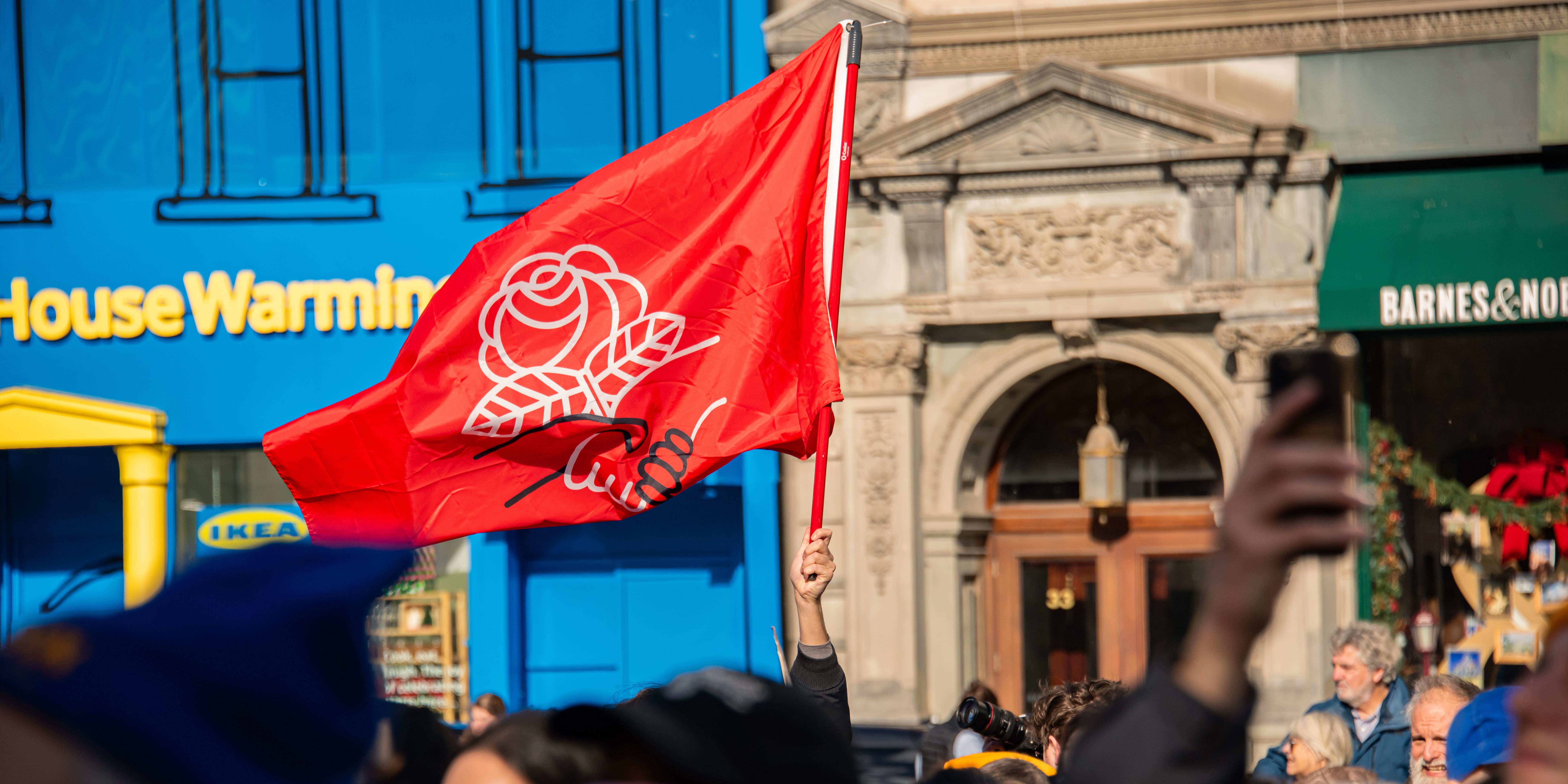
The New York City Democratic Socialists of America hold a Tax the Rich rally in Manhattan on Nov. 16, 2025. Photo: Neil Constantine/NurPhoto via Associated Press
As democratic socialists toppled establishment favorites this midterm cycle, the old guard of the Democratic Party picked up a preferred cudgel against insurgents: These people were propped up by white, urban, coastal, educated electorates — not the ones the Democrats were trying to reach, and certainly not the working class.
It’s true that the four victorious socialists running for Congress — Chris Rabb in Philadelphia, Darializa Avila Chevalier and Claire Valdez in New York City, and Melat Kiros in Denver — won in major cities where progressive politics are more likely to be popular than in the country’s many more rural, poorer, and less educated districts. But before this cycle’s big surge, the Democratic Socialists of America had spent the past decade backing and recruiting candidates in down-ballot races across the U.S., multiplying the number of people in office by a figure of eight and electing mayors, city councilors, state lawmakers, and other local officials in 39 states.
“Everybody is feeling the crunch. Everybody is deeply concerned for their families, for their security,” said Becky Cooper, campaign manager to Francesca Hong, a Wisconsin state representative and formidable DSA candidate for governor. “That transcends political party, transcends ages, and it transcends geography. This is not just a coastal elites thing.”
Despite the narrative that the socialist model only works among electorates dominated by young, white, coastal elites, the DSA, the largest socialist organization in the U.S., is decentralized and operates chapters in a majority of states. Its members currently hold office in states like Ohio, North Carolina, Texas, and Tennessee. Many of those candidates have been elected to local offices even as far-right campaigns to take over bodies like school boards have dominated in recent years. Since 2018, 305 DSA-backed lawmakers have won their races. Democratic socialists won state legislative primaries this season in Georgia and Kentucky, and they’re on the ballot in upcoming primary races in Florida, Michigan, Minnesota, and Wisconsin, where Hong has polled first or second in recent months in a tight gubernatorial primary.
In order to win, they’ve built what some might call a machine, joining forces with more mainstream progressive organizations to marshal resources against a well-financed political establishment that buried candidates on the left in 2024.
Their success has sent the Democratic establishment into a frenzy. Dismissing the wins in his backyard, House Minority Leader Hakeem Jeffries said the socialist victories in New York were concentrated in “higher-income districts” with an “outsized focus on issues connected to the Middle East.”
But while Valdez and Avila Chevalier won a majority of voters in areas dominated by the young, wealthy, and college-educated, Avila Chevalier beat longtime incumbent Rep. Adriano Espaillat among Black voters, while Valdez dominated over Brooklyn Borough President Antonio Reynoso among majority-Hispanic precincts — suggesting the socialism-curious share of the electorate is more complex than its critics might make it seem.
It’s “a very reductionist identity politics from pundits and critics who don’t have anything meaningful to offer working-class voters.”
“People are going to keep trying to move the goalposts to pretend like this isn’t a movement sweeping the nation,” said democratic socialist New York state Sen. Jabari Brisport, pointing to another DSA member who won a primary upstate in Buffalo. “It’s an attack line that will keep coming again and again, a very reductionist identity politics from pundits and critics who don’t have anything meaningful to offer working-class voters.”
According to Cooper, Democratic leaders hold responsibility for the surging popularity of the socialist brand.
“The socialist label is more popular than the Democratic label because people are recognizing that they’ve been fed a bill of lies through capitalism,” she said.
Democratic socialists looking to take over the governor’s mansion in Wisconsin say their message isn’t contingent on geography, race, or class.
“You’ve had throughout history political leaders use socialist policies without actually calling it socialism,” said Wisconsin state Rep. Darrin Madison, the first Black socialist elected in the state. He pointed to policies like the New Deal, the eight-hour workday, and Social Security. “Building systems of mutual aid, that’s a form of socialism,” Madison said.
Wisconsin’s long history of socialist politics has enjoyed a revival in recent years. Milwaukee sent the first socialist to the House in 1910 and elected three socialist mayors over the next half century, but the state’s socialist caucus died out in the early 1930s — after passing close to 300 bills in the preceding decade. Frank Zeidler, elected Milwaukee mayor in 1948, was the last socialist elected in the city until 2020, when voters elected Ryan Clancy to the County Board of Supervisors. Two years later, Madison and Clancy won election to the state Assembly; the first thing the pair did after taking their oaths of office was to found the Socialist Caucus, which had died out in the 1930s. The caucus doubled in size last year to four members, adding Hong and state Rep. Christian Phelps.
Socialists resuscitated their Wisconsin roots at a time when Democrats had earned a reputation for shirking their responsibilities at every level of Wisconsin’s government. After Bernie Sanders beat Hillary Clinton in the state’s 2016 Democratic primary, its general election voters swung toward Donald Trump — clinching his first presidency. Until current Democratic Wisconsin Gov. Tony Evers was elected in 2018, the state was under full Republican control.
“The last time that Wisconsin had a [Democratic] trifecta was 16 years ago now,” Clancy told The Intercept. After Democratic Gov. Jim Doyle did not seek reelection, the Democratic candidate lost the 2011 governor’s race to Republican Scott Walker, and the GOP flipped both state legislative chambers. “The Democrats at the time squandered that opportunity, and they really failed to deliver for the state.”
Those failures, Clancy said, included not codifying abortion rights ahead of the Supreme Court decision to overturn Roe v. Wade, and not raising the minimum wage, which is still $7.25 an hour, when they had the votes to do so. “They didn’t even bring it up for a vote because they feared what that would mean for their large-dollar donors,” Clancy said.
Cooper said Hong’s campaign is hearing from voters who are increasingly blaming the capitalist system for the problems they see around them. In response, the campaign is talking about what it says is the true definition of socialism, Cooper said: “Taking care of our neighbors, taking care of people’s economic needs.”
“They’re waking up to the fact that it is capitalism at the heart of these issues. It is people profiting off of our neighbors being sick, or not being able to afford groceries or not being able to afford their credit card bills, when we see that people are becoming billionaires while we’re suffering and literally just trying to feed our families,” she said.
Hong’s performance in recent polling shows that socialist policies are resonating with voters, Madison said.
“When folks say this is a reflection of the elites and folks from academia and young folks in college, that does a disservice to community members and their abilities to understand the circumstances that they are in and the ways in which parties have exploited their pain,” he said.
“It doesn’t speak to the reality that folks are facing.”
Cops Warn CEO Bodyguards That Luigi Mangione Fever Could Spark Class War
Glen Stellmacher, Noah Hurowitz

The Horrifying Lessons of 250 Years of American History
Graham Platner Inspired Another Left-Wing Veteran to Take On an Establishment Dem
Nearly 2,000 miles southwest of Wisconsin’s capitol, the city of Los Angeles has all the markers of a coastal haven for democratic socialist politics to thrive: a large working class, high racial diversity, a significant immigrant population with a rich history of progressive organizing, all existing alongside pockets of wealthier, whiter, college educated residents who lean left. The city has its own storied history of socialism and nearly elected a socialist mayor in the early 1900s, riding a wave of labor and working-class support and drawing on the socialist model of Milwaukee.
Since 2020, the LA DSA chapter has gained a foothold in City Council with challenges to the Democratic establishment. When Nithya Raman unseated an incumbent that year with the backing of DSA LA, the victory sent shockwaves throughout an LA establishment — then the DSA repeated the feat three times in subsequent cycles.
Now, Raman has a chance to unseat incumbent Democratic mayor Karen Bass in November, tempting comparisons that suggest the city is on the cusp of its own wave of governmental transformation akin to New York under democratic socialist Mayor Zohran Mamdani. Yet DSA LA has struggled to break out of its main stronghold of the city’s east and northeast sides, into some of the city’s power centers, such as South LA, which has majority Black, Latino, and working-class precincts.
“If we’re serious about building power in the areas where we want to build power, then the process has to begin much earlier than a candidate coming to DSA” for an endorsement, said DSA LA co-chair Leslie Chang. She acknowledged the need to break out of LA’s own “commie corridor,” where many DSA members live.
Like in New York, DSA LA has had to battle accusations that its candidates only draw support from white, college-educated voters, despite winning in multiple districts with majority-Latino residents. This reality played out in two city council races on LA’s west and south sides, where one DSA candidate lost outright and the other made it to the runoff — but trailing the establishment pick by 13 percentage points.
Chang, who spent a week in New York knocking on doors and phone-banking for that socialist slate, said the LA chapter needs to follow New York’s lead to train and identify “homegrown” candidates within the organization.
“We need multi-year power building plans for a lot of the things that we want to achieve,” Chang said. “We have to commit to working on projects, like non-electoral campaigns in districts, to become better embedded in that community that we want to represent.”
While DSA found success in its first citywide race when its endorsed city attorney candidate, Marissa Roy, locked out the incumbent from the top two and made it to a November runoff, its members were split over whether to back Raman for mayor or long-shot candidate Rae Huang. Its city council members endorsed Bass. Now, DSA LA’s larger membership has to weigh whether to endorse Raman in November’s runoff as she faces lingering mistrust among the organization and LA’s left after she diverged from her DSA colleagues on key housing issues and on Palestine and Israel. If she does want to unlock the group’s army of canvassing volunteers, Raman would need to collect at least 50 signatures from DSA members, sit for an interview with its electoral politics committee, and fill out a questionnaire that would likely include policy commitments important to the group.
Still, recent socialist victories have had a reverberating effect on the nation’s second largest city. The LA chapter saw bumps in membership after Mamdani’s election last year and another after New York’s congressional primaries, adding 70 new members to its total of 5,000. Chang said the wins in New York have also energized the chapter to begin building toward electing members to the California State Legislature, where only one current DSA member from the Silicon Valley is serving. Elsewhere in California, Mai Vang, endorsed by the Sacramento DSA chapter, is headed to a runoff after leading longtime Democratic incumbent Rep. Doris Matsui; the previous person who held the seat was Matsui’s husband Bob.
“When New York wins, LA wins,” said Sean Wakasa, a DSA LA co-chair with Chang, also mentioning the wins in Philadelphia and Denver. “We’re building politics that working-class people can see themselves in, and it’s built around addressing universal issues around affordability around the ability for people to work.”
DSA might bristle at the suggestion that it’s becoming a political machine. The group prides itself on getting buy-in from its members before taking a position on policy issues and having a painstakingly democratic structure — not the top-down politics they say has led to the downfall of the Democratic Party.
But DSA is playing the game. It’s one group in a coalition of lefty organizations whose chapters have beefed up their coordination this cycle to power socialist and progressive candidates.
In all four of its congressional primary wins so far this cycle, DSA chapters have teamed up with Justice Democrats, the left insurgent group that rose to prominence in 2018 when it helped get the first two DSA members of Congress elected — Reps. Alexandria Ocasio-Cortez, D-N.Y., and Rashida Tlaib, D-Mich. — but suffered last cycle when two of its newer incumbents, Reps. Jamaal Bowman of New York and Cori Bush of Missouri, were ousted by AIPAC-backed challengers. Now, joining forces with DSA chapters and Sunrise Movement, the youth-led climate group that has expanded its ambit to oppose war and authoritarianism, Justice Democrats is receiving mea culpas for previous death knells — as JD spokesperson Usamah Andrabi told The Intercept when Kiros won: “We’re just having an amazing fucking cycle.”
Groups on the left have also massively increased their spending in this year’s primaries after losing candidates last cycle who faced tens of millions of dollars in attacks from deep-pocketed super PACs and dark-money groups. Several pro-Palestine PACs are working or spending on primaries for the first time this cycle. The super PAC American Priorities, funded by Mamdani donors, has spent more than $4 million so far. Those investments have helped shift the dynamics in congressional races even in the face of similar outside spending against the left.
“Justice Democrats has the expertise to run federal challenger primaries — embedding in campaigns as staff and advisers, managing budgets, recruiting and training candidates, coordinating donors and leading independent expenditure programs,” Andrabi told The Intercept. “Combining that expertise with local DSA’s immense field and organizing power, which is unmatched in cities like NYC, delivers these monumental victories.
The national groups that helped power Kiros, Valdez, Avila Chevalier, and Rabb’s congressional campaigns don’t work on state-level races. But the DSA’s local Wisconsin chapters and another three campus chapters of the Young Democratic Socialists of America have endorsed Hong and are helping to boost her campaign by canvassing, fundraising, holding events, and calling voters. A new DSA chapter for Central Wisconsin formed last week and is also expected to endorse her.
Still, Hong’s campaign expects to face a surge in outside spending against her. “We know that super PAC money is going to come in, especially with Fran’s stance on data centers. We know AI money is going to come in,” said Cooper, Hong’s campaign manager. She also said she expects to face money from the pro-Israel lobby, though its flagship national group does not spend on state races.
“We know that we are never going to raise the most money.”
“That doesn’t change our message or our work. We know that we are never going to raise the most money. We know that we’re not going to have a ton of independent expenditures coming in to rescue us. We have 6,000 volunteers on the ground,” she said. The weekend after the New York primaries, the campaign knocked 10,000 doors in a day and a half. “That is how we will offset paid media and the spending and all those kinds of things, is getting people out to have real conversations.”
In addition to outside spending, Cooper said the current pearl-clutching around the rise of democratic socialist candidates was to be expected.
“Any time within the larger pendulum swings, there’s smaller ones as well.”

I’M BEN MUESSIG, The Intercept’s editor-in-chief. It’s been a devastating year for journalism — the worst in modern U.S. history.
We have a president with utter contempt for truth aggressively using the government’s full powers to dismantle the free press. Corporate news outlets have cowered, becoming accessories in Trump’s project to create a post-truth America. Right-wing billionaires have pounced, buying up media organizations and rebuilding the information environment to their liking.
In this most perilous moment for democracy, The Intercept is fighting back. But to do so effectively, we need to grow.
That’s where you come in. Will you help us expand our reporting capacity in time to hit the ground running in 2026?
Akela Lacyakela.lacy@theintercept.com@akela_lacyon X
Jonah Valdezjonah.valdez@theintercept.com@jonahmv.05on Signal@jonahmvon X


The wealthy and powerful few have dominated the masses throughout most of human history. This is starkly visible now more than ever—today, the gulf between oligarchs and the average citizen is larger than any gap that existed during European serfdom or the slave society of Imperial Rome. We have arrived at the most blatant version of oligarchy that most modern states have endured, with politicians bought and paid for across the political spectrum.
The strange thing we aren’t in open revolt against this system. In fact, we keep voting to prop it up. Why?
In The Blind Spot, political scientist Jeffrey A. Winters delivers an urgent, incisive account of how we reached this era of in-your-face oligarchy, exposing how modern democracy was developed to protect the interests of the ultra-rich. By tracing the evolution of oligarchy across the globe and through modern history, he demonstrates how the rule of the wealthy isn’t just a flaw in our democracy, it has been built into its very foundations. Now, in an extraordinary paradox, we exist in a state of “participatory inequality”: a world in which 99.99% of us participate openly and freely—democratically, even—in our own ongoing exclusion and disenfranchisement.
But powerful change can begin when we have a clear understanding of where we are, and where we deserve to be. As well as shining a light just how bad our political reality has become, The Blind Spot introduces bold ideas for how we might shift the balance of power. While the rich and powerful do not cede power quietly, this period of shocking inequality is, Winters shows, an opportunity for transformation.
Jeffrey Alan Winters is an American political scientist at Northwestern University, specialising in the study of oligarchy. He has written extensively on Indonesia and on oligarchy in the United States. His 2011 book Oligarchy was the 2012 winner of the American Political Science Association’s Luebbert Award for the Best Book in Comparative politics.
In the mythology of history, 1776 belongs to Philadelphia: declarations, rebellion and the birth of the United States. Yet on the far edge of a continent the revolutionaries hadn’t fully imagined, another founding was quietly unfolding that same year.
While Thomas Jefferson drafted ideals of liberty and self-government in the East, Spanish conquistadors and Franciscan missionaries were establishing a tiny outpost beside one of the world’s greatest natural harbors. That settlement would become San Francisco.
The coincidence is more than historical trivia. It is a revealing dual narrative about the American experiment itself: one founding devoted to principles, the other to possibility.
The United States was born from an argument about freedom. San Francisco was born from geography, ambition and grit. Together, they tell the story of a nation forever oscillating between ideals and reinvention.
In 1776, the future San Francisco — located on the ancestral homeland of the Ramaytush Ohlone people — was mainly known for windblown dunes and rolling hills.
Then, Spain — worried about Russian and British encroachment on the Pacific coast — moved to secure Alta California. That summer, colonists established the Presidio of San Francisco and Mision San Francisco de Asis, today better known as Mission Dolores.
Mere days before the Continental Congress signed the Declaration of Independence, Juan Bautista de Anza planted a cross in the ground establishing the Presidio on the bluffs above the Pacific. The contrast between the two foundings could not have been sharper.
The American Revolution announced itself with soaring language about equality and liberty. San Francisco’s founding emerged from empire. One was loudly ideological; the other deeply pragmatic — but over the centuries, San Francisco would evolve into perhaps the most vivid expression of the very ideals articulated in Philadelphia.
For most of its early life, San Francisco remained obscure. No one could have predicted that this remote village would one day become one of the most influential cities on Earth. Then came 1848.
The discovery of gold transformed San Francisco almost overnight from a sleepy port into a global magnet for ambition, becoming — in a matter of years — the most cosmopolitan place west of New York.
The California Gold Rush did more than enrich prospectors. It created a civic culture built around reinvention. In older societies, identity often depended on class, ancestry or inherited status. In San Francisco, identity became fluid. Here, a laborer could become a merchant, a refugee could become a restaurateur, and an immigrant could become a titan of industry.
The City rewarded audacity more than pedigree. That ethos still defines San Francisco today.
The rest of America often imagines San Francisco as a place of contradictions: radical and wealthy, bohemian and corporate, idealistic and relentlessly ambitious. But beneath these polarities lies a coherent civic philosophy.
San Francisco has long believed that talent matters more than origins and that the future belongs to those willing to invent it. That is the deeper connection between the two foundings of 1776.
The founders of the United States envisioned a society in which individuals were not permanently trapped by aristocracy or inherited hierarchy. Their vision was incomplete and deeply flawed in practice, especially in a nation still burdened by slavery and exclusion.
But the democratic aspiration was revolutionary: Ordinary people could shape their own destinies. San Francisco became one of the ultimate realizations of that aspiration.
The City’s history is a procession of outsiders arriving with little and building something transformative. Chinese railroad workers and merchants helped define its commercial and cultural identity despite fierce discrimination. LGBTQ communities found refuge and political power in San Francisco decades before much of America accepted them. Artists, activists and entrepreneurs repeatedly turned our home into a laboratory for social and technological change.
And then came Silicon Valley.
Though the region geographically exists outside the city limits, the Bay Area spawned a technological revolution over the 20th century that cemented San Francisco’s place in the global imagination as the cradle of innovation. The personal computer, the internet economy, social media, artificial intelligence and venture capital culture all carry the unmistakable imprint of San Francisco’s frontier mentality.
This place has always attracted people who believe the world can be remade.
They say they aren’t surprised the White House has changed its tune on AI regulation, but they question its targeting of Anthropic’s new models
A 50-cent hike is going into effect as part of a five-year toll program first approved in March 2024 to help address a financial shortfall
The Storefront Opportunity Grant Program is infusing commercial corridors with commerce and assisting proprietors with up to $100,000 in funding
From prospectors searching riverbeds for precious metal to engineers in laboratories searching for semiconductor breakthroughs to today’s founders exploring frontiers in AI, biotech, climate technology and space exploration, the tools have changed but the underlying impulse remains strikingly similar: Come west; start over; build the future.
That is why San Francisco occupies such a singular place in popular imagination.
To many around the world, New York represents power, Los Angeles represents fame and Washington, D.C., represents authority. San Francisco represents possibility. Its steep hills and Victorian houses are only part of the iconography. Our home symbolizes a belief that new ideas can overturn old systems.
But today, San Francisco represents something more urgent than possibility. It represents defiance.
The ideals that animated 1776 — that all people are created equal, that liberty is not a privilege of the powerful, that government exists to serve its citizens rather than to subjugate them — these are not abstract principles safely preserved behind museum glass. They are living commitments, and they are under pressure.
Across the country and in the halls of national power, forces have emerged that would concentrate wealth and authority in fewer hands, that would use the machinery of government to punish dissent, that would cast immigrants as threats and vulnerable communities as burdens, and that would replace the expansive promise of American democracy with a narrower, harder vision of who belongs and who matters.
San Francisco has answered that pressure not with resignation, but with resolve.
When federal policies have targeted immigrant communities, San Francisco has reaffirmed its commitment to being a sanctuary city, insisting that human dignity does not depend on documentation.
When LGBTQ rights have faced legal assault, San Francisco has stood as a place where queer people do not merely survive but lead, govern and thrive.
When the social safety net has been frayed by ideology and indifference, San Francisco has continued to invest in housing, mental health, public health and the radical proposition that a city’s worth is measured by how it treats its most vulnerable residents, not its most powerful.
These commitments are not without struggle. San Francisco is not a finished city or a perfect one. It wrestles daily with inequality, with the displacement of longtime residents, with the unresolved tension between its progressive ideals and the enormous private wealth generated within its borders.
But its willingness to wrestle openly with those tensions is itself a democratic act.
What is emerging now is something the City’s founders could not have anticipated but might have recognized: San Francisco stepping into a role not merely as an American city, but as a global symbol of what humane, democratic governance can look like when it refuses to surrender its values.
Cities around the world watch San Francisco not just for its technology or its culture, but for its example. They watch to see whether a major city can protect the marginalized while remaining open to the world, whether it can hold fast to civil liberties while confronting deep inequality, whether it can say to immigrants and refugees, to artists and dissidents, to people who have been turned away elsewhere: You are welcome here, and your presence makes us stronger.
In this moment, that message is not merely civic pride. It is a moral stance.
The United States was founded on the audacious proposition that human beings could govern themselves, that no person was born to rule and no person was born to be ruled. Throughout American history, every generation has been asked to decide whether that proposition holds.
San Francisco has consistently answered that question with a stubborn, imperfect and living yes.
Two foundings, one nation — and one city fighting for the soul of both.
In Philadelphia, America declared its ideals. On the shores of San Francisco Bay, a city grew that has never stopped insisting those ideals must be honored in practice, not just in principle — that freedom is not merely a word to be celebrated, but a standard to be met, a promise to be kept and, when necessary, a flame to be carried forward against the wind.


