Peyrin Kao, who went on a hunger strike for Gaza, said he believes Cal “is capitulating to the demands of the Trump administration and using me as bait.” The university said it was responding to student complaints.
We work for you — and we’re matching your donation 1:1! Our journalists attend city council and school board meetings, follow tips and make the calls to keep you informed on the important issues in Berkeley. Will you chip in today?
Peyrin Kao, a UC Berkeley computer science lecturer, stands in an empty classroom on Oct. 2 during his month-long hunger strike protesting “the use of tech in Israel’s genocide in Gaza and starvation of Palestinians.” Credit: Estefany Gonzalez for Berkeleyside
Just a few months after UC Berkeley said it had released the names of 160 students, faculty and staff mentioned in antisemitism complaints to the Trump administration, the university has suspended one of them for sharing his pro-Palestinian political beliefs with his students.
Peyrin Kao, a computer science lecturer whose 38-day hunger strike made him one of the campus’s most high-profile faculty critics of the war in Gaza, said he learned Thursday that UC Berkeley is placing him on six months of suspension without pay beginning in January.
The suspension, first reported by The Daily Californian, comes after student complaints, according to a letter signed by Professor Jelani Nelson, chair of the university’s Electrical Engineering and Computer Sciences department. Several academics within and outside the university decried it as an assault on academic freedom that is likely to chill political speech on a campus already at the center of the Trump administration’s crackdown on colleges.
At issue are two lectures Kao delivered, one in April 2024 and the other in August 2025, that university officials say violated a University of California policy barring “misuse of the classroom” and “political indoctrination” of students.
In the first, which took place as UC Berkeley students were protesting the Gaza war, Kao took about five minutes after the last class of the semester had officially ended to talk about political dialogue and the role of technology companies in providing tools used by the Israeli military. He called the war a genocide and said conversations about the ethical use of technology were important to engage in as part of recruiting and retaining diverse people to computer science. He ended by expressing solidarity with student protesters and Palestinians.
In the second instance, Kao told students, “I might be a little fatigued because I’m doing a starvation diet for a cause that I believe in.” He did not say what the cause was, but provided students with a link to his personal website, where they could find additional information.
“No one can deny that, outside the classroom, Mr. Kao’s First Amendment rights allow him to advocate for causes he supports,” Executive Vice Chancellor Benjamin Hermalin wrote in a review of Kao’s conduct. But Kao’s hunger strike, he wrote, qualified as a “nonverbal” form of in-class advocacy due to “the visible physical toll it presumably was taking and the adverse consequences it may have had on the quality of his instruction.” Kao also drew attention to the strike by mentioning it in class and being interviewed about it in the press, Hermalin wrote.
Hermalin said Kao’s teaching should be “monitored” until the suspension takes effect and that he had “no objection” if the department chose to terminate Kao.
Kao says he’s been careful not to run afoul of university rules
Kao said in an interview that he believes he was specifically targeted because of his pro-Palestinian views, and that the university had not raised any questions about the April 2024 lecture until late October 2025, when he was summoned to an investigatory meeting.
“The timing of this one raises some very serious questions about whether the university is capitulating to the demands of the Trump administration and using me as bait,” he said.
After being warned by the university in 2023 to keep his pro-Palestinian advocacy out of the classroom, Kao said he had been careful not to run afoul of university rules. He said the April 2024 conversation took place after an end-of-term class session that had been billed as optional, in which other topics of conversation included what books he and his co-instructor were reading, and that he had told students before he began speaking that they were free to leave.
“I explicitly said, ‘It’s OK if you don’t agree with me,’” he said. “When I talk about these things to students, it’s not like I’m trying to indoctrinate them or coerce them to think a certain way. It’s really just that I think students are capable of thinking critically and having these conversations among themselves.”
A Palestinian family from San Francisco visits the “Free Palestine Camp” at the UC Berkeley in May 2024. File photo: Ximena Natera, Berkeleyside/CatchLight
That distinction is key, said Jonathan Zimmerman, a historian at Penn State’s Graduate School of Education who focuses on free speech.
“Expression and indoctrination are not the same thing,” Zimmerman said. “This professor has a right to say anything he wants about Palestine. He doesn’t have the right to impose his views on his students.”
In the absence of any evidence that Kao was grading his students in a biased manner or otherwise pressuring them to agree with him, Zimmerman said, the suspension “seems really draconian.”
But he said it fits a nationwide pattern of increased restrictions on in-class speech, pointing to a September incident in which a Texas A&M professor was fired after a student recorded her making comments about gender identity that incensed Republican lawmakers. The Trump administration is currently investigating allegations of antisemitism at dozens of colleges and universities, including UC Berkeley, a campaign that has been welcomed by some conservative and Jewish scholars but that critics — including other Jewish academics — describe as a thinly veiled effort to exert control over higher education and silence political dissent.
UC Berkeley spokesperson Janet Gilmore said the university doesn’t comment on confidential personnel matters.
“The university will always take a viewpoint-neutral approach when it comes to supporting freedom of expression and actions that align with policy,” she said.
She did not answer whether the university has disciplined any other professors this year for violating the same policy.
Peyrin Kao, a UC Berkeley computer science lecturer, on Oct. 2. Credit: Estefany Gonzalez for Berkeleyside
UC Berkeley faced a public backlash in September when it announced it had shared the names of the 160 students, faculty and staff with Education Department officials investigating the campus’s handling of antisemitism complaints. This appears to be the first publicized case since then of the university disciplining someone named in the documents. UC Berkeley officials have said they were directed by UC system leaders to share the unredacted documents and notified those named in the interest of transparency.
Judith Butler, a prominent gender studies scholar whose name was also forwarded to the Trump administration, called Kao’s suspension a “terrible decision.”
“The consequences will not only be to chill political speech on campus, but to further ruin UC Berkeley’s reputation as upholding the principles of free speech,” they said.
In the letter announcing the suspension, Nelson told Kao that his failure to comply with university policies “continues to make students in your courses very uncomfortable.”
“I received reports that your actions made CS 61B a hostile environment for them and they disguised their identity for fear of retaliation.”
Other students spoke out in support of Kao. A spokesperson for the student organization Stem4Palestine said it was planning campus demonstrations in Doe Library on Wednesday and Sproul Plaza on Thursday to protest his suspension.
“Peyrin’s suspension shows that the university will selectively retaliate against pro-Palestine speech, even if it means depriving EECS students of an educator who has always prioritized his students and the quality of their education,” the group said in a statement.
Planned hunger strike would protest the suspension
UC Berkeley students protest the Israeli military campaign in Gaza at a 2023 demonstration. File photo: Ximena Natera, Berkeleyside/CatchLight Local
Some members plan to launch an extended hunger strike Wednesday to demand Kao’s reinstatement, the group said.
A field representative for the University Council-AFT, which represents campus lecturers, said the union planned to file a grievance over Kao’s suspension.
“We don’t find that UC Berkeley had any just cause for this suspension,” said the field representative, Jessica Conte.
Kao said he planned to continue speaking out about Palestine.
“When you make a choice not to talk about something, that’s also a political decision,” he said. “You are making a decision to uphold the status quo.”
Felicia Mello covers UC Berkeley and other East Bay colleges as Berkeleyside’s senior reporter for higher education. She works in partnership with Open Campus, a nonprofit newsroom focused on strengthening… More by Felicia Mello
In an extraordinary rebuke to Donald Trump on Thursday, the Indiana state Senate rejected a gerrymandered congressional map relentlessly pushed by the president and his allies that would have given Republicans a lopsided 9-0 advantage in the state’s House delegation by eliminating the seats of two Democratic members of Congress. The final vote was 31-19 in the state Senate, where Republicans have a supermajority: Twenty-one Republicans joined 10 Democrats to defeat the legislation.
Republican state senators who opposed the gerrymandered map sharply criticized the months-long pressure campaign by Trump and his allies, which led to threats of violence and intimidation against at least 11 state lawmakers.
“I fear for this institution,” Republican state Sen. Greg Walker, chair of the Senate Committee on Elections, said during an emotional speech this week. “I fear for the state of Indiana and I fear for all states if we allow intimidation and threats to become the norm.”
Ultimately, the heavy-handed tactics employed by Trump backfired on the president and his allies.
Republican state Sen. Greg Goode, a key swing vote whom Trump called out by name and who was a victim of a swatting attack, cited the climate of fear and intimidation as a reason why he was opposing the bill.
“Misinformation. Cruel social media posts. Over the top pressure from inside and outside the statehouse. Threats of primaries. Threats of violence. Acts of violence,” Goode said on the Indiana Senate floor on Thursday. “Friends, we’re better than this, are we not?”
Trump reprised the playbook he used to attempt to overturn the 2020 election, attacking, bullying, and harassing Republican state officials in Indiana who would not automatically bend to his will.
The president summoned Republican state legislators to the White House and sent Vice President JD Vance to Indiana twice to lobby the state legislature. He vowed to support primary campaigns against Republicans who opposed the redistricting plan, calling out individual state legislators by name, and attacking the leader of the state Senate, Rodric Bray, as a “weak and pathetic RINO” after Bray said the senate didn’t have the votes to pass the measure.
Trump posted another rant on Truth Social against Bray on the eve of the state Senate vote, calling the Senate leader “either a bad guy, or a very stupid one!” and once again threatening “a MAGA Primary” against “anybody that votes against Redistricting.” That same night, a Republican member of the state House who voted against the redistricting bill was the victim of a bomb threat at his home.
Another GOP state senator opposed to gerrymandering who received a pipe bomb threat at her home posted on X that it was the “result of the D.C. political pundits for redistricting.”
Trump’s allies, including Turning Point USA and another dark money group led by former Trump campaign officials, escalated the pressure campaign by vowing to spend seven figures supporting primary challengers to Republican opponents of the map. Indiana Republican Gov. Mike Braun, who eventually fell in line, suggested the state could lose resources if it didn’t comply with Trump’s dictates.
“If we try to drag our feet as a state on it, probably, we’ll have consequences of not working with the Trump administration as tightly as we should,” Braun said.
Heritage Action, the dark money arm of the Heritage Foundation, claimed that Trump threatened to strip all federal funding from the state if redistricting failed, a new low in his authoritarian playbook if true.
“President Trump has made it clear to Indiana leaders: if the Indiana Senate fails to pass the map, all federal funding will be stripped from the state,” the group wrote on X. “Roads will not be paved. Guard bases will close. Major projects will stop. These are the stakes and every NO vote will be to blame.”
Other top Republicans went so far as to invoke the death of right-wing activist Charlie Kirk as a reason why the legislature should pass the new gerrymandered map. “They killed Charlie Kirk—the least that we can do is go through a legal process and redistrict Indiana into a nine to zero map,” US Sen. Jim Banks (R-Ind.) said a few days after Kirk’s murder.
Mid-decade gerrymandering is bad enough on its own. It’s even worse when accompanied by economic and political terrorism. The intimidation against Indiana state legislators, which included warnings of a pipe bomb and fake threats against lawmakers designed to produce a law enforcement response, called to mind the ire Trump and his supporters directed at former Indiana Gov. Mike Pence when insurrectionists broke into the Capitol on January 6 and said they wanted to “hang” the vice president because he refused to go along with the president’s unconstitutional plan to overturn the 2020 election.
But now, instead of overturning an election, Trump is trying to rig and predetermine the next one so that his party doesn’t lose power next November.
The 9-0 map was designed to eliminate all traces of Democratic representation at the congressional level in the state, giving Republicans 100 percent of seats in a state where Trump won 58 percent of the vote in 2024. Under the proposal, Trump would have carried every one of the new districts by at least 12 points. Indiana’s current map received an A from the Princeton Gerrymandering Project. The new one got an F.
To oust Democratic Rep. André Carson, the city of Indianapolis, which he largely represents, would be split four ways, creating districts that border three different states in the process. Carson’s new district would have shifted from favoring Kamala Harris by 40 points to Trump by nearly 20 points, one of the most outlandish examples of gerrymandering anywhere in the country. It would go from a compact urban district that is roughly 50 percent non-white to a sprawling rural district that is 80 percent white, dramatically diluting the power of minority voters in Indianapolis.
“Splicing our state’s largest city—and its biggest economic driver—into four parts is ridiculous,” Carson said in a statement. “It’s clear these orders are coming from Washington, and they clearly don’t know the first thing about our community.” (Republicans confirmed the map was drawn by a DC-based group, the National Republican Redistricting Trust, that has drawn pro-Republican gerrymanderers in other states, including Texas, this year.)
The targeting of Carson, who is Black, continued the trend of Republicans drawing new maps in 2025 that seek to dismantle districts held by Black Democrats, which has also occurred in Texas, Missouri, and North Carolina.
The Trump-backed map also attempted to oust Democratic Rep. Frank Mrvan, who represents a district in northwest Indiana alongside Lake Michigan that Trump narrowly lost. Mrvan’s district would sprawl from two counties to eight, with the Democratic cities of East Chicago and Gary outnumbered by the red countryside, in another example of how the map disenfranchises Black and urban voters.
The egregious nature of this gerrymander was too much for even the Republican supermajority in the Indiana state Senate to ignore. The map’s defeat is further evidence of how, despite the Supreme Court reinstating Texas’ gerrymander last week, Trump’s gerrymandering arms race hasn’t become the lopsided victory he initially envisioned. The parties may break mostly even in the end.
Voting rights supporters in Missouri submitted more than 300,000 signatures this week to hold a ballot referendum that could ultimately block the gerrymandered map passed by Republicans in September, although Missouri’s Republican Secretary of State is now absurdly claiming he can unilaterally declare the new referendum unconstitutional, which is sure to provoke another court battle. New Democratic districts in California, Utah, and potentially Virginia could also minimize Trump’s advantage heading into the midterms.
The Provisions of Oxford in 1258 were constitutional reforms that forced King Henry III to accept a new, baronial-led government and were considered by some to be England’s first written constitution. Key provisions included establishing a 15-member council to advise the king, mandating that Parliament meet three times a year, and reforming local administration by replacing most sheriffs with knights. These reforms aimed to limit the king’s power and ensure he governed according to the law and the advice of his barons.
Key provisions of the 1258 agreement
Council of Fifteen:A 15-member council was created to advise the king on all important matters and to oversee the administration.
Regular Parliament:Parliament was to be summoned three times a year to consult on reforms.
Reformed government:The provisions aimed to reform the king’s household and reform specific governmental roles, such as the Chief Justice and Chancellor.
Local administration:Reforms were put in place for local governance, including replacing most sheriffs with local knights and establishing a system for addressing local grievances.
Context and outcome
Background: The Provisions were created during a period of crisis during Henry III’s reign, including financial problems, military defeats, and a general dissatisfaction with his rule and favoritism towards foreign advisors.
Leadership: The reforms were imposed on the king by a group of powerful English barons, led by Simon de Montfort, during the “Mad Parliament” of 1258.
Consequences: King Henry III later repudiated the provisions with the Pope’s permission, which escalated into civil war (the Second Barons’ War). Though the provisions limiting monarchical authority were annulled, some legal clauses were later reaffirmed in the Statute of Marlborough in 1267.
Google AI Overview
The “Community of the Realm” (or communitas regni) refers to the collective body of a kingdom’s political actors—nobles, clergy, and eventually burghers—acting as a political entity, particularly in medieval Scotland, as seen in documents like the Declaration of Arbroath (1320). It represents a developing idea of a unified, sovereign nation capable of self-governance, even in the monarch’s absence, and is central to understanding medieval state formation and national identity, especially during Scotland’s Wars of Independence.
Key aspects:
Political Body: It’s not just the king but the kingdom’s key figures (Three Estates) collectively asserting their rights and governance, functioning as a corporate entity.
Historical Context (Scotland): The concept became prominent in Scotland (1249-1424) as a way to maintain the kingdom’s independence and continuity, especially when the monarchy was weak or contested, like during the succession crisis after Alexander III’s death.
Key Documents: Documents like the Declaration of Arbroath (1320) and the Regiam Majestatem (foundational law) are key examples, articulating this collective identity.
Modern Study: A major digital humanities project, “The Community of the Realm in Scotland,” studies this concept through digital editions and research, exploring how this political community was formed, functioned, and changed.
In essence, the Community of the Realm signifies the medieval idea of a nation as a self-governing political community distinct from just the person of the king.
on Dec 10, 2025 (Schwartzreport from info@schwartzreport.net)
Travis Gettys, Senior Editor – Raw Story
Stephan: Most of the media coverage about the Supreme Court is focused on the Trump-supporting fascist majority. But it is important to remember that there are three Associate Justices, all women, who still behave ethically, and want the United States to remain a democratic republic. Here is why I say this.
Associate Justice Sonia Sotomayor Credit: The Guardian
An exchange between Justice Sonia Sotomayor and Donald Trump’s Solicitor General D. John Sauer briefly silenced the U.S. Supreme Court chamber Tuesday.
Sauer argued in Trump v. Slaughter – a case that could redefine the limits of presidential power over independent agencies and give the Trump more authority to fire officials – that the Constitution vests full removal authority in the president and that a 90-year precedent insulating officials inside those agencies should be discarded — showing how far the government intended to take the challenge, reported Newsweek.
“You’re asking us to destroy the structure of government and to take away from Congress its ability to protect its idea that the government is better structured with some agencies that are independent,” Sotomayor said.
Justice Samuel Alito asked Sauer to respond, and he assured the court that overturning the Humphrey’s Executor precedent – allowing President Donald Trump to fire independent agency leaders – would not fundamentally reshape the government.
“The sky will not fall,” Sauer said. “The entire government will move toward accountability to the people.”
The court’s liberals appear inclined to believe those removal protections preserve congressional intentions in creating the […]
The Republican healthcare proposal that’s set for a vote in the US Senate on Thursday would not prevent insurance premiums from skyrocketing for tens of millions of Americans and would likely harm sicker people by promoting high-deductible plans.
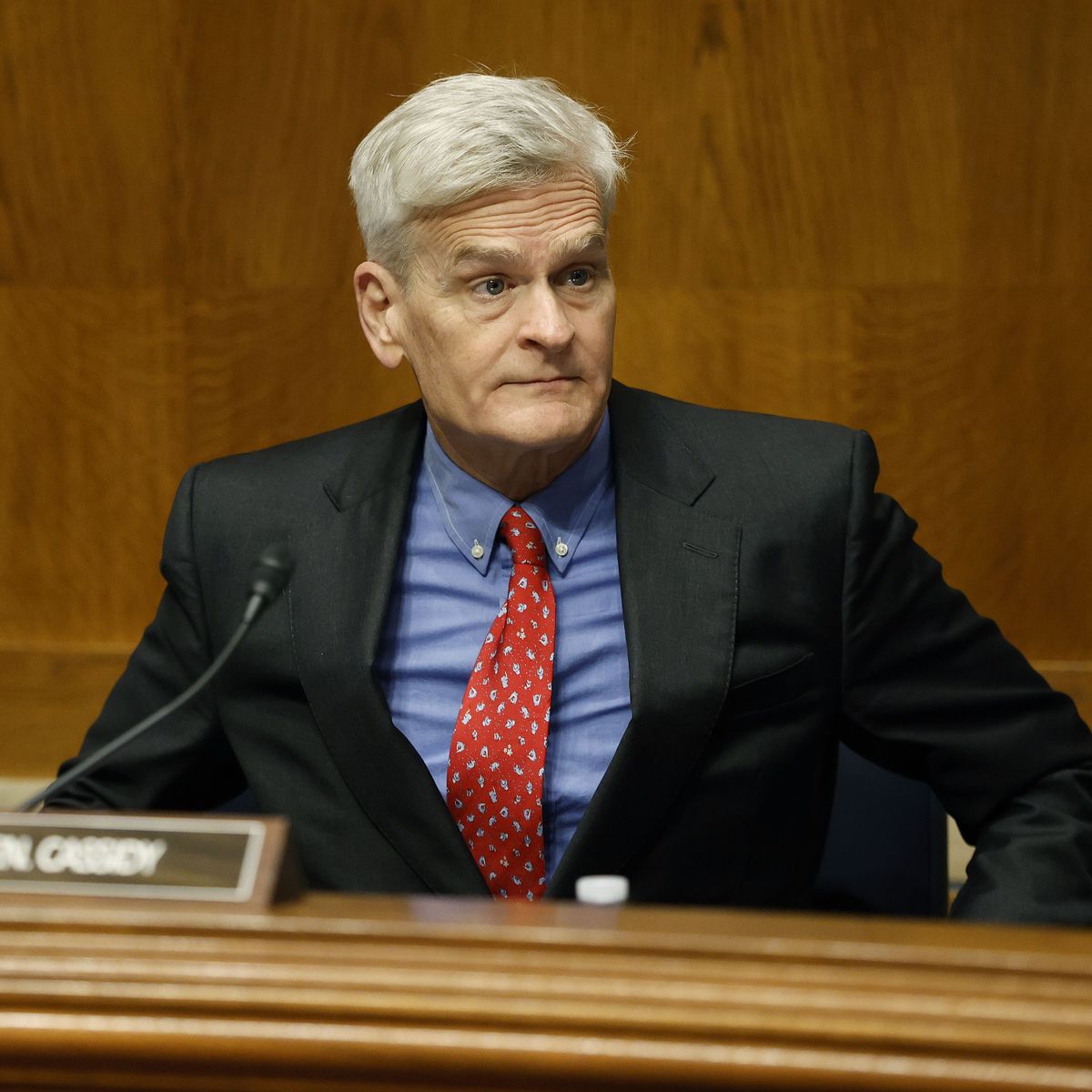
The GOP bill, led by Sens. Mike Crapo (R-Idaho) and Bill Cassidy (R-La.), would allow enhanced Affordable Care Act (ACA) tax credits to expire, replacing them in 2026 and 2027 with an annual payment of up to $1,500 in tax-advantaged health savings accounts to help cover out-of-pocket costs.
The catch is that only Americans enrolled in high-deductible bronze or catastrophic plans on the ACA exchanges would be eligible for the funding, which could not be used on monthly premiums. In 2026, the average individual deductible for bronze plans is $7,476, and the average for catastrophic plans is $10,600.
Larry Levitt, executive vice president for health policy at KFF, said Tuesday that “premium payments would still more than double next year” under the GOP plan, which does not have enough support to overcome the Senate’s 60-vote filibuster.
“Healthy people could be better off in a high deductible plan with a health savings account,” Levitt noted. “People who are sick would face big premium increases or a deductible they can’t afford.”
Brad Woodhouse, president of the advocacy group Protect Our Care, called Senate Republicans’ legislation “an utter joke that would set healthcare progress back by decades and leave Americans high and dry without the care and coverage they deserve.”
“Republicans are proving once again how unserious they are,” said Woodhouse. “Instead of protecting hard-working families, Sens. Cassidy and Crapo want to force them off the insurance plans they like and onto junk plans that leave them at risk of crippling medical debt. That’s not what American families want, and it’s certainly not what they deserve.”
Asked earlier this week if he supports the Crapo-Cassidy bill, President Donald Trump responded, “I like the concept.”
The Senate GOP plan was introduced as a counter to Democrats’ push for a clean three-year extension of the enhanced ACA subsidies. Republicans, who passed legislation over the summer that enacted the largest-ever cuts to Medicaid, are expected to vote down the Democratic plan on Thursday.
The Center on Budget and Policy Priorities estimates that if the ACA tax credits lapse at the end of the year, “a couple making $44,000 (208% of the poverty level) will see their monthly marketplace premium rise from $85 to $253—an annual increase of $2,013.”
With the Senate vote looming, House Speaker Mike Johnson (R-La) is “still trying to figure out” his healthcare proposal, Politicoreported Tuesday.
“The goal is for GOP lawmakers to have ‘something’ to vote on before the end of next week, according to one of the senior House Republicans involved in the talks,” the outlet added, “even if there is no time left for the Senate to pass it before the subsidies lapse.”
Our work is licensed under Creative Commons (CC BY-NC-ND 3.0). Feel free to republish and share widely.
A Venezuelan navy patrol boat escorts Panamanian flagged crude oil tanker Yoselin near the El Palito refinery in Puerto Cabello, Venezuela on November 11, 2025.
(Photo by Juan Carlos Hernandez/AFP via Getty Images)
“Millions of civilians will be at risk if the economy deteriorates and tensions rise,” warned one anti-war group.
The US military on Wednesday seized an oil tanker off the coast of Venezuela in the latest act of aggression against a nation that President Donald Trump has been openly threatening for several weeks.
Bloomberg, which described the move as a “serious escalation” in tensions between the US and Venezuela, reported that the seizure of the tanker by US forces “may make it much harder for Venezuela to export its oil, as other shippers are now likely to be more reluctant to load its cargoes.”
The seizure was described to Bloomberg by a Trump administration official as a “judicial enforcement action on a stateless vessel” that had been docked in Venezuela.
Shortly after the seizure occurred, Trump boasted about it during a meeting with business leaders at the White House, declaring that the tanker was the “largest one ever seized.”
Trump: "It's been an interesting day from the standpoint of news. As you probably know, we've just seized a tanker on the coast of Venezuela. Largest one ever seized actually. And other things are happening." pic.twitter.com/wyOYMKCJTT
Just Foreign Policy, a progressive think tank and advocacy group, condemned the seizure of the tanker, describing it as an “illegal US move to take control of Venezuela’s natural resources and strangle the economy, which is already struggling under indiscriminate US sanctions,” and warning that “millions of civilians will be at risk if the economy deteriorates and tensions rise.”
The seizure of the oil tanker is just one of many aggressive maneuvers that the Trump administration has been making around Venezuela.
Starting in September, the administration began a series of murders of people aboard boats in the Caribbean Sea off the coast of Venezuela and in the Pacific Ocean.
The Trump administration has claimed those targeted for extrajudicial killing are drug smugglers and accused Venezuelan President Nicolás Maduro of leading an international drug trafficking organization called the Cartel de los Soles, despite many experts saying that they have seen no evidence that such an organization formally exists.
Trump late last month further escalated tensions with Venezuela when he declared that airspace over the nation was “closed in its entirety,” even though he lacks any legal authority to enforce such a decree. Trump has also hinted that strikes against purported drug traffickers on Venezuelan soil would occur in the near future.
Our work is licensed under Creative Commons (CC BY-NC-ND 3.0). Feel free to republish and share widely.
The 50 year old Billionaire Conspiracy to undermine democracy and impoverish working people.
WATCH THE DOCUMENTARY
The biggest theft in American history wasn’t a crime of passion, but a secret plan launched in the 1970s—funded by a handful of billionaire families—designed to make them richer while robbing you and your family.
Heist reveals how that plan, known as the Powell Memo, became a blueprint for corporate control of Congress, the courts, the presidency, our schools, and the media. More than a film, Heist is both a guide to understanding this theft and a rallying cry to reclaim our democracy.
How is the Heist unfolding?
10 Richest Americans Have Gained $700 Billion in Wealth Since Trump Reelection
“The new American oligarchy is here,” said the CEO of Oxfam America. “Billionaires and mega-corporations are booming while working families struggle to afford housing, healthcare, and groceries.”
How the Trump Administration is Giving Even More Tax Breaks to the Wealthy
The Treasury Department and Internal Revenue Service are issuing rules that provide hundreds of billions of dollars in tax relief to big companies and the ultrarich.
The Alaska Permanent Fund (APF) is a massive sovereign wealth fund created from oil revenues to benefit all Alaskans, investing in stocks, bonds, and real estate for long-term growth, while the annual Permanent Fund Dividend (PFD) distributes a portion of these earnings directly to eligible residents, with the 2025 payment confirmed at $1,000, requiring Alaskans to live in the state for a full year before applying and intending to stay indefinitely.
How the Fund Works (APFC)
Purpose: To convert non-renewable oil wealth into a sustainable resource for current and future generations, managed by the Alaska Permanent Fund Corporation (APFC).
Structure: It has a Principal (savings) and an Earnings Reserve Account (ERA) for distributions.
Investments: The APFC invests globally in a diversified portfolio, including stocks, bonds, and real estate.
The Permanent Fund Dividend (PFD)
What it is: An annual cash payment to qualifying residents from the Fund’s investment earnings.
2025 Payment: Confirmed at $1,000, with payments starting in October.
Eligibility: Must be a permanent resident of Alaska for the entire calendar year before applying and intend to remain indefinitely.
Extreme weather and changes in seasonal patterns are fundamentally altering the landscape, in cities and in farming communities. You’re going to pay for it.
Twenty years ago, Hurricane Katrina unleashed a levee-busting catastrophe on New Orleans that woke Americans up to the fabled city’s precarious relationship with water. But it’s not just tropical storms that unleash flooding; the fierce thunderstorms that wind up long before hurricane season can also bring NOLA to grief. In April, a period of flash flooding captured national headlines. Ten inches of rain pelted the Algiers neighborhood on the western flank of the Mississippi River; other areas of the city saw up to seven inches—more rainfall than the city usually sees during the entire month.
“New Orleans is facing, I would say, like a seven-layer cake of challenges in regard to flooding,” says Jessica Dandridge-Smith, executive director of The Water Collaborative of Greater New Orleans, a regional water policy, education, and equity organization.
Climate change delivers constant reminders of how humans have completely disrupted the ways water cycles around the planet. There’s more precipitation in some places and next to no rainfall in others, or alternating seasons of flooding and drought. Persistent drought threatens the supply of fresh water, while heavy and more frequent rains, like the ones New Orleans experiences, stress inadequate stormwater systems that struggle to prevent flooding. All of these events complicate whether people can afford the one substance that they can’t live without, and renders the simple act of turning on a faucet a budget-busting financial decision.
Civilizations have prospered according to the rhythms of the natural world. And even in the Anthropocene, societies continue to grow crops and raise livestock that flourish in their environments. For everything else, they turn to global markets. But climate change–fueled natural disasters and shifting weather patterns have hit hard, disrupting where humans live, right along with their traditional agricultural practices. These upheavals mean that people are left scrambling, in some cases almost daily, to respond to a world in constant flux.
Climate change plays havoc with crops as much as it does with water, leading to sticker shock at the grocery store.
Climate change plays havoc with crops as much as it does with water, leading to sticker shock at the grocery store.
Climate change is an affordability issue that demands reassessing the pearl-clutchers’ claims that expensive solutions only burden people with higher costs. This era’s threats should prompt the realization that inaction (or worse, retrenchment) is prompting price hikes right now, which people find intolerable. By contrast, the policy responses and environmental adaptations needed to grapple with the crisis can potentially decrease consumer prices, as the progress in the renewable-energy sector shows.
A warming planet can cause more suffering, more disease, and even mass deaths. But even if you don’t live in a danger zone made more treacherous by climate change, the higher prices you pay for everyday goods—even something as basic as water—mean that no one escapes the impacts.
AFFORDABLE WATER IS AN OXYMORON in New Orleans. The American Water Works Association defines water affordability as “the ability of a customer to pay the water bill in full and on time without jeopardizing the customer’s ability to pay for other essential expenses.” Water affordability is a monumental stressor in a place where the poverty rate is nearly 23 percent and the median income is $55,580. A 2024 investigation by The Lens, a New Orleans–area public-interest newsroom, found that water bills average $115.44 each month, more than twice that of comparable Southern cities.
Not only do New Orleanians already pay premium water and sewer rates, but the infrastructure that delivers drinking water, carries out sewage, and pumps out floodwater is more than a century old, and chronic needs to upgrade or repair contribute to the high rates that residents will continue to pay.
New Orleans stays dry for the most part because its massive, antique system of dozens of pumps, catch basins, drainage pipes, and aboveground and underground canals keeps it that way. At times, this is not enough—the April rains overwhelmed the pumps in certain sections. A system built for the weather patterns of the 20th century can’t keep up with the heavier rainfall of the 21st.
Much of the city’s difficulties rest with the wildly dysfunctional and despised entity that runs the system: the Sewerage and Water Board of New Orleans (SWBNO). This dysfunction extends to predatory billing practices and water shutoffs that are a regular occurrence in the city. It’s bad enough that working families and seniors are paying the cost of climate change through progressively higher water and sewer bills; it’s worse that those bills are sometimes erroneous.
Gov. Jeff Landry (R-LA) finally convened a special task force to get to the bottom of a myriad of issues, including ongoing maintenance failures despite hundreds of millions of federal, state, and local investments; billing snafus; and no small amount of corruption. The inquiry confirmed what residents and businesses already knew about water “affordability” in New Orleans: “The SWBNO billing crisis may very well be the single biggest hindrance on daily quality of life.”
“Low-income families and those on fixed incomes simply cannot tolerate a ‘surprise’ high water bill,” the task force report reads. “A fairly typical complaint was an inaccurate [water usage] reading leading to a massive bill that was either auto drafted out of the customer’s account or double billed.”
To partially address the lack of confidence in billing, the SWBNO finally launched a system with an outside vendor to work with customers who owe $50 or more to pay their bills interest-free without incurring additional penalties or having their water shut off. As of September, 23,000 customers have been able to catch up on payments and the utility has recovered nearly $19 million in past-due revenue, with an estimated $24 million projected to be paid through the program.
Dandridge-Smith, who once had her water shut off for two months when she was between jobs, says the program appears to be making progress. “But the issue that still remains is that our water bills are high, so the residents are feeling the burden,” she said. “And frankly, the utility is feeling the burden.”
Twenty years after Katrina, the antique system keeping New Orleans dry struggles to deal with heavy rainfall. Credit: Apolline Guillerot-Malick/SOPA Images/Sipa USA via AP Images
New Orleans isn’t alone. Many municipalities face astronomical water rates at a time when energybills are also soaring. An April 2025 Bank of America report indicated that in March Americans’ median monthly water utility payments increased more than 7 percent year over year. Durango, Colorado, ratepayers face a 10 to 20 percent hike; San Diego will see a 30 percent hike. Broomfield, Colorado, approved a 50 percent increase. All are blaming aging infrastructure, and shifting climate patterns are at the heart of those unanticipated costs.
Helping people pay their bills is not the same as making sure that water flows to homes at a reasonable cost. “What we really need are affordability solutions that address [bringing] bills down to a level that a household can afford to pay based on their income,” says Mary Grant, who directs the Public Water for All campaign at Food & Water Watch, a national advocacy group.
To address the city’s massive stormwater infrastructure issues, New Orleans residents passed a $50 million bond proposition to improve drainage and stormwater management facilities. Another proposal being debated is a stormwater fee to begin to chip away at the $1 billion in improvements over the next decade that the SWBNO needs to make. According to a Water Collaborative survey conducted earlier this year, a majority of New Orleanians are willing to acquiesce to a fee in return for modern stormwater infrastructure that can offer relief from flooding during smaller storms—as long as the SWBNO isn’t collecting the fee. New Orleans Mayor-elect Helena Moreno has said that she supports a regional entity to monitor and address drinking water issues, as well as the stormwater fee. She’s no fan of the SWBNO either.
But the demands of problems like lead pipe replacement and treating drinking water from the Mississippi River for pollutants and salt water intrusion due to sea level rise mean that recurring infrastructure costs still get passed on to consumers. The SWBNO runs its own power plant to help power older segments of the system, a cost that even the utility admits is not sustainable.
During the COVID-19 pandemic, New Orleans had access to the federal Low Income Household Water Assistance Program (LIHWAP), a federal program that mirrored the existing federal home heating assistance program. Congress provided more than $1 billion in funding across the country, sparing more than a million low-income households from shutoffs and bills that they could not pay.
The need is still there, but LIHWAP isn’t; the program expired in 2022. A proposal to restart the program introduced in July by Reps. Eric Sorenson (D-IL), Rob Bresnahan (R-PA), and several other members of Congress is going nowhere fast, given the lack of interest in social programs in Congress and the White House.
But New Orleans never properly utilized LIHWAP during COVID to assist ratepayers, says Dandridge-Smith. “We have a state that, oftentimes, either intentionally or unintentionally, does not mobilize federal dollars to the people who need it the most. This is a constant problem across all issues, and then you have a city that is essentially drowning in its own aging and failing infrastructure,” she says.
CLIMATE CHANGE PLAYS HAVOC WITH CROPS as much as it does with water, leading to sticker shock at the grocery store, one of American consumers’ biggest concerns.
The role of climate can sometimes be surprising. When faced with high coffee prices, many people might blame President Trump’s tariffs on coffee-producing regions like Brazil and Vietnam. But droughts in the region near the equator known as the “coffee belt” sent prices to an all-time high before any tariffs were imposed.
Climate-fueled drought in the Great Plains states have thinned out cattle herds, also leading to higher beef prices. Houston Public Media reported that prices reached $6.32 per pound in September for 100 percent ground beef, the highest ever—and after a drought, ranchers expect to see price increases for the next couple of years.
Every day, there seems to be a new weather-related food disaster. Olive oil prices skyrocketed in early 2024 due to drought. That spring, high temperatures in Ghana and Ivory Coast, home to 60 percent of the world’s cocoa, took those prices up by threefold. By summer, a heat wave in Asia spiked Japanese rice prices by 48 percent and Korean cabbage prices by 70 percent.
The Prospect in your inbox
Subscribe for analysis that goes beyond the noise.
The Daily ProspectA daily dose of the ideas, politics and power that shape our world, in your inbox weekday mornings.
Today On TAPWeekday newsletter features commentary from Robert Kuttner, Harold Meyerson and more, plus links to what’s trending at Prospect.org.
Weekend ReadsThe best of the week, curated by the editors of The American Prospect, delivered Saturday mornings.
Pop-up newslettersLimited series newsletters on timely topics, such as the debt limit challenge, budget negotiations and more.
Sign up
Heavy rains can also ruin fertile soil. A November report from the United Nations Development Programme finds that more than 90 percent of all countries will see lower crop yields because of climate change by the end of the century, even after accounting for farmers adapting to weather changes.
One reason for lower crop yields is changes in the seasons. Trees have adapted to the climate by blossoming earlier, for example, which makes fruits and nuts more vulnerable to spring cold snaps and frosts that can wipe out a whole harvest. That’s what happened to hazelnuts this year in Turkey, the country that accounts for 73 percent of the global supply. The projected 40 percent loss of hazelnut yields translates into a 30 percent increase in price.
In addition to risk from seasonal patterns, a hotter climate can become a breeding ground for pathogens that can debilitate the food supply. The New World screwworm, a parasitic fly whose larvae feed on warm-blooded animals like cows and other livestock, has been virtually eradicated in the United States since the 1970s. But it returned to Panama in 2022, has been reported in southern Mexico, and is threatening domestic cattle herds this year, leading to a ban on Mexican livestock to contain the damage.
Huge agribusinesses have fewer water issues, but smaller farmers can be driven out of business by extreme events.
Bird flu, which reappeared in the U.S. this fall, has also been spurred by a warming planet. Changes in migratory patterns have led to diseased birds flying into new places, leaving those areas vulnerable to outbreaks.
Both Brazil, the world’s biggest producer of oranges, and the U.S. have been slammed by citrus greening, spread by an insect, the Asian citrus psyllid. About 50 percent of Brazil’s crop has been infected, while Florida’s production has dropped more than 92 percent in the past two decades. Severe weather has also plagued Florida orange producers: Hurricane Milton destroyed 20 percent of the state’s orange crop.
These alternating seasons of flood and drought, as well as disease and insect infestations, leave agricultural producers wrestling with the basic questions of whether they can afford to keep juggling different climate adaptation strategies.
FOR TWO STRAIGHT YEARS, SUMMER TORRENTS led to extreme flooding in Vermont, with mudslides and washouts that destroyed entire farms and pulverized town centers. A July 10, 2023, deluge across the state lasted 48 hours, produced nearly a foot of rain in the worst-hit enclaves, and led to a federal disaster declaration. Exactly one year later to the day, the remnants of Hurricane Beryl struck some of the same towns that had been inundated before.
It had been more than a decade since Tropical Storm Irene meandered up the East Coast and introduced Vermonters to their own new climate strangeness: severe flooding from weather systems that originate in the tropics. During the decade it took to recover, some Vermonters began to see Irene as a “one-off.” It wasn’t.
This past summer delivered another weird, unwelcome jolt: weeks of extreme drought. The prospect of seasons of inundation and scarcity colors how farmers view the affordability of their enterprises. Huge agribusinesses have fewer water issues, but smaller farmers can experience crises and be driven out of business by extreme events.
Vermont farmers who grow vegetables irrigate their lands with river water or streams and creeks that run through their properties. In the eastern United States, farmers have riparian rights, sourcing their water from nearby bodies of water like streams, rivers, and lakes, or from groundwater via wells. As of 2023, Vermont requires farmers to report their surface water usage annually above a particular threshold. (In the West, under the doctrine of prior appropriation, farmers access water based on water rights acquired decades ago.)
A 2023 Vermont Agriculture Recovery Task Force survey found that extreme weather left farmers with about a 30 percent loss in annual income; nearly 60 percent reported that their cash flow would go negative. Estimated total drought losses reported through the state’s 2025 Agriculture Drought Survey are $13 million for this year alone.
Maddie Kempner, the policy and organizing director for the Northeast Organic Farming Association of Vermont, explains what it means to local farmers to have uncertain water access. Livestock farmers, for example, have tremendous water demands: “A productive dairy cow needs 50 gallons of drinking water daily,” Kempner says. If a well runs dry, “that means paying to haul water to your farm constantly to keep up with that level of need that your animals have, in order to keep them healthy, alive, and producing the product that is the lifeblood of your business.” It’s also a major cost to bear if the wells that they rely upon have run dry. They may have to drill new ones, up to a five-figure expense.
Shifting weather patterns, pesticides, and other obstacles have challenged beekeeping and farming in Vermont. Credit: Andy Duback/ AP Photo
To make farming work, some regional growers plant crops like carrots and leafy greens like lettuces that they can harvest in a shorter span of time, rather than vegetables like broccoli or brussels sprouts that take months to mature and are at risk in areas subject to flooding.
Kempner spotlighted another major concern: “They don’t have meaningful crop insurance support or disaster relief programs that work for their operation. Those by and large are designed to work for much larger and less diversified farms and poorly serve our farming community here.”
Farmers also must think about moving heating and cooling systems and other infrastructure to higher ground, or shoring up roads and improving drainage, costs that also run into the tens of thousands of dollars. “A lot of our farms are living on thin profit margins where they don’t necessarily have extra room in their budget to invest in those kinds of protective measures,” she says.
All of these additional measures add cost to the produce or beef you buy in the grocery store. And farmers are not just growing the food; they’re buying it, too. “Beyond these climate disasters and extreme weather events, farmers are dealing with the same inflationary pressures as everyone else in general,” says Kempner. “We are facing a pivotal moment in American agriculture, where our population of farmers is aging, and access to farmland and affordability of farmland is a huge challenge for beginning farmers trying to get into farming. These affordability challenges are existential when you think about the future of our food system on the whole.”
IN THE SUMMER OF 2025, FLOODING wasn’t the problem in Middlebury, Vermont, where commercial beekeeper Curtis Mraz runs the Champlain Valley Apiaries. “We actually produced quite a bit more honey in the years where we had significant flooding,” the fourth-generation beekeeper tells the Prospect. “And we were in a part of Vermont where we didn’t have serious washouts like other parts of the state.”
“That being said,” he continues, “the more it rains, the less a bee can fly. We often as beekeepers talk about fly time. We need clear days; they don’t fly at night. So in the last couple years, we had significant rainfall to the point where fly time was limited.”
Until the beginning of July, the apiary’s bees were very productive, but as the month wore on, the amount of honey dropped off. “If you looked out in the Vermont landscape, you’d see goldenrod coming in in August, but not a single bee dancing across it,” says Mraz. “Beautiful flowers, but because there was a drought, there was no water in the soil, and therefore, no nectar in the flowers for the bees to feed on.”
Mraz and his family have worked with bees for a century, and he has an excellent sense of how the bee ecosystem has changed. “In Vermont, we’re getting into these two seasons, where there’s too much water or too little water: Now it’s either mud season or it’s a drought,” he says. Wet conditions mean that Mraz and his workers spend more time moving equipment around, because it’s too muddy for a truck to drive into the fields. That ends up increasing his labor costs.
Last year, beekeepers lost between 60 and 100 percent of their colonies, Mraz says, and his losses were “in that range.” It’s not just the excess rainfall, but the amount: A deluge, then drought, makes the bees susceptible to disease. Colony collapse disorder is what beekeepers now call a mass bee die-off. But while it’s been forecast for two decades, researchers noticed a serious uptick in 2025.
Colony collapse is an imprecise name. “It’s basically this huge conglomeration of pressures that nobody can truly name,” Mraz says, “although I’ll tell you, it’s pesticides that’s the biggest contributing factor.” He adds that the family’s hives once lived from 10 to 15 years; now they last about three. A 60 percent colony loss would have been unimaginable previously, he says: “When my great-grandfather was running the business, a 10 percent loss would be a terrible year.”
Some of the practices used on soybeans and other monoculture crops, like the use of pesticides, contribute to the conditions that produce bee colony losses. After a heavy rainfall, pesticides used to treat them wash off into ditches, then streams and other water sources that bees use, and poison them. Neonicotinoids are a class of pesticides that have emerged as a major culprit.
Mraz would like to see a shift in perspectives in using pesticides in the food system at all, especially when the chemicals kill the very bugs that are needed to cultivate crops. But pesticides are used to maintain crop yields that are thinning due to climate change. So the conditions that are killing so many bees have a climate nexus as well.
Because the honeybees that migratory beekeepers tend are central to the economics of pollination for crops like almonds, apples, cranberries, and blueberries, there’s a whole passel of scientists and researchers dedicated to the continuation of the species. Mraz worries that the U.S., unlike Canada and the European Union, isn’t moving fast enough to deal with the threat. Vermont is working on a gradual phaseout, but a ban won’t go into effect until 2029.
“Because our agricultural system is so dependent on honeybees, you can always guarantee that somebody will be out there selling more honeybees,” Mraz says. But like most producers, the costs get passed on to his customers.
“My uncle has a saying: We are no longer beekeepers—we’ve all become bee replacers. I just couldn’t help but wonder, is this really the right future?” Mraz asks. “And the reality is if we want to keep this going, there’s not a ton of government subsidy money for us, like there is for corn, soybean farmers, or dairy producers, so we have to ultimately increase the price of our products.”
The financial pressures of adapting to climate shifts and bee colony collapse weigh heavily on the young beekeeper. “Every year, we’ll take those 40 percent of the bees that survive and we’ll turn 200 colonies back into 1,000. But that comes with a huge genetic cost, a huge labor cost, and then, ultimately, every spring, I’m breaking down and crying again and talking to my beekeeper peers who are ready to walk off a cliff—‘How can we do this again?’”
If folks in the business of writing, editing, and curating quality reporting and analysis can only make the math work by putting their work behind a paywall, we’re in trouble. Journalism is so critical to democracy that a free press is literally safeguarded in the Constitution. But it doesn’t say, “a free press only for those who can afford it.” Information is becoming available more as a luxury good than the basis of a free society. We will never put the Prospect behind a paywall because we think information should be free. But we need you to be a part of this project.
Gabrielle Gurley is a senior editor at The American Prospect. She covers states and cities, focusing on economic development and infrastructure, elections, and climate. She wins awards, too, most recently picking up a 2024 NABJ award for coverage of Baltimore and a 2021 Association for Education in Journalism and Mass Communication urban journalism award for her feature story on the pandemic public transit crisis. More by Gabrielle Gurley
An affordable housing complex at 383 Sixth Ave., formerly 4200 Geary Blvd., became a vivid example of a bitter divide between Scott Wiener and Connie Chan over their approaches to new housing.Lea Suzuki/S.F. Chronicle
Days later, however, the building at Geary Boulevard and Sixth Avenue — a former funeral home transformed into 98 apartments for low-income seniors — became a vivid example of a bitter divide between Wiener and Chan that could fuel their dueling campaigns to represent San Francisco in Congress.
When Chan entered the race to succeed Speaker Emerita Nancy Pelosi on Nov. 20, her announcement video featured an image of the Geary apartments as she took a thinly veiled dig at Wiener, who has for years opposed Chan in San Francisco’s notoriously fractious housing debates. As a supervisor representing the Richmond District, Chan said she had “built real affordable housing, not the Sacramento version that destroys our neighborhoods.”
“This is rich,” Wiener retorted. He pointed out that the Geary site took advantage of several recent state laws aimed at increasing housing development — including one that he passed. In a news release, he accused Chan of taking credit for others’ work to cover her own thin record.
The sniping immediately catapulted housing to the center of the race at a time, more than six months before the primary, when candidates are usually just introducing themselves to voters. The campaign could open yet another front in the eternal NIMBY vs. YIMBY war and potentially turn the contest to succeed Pelosi into a referendum on the best way to bring down astronomical rents and home prices.
Though Congress is not traditionally where most Americans look for housing policy, it’s becoming an increasingly potent issue in Washington during this era of affordability politics. And in a safely Democratic seat, where the major candidates are all running as various shades of progressive, it could be the most significant differentiating factor.
“One of the reasons we have a housing crisis is because the federal government has not thought of housing as their role,” said Rep. Laura Friedman, a Burbank Democrat who jumped to Congress from the state Assembly last year and recently introduced a bill that would exempt certain infill housing projects from federal environmental reviews.
How the candidates align
Either Wiener or Chan would likely be among the most left-leaning members of Congress if elected in November. But locally, they represent different factions of a long-running political schism centered on housing — and the specific steps that policymakers should take to reduce living costs in one of the country’s most expensive cities.
On one side of the debate are Wiener and his allies in the YIMBY movement that seeks to cut red tape and spur development of all new housing, including market-rate apartments and condominiums.
Wiener told the Chronicle he wants to return to the mid-20th century, when the United States built large amounts of new affordable housing. If elected to Congress, he would like to create a federal social housing program, despite the Trump administration’s ongoing efforts to slash housing assistance, and help scale up apprenticeship programs for construction workers.
“We need to get government back in the business of housing,” Wiener said. “The cost of housing is profoundly more important to people’s lives than the cost of eggs.”
On the other side are Chan and others who focus their advocacy more specifically on government-funded affordable housing, protecting low-income tenants from displacement and preserving the character of historic neighborhoods.
Chan described her approach to housing to the Chronicle as “not for special interests” but rather “for San Franciscans” — especially lower-income workers feeling increasingly priced out by the city’s affordability crisis. She said Congress should create more ways to fund affordable-housing construction, as the city did by getting voters to approve a 2019 bond that helped pay for the Geary project.
“You can have a lot of housing be made available and built, but if people cannot afford it because they just can’t with their salary, that in and of itself is an affordability crisis,” Chan said. “There’s no one-size-fits-all approach, and there’s definitely not … one policy (that) will just be able to magically build housing. Many factors have to come together.”
It’s not the first time Chan and Wiener have been on opposite sides of an expensive electoral fight where housing was a top issue. In 2022, they backed dueling — and ultimately unsuccessful — ballot measures that aimed to fast-track housing development.
Then there’s Saikat Chakrabarti, a former Silicon Valley entrepreneur and aide to progressive favorite Rep. Alexandria Ocasio-Cortez, who originally entered the race offering a generational change to Pelosi. Now he’s betting that San Francisco residents are weary of the polarized housing debate exemplified by Chan and Wiener and is trying to position himself as an appealing alternative.
He described himself as “an all-of-the-above person when it comes to housing,” stressing that he wants to cut red tape to accelerate development while also expanding funds for low-income housing. His housing proposals include calling for the establishment of a federal agency that could offer low-interest financing to pay for home construction.
“Look at what the results have been of the current nature of tribal politics in this city,” Chakrabarti said. “The result has been a housing crisis, a cost-of-living crisis, and it’s become harder and harder to actually live in this city. We have to be willing to talk about new ideas.”
What’s happening in D.C.
Disputes over housing policy would more typically animate a race for the Board of Supervisors or the state Legislature than for Congress, but the urgency around this issue is ramping up in national politics.
Suddenly the buzzword everywhere is “affordability” — and the cost of housing, which was turbocharged nationwide by the pandemic, is the biggest driver, bringing the rest of the country into a debate that has long consumed California.
During last year’s presidential election, President Donald Trump and Democratic nominee Kamala Harris both touted plans to increase the housing supply and provide financial assistance for homebuyers. Though it has not ultimately been a focus of Trump’s first year back in office, he did last month float a controversial idea to create a 50-year-mortgage, while also proposing to slash billions of dollars for homelessness programs.
Meanwhile, a small group of lawmakers is trying to elevate the issue in Congress, where housing policy lately has mostly meant district earmarks and other appropriations. Two new bipartisan caucuses, the Congressional YIMBY Caucus and the Build America Caucus, formed in the past year to promote housing construction and streamline development.
And a sweeping bill that has excited housing advocates could pass before the end of the year attached to the defense spending measure. It includes dozens of provisions aimed at boosting production, including prioritizing federal funding for projects near public transit and in opportunity zones, rolling back federal environmental reviews for infill housing, and developing federal recommendations for state and local zoning, as well as “pattern books” of approved designs that can be adopted by local planning departments. Many of these ideas align with state laws that Wiener and other YIMBY-aligned legislators pursued in Sacramento over the past decade.
“This is the biggest congressional policy play on housing in a generation,” said Ben Metcalf, managing director of the Terner Center for Housing Innovation at UC Berkeley. He said housing is the rare policy issue these days where divisions are not partisan — liberal and conservative states have begun passing similar laws to address the affordability crisis — which gives Congress cover to actually take action.
‘Voters are tired of the same political factions’
It remains to be seen, however, whether the congressional race can sustain a nuanced debate about what that federal vision for housing policy should be. In San Francisco, housing is always a hot-button topic, and the campaign threatens to be consumed by more immediate fights dominating local politics.
The Board of Supervisors, which shifted to the center in 2024, just passed a sweeping plan from Mayor Daniel Lurie to allow taller and denser housing on the west side of the city — with support from Wiener and YIMBY groups and despite opposition from Chan. Critics including former Supervisor Aaron Peskin, a longtime Chan ally, are now floating a countermeasure to protect more rent-controlled housing from demolition.
Details are still up in the air, but Chan, one of four supervisors to vote against Lurie’s zoning plan, has indicated that she’d likely support the measure, which could appear on the ballot at the same time she is trying to turn out supporters for her congressional bid.
“If City Hall won’t listen to the people, we know what San Franciscans can do,” Chan told the Chronicle before supervisors approved the zoning plan. “I’m going to work with stakeholders and see what their next steps are, and that includes an option for a ballot measure.”
Wiener criticized Chan’s positioning in the race as “a very, very cynical way” to “galvanize NIMBYism” to boost her campaign.
“She’s trying to harness the energy that got us into this crisis and ride it all the way to Congress,” he said.
San Francisco labor leader Rudy Gonzalez said he hopes the race doesn’t devolve into the “progressive versus moderate or YIMBY versus NIMBY” mudslinging that has characterized past political fights on housing.
Gonzalez’s labor group, the influential San Francisco Building and Construction Trades Council, has not backed a candidate in the race, which could unlock money and volunteers. The council endorsed Wiener in his first state Senate campaign and Chan in her reelection campaign last year. He said that to win, both will need to “show themselves as different, as having new ideas.”
“I think San Francisco voters are tired of the same political factions repeating,” he said.
J.D. Morris covers San Francisco City Hall, focused on Mayor Daniel Lurie. He joined the Chronicle in 2018 to cover energy and spent three years writing mostly about PG&E and California wildfires.
Before coming to the Chronicle, he reported on local government for the Santa Rosa Press Democrat, where he was among the journalists awarded a Pulitzer Prize for their coverage of the 2017 North Bay wildfires.
He was previously the casino industry reporter for the Las Vegas Sun. Raised in Monterey County and Bakersfield, he has a bachelor’s degree in rhetoric from UC Berkeley.
Alexei Koseff is the Washington, D.C., correspondent for the San Francisco Chronicle, chronicling President Donald Trump’s policies targeting California and the tension between the state and the federal government, as well as how powerful Bay Area figures are shaping — or thwarting — solutions in Washington.
He is rejoining the Chronicle from CalMatters, where he covered Gov. Gavin Newsom and state government. Previously, he previously served as a Capitol reporter for the Chronicle and spent five years in the Capitol bureau of the Sacramento Bee. Alexei is a Bay Area native and attended Stanford University. He speaks fluent Spanish.
Help Outreach Working Group lift the fog of corporate media. Donate to help us maintain this website and distribute literature on the street.
Milk Club Trans Caucus Meeting Date: Tuesday, April 28 Time: 5-7 PM Location and Zoom Link: Meeting info available to members of the Milk Club Trans Caucus. Please reach out to trans@milkclub.org if you would like to join the Milk Club Trans Caucus.
San Francisco Young Democrats meet with SFDems Chair Nancy Tung Wednesday, April 29th | 2pm Location: SC T-160 (third floor of Student Center) Register The San Francisco Young Democrats at SF State are teaming up with SFDems to make sure their voices are heard. Want to get more plugged into San Francisco... Continue reading →
One Million Rising: Strategic Non-Cooperation to Fight Authoritarianism Virtual Event · Hosted by No Kings Time Wednesdays 8 – 9:30pm EDT Location Virtual event Join from anywhere About this event Across the country, authoritarian forces are getting bolder and more dangerous. Trump and his allies are not hiding their agenda: mass deportations,... Continue reading →
THURSDAY, JUNE 29, 2023 AT 2 AM – 4 AM PDT How to create trust in a group? Details Event by Extinction Rebellion Empathy Circles online EMPATHY CAFE Duration: 2 hr Public · Anyone on or off Facebook How to create trust in a group? This is the question that arose in our... Continue reading →
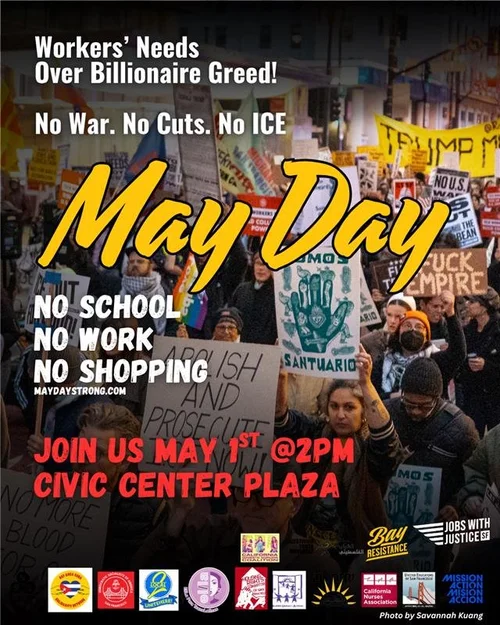
This May 1st, history is calling us into the streets. Our Revolution members are mobilizing for May Day action, joining workers, organizers, union members, students, immigrants, and community allies in a powerful show of solidarity against authoritarianism, corporate greed, and attacks on working people. Across the country, people are rising together... Continue reading →








.png)

 BY
BY