Donald Trump’s authoritarian house of cards is propped up by the cowardice and compliance of others in positions of power: business leaders, universities, law firms, media, and more. His authority collapses without their support. But right now, too many powerful institutions are bending and bowing.
We need to show our institutions that we’ll have their back when they fight — and that there’s a real price to pay when they don’t.
In the One Million Rising series that wrapped up last night, we laid out strategies and actions nearly anyone can use to hit Trump’s enablers where it hurts. If you didn’t catch One Million Rising, you can watch all three trainings here.
Now, we’re putting non-cooperation into action on a massive scale! Here are three nationwide initiatives you can join to undermine Trump’s power structures.
1) Slow down ICE with Signs of Solidarity
Masked ICE agents are raiding businesses and workplaces in broad daylight, rounding up our neighbors and purposefully cultivating an atmosphere of chaos and fear. We need business leaders to stand their ground and show immigrant communities we stand with them.
Our Signs of Solidarity program is how you can help make that happen! We’re asking Indivisibles to visit local businesses, speak to small business owners or store managers, and distribute signs that do two things:
Clearly mark “Staff Only” areas to create safe zones where ICE can’t legally operate without a signed judicial warrant
Unequivocally show they stand WITH immigrant workers and clientele and AGAINST Trump’s secret police tactics
Once you’ve signed on below, we’ll give you everything you need to succeed, like guidelines for speaking to businesses, tools to track progress/success, and the signs you’ll help businesses post.
Avelo Airlines is profiting off Trump’s terror tactics. By contracting with the Department of Homeland Security to run their (often illegal) deportation flights, Avelo is complicit in destroying the very same communities it relies on for its business to succeed.
With our allies on the frontlines, we’ve been keeping pressure on Avelo for months — and there are signs that they’re feeling the heat. Now, we need to take our pressure campaign to the next level and finally force Avelo to disavow its work with Trump’s terror cops for good.
Texas Democrats are bravely showing us what non-cooperation looks like in action! By leaving behind their homes and families — even risking arrest in the process — to block redistricting in Texas, they’re throwing sand in the gears of Trump’s power-grab and reminding us how much courage matters.
But Trump’s map-rigging scheme won’t end in Texas, so we need Democratic leaders and everyday people in every state ready to be brave and fight hard. That’s why we’re proudly supporting a nationwide day of action and rolling out a new toolkit to lead the fight against GOP map-rigging.
It’s on us — all of us — to hold the line against this new threat, so please make sure you do your part whether you’re in a red, blue, or purple state.
“It’s fine that people are waking up late. It’s fine that people didn’t get it until now. It’s fine that people didn’t see it until now. But the real question is: Can we change it?”
We can change the direction of this country and stop Trump’s hostile takeover! But it’ll take all of us pulling together — not just on single days of mass action, but through relentless daily organizing and sustained non-cooperation.
The three initiatives above are a start, and there’s so much more to come. Please stay tuned, and thanks for being with us.
President Donald Trump has claimed that crime is “out of control” in the nation’s capital and beyond. The Onion assesses the veracity of the president’s claims.
Claim: D.C. has endured a record amount of robberies.
Partially true: Some places in Georgetown sell a cup of coffee for $9.
Claim: Chicago, New York, and Los Angeles are crime-ridden cesspools.
False: These cities are safe, vibrant cesspools.
Claim: The National Guard is being deployed to crack down on crime.
False: The National Guard is being deployed to give Stephen Miller an erection.
Claim: Just last week, a high-ranking politician was shot in the head at a D.C. theater.
False: Trump is mixing up last week with April 14, 1865.
Claim: Violent foreigners traveled to D.C. to savagely beat Americans.
False: The UFC fight on the White House South Lawn isn’t until next year.
Claim: Basically anything.
False: “False” continues to be a very safe assumption to make.
Gov. Gavin Newsom speaks at Google San Francisco office in San Francisco, California, on August 7, 2025.
(Photo: Tayfun Coskun/Anadolu via Getty Images)
“Who else sends ICE at the same time while having a conversation like this? Someone who is weak. Someone who’s broken. Someone whose weakness is masquerading as a strength,” said Newsom.
Democratic California Gov. Gavin Newsom on Thursday struck a defiant tone during a political rally in Los Angeles aimed at promoting a ballot initiative that would allow the state legislature to redraw the Golden State’s electoral maps.
During his speech, Newsom emphasized his preference to having an independent commission draw up districts in California and across the country. However, he said that U.S. President Donald Trump’s push to have Texas Republicans redraw their state’s map in the middle of the decade to gain five more Republican seats in the U.S. House of Representatives has left him with no choice but to return the favor.
“You have poked the bear, and we will punch back,” Newsom said during the speech, addressing Trump directly.
The California governor then explained why doing nothing in response to Trump’s pressure on Texas is not an option.
“[Trump] doesn’t play by a different set of rules—he doesn’t believe in the rules,” Newsom said. “And as a consequence, we need to disabuse ourselves of the way things have been done. It’s not enough to just hold hands, have a candlelight vigil, and talk about way the world should be. We have got to recognize the cards that have been dealt, and we have got to meet fire with fire!”
Newsom also pointed out that several Immigration and Customs Enforcement (ICE) officials had stationed themselves nearby where California Democrats were holding their rally, which he called a deliberate attempt at intimidation.
However, Newsom said that instead of subduing lawmakers and advocates with the mass deportation force, Trump was only exposing his weakness.
“He is a failed president,” Newsom declared. “Who else sends ICE at the same time while having a conversation like this? Someone who is weak. Someone who’s broken. Someone whose weakness is masquerading as a strength. The most unpopular president in modern history.”
Newsom encouraged voters in his state to approve a ballot initiative this coming November 4 that would allow the redrawing of California’s congressional map on a temporary basis before returning to the independent commission that has long been used in the state starting in 2030.
Our work is licensed under Creative Commons (CC BY-NC-ND 3.0). Feel free to republish and share widely.
Senate Minority Leader Chuck Schumer (D-N.Y.) holds a news conference criticizing President Donald Trump’s trade policy at the US Capitol on July 31, 2025, in Washington, DC.
(Photo: Chip Somodevilla/Getty Images)
“Voters have made their feelings clear,” said the leader of Justice Democrats. “The majority do not see themselves in this party and do not believe in its leaders or many of its representatives.”
A top progressive leader has given her prescription for how the Democratic Party can begin to retake power from US President Donald Trump: Ousting “corporate-funded” candidates.
Justice Democrats executive director Alexandra Rojas wrote Thursday in The Guardian that, “If the Democratic Party wants to win back power in 2028,” its members need to begin to redefine themselves in the 2026 midterms.
“Voters have made their feelings clear, a majority do not see themselves in this party and do not believe in its leaders or many of its representatives,” Rojas said. “They need a new generation of leaders with fresh faces and bold ideas, unbought by corporate super [political action committees] and billionaire donors, to give them a new path and vision to believe in.”
Despite Trump’s increasing unpopularity, a Gallup poll from July 31 found that the Democratic Party still has record-low approval across the country.
Rojas called for “working-class, progressive primary challenges to the overwhelming number of corporate Democratic incumbents who have rightfully been dubbed as do-nothing electeds.”
According to a Reuters/Ipsos poll conducted in June, nearly two-thirds of self-identified Democrats said they desired new leadership, with many believing that the party did not share top priorities, like universal healthcare, affordable childcare, and higher taxes on the rich.
Young voters were especially dissatisfied with the current state of the party and were much less likely to believe the party shared their priorities.
Democrats have made some moves to address their “gerontocracy” problem—switching out the moribund then-President Joe Biden with Vice President Kamala Harris in the 2024 presidential race and swapping out longtime House Speaker Rep. Nancy Pelosi (Calif.) for the younger Rep. Hakeem Jeffries (N.Y.).
But Rojas says a face-lift for the party is not enough. They also need fresh ideas.
“Voters are also not simply seeking to replace their aging corporate shill representatives with younger corporate shills,” she said. “More of the same from a younger generation is still more of the same.”
Outside of a “small handful of outspoken progressives,” she said the party has often been too eager to kowtow to Trump and tow the line of billionaire donors.
“Too many Democratic groups, and even some that call themselves progressive, are encouraging candidates’ silence in the face of lobbies like [the America-Israel Public Affairs Committee] (AIPAC) and crypto’s multimillion-dollar threats,” she said.
A Public Citizenreport found that in 2024, Democratic candidates and aligned PACs received millions of dollars from crypto firms like Coinbase, Ripple, and Andreesen Horowitz.
According to OpenSecrets, 58% of the 212 Democrats elected to the House in 2024—135 of them—received money from AIPAC, with an average contribution of $117,334. In the Senate, 17 Democrats who won their elections received donations—$195,015 on average.
The two top Democrats in Congress—Jeffries and Senate Minority Leader Chuck Schumer (D-N.Y.)—both have long histories of support from AIPAC, and embracedcrypto with open arms after the industry flooded the 2024 campaign with cash.
“Too often, we hear from candidates and members who claim they are with us on the policy, but can’t speak out on it because AIPAC or crypto will spend against them,” Rojas said. “Silence is cowardice, and cowardice inspires no one.”
Rojas noted Rep. Summer Lee (D-Pa.), who was elected in 2022 despite an onslaught of attacks from AIPAC and who has since gone on to introduce legislation to ban super PACs from federal elections, as an example of this model’s success.
“The path to more Democratic victories,” Rojas said, “is not around, behind, and under these lobbies, but it’s right through them, taking them head-on and ridding them from our politics once and for all.”
Our work is licensed under Creative Commons (CC BY-NC-ND 3.0). Feel free to republish and share widely.
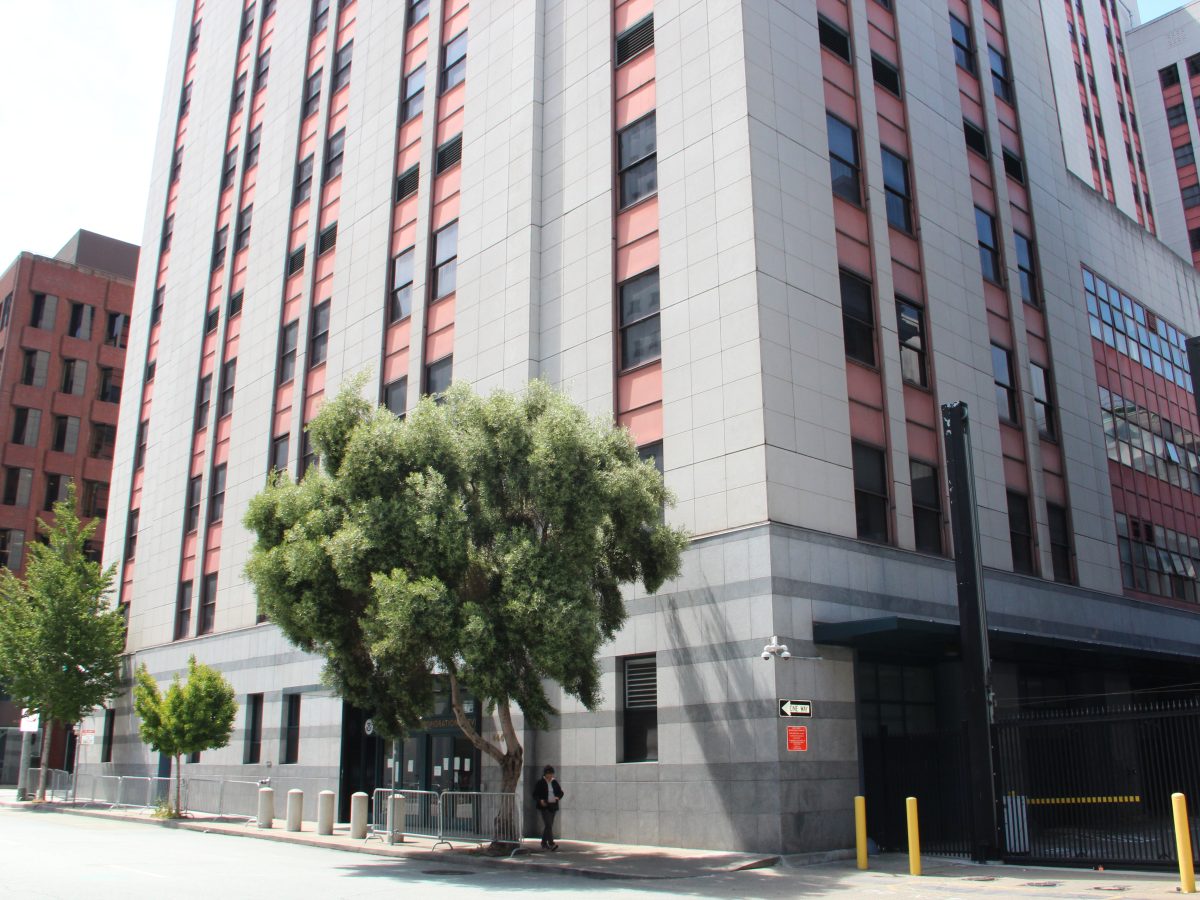
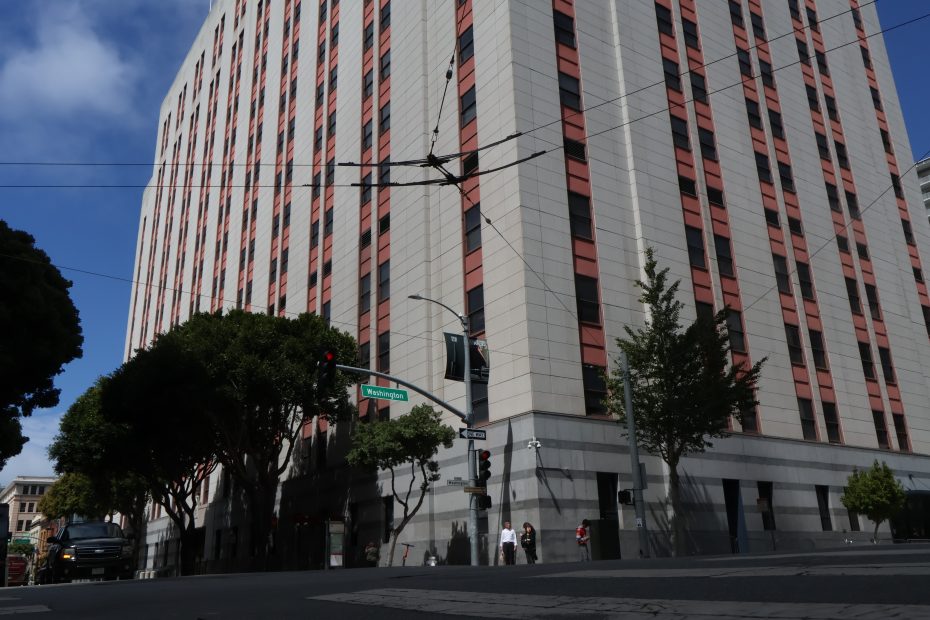
Over the past couple of months, mass immigrant arrests, asylum-seekers detained for longer and longer stays, and protests turned violent have shone a spotlight on the Immigration and Customs Enforcement office in San Francisco, located inside the Appraiser’s Building at 630 Sansome St.
It’s not the first time, however, that efforts to detain immigrants within the building have invited scrutiny. Ever since it was built, 630 Sansome has been linked with American immigration policy — and its tragic consequences.
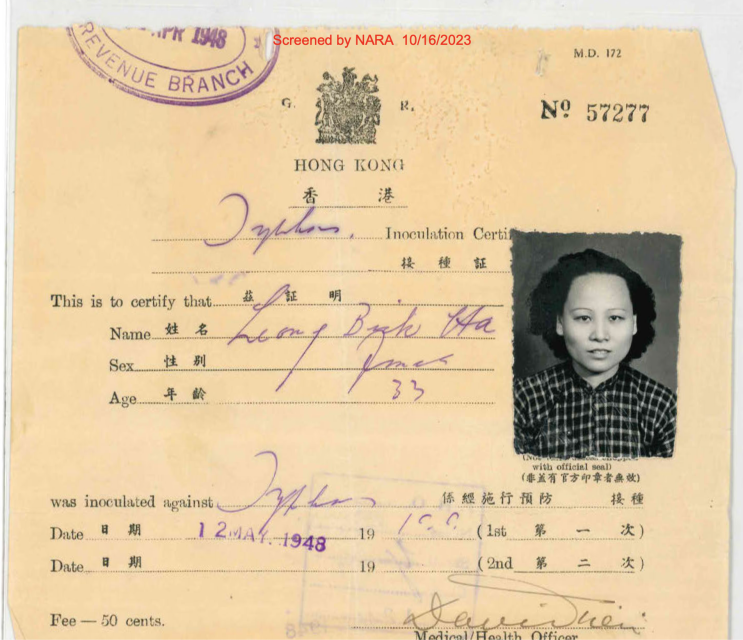
The night of September 21, 1948, 33-year-old Leong Bick Ha hanged herself on the 13th floor of the building, which at that time was the city’s headquarters for the now-defunct Immigration and Naturalization Services, which predated ICE.
Want the latest on the Mission and San Francisco? Sign up for our free daily newsletter below.Sign up
Leong — her surname — was one of nearly 4,000 Chinese women who were detained inside the building between 1946 and 1948 after arriving in the United States to reconnect with their American GI husbands.
After being held for three months in jail-like conditions, unable to communicate with her husband U.S. Army Sergeant Ng Bak Teung and her 15-year-old son, Leong was subjected to a long interview process as officials tried to determine the legitimacy of her marriage.
She was so anxious before her official interview that immigration officials prescribed her sedatives. Afterwards, she was told that she had failed the interview and would soon be deported.
That night, several floors up from where ICE detains immigrants in holding cells today, Leong hanged herself in a shower stall.
Leong Bick Ha. File 1300/078976, Immigration and Deportation Investigation Case Files, 1944–1955, RG 85, National Archives and Records Administration, San Francisco. (Courtesy of Brianna Nofil)
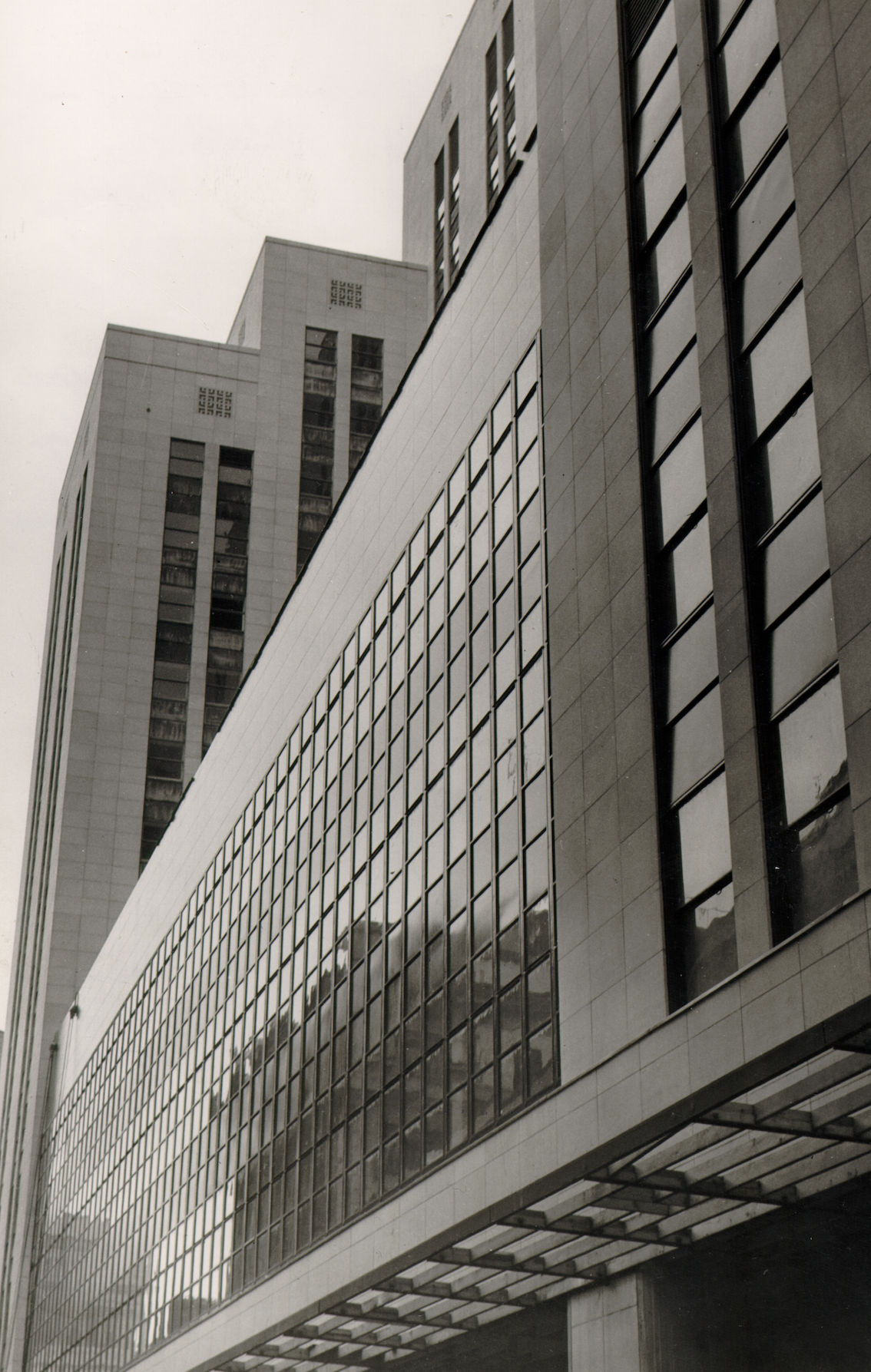
630 Sansome St.’s relationship with immigration enforcement began around the end of World War II, when an electrical fire destroyed a 30-year-old immigration detention center on Angel Island. Shortly after,INS moved its headquarters and detention center to 630 Sansome St., an unassuming federal building in the Financial District completed in 1944.
The building has always housed some federal agencies unrelated to INS and ICE. But from the start, it had a relationship with immigration enforcement and detention. INS occupied six of the building’s 16 floors, and devoted two floors to the detention of men, women, and children. In 1947 the San Francisco Chronicledescribed the detention space as “a prison-like atmosphere — barred windows, locked doors, guards everywhere.”
Though Leong Bick Ha is arguably the best-known detainee at the INS headquarters, thousands of immigrants passed through in its first decade. European communists were tried and deported from the building in 1950. A Russian family was inexplicably held in detention for over 14 months in 1951. And a 21-month-old baby girl and her mother were held in the building for three months even after being ordered removed to Canada.
And yet, many San Franciscans were unaware of the hordes of immigrants detained in the modest building every day, according to historian Brianna Nofil, author of “The Migrant’s Jail: An American History of Mass Incarceration.” Nofil argues that 630 Sansome marks the beginning of the practice of detaining individuals in office spaces to avoid scrutiny.
Despite the scale, she says, “If you just hold people in an office building, there’s a pretty good chance that most observers will have no idea it’s happening.”
There were occasions when 630 Sansome lost its anonymity. A couple of months before Leong’s death, 41-year-old Huang Lai crawled onto a ledge of the building’s 14th floor. Lai, who had been in detention for nine months while awaiting an interview, sat on the ledge for hours until police successfully brought her back inside. Five thousand onlookers gathered to watch on the street below.
According to Nofil, this incident was the first time that many San Franciscans learned 630 Sansome St. was a detention center.
In July 1948, a columnist writing in the San Francisco Examiner under the pen name of “Freddie Francisco” implored “officer workers who spend their days in the financial district,” to look closer at the “shining white skyscraper that is the Customs Building on Sansome Street.”
March 1944 picture of the ‘New Appraisers Building.’
INS was likely doing its best to provide adequate conditions, Francisco wrote. But, “the fact remains that the top of an office building, in the center of a big city, is not the place in which to house hundreds upon hundreds of men, women and children for periods ranging from six months to a year, and more.”
During a 1952 hearing in front of the President’s Commission on Immigration and Naturalization about the financial cost of detaining immigrants for longer periods of time, the lawyer Welburn Mayock called the building a “skyscraper concentration camp.”
He represented American President Lines Ltd., a large American shipping company, and he complained to the commission about the high cost of detaining immigrants there.
Mayock wrote that the detention space “increases the risk of hospitalization” to those inside, and that on average one baby a month was born to women detained at the facility.
Shortly after, President Dwight Eisenhower promised to change immigration detention standards, passing the Refugee Relief Act of 1953 and opening new immigration pathways to 214,000 people. “This action demonstrates again America’s traditional concern for the homeless, the persecuted and the less fortunate of other lands,” reads his statement upon signing the act.
The detention center closed the next year on October 31, 1954. The holding areas were turned into office space or immigration courts — staying that way for a long time. All the remaining detainees were reportedly distributed between county jails and hotels, or released on parole.
While Eisenhower’s administration saw a shift towards alternative detention policies like monitored parole in big cities, immigration restrictions were only tightening at the southern border. The 1954 act Operation Wetback — which some advocates see as a predecessor for Trump’s current mass deportation plan — reportedly deported over one million Mexican day laborers, and wielded racialized immigration policy primarily against Latino people.
“It’s a story of shifting geography,” Nofil said of the 1954 closure, “not a history of eliminating migrant incarceration.”
Nowadays, 630 Sansome St. is again being used to discreetly hold immigrants. But it is no longer anonymous: It has become a place of protest by anti-ICE demonstrators, and for lawyers it is often the easiest place to access clients while trying to get them released through habeas corpus petitions.
Nofil said there was no particular precedent for what to do with immigrants when they first started coming into Sansome. The fledgling system that INS developed in the 1940s still informs modern detention, she said. “Everyone is just flying by the seat of their pants. No one has a plan.”
Back to its roots
Until the 2000s, 630 Sansome St. was mostly known as the headquarters for the regional U.S. Forest Service and the auction site of seized and unclaimed items gathered by the U.S. Customs Service, including confiscated liquor.
But even when INS dissolved in 2003, immigrants continued to shuffle through the court still there, said Jennifer Friedman, deputy director of the immigration unit at the San Francisco Public Defender’s Office. Established under the Department of Homeland Security, ICE adopted the court already housed on the building’s fourth floor, using it to try detained immigrants facing deportation.
Elsewhere in the building, United States Customs and Immigration Services, also under the DHS, processes immigrants for green cards and naturalizations.
Between 2008 and 2014, the number of people attending immigration court every day at the building hovered around 25, according to a data analysis conducted by Vera, a national organization composed of advocates and researchers. Immigrants would be brought to 630 Sansome St. for days when they had court, bused in from jails and prisons that housed people detained by ICE.
The number of people peaked in 2008, when ICE arrested 63 immigrants in a city-wide raid, and then again on July 13, 2011, when 88 people passed through the building.
630 Sansome St. on July 25, 2025. Photo by Frankie Solinsky Duryea.
San Francisco’s courts for detained immigrants at 630 Sansome St. closed in 2021 after all California jails and prisons ended their contracts with ICE, facing public pushback. The closest long-term ICE detention center was then in Bakersfield, said Friedman, and the court moved south to accommodate that change. Friedman added that this change also isolated detained immigrants from San Francisco’s pro-bono lawyers.
What remained at 630 Sansome St., however, was a courtroom where immigrants not in detention appeared for hearings — mostly related to asylum cases. Up until recently, they did not worry about being arrested at these hearings.
630 Sansome St. saw a decline in detainees in the late 2010s. Since the vast majority of the immigrants passing through the building were free to return home after their hearings, it was impractical to process immigrants there since it is so far from any detention court or long-term detention facility.
Patrick O’Brien and Joseph Park, two of the judges who preside over the courtrooms of 630 Sansome St. today, began hearing more general immigration and asylum cases when the detained court closed in 2021. Until 2025, an average of two immigrants were kept at Sansome per day.
But 630 Sansome St. is getting busier. Most immigrants arrested around the Bay Area are now being processed at the ICE office at 630 Sansome St. And many of those who show up for hearings are being arrested inside the building, as ICE agents wait outside the courtroom.
Some lawyers question the legality of these arrests, and have had success filing habeas petitions to release them.
Recent data indicates that people are being held in these spaces for longer and longer periods of time. Data analysis by Mission Local, using the Deportation Data Project’s most recent release, shows that at least 172 people were held at 630 Sansome St. from June 26 to July 29. Eleven of those people were held for over 24 hours. Two were held for over 72 hours.
Detainees who have stayed overnight said that the cells are cold, and they sometimes have to sleep on the floor with just a Mylar blanket, a sheet that looks like aluminum. Video smuggled out of holding cells in New York City’s equivalent to 630 Sansome St. — 27 Federal Plaza — shows cramped conditions in brightly lit rooms.
Only lawyers and family members of the detained have a legal right to get access to the sixth floor, where immigrants are detained. Media members are technically allowed to enter, but Mission Local reporters have been repeatedly denied access.
For visitors, the sixth floor is mostly made up of one long windowless hallway. Visitors are put into a small fluorescent-lit room, where they can speak with detained people across a plastic divider, through wall-mounted phones.
Francisco Ugarte, the first attorney to be hired to the immigration unit at the San Francisco Public Defender’s Office, said that arrests inside the courthouse are new. “What’s happening now, with masked agents at courthouses, this is unprecedented, authoritarian, and indicative of a government that’s failing its people,” he wrote to Mission Local.
630 Sansome becomes ground zero for San Francisco protests
Over the years, 630 Sansome has been a magnet for civil resistance.
The first major instance of protests began after Leong Bick Ha’s death, when 104 women detainees, the majority of them Chinese war brides, reportedly began a hunger strike, said Leona Lau, the founder of the 1945 Chinese War Brides Project.
While INS tried to downplay the protest, Lau said that Leong’s death became a lightning rod for the frustration and anger of the Chinese community. People protested outside the building, and the Chinese-language media lambasted what they saw as racist immigration and detention policies.
Lau said that this frustration and anger remain today, especially as some immigration policies target Chinese people.
“How many more years do we have to fight the fight to have this country recognize us?” Lau asked.
In later years, protestors at 630 Sansome St. were arrested for a 1976 sit-in against the expansion of detention centers, for a 1986 protest against President Ronald Reagen’s support of Nicaraguan anti-communist “Contra” rebels, and for a 1990 demonstration for the rights of immigrants with HIV/AIDS.
In 2007 and 2008, students protested there against immigration raids. In 2010, the building became the site of protests supporting sanctuary city policies and, in 2013, dozens of protesters gathered around a bus believed to be carrying undocumented immigrants to deportation, blocking the bus’s movement for several hours.
But recent protests have focused on what’s going on inside the building’s hallways — the arrest of immigrants as they leave regularly scheduled asylum hearings. Protesters have succeeded in closing the immigration court at 630 Sansome St. on a couple occasions, and they’ve done the same at 100 Montgomery St., San Francisco’s main immigration courthouse, around 10 blocks away.
Protesters gathered outside 630 Sansome St. on July 29, 2025. Photo by Frankie Solinsky Duryea
Protesters gathered outside 630 Sansome St. on July 29, 2025. Photo by Frankie Solinsky Duryea
Protesters and federal officers outside 630 Sansome St. on July 29, 2025. Photo by Frankie Solinsky Duryea
Protesters and ICE officers outside 630 Sansome St. on July 8, 2025. Photo by Frankie Solinsky Duryea
The demonstrations have had mixed results. When protesters tried to stop ICE officers from taking a detainee from 100 Montgomery St., the ICE van drove through the crowd. And, in the most recent attempt to stop ICE vehicles leaving 630 Sansome St., two protesters were tackled and detained.
Protesters continue to regularly show up at 100 Montgomery St. There, they hope that they can keep ICE officers out of the building. But at 630 Sansome St., protestors have said, there’s no ideal strategy. ICE officers can arrest immigrants and then process them two floors above, all out of sight.
At least 50 people have been arrested while attending routine immigration court arrests this year, Mission Local reporters have observed. But legal experts say that number is much higher, and courthouse arrests are occurring nearly daily.
As an unknown number of people are detained there every day, without an opportunity for observers to see courthouse arrests, immigration detention is again invisible, much as it was 80 years ago.
“Few, if any, detention spaces have endured since the 1940s,” said the historian Brianna Nofil. But, from INS to ICE, immigration enforcement has held a lease in San Francisco’s downtown for over 80 years. Nofil said she doesn’t know of any other detention space in the country that’s lasted that long.
Margaret Kadifa contributed reporting.
Correction: A previous version of this article stated that 176 people were held at 630 Sansome St. from June 26 to July 29. Several of those were duplicate entries in ICE’s data. The more accurate number of detained people during that time frame is 172.
We’re a small, independent, nonprofit newsroom that works hard to bring you news you can’t get elsewhere.
In 2025, we have a lofty goal: 5,000 donors by the end of the year — more than double the number we had last year. We are 20 percent of the way there: Donate today and help us reach our goal!
I’m covering immigration and running elsewhere on GA. I was born and raised in Burlingame but currently attend Princeton University where I’m studying comparative literature and journalism. I like taking photos on my grandpa’s old film camera, walking anywhere with tall trees, and listening to loud music.More by Frankie Solinsky Duryea
President Donald Trump’s casual reference to Oakland during a press conference about crime on Monday has sparked a furious response from the city’s elected officials, who accused him today of distorting the truth, fomenting authoritarianism, fearmongering, and trying to distract the public from his ties to the deceased pedophile Jeffrey Epstein.
At a City Hall press conference on Thursday, Mayor Barbara Lee promised residents that her administration will not back down against any threats from Trump.
“No one knows this president’s playbook better than I do,” Lee said, noting that she served in Congress during his first administration, and was on the House floor on January 6, 2021, when Trump encouraged his supporters while they stormed the Capitol in an attempted insurrection.
Trump’s recent comment about Oakland was made during a press conference announcing his takeover of the Washington D.C. police. Through the D.C. takeover and Trump’s earlier deployment of the National Guard in Los Angeles, Trump has signaled a willingness to clash with the Democratic Party leaders of major cities, which he has characterized as lawless, despite historically low and falling crime rates in most metro areas.
Never miss a story.Sign up for The Oaklandside’s free daily newsletter.Email
Lee said Oakland’s legal team is analyzing the constitutionality of some of Trump’s statements, including his threat to send National Guard troops to different cities across the country, and coordinating how to respond with state and local allies.
“When Donald Trump threatens our communities, we stand up, and I stood up to him before, over and over and over again. And as mayor, I will continue to stand firm with you,” Lee said.
Alameda County Supervisor Nikki Fortunato Bas said that Trump is wrong about Oakland, and that local leaders are “laser focused” on public safety improvements. She touted the county’s recent work approving plans to spend hundreds of millions of dollars from Measure C on early childcare and education, and a “historic $1.4 billion investment of Measure W funds for homelessness solutions across the county.”
“Let’s be clear today that Trump’s threats and his deployment of the National Guard are not about safety or law, this is about fear and control, and it is a blatant abuse of power,” Bas said.
Several councilmembers also condemned Trump’s remarks. Rowena Brown, Oakland’s at-large councilmember, argued Trump’s comments are part of a “long, harmful pattern where leaders distort the truth about majority Black communities to justify federal overreach, aggressive policing, and the erosion of our civil liberties.”
Councilmember Janani Ramachandran said Trump is using Oakland as a scapegoat to distract the public from his connection to Jeffrey Epstein.
Calling Trump “Mister Convicted Felon,” Councilmember Carroll Fife scoffed at the idea that Trump cares about law and order, referring to Trump’s criminal convictions. Fife also accused the president of “grooming communities “to prepare us for an abusive relationship that he wants to have with the American people.”
Brenda Harbin-Forte, a former Alameda County Superior Court judge who helped lead the recall against former Mayor Sheng Thao, spoke at the press conference, sharing a statement from NAACP President and CEO Derrick Johnson, who said that Trump campaigned on law and order but is a “president of chaos and corruption.”
Oakland leaders promised to support immigrants, but advocates say they need more help from the city
The press conference at City Hall occurred just two days after Immigration and Customs Enforcement agents detained at least six people in East Oakland. The detainees include a 17-year-old and a person with Down Syndrome, according to Nikolas De Bremaeker, an immigrants’ rights managing attorney at Centro Legal de la Raza.
At the press conference on Thursday, De Bremaeker shared that the detained residents had been held in “deplorable conditions” at ICE’s San Francisco field office and that the situation has been especially traumatizing for the child.
“When I had to explain that his family members had been transferred, he just broke down in tears,” De Bremaeker said. He said the cell that held the child had a “piece of plastic to use as a blanket,” a bare cement floor, and one toilet without any privacy partition.
According to De Bremaeker, the child has been transferred to a facility in New York, and several of the other detained residents, including the person with Down Syndrome, have been sent to a facility in Tacoma, Washington.
During her speech, Lee affirmed that Oakland is a sanctuary city, providing support to immigrant communities and families affected by ICE.
De Braemaker said what Centro Legal needs is support from the city to help fund the work being done by attorneys, who file habeas petitions and temporary restraining orders to try to free detained immigrations, plus the social workers and other response staff who handle these matters.
“We are calling on the city of Oakland to work with us to build resources to be able to file more of these [motions],” De Braemaker told reporters. “The Trump administration is not playing by the rules; they’re breaking the law, and the only way to address this is by bringing these petitions to federal court.”
Lourdes Martinez, directing attorney of Centro Legal’s immigrants’ rights practice, said that Oakland did help fund some rapid response immigration services during the first Trump administration. Alameda County recently allocated money to the Alameda County Immigration Legal Education Partnership, which runs a hotline used to report ICE interactions and detentions. But Oakland so far hasn’t thrown in support. Martinez said she hopes the city will come to the table and work with the organizations and agencies that are collaborating on this front.
“Our assessment of the city of Oakland is we’re not prepared for what may come in terms of ICE enforcement now that ICE is the best-funded law enforcement agency of the federal government,” Martinez said. “It really could increase what we see at the local level.”
Eli Wolfe reports on City Hall for The Oaklandside. He was previously a senior reporter for San José Spotlight, where he had a beat covering Santa Clara County’s government and transportation. He also worked as an investigative reporter for the Pasadena-based newsroom FairWarning, where he covered labor, consumer protection and transportation issues. He started his journalism career as a freelancer based out of Berkeley. Eli’s stories have appeared in The Atlantic, NBCNews.com, Salon, the San Francisco Chronicle, and elsewhere. Eli graduated from UC Santa Cruz and grew up in San Francisco.More by Eli Wolfe
The U.S. Department of Justice may file a lawsuit against the entire UC system if a settlement agreement for alleged antisemitism on UC campuses is not reached by Sept. 2.Rahimeen Shah | Staff
President Donald Trump’s administration is seeking a $1 billion settlement from the university to restore frozen research grant funding — the most the administration has publicly sought from a university in a recent series of settlements.
California Gov. Gavin Newsom and others labeled the proposed settlement an “unprecedented assault on academic freedom” in a joint statement released Aug. 8.
This move follows the suspension of $584 million in federal funding to UCLA after the U.S. Department of Justice, or DOJ, announced it found that UCLA was “deliberately indifferent to a hostile environment for Jewish and Israeli students in violation of the Equal Protection Clause and Title VI” in a July 29 press release.
The UC system may face a lawsuit by Sept. 2 if an agreement is not reached, according to a July 29 DOJ letter to then-UC President Michael Drake. The proposed settlement follows other settlements reached between the Trump administration and Ivy League institutions, including a $50 million settlement with Brown University and a $221 million settlement with Columbia University.
The UC Board of Regents convened an emergency meeting Aug. 11 to discuss “External Funding Litigation and Legal Issues,” according to the meeting agenda. A statement released by UC Senior Vice President of External Relations & Communications Meredith Vivian Turner described the proposed settlement payment as “devastating.”
“UC’s leadership spent recent days evaluating the demand, updating the UC community, and engaging with stakeholders,” Turner said in the statement. “Our focus remains on protecting students’ access to a UC education and promoting the academic freedom, excellence, and innovation that have always been at the heart of UC’s work.”
The joint statement released by Newsom and others claimed the DOJ’s actions “punish” California students and threaten to “cripple life-saving research,” warning that the payment would “devastate” the UC system and “sabotage” innovations that serve the nation.
The UC system contributes $82 billion to the U.S. economy each year, supporting more than 500,000 jobs nationwide, according to the statement.
“Trump has weaponized the Department of Justice to punish California, crush free thinking, and kneecap the greatest public university system in the world,” Newsom and others said in the statement.
Investigations have also been launched into UC Berkeley, whose Chancellor Rich Lyons testified before the U.S. House Committee on Education and Workforce on July 15 regarding campus’s response to alleged antisemitism. Presidents of the University of Pennsylvania and Harvard University were previously called to testify before this committee, and their institutions have also faced billions of dollars of federal funding cuts.
Lyons acknowledged during the hearing that the country, as well as UC Berkeley, has seen a “disturbing rise in antisemitism,” stating that it is imperative that his campus works to protect its community from discrimination and harassment.
The university maintains it has taken action to end antisemitism on its campuses through reforms and programs promoting safety and combating “all forms of harassment and discrimination,” according to a UC web page titled “Combating antisemitism”. UC Berkeley has increased funding to the Antisemitism Education Initiative and developed mandatory antisemitism training for first-year students, leaders and residential assistants, according to the webpage.
“Americans across this great nation rely on the vital work of UCLA and the UC system for technologies and medical therapies that save lives, grow the U.S. economy, and protect our national security,” UC President James Milliken said in an Aug. 8 statement responding to the DOJ’s proposed $1 billion settlement.
The former president has brought dehumanizing language into American presidential politics.By Anne Applebaum
Jon Cherry / Getty
OCTOBER 18, 2024 (TheAtlantic.com)
To support The Atlantic’s journalism, please consider subscribing today.
Rhetoric has a history. The words democracy and tyranny were debated in ancient Greece; the phrase separation of powers became important in the 17th and 18th centuries. The word vermin, as a political term, dates from the 1930s and ’40s, when both fascists and communists liked to describe their political enemies as vermin, parasites, and blood infections, as well as insects, weeds, dirt, and animals. The term has been revived and reanimated, in an American presidential campaign, with Donald Trump’s description of his opponents as “radical-left thugs” who “live like vermin.”
ENJOY A YEAR OF UNLIMITED ACCESS TO THE ATLANTIC—INCLUDING EVERY STORY ON OUR SITE AND APP, SUBSCRIBER NEWSLETTERS, AND MORE.Become a Subscriber
This language isn’t merely ugly or repellent: These words belong to a particular tradition. Adolf Hitler used these kinds of terms often. In 1938, he praised his compatriots who had helped “cleanse Germany of all those parasites who drank at the well of the despair of the Fatherland and the People.” In occupied Warsaw, a 1941 poster displayed a drawing of a louse with a caricature of a Jewish face. The slogan: “Jews are lice: they cause typhus.” Germans, by contrast, were clean, pure, healthy, and vermin-free. Hitler once described the Nazi flag as “the victorious sign of freedom and the purity of our blood.”
Stalin used the same kind of language at about the same time. He called his opponents the “enemies of the people,” implying that they were not citizens and that they enjoyed no rights. He portrayed them as vermin, pollution, filth that had to be “subjected to ongoing purification,” and he inspired his fellow communists to employ similar rhetoric. In my files, I have the notes from a 1955 meeting of the leaders of the Stasi, the East German secret police, during which one of them called for a struggle against “vermin activities” (there is, inevitably, a German word for this: Schädlingstätigkeiten), by which he meant the purge and arrest of the regime’s critics. In this same era, the Stasi forcibly moved suspicious people away from the border with West Germany, a project nicknamed “Operation Vermin.”
This kind of language was not limited to Europe. Mao Zedong also described his political opponents as “poisonous weeds.” Pol Pot spoke of “cleansing” hundreds of thousands of his compatriots so that Cambodia would be “purified.”
DON’T MISS WHAT MATTERS. SIGN UP FOR THE ATLANTIC DAILY NEWSLETTER.Email AddressSign Up
In each of these very different societies, the purpose of this kind of rhetoric was the same. If you connect your opponents with disease, illness, and poisoned blood, if you dehumanize them as insects or animals, if you speak of squashing them or cleansing them as if they were pests or bacteria, then you can much more easily arrest them, deprive them of rights, exclude them, or even kill them. If they are parasites, they aren’t human. If they are vermin, they don’t get to enjoy freedom of speech, or freedoms of any kind. And if you squash them, you won’t be held accountable.
Until recently, this kind of language was not a normal part of American presidential politics. Even George Wallace’s notorious, racist, neo-Confederate 1963 speech, his inaugural speech as Alabama governor and the prelude to his first presidential campaign, avoided such language. Wallace called for “segregation today, segregation tomorrow, segregation forever.” But he did not speak of his political opponents as “vermin” or talk about them poisoning the nation’s blood. Franklin D. Roosevelt’s Executive Order 9066, which ordered Japanese Americans into internment camps following the outbreak of World War II, spoke of “alien enemies” but not parasites.
In the 2024 campaign, that line has been crossed. Trump blurs the distinction between illegal immigrants and legal immigrants—the latter including his wife, his late ex-wife, the in-laws of his running mate, and many others. He has said of immigrants, “They’re poisoning the blood of our country” and “They’re destroying the blood of our country.” He has claimed that many have “bad genes.” He has also been more explicit: “They’re not humans; they’re animals”; they are “cold-blooded killers.” He refers more broadly to his opponents—American citizens, some of whom are elected officials—as “the enemy from within … sick people, radical-left lunatics.” Not only do they have no rights; they should be “handled by,” he has said, “if necessary, National Guard, or if really necessary, by the military.”
MAKE YOUR INBOX MORE INTERESTING WITH NEWSLETTERS FROM YOUR FAVORITE ATLANTIC WRITERS.Browse Newsletters
In using this language, Trump knows exactly what he is doing. He understands which era and what kind of politics this language evokes. “I haven’t read Mein Kampf,” he declared, unprovoked, during one rally—an admission that he knows what Hitler’s manifesto contains, whether or not he has actually read it. “If you don’t use certain rhetoric,” he told an interviewer, “if you don’t use certain words, and maybe they’re not very nice words, nothing will happen.”
His talk of mass deportation is equally calculating. When he suggests that he would target both legal and illegal immigrants, or use the military arbitrarily against U.S. citizens, he does so knowing that past dictatorships have used public displays of violence to build popular support. By calling for mass violence, he hints at his admiration for these dictatorships but also demonstrates disdain for the rule of law and prepares his followers to accept the idea that his regime could, like its predecessors, break the law with impunity.
These are not jokes, and Trump is not laughing. Nor are the people around him. Delegates at the Republican National Convention held up prefabricated signs: mass deportation now. Just this week, when Trump was swaying to music at a surreal rally, he did so in front of a huge slogan: trump was right about everything. This is language borrowed directly from Benito Mussolini, the Italian fascist. Soon after the rally, the scholar Ruth Ben-Ghiat posted a photograph of a building in Mussolini’s Italy displaying his slogan: mussolini is always right.
The Atlantic Daily: The atmosphere of a Trump rally
These phrases have not been put on posters and banners at random in the final weeks of an American election season. With less than three weeks left to go, most candidates would be fighting for the middle ground, for the swing voters. Trump is doing the exact opposite. Why? There can be only one answer: because he and his campaign team believe that by using the tactics of the 1930s, they can win. The deliberate dehumanization of whole groups of people; the references to police, to violence, to the “bloodbath” that Trump has said will unfold if he doesn’t win; the cultivation of hatred not only against immigrants but also against political opponents—none of this has been used successfully in modern American politics.
But neither has this rhetoric been tried in modern American politics. Several generations of American politicians have assumed that American voters, most of whom learned to pledge allegiance to the flag in school, grew up with the rule of law, and have never experienced occupation or invasion, would be resistant to this kind of language and imagery. Trump is gambling—knowingly and cynically—that we are not.
Mediaite Aug 13, 2025 Anne Applebaum, staff writer for The Atlantic, has covered dictators for decades. In an interview from before the 2024 election with Mediaite’s Press Club, she told host Aidan McLaughlin that Donald Trump’s language mirrored rhetoric from Hitler, Stalin, and Mussolini. She described a disturbing trend in his authoritarian language — and how it foreshadowed his consolidation of “absolute power” in a second term as president.
Help Outreach Working Group lift the fog of corporate media. Donate to help us maintain this website and distribute literature on the street.
One Million Rising: Strategic Non-Cooperation to Fight Authoritarianism Virtual Event · Hosted by No Kings Time Wednesdays 8 – 9:30pm EDT Location Virtual event Join from anywhere About this event Across the country, authoritarian forces are getting bolder and more dangerous. Trump and his allies are not hiding their agenda: mass deportations,... Continue reading →
THURSDAY, JUNE 29, 2023 AT 2 AM – 4 AM PDT How to create trust in a group? Details Event by Extinction Rebellion Empathy Circles online EMPATHY CAFE Duration: 2 hr Public · Anyone on or off Facebook How to create trust in a group? This is the question that arose in our... Continue reading →
When you volunteer for Saikat, it’s on us to give you a great experience and a genuine chance to make a difference. We don’t want to waste a second of your time. That’s why we’re always optimizing. And I’m excited to report that this Saturday we talked with 300% more... Continue reading →
This Sunday’s Town Hall: Announcing This Week’s Progressive Town Hall: Every Sunday at 4pm ET/1pm PT RSVP HERE Join PDA activists online from across the country to discuss the importance of progressives reclaiming the American story from the MAGA right, an issue of heightened importance as we’re now within one... Continue reading →
https://us06web.zoom.us/j/82277824260?pwd=fl9pABrChumF21XONZfFDtPSCk8RVe.1 Cost of Rome wishes… Now depends on who you are. (1) (Still free on a star.) A black hole departs. Speeding from its galaxy. New stars in its wake. (2) We say “Epstein files.” Trump says “N* F****** W**, *******S” Blacked out text matters. Trump executes grass. (Schedule 1... Continue reading →
We protest Heritage Foundation EVERY MONDAY (Join us!!!!) By admin | September 2, 2025 | Uncategorized Cliff Cash Comedy Premiered Jul 26, 2025 Every Monday at The Heritage Foundation 214 Massachusetts Ave. Washington D.C. 4pm protest 6pm pizza Every Friday at Fox News D.C. 400 N. Capitol St. Washington D.C. 4pm protest 6pm pizza We are... Continue reading →
One Million Rising: Strategic Non-Cooperation to Fight Authoritarianism Virtual Event · Hosted by No Kings Time Wednesdays 8 – 9:30pm EDT Location Virtual event Join from anywhere About this event Across the country, authoritarian forces are getting bolder and more dangerous. Trump and his allies are not hiding their agenda: mass deportations,... Continue reading →
San Francisco Congressional Candidate Forum Town Hall Time Wednesday, January 7, 2026 6 – 8pm PST Location This event’s address is private. Sign up for more details. About this event Join the San Francisco Working Families Party, the Harvey Milk LGBTQ Democratic Club, and the Alice B Toklas Democratic Club... Continue reading →
COMMUNITY INVESTMENT FOR NEW MEXICO: Lessons from a Successful Model Date & Time Jan 8, 2026 08:00 AM in Pacific Time (US and Canada) Description You’re Invited! Guest Speaker: Don S. Morgan President & CEO of the Bank of North Dakota Explore with us: • How the Bank of North Dakota turns... Continue reading →
THURSDAY, JUNE 29, 2023 AT 2 AM – 4 AM PDT How to create trust in a group? Details Event by Extinction Rebellion Empathy Circles online EMPATHY CAFE Duration: 2 hr Public · Anyone on or off Facebook How to create trust in a group? This is the question that arose in our... Continue reading →






 by
by 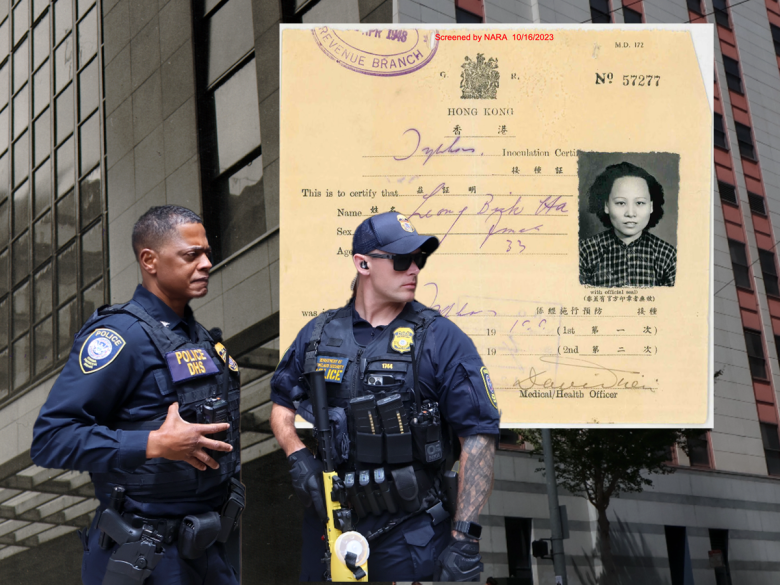


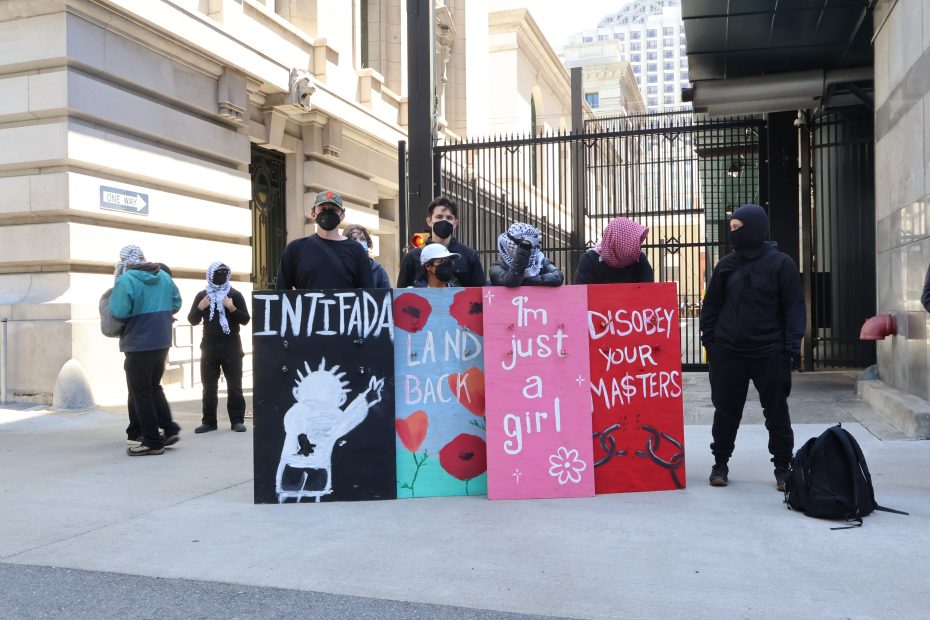 Protesters gathered outside 630 Sansome St. on July 29, 2025. Photo by Frankie Solinsky Duryea
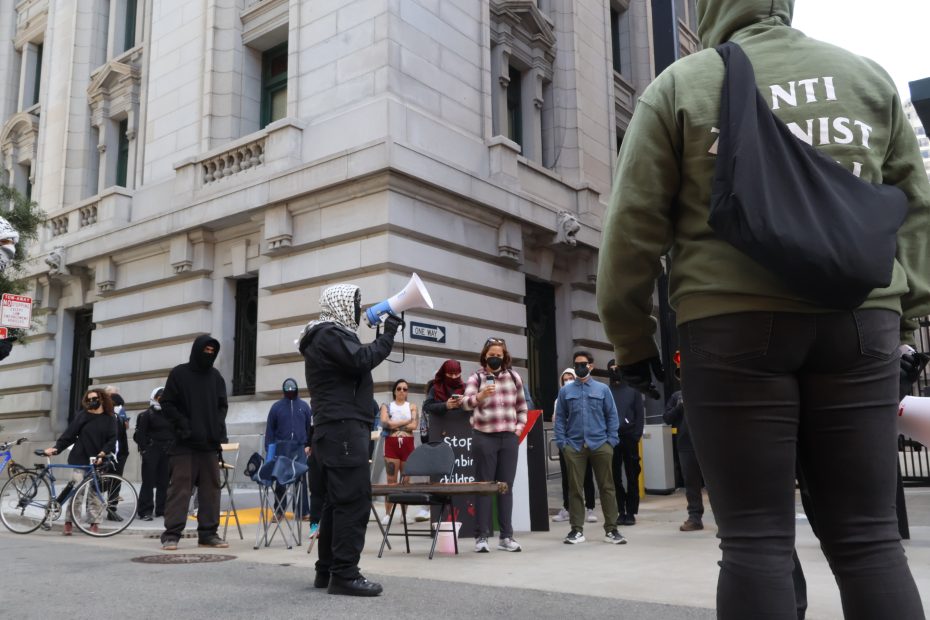 Protesters gathered outside 630 Sansome St. on July 29, 2025. Photo by Frankie Solinsky Duryea
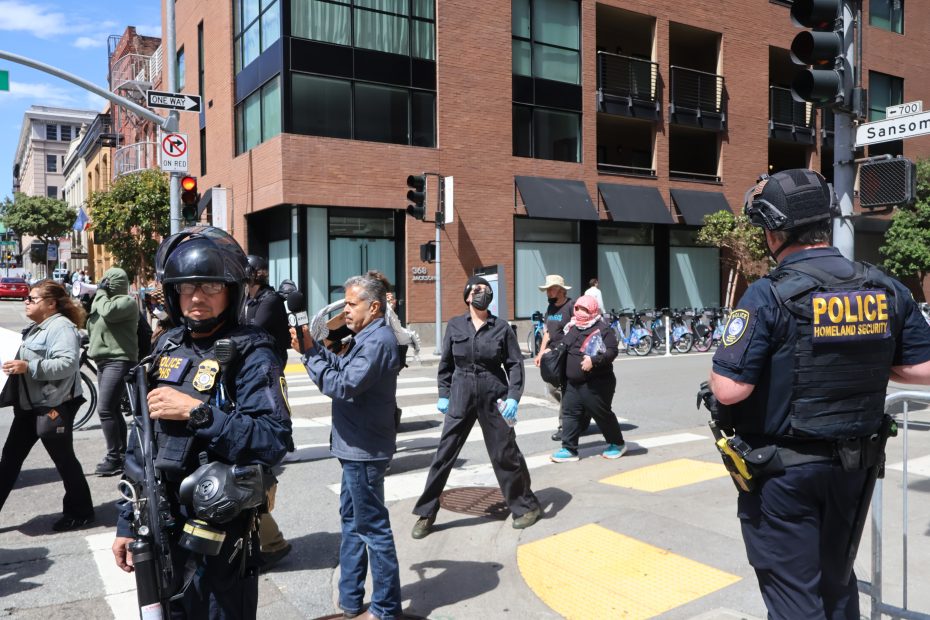 Protesters and federal officers outside 630 Sansome St. on July 29, 2025. Photo by Frankie Solinsky Duryea
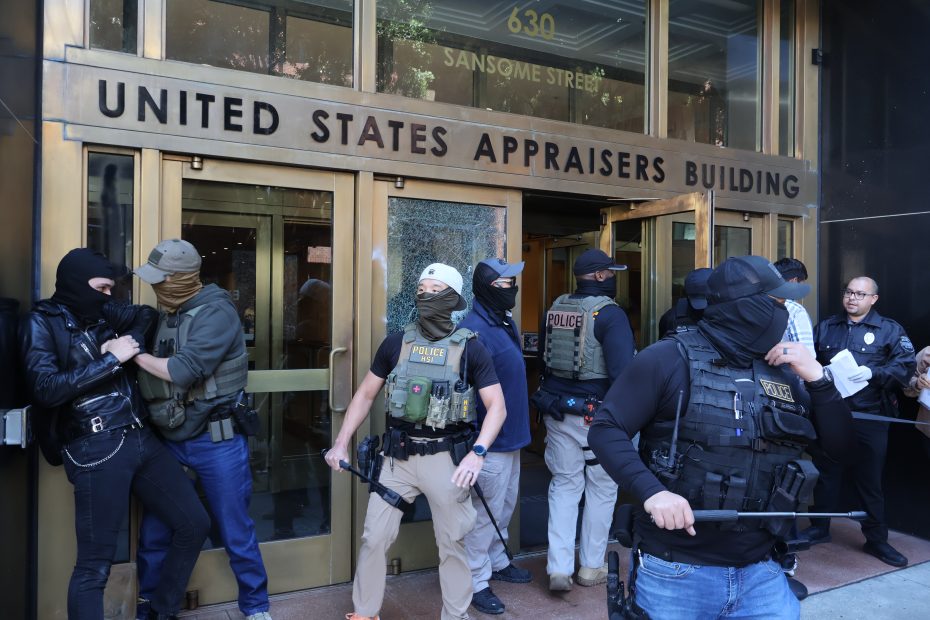 Protesters and ICE officers outside 630 Sansome St. on July 8, 2025. Photo by Frankie Solinsky Duryea