Aug. 24, 2023 Updated: Aug. 25, 2023 (SFChronicle.com)

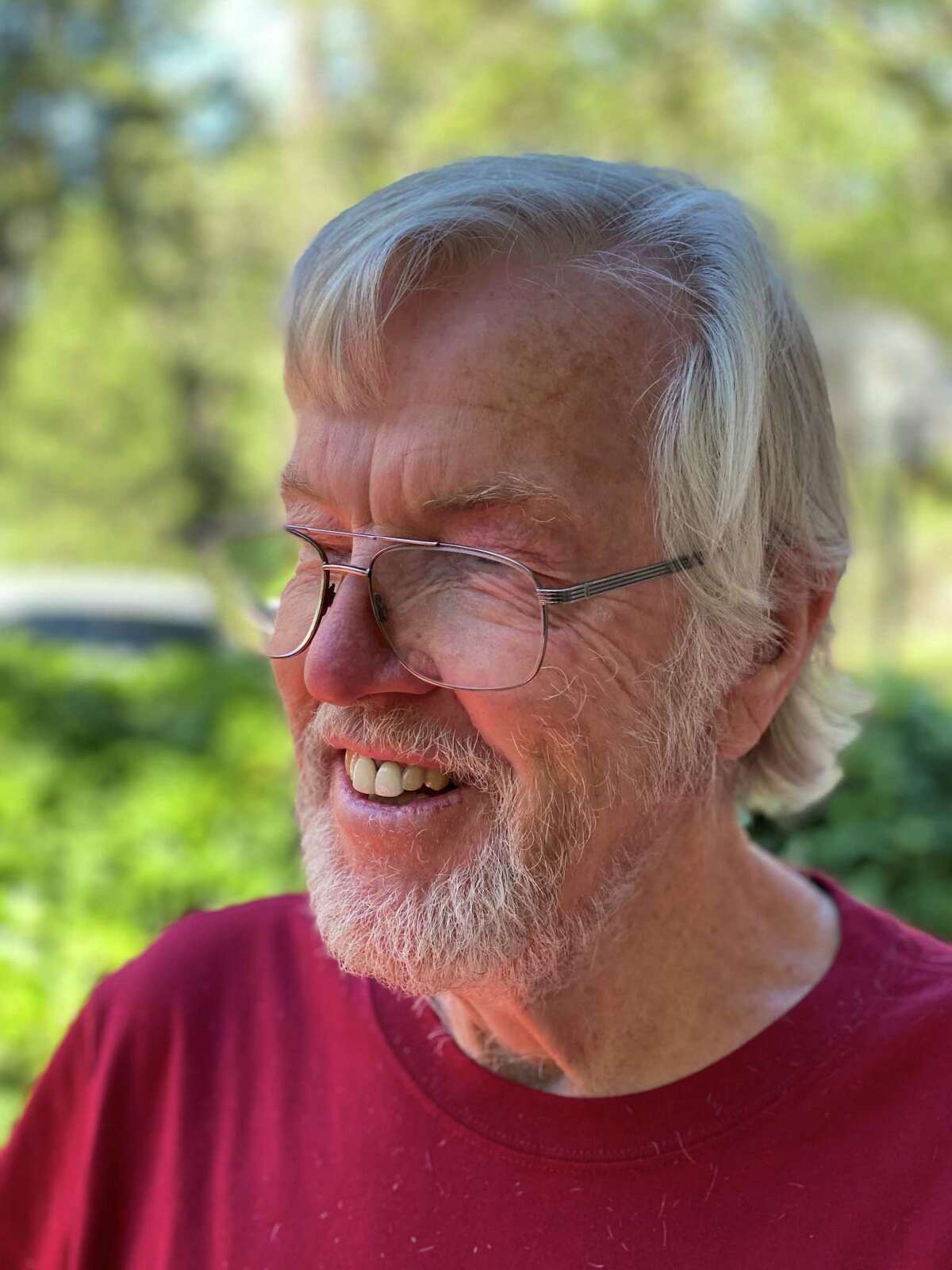
In jail for drug possession, Jay Thelin was regrettably unable to attend the San Francisco funeral procession that marked the Death of the Hippie. But he was there for the birth of it.
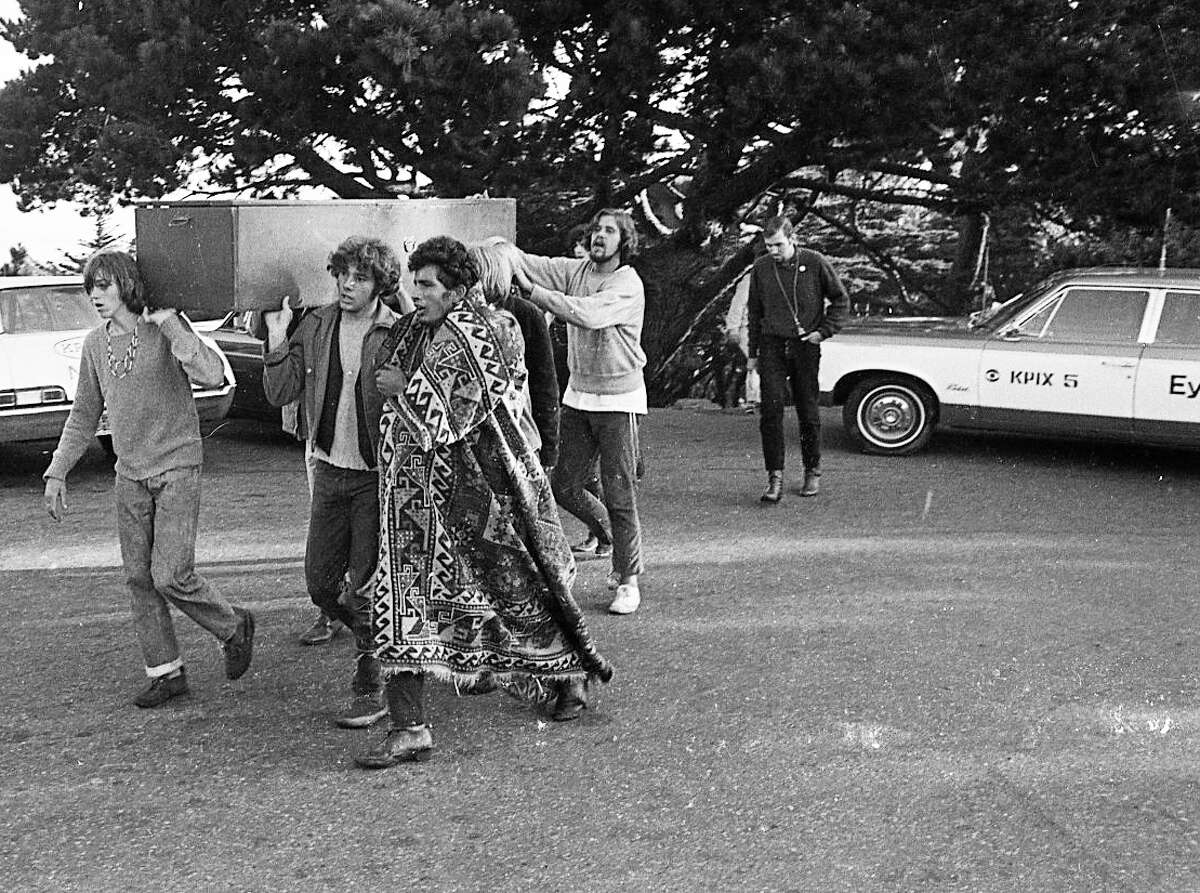
Thelin and his older brother Ron ran the Psychedelic Shop in Haight-Ashbury, the retail focal point for the Summer of Love in 1967. When that brief and overhyped utopian scene became a major bummer and was declared over with a parade on Oct. 6, 1967, a symbolic wooden coffin was carried on the shoulders of mourners through the neighborhood to Buena Vista Park.
The starting point for the hippie death march was the Psychedelic Shop, which donated its sign to ride inside the coffin. It ended there too, because after the wake Ron Thelin closed the store and gave away the merchandise of concert posters, pipes, books on mysticism, beads and trinkets, incense and rolling papers.
Ron Thelin died in 1996. Jay Thelin died on Aug. 13, his 84th birthday, at his home in Nevada City, where he had a successful second career building wood-burning stoves. The cause of death was heart failure, in his own bed after two nights in the hospital, said his wife of nearly 50 years, Carol Thelin.
The Thelin brothers, who were born just 11 months apart, did everything together, from becoming Eagle Scouts to joining the Army to attending San Francisco State, to owning and operating a flophouse in the Haight. They were in their mid-20s when they founded the Psychedelic Shop in January 1966. That was so early in the Haight-Ashbury counterculture that the Grateful Dead had not yet recorded an album and Jefferson Airplane was still a year from releasing “Surrealistic Pillow.”
“The Psychedelic Shop was the linchpin to the world’s first psychedelic neighborhood,” said cultural historian Dennis McNally, who interviewed Thelin for his upcoming nonfiction book, “The Last Great Dream: The Origins of the 1960s Counterculture.”
“There were two or three institutions that were pivotal,” McNally said, “and the first was the Psychedelic Shop, which established the street as this phenomenon.”
According to McNally, Jay Thelin was straitlaced until he happened across a New Yorker magazine excerpt of James Baldwin’s “The Fire Next Time.” That radicalized him, and he ventured into hallucinogens after attending a lecture by the psychedelic psychologist Richard Alpert, who also went by Ram Dass.
“Jay had never even smoked pot,” said McNally, “but when he did that (dropped acid), it just opened him up.”
It also gave Thelin the idea for a storefront, which came to him while painting a house in Truckee.
“Jay had the inspiration that what the world needed was a place to go to find out what you need in order to have a good trip,” McNally said. “That was the mission statement for the Psychedelic Shop.”
In a 1966 interview with the brothers captured on KRON-TV and available on YouTube, Jay offered a recommendation for families seeking unity.
“It’s all related — the psychedelics, the protesting, the gap in the generations,” he said. “I would suggest that any parent who is concerned about his relationship with his son or his daughter that you try turning on with them. I think this would be very useful.”
But Thelin did not follow his own advice. By the time he was a parent, he had forsworn drugs, alcohol and meat, and he was meditating two hours a day while building a business in environmentally sound wood stoves that burned pellets. His line of innovations survive him as Thelin Hearth Products.
Jay Leslie Thelin was born Aug. 13, 1939, at Merritt Hospital in Oakland and spent his earliest years in San Francisco, where his father, Wallace Thelin, managed the Woolworth store on Haight Street. Ron and Jay were followed by sisters Sherrill and Roxann. In the service of Woolworth, Wallace Thelin accepted job transfers to San Mateo to San Luis Obispo to Yuba City.
According to Sherrill, the brothers were so close that when Ron got sent to school without his little brother, he put up such a fuss that the school held him back a year so they could go through as twins.
The brothers were industrious, and while in high school they started a parking concession at the Cal Neva Lodge on the North Shore of Lake Tahoe, which they continued to run during summer vacations during the Rat Pack era.
After graduating from Yuba City High School in 1957, the Thelin brothers both volunteered for the U.S. Army, hoping to serve together. But the Army was not as sympathetic as their kindergarten teacher had been. Ron was stationed in Taiwan, and Jay served two years in Fort Sill, Okla.
In 1962, Wallace Thelin left Woolworth to purchase a dime store on Chestnut Street in San Francisco, and the whole family returned to the city. With their savings, the brothers bought an eight-bedroom Victorian on the corner of Clayton Street and Parnassus Avenue. The down payment was $300 each, with a partner also kicking in a third.
They were homeowners before they were store owners, and they paid the mortgage by renting out extra bedrooms. There could be six tenants at any given time, including Herb Greene, photographer of the San Francisco Mime Troupe, who was on his way to greater fame photographing the bands that formed the San Francisco Sound.
The Psychedelic Shop, located mid-block at 1535 Haight St., was essentially an extension of their home, four blocks uphill. In November 1966, Sherrill was driving in Kansas when she heard the unmistakable and polite voice of her brother Jay being interviewed on national radio after police raided the shop for selling “The Love Book,” a poetry volume that neighbors took offense to for inspiring lewd thoughts among browsers in the store.
But the publicity was only good for business, and a visit to the Psychedelic Shop became “the thing to do, whenever you went to the city,” said Jay’s wife, Carol, who was a Monterey schoolteacher when she made her pilgrimage.
“It was pretty trippy with all the books and recordings, and there were two cute guys behind the counter,’’ she said. “But I didn’t see one hash pipe or any drug paraphernalia. If they had it, it was behind the counter.’’
Not long after her visit, Jay Thelin and three friends set off in his car to visit the Four Corners, where Utah, Arizona, New Mexico, and Colorado meet. “There was some mystical connection to it,’’ said his son, Josh. “They thought it would be a great place to get high.’’
But they made it only as far as Fresno before a police officer rapped on the window while Thelin was taking a nap in the car. Their stash of marijuana, hashish, magic mushrooms and maybe LSD was under the seat. The friends, who were in a diner at the time of the arrest, took off.
Thelin had enough on him to be convicted for distribution, which got him a three-month jail term. He was still there when the shop closed in October 1967. It had not lasted even two years.
While doing time he read a book about the Indian religious order Radha Soami Satsang Beas, and by the time of his release he was a follower. A judge was impressed by his contrition and expunged his conviction from his record, which was otherwise clean.
The Thelins sold the big house in the Haight and Jay moved to Tahoe to work at Sierra Boat, but the legend followed him. Carol Nugent, the Monterey schoolteacher, met him in Tahoe and recognized him as one of those cute brothers from the shop. They were married in 1973 and their son, Josh, was born in 1975. They relocated to Nevada City in the Sierra foothills in 1983.
When the 50th anniversary of the Summer of Love came around in 2017, Thelin made a rare trip to San Francisco to see the comprehensive “Summer of Love Experience” art exhibition at the de Young Museum in Golden Gate Park.
“He kind of felt that the curators didn’t get it,’’ Josh said. “They glorified the drugs and the scene but not the desire for social change or spiritual enlightenment that was what it was all about for my dad and his brother.”
Reach Sam Whiting: swhiting@sfchronicle.com
Written By Sam Whiting
Sam Whiting has been a staff writer at The San Francisco Chronicle since 1988. He started as a feature writer in the People section, which was anchored by Herb Caen’s column, and has written about people ever since. He is a general assignment reporter with a focus on writing feature-length obituaries. He lives in San Francisco and walks three miles a day on the steep city streets.

 ©2023 Hearst Communications, Inc.