As tensions rise on campus, can one email make a difference?
Robin Buller
Oct. 19, 2023 (SFChronicle.com)
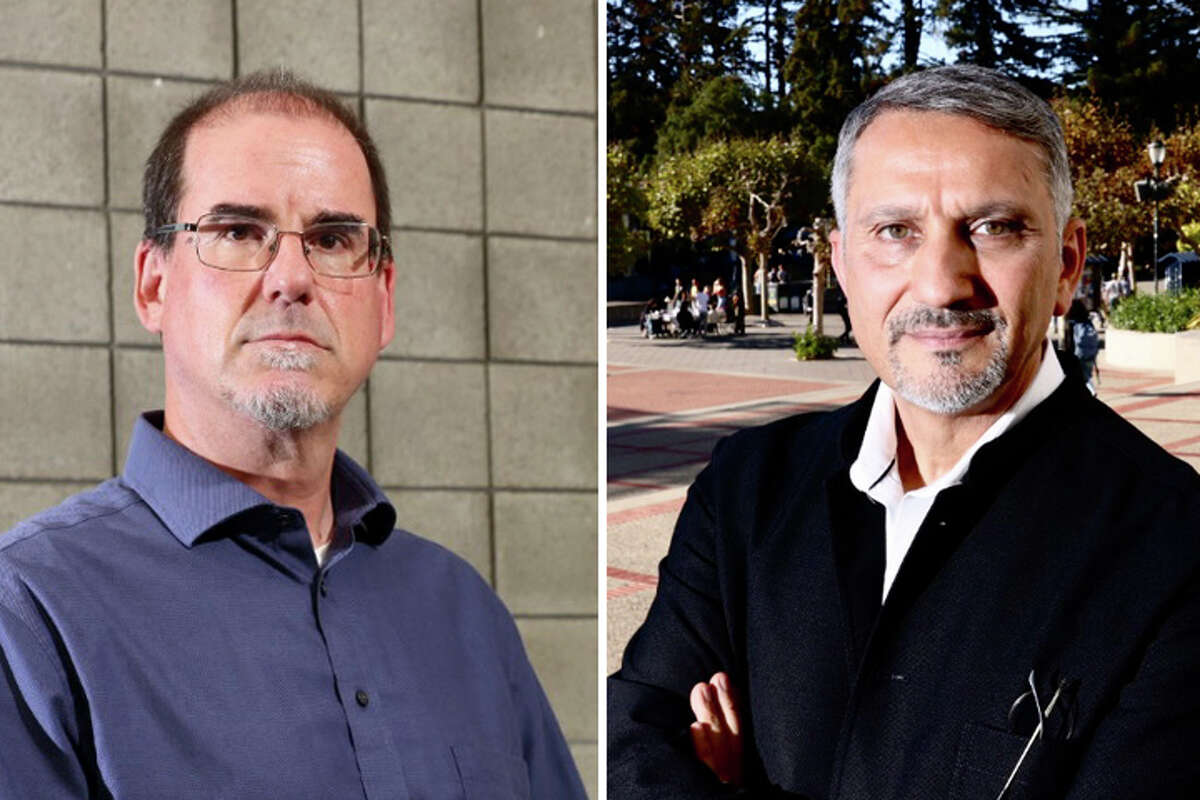
Ron Hassner sat in front of his computer last Wednesday feeling a combination of stress, pain and determination. The day prior, unsettling events had taken place on the campus of UC Berkeley, where Hassner, a professor of political science, directs the Helen Diller Institute for Jewish Law and Israel Studies.
A collection of primarily Jewish students had gathered on the steps of Sproul Plaza to read the names of the people who had been killed and kidnapped by Hamas during the Oct. 7 attacks in southern Israel. But during the ceremony — which echoed a practice common to remember victims of the Holocaust — they were confronted by a group of anti-Israel peers.
“They jeered, laughed and even did a couple of Nazi salutes,” said Hassner, who learned about the event from colleagues who were present. Within seconds, students were getting into each other’s faces. A campus rabbi, Hassner said, physically stood between the two sides, even taking a few blows.
Compelled to do something to prevent further escalations to violence, Hassner’s mind went to his colleague, Hatem Bazian, a lecturer who teaches courses on Palestine, Islamophobia and post-colonial studies. When it comes to Israel and Palestine, the two scholars could not see things more differently.
In the past, the two have faced off in debates about campus involvement in the boycott, divestment and sanctions movement, which this year saw a Berkeley student group adopt a resolution that banned speakers who support Israel and Zionism. While their disagreements are undergirded by mutual professional respect, they also see their roles on campus quite differently.
“I like to think that my students understand that I am a professional scholar and that I’m not a propagandist,” said Hassner, who strives to compartmentalize his Israel identity from his scholarly pursuits, especially in the classroom.
But for Bazian, personal connections to Palestine permeate his research, his teaching and his relationships with students. Having founded the pro-Palestinian campus organization Students for Justice in Palestine as a graduate student in 2001, being an activist is a core part of who he is.
“To only teach is a luxury I don’t have,” Bazian said.
Perhaps the two scholars could do something together to call for calm, Hassner thought — not in the Middle East, but on their Berkeley campus. So he fired off a quick email, asking Bazian if he would be open to drafting a joint statement condemning violence and advocating for civil disagreement. But as Hassner hit send, he felt nervous.
Prominent U.S. college campuses from Stanford to Columbia have struggled to navigate expressions of solidarity with Israelis or Palestinians. Gaffes and provocations have been abundant, including an incident at Harvard in which students were publicly shamed on billboards and websites for criticizing Israel. A Berkeley law professor publicly called for firms not to hire his students who expressed anti-Israel sentiments, labeling them antisemitic.
Even before the events of this month, moments in which two opposing sides meet with and listen to each other felt increasingly rare. At a polarized time at the beginning of a polarizing war, was it even possible to bridge what Hassner and Bazian both felt to be a widening gulf? And what could such a small gesture achieve anyway?
Fractured pasts
Hassner grew up in Israel and has friends who were shot and killed while protecting their teenage son from the Hamas attacks. He believes in a two-state solution, one in which Israel has a right to exist as a country, but in which its occupation of Palestinian land should end. But he is unequivocal in his condemnation of Hamas. To him, the group’s attacks on Israeli civilians were acts of terrorism, pure and simple.
Bazian, on the other hand, views Israel as an apartheid and colonial state. A Palestinian born in Nablus on the West Bank, he has friends and students who have lost loved ones in Gaza. Last week, his cousin who lives in the Israeli city of Haifa was jumped and badly beaten by a group of strangers. To him, the present conflict is a consequence of historic and continuing Israeli oppression of Palestinians, as well as an outcropping of Palestinians’ collective plight for justice and liberation.
In light of those differences, Hassner described reaching out to Bazian as the hardest thing he has done as a scholar.
“I respect him and I always have … (but) we are not friends, we are not chummy,” Hassner said. “I’m not even sure he likes me.”
Bazian was at home putting finishing touches on a midterm exam when he saw Hassner’s email pop into his inbox. The issue deserved his full attention, so he responded saying that he would think about it. Within a few hours, Bazian accepted. A message like that coming from two campus leaders, one Israeli and the other Palestinian, just might resonate, he thought.
When Hassner saw the reply, he said he burst into tears. “It just offers a little glimmer of humanity and respect and civility at a time you see photos from the Middle East that are just harrowing,” said Hassner, who studies religious terrorism and called the recent events in the region a “festival of death.”
Bazian likewise felt the weight of the moment. He was able to relate to the goals of someone with whom he is often vehemently at odds. Tensions and emotions are high on campus, and Bazian, like Hassner, said he feels it is his duty to prevent students from using the crisis to do further harm.
“Have your space to present your view, but don’t cross a line,” he said.
Israel-Hamas War
S.F. students plan walkout to protest Israel bombing Gaza
Berkeley man was on phone with mom in Israel as Hamas attacked. Here’s how she escaped
Two UC Berkeley professors have clashed on Israel-Palestine. War led them to a joint message
Instructor removed from class as Stanford, UC Berkeley respond to Israel-Hamas war
Stanford students say lecturer called Jews in class ‘colonizers,’ minimized Holocaust
An open wound
Their joint message went out as an email from the chancellor’s office last Thursday afternoon. Written by Hassner and edited by Bazian, it acknowledged that “disagreement and different points of view are an essential part of life,” but asked readers to show each other “respect and dignity,” just as the colleagues were modeling not only by collaborating on a statement, but also in their years of civil, facts-bound debate.
Since the statement’s release, responses from students and colleagues have been widely positive, both scholars said. But Bazian and Hassner emphasize that they are promoting civil disagreement, not political compromise. “We’re not asking people to change their minds on the issue,” Bazian said. “We’re asking people to recognize that you don’t need to hurt or confront the other in an (aggressive) way to make your point of view land.”
When asked how their joint statement will shape future collaboration and dialogue, both scholars said it is too early to say. “The wound is still open and bleeding,” said Hassner, noting that tensions on campus may worsen yet as Israel prepares for a ground invasion and both sides point fingers over the destruction of a Gaza hospital. On Monday, dueling pro-Israel and pro-Palestinian protests made their voices heard at the Sather Gate, but remained peaceful.
For his part, Bazian hopes the statement will make students think about who among their peers might be impacted by inflammatory rhetoric. “We fail to recognize who is walking on campus and the pain that is on their shoulders,” he said, citing a Palestinian student who is struggling to focus on midterm exams while unable to reach loved ones in Gaza.
They see their roles as leaders and educators as important tools in achieving change — which they say is only possible through informed debate. “Maybe we can teach our way out of this,” Hassner said. “But that requires campus to be a healthy, open-minded place of learning.”
On a campus known for embracing culture clashes and facilitating political dissent, that may sound inconsequential, Hassner continued. But it could also lead to new and fruitful dialogue.
“All we have is the respect that scholars owe to one another and the understanding that the campus is a sacred place,” he said. “That’s very little, but it’s something.”
Robin Buller is an Oakland journalist. Twitter: @RobinBuller
Written By Robin Buller

 ©2023 Hearst Communications, Inc.