By Bob Egelko, Courts Reporter Sep 25, 2024 (SFChronicle.com)
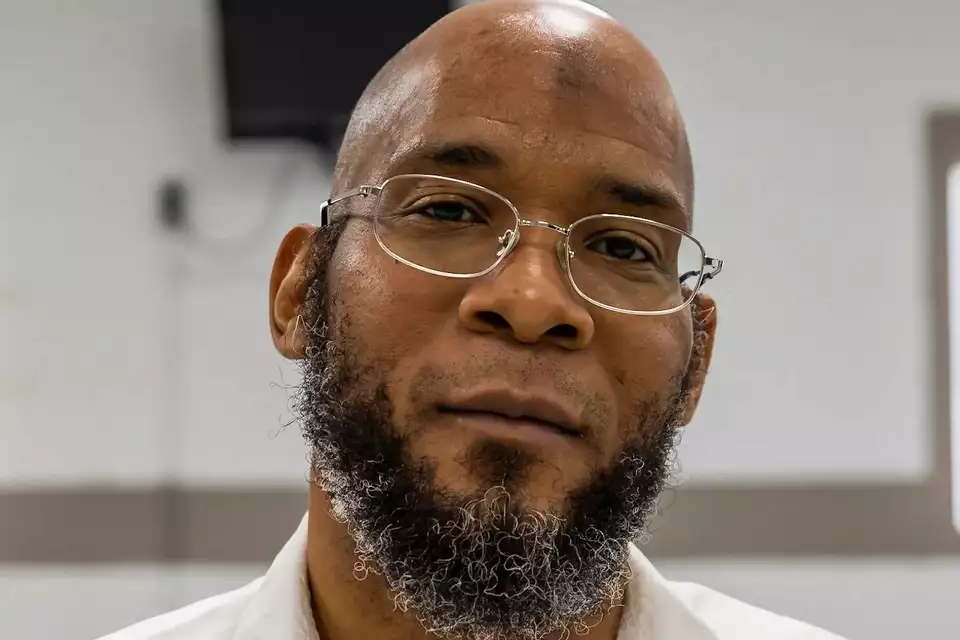
Marcellus Williams was executed by the state of Missouri on Tuesday despite objections from prosecutors and the family of the woman he was found guilty of killing.The Innocence Project
In the wake of Missouri’s execution of a Black man over the objections of both the current prosecutor’s office and the victim’s family, a California civil rights lawyer who led the state’s reparations task force says it’s time to resurrect a federal court system that was briefly installed after the Civil War to hear the cases of the formerly enslaved.
“Marcellus Williams’ case reveals how the criminal legal system continues to fail descendants of American slaves,” attorney Kamilah Moore wrote Tuesday in a now-deleted post on X, formerly Twitter. By using its constitutional authority to establish “specialized courts,” she said, “Congress could guarantee fair trials, unbiased juries, and proper evidence handling for Black Americans.”
Politically, it’s “probably a long shot,” Moore acknowledged Wednesday. But she said historical precedent, and Williams’ execution Tuesday, drove her to advocate a dramatic remedy to racism in the legal system.
Moore was the chair of the California Reparations Task Force, which worked from 2020 to 2023 on proposals to atone for California’s treatment of slaves — the state’s first governor, Peter Hardeman Burnett, was a slaveholder, and its laws required runaway slaves to be returned to their owners.
The task force’s report, released last year, included extensive proposals to make the legal system more fair to African Americans and other vulnerable populations.
The recommendations included repealing California’s death penalty and three-strikes law that greatly extended prison sentences for repeat offenders; eliminating cash bail; removing legal barriers to lawsuits against police for violating civil rights; closing 10 state prisons within five years; and ending what the report described as racially biased treatment of Black adults and juveniles in state custody. The state’s voters have approved three strikes, rejected legislation to abolish bail and defeated two initiatives to abolish the death penalty.
Williams was convicted of the 1998 murder of Felicia Gayle, a former St. Louis newspaper reporter who was white. There was no physical evidence against Williams, but two witnesses said he had admitted the fatal stabbing. The jury was made up of 11 white members and one Black member.
Williams’ claim of innocence drew support in January from the current St. Louis County prosecutor, Wesley Bell, who said in court papers that the two prosecution witnesses’ credibility was questionable and that Williams was not the source of footprints or hairs found at the crime scene, or of DNA on the knife. Members of Gayle’s family also opposed the execution.
Williams eventually agreed with Bell’s office to plead no contest to the murder, without admitting guilt, in exchange for a life sentence. But Missouri’s attorney general, Andrew Bailey, vetoed the agreement, Gov. Mike Parsons denied clemency, and the U.S. Supreme Court voted 6-3 Tuesday to allow the execution to proceed. Williams, 55, was put to death by lethal injection 90 minutes later.
Among other things, Moore said Wednesday, the case reflects the inadequacy of the current judicial system to address racial issues.
It’s among many “cases we’re seeing in southern states where legislators and Republican governors are allowing Black people, brown people, to be executed” despite serious questions about their guilt or their prosecution, she asserted.
In the Legislature, two bills that would have taken significant steps toward implementing cash payments to descendents of slaves failed last month. But Moore said eight other bills supported by the Reparations Task Force are awaiting Gov. Gavin Newsom’s signature, including one that would express the state’s formal apology for its conduct during and after the Civil War.
Another task force measure will be on California’s November ballot as Proposition 6, which would repeal a provision in the state Constitution that allows “involuntary servitude” — forced labor without pay — in state prisons and jails.
Moore said the new court she’s now proposing would be modeled on the judicial system created by the Freedmen’s Bureau, established by the federal government as part of the War Department in 1865 to assist formerly enslaved Blacks and impoverished whites after the Civil War.
In the former Confederate states, she said, any legal cases involving a formerly enslaved person were tried in the Freedmen’s Courts, with judges from the War Department.
The courts drew little support from President Andrew Johnson, who succeeded Abraham Lincoln after his assassination, and were shut down in 1868. But Moore said they provided a “brief moment in the sun” and, according to a legal study she has reviewed, could be revived today.
The Constitution’s 13th Amendment, which abolished slavery, also authorized Congress to “eradicate any lingering badges or incidents of slavery,” Moore said. She also noted that cases arising in U.S. areas populated by recognized Native American tribes are now heard in tribal courts, separate from state courts.
A modern-day Freedmen’s Court — more inclusively titled the “Free People’s Court,” Moore said — could review civil and criminal cases that have been brought by or against a descendant of the formerly enslaved. The presiding officer, she said, “would have to be a federal judge who doesn’t have any clear bias,” regardless of the judge’s race or ethnicity.
And long shot or not, she said, changes are needed in the legal system in light of strong evidence that Black people are disproportionately affected by arrests, convictions and severe sentences, including the death penalty.
What’s needed is “a coalition of attorneys to put pressure on Congress to create these courts,” Moore said. “It’s not pie in the sky.”
Reach Bob Egelko: begelko@sfchronicle.com; Twitter: @BobEgelko
Sep 25, 2024
COURTS REPORTER
Bob Egelko has been a reporter since June 1970. He spent 30 years with the Associated Press, covering news, politics and occasionally sports in Los Angeles, San Diego and Sacramento, and legal affairs in San Francisco from 1984 onward. He worked for the San Francisco Examiner for five months in 2000, then joined The Chronicle in November 2000.His beat includes state and federal courts in California, the Supreme Court and the State Bar. He has a law degree from McGeorge School of Law in Sacramento and is a member of the bar. Coverage has included the passage of Proposition 13 in 1978, the appointment of Rose Bird to the state Supreme Court and her removal by the voters, the death penalty in California and the battles over gay rights and same-sex marriage.