


- By Troy Wolverton | Examiner staff writer |
- Dec 13, 2024 Updated Dec 13, 2024 (SFExaminer.com)

An OpenAI researcher turned whistleblower who accused the company of violating copyright law when it trained the artificial-intelligence models underlying ChatGPT has reportedly died.
Suchir Balaji, 26, died by suicide Nov. 26, according to an emailed statement from David Serrano Sewell, executive director of San Franicisco’s Office of the Chief Medical Examiner.
San Francisco police and medics went to Balaji’s residence on the 100 block of Buchanan Street around 1:15 that day in response to a request for a wellness check, Officer Robert Rueca, a spokesman for the department, said in a separate email. Balaji was dead at the scene, Rueca said.
The Mercury News, which first reported Balaji’s death, said he was the OpenAI whistleblower of the same name.
“We are devastated to learn of this incredibly sad news today and our hearts go out to Suchir’s loved ones during this difficult time,” OpenAI Chief Communications Officer Hannah Wong said in a statement.
Balaji worked at OpenAI from November 2020 until this past August, according to his LinkedIn page and an October report in The New York Times. His job was to help the company gather data for GPT-4, the large-language model that now powers ChatGPT, according to The Times. In the process, OpenAI reportedly collected much of the publicly accessible data on the internet.
Although Balaji said he initially saw his work as a simple research project and within the scope of fair use, he changed his mind after the company released ChatGPT to the public and began making money off it, The Times reported. He began to see OpenAI as competing with the companies whose data it had collected to train GPT, such as news organizations, according to The Times’ report. Balaji also came to view ChatGPT as something that was undermining the internet, because it threatened to replace reliable information sources, offering false inaccurate information instead due to the propensity of AI models like it to make things up whole cloth, according to the Times.
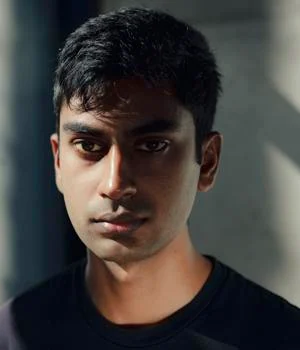
Suchir Balaji, a former OpenAi employee, in San Francisco, on Oct. 3, 2024. By Ulysses Ortega © 2024 The New York Times Company
In the wake of The Times report in October, Balaji was expected to be a witness in the lawsuit The Times and other news organizations filed against OpenAI and Microsoft, its backer, accusing the San Francisco startup of infringing on their copyrights.
Balaji published a series of posts on X in late October pointing to the article about him in The Times. He denied at the time that the news outlet had reached out to him or that his participation in the article had anything to do with the lawsuit.
“I reached out to them because I thought I had an interesting perspective, as someone who’s been working on these systems since before the current generative AI bubble,” Balaji said in a tweet. “None of this is related to their lawsuit with OpenAI – I just think they’re a good newspaper.”
The lead attorneys representing The Times and other news organizations in that case did not immediately respond to a request for comment about Balaji’s death.
Balaji grew up in Cupertino, according to The Times. He graduated from UC Berkeley in 2021 with a Bachelor’s degree in computer science, according to his LinkedIn page. His mother declined to talk with the Mercury News about his death.