by KELLY WALDRON FEBRUARY 28, 2025 (MissionLocal.org)

Read Mission Local often?
Help grow our newsroom, joining the hundreds of San Franciscans who support us by giving below.
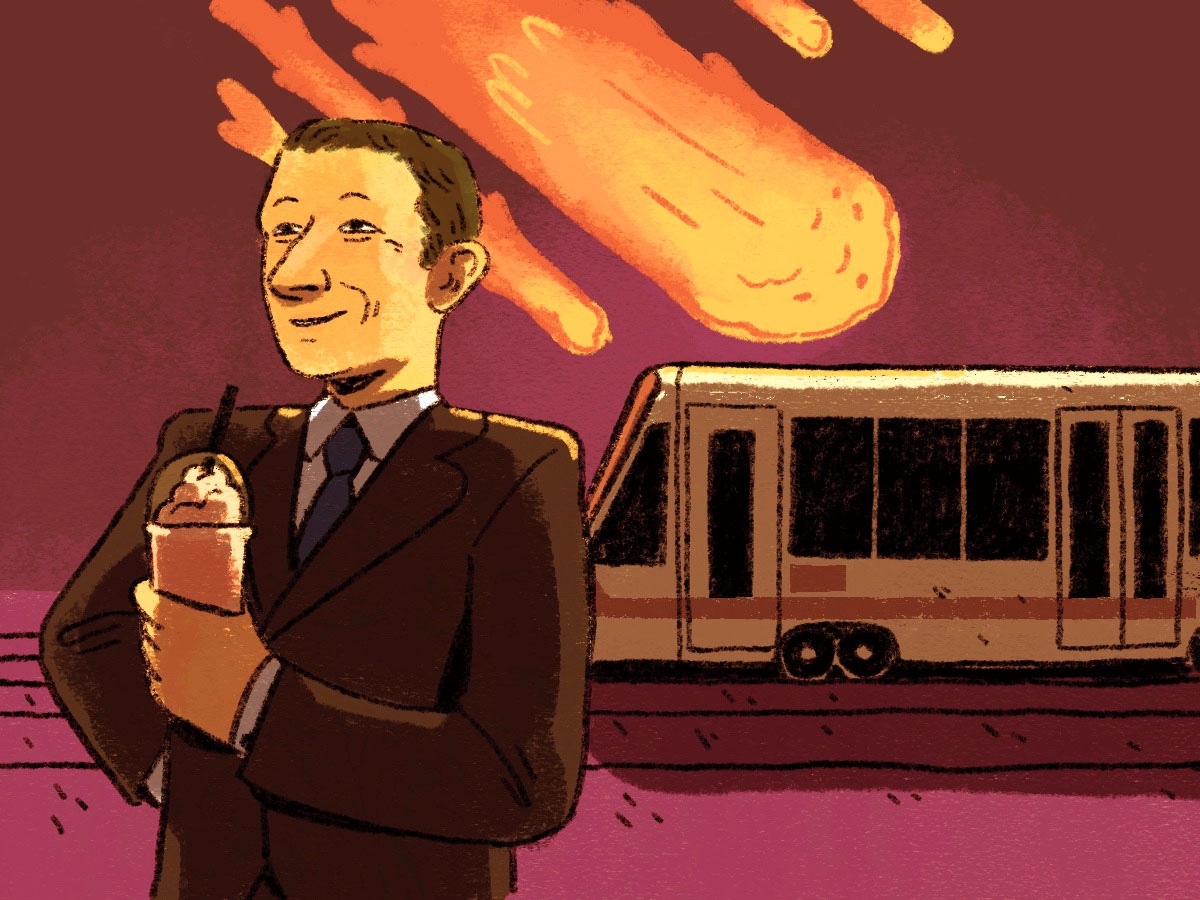
In his first seven weeks in City Hall, San Francisco Mayor Daniel Lurie has made downtown recovery a priority.
He pushed the Board of Supervisors to relinquish some of its oversight power for city contracts related to homelessness, drug overdoses and substance use, a law that was swiftly enacted. At his request, the San Francisco Police Department spun up a “triage center” on Sixth Street to deal with the notorious drug market nearby, and launched a “Hospitality Zone Task Force” to increase police presence around downtown tourist hotspots like Union Square, Moscone Center and Yerba Buena Gardens.
Lurie eliminated affordable housing fees for office-to-housing conversions downtown, pushed for a state law to authorize 20 new liquor licenses downtown, and urged businesses to “come back and invest” in San Francisco at the Chamber of Commerce this week.
But a key piece of downtown recovery is missing from his policy announcements and speechmaking: Transit. How can Lurie ensure the survival of downtown if the buses and trams that shuttle people who will reinvigorate the city’s urban core — the shoppers, bon vivants, and hospitality workers who cater to them — need a lifeline?

Want the latest on the Mission and San Francisco? Sign up for our free daily newsletter below.Sign up
“I don’t believe that there has been a Muni funding ‘State of Emergency’ ordinance,” said Todd David, the political director of the YIMBY group Abundance Network, referencing Lurie’s name for his fentanyl measures. “I am a little bit shocked that the Muni and BART fiscal cliff has not received the political attention that it absolutely deserves.”
Muni is facing a $50 million shortfall for the upcoming budget cycle, and, beyond that, a ballooning deficit that is expected to hover between $239 million and $322 million by fiscal 2026-27. The agency is considering service cuts to some 20 lines this summer that would trim that shortfall by $15 million.
“Downtown success — public transit is intrinsic to it,” said Tom Radulovich, a transit advocate and former longtime elected BART commissioner. “And there’s never been a greater threat to it.”
When Supervisor Myrna Melgar asked about Muni’s looming service cuts during a Lurie appearance before the Board of Supervisors on Feb. 11, the mayor did not unfurl a plan of action.
“No one wants to see Muni service cuts,” said Lurie. But, he added, “The reality is: This is what Muni may need to do to solve the wider budget crisis they are facing.”

Lurie’s team, for its part, also seem resigned to cutting Muni’s service.
“The process the MTA is going through is necessary. We have to evaluate among what are really tough choices,” said Alicia John-Baptiste, Lurie’s chief of infrastructure, climate and mobility, who added that service cuts are likely, especially before the agency’s financial outlook worsens next year. “I don’t think we will regret having reduced our costs in advance.”
The mayor could allocate money from the city’s general fund to support transit, but a spokesperson for Lurie did not respond when asked whether he would do so. John-Baptiste emphasized that the city’s budget at large is also facing major cuts. “The general fund itself is facing really significant shortfalls. We are committed to putting our dollars where they matter most.”
But accepting cuts to Muni would endanger Lurie’s other downtown recovery priorities. Vibrant streets, more housing and thriving businesses are all dependent on more people going downtown, during and outside of working hours. Cutting transit would also affect those who don’t ride it: Fewer trains and buses would mean more cars on the road and more congestion.
“Downtown San Francisco’s competitive advantage, relative to other places where people might shop or live, is its public transit,” said Radulovich. “The private car mode shift is not viable for downtown, unless they want fewer people to come downtown.”
Currently, Muni is looking at three different service-cut scenarios, said Chris Arvin, a transit advocate who is part of the SFMTA’s Muni funding working group:
- The first scenario would end Muni metro service — Muni’s light rail lines — at 10 p.m, reduce frequencies on nine bus lines, and eliminate several others, including the 6-Haight and 31-Balboa that go downtown.
- The second would reduce the frequency of buses along 13 lines, including some of the busiest lines, like the 38-Geary. That would lead to more crowding along those routes.
- The third scenario would both eliminate select lines (including downtown feeders: 2-Sutter and 21-Hayes) and reduce the frequency of 11 others.
All three of them, Arvin said, would threaten downtown recovery.
https://missionlocal.github.io/2025-graphics/service-cuts-map/?initialWidth=749&childId=map&parentTitle=Lurie%20has%2099%20fixes%20for%20S.F.%E2%80%99s%20downtown.%20But%20a%20fix%20for%20transit%20ain%E2%80%99t%20one.%C2%A0&parentUrl=https%3A%2F%2Fmissionlocal.org%2F2025%2F02%2Fmayor-lurie-has-99-fixes-for-san-franciscos-downtown-but-a-fix-for-transit-aint-one%2F%3Futm_medium%3Demail%26utm_source%3DMission%2BLocal%26utm_campaign%3Dda2814452f-EMAIL_CAMPAIGN_2025_02_28_05_57%26utm_term%3D0_-da2814452f-220975212
When service cuts like this happen, added Erik Mebust, a spokesperson for Sen. Scott Wiener, it can trigger a so-called “transit death spiral:” Service gets worse, fewer people ride transit, and Muni loses money, forcing more cuts that worsen service further and trigger even more people to leave. “Transit systems can completely fail when they do that.”

Part of the frustration for transit supporters is how urgent these issues are. Currently, ridership is improving for both BART and Muni, and is higher than pre-pandemic levels on several lines. “People just expect it to continue to exist,” said Edward Wright, the BART commissioner for areas covering the Mission, Civic Center and the Embarcadero, “and that the funding will take care of itself.”
“Nobody is against it [public transit], but nobody is putting a lot of energy into solving it,” added Radulovich. “Nobody seems to be willing to expend political capital. No politician wants to say, ‘Hey, public transit’s important, we all value it, but we need to pay for it.’”
The transit fiscal cliff
If it doesn’t cut lines, Muni is considering other ways to save $15 million this summer, like cutting back on maintenance and tow-subsidy programs, or spending some of the agency’s $141 million reserves. (It is recommended to keep 10 percent of its total budget in reserves.)
The agency has ruled out extending parking meter hours in the evenings and on Sundays to generate more revenue, due to strong community opposition. (Golden Gate Park may see its free parking go away, but that is a decision from the Recreation and Parks Department to address the city’s general fund deficit.)

The short-term cash crunch is one problem, but so are the long-term funding issues: The deficit will rise to a projected $322 million in 2026-2027, in large part because that is when state and federal pandemic relief funds will run out.
BART, too, is facing a deficit for the next fiscal year: $35 million. If it, too, has to cut service, that could sever movement between downtown and other cities in the Bay Area, and make bridge traffic even more unbearable. Addressing that budget shortfall would likely require city support of both local and regional ballot measures to keep BART and other cross-city transit afloat.
Some work is afoot to secure more Muni and BART funding in the longer term. Wiener and East Bay Sen. Jesse Arreguín are leading efforts to secure $2 billion in transit funding from the state budget this year, which Lurie has been lobbying for in Sacramento. Supervisor Melgar has introduced a resolution that would prioritize using revenue from any SFMTA-owned land to stabilize SFMTA finances.
Because the SFMTA is a public agency, it’s tempting to try and secure Muni property for civic goods, Melgar told the San Francisco Chronicle. “Every community is going to want something out of the MTA: Open space, childcare, affordable housing, whatever.” But, Melgar added, those things aren’t the agency’s primary responsibility. “The primary responsibility is to be a financially sound agency that transports people around.”
The important thing, added Wright of the BART board, is to understand the way that good transit underpins every big civic vision. Whatever it is that residents are concerned about, whether it’s safety, or the economy, or clean air, said Wright. “Any of those problems will be made worse if transit gets worse. Any of those problems will be made better if transit gets better.”
Correction: An earlier version of this article stated Muni’s 2025-2026 budget shortfall as $15 million. It is $50 million.
LATEST NEWS

Crème brûlée memories: The community that Curtis Kimball built

Mayor Lurie picks anti-violence activist Mattie Scott for police commission. Some advocates ‘shocked.’
Review: El Catrachito, offering Honduran comfort food in the Mission
Support the Mission Local team

We’re a small, independent, nonprofit newsroom that works hard to bring you news you can’t get elsewhere.
KELLY WALDRON
Kelly is Irish and French and grew up in Dublin and Luxembourg. She studied Geography at McGill University and worked at a remote sensing company in Montreal, making maps and analyzing methane data, before turning to journalism. She recently graduated from the Data Journalism program at Columbia Journalism School.More by Kelly Waldron