


All nine counties of the Bay Area had robust streetcar systems at the start of the 20th century. In the East Bay, rumors swirl about how and why the Key System failed.
by Dan Brekke | KQED Feb. 23, 2026 (Berkeleyside.org)

At the turn of the 20th century, streetcars crisscrossed the Bay Area.
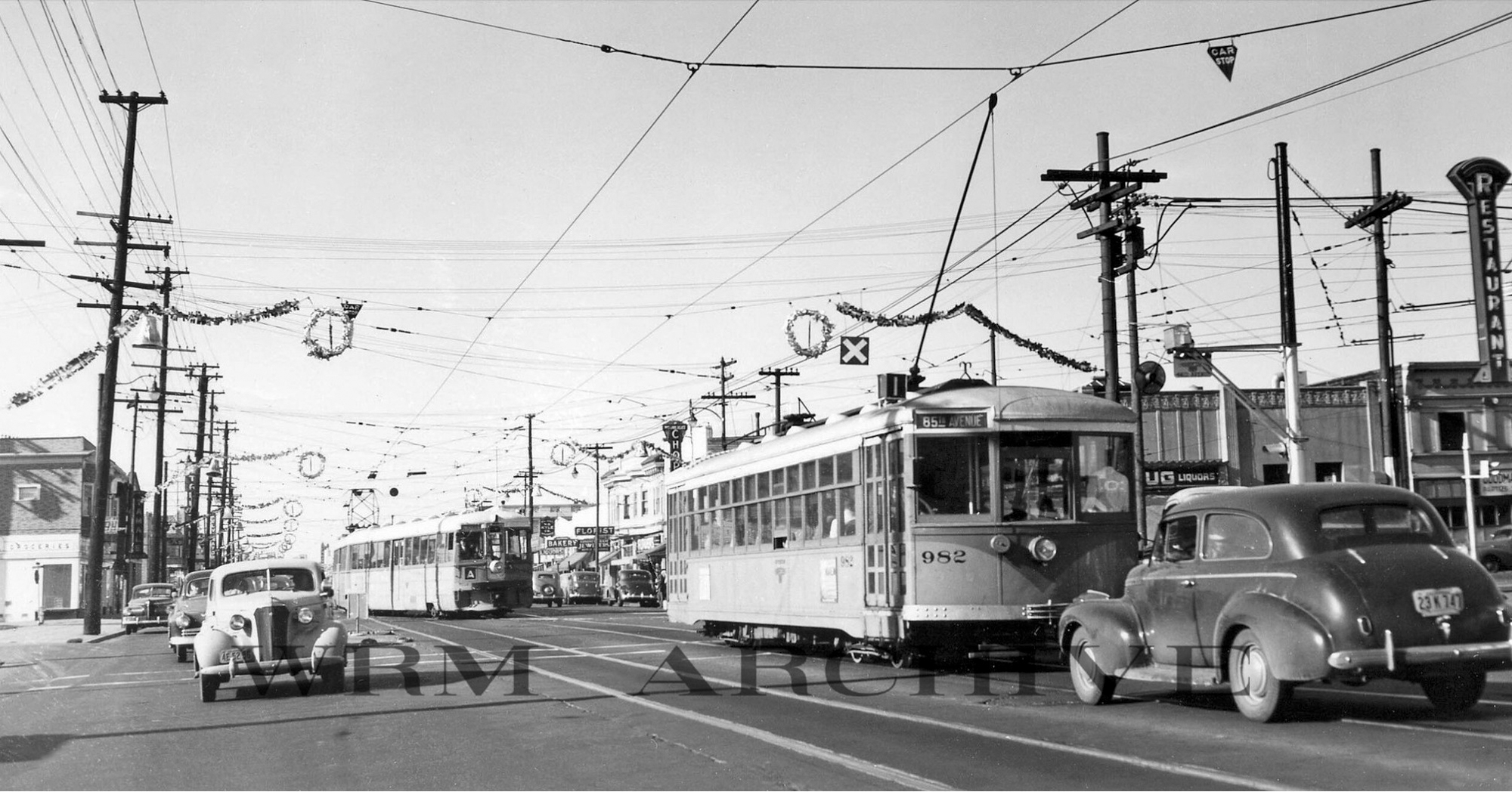
For many people, they were the primary way to get around town — and to San Francisco for work. People would walk out their doors in Berkeley, Alameda, Oakland, hop on a streetcar that would take them to a ferry and be in downtown San Francisco in about 40 minutes. Remnants of these lines can be seen in many Bay Area streetscapes.
But what happened to the streetcars?
The history and disappearance of the Key System, which once served East Bay residents, has captured the imagination of many transit aficionados.
It’s a story that touches on a disputed piece of both East Bay and national transportation history, a conspiracy theory that involves some of the nation’s most powerful corporations and the role they played — or didn’t play — in the disappearance of streetcars in the East Bay. The story also encompasses a real-estate development scheme that shaped Berkeley and Oakland, the rise of suburban sprawl, and the dawn of the motor vehicle age.
Streetcars fundamentally shaped urban development

Streetcars were essential to the growth of cities in the Bay Area and across the United States in the final years of the 19th century and the opening years of the 20th. Electric railroads — either streetcar networks connecting neighborhoods or interurban lines connecting towns and cities — served all nine Bay Area counties in the early 20th century.
The place where that electric streetcar legacy is most obvious is San Francisco, where several electric lines that operated in the 1920s — Muni’s J, K, L, M and N routes — are still essential parts of the city’s transportation system. Two other lines, the E and the F, feature tourist-oriented service using historic streetcars.
For the first four decades of the 20th century, the East Bay was served by two major electric streetcar systems: one run by Southern Pacific and a competitor known popularly as the Key System. Southern Pacific’s system, initially called the Oakland, Alameda and Berkeley Lines, ran transbay service using ferries that left from long causeways, or moles, in West Oakland and Alameda.
The Key System was a collection of East Bay streetcar and transbay lines built or purchased and consolidated by Francis Marion Smith, known as “Borax” Smith because of his success mining and marketing the all-purpose mineral in the deserts of Nevada and southeastern California. Starting in the 1890s, Smith created a network of lines that eventually stretched from Richmond to San Leandro.
But creating a transit system wasn’t Smith’s main objective. He and partner Frank Havens had purchased about 13,000 acres, more than 20 square miles, under the aegis of a separate enterprise known as The Realty Syndicate. The streetcar and transbay train system Smith created was designed to serve the new neighborhoods that would be developed on the syndicate’s properties.
Oakland historian Mitchell Schwarzer said the streetcar network fundamentally changed the shape of the city. In his 2021 study of Oakland’s development, “Hella Town,” he said that by 1912, property subdividers had created more than 50,000 new residential lots close to streetcar routes.
The effect on what had been a compact East Bay community focused on downtown was dramatic, with streetcar lines triggering a sprawl of new neighborhoods in every direction and the creation of commercial districts like Grand Lake, Rockridge, Piedmont Avenue and along stretches of San Pablo Avenue and East 14th Street, now International Boulevard.

The streetcar “affected everything — it affected where the residential areas developed, it affected where the commercial areas developed, it affected where industry moved pretty much,” Schwarzer said. Alongside the automobile, streetcars shaped the form Oakland took to this day, “both where things are located, how they’re distributed, how they’re built, what’s built, where they’re built,” Schwarzer said.
He adds that this early episode of sprawl also helped shape Oakland’s future demographic and class profile. The city’s vast residential expansion “allowed for the wealthier people to live on larger lots and to live separately and to erect barriers to minorities moving into their communities. Without the streetcar, they couldn’t have done that.”
Financial failures
Although the Key System and other streetcar operations were useful in driving real estate development and despite the fact that they carried more than 100 million passengers a year at their peak in the 1920s, they were, for the most part, failures as money-making enterprises.
The Key System was in deep financial trouble by 1913. According to the late transportation reporter and historian Harre W. Demoro, the Key’s early money troubles could be traced directly to Borax Smith’s risky and chaotic business practices. With the company deeply in debt, Smith was forced out in 1913. A series of crises ensued, with the company teetering on the edge of failure and being foreclosed on and reorganized in 1923 and 1930.
By this time, private automobiles had become a major presence in cities across the country, including those in the Bay Area. The growing popularity of car ownership is reflected in a steep decline in ridership for both the Southern Pacific and Key System after a peak recorded in the mid-1920s.
Drivers weren’t the only ones who were drawn to new motorized modes of transport. Starting before 1920, transit systems began to convert some of their train service to bus lines. By the mid-1920s, the Key System had joined in that trend, which accelerated through the U.S. entry into World War II in 1941.
Demoro found in a 1979 study of the Key System published in the National Railway Bulletin that by 1937, its buses accounted for more than half of the company’s business in terms of miles of service delivered. “From then on, the bus dominated” Key’s operation, Demoro wrote in his two-volume history of the transbay service.

The decline accelerated after the Bay Bridge opened to drivers in November 1936. The planned railroad service on the bridge wasn’t ready when the bridge opened, creating an opportunity for East Bay residents to enjoy the ease of car travel. When train service on the bridge’s lower deck finally began in January 1939, it did little to reverse the ridership slump.
And it’s right here that the conspiracy theory mentioned earlier becomes part of the Key System story. Because as the car was becoming king, companies related to the automobile industry bought up dozens of streetcar lines and replaced them with buses. That effort was intended, the story goes, to undermine mass transit to such an extent that riders would desert it in preference for automobiles.
A kernel of truth to the myth
General Motors, Standard Oil of California (now known as Chevron), Firestone Rubber and Phillips Petroleum really did invest in a company called National City Lines and a pair of subsidiaries that were in the business of buying mostly financially troubled streetcar systems and immediately converting them to bus systems. That happened in 46 cities across the country, including a few big ones, like Los Angeles, St. Louis, and yes, Oakland.

The government really did take National City Lines, GM, its partners and their executives to court. In 1949, a jury in Chicago really did convict them of one count of violating federal antitrust law by conspiring to monopolize the sale of buses, fuel, tires and other supplies to the transit systems that National City Lines and its subsidiaries had taken over. The companies were acquitted on a second count alleging they had conspired to block competitors from doing business with the National City companies. In other words, the defendants were found guilty of trying to control the purchase of supplies that newly “motorized” transit agencies would need, not of any broader conspiracy to wreck mass transit.
The penalties the judge imposed were trivial: $5,000 for each corporate defendant — about $68,000 in 2026 dollars — and $1 for each of the executives who had played a part in the conspiracy.
But the story is more complex than the National City Lines case, said Ethan Elkind, who directs the climate program at UC Berkeley Law’s Center for Law, Energy and the Environment. “It’s really a story of technology change.”

The electric streetcar systems that started appearing everywhere in the 1890s were a big leap in speed and performance compared to the horse-drawn omnibuses and cable cars they replaced. But then the next big innovation in transportation arrived.
“In the early 20th century, the big, disruptive technology was the automobile, and people adopted it en masse very rapidly, and it made these streetcars for a vast majority of the population essentially obsolete,” Elkind said. Cars not only competed for riders, they also competed for space on the streets.
“When you throw the automobile into that, and everybody’s driving now, these streetcars are getting stuck in traffic,” Elkind said. “They’re not really enjoyable for people to ride. And people are frustrated by the poor service, high fares, and they wanted the freedom and mobility that automobiles, private automobiles, represented.”
The argument that GM’s National Cities gambit was chiefly responsible for the collapse of electric railways across the county has been widely criticized as little more than a myth, one that ignores other factors that made many streetcar systems vulnerable by the 1930s, including their often poor physical and financial condition and the fact that, as shown by the Key System, bus transportation was becoming steadily more popular and economical well before National City Lines appeared on the scene.
The Key System’s slow demise
After struggling through most of the 1930s, a surge in wartime ridership had made the company profitable and by 1945, it was sitting on a sizable surplus. Although it had struggled to upgrade its cars and tracks before the war, it had begun making plans to revamp service.
The company began to follow through on all of these initiatives, contracting for new streetcars and moving ahead with the purchase of trolley buses to run on College Avenue and on the Arlington Avenue-Euclid Avenue service in the Berkeley Hills.

Then suddenly, all that work stopped. In May 1946, Key System management sold the company to National City Lines for $3 million ($52 million in 2026 dollars). By the end of the year, the company’s new owners decided to scrap all the remaining streetcar lines and replace trains with motor buses. The only trains the Key System still operated were the half-dozen transbay lines operating across the Bay Bridge.
In 1955, the company applied to the state Public Utilities Commission to abandon transbay service. The last trains ran over the bridge to San Francisco’s Transbay Terminal in April 1958. The Key System, now an all-bus operation, was purchased by a new public transit agency — AC Transit — in 1960.
The evolution of the Bay Area’s transit system
Looking back on those events in 1979, Demoro speculated that without the National City Lines takeover, the East Bay’s transit system would likely have evolved into a hybrid featuring streetcars, trolley buses along with motor buses. Whether the transbay service would have survived was less clear, he said, because of the state’s interest in reconfiguring the bridge to accommodate more motor vehicles — a goal realized when the Key System tracks were removed.
But he also marveled that the region managed to build BART, an agency created in the 1950s as the Key System trains were in their twilight years and both California and the rest of the United States went all in on highway spending. “That accomplishment … seems astounding today, he wrote.

But in one sense, the Key System hasn’t gone away. When AC Transit took control of the Key’s bankrupt all-bus operation in 1960, it continued an East Bay transit legacy that stretched back nearly a century. AC Transit continues to be a vital transportation link for hundreds of thousands of East Bay residents, much the way the Key System was in its peak years. And for those who travel between the East Bay and San Francisco, BART now serves the riders the way the Key System’s trains and ferries once did, although maybe a lot less romantically.
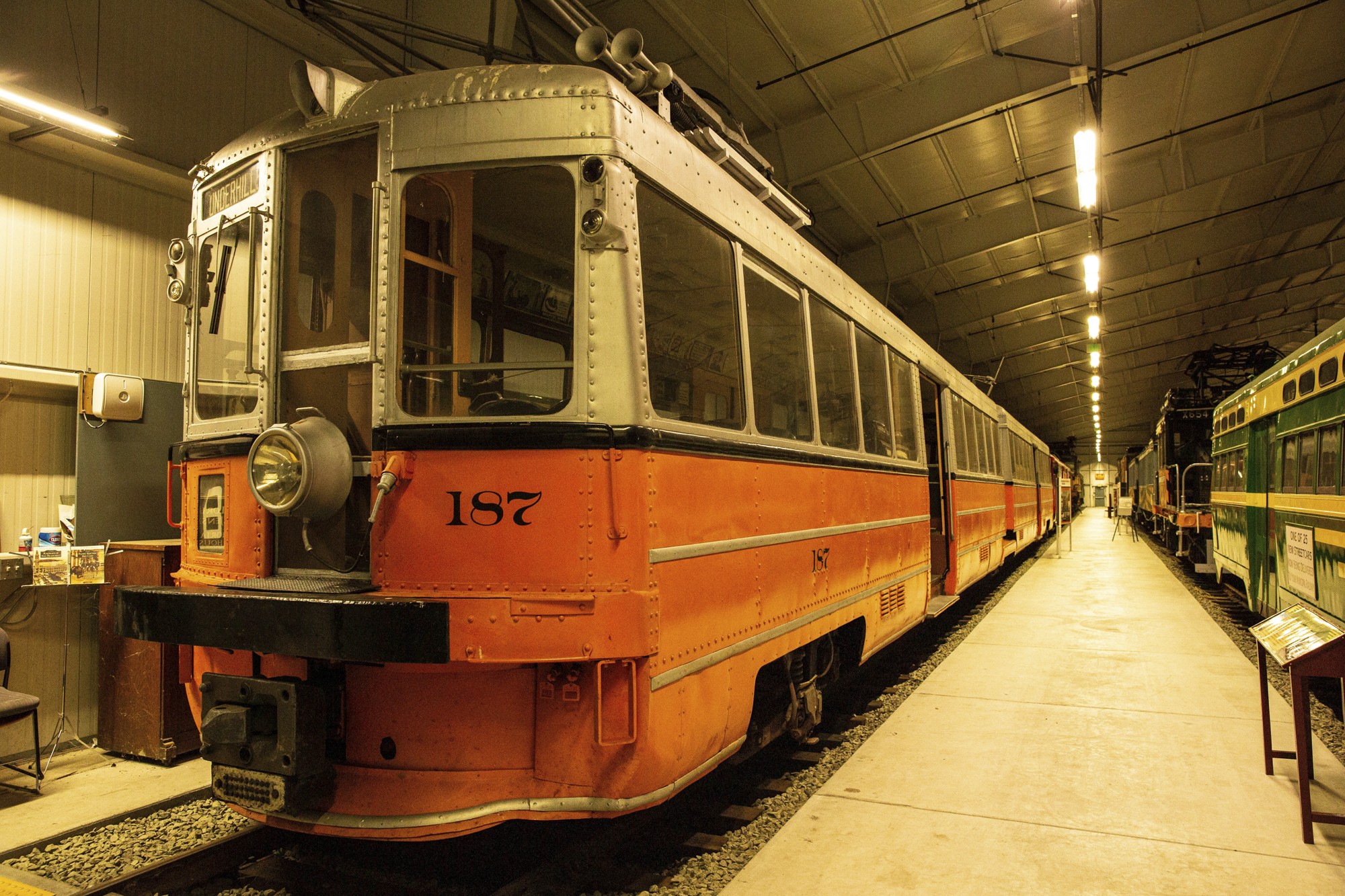
It’s still possible to ride some of the few surviving Key System trains at Solano County’s Western Railway Museum, on Highway 12 between Fairfield and Rio Vista. Muni offers a daily vintage streetcar experience on its F trolley car line, running along Market Street between the Castro and Steuart Street downtown.
Berkeleyside is a media partner of KQED, a listener-supported public radio station serving Northern California. Berkeleyside occasionally republishes KQED stories we believe will be of interest to our readers.


_(14761661915).jpg)