


- By Troy Wolverton | Examiner staff writer
- Mar 22, 2026 (SFExaminer.com)
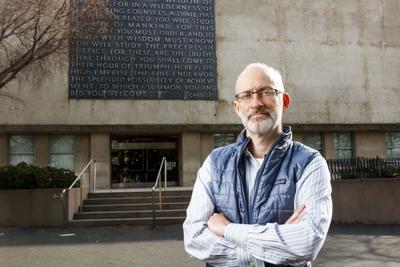
Although Brian Galle is one of the co-authors of California’s proposed billionaire tax, he said he doesn’t think it’s the be-all-and-end-all for getting the ultrawealthy to pay what he sees as their fair share.
Instead, the tax-law expert and law professor at UC Berkeley thinks there needs to be a more fundamental, permanent and national change to the way the country assesses the richest among us.
Earlier this year, the left-leaning Roosevelt Institute published online “How to Tax the Ultrarich,” Galle’s book-length proposal for how to do that. Revolving around what he calls FAST — short for the Fair Share Tax — his plan would significantly revise how the federal government taxes investments, a crucial part of assessing billionaires and centimillionaires.
Galle’s proposal is designed to make the tax system fairer by upping the often minuscule effective tax rate the ultraweatlhy pay. In doing so, it could limit the growth of wealth inequality while raising hundreds of billions and potentially trillions of dollars, he argues.
“It’s just fair for [the richest Americans] to pay the same share of their economic income as the rest of us,” he said in an interview with The Examiner. “Right now, they mostly escape from that obligation.”
Galle’s proposal comes as wealth and income inequality globally, within the Bay Area, in California, in the U.S. and in many other parts of the world have grown markedly in recent years and decades. That increasing concentration of wealth — and the power and influence it often brings — has led to growing calls, even from among some of the wealthy themselves, to increase taxes on those at the top of the scale.

For his part, Galle has been working on proposals to tax billionaires and the richest Americans for years. In addition to his work on the California billionaires tax, his new book builds on his previous academic work in the field as well as prior policy plans he’s contributed to, including former President Joe Biden’s Billionaires’ Minimum Income Tax proposal, which ultimately died in Congress.
What Galle’s new proposal and related other ones attempt to rectify is the fact that the ultrawealthy tend to pay exceedingly low tax rates even as their wealth balloons.
The federal income tax is an imposition on wages and salaries, but many of the richest people in the country report relatively modest income from such sources. That’s because for people in that class, most of the growth in their wealth generally comes not from high salaries but from the appreciation of the assets they hold, such as stocks, bonds and real estate.
The government does tax income from investments through the capital-gains tax, but the rate is significantly lower than the top income-tax rate. People only have to pay the capital-gains tax when they sell assets and make gains on them. And they can wipe out other gains or income — and any corresponding tax liabilities — if they sell assets at a loss.
Instead of taking a salary or selling assets, many of the ultrarich fund their regular activities and lifestyles by borrowing against their assets. Even though the cash from such loans is used like regular income, the loans aren’t subject to income taxes.
The proposed billionaire tax would get around all of that by assessing a direct tax on the wealth — other than personal property — held by California residents who have more than $1 billion in assets. Such people would be required to pay a 5% one-time imposition on their assets.
Politicians such as U.S. Senators Bernie Sanders of Vermont and Elizabeth Warren of Massachusetts have proposed similar wealth taxes that would be imposed nationwide. Other politicians have proposed what are called mark-to-market taxes, in which people would pay a tax on the amount by which their wealth increased — or earn credit based on how much it decreased — each year. Additionally some politicians have proposed treating borrowing used to fund personal consumption as essentially income and taxing it as such.
The problem with wealth and mark-to-market taxes is that the Supreme Court in a 2024 ruling indicated it could rule both kinds of taxes unconstitutional, Galle and other legal scholars believe.
The 16th Amendment to the Constitution legalized income taxes, but the Court suggested in Moore et ux. v. United States, that it wouldn’t sign off on allowing unsold assets to be considered income. Taxing borrowing as income could face similar constitutional problems, Galle argues.
Because of the Court’s ruling, if you want to have a tax that acts like a wealth or mark-to-market imposition, “you need to have an alternative structure,” said David Gamage, a law professor at the University of Missouri who focuses on tax law and is one of Galle’s frequent collaborators.
Galle designed FAST to be just such an alternative. Unlike a straight wealth or mark-to-market tax, it would be enforced only after people sold their assets, so it would get around the obstacle the Supreme Court hinted at in the Moore case. But people’s tax liabilities would increase in tandem with the returns on their investments, mimicking a wealth or mark-to-market tax. To ensure that the tax only hit the wealthiest Americans, it would exempt the first $15 million of assets.
So, assuming a base 23.8% rate on long-term investment gains — the rate applicable to those in the highest income bracket — those whose assets had doubled in value would pay a tax equivalent to 15% of the total value of their assets. Those whose assets had increased in value by 10 times would pay a tax equivalent to 42% of their assets’ total value. And those who had seen a return of 100 times would owe a tax equal to 67% of their assets.
Under Galle’s proposal, people choose to pay early, before they sell their assets, and even as often as every year. Those that do so would have incentive to do so — they would effectively pay lower rates on their unrealized gains. That option to pay early would allow the tax to function in practice — at least in part — similar to an annual wealth or mark-to-market tax, bringing in regular revenue, rather than only at the time of sale.
FAST would get around borrowing by focusing on people’s assets. People would have no incentive to sell assets early for a loss to decrease their reported incomes, because the FAST liability applies to all of their assets.
Reuven Avi-Yonah, a law professor at the University of Michigan who also focuses on tax policy, said he was impressed with the proposal.
Given the Supreme Court’s ruling, “this is the most practically feasible proposal that’s out there,” he said.
Galle said reforming the federal tax code is important in part to address growing inequality and the political and economic instability that comes with it.
Ex // Top Stories

Proposed changes to SF commissions draw public outrage
Speakers warn that quest for government efficiency could come at the high cost of lost community input, oversight

Pied Piper maintains its history and a locally-famous loyal customer
San Francisco journalist Carl Nolte joined this week’s Sips in The City at one of his favorite bars, Pied Piper in the Palace Hotel.

End of March in The City heats up with these 18 SF events
The last week of the month brings exhibition baseball, a chocolate festival and a craft fair with more than 250 vendors to San Francisco
Billionaires make up a substantial portion of the top levels of President Donald Trump’s administration, he noted. Some 19% of all federal campaign contributions in 2024 came from just 300 billionaires or their family members, the New York Times reported earlier this month.
Elon Musk alone reportedly spent more than $290 million in that campaign cycle, mostly to support Trump’s reelection campaign. Trump subsequently named Musk to head the so-called Department of Government Efficiency, which slashed thousands of government jobs and effectively shuttered entire departments.

“That looks like disproportionate power,” Galle said.
But he said reform is also necessary to address the fundamental unfairness that results in the ultrawealthy often having effective tax rates that are a fraction of what even middle- or working-class people pay.
Between 2014 and 2018, then-Berkshire Hathaway CEO Warren Buffet saw his wealth increase by $24 billion — but he only paid $23.7 million in taxes, an effective rate of about 0.1%, according to the investigative-journalism website ProPublica. Former Amazon CEO Jeff Bezos’ wealth jumped by $99 billion over the same time frame. He paid $973 million in taxes, or about 1% of that increase, ProPublica reported.
And in numerous cases, the ultrawealthy paid no income taxes at all in particular years. Bezos, for example, didn’t pay any federal income tax in 2007 or 2011, according to ProPublica.
From 2006 to 2018, Bezos’ wealth grew by $127.8 billion, but he only paid $1.4 billion in taxes, ProPublica reported. By contrast, the report said, the typical American household paid $142,000 in taxes over that same period while seeing its wealth only go up by $89,000, thanks largely to the hits home values took from the Great Recession.
Because the tax rates paid by the ultrarich on their wealth accumulation are so much lower than those paid by everyone else, the tax system is “helping them to become richer faster,” Galle said.
In theory, estate and gift taxes should level the playing field, allowing the federal government to take a sizable chunk of that accumulated wealth at the time billionaires or centimillionaires die, and limiting the creation of multigenerational dynasties.
But that’s not actually what happens in practice, tax experts say. Instead, when someone dies, the cost basis for the investments they hold is “stepped up” to the fair market value at the time of their death. That allows the gains from those investments up to that point to permanently avoid being taxed.
Meanwhile, the affluent have found legal ways, including using trusts, to pass on much of their wealth to their heirs tax-free. In a previous report, Galle and some fellow researchers estimated that the wealthy have stocked away in trusts more than $5 trillion in assets that would otherwise be subject to tax but now won’t ever be.
Part of Galle’s proposal is to eliminate that step-up provision at death and to have the FAST liability carry over to inheritors. He also would impose a 40% inheritance tax on everything not covered by FAST. But that liability would work much like FAST, being enforced only when people sell their assets, but increasing in tandem with the rise in the assets value.
Gamage said that he generally likes Galle’s plan, but its increase in liability as assets rise in value over time could give the wealthiest Americans an incentive to game the system. Without provisions forcing them to pay taxes on their gains early, they could try to hold out until they can persuade politicians to change or eliminate the tax or give them some kind of tax holiday. Congress has done similar things numerous times in the past, he noted.
“I would put more pressure than he does on taxing what you can in the interim,” Gamage said.
Avi-Yonah said the problem with Galle’s proposal is that it wouldn’t do much to address rising inequality. For him, a better method would be to bolster entitlement programs. The expansion of the Child Tax Credit in 2021 dramatically reduced poverty levels, he noted, bringing child poverty down to its lowest recorded level ever.
Avi-Yonah said he advocates not for a FAST or wealth tax but a consumption tax, similar to those seen in Europe, as a way to fund such efforts, because they could easily bring in vastly more revenue.
“The key” to addressing inequality “is less taxing the rich and more raising the bottom and the middle class,” he said. “But both are necessary.”
Any effort to reform the tax system is likely to nowhere as long as Trump is in the White House and Republicans control the Congress, Galle said.
In his two terms in office, Trump has pushed through two major rounds of tax cuts favoring the wealthy, including last year’s One Big Beautiful Bill. And Republicans have made cutting taxes central to their brand, even at the expense of ever-widening deficits, not to mention income and wealth inequality.
Galle said he started working on his proposal before the 2024 election that brought unified Republican control to Washington, but he was thinking of abandoning the effort in the wake of that outcome.
But that November, he said, he ended up sharing a cab ride with a Treasury Department official he declined to name who worked under Joe Biden. When Galle expressed his doubts, the official advised him to go forward anyway.
“It takes a long time to write good tax legislation,” he said she told him. “You should get started on it.”