April 4, 2023 (SFChronicle.com)
In the latest in a series of policies aimed at encouraging San Francisco commercial property owners to convert vacant office buildings to housing, Supervisor Matt Dorsey on Tuesday will introduce a bill that would exempt such conversions from a slew of fees.
The legislation would mean that office-to-residential converters would be exempt from paying fees on bicycle parking, child care, transit sustainability and public art. Taken together, the fees represent well under 10% of project costs “but could be the difference between feasible and not feasible,” Dorsey said.
“This is a small step, but it’s part of an accumulation of small steps our city will be taking over the next few years,” he said. “I am committed to removing constraints and barriers that make building housing more difficult.”
Dorsey’s district, which encompasses the office-heavy districts of the South of Market and south Financial District, has been among the hardest hit by the work-from-home sea change brought on by the pandemic. Retailers and restaurants have been forced to shutter as office workers have shunned the workplace. A recent Stanford University study concluded that the average downtown office worker spent $168 per week near their workplaces prior to the pandemic and that the shift to working from home has represented a $1.2 billion annual blow to the downtown economy.
More for you
- How a 1,000-unit ‘academic village’ could transform S.F.’s Tenderloin
- Castro Theatre renovation opponents launch ‘Castro in Exile’ series
Beefing up the residential population downtown would make the streets more lively, safer and increase the dollars flowing into the cash registers of small businesses, Dorsey said.
Having a larger residential population would insulate “the corner stores and restaurants and small businesses from the boom-and-bust cycles we have seen.”
“We have to do everything we can to get things unstuck and moving in the right direction,” he said.
Last week, Mayor London Breed and Board of Supervisors President Aaron Peskin introduced legislation to relax requirements for downtown office-to-housing conversions to save developers time and money. That ordinance would also loosen rules around Union Square to help the struggling shopping district become less reliant on large retail stores.
Also on Monday, the Board of Supervisors Land Use and Transportation Committee held a hearing to discuss a report on the feasibility of residential conversions, with testimony from the urban think tank SPUR, the Urban Land Institute and the global architecture firm Gensler.
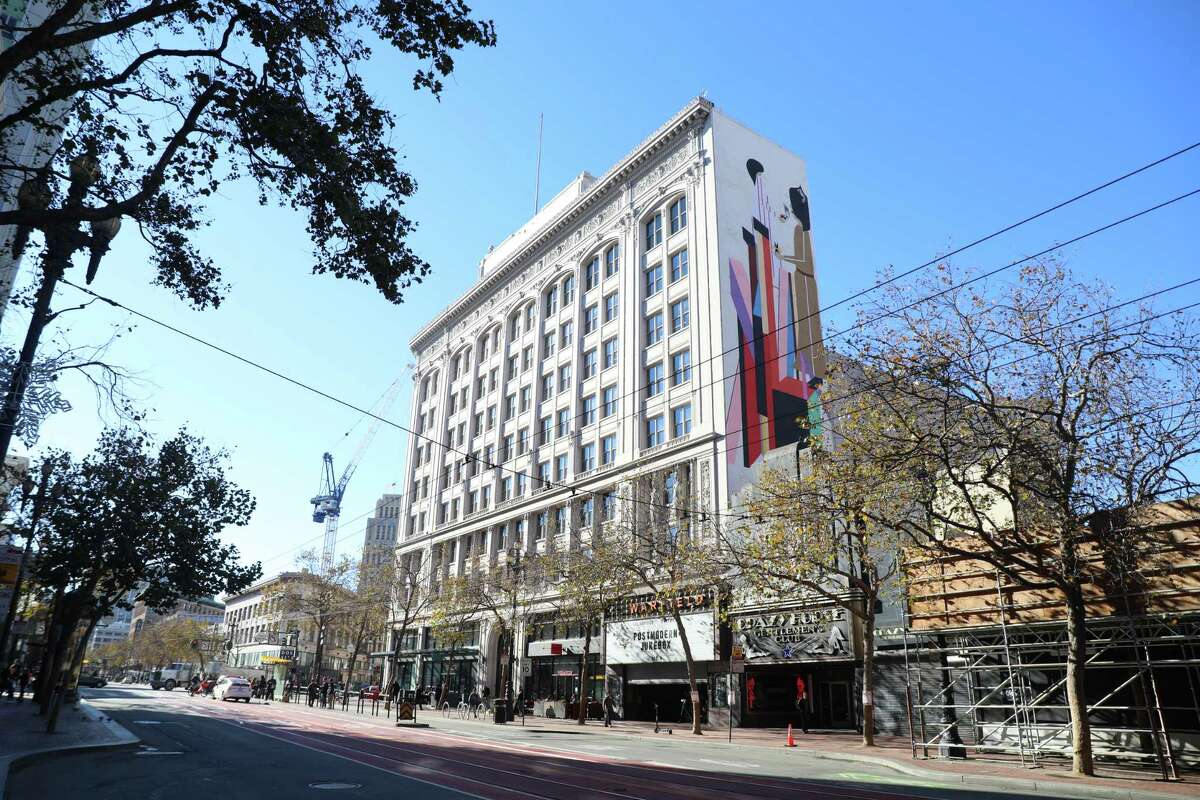
While the conversion concept of transforming office buildings into residential homes has been widely discussed and studied over the last two years, so far only one application has been filed with the city, a 27-unit reuse of the historic Warfield office building at Taylor and Market streets. Other property owners have studied conversions but concluded that the costs would be too high to make it profitable.
At the hearing Monday, Sujata Srivastava, SPUR’s San Francisco director, said lowering development costs would be key.
“None of it really pencils out as a residential conversion unless you are able to reduce construction costs,” Srivastava said.
Ben Tranel, a partner with Gensler, said they studied 700 buildings and found 25 that were ripe for conversion. Of the 25, 10 were considered excellent candidates, high-rises with floor plates between 12,000 and 25,000 square feet. The buildings, totaling 4 million square feet, could generate about 4,000 housing units, he said.
While San Francisco has had a trickle of office buildings converted to housing — about 2,369 units between 2014 and 2020 — other cities have been more successful using incentives and tax breaks.
About 12,000 units in downtown Los Angeles and 13,000 in New York City have been created by the adaptive reuse of office buildings since both those cities passed legislation providing financial incentives to do conversions. In 2021, the Calgary City Council approved $77 million in grants to incentivize conversions in the Canadian city. So far, $23 million has been spent, resulting in about 700 units.
Reach J.K. Dineen: jdineen@sfchronicle.com
Written By J.K. Dineen
J.K. Dineen covers housing and real estate development. He joined The Chronicle in 2014 covering San Francisco land use politics for the City Hall team. He has since expanded his focus to explore housing and development issues throughout Northern California. He is the author of two books: “Here Tomorrow” (Heyday, 2013) and “High Spirits” (Heyday, 2015).
Top of the News

 ©2023 Hearst Communications, Inc.