July 10, 2023Updated: July 11, 2023 11:56 a.m. (SFChronicle.com)
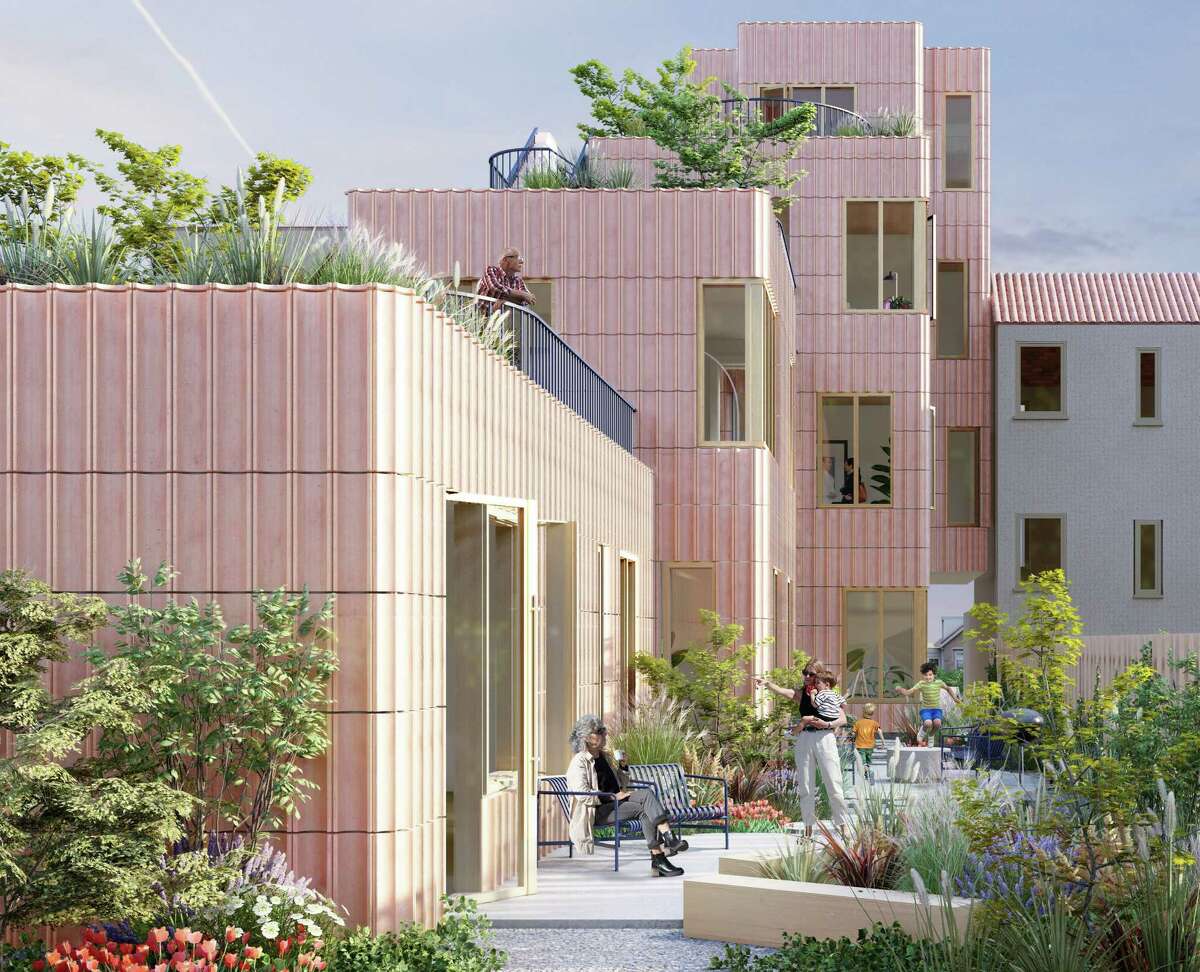
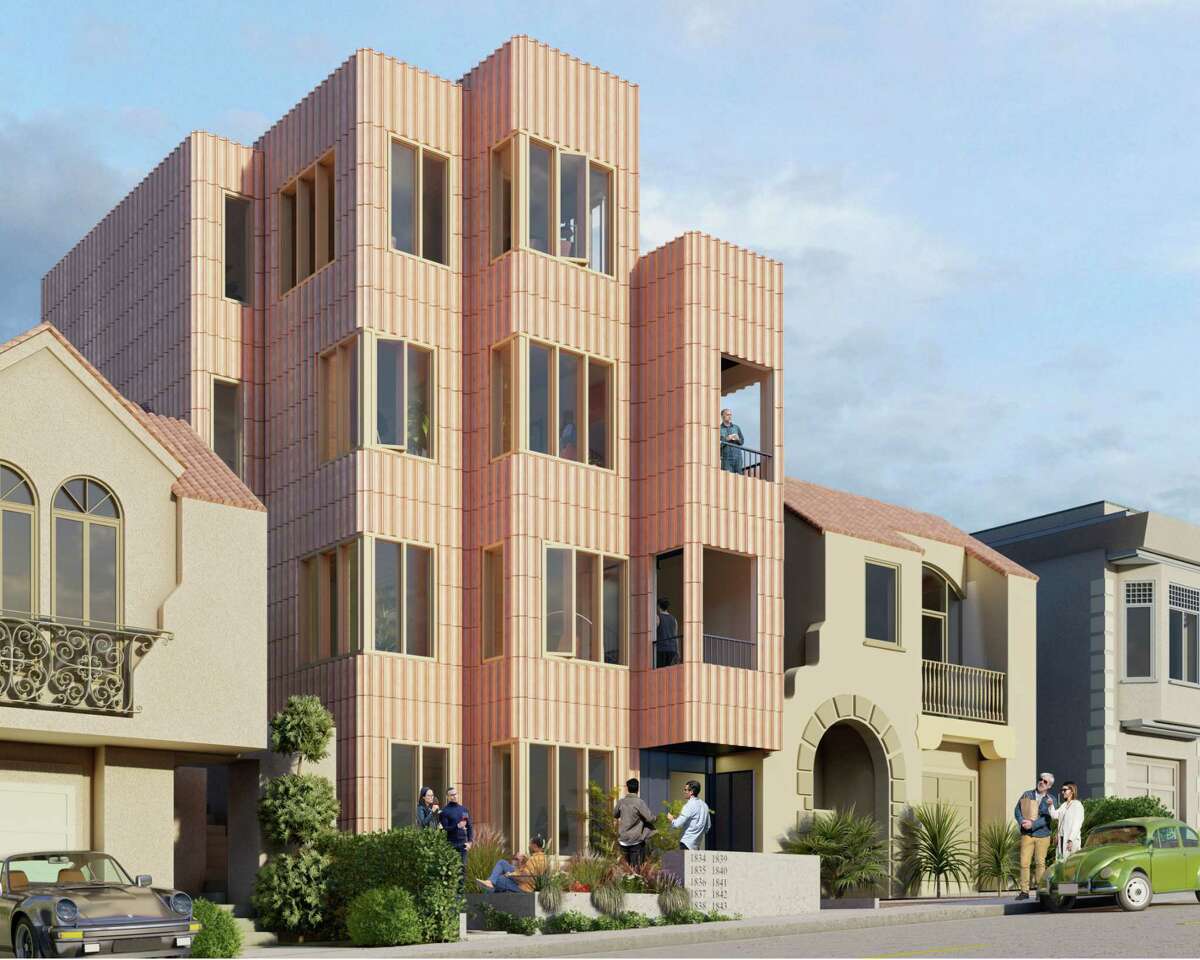
While a developer tries to win approval for a 50-story residential tower amid single-family homes near Ocean Beach, a new national competition shows there are more creative ways to add housing to San Francisco’s low-slung Sunset District.
Such as terraced condominiums sliding 10 homes into a lone residential lot. Or lines of townhouses through a procession of backyards, with entries from single lots to the north and south.
- 50-story S.F. condo tower: Realistic or not, the proposed building casts political shade
These are among the six winning entries announced Monday by the San Francisco chapter of the American Institute of Architects. And even though the competition is speculative — competition winners don’t get an empty parcel of land — the organizers believe that the results can expand the debate over what can be done.
“Something has to change,” said Sarah Willmer, a local architect active on housing issues with the chapter. “We have to find a way to increase density while maintaining the character of San Francisco that people love.”
The $10,000 honor award went to the firm West of West, which has offices in Portland and Los Angeles, for a proposal it calls “Sunset Steps.”
The conceptual design starts with four stories along the street — noticeably taller than its neighbors — then steps down at each level until it is just one story at the rear of the lot. The types of units vary, and each level would have outdoor space for residents to enjoy, as well as a shared side yard.
“We were struck by the combination of spaces it created, and the real possibilities for interchangeable living,” said Anne Torney, a partner at Mithun and the chair of the six-member design jury. Another asset? “It’s quite a lovely architectural composition.”
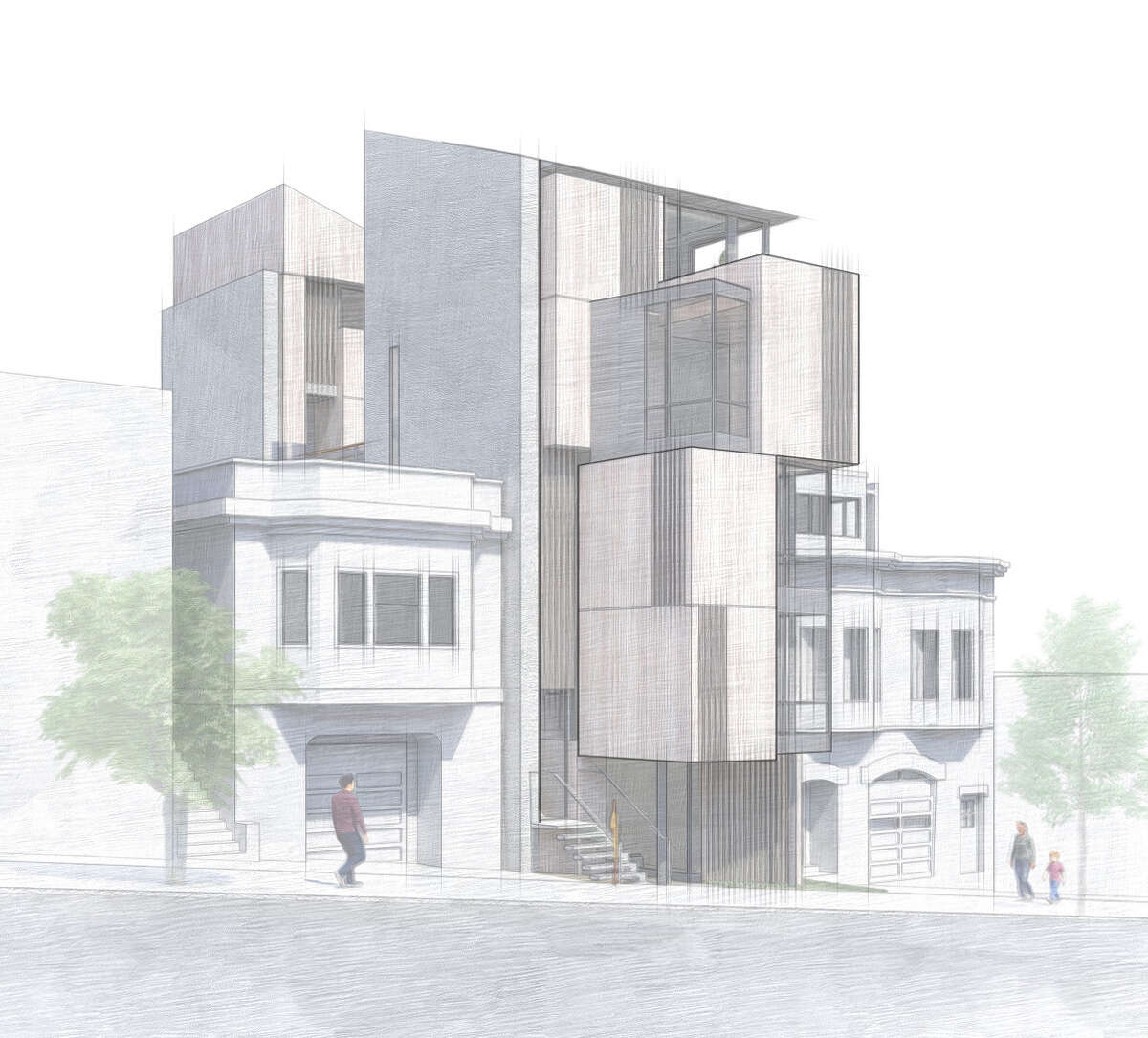
Most of the 45 or so entrants were from the Bay Area, but only one award went to a San Francisco firm. Kennerly Architecture & Planning received a $2,000 merit award for a design with seven stacked units in two slender towers with a shared courtyard and upper-floor open bridges.
“It’s a needed conversation,” said Owen Kennerly, the firm’s co-founder. Though Kennerly is the architect for such upcoming projects as a 17-story collection of low-income apartments on Folsom Street that Mercy Housing will develop, it got its start with small buildings in neighborhoods like the Mission and the Richmond.
“This scale is something we’ve always enjoyed,” Kennerly said. “Everyone worries about neighborhood character, and I agree, but neighborhood character can be augmented” by new forms for living.
Perhaps the most intriguing winner, recipient of a $1,500 citation, came from the East Coast: “In Our Back Yard.”
Its premise is that owners of consecutive single-family homes might pool their backyards to make room for a succession of two-story townhouses along a shared alley — “a flexible, organic urbanism that can unfold over time,” according to the entry. The entrance from one block could be created by turning an existing home’s ground-floor garage into a covered walkway, or making an empty lot into a landscaped portal.
The proposal is from ISA, a Philadelphia firm. According to Brian Phillips, the firm’s founding principal, the inspiration was the surge in construction of accessory dwelling units since California made them easier to build.
“What one building can do on one lot is limited,” Phillips said. “We were interested in developing a housing strategy. It’s the planner in every architect — thinking about the larger move.”
The conclusion of the competition coincides with efforts by the city’s planning department to begin rezoning the Sunset neighborhood — much of which is scaled to single-family homes — as part of larger effort to clear the way for construction of 82,000 homes over the next eight years, as required by the state.
But even as work begins, there’s heavy pushback by neighbors and planners to one developer’s claim that he can use state housing bonuses to build a 580-foot, 680-unit shaft across from the San Francisco Zoo.
This context makes the competition’s results all the more relevant.
“The winners did a really good job helping visualize density” and show that it needn’t be overwhelming, Torney said. “It’s the role of architects to make it easier for skeptics to imagine a San Francisco with more neighbors.”
The other winners were Martin Fenlon Architecture and Object-Territories, which received merit awards, and citation recipient Po-Yu Chung.
Information on the contest is available at www.aiasf.org.
Reach John King: jking@sfchronicle.com; Twitter: @johnkingsfchron
Written By John King
John King is The Chronicle’s urban design critic and a two-time Pulitzer Prize finalist who joined the staff in 1992. His book “Portal: San Francisco’s Ferry Building and the Reinvention of American Cities” will be published by W.W. Norton in November.VIEW COMMENTS

 ©2023 Hearst Communications, Inc.