July 20, 2023 Updated: July 24, 2023 (SFChronicle.com)
Could a century-old banking concept originally designed for North Dakota farmers help ease San Francisco’s perennial housing crisis and economic woes?
A city working group thinks so, proposing what would be the nation’s first municipal public bank to help fund housing projects — particularly those within reach for low- and middle-wage workers — as well as jump-start small-business recovery and creation.
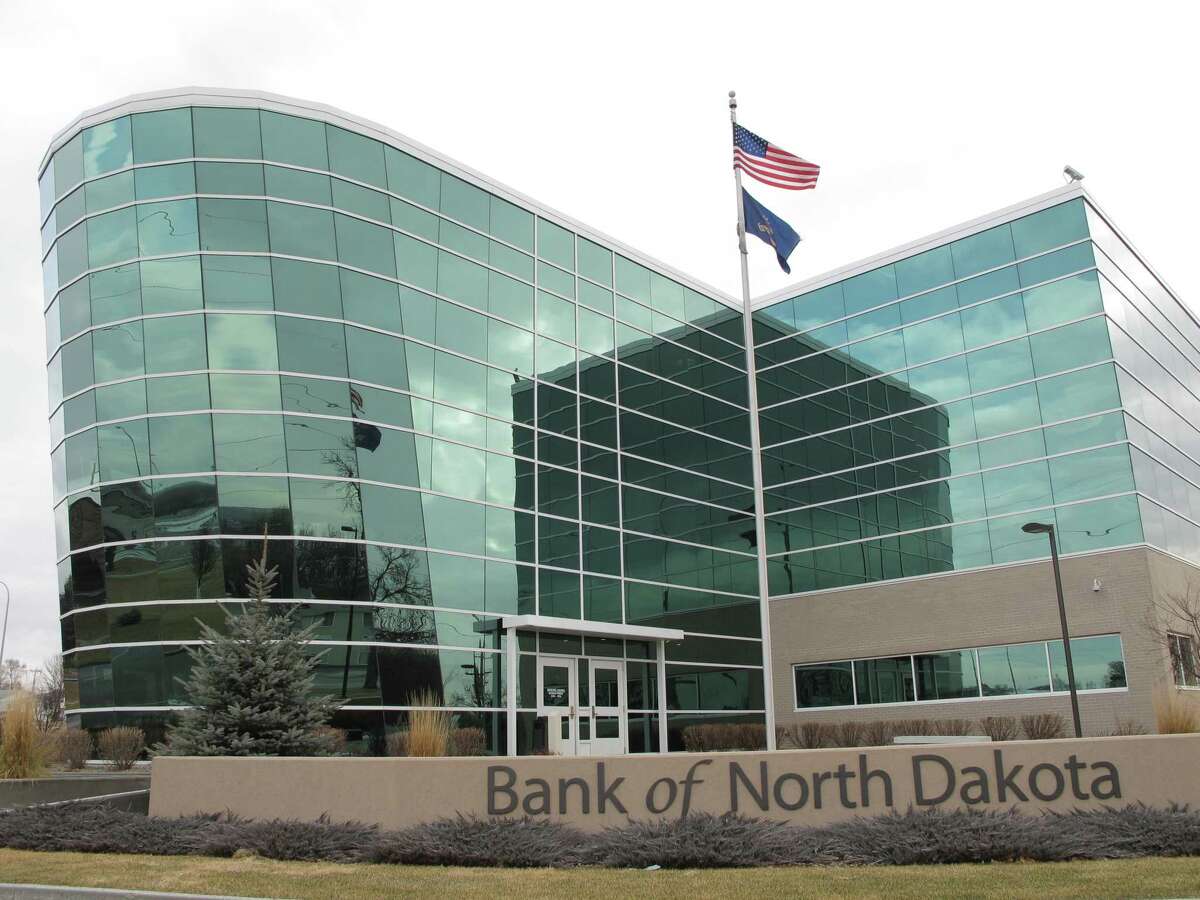
But the plan seeks to partner, rather than compete, with private banks. Created in 1919, the Bank of North Dakota’s main services are not to individuals. Instead, the only state public bank in the country generates funds that enable community banks and other institutions to provide financing at interest rates considerably below what they would normally charge. California’s Legislature has authorized cities to explore public banking.
After about a year developing a business and governance plan for a municipal public bank, San Francisco’s nine-member working group recently sent the proposal to the Board of Supervisors, which began examining it Thursday and could make changes. Under the plan, the bank would use funding from the government and other sources for low-interest loans to further community initiatives.
More from Noah Arroyo
- Game changer? Bay Area could get up to $20 billion for affordable housing
- Owners are walking away from downtown S.F. buildings. We mapped 14 in financial crisis
The bank’s cash reserves would be modest to begin with, and lawmakers have yet to decide where initial funding would come from. But proponents say, if approved, the bank could grow in the next decade to channel hundreds of millions of dollars toward housing and its other goals of helping small businesses and ushering the city into a carbon-neutral future. Last year, the Bank of North Dakota reported $10.2 billion in assets and a profit of $191 million.
“The real end point for the public bank will be developing new loan products to expand the range of housing options available,” said Fernando Martí, working group member and the former co-director of the Council of Community Housing Organizations. That could include funding for accessory dwelling units, which are added to properties, or cooperatives, “which we haven’t seen in the city since the 1960s and ’70s,” Martí said.
The bank could also help new small businesses launch in the downtown area, which was crippled by the loss of office workers, said Christin Evans, chair of the working group and a business owner. Many businesses seek startup loans on the scale of $100,000, Evans said. That’s often too small for large private banks like Wells Fargo, which prefer the greater returns that come with bigger loans, she said.
“The (private) bank that has a million dollars to lend, they’ll put it into an oil pipeline instead of funding the deli in downtown San Francisco,” Evans said.
A public bank could even help fund a transformation of the Westfield San Francisco Centre, which the owners are giving up in response to decimated foot traffic, working group member Sylvia Chi said. Mayor London Breed has pitched converting the mall into lab space or a soccer stadium.
“If we’re going to redevelop the Westfield mall into something, they should use green building techniques and make sure it’s as efficient and sustainable as possible,” Chi said.
Send feedback, ideas and suggestions to sfnext@SFChronicle.com
Many cities have considered starting public banks in recent years but none have pulled the trigger. Even if approved, the scale of its impact is unclear. But there are clues in North Dakota, where the state bank has a track record of providing everything from loans for community development projects to disaster relief.
In addition to helping residents weather crises from the Great Depression to the COVID-19 pandemic, the Bank of North Dakota’s lending has built up the retail and services sectors in parts of the state, eased the transition of farm ownership to later generations and enabled manufacturers to expand their facilities. Profits from lending flow back into its programs to reduce costs to those seeking financing.
In the Bay Area, “A lot of the existing infrastructure is beholden to investors and private boards, both of whom are purely market driven,” said Fred Blackwell, CEO of the San Francisco Foundation, a philanthropic organization that funds nonprofits advancing goals like racial equity and housing affordability. San Francisco’s public bank would focus on social good, rather than “asking how do we return equity to shareholders,” he said.
The Chronicle asked a spokesperson for Mayor Breed if she supported the creation of a local public bank, but did not receive a response.
In 2019, the state Legislature allowed cities to form public banks via the Public Banking Act, co-authored by then-Assembly Member David Chiu, now San Francisco city attorney. The California Bankers Association criticized the move, saying there was already enough competition in the state’s banking industry.
The legislation “also risks taking local agency deposits away from commercial banks,” the association said in a statement at the time. “Commercial banks, particularly community banks, use local agency deposits as a source of liquidity which is then used to make loans into their communities.”
If approved, a stripped-down version of the public bank might be up and running some time next year. Supervisors can create it without immediately funding it, and later draw from city coffers to get it operating. Outside grants could also fund it, and Martí said a bond measure might be on the horizon, but all money would initially flow one-way into the bank to power lending. Over its first three years, it would issue nearly $60 million in loans, the plan envisions.
Bank officers would try to turn a profit by the end of that period, in part to persuade state and federal regulators that it was financially viable so they would authorize it to receive deposits from government departments and outside organizations. Some bank proponents hope this would let the city begin moving some of its reserve funds from large for-profit banks into the public bank, which would help it grow its lending to reach almost $250 million by year eight.
In its early years, the bank would partner with community lenders that already fund affordable housing, contributing money that would free up the lenders to pursue additional projects. The loans might cover architectural drawings and other early-stage work that real estate developers must finish before their projects can progress.
That, in turn, would help the city hit housing targets from the state.
Construction in the city is largely dormant. Lawmakers are trying to jump-start it by reducing the number of units that market-rate projects have to offer to low- and middle-income households, lowering total costs. While that would make it easier for the city to satisfy the state’s mandate to build tens of thousands of housing units over the next eight years, it would complicate efforts to build affordable housing, which is also required. If the city falls short of the targets, it will incur financial penalties and lose control over land-use decisions.
“When a Veritas type is putting their thousands of units on the market, we can look at actually making those affordable housing” by buying them with the bank’s money, said Supervisor Dean Preston, one of the model’s proponents. Veritas Investments, reputedly the city’s largest residential landlord, declared plans in 2019 to sell buildings with more than 2,000 rent-controlled apartments.
Reach Noah Arroyo: noah.arroyo@sfchronicle.com
Written By Noah Arroyo
Noah Arroyo is a reporter examining the future of San Francisco. Before The Chronicle, he worked at Mission Local and the San Francisco Public Press and focused on the city’s housing and homelessness crises — possibly two sides of the same coin. Noah takes a data-driven approach when possible and seeks out the sources who don’t generally get quoted.

 ©2023 Hearst Communications, Inc.