


San Francisco’s push to open a college campus in its struggling downtown is a promising idea, but city officials should embrace a revolutionary one: Make it a satellite campus of a historically Black university.
Aug. 6, 2023 (SFChronicle.com)
Aurion Wiley-Green says she would have attended a historically Black college if one existed in San Francisco when she was growing up. Many of her friends would have enrolled too.
“There were always college fairs for high school students, and there were tons of us who wanted the kind of experience you’d get at an HBCU,” said Wiley-Green, a 2022 graduate of San Jose State University who double majored in African American studies and justice studies and is a member of Delta Sigma Theta, a historically Black sorority.
“It’d be nice if San Francisco had a Black college legacy.”
San Francisco has a chance to create one now, which would be revolutionary, considering there are no historically Black colleges and universities, or HBCUs, west of Texas. (Charles R. Drew University of Science and Medicine in Los Angeles is designated as a historically Black graduate institution, or HBGI.)
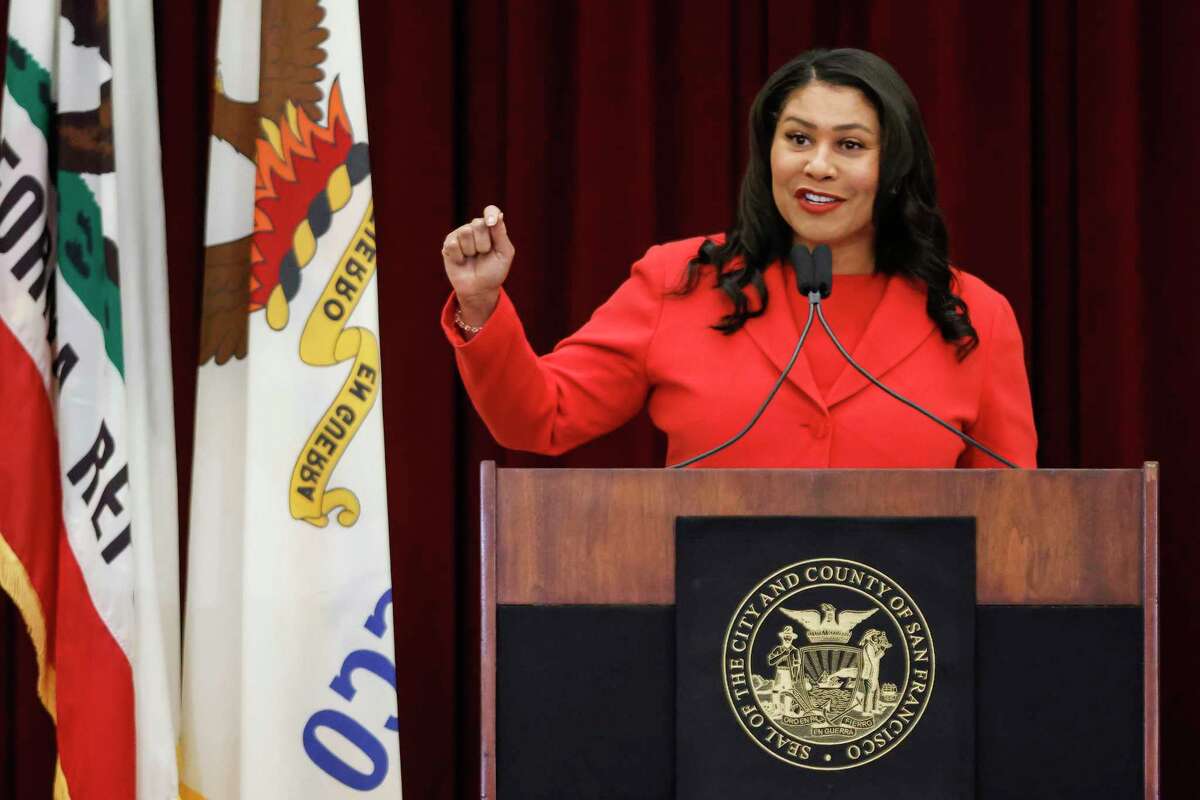
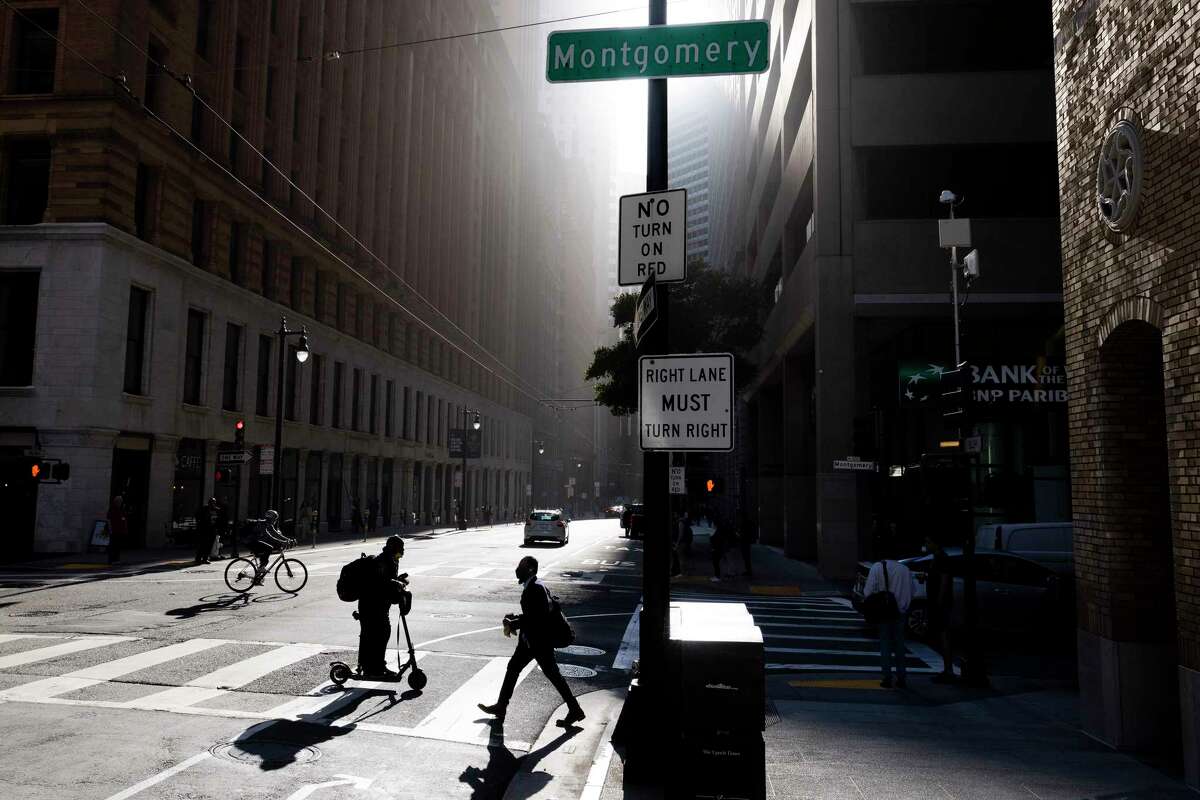
There’s already momentum behind such an idea. HBCUs across the country are looking to expand with satellite campuses. HBCUs in recent years have also increasingly become the preferred destinations for Black students. And San Francisco Mayor London Breed has expressed a desire to revitalize the beleaguered downtown area by bringing a college campus to the area.
Why not make it a campus for one of the country’s 107 HBCUs? It would help tremendously if San Francisco’s Black mayor threw her support behind the idea.
More from Justin Phillips
- The emotional toll of studying reparations: A look into California’s journey
- Alameda D.A. Pamela Price isn’t yet a hero nor is she a villain
San Francisco having an HBCU satellite campus isn’t actually a new proposal, and neither is the idea that it be located downtown. The city’s reparations advisory committee has been floating this recommendation for the past year, first in its draft reparations proposal in December and again in its final report published last month. Breed has yet to say she outright supports any of the committee’s recommendations.
The HBCU idea is in perfect harmony with solutions to problems that San Francisco leaders claim they wish to address: diversifying the tech industry and luring Black people back to the city.
“If we’re trying to revitalize that part of San Francisco, students make sense. And having that campus be one for an HBCU, it would mean Black students are our city’s future,” said Tiffany Carter, the reparations committee member who came up with the idea.
According to a 2019 report by the United Negro College Fund, these schools produce a quarter of all Black bachelor’s degree holders in science, technology, engineering and math (a.k.a. STEM) fields.
Despite HBCUs having a track record of producing qualified candidates to work in the tech field, Pew Research Center data show Black workers are 11% of the country’s overall workforce and fill only 9% of the country’s STEM jobs. There also has only been a 1% increase in Black workers in technical roles at large tech companies between 2014 and 2021, according to the Oakland-based nonprofit Kapor Center, which works to diversify the tech industry, and the NAACP.
But having an HBCU in the city is not just about advancing the economic prospects of Black people, although that in itself is crucial. It’s also about attracting more Black residents to a San Francisco that has experienced decades of out-migration due to a variety of socioeconomic factors.
Today, only 5.7% of the city’s population identifies as Black, compared to 13% in 1970. The trend only looks like it’s going to continue. As recently as 2019, a whopping 58% of Black residents were considering moving out of state, citing the high cost of housing as one of their major grievances, a UC Berkeley poll found.
An HBCU could also be a reason for Black students and their families to decide to call the city home.
“Being a Californian and growing up in the Bay Area, not having an HBCU anywhere close was why I had to go all the way across the country,” said Tasion Kwamilele, who went to Howard University in Washington, D.C., just like another Bay Area native, Vice President Kamala Harris. “There’s undeniable power in going to a college knowing where as a Black person, that space was specifically made for you.”
As pleasant as the dream of an HBCU in San Francisco is, it also comes with its own unique challenges. These cash-strapped institutions have historically been underfunded and currently have endowments that are, on average, one-seventh of those of non-HBCUs, according to a 2021 report by the National Center for Education Statistics. This complicates the process of growth inherent in an HBCU buying property in a new city and staffing a satellite campus with appropriate personnel.
But bringing any kind of academic institution into San Francisco — even if it’s a project to create a University of California campus that, unlike an out-of-state HBCU, would likely get funding from the state — presents its own set of challenges. The ones specific to a HBCU shouldn’t dissuade local leaders from pursuing it.
HBCUs have long been at the forefront of broadening educational access and positively impacting the nation. Now, it is time for San Francisco to embrace this transformative power and welcome an HBCU campus into its downtown landscape. The decision to do so rests in the hands of city leaders, and they have the opportunity to reshape not only San Francisco, but also the narrative surrounding racial equality and economic mobility in America.
And Breed would benefit from being the effort’s most influential supporter.
“The problems San Francisco is facing, with its fentanyl crisis and homelessness and things like that, aren’t going to last forever,” University of San Francisco political science professor and San Francisco reparations advisory committee member James Taylor said. “City leaders thinking about bringing an HBCU in downtown San Francisco? Now that could be some positive news for San Francisco that will also reverberate around the nation.”
Reach Justin Phillips: jphillips@sfchronicle.com
Written By Justin Phillips
Justin Phillips joined The San Francisco Chronicle in November 2016 as a food writer. He previously served as the City, Industry, and Gaming reporter for the American Press in Lake Charles, Louisiana. In 2019, Justin also began writing a weekly column for The Chronicle’s Datebook section that focused on Black culture in the Bay Area. In 2020, Justin helped launch Extra Spicy, a food and culture podcast he co-hosts with restaurant critic Soleil Ho. Following its first season, the podcast was named one of the best podcasts in America by the Atlantic. In February, Justin left the food team to become a full-time columnist for The Chronicle. His columns focus on race and inequality in the Bay Area, while also placing a spotlight on the experiences of marginalized communities in the region.

 ©2023 Hearst Communications, Inc.