In life, Victor Nguyen was unique, an individual, one-of-a-kind. In death, however, he was hardly atypical. And he became a statistic.
On May 23 of last year, Nguyen was an innocent bystander — a term that’s never used when something good happens. He was waiting for a bus in front of the Potrero Center mall in the late morning, when a purloined SFMTA paint truck being pursued by San Francisco law-enforcement officers jumped the curb and ran him down.
Nguyen was 58.
One month later, a San Francisco Police Department cruiser involved in a high-speed chase clipped a motorcycle, narrowly missed a child and barreled through the former Lucca delicatessen site. By the grace of God, nobody was seriously injured.
In light of a man being killed and half a dozen others injured, San Francisco’s Police Commission stated in June that it would “take a hard look” at the city’s police-pursuit policy, which hasn’t been modified since Chief Greg Suhr and a prior iteration of the Police Commission hammered it out in 2013.
But Mayor London Breed had plans of her own. In October, she claimed that the Police Commission — which, again, last modified police pursuit policy a decade ago — had “gone way too far.” She proposed that we, the voters, decide on departmental policy regarding chasing suspected criminals. And this proposed policy would be broader: Rather than essentially being limited to pursuing alleged violent felons, SFPD officers would, if Breed’s Proposition E passes on Tuesday, be empowered to chase suspects in nonviolent felonies and “violent misdemeanors.”
“Violent misdemeanors,” by the way, are not defined under the state penal code. Both prosecutors and police officers have told me they don’t know what this means.
But they can certainly make inferences. Cops I’ve spoken with figured this was a term of art to encompass retail thieves and auto break-in specialists of the sort who’ve been a San Francisco scourge going back decades. “This would allow WAY more suspects to be pursued,” says one.
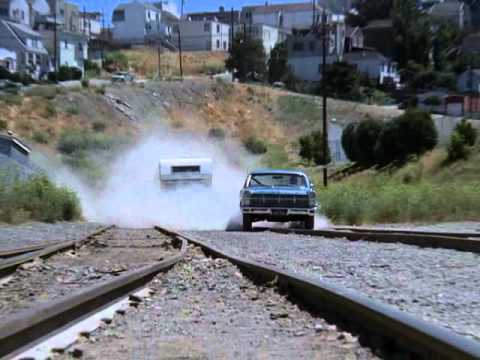
And that’s a double-edged sword. More than four in 10 of the pursuits initiated by San Francisco police result in a collision. And this staggering rate comes as no surprise to the cops who do the pursuing.
“Pursuits end in two ways; suspects rarely have a change of heart and just pull over,” says one. Rather, “1. The suspect crashes and probably foot bails or, 2. The suspect has his tires spiked and eventually stops — and then probably foot bails.”

This week, a pair of deeply researched stories regarding police pursuits appeared in San Francisco publications. The Chronicle published a yearlong analysis of pursuits nationwide, which found that in the six years ending in 2022, at least 3,336 people were killed in police pursuits — which were often triggered by minor crimes or non-crimes. At least 551 of the people killed were bystanders, like Nguyen.
The San Francisco Standard published a study of California police chases. It found that pursuits initiated by the San Francisco Police Department result in a collision 41 percent of the time — compared to a 22 percent statewide average. San Francisco officers catch the suspect they’re pursuing only 39 percent of the time — compared to a 56 percent statewide average.
It is not the job of Mission Local to tell you how to vote on Proposition E, but it is within our purview to elucidate the issues you’ll be voting on, and explain how and why things get on the ballot. Enabling a broader swath of suspected crimes to trigger police chases intuitively figures to increase the number of police chases undertaken in San Francisco. And, considering the statistics we have access to — and common sense — that would lead to more risk. More risk for suspected criminals, more risk for police officers and more risk for passengers and innocent bystanders. Like Victor Nguyen.
The police are well aware of this. The police don’t need to be reminded that driving at high speeds through San Francisco’s crowded streets — and pursuing people who are not bound by ethical obligations to drive as safely as possible and who may well be armed — is dangerous. The officers I have spoken with get this. They know the risks. They’re frustrated at watching law-breakers drive off and simply radioing it in. Professional break-in crews wear gloves and masks, and are often driving stolen cars with stolen plates. They are often packing heat, and if there’s a way to track them down beyond nabbing them in the act or pursuing them, it almost always eludes the SFPD; the department’s clearance rate for auto break-ins rarely cracks 2 percent.
“If we get hurt while preventing future people from being victimized, it’s a tradeoff I’m willing to make,” says a veteran cop. He’s voting yes on Proposition E.
He’s okay with the risk. This, he says, is part of his job.
But it’s not yours. What about the increased risk for the general public? The veteran officer went on to make a point that I think is pretty profound — and is something every voter could do well to consider.
“I don’t see the police commission, in a liberal city like San Francisco, being open to allowing more dangerous activities — which I understand,” he said. “So if we’re going to loosen a pursuit policy, something that will increase risk to the public at large, maybe the citizens should get a vote and express the amount of risk they’re willing to accept — for themselves and for their cops.”
The officer notes that residents of affluent areas like the Marina, Alamo Square, Pacific Heights or North Beach — “where a lot of our ‘crimes of opportunity’ are occurring” — may be the ones to disproportionately experience more high-speed police chases.
Voters, the cop concludes, should understand that Proposition E “likely will put more people in danger. If we are willing to accept that in order to arrest people, okay, fine. If we aren’t okay with that, that’s fine, too. I will work under whatever parameters the public sets.”
He is awaiting your orders; Election Day is March 5. Mission Local cannot tell you how to think nor how to vote. It can only ask you to think. And then vote.
JOE ESKENAZI
Managing Editor/Columnist. Joe was born in San Francisco, raised in the Bay Area, and attended U.C. Berkeley. He never left.
“Your humble narrator” was a writer and columnist for SF Weekly from 2007 to 2015, and a senior editor at San Francisco Magazine from 2015 to 2017. You may also have read his work in the Guardian (U.S. and U.K.); San Francisco Public Press; San Francisco Chronicle; San Francisco Examiner; Dallas Morning News; and elsewhere.
He resides in the Excelsior with his wife and three (!) kids, 4.3 miles from his birthplace and 5,474 from hers.
The Northern California branch of the Society of Professional Journalists named Eskenazi the 2019 Journalist of the Year.More by Joe Eskenazi