The East Bay-based grocery chain’s latest closure drama echoes a similar saga, generations ago
 by ELENI BALAKRISHNAN FEBRUARY 12, 2025 (MissionLocal.org)

Read Mission Local often?
Help grow our newsroom, joining the hundreds of San Franciscans who support us by giving below.
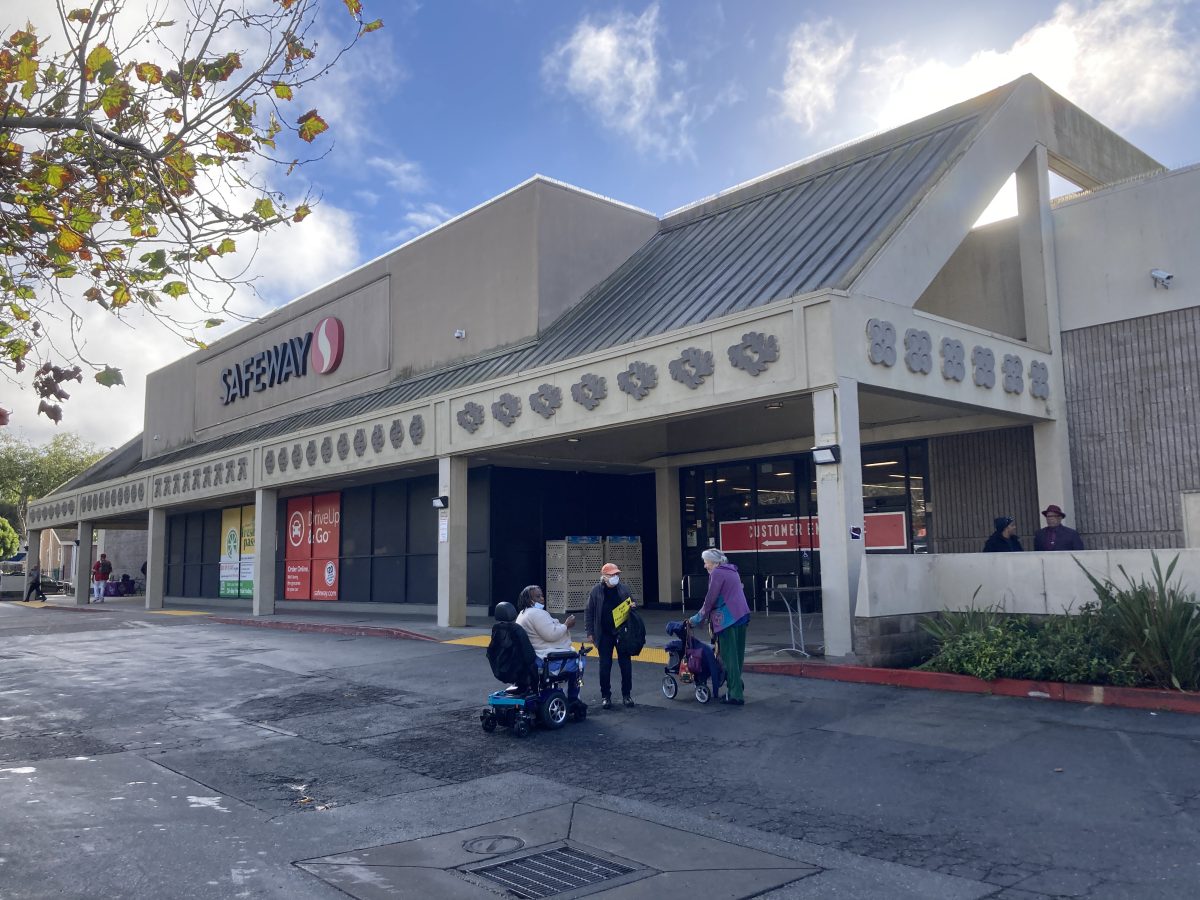
In 1981, San Francisco’s Redevelopment Agency sold more than four acres of land in the heart of the Fillmore to the Safeway corporation. It was a sweetheart deal, according to public records and interviews: A massive parcel for just $1.5 million.
Today, the 3.7 acres of land Safeway still owns could be worth tens of millions of dollars.
The initial deal included the transfer of public streets into Safeway’s plot, free of charge. Safeway meanwhile agreed to build a grocery store on the site and remain there for the next 40 years — or longer, many hoped: It was a needed resource in a neglected part of the city.
But, just a few months after that 40-year mark, Safeway began closing up shop.

Want the latest on the Mission and San Francisco? Sign up for our free daily newsletter below.Sign up
A sweet deal
Safeway was supposed to stay “for a minimum — minimum — of 40 years,” said commissioner Bivett Brackett of the Office of Community Investment and Infrastructure, the Redevelopment Agency’s successor, at a Board of Supervisors committee hearing last week on the issue. “It was not sold to Safeway for them to later make a profit off of it and resell the land, therefore robbing the community of a community resource.”
The grocery store’s 40th anniversary was in the fall of 2023; by January 2024, Safeway had announced its imminent closure. Then-Mayor London Breed persuaded the store to remain in place an extra year. Residents protested, and city leaders urged the grocery store to stay, but Safeway stopped selling groceries early last month and closed its pharmacy last week.
Now, the company stands to make millions off a sale that was subsidized by city coffers.
“It’s a hugely valuable site,” said David Noravian of Beckett Capital, who said current market conditions make it difficult to put a dollar value on the lot. A smaller 2.3 acre shopping center that didn’t involve a potential major housing development sold to H Mart last year for $37 million.
Louis Cornejo of Urban Group Real Estate said Safeway might not make a massive profit in today’s real estate market, but the company profited for years by owning and operating on the land it acquired for so little.
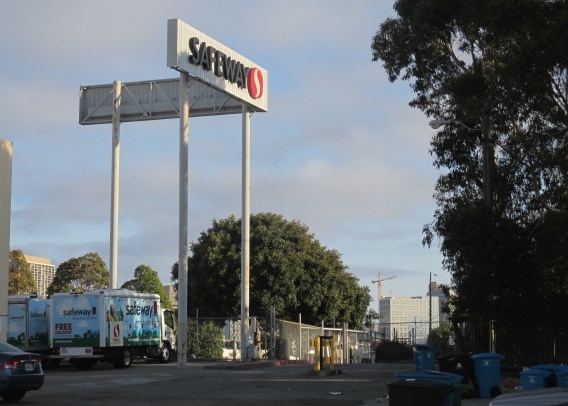
No paperwork has been filed by Align Real Estate, the company expected to build a mixed-use development on the lot. Cornejo said that, in the current market, he expects any development on the site to come slowly. In the meantime, he said, the land could become a vacant “blight” on the neighborhood.
Safeway has offered no details about the development, but said the site will change hands soon.
“They are sitting on very valuable real estate that they got for a huge discount back in the ’80s to provide a grocery store for the community,” said former District 5 Supervisor Dean Preston. “Why would they not try to work with the city or the community to find a new grocery store to come into the location?”
This scenario shouldn’t come as a surprise. A 1980 Chronicle article mentioned Safeway closing a nearby store, part of a pattern of grocery stores “abandoning relatively poorer urban areas for the lucrative suburban trade.” Over the years, the East Bay-headquartered grocery chain has pulled out of different store locations throughout the city, giving little notice to the communities that rely on its services.
Yet, despite the store’s track record, generations of San Francisco officials have bent over backward to accommodate it.
The Fillmore store was championed as part of a plan to reinvigorate the neighborhood, which saw the razing of businesses and homes in the 1960s and ‘70s and the displacement of its Black and immigrant community members in the name of urban renewal and “redevelopment.”
The landmark Booker T. Washington Hotel that once sat on the Safeway site met this same fate. The land sat empty for more than a decade before the sale to Safeway, “in the vital and best interests of the city and the health, safety, morals and welfare of its residents,” according to the contract signed between the San Francisco Redevelopment Agency and Safeway in 1981. The contract referred to the area as one of the city’s “slum and blighted areas.”
The agreement waived a $68,000 deposit, more than $230,000 in 2024 dollars, and allowed Safeway to apply that money toward permitting and other costs. A December 1980 Chronicle article refers to a $2.5 million federal grant being used to prepare the land for the “long desired” Safeway. And the Board of Supervisors in 1981 approved the clearance and transfer of two streets to Safeway’s ownership, without charge.
Then-Supervisor Quentin Kopp pushed back against the street transfer, calling it a gift of a public street to a private corporation. But the transfer and sale ultimately went through, and Safeway opened what was reportedly the largest Safeway in Northern California on the lot in 1983.
Kopp said he always opposed redevelopment, and said San Francisco should sue Safeway to retrieve the amount of money the company saved in the discounted sale more than 40 years ago.
“It’s Safeway’s prerogative to sell a store which isn’t making money or is even losing money,” Kopp said this week. But city leaders who “cared enough” could sue the company, as the city subsidized the original purchase.
It is unclear how much Safeway stands to make off the sale. The company has remained tight-lipped about its agreement with Align Real Estate.
A familiar story just blocks away
Around the time Safeway opened its Fillmore store more than 40 years ago, residents about 12 blocks away in Lower Nob Hill were taking action to save their Safeway store, action that may be familiar to those in the Fillmore, Western Addition and Japantown today.
In October 1983, Safeway abruptly announced the closure of its location at Bush and Larkin streets; it would close within five days. Residents mobilized quickly, with protests and petitions to persuade the store to stay. News reports said the Bush Street store was the last of five Safeway outposts to depart within that decade.
Just as Fillmore residents have done over the past year, Nob Hill residents in 1983 “bemoaned the hardship that the closing will have on area residents, particularly seniors, who will lose their access to a conveniently located full-service market,” according to a November 1983 Tenderloin Times article.
The Fillmore Safeway sits among census tracts with some of the highest populations of senior residents in the entire city. Its once majority-Black population has dwindled, due to displacement, to around 10 percent in the last census.
Then-Supervisor Nancy Walker accused Safeway of also abruptly closing a Visitacion Valley store it had “promised to keep open,” and said the Bush Street closure was another example of the company failing to keep its word.
“I don’t think Safeway has any regard for this community,” resident Don Feeser told the Tenderloin Times in 1983. “They made their money in this community, now they’re leaving.”
The late Rev. Arnold Townsend, upon learning of Safeway’s planned closure in 2024, said something similar.
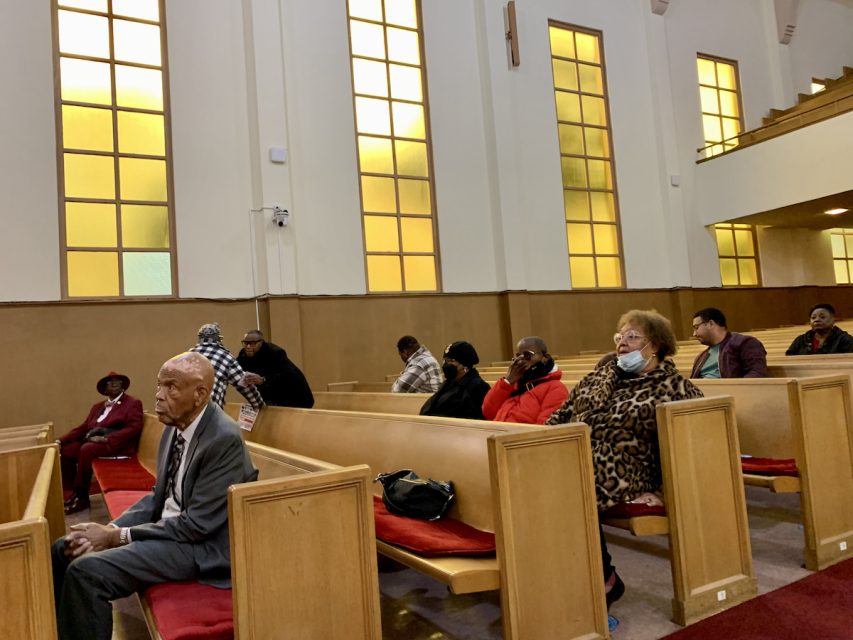
“I have been in this town for 56 years, and Safeway has been probably the worst community partners you would ever know,” Townsend said before a town hall meeting at Third Baptist Church last January. “They certainly have not contributed to the community, but they’ve taken millions of dollars out of this community.”
Similar to Breed’s action last year, then-Mayor Dianne Feinstein in 1983 sent Safeway’s CEO a letter, urging him to negotiate with possible replacement supermarkets to take over the Bush and Larkin space, on which the company held a 75-year lease. The store extended its closure by an extra month, but maintained it was losing money, and shuttered in October 1983.
Walker proposed legislation to require supermarkets to give six months notice of closure and hold community meetings, much as former Supervisor Dean Preston did last year before he left office. Records show Feinstein vetoed the legislation in 1984, but Preston’s legislation, though left unsigned by Breed, passed in November. The Board of Supervisors also passed a resolution in February urging the store to stay.
But again, the present-day legislation and resolution had little effect on the Fillmore Safeway closure.
Align and development
Last year, Preston pushed for Safeway and Align Real Estate to offer up the land for affordable housing nonprofits, to no avail. He urged Breed to consider acquiring the property, and got no response.
Safeway, which is today part of a supermarket conglomerate owned by private equity firm Cerberus Capital Management, also showed “incredible disrespect” by never meeting with a community that has been “wronged for generations,” Preston said.
“If they want out, the respectful thing to do is meet with community groups and involve the city,” Preston said. “They want to cash out and get top dollar selling the lot.”
Preston’s successor, Supervisor Bilal Mahmood, held a hearing last week to assess the situation, and promised residents who filled the City Hall chamber that he is dedicated to fulfilling the community’s needs. Residents were not convinced, and filtered out of the room grumbling their frustrations.
“Terrible! Shame!” shouted Gloria Berry, a member of the African American Reparations Advisory Committee, across the room as Mahmood and his fellow supervisors ended the hearing without any new answers or plan. “You should be ashamed of yourself … how dare you have us all come down here!”
“The frustration, overall, is valid,” said Mahmood in an interview. “It’s been a year, and there’s been no action.”
Safeway and Align Real Estate were notably absent from the hearing. Mahmood didn’t call them, and he told Mission Local that he still has not managed to meet with the grocery chain.
“We take pride in our 40-year history of serving the Fillmore district and are grateful to our neighbors, customers and community members who supported us throughout the years,” a Safeway spokesperson wrote in a statement after the hearing, noting that 15 other stores remain in the city. “We look forward to seeing more of the exciting proposal Align has in store as they develop their upcoming mixed-use project on their soon-to-be-acquired site.”
City leaders seem unwilling to explore options, like acquisition through an eminent domain process to intervene in the sale.
“Safeway is a hard-nosed corporate partner, and all they are interested in is a dollar sign,” said The Rev. Amos Brown at last week’s hearing. “What we need to do is to put the brakes on and tell Safeway: ‘Since you don’t know how to be good partners, you don’t deserve being in this town.’”
LATEST NEWS
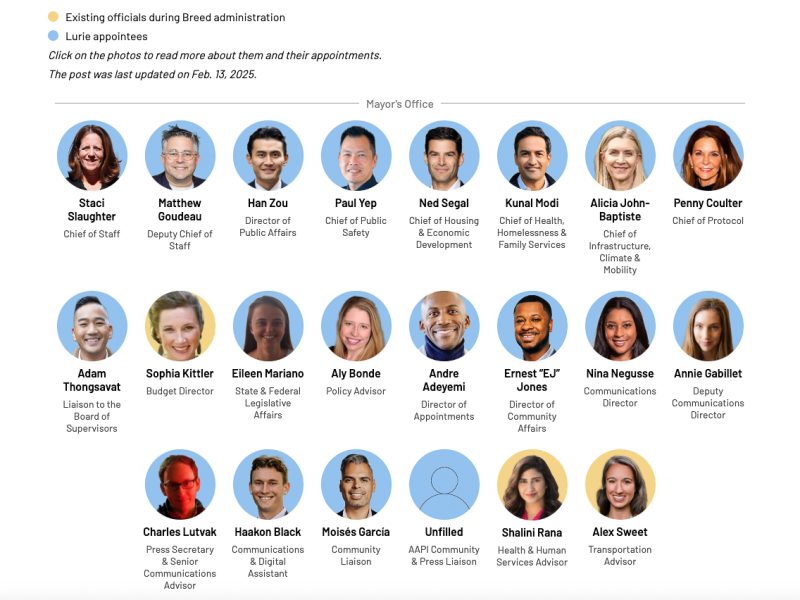
Live updates: Daniel Lurie’s City Hall: Who’s coming and who’s going?
Photos: The Tenderloin, according to those who live there
S.F. DA charges women who crashed into Mission bar during police chase
Support the Mission Local team

We’re a small, independent, nonprofit newsroom that works hard to bring you news you can’t get elsewhere.
ELENI BALAKRISHNAN
Eleni reports on policing and criminal justice in San Francisco. Follow her on Twitter @miss_elenius.More by Eleni Balakrishnan